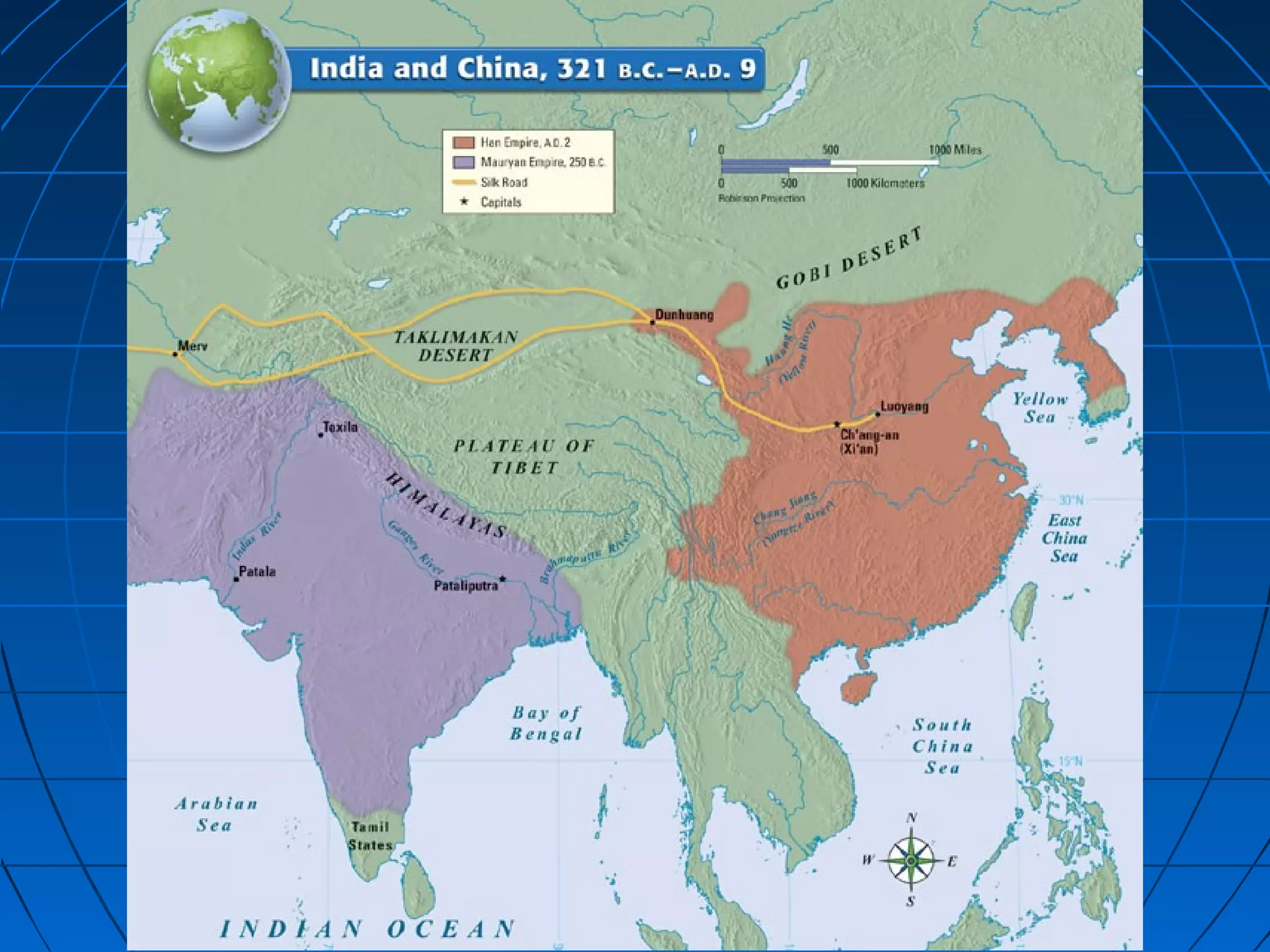
India and China Establish
Empires 400 B.C.-AD.550
Chapter Opener
          Asoka: The
           Buddhist King of
           India
           • Buddhism turned
             Asoka, the
             bloodthirsty king of
             ancient India’s
             Mauryan Empire,
             into a peace-loving
             ruler.
Section 1: India’s First Empires
The Mauryan Empire is Established
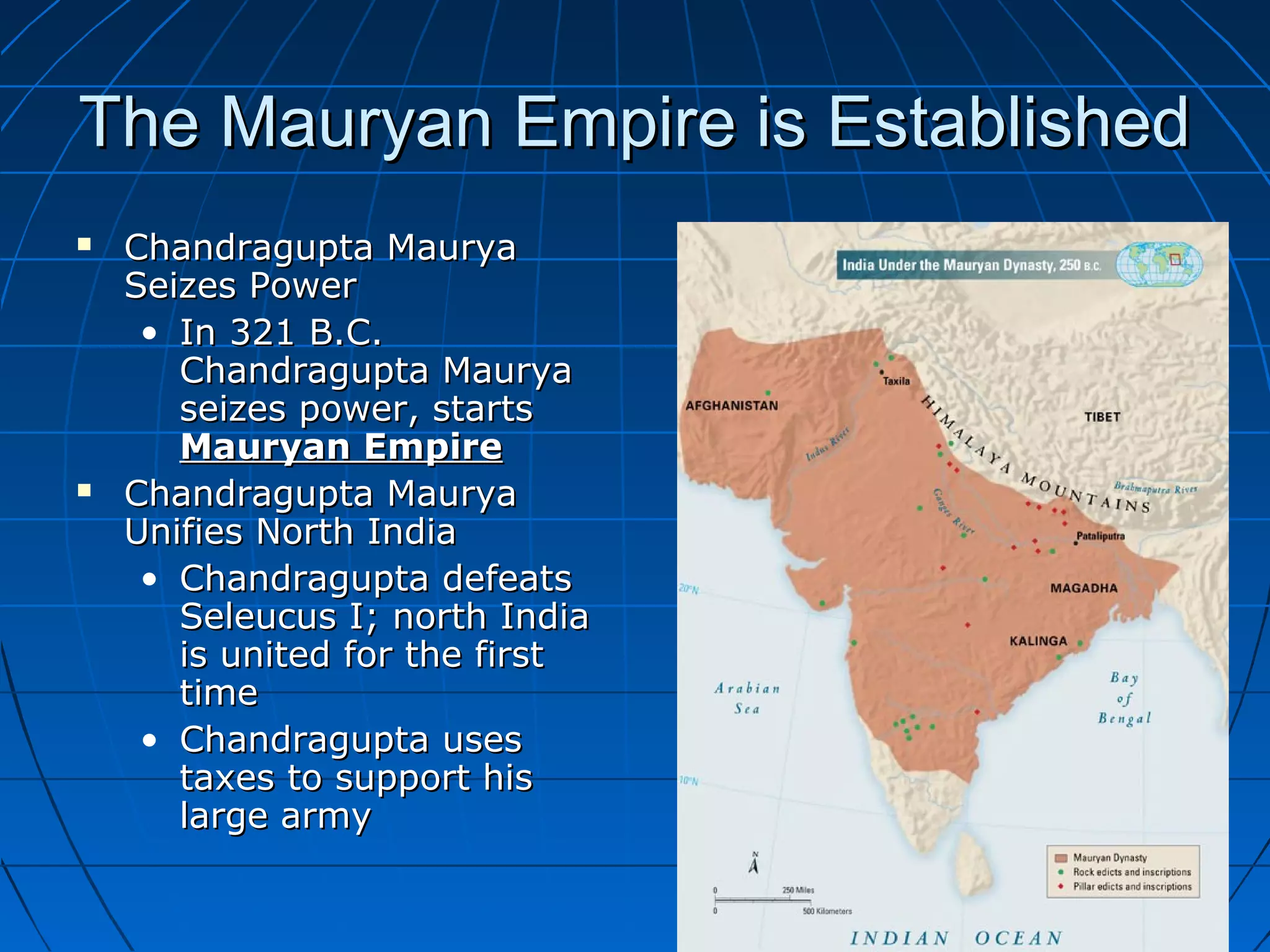
   Chandragupta Maurya
    Seizes Power
     • In 321 B.C.
       Chandragupta Maurya
       seizes power, starts
       Mauryan Empire
   Chandragupta Maurya
    Unifies North India
     • Chandragupta defeats
       Seleucus I; north India
       is united for the first
       time
     • Chandragupta uses
       taxes to support his
       large army
The Mauryan Empire is Established
   Running the Empire
    • Chandragupta’s chief adviser is Kautilya,
      a priest
    • Chandragupta creates a bureaucratic
      government
    • He divides the government
      to make it easier to rule
The Mauryan Empire is Established
   Life in the City and the
    Country
    • A Greek ambassador
      writes glowing praise of
      the empire
    • Chandragupta’s son
      rules from 301 to 269
      B.C., (32 years)
    • Aŝoka—
      Chandragupta’s
      grandson, brings the
      empire to its height

                                 Mahabodhi Temple, site of first temple built
                                 by Asoka (3rd century B.C.) on spot of
                                 Buddha’s enlightenment. Bihar, India
The Mauryan Empire is Established
   Asoka Promotes Buddhism
    • After a bloody war with Kalinga, Asoka
      promotes Buddhism and peace
    • Preaches religious toleration—accepting
      people of different religions
    • Builds roads, with wells along them
A Period of Turmoil
   The Breakup of the Mauryan Empire
    • Asoka dies in 232 B.C.; kingdoms in
      central India soon break away
    • The Andhra Dynasty dominates central
      India for centuries
    • Northern India receives immigrants from
      Greece and other parts of Asia
    • Tamils—a people living in southern
      India—remain separate and frequently
      war with rival peoples.
The Gupta Empire is
    Established
             Chandra Gupta Builds
              an Empire
              • Chandra Gupta
                marries into kingship
                in north India in A.D.
                320
              • Starts Gupta Empire
                —India’s second
                empire; flowering of
                Indian civilization,
                especially Hindu
                culture (see next
                slide)
              • His son Samudra
                Gupta expands
                empire with conquest
Tamils
The Gupta Empire is
             Established
   Daily Life in India
    • Majority of Indians are farmers; entire
      family raises crops together
    • Families are patriarchal—headed by
      the eldest male
    • Farmers have to contribute work to
      government and pay heavy taxes
    • Some Tamil families are matriarchal—
      led by mother rather than father
The Gupta Empire is
             Established
   Height of the Gupta Empire
    • Chandra Gupta II rules from A.D. 375-
      415
    • He defeats the Shakas and adds
      western coast to empire
    • Gupta Empire sees flourishing of arts,
      religion, and science
    • After Chandra Gupta II dies, the empire
      declines

7.1 india's first empires

  • 1.
    India and ChinaEstablish Empires 400 B.C.-AD.550
  • 3.
    Chapter Opener  Asoka: The Buddhist King of India • Buddhism turned Asoka, the bloodthirsty king of ancient India’s Mauryan Empire, into a peace-loving ruler.
  • 4.
    Section 1: India’sFirst Empires
  • 5.
    The Mauryan Empireis Established  Chandragupta Maurya Seizes Power • In 321 B.C. Chandragupta Maurya seizes power, starts Mauryan Empire  Chandragupta Maurya Unifies North India • Chandragupta defeats Seleucus I; north India is united for the first time • Chandragupta uses taxes to support his large army
  • 6.
    The Mauryan Empireis Established  Running the Empire • Chandragupta’s chief adviser is Kautilya, a priest • Chandragupta creates a bureaucratic government • He divides the government to make it easier to rule
  • 7.
    The Mauryan Empireis Established  Life in the City and the Country • A Greek ambassador writes glowing praise of the empire • Chandragupta’s son rules from 301 to 269 B.C., (32 years) • Aŝoka— Chandragupta’s grandson, brings the empire to its height Mahabodhi Temple, site of first temple built by Asoka (3rd century B.C.) on spot of Buddha’s enlightenment. Bihar, India
  • 8.
    The Mauryan Empireis Established  Asoka Promotes Buddhism • After a bloody war with Kalinga, Asoka promotes Buddhism and peace • Preaches religious toleration—accepting people of different religions • Builds roads, with wells along them
  • 9.
    A Period ofTurmoil  The Breakup of the Mauryan Empire • Asoka dies in 232 B.C.; kingdoms in central India soon break away • The Andhra Dynasty dominates central India for centuries • Northern India receives immigrants from Greece and other parts of Asia • Tamils—a people living in southern India—remain separate and frequently war with rival peoples.
  • 10.
    The Gupta Empireis Established  Chandra Gupta Builds an Empire • Chandra Gupta marries into kingship in north India in A.D. 320 • Starts Gupta Empire —India’s second empire; flowering of Indian civilization, especially Hindu culture (see next slide) • His son Samudra Gupta expands empire with conquest
  • 11.
  • 12.
    The Gupta Empireis Established  Daily Life in India • Majority of Indians are farmers; entire family raises crops together • Families are patriarchal—headed by the eldest male • Farmers have to contribute work to government and pay heavy taxes • Some Tamil families are matriarchal— led by mother rather than father
  • 13.
    The Gupta Empireis Established  Height of the Gupta Empire • Chandra Gupta II rules from A.D. 375- 415 • He defeats the Shakas and adds western coast to empire • Gupta Empire sees flourishing of arts, religion, and science • After Chandra Gupta II dies, the empire declines