Downloaded 25 times
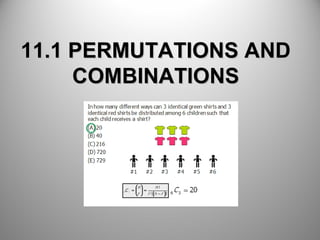
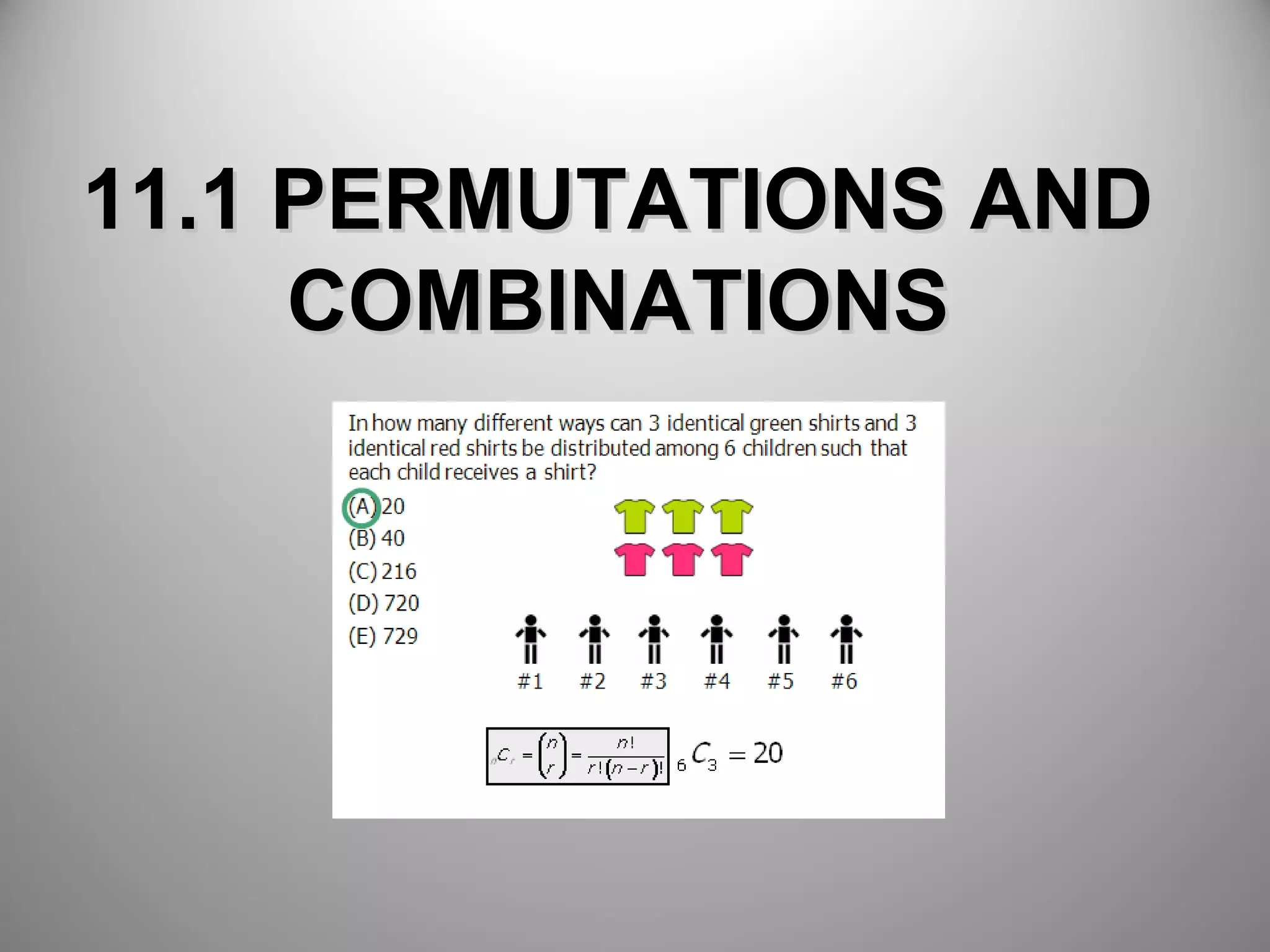
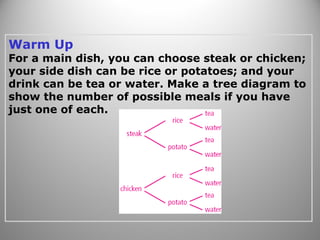
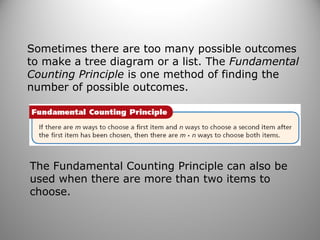
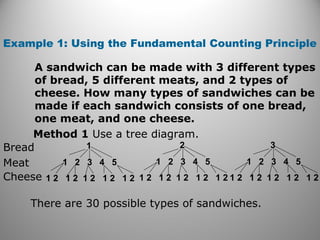
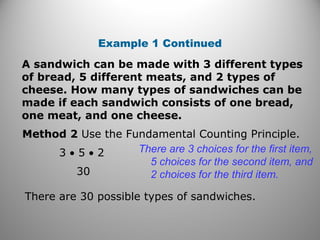
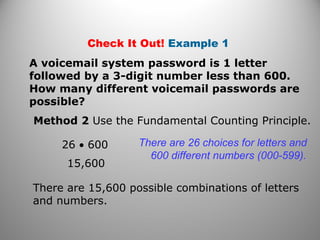
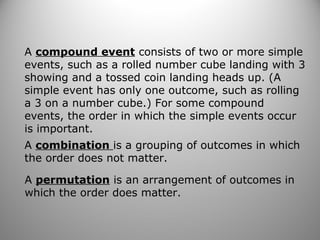
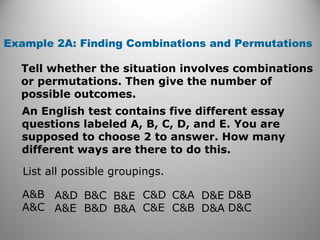
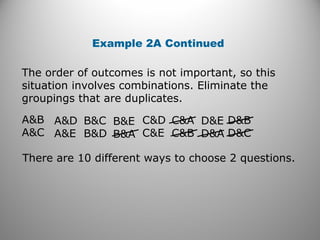
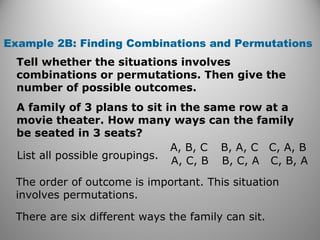
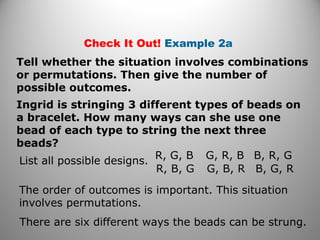
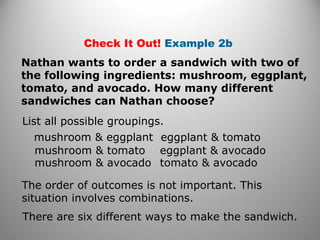
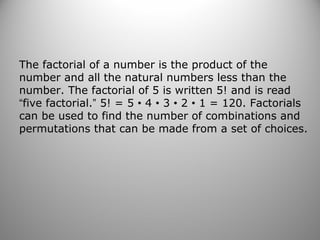
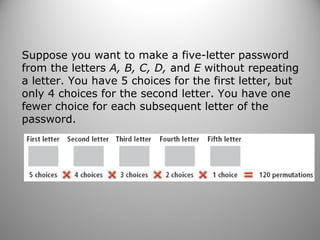
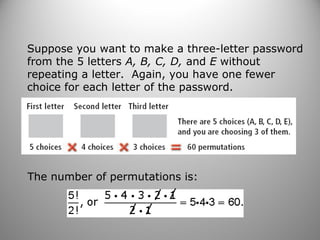
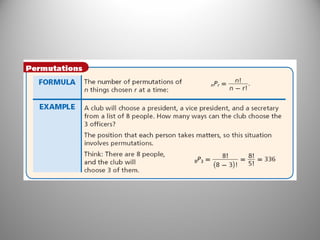
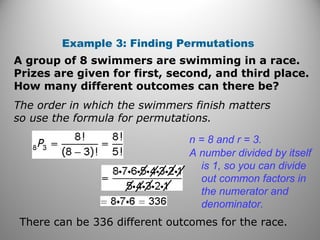
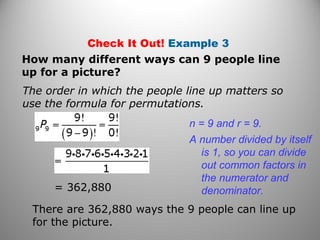
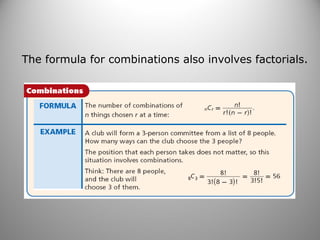
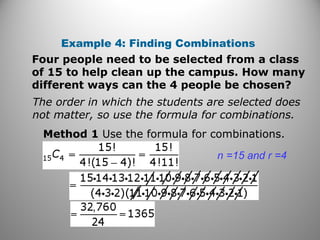
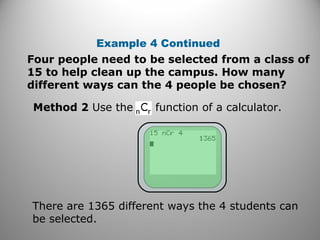
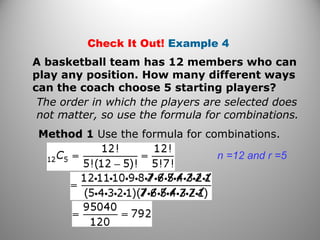
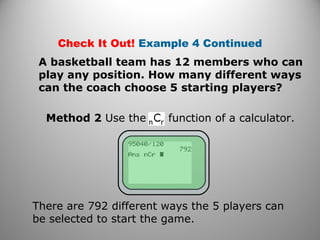
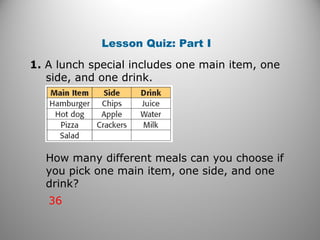
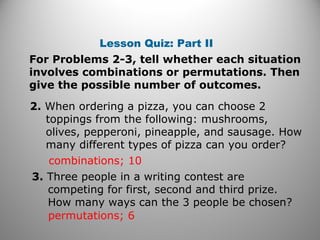
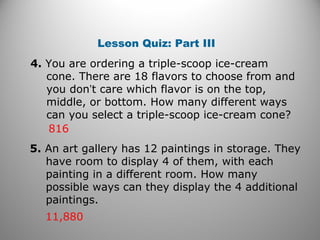


This document discusses permutations and combinations. It provides examples of using the fundamental counting principle and formulas for permutations and combinations to calculate the number of possible outcomes for various events and selections. Examples include determining the number of possible meal combinations, voicemail passwords, bead stringing patterns, sandwich ingredients, swimming race outcomes, people lining up, and selecting groups from a class. The key concepts of permutations versus combinations and using factorials are also explained.


