PLANT CELLS, TISSUES, &
ORGANS
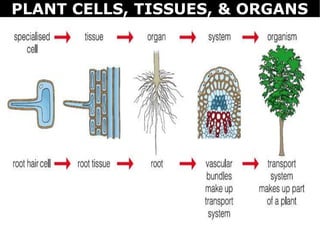
PLANT CELLS, TISSUES, & ORGANS
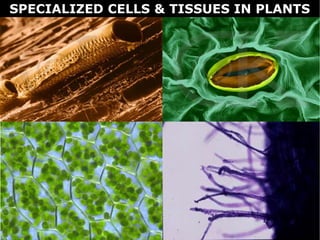
SPECIALIZED CELLS & TISSUES IN PLANTS
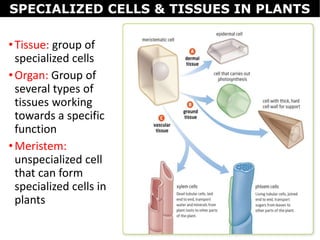
•Tissue: group of
specialized cells
•Organ: Group of
several types of
tissues working
towards a specific
function
•Meristem:
unspecialized cell
that can form
specialized cells in
plants
SPECIALIZED CELLS & TISSUES IN PLANTS
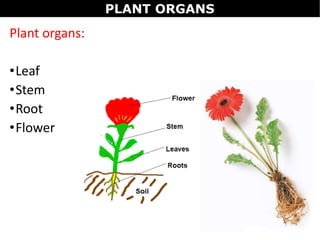
Plant organs:
•Leaf
•Stem
•Root
•Flower
PLANT ORGANS
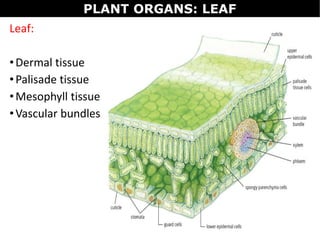
Leaf:
•Dermal tissue
•Palisade tissue
•Mesophyll tissue
•Vascular bundles
PLANT ORGANS: LEAF
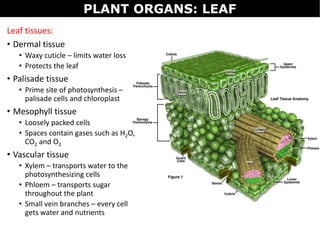
Leaf tissues:
• Dermal tissue
• Waxy cuticle – limits water loss
• Protects the leaf
• Palisade tissue
• Prime site of photosynthesis –
palisade cells and chloroplast
• Mesophyll tissue
• Loosely packed cells
• Spaces contain gases such as H2O,
CO2 and O2
• Vascular tissue
• Xylem – transports water to the
photosynthesizing cells
• Phloem – transports sugar
throughout the plant
• Small vein branches – every cell
gets water and nutrients
PLANT ORGANS: LEAF
PLANT ORGANS: LEAF
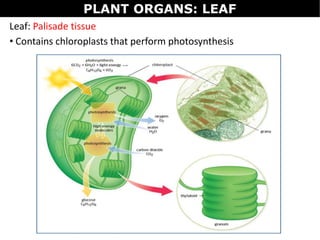
Leaf: Palisade tissue
• Contains chloroplasts that perform photosynthesis
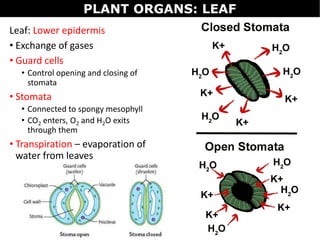
Leaf: Lower epidermis
• Exchange of gases
• Guard cells
• Control opening and closing of
stomata
• Stomata
• Connected to spongy mesophyll
• CO2 enters, O2 and H2O exits
through them
• Transpiration – evaporation of
water from leaves
PLANT ORGANS: LEAF
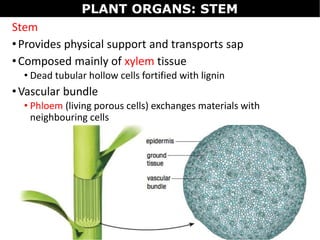
Stem
•Provides physical support and transports sap
•Composed mainly of xylem tissue
• Dead tubular hollow cells fortified with lignin
•Vascular bundle
• Phloem (living porous cells) exchanges materials with
neighbouring cells
PLANT ORGANS: STEM
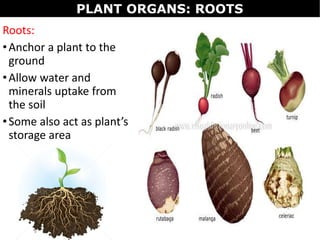
Roots:
•Anchor a plant to the
ground
•Allow water and
minerals uptake from
the soil
•Some also act as plant’s
storage area
PLANT ORGANS: ROOTS
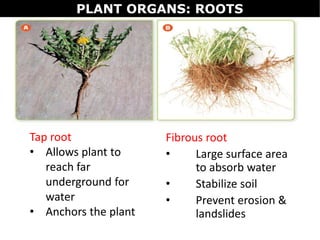
Fibrous root
• Large surface area
to absorb water
• Stabilize soil
• Prevent erosion &
landslides
Tap root
• Allows plant to
reach far
underground for
water
• Anchors the plant
PLANT ORGANS: ROOTS
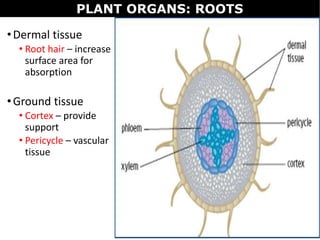
•Dermal tissue
• Root hair – increase
surface area for
absorption
•Ground tissue
• Cortex – provide
support
• Pericycle – vascular
tissue
PLANT ORGANS: ROOTS
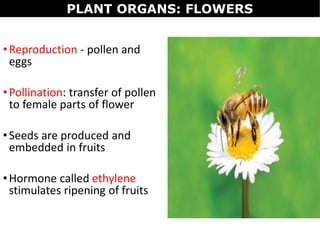
•Reproduction - pollen and
eggs
•Pollination: transfer of pollen
to female parts of flower
•Seeds are produced and
embedded in fruits
•Hormone called ethylene
stimulates ripening of fruits
PLANT ORGANS: FLOWERS
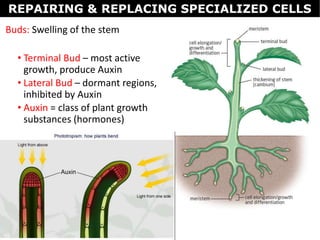
Buds: Swelling of the stem
• Terminal Bud – most active
growth, produce Auxin
• Lateral Bud – dormant regions,
inhibited by Auxin
• Auxin = class of plant growth
substances (hormones)
REPAIRING & REPLACING SPECIALIZED CELLS
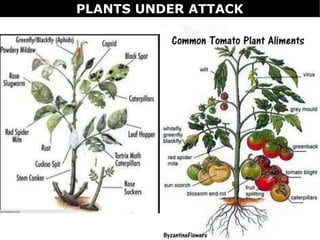
PLANTS UNDER ATTACK

07 plant cells, tissues and organs

  • 1.
  • 2.
  • 3.
    SPECIALIZED CELLS &TISSUES IN PLANTS
  • 4.
    •Tissue: group of specializedcells •Organ: Group of several types of tissues working towards a specific function •Meristem: unspecialized cell that can form specialized cells in plants SPECIALIZED CELLS & TISSUES IN PLANTS
  • 5.
  • 6.
    Leaf: •Dermal tissue •Palisade tissue •Mesophylltissue •Vascular bundles PLANT ORGANS: LEAF
  • 7.
    Leaf tissues: • Dermaltissue • Waxy cuticle – limits water loss • Protects the leaf • Palisade tissue • Prime site of photosynthesis – palisade cells and chloroplast • Mesophyll tissue • Loosely packed cells • Spaces contain gases such as H2O, CO2 and O2 • Vascular tissue • Xylem – transports water to the photosynthesizing cells • Phloem – transports sugar throughout the plant • Small vein branches – every cell gets water and nutrients PLANT ORGANS: LEAF
  • 8.
    PLANT ORGANS: LEAF Leaf:Palisade tissue • Contains chloroplasts that perform photosynthesis
  • 9.
    Leaf: Lower epidermis •Exchange of gases • Guard cells • Control opening and closing of stomata • Stomata • Connected to spongy mesophyll • CO2 enters, O2 and H2O exits through them • Transpiration – evaporation of water from leaves PLANT ORGANS: LEAF
  • 10.
    Stem •Provides physical supportand transports sap •Composed mainly of xylem tissue • Dead tubular hollow cells fortified with lignin •Vascular bundle • Phloem (living porous cells) exchanges materials with neighbouring cells PLANT ORGANS: STEM
  • 11.
    Roots: •Anchor a plantto the ground •Allow water and minerals uptake from the soil •Some also act as plant’s storage area PLANT ORGANS: ROOTS
  • 12.
    Fibrous root • Largesurface area to absorb water • Stabilize soil • Prevent erosion & landslides Tap root • Allows plant to reach far underground for water • Anchors the plant PLANT ORGANS: ROOTS
  • 13.
    •Dermal tissue • Roothair – increase surface area for absorption •Ground tissue • Cortex – provide support • Pericycle – vascular tissue PLANT ORGANS: ROOTS
  • 14.
    •Reproduction - pollenand eggs •Pollination: transfer of pollen to female parts of flower •Seeds are produced and embedded in fruits •Hormone called ethylene stimulates ripening of fruits PLANT ORGANS: FLOWERS
  • 15.
    Buds: Swelling ofthe stem • Terminal Bud – most active growth, produce Auxin • Lateral Bud – dormant regions, inhibited by Auxin • Auxin = class of plant growth substances (hormones) REPAIRING & REPLACING SPECIALIZED CELLS
  • 16.

Editor's Notes

  • #4 Transport cell – conducting vessel element in mahogany wood Guard cell Photosynthetic cell Epidermal cell (root hair of tomato)
  • #17 P. 69 # 1, 3, 5 - 7