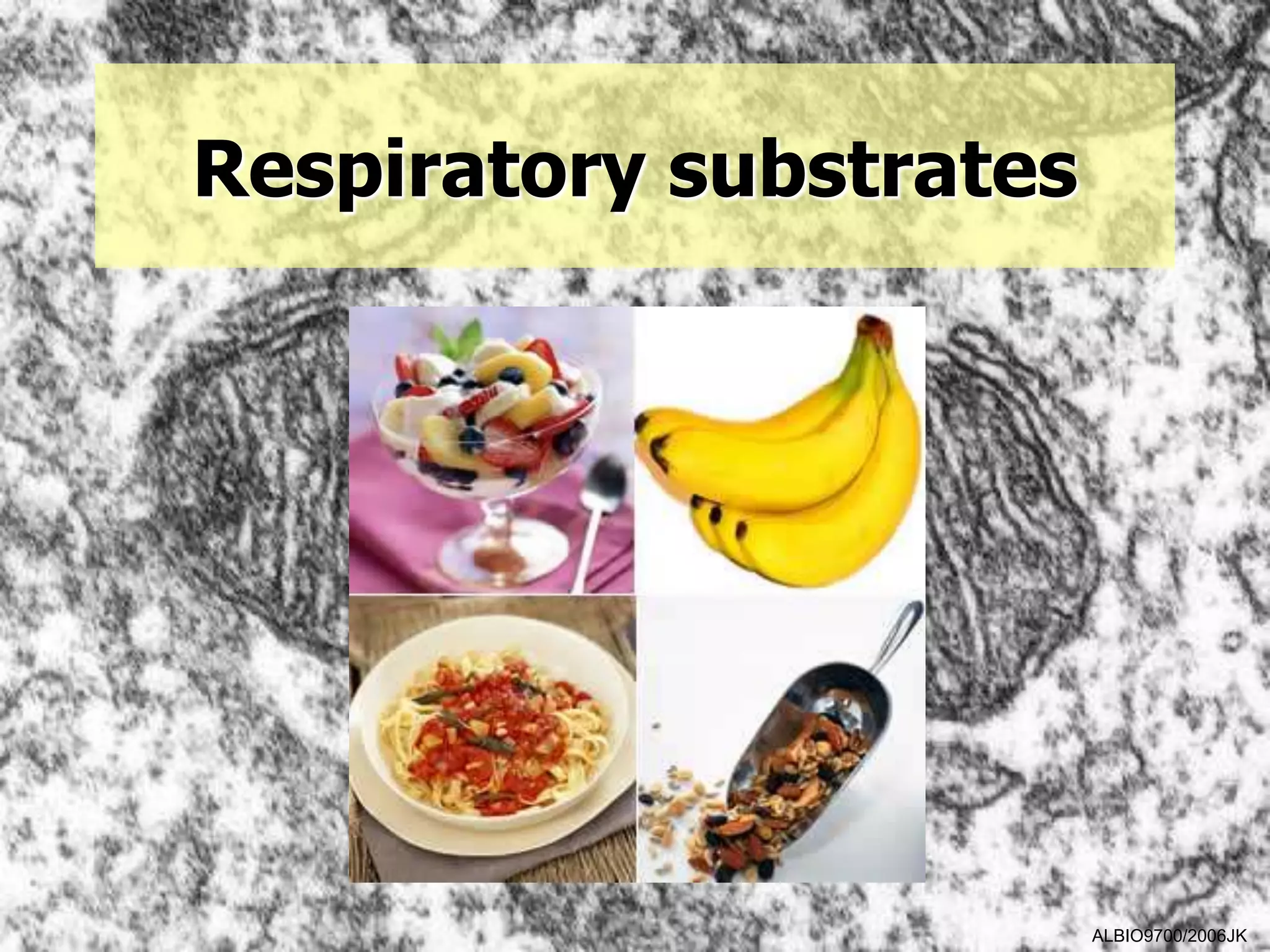
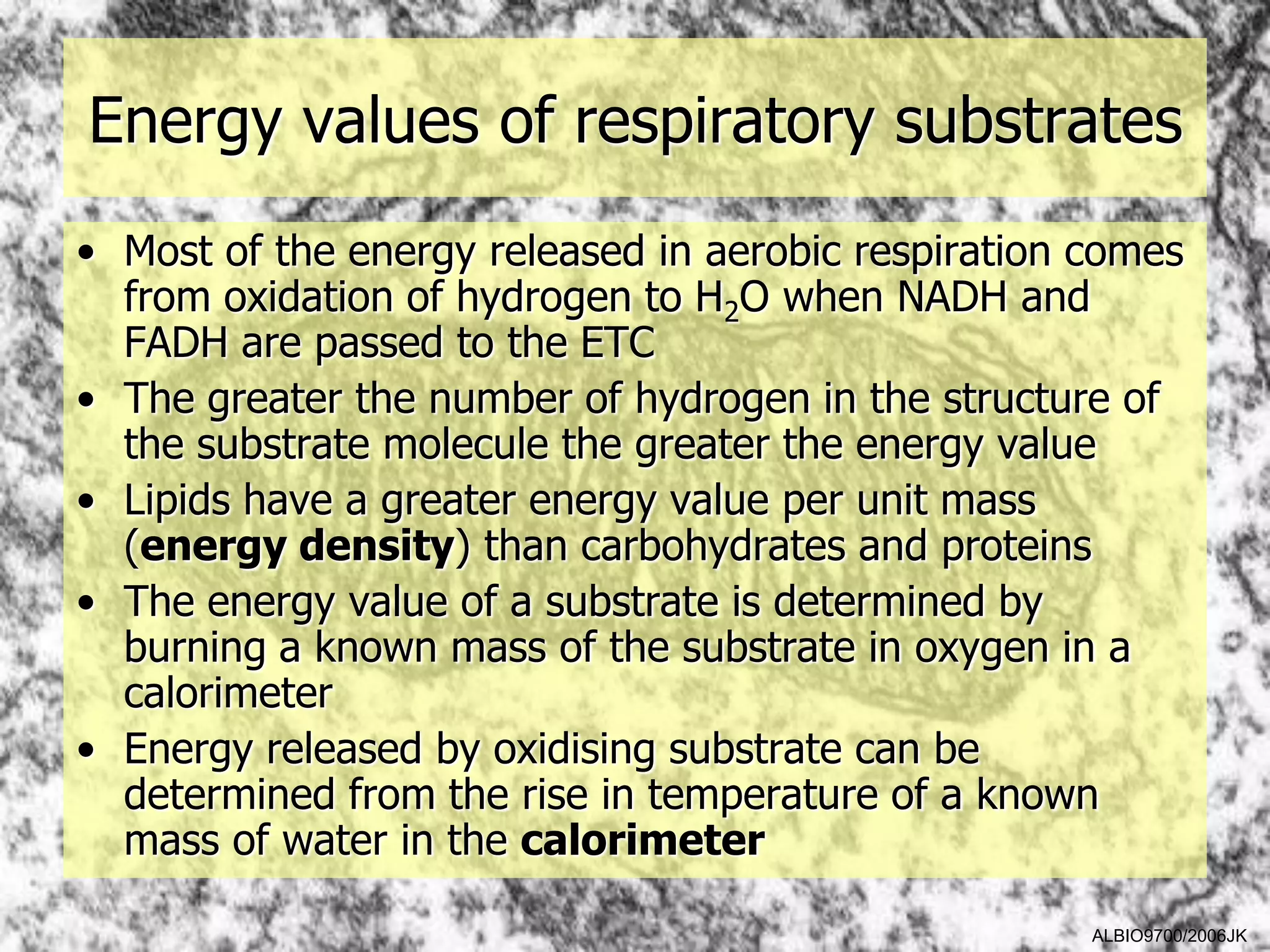
Respiratory substrates


                         ALBIO9700/2006JK
• Glucose is the essential respiratory substrate
  for some cells such as neurones in the
  brains, red blood cells and lymphocytes
• Other cells can oxidise lipids and amino acids
• When lipids are respired, C atoms are
  removed in pairs, as acetyl CoA, from the
  fatty acid chains and fed into the Krebs cycle
• The carbon-hydrogen skeletons of amino
  acids are converted into pyruvate or into
  acetyl CoA


                                            ALBIO9700/2006JK
Energy values of respiratory substrates
• Most of the energy released in aerobic respiration comes
  from oxidation of hydrogen to H2O when NADH and
  FADH are passed to the ETC
• The greater the number of hydrogen in the structure of
  the substrate molecule the greater the energy value
• Lipids have a greater energy value per unit mass
  (energy density) than carbohydrates and proteins
• The energy value of a substrate is determined by
  burning a known mass of the substrate in oxygen in a
  calorimeter
• Energy released by oxidising substrate can be
  determined from the rise in temperature of a known
  mass of water in the calorimeter

                                                     ALBIO9700/2006JK
Calorimeter


              ALBIO9700/2006JK
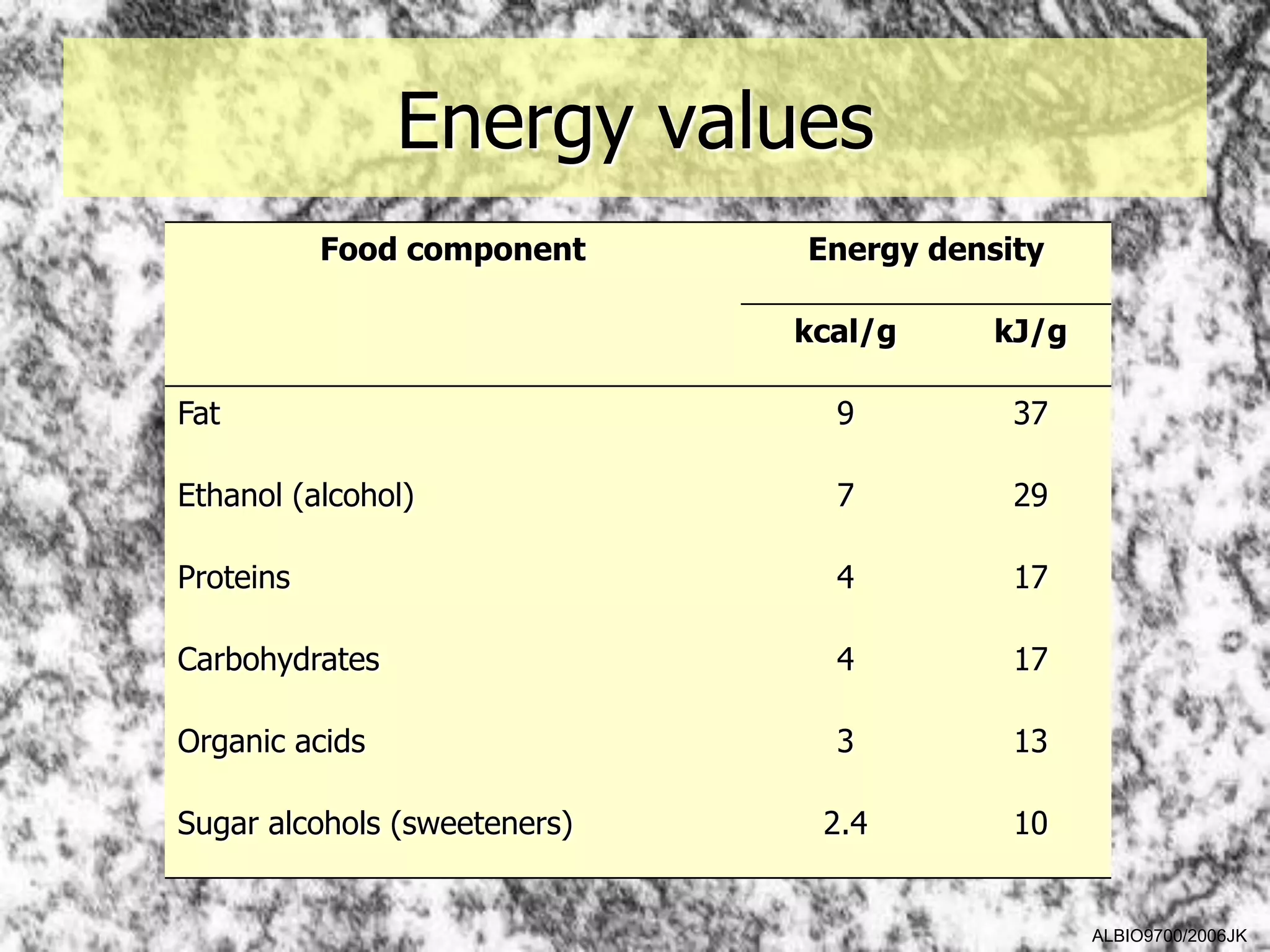
Energy values
           Food component     Energy density

                              kcal/g     kJ/g

Fat                             9         37

Ethanol (alcohol)               7         29

Proteins                        4         17

Carbohydrates                   4         17

Organic acids                   3         13

Sugar alcohols (sweeteners)    2.4        10


                                                ALBIO9700/2006JK
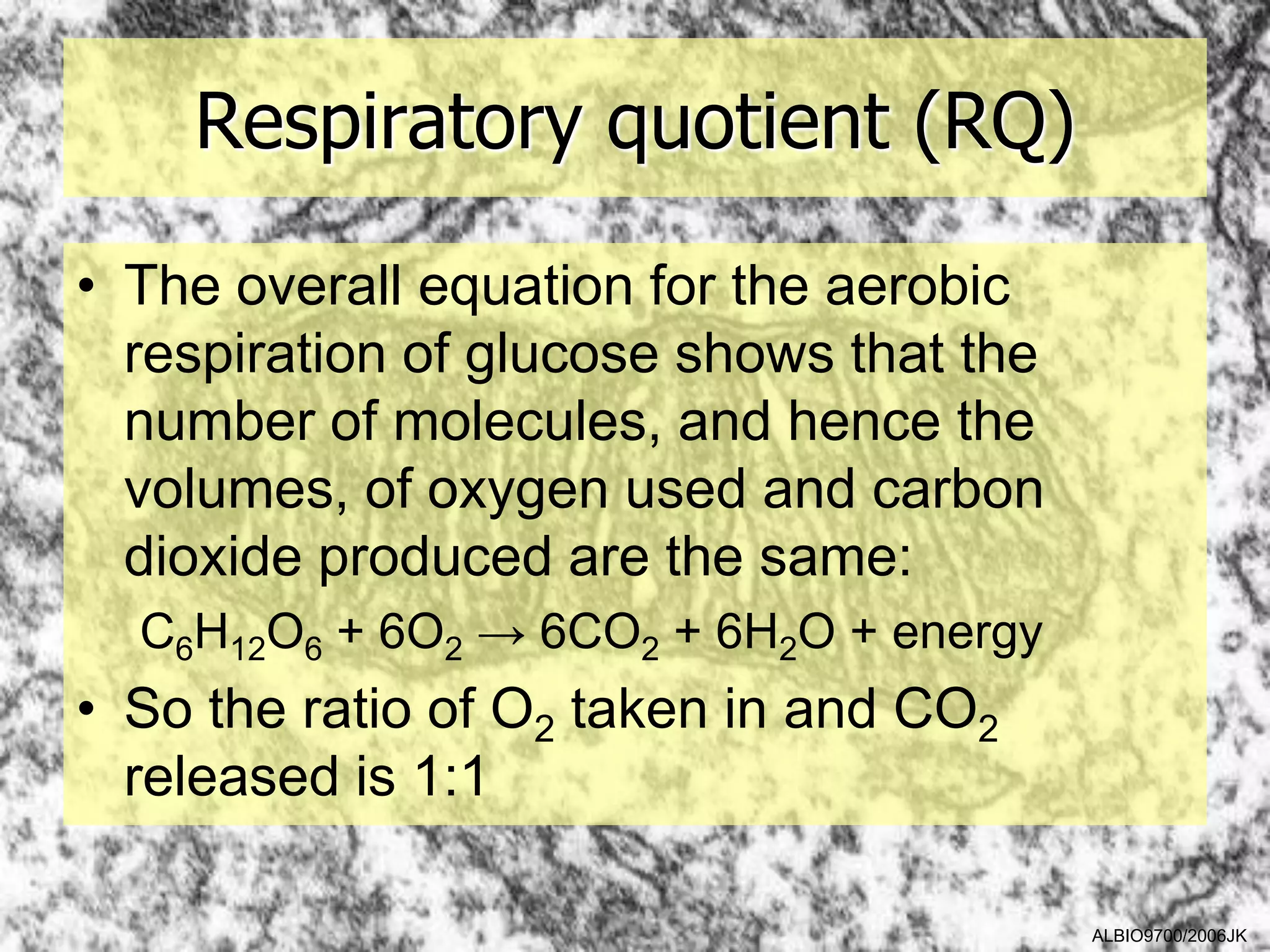
Respiratory quotient (RQ)

• The overall equation for the aerobic
  respiration of glucose shows that the
  number of molecules, and hence the
  volumes, of oxygen used and carbon
  dioxide produced are the same:
  C6H12O6 + 6O2 → 6CO2 + 6H2O + energy
• So the ratio of O2 taken in and CO2
  released is 1:1

                                          ALBIO9700/2006JK
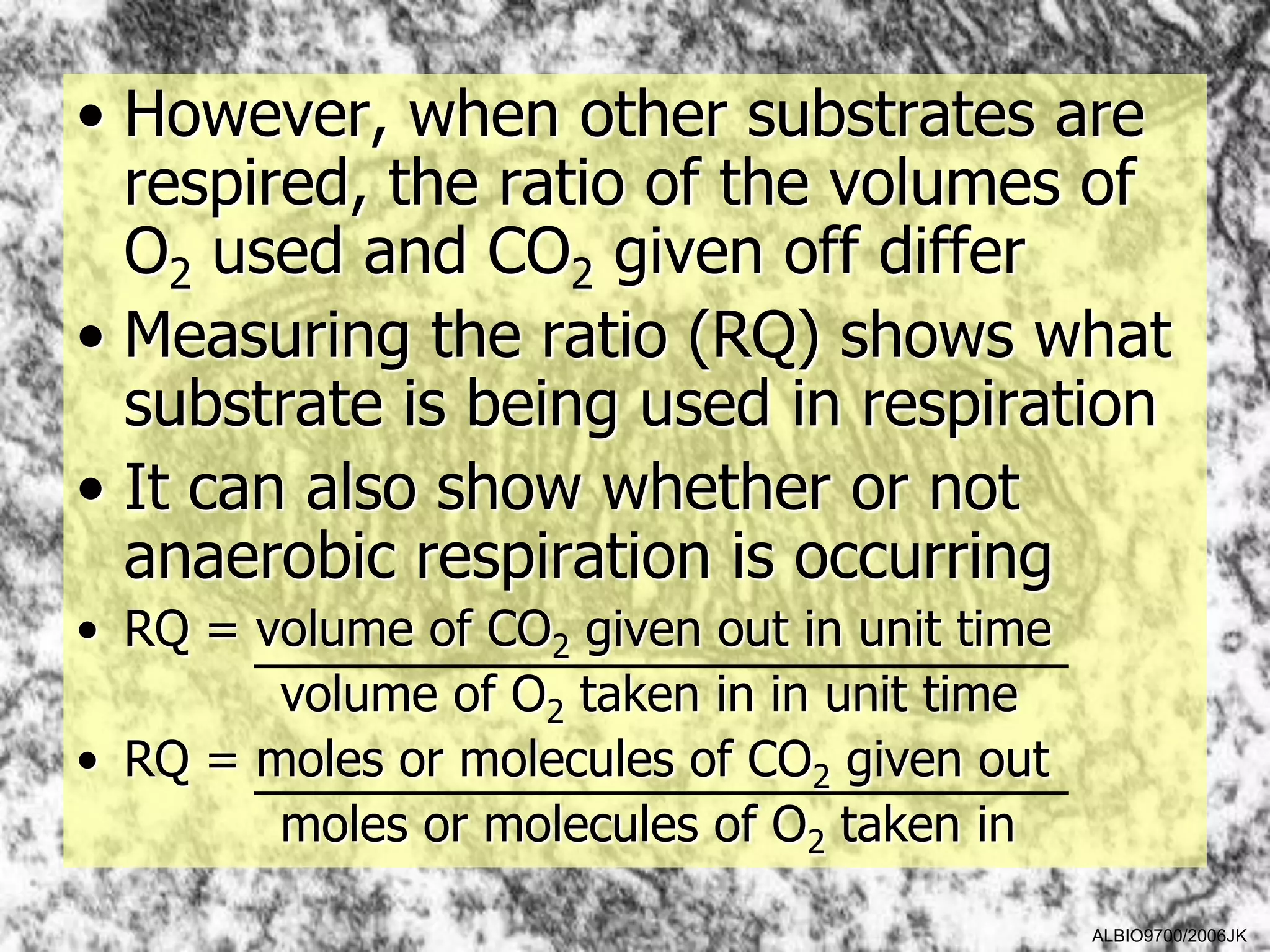
• However, when other substrates are
  respired, the ratio of the volumes of
  O2 used and CO2 given off differ
• Measuring the ratio (RQ) shows what
  substrate is being used in respiration
• It can also show whether or not
  anaerobic respiration is occurring
• RQ = volume of CO2 given out in unit time
        volume of O2 taken in in unit time
• RQ = moles or molecules of CO2 given out
        moles or molecules of O2 taken in

                                              ALBIO9700/2006JK
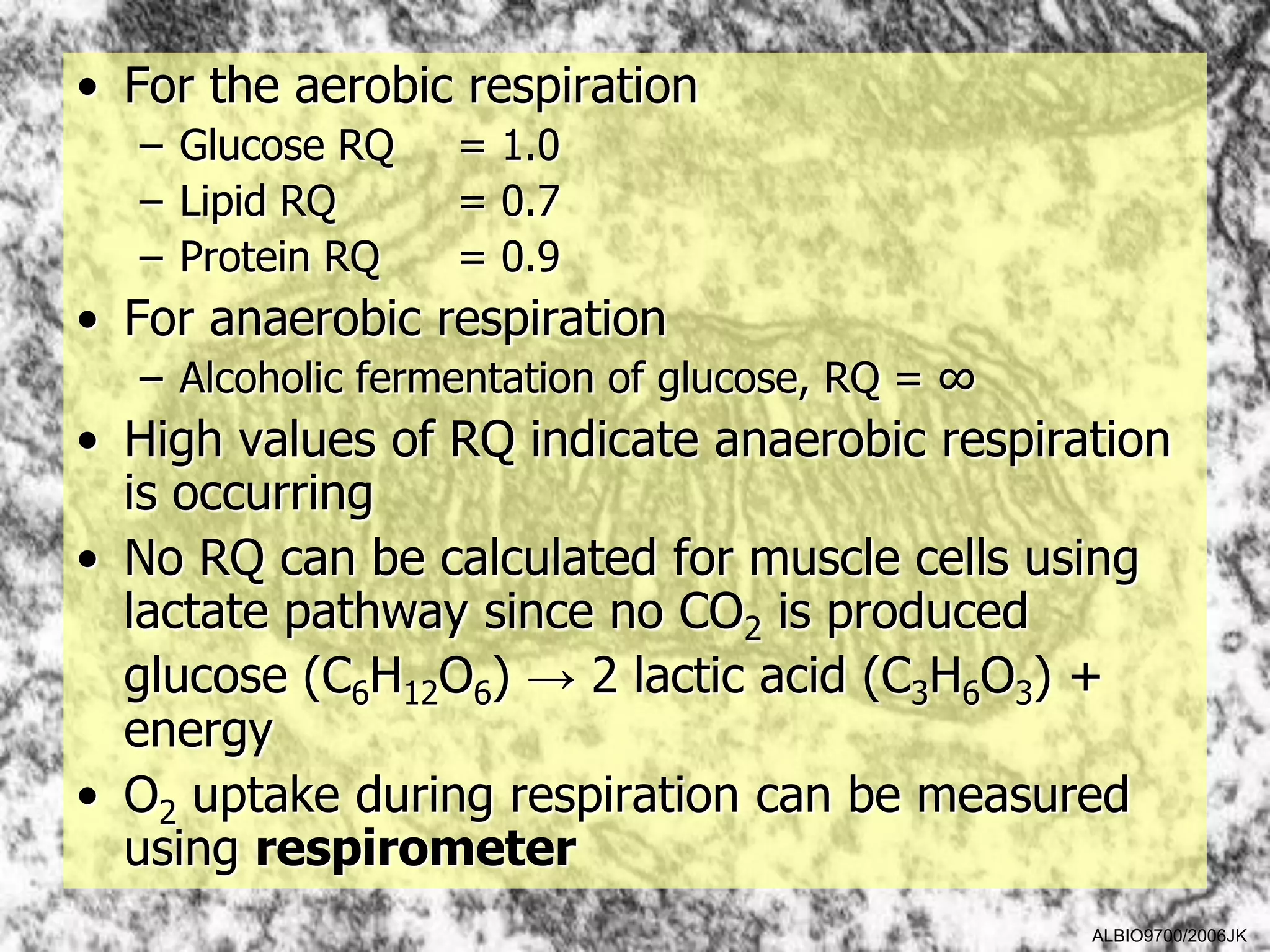
• For the aerobic respiration
  – Glucose RQ    = 1.0
  – Lipid RQ      = 0.7
  – Protein RQ    = 0.9
• For anaerobic respiration
  – Alcoholic fermentation of glucose, RQ = ∞
• High values of RQ indicate anaerobic respiration
  is occurring
• No RQ can be calculated for muscle cells using
  lactate pathway since no CO2 is produced
  glucose (C6H12O6) → 2 lactic acid (C3H6O3) +
  energy
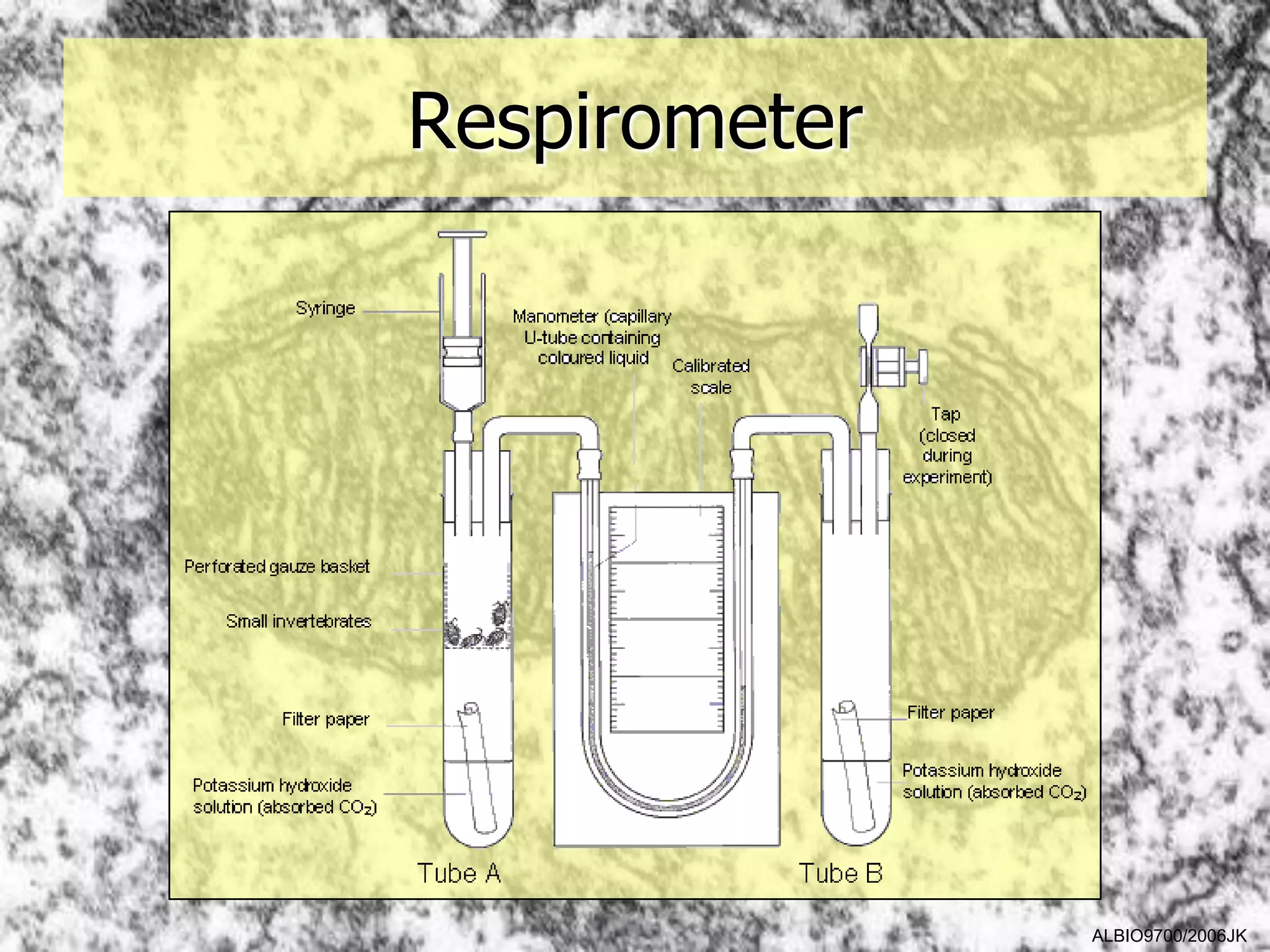
• O2 uptake during respiration can be measured
  using respirometer
                                                ALBIO9700/2006JK
Respirometer


               ALBIO9700/2006JK
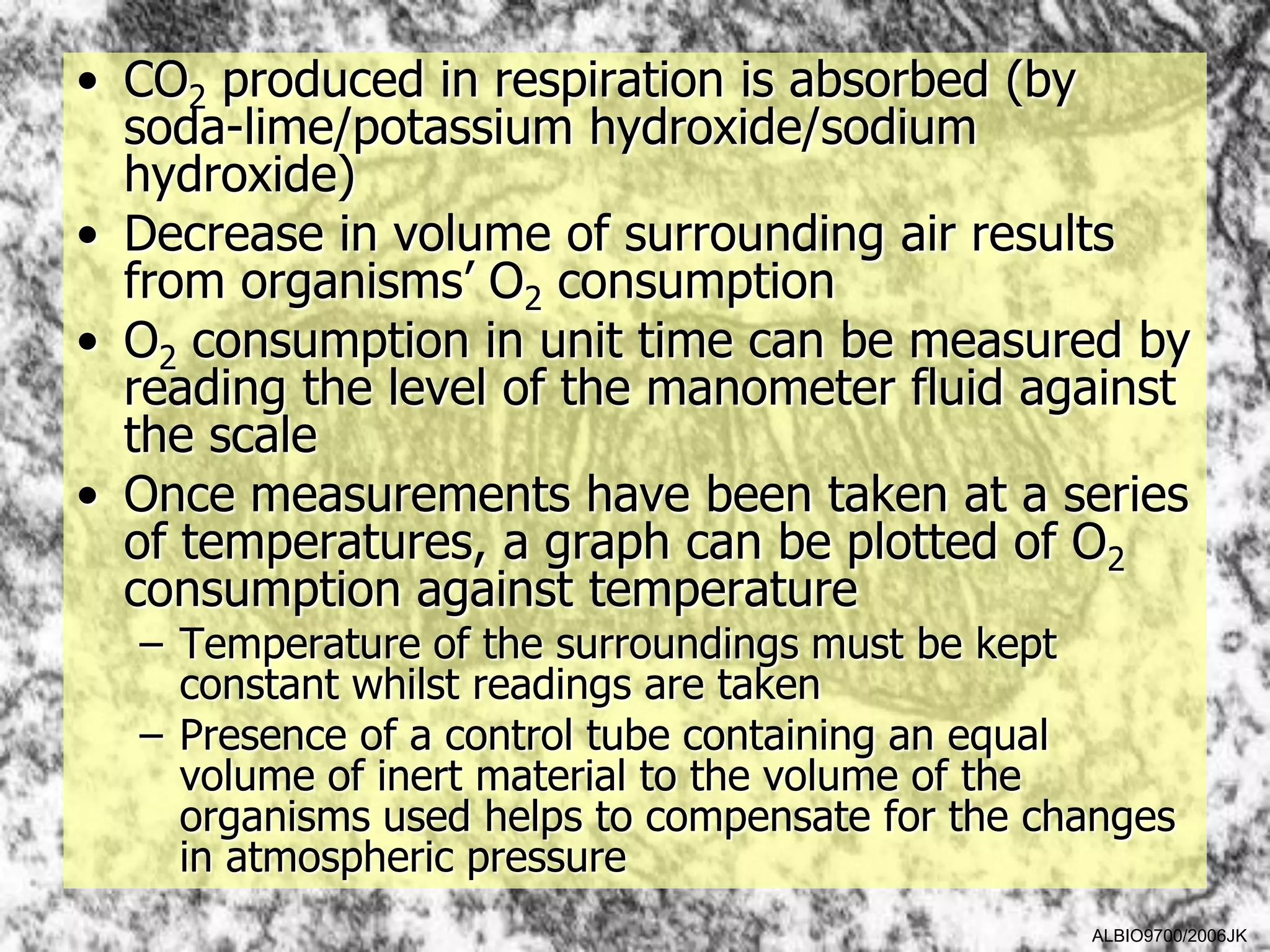
• CO2 produced in respiration is absorbed (by
  soda-lime/potassium hydroxide/sodium
  hydroxide)
• Decrease in volume of surrounding air results
  from organisms’ O2 consumption
• O2 consumption in unit time can be measured by
  reading the level of the manometer fluid against
  the scale
• Once measurements have been taken at a series
  of temperatures, a graph can be plotted of O2
  consumption against temperature
  – Temperature of the surroundings must be kept
    constant whilst readings are taken
  – Presence of a control tube containing an equal
    volume of inert material to the volume of the
    organisms used helps to compensate for the changes
    in atmospheric pressure
                                                 ALBIO9700/2006JK
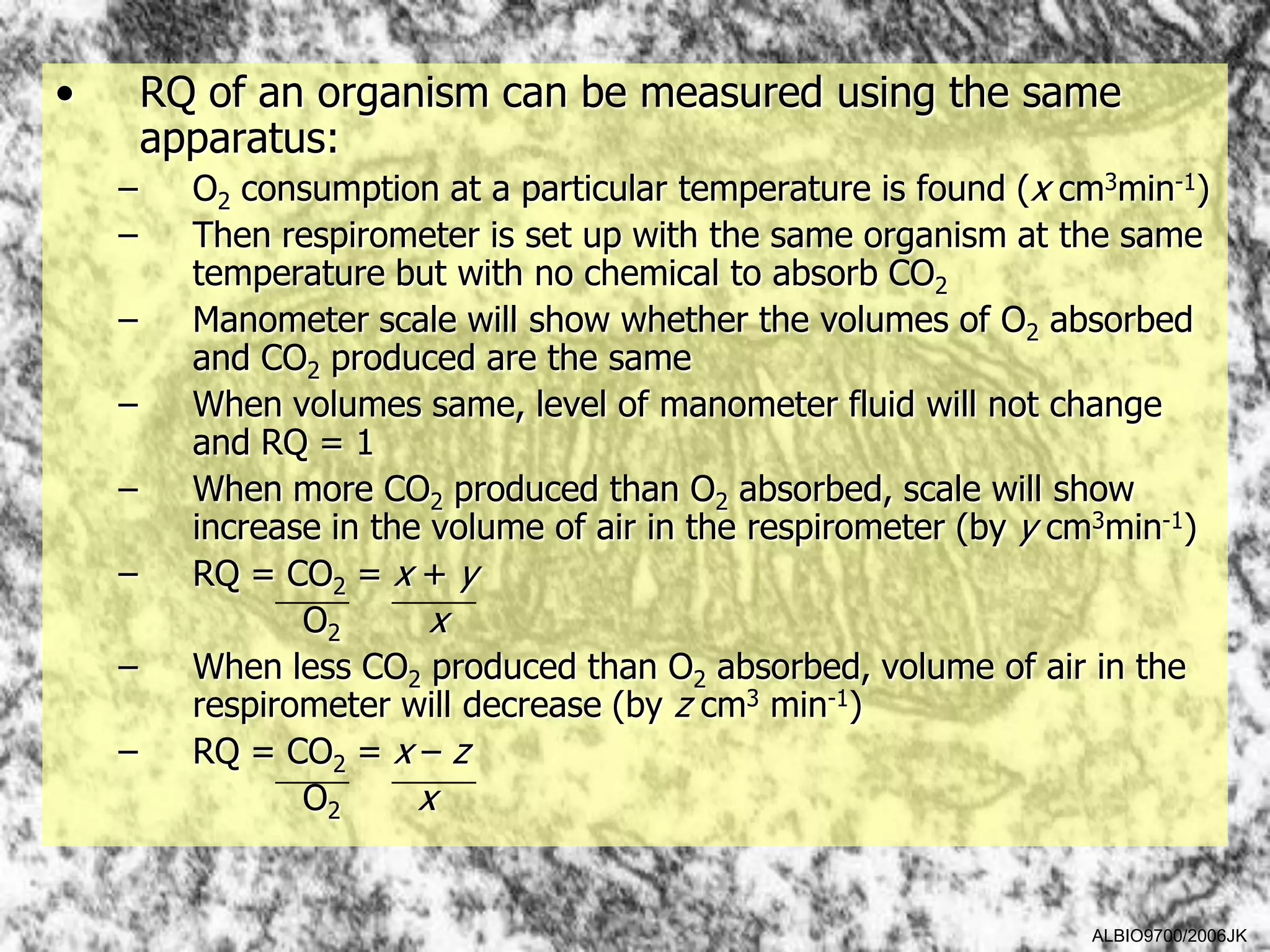
•       RQ of an organism can be measured using the same
        apparatus:
    –     O2 consumption at a particular temperature is found (x cm3min-1)
    –     Then respirometer is set up with the same organism at the same
          temperature but with no chemical to absorb CO2
    –     Manometer scale will show whether the volumes of O2 absorbed
          and CO2 produced are the same
    –     When volumes same, level of manometer fluid will not change
          and RQ = 1
    –     When more CO2 produced than O2 absorbed, scale will show
          increase in the volume of air in the respirometer (by y cm3min-1)
    –     RQ = CO2 = x + y
                 O2       x
    –     When less CO2 produced than O2 absorbed, volume of air in the
          respirometer will decrease (by z cm3 min-1)
    –     RQ = CO2 = x – z
                 O2      x


                                                                   ALBIO9700/2006JK

03 Respiratory Substrates

  • 1.
    Respiratory substrates ALBIO9700/2006JK
  • 2.
    • Glucose isthe essential respiratory substrate for some cells such as neurones in the brains, red blood cells and lymphocytes • Other cells can oxidise lipids and amino acids • When lipids are respired, C atoms are removed in pairs, as acetyl CoA, from the fatty acid chains and fed into the Krebs cycle • The carbon-hydrogen skeletons of amino acids are converted into pyruvate or into acetyl CoA ALBIO9700/2006JK
  • 3.
    Energy values ofrespiratory substrates • Most of the energy released in aerobic respiration comes from oxidation of hydrogen to H2O when NADH and FADH are passed to the ETC • The greater the number of hydrogen in the structure of the substrate molecule the greater the energy value • Lipids have a greater energy value per unit mass (energy density) than carbohydrates and proteins • The energy value of a substrate is determined by burning a known mass of the substrate in oxygen in a calorimeter • Energy released by oxidising substrate can be determined from the rise in temperature of a known mass of water in the calorimeter ALBIO9700/2006JK
  • 4.
    Calorimeter ALBIO9700/2006JK
  • 5.
    Energy values Food component Energy density kcal/g kJ/g Fat 9 37 Ethanol (alcohol) 7 29 Proteins 4 17 Carbohydrates 4 17 Organic acids 3 13 Sugar alcohols (sweeteners) 2.4 10 ALBIO9700/2006JK
  • 6.
    Respiratory quotient (RQ) •The overall equation for the aerobic respiration of glucose shows that the number of molecules, and hence the volumes, of oxygen used and carbon dioxide produced are the same: C6H12O6 + 6O2 → 6CO2 + 6H2O + energy • So the ratio of O2 taken in and CO2 released is 1:1 ALBIO9700/2006JK
  • 7.
    • However, whenother substrates are respired, the ratio of the volumes of O2 used and CO2 given off differ • Measuring the ratio (RQ) shows what substrate is being used in respiration • It can also show whether or not anaerobic respiration is occurring • RQ = volume of CO2 given out in unit time volume of O2 taken in in unit time • RQ = moles or molecules of CO2 given out moles or molecules of O2 taken in ALBIO9700/2006JK
  • 8.
    • For theaerobic respiration – Glucose RQ = 1.0 – Lipid RQ = 0.7 – Protein RQ = 0.9 • For anaerobic respiration – Alcoholic fermentation of glucose, RQ = ∞ • High values of RQ indicate anaerobic respiration is occurring • No RQ can be calculated for muscle cells using lactate pathway since no CO2 is produced glucose (C6H12O6) → 2 lactic acid (C3H6O3) + energy • O2 uptake during respiration can be measured using respirometer ALBIO9700/2006JK
  • 9.
    Respirometer ALBIO9700/2006JK
  • 10.
    • CO2 producedin respiration is absorbed (by soda-lime/potassium hydroxide/sodium hydroxide) • Decrease in volume of surrounding air results from organisms’ O2 consumption • O2 consumption in unit time can be measured by reading the level of the manometer fluid against the scale • Once measurements have been taken at a series of temperatures, a graph can be plotted of O2 consumption against temperature – Temperature of the surroundings must be kept constant whilst readings are taken – Presence of a control tube containing an equal volume of inert material to the volume of the organisms used helps to compensate for the changes in atmospheric pressure ALBIO9700/2006JK
  • 11.
    RQ of an organism can be measured using the same apparatus: – O2 consumption at a particular temperature is found (x cm3min-1) – Then respirometer is set up with the same organism at the same temperature but with no chemical to absorb CO2 – Manometer scale will show whether the volumes of O2 absorbed and CO2 produced are the same – When volumes same, level of manometer fluid will not change and RQ = 1 – When more CO2 produced than O2 absorbed, scale will show increase in the volume of air in the respirometer (by y cm3min-1) – RQ = CO2 = x + y O2 x – When less CO2 produced than O2 absorbed, volume of air in the respirometer will decrease (by z cm3 min-1) – RQ = CO2 = x – z O2 x ALBIO9700/2006JK