Neurovascular Assessment
PURPOSE:
To assess for adequate nerve function and blood circulation to
the parts of the body in order to detect signs and symptoms of
potential complication such as compartment syndrome.
Assessment of peripheral circulatory:
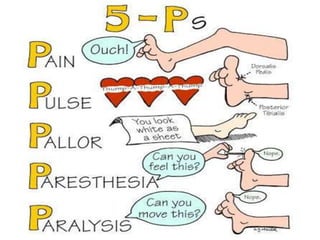
a. Pain
b. Presence of peripheral pulses
c. Pallor -colour, capillary refill , temperature
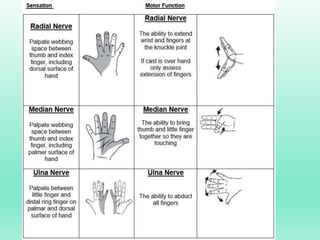
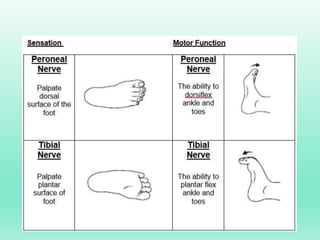
d. Paresthesia -sensation
e. Paralysis -movement
1. Pain
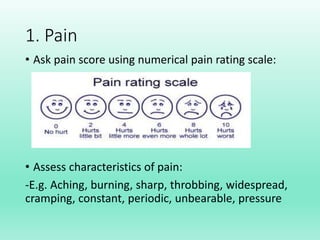
• Ask pain score using numerical pain rating scale:
• Assess characteristics of pain:
-E.g. Aching, burning, sharp, throbbing, widespread,
cramping, constant, periodic, unbearable, pressure
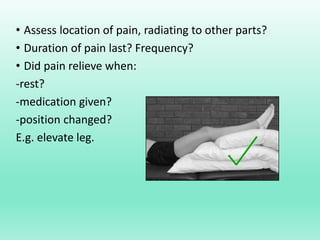
• Assess location of pain, radiating to other parts?
• Duration of pain last? Frequency?
• Did pain relieve when:
-rest?
-medication given?
-position changed?
E.g. elevate leg.
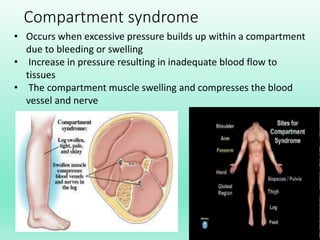
Compartment syndrome
• Occurs when excessive pressure builds up within a compartment
due to bleeding or swelling
• Increase in pressure resulting in inadequate blood flow to
tissues
• The compartment muscle swelling and compresses the blood
vessel and nerve
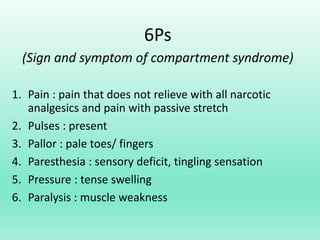
6Ps
(Sign and symptom of compartment syndrome)
1. Pain : pain that does not relieve with all narcotic
analgesics and pain with passive stretch
2. Pulses : present
3. Pallor : pale toes/ fingers
4. Paresthesia : sensory deficit, tingling sensation
5. Pressure : tense swelling
6. Paralysis : muscle weakness
• Acute compartment syndrome can also occur after injuries
without bone fractures, including:
-Soft tissue injuries
-Burns
-Overly tight bandaging
-Prolonged compression of a limb during a
period of unconsciousness
-Surgery to blood vessels of an arm or leg
-A blood clot in a blood vessel in an arm or leg
-Extremely vigorous exercise, especially eccentric movements
(extension under pressure)
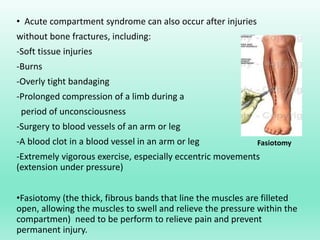
•Fasiotomy (the thick, fibrous bands that line the muscles are filleted
open, allowing the muscles to swell and relieve the pressure within the
compartmen) need to be perform to relieve pain and prevent
permanent injury.
Fasiotomy
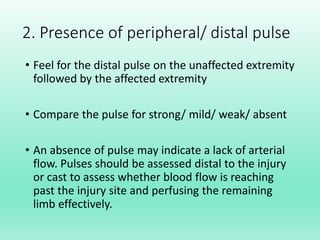
2. Presence of peripheral/ distal pulse
• Feel for the distal pulse on the unaffected extremity
followed by the affected extremity
• Compare the pulse for strong/ mild/ weak/ absent
• An absence of pulse may indicate a lack of arterial
flow. Pulses should be assessed distal to the injury
or cast to assess whether blood flow is reaching
past the injury site and perfusing the remaining
limb effectively.
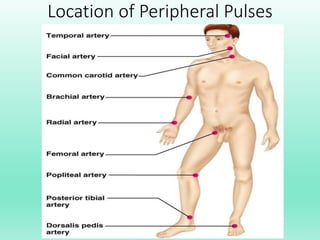
Location of Peripheral Pulses
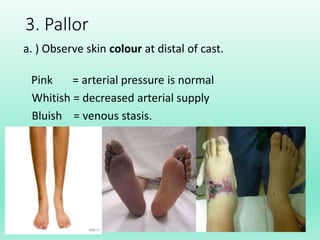
3. Pallor
a. ) Observe skin colour at distal of cast.
Pink = arterial pressure is normal
Whitish = decreased arterial supply
Bluish = venous stasis.
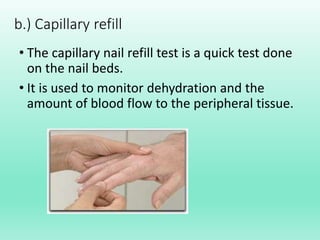
b.) Capillary refill
• The capillary nail refill test is a quick test done
on the nail beds.
• It is used to monitor dehydration and the
amount of blood flow to the peripheral tissue.
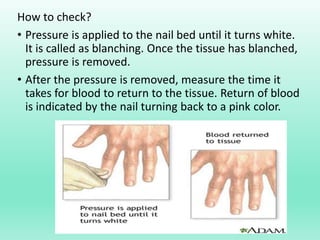
How to check?
• Pressure is applied to the nail bed until it turns white.
It is called as blanching. Once the tissue has blanched,
pressure is removed.
• After the pressure is removed, measure the time it
takes for blood to return to the tissue. Return of blood
is indicated by the nail turning back to a pink color.
• If there is good blood flow to the nail bed, a pink
color should return in less than 3 seconds after
pressure is removed.
• Abnormal results:
- Slow = more than 3 sec
- Sluggish = more than 5 sec
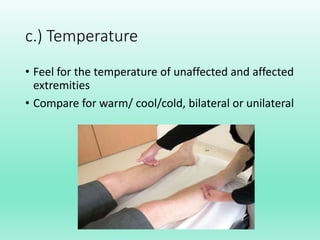
c.) Temperature
• Feel for the temperature of unaffected and affected
extremities
• Compare for warm/ cool/cold, bilateral or unilateral
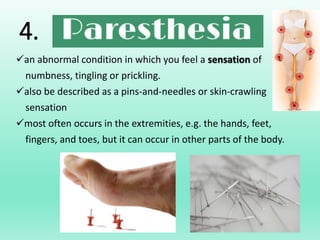
4.
an abnormal condition in which you feel a sensation of
numbness, tingling or prickling.
also be described as a pins-and-needles or skin-crawling
sensation
most often occurs in the extremities, e.g. the hands, feet,
fingers, and toes, but it can occur in other parts of the body.
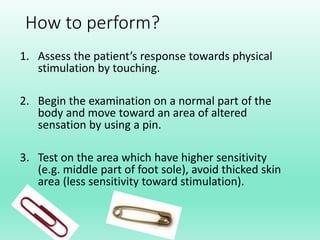
How to perform?
1. Assess the patient’s response towards physical
stimulation by touching.
2. Begin the examination on a normal part of the
body and move toward an area of altered
sensation by using a pin.
3. Test on the area which have higher sensitivity
(e.g. middle part of foot sole), avoid thicked skin
area (less sensitivity toward stimulation).
 a condition involving a loss of muscle function in the body
usually due to damage to the nervous system, there is loss of
motor function or sensory information.
• Paresthesia = loss of sensation.
• Paralysis = loss of movement and sensations.
5.
How to perform?
1. Instruct patient to perform simple range of motion (ROM) or
isometric exercise such as
2. Assess patient’s ability to perform the simple movement.
SCENARIO
MADAM TAN ,50 years old, is admitted for fracture of
right ulna. She is on POP and arm sling.
Reference
• The Sydney Children’s Hospitals Network.
http://www.schn.health.nsw.gov.au/_policies/pdf/
2014-9096.pdf
• US National Library of Medicine, National Institutes
of Health.
http://www.ncbi.nlm.nih.gov/pmc/articles/PMC37
88190/
• WebMD.
http://www.webmd.com/pain-
management/guide/compartment-syndrome-
causes-treatments
• White CJ. Atherosclerotic peripheral arterial diseases. In:
Goldman L, Schafer AI, eds.Cecil Medicine
• Health Grades, Paresthesia
http://www.healthgrades.com/conditions/paresthesia
• International Chiropractic Pediatric Association,
Paresthesias: A Practical Diagnostic Approach
http://www.chiro.org/ChiroZine/FULL/Paresthesias.shtml
Neurovascular assessment

Neurovascular assessment

  • 3.
    Neurovascular Assessment PURPOSE: To assessfor adequate nerve function and blood circulation to the parts of the body in order to detect signs and symptoms of potential complication such as compartment syndrome. Assessment of peripheral circulatory: a. Pain b. Presence of peripheral pulses c. Pallor -colour, capillary refill , temperature d. Paresthesia -sensation e. Paralysis -movement
  • 4.
    1. Pain • Askpain score using numerical pain rating scale: • Assess characteristics of pain: -E.g. Aching, burning, sharp, throbbing, widespread, cramping, constant, periodic, unbearable, pressure
  • 5.
    • Assess locationof pain, radiating to other parts? • Duration of pain last? Frequency? • Did pain relieve when: -rest? -medication given? -position changed? E.g. elevate leg.
  • 6.
    Compartment syndrome • Occurswhen excessive pressure builds up within a compartment due to bleeding or swelling • Increase in pressure resulting in inadequate blood flow to tissues • The compartment muscle swelling and compresses the blood vessel and nerve
  • 7.
    6Ps (Sign and symptomof compartment syndrome) 1. Pain : pain that does not relieve with all narcotic analgesics and pain with passive stretch 2. Pulses : present 3. Pallor : pale toes/ fingers 4. Paresthesia : sensory deficit, tingling sensation 5. Pressure : tense swelling 6. Paralysis : muscle weakness
  • 8.
    • Acute compartmentsyndrome can also occur after injuries without bone fractures, including: -Soft tissue injuries -Burns -Overly tight bandaging -Prolonged compression of a limb during a period of unconsciousness -Surgery to blood vessels of an arm or leg -A blood clot in a blood vessel in an arm or leg -Extremely vigorous exercise, especially eccentric movements (extension under pressure) •Fasiotomy (the thick, fibrous bands that line the muscles are filleted open, allowing the muscles to swell and relieve the pressure within the compartmen) need to be perform to relieve pain and prevent permanent injury. Fasiotomy
  • 9.
    2. Presence ofperipheral/ distal pulse • Feel for the distal pulse on the unaffected extremity followed by the affected extremity • Compare the pulse for strong/ mild/ weak/ absent • An absence of pulse may indicate a lack of arterial flow. Pulses should be assessed distal to the injury or cast to assess whether blood flow is reaching past the injury site and perfusing the remaining limb effectively.
  • 10.
  • 11.
    3. Pallor a. )Observe skin colour at distal of cast. Pink = arterial pressure is normal Whitish = decreased arterial supply Bluish = venous stasis.
  • 12.
    b.) Capillary refill •The capillary nail refill test is a quick test done on the nail beds. • It is used to monitor dehydration and the amount of blood flow to the peripheral tissue.
  • 13.
    How to check? •Pressure is applied to the nail bed until it turns white. It is called as blanching. Once the tissue has blanched, pressure is removed. • After the pressure is removed, measure the time it takes for blood to return to the tissue. Return of blood is indicated by the nail turning back to a pink color.
  • 14.
    • If thereis good blood flow to the nail bed, a pink color should return in less than 3 seconds after pressure is removed. • Abnormal results: - Slow = more than 3 sec - Sluggish = more than 5 sec
  • 15.
    c.) Temperature • Feelfor the temperature of unaffected and affected extremities • Compare for warm/ cool/cold, bilateral or unilateral
  • 16.
    4. an abnormal conditionin which you feel a sensation of numbness, tingling or prickling. also be described as a pins-and-needles or skin-crawling sensation most often occurs in the extremities, e.g. the hands, feet, fingers, and toes, but it can occur in other parts of the body.
  • 17.
    How to perform? 1.Assess the patient’s response towards physical stimulation by touching. 2. Begin the examination on a normal part of the body and move toward an area of altered sensation by using a pin. 3. Test on the area which have higher sensitivity (e.g. middle part of foot sole), avoid thicked skin area (less sensitivity toward stimulation).
  • 18.
     a conditioninvolving a loss of muscle function in the body usually due to damage to the nervous system, there is loss of motor function or sensory information. • Paresthesia = loss of sensation. • Paralysis = loss of movement and sensations. 5.
  • 19.
    How to perform? 1.Instruct patient to perform simple range of motion (ROM) or isometric exercise such as 2. Assess patient’s ability to perform the simple movement.
  • 22.
    SCENARIO MADAM TAN ,50years old, is admitted for fracture of right ulna. She is on POP and arm sling.
  • 23.
    Reference • The SydneyChildren’s Hospitals Network. http://www.schn.health.nsw.gov.au/_policies/pdf/ 2014-9096.pdf • US National Library of Medicine, National Institutes of Health. http://www.ncbi.nlm.nih.gov/pmc/articles/PMC37 88190/ • WebMD. http://www.webmd.com/pain- management/guide/compartment-syndrome- causes-treatments
  • 24.
    • White CJ.Atherosclerotic peripheral arterial diseases. In: Goldman L, Schafer AI, eds.Cecil Medicine • Health Grades, Paresthesia http://www.healthgrades.com/conditions/paresthesia • International Chiropractic Pediatric Association, Paresthesias: A Practical Diagnostic Approach http://www.chiro.org/ChiroZine/FULL/Paresthesias.shtml