MUSCULO
SKELETAL
ASSESSMENT
By:
Mrs.Keerthi Samuel.K,
Asst.Professor,
VMCON
INTRODUCTION
The musculoskeletal system is the supporting
framework and collectively the largest system in the
body, composed of two words ,Muscle + Skeletal.
It consistes of:
• A. Muscles (accounts for approximately 50% of the body
weight):
• B. Bony structures and connective tissue (accounts for
approximately 25% of the body weight):
1-The Skeleton
2-Supportive connective tissues
3-Articular system(Joints)
MUSCLES
Skeletal muscles (voluntary
and striated),
Cardiac muscles (involuntary
and striated)
Smooth/visceral muscles
(involuntary and non-striated)
TYPES
Types of Muscle Contractions:
Isometric-no
change in the
length of fiber
Concentric-
muscle fibers
shorten
Eccentric-
muscle fiber
lengthens
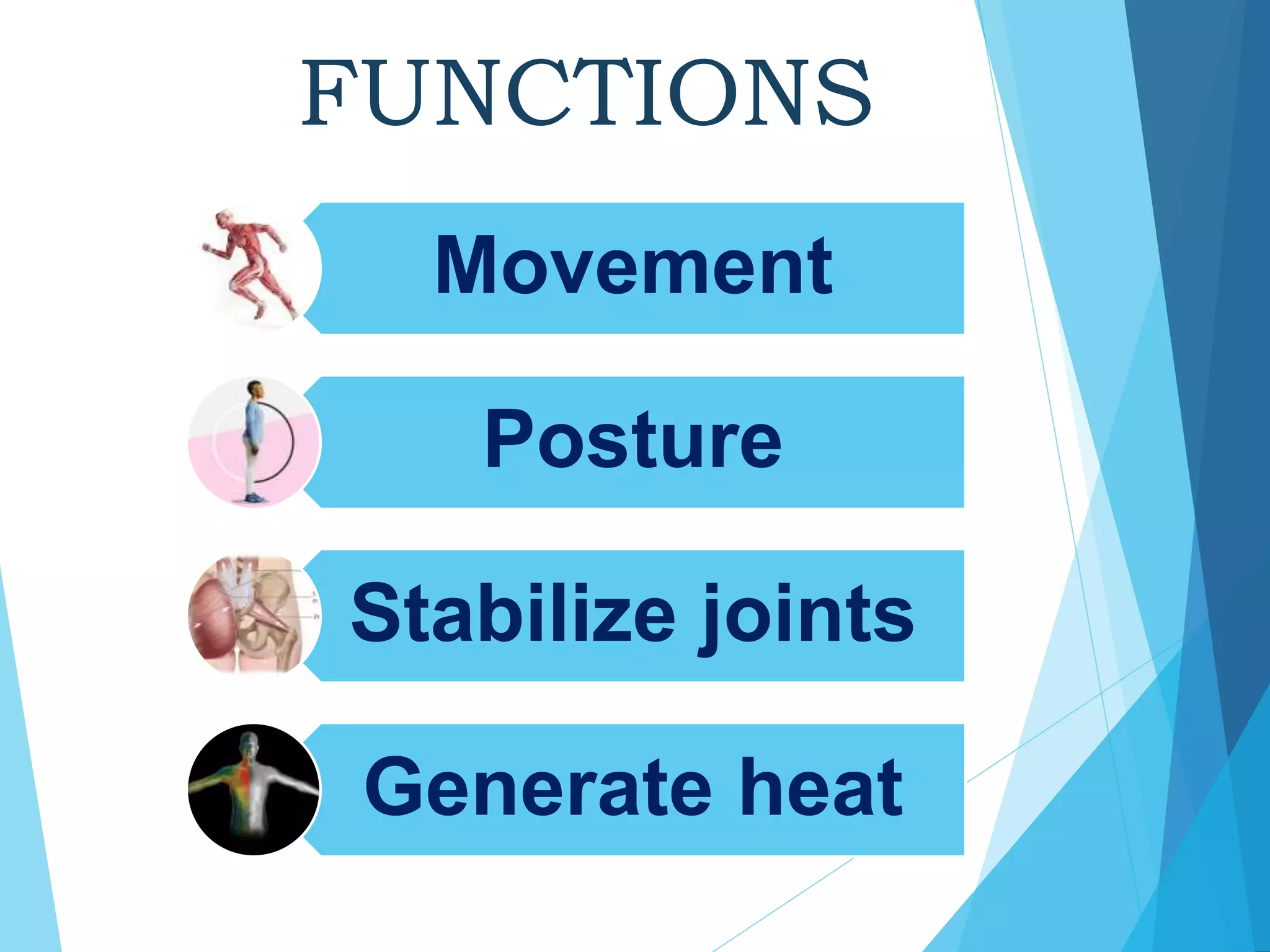
FUNCTIONS
Movement
Posture
Stabilize joints
Generate heat
SKELETAL SYSTEM
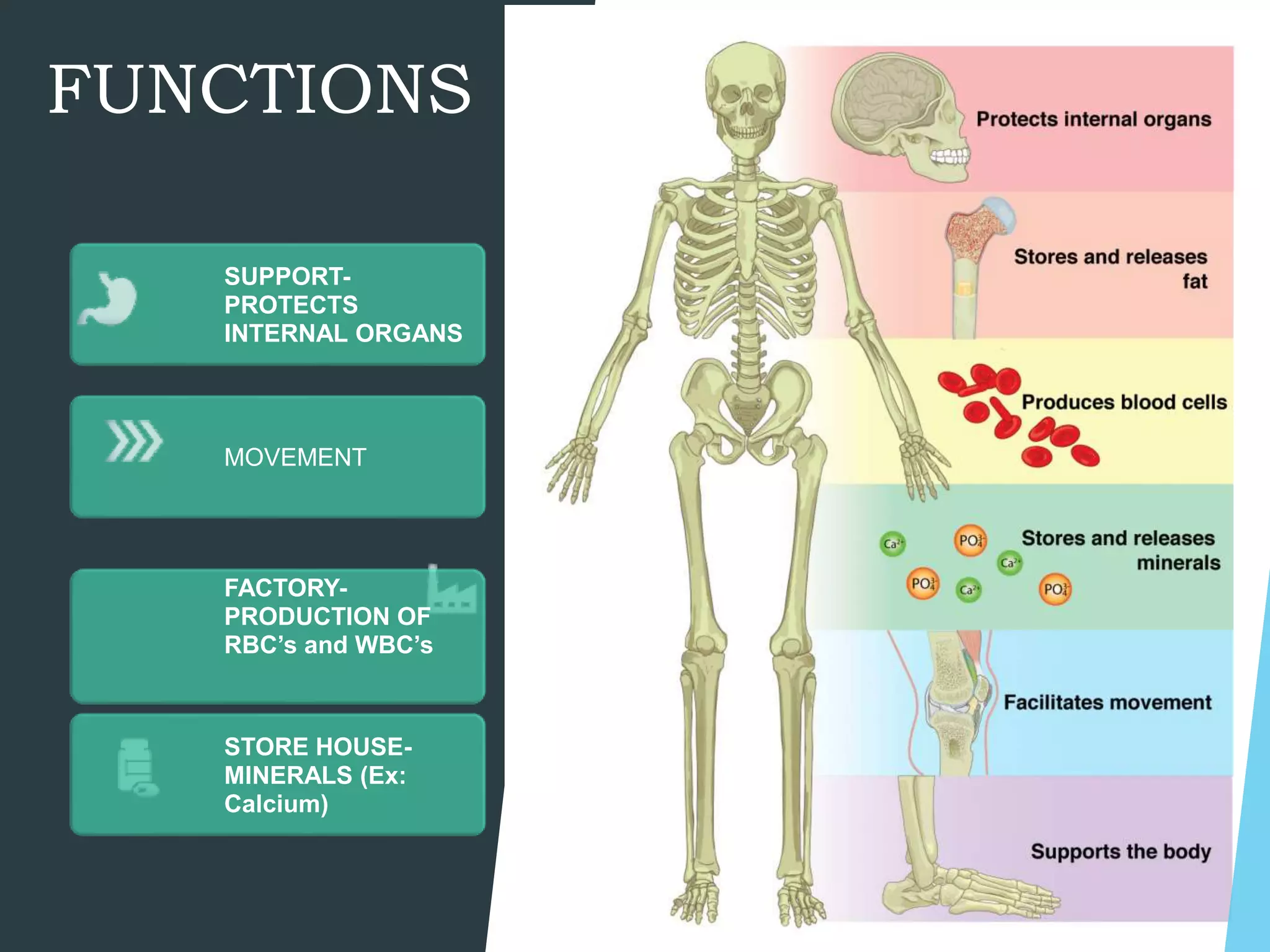
FUNCTIONS
SUPPORT-
PROTECTS
INTERNAL ORGANS
MOVEMENT
FACTORY-
PRODUCTION OF
RBC’s and WBC’s
STORE HOUSE-
MINERALS (Ex:
Calcium)
CLASSIFICATION
SUPPORTIVE
SKELETAL SYATEM
COMPOSITION OF BONES
Typs of bones cells:
OSSIFICATION
• Ossification is the process by which
the bone matrix (collagen fibers and
ground substance) is formed and
hardening minerals (eg, calcium salts)
are deposited on the collagen fibers.
The collagen fibers give tensile
strength to the bone, and the Calcium
provides compressional strength.
FACTORS AFFECTNG BONE HEALTH
Local stress
(weight bearing)-
stimulates bone
formation and
remodelling +
Age
consideration
vitamin D-
Absorption of ca
and
mineralization
Blood supply-
with congestion
ossification and
remodeling
deminishes
Parathyroid
hormone and
calcitonin-Ca
homeostasis and
prevents bone
resorption
Anatomy of the Skeletal
System
Part I: Bones of the Cranium
Part II: Bones of the Appendicular
Skeleton
Bones of the Cranium
Frontal
Nasal
Zygoma
Maxilla
Mandible
Parietal
External AuditoryMeatus
Sphenoid
Temporal
Occipital
Mastoid Process
Lateral View
Bones of the
Appendicular
Skeleton
Ilium
Ischium
Femur
Fibula
Sacrum
Pubis
Patella
Tibia
Joints
Joint: the point at which two or more bones meet. The
synotide membrane lines the joints. It secretes synovial
fluid that acts as a lubricant so the joint can move
smoothly
Components: (Synovial fluid-Cartilage- Tendons-
Ligaments-Bursa)
.
Bursa: disc shaped, fluid-filled synovial sacs that
develop at points of friction around joints, between
tendons, cartilage & bonedecrease friction & promote
ease of motion
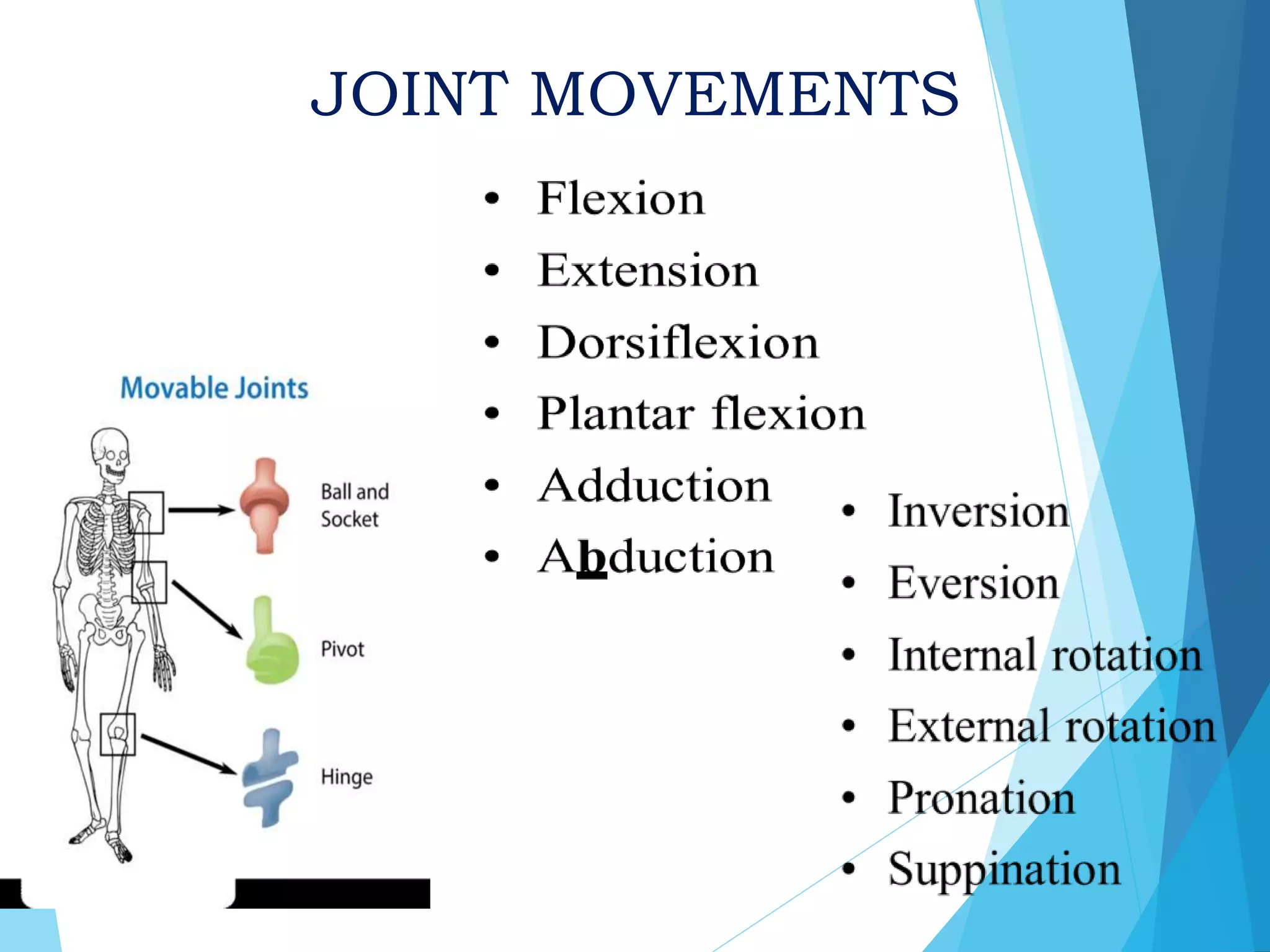
CLASSIFICATION OF JOINTS
Synarthroses or fibrous
Amphiarthroses or
cartilaginous
Diarthroses or synovial
/movable joints
JOINT MOVEMENTS
SUPPORTIVE CONNECTIVE TISSUE
LIGAMENT
Assessment of
GOALS
 Presents with pain or
decreased functional
ability.
 determine the
degree to which the
patient’s activities of
daily living are
affected, through a
systematic
assessment.
PRE-REQUISITES
• two objective stages together: inspection
and palpation. rather than inspecting all
joints and then returning to palpate.
• To discover you must uncover but ensure
privacy and dignity.
• Always ask whether the patient has any
pain and if so, assess the pain-free side
first.
PRE-REQUISITES
• position for patient comfort
• Always compare each side.
• Organize your examination of the bones,
muscles and joints in a head-to toe method.
This will help avoid omissions.
• Always start each part of the examination
from the neutral position
Patient Preparation
 Explain
procedure to
patient
 Use firm
support, gentle
movement
 Patient comfortable
 Adequate Lighting
DATA COLLECTIONSUBJECTIVE DATA:
1. Demographic data: Age, sex, Weight gain/loss and
Work………etc
Present history musculoskeletal complaint
 what’s functional limitation?
 -Symptoms in single vs multiple joints?
 -Acute vs slowly progressive?
 -If injury, the mechanism?
 -Prior problems which area?
 -Systemic symptoms?
P-
Provocative
/palliativeP
• Provocative/palliative:cause of pain,aggrevating and relieving factors
Q-Quality
or
Quantity
Character of the symptom i.E. Pain: is it crushing, piercing, dull,
sharp?
• How much of it are you experiencing now?
R-Region
or
Radiation
Where is the symptom?
• Does it spread?
S-
Severity
• How does the symptom rate on a severity scale of 1 to 10 with 10 being THE
MOST INTENSE?
T-Timing
&Time
When did the symptom begin?
• How long does it last (Identify 24 hour pattern of presenting complaint?
• Time: How often does it occur? Is it sudden or gradual?
2. PQRST APPROACH-SUBJECTIVE ASSESSMENT
3. CHIEF COMPLAINTS: Most common Chief complaint:
pain, weakness, and deformity, limitation of movement,
stiffness, and joint crepitating , changes in sensation or in
the size of a muscle, discomfort , disturbed sleep pattern..
• EFFECTS OF PRESENTING MUSCULOSKELETAL
COMPLAINT ON:
o activities of daily living: able to care for himself
(independently-with assistance -complete dependence)
o Activity-Exercise Pattern ,Nutritional-Metabolic Pattern,
Elimination Pattern, Sleep Pattern, Role-Relationship
Pattern
DATA COLLECTION-SUBJECTIVE DATA
4. PAST MEDICAL HISTORY:
• Tuberculosis, poliomyelitis, diabetes mellitus parathyroid problems,
hemophilia, rickets, soft tissue infection, and neuromuscular
disabilities.
• Arthritic and connective tissue diseases (e.g., gout, psoriatic
arthritis, systemic lupus erythematosus)
HISTORY OF TRAUMA, surgery, period of prolonged immobilization ,
Alcohol use
DIET: Adequate amounts of vitamins C and D, calcium, and protein
are essential for a healthy, intact musculoskeletal system.
DATA COLLECTION-SUBJECTIVE DATA
4. MEDICATIONS:A history of medication use and response to pain
medication aids in designing medication management regimens
• For any possible side effects include antiseizure
drugs(osteomalacia),corticosteroids( vascular necrosis, decrease bone
and muscle mass) and potassium depleting diuretics( muscle cramps
and weakness)
-Amphetamines : Muscle hyperactivity
-Anticoagulants:Bleeding into the joints
-Antipsychotics:Dystonic movements, altered gait
-Caffeine: Muscle hyperactivity
-Corticosteroids: Necrosis of femur head
-
DATA COLLECTION-SUBJECTIVE DATA
Objective Data
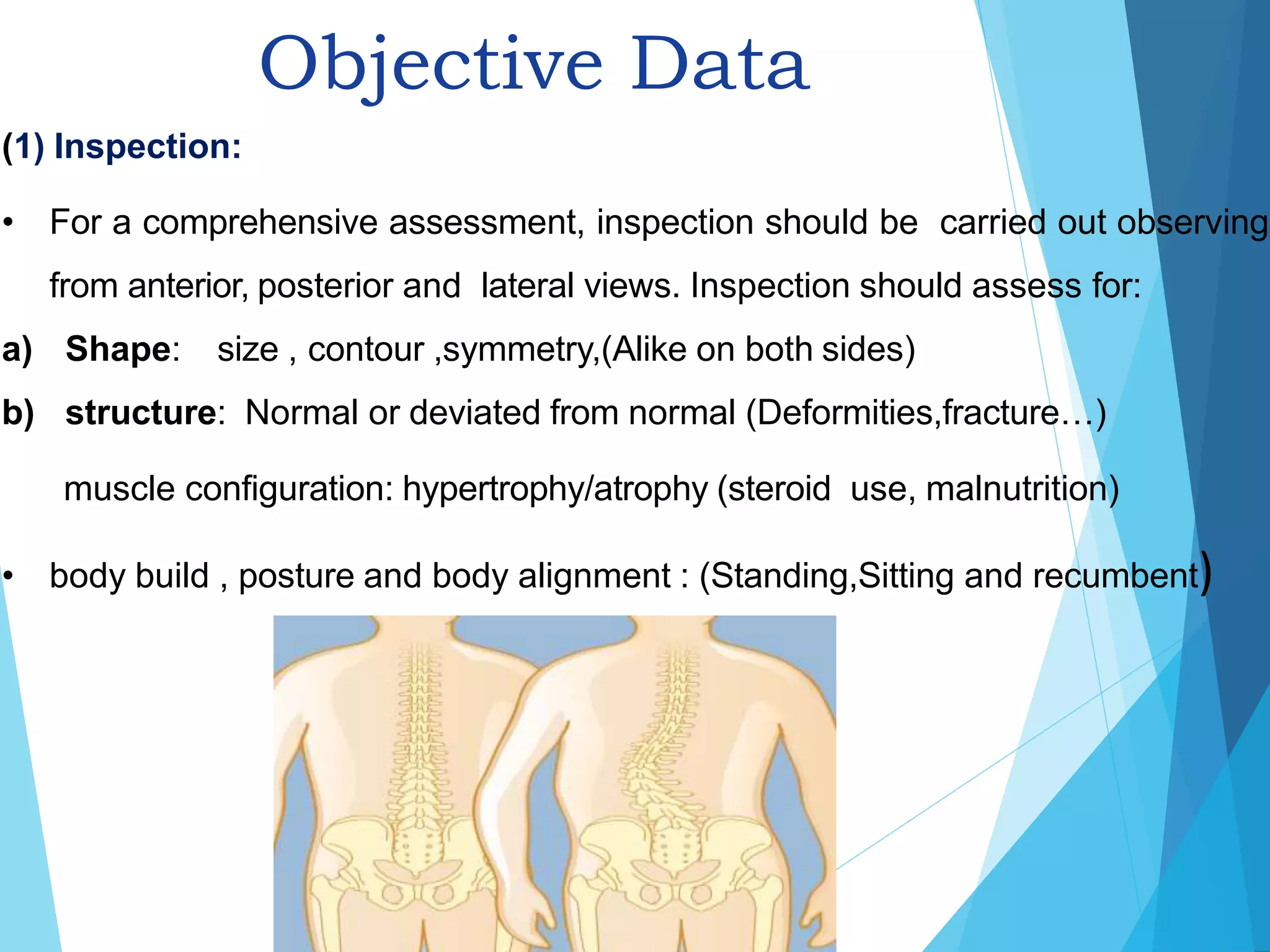
(1) Inspection:
• For a comprehensive assessment, inspection should be carried out observing
from anterior, posterior and lateral views. Inspection should assess for:
a) Shape: size , contour ,symmetry,(Alike on both sides)
b) structure: Normal or deviated from normal (Deformities,fracture…)
muscle configuration: hypertrophy/atrophy (steroid use, malnutrition)
• body build , posture and body alignment : (Standing,Sitting and recumbent)
Objective Data
INSPECTION
-structural relationships:
(Gait-involuntary movements -Full Rom of all joints)
- Shoulders level, Scapulae level, Iliac crests level
skin condition
• swelling/edema (effusions, hematoma)
• discoloration (vascular insufficiency, bruising,
hematoma)
• pressure sores, necrosis, scarring scars indicating any
previous surgery or trauma
Note ( joint and muscle symmetry -
extremity length and muscle
deformity-Body alignment- Use of
Assistive devices-Shoes) (type of
gait:Unsteady–Shuffling–Limp–
Steady)
wing scapula Varus (bow legs)
Valgus (knock-knees)
ganglion cyst
PALPATION- :( TEC)2
• T: increased temperature (use the
back of the hand above, below and on
the joint and compare with the other
side)
• T:tenderness
• E: edema/ swelling
• E: enlargement (bone tumor)
• C: crepitus (osteoarthritis, listen for
crepitus as well as feeling)
• C:Consistency and tone of muscle
• During Palpation: Assess
the patient for both verbal
and non-verbal cues of
pain, Ask the patient,
‘Does the pain radiate
elsewhere from the initial
region?’
• Palpate joints, bursal sites,
bones and surrounding
muscles.
During
assessment
The part may has :
1. Muscles
2. Bones
3. Joints
4. Limb to be measured
so, those must be assessed
1-MUSCLE ASSESSMENT
Muscle mass
Muscle
Measurement
Muscle
Strength
Joint motion
produced by
muscle
contraction
A-Muscle Mass
General view of
muscle:
 Atrophy
 Hypertrophy
 Of normal
B-MUSCLE MEASUREMENT:
• Muscle mass is measured
circumferentially at the largest area of
the muscle.
• When recording measurements,
document the exact location at which
the measurements were obtained
(e.g., the quadriceps muscle is
measured 15 cm above the patella).
• This informs the next examiner of the
exact area to measure and ensures
consistency during reassessment
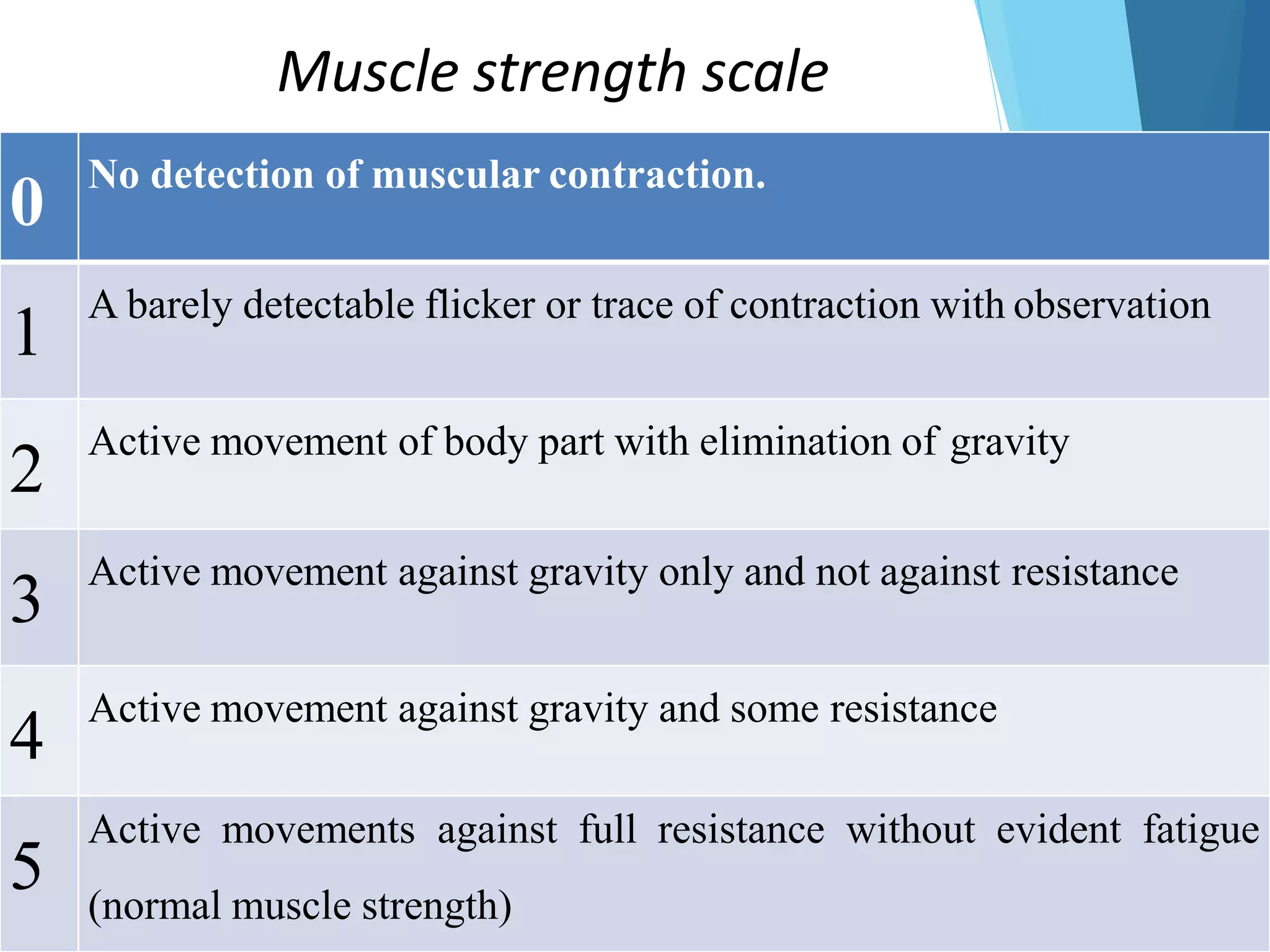
3-Muscle Strength:
• Assess each group :Strong & Equal
• Compare each side
• Scale - 0-5
• - It is considered a disability is muscle
strength is less than grade 3.
Muscle strength scale
No detection of muscular contraction.
0
A barely detectable flicker or trace of contraction with observation
1
Active movement of body part with elimination of gravity
2
Active movement against gravity only and not against resistance
3
Active movement against gravity and some resistance
4
Active movements against full resistance without evident fatigue
(normal muscle strength)
5
4-Joint motion produced by muscle
contraction
• Flexion
• Extension
• Dorsiflexion
• Plantar flexion
• Adduction
• Abduction
• Inversion
• Eversion
• Internal rotation
• External rotation
• Pronation
• Suppination
II-Bones
• Examine for:
1- Deformity
2- Tumors
3- Pain: is the pain focal (fracture/trauma, infection,
malignancy, Paget’s disease, osteoid osteoma), or diffuse
(malignancy, Paget’s disease, osteomalacia, osteoporosis,
metabolic bone disease)?
III-Joint
1 Signs of inflammation, injury (swelling, redness, warmth)?
Deformity? Compare w/opposite side
2 activity and Range of motion–what can’t they do?
Specific limitations? Discrete event (e.g. trauma)?
Mechanism of injury?
3 Palpate joint warmth? Point tenderness? Over what
structure(s)?
4 Strength, neuro-vascular assessment.
5 If acute injury& pain difficult to assess as patient
RANGE OF MOVEMENT (ROM)
• Assess (Type: Active, Passive, Full, Limited, Stiffness,
contractures)
• If ROM is limited – determine the cause (excess fluid or any loose
bodies in the joint e.g. cartilage, joint surface irregularity e.g.
osteoarthritis, contracture of muscle, ligaments or capsule)
• Range of motion assessed by:
1 goniometer, most accurate which measures the angle of the
joint.
2 Symmetry
4-LIMB MEASUREMENT
• limbs are in the neutral
position.
• the patient is lying straight
• Full length upper limb –
measure from the acromion
process to the end of the
middle finger.
• Full length lower limb – lower
edge of the ileum to tibial
malleolus.
• Phalen’s Test –Ask the
patient to hold the wrist in
acute flexion for 60
seconds. Numbness or
burning indicate carpel
tunnel syndrome.
SPECIAL TESTS
• “Bulge sign” –assess for
small amount of fluid on the
knee.
• Milk upward on the medial
side of the knee then tap
lateral side of the patella. It
indicated joint swelling
SPECIAL TESTS
DIAGNOSTIC STUDIES
A. Radiological studies
B. Bone mineral density (BMD) measurements
C. Nuclear studies
D. Endoscopic studies-arthrocentesis,arthroscopy
E. Synovial fluid analysis
F. Muscle biopsy
G. Laboratory
-X-rays provide information about bone deformity, joint
congruity, bone density, and calcification in soft tissue.
-Fracture diagnosis and management are the primary
indications for x-ray.
-but it is also useful in the evaluation of hereditary,
developmental, infectious, inflammatory, neo-plastic,
metabolic, and degenerative disorders
RADIOGRAPHIC STUDIES
NURSING CARE
• Maintain privacy of patient
• patient is asked to remove some or all of his
clothes and to wear a gown during the exam.
• may also be asked to remove jewelry, removable
dental appliances, eye glasses and any metal objects or
clothing that might interfere with the x-ray images.
• If contrast medium is used, assess for allergy to
shellfish, iodine, or contrast medium used in previous
tests. If allergy is present, test will not be performed.
A-Fluoroscopy
X-ray source is underneath table and detector
above, thus shield needs to be placed
underneath patient
• DISCOGRAM:
• X-ray of cervical or lumbar intenvertebral disk is
done after injection of contrast media into nucleus
pulpous. Permits visualization of intenvertebral
disk abnormalities
COMPUTED TOMOGRAPHY:CT uses x-rays
to produce cross sectional images
• X-ray beam is used with a computer to provide a three-
dimensional picture.
Computed Tomography
Indications
–Staging of complex
fractures
–Detection of small
intra-articular
fragments
–Fracture healing
–Confirmation of plain
film fractures
–Bone tumor evaluation
• RELATED NURSING CARE :
Assess for metallic implants or
metal on clothing (metallic implants,
such as clips on aneurysms,
pacemakers, or shrapnel, will
prohibit having an MRI)
• Contraindicated in patient with
eneurysm clips, metallic implants,
pacemakers electronic devices,
hearing aids, and shrapnel.
Magnetic Resonance Imaging (MRI)
• Radio waves and magnetic field are used to
view soft tissue. Especially useful in the
diagnosis of a vascular necrosis, disk disease,
tumors,; ligament tears, land cartilage tears.
• Patient is placed inside scanning chamber.
• Gadolinium may be injected IV to enhance
visualization of structures
E-Myelogram with or without CT
• Involves injecting a radiographic contrast medium: Into sac around
nerve roots. CT scan may follow to show how the bone is affecting
the nerve foots. Very sensitive test for nerve impingement and
can detect very subtle lesions and injuries.
BONE MINERAL DENSITY
• Quantitative ultrasound Evaluates density,
elasticity, and strength of bone using
ultrasound rather than radiation. Common area
assessed is calcaneus's (heel).
• B-Dual energy x-ray Absorptlomatry (DEXA:
• Assesses bone density to
diagnose osteoporosis
• -Uses LOW dose radiation to measure bone
density
• - Painless procedure, non-invasive, no special
preparation
• -Advise to remove jewelry
BONE SCAN
Imaging study with the use of a contrast radioactive material
-Pre-test: Painless procedure, IV radioisotope is used, no
special preparation, pregnancy is contraindicated
-Intra-test: IV injection, Waiting period of 2 hours before X-
ray, Fluids allowed, Supine position for scanning
-Post-test: Increase fluid intake to flush out
radioactive material
NUCLEAR SCANS
ENDOSCOPIC-Arthroscopy
A direct visualization of the joint cavity
-Pre-test: consent, explanation of procedure, NPO
-Intra-test: Sedative, Anesthesia, incision will be made
-Post-test: maintain dressing, ambulation as soon as awake,
mild soreness of joint for 2 days, joint rest for a few days, ice
application to relieve discomfort
If general anesthesia is used, client is NPO after midnight.
Following the procedure, assess for bleeding and swelling,
apply ice to the area if prescribed, and teach client to avoid
excessive use of the joint for 2 to 3 days.
Arthrocentesis
 -Done to obtain
synovial fluid from a
joint for diagnosis (such
as infections
/hemorrhage) or to
remove excess fluid. A
needle is inserted
through the joint capsule
and fluid is aspirated
LAB TESTS
URINE TEST:
• 24 hour creatine-creatinine ratio:- (Creatine
phosphate is the most important storage form of
high-energy phosphate; together with some other
smaller sources, this energy reserve is sometimes
called the creatine phosphate pool).
• Urine Uric acid –24 hr specimen
• Cancer of the bone has increased calcium levels
• Urine deoxypyridinoline
Blood tests:
1-Rheumatoid Factor:
Importantly, RF is not a 'test for rheumatoid
arthritis'. It is therefore neither sufficient nor
necessary for the diagnosis. Its principal use is as a
prognostic marker; a high titre at presentation
associates with a poorer prognosis. IgG RF has
greater specificity for major rheumatic disease but
the above caveats still remain.
Blood tests:
2-Antinuclear antibodies:
Mainly for diagnoses of SLE
- a negative ANA virtually excludes the diagnosis
- a positive ANA :lupus is suspected. For lupus,
ANA has high sensitivity (virtually 100%)
However, the specificity is low (10-40%) so a
positive result does not make the diagnosis
-ANA directed against double-stranded DNA
(anti-dsDNA) is highly specific for lupus.
Calcium
Total
Ionized
8.6–10.3 mg/dl
4.4–5.1 mg/dl
2.2–2.74 mmol/L
1–1.3 mmol/L
Phosphorus 2.5–5 mg/dl 0.8–1.6 mmol/L
Phosphatase (acid), total 0.13–0.63 IU/L 2.2–10.5 IU/Lor
2.2–10.5 mckat/L
Phosphatase alkaline2 20–130 IU/L 20–130 IU/Lor
0.33–2.17 mckat/L
Creatinine kinase 0–12 IU/L 0–0.2 mckat/L
Hb
13.5-18 g/dl
HCT 40%-55%
TLC 5000-1000010ᶺ3/Cmm
RBCs 4.5-6)×106Cmm
Invasive investigation
Synovial
fluid
analysis
Bone
biopsies
Musccle
biopsies
SYNOVIAL FLUID ANALYSIS
• For: septic arthritis, crystal-associated arthritis and intra-
articular bleeding, and it should be performed in all patients
with acute monoarthritis, especially with overlying erythema.
• From: sample from most peripheral joints and for diagnostic
purposes only a small volume is required
• Normal SF: is present in small volume, contains very few
cells, is clear and either colourless or pale yellow, and has
high viscosity
• Turbid: joint inflammation, volume increases, the total cell
count and proportion of neutrophils rise, and the viscosity
lowers (due to enzymatic degradation of hyaluronan and
aggrecan). However, because of considerable variation and
overlap between arthropathies these features have little
diagnostic value.
• Frank pus or 'pyarthrosis‘: results from very high neutrophil
counts and is not specific for sepsis.
Continue..
Continued..
• High concentrations of crystals: mainly urate or
cholesterol, can make SF appear white Non- uniform
blood-staining of SF is common.
• Floride: Uniform blood-staining-haemarthrosis-
commonly accompanies florid synovitis but may also
result from a bleeding diathesis, trauma or pigmented
villonodular synovitis.
BONE BIOPSIES
• BONE BIOPSY:
in metabolic bone diseases
With patients who are
suspected of having
osteomalacia
Muscle biopsy
• For myopathy and myositis.
• Needle muscle biopsy of the
quadriceps or deltoid
• is preferred to open surgical
biopsy because it is a simple
procedure which can be
repeated for serial monitoring of
treatment response

Musculoskeletal assessment

  • 1.
  • 2.
    INTRODUCTION The musculoskeletal systemis the supporting framework and collectively the largest system in the body, composed of two words ,Muscle + Skeletal. It consistes of: • A. Muscles (accounts for approximately 50% of the body weight): • B. Bony structures and connective tissue (accounts for approximately 25% of the body weight): 1-The Skeleton 2-Supportive connective tissues 3-Articular system(Joints)
  • 3.
  • 4.
    Skeletal muscles (voluntary andstriated), Cardiac muscles (involuntary and striated) Smooth/visceral muscles (involuntary and non-striated) TYPES
  • 5.
    Types of MuscleContractions: Isometric-no change in the length of fiber Concentric- muscle fibers shorten Eccentric- muscle fiber lengthens
  • 6.
  • 7.
  • 8.
  • 9.
  • 10.
  • 11.
  • 13.
    OSSIFICATION • Ossification isthe process by which the bone matrix (collagen fibers and ground substance) is formed and hardening minerals (eg, calcium salts) are deposited on the collagen fibers. The collagen fibers give tensile strength to the bone, and the Calcium provides compressional strength.
  • 14.
    FACTORS AFFECTNG BONEHEALTH Local stress (weight bearing)- stimulates bone formation and remodelling + Age consideration vitamin D- Absorption of ca and mineralization Blood supply- with congestion ossification and remodeling deminishes Parathyroid hormone and calcitonin-Ca homeostasis and prevents bone resorption
  • 15.
    Anatomy of theSkeletal System Part I: Bones of the Cranium Part II: Bones of the Appendicular Skeleton
  • 16.
    Bones of theCranium
  • 17.
  • 18.
  • 20.
  • 22.
    Joints Joint: the pointat which two or more bones meet. The synotide membrane lines the joints. It secretes synovial fluid that acts as a lubricant so the joint can move smoothly Components: (Synovial fluid-Cartilage- Tendons- Ligaments-Bursa)
  • 23.
    . Bursa: disc shaped,fluid-filled synovial sacs that develop at points of friction around joints, between tendons, cartilage & bonedecrease friction & promote ease of motion
  • 24.
    CLASSIFICATION OF JOINTS Synarthrosesor fibrous Amphiarthroses or cartilaginous Diarthroses or synovial /movable joints
  • 25.
  • 26.
  • 27.
  • 28.
    GOALS  Presents withpain or decreased functional ability.  determine the degree to which the patient’s activities of daily living are affected, through a systematic assessment.
  • 29.
    PRE-REQUISITES • two objectivestages together: inspection and palpation. rather than inspecting all joints and then returning to palpate. • To discover you must uncover but ensure privacy and dignity. • Always ask whether the patient has any pain and if so, assess the pain-free side first.
  • 30.
    PRE-REQUISITES • position forpatient comfort • Always compare each side. • Organize your examination of the bones, muscles and joints in a head-to toe method. This will help avoid omissions. • Always start each part of the examination from the neutral position
  • 31.
    Patient Preparation  Explain procedureto patient  Use firm support, gentle movement  Patient comfortable  Adequate Lighting
  • 32.
    DATA COLLECTIONSUBJECTIVE DATA: 1.Demographic data: Age, sex, Weight gain/loss and Work………etc Present history musculoskeletal complaint  what’s functional limitation?  -Symptoms in single vs multiple joints?  -Acute vs slowly progressive?  -If injury, the mechanism?  -Prior problems which area?  -Systemic symptoms?
  • 33.
    P- Provocative /palliativeP • Provocative/palliative:cause ofpain,aggrevating and relieving factors Q-Quality or Quantity Character of the symptom i.E. Pain: is it crushing, piercing, dull, sharp? • How much of it are you experiencing now? R-Region or Radiation Where is the symptom? • Does it spread? S- Severity • How does the symptom rate on a severity scale of 1 to 10 with 10 being THE MOST INTENSE? T-Timing &Time When did the symptom begin? • How long does it last (Identify 24 hour pattern of presenting complaint? • Time: How often does it occur? Is it sudden or gradual? 2. PQRST APPROACH-SUBJECTIVE ASSESSMENT
  • 34.
    3. CHIEF COMPLAINTS:Most common Chief complaint: pain, weakness, and deformity, limitation of movement, stiffness, and joint crepitating , changes in sensation or in the size of a muscle, discomfort , disturbed sleep pattern.. • EFFECTS OF PRESENTING MUSCULOSKELETAL COMPLAINT ON: o activities of daily living: able to care for himself (independently-with assistance -complete dependence) o Activity-Exercise Pattern ,Nutritional-Metabolic Pattern, Elimination Pattern, Sleep Pattern, Role-Relationship Pattern DATA COLLECTION-SUBJECTIVE DATA
  • 35.
    4. PAST MEDICALHISTORY: • Tuberculosis, poliomyelitis, diabetes mellitus parathyroid problems, hemophilia, rickets, soft tissue infection, and neuromuscular disabilities. • Arthritic and connective tissue diseases (e.g., gout, psoriatic arthritis, systemic lupus erythematosus) HISTORY OF TRAUMA, surgery, period of prolonged immobilization , Alcohol use DIET: Adequate amounts of vitamins C and D, calcium, and protein are essential for a healthy, intact musculoskeletal system. DATA COLLECTION-SUBJECTIVE DATA
  • 36.
    4. MEDICATIONS:A historyof medication use and response to pain medication aids in designing medication management regimens • For any possible side effects include antiseizure drugs(osteomalacia),corticosteroids( vascular necrosis, decrease bone and muscle mass) and potassium depleting diuretics( muscle cramps and weakness) -Amphetamines : Muscle hyperactivity -Anticoagulants:Bleeding into the joints -Antipsychotics:Dystonic movements, altered gait -Caffeine: Muscle hyperactivity -Corticosteroids: Necrosis of femur head - DATA COLLECTION-SUBJECTIVE DATA
  • 37.
    Objective Data (1) Inspection: •For a comprehensive assessment, inspection should be carried out observing from anterior, posterior and lateral views. Inspection should assess for: a) Shape: size , contour ,symmetry,(Alike on both sides) b) structure: Normal or deviated from normal (Deformities,fracture…) muscle configuration: hypertrophy/atrophy (steroid use, malnutrition) • body build , posture and body alignment : (Standing,Sitting and recumbent)
  • 38.
    Objective Data INSPECTION -structural relationships: (Gait-involuntarymovements -Full Rom of all joints) - Shoulders level, Scapulae level, Iliac crests level skin condition • swelling/edema (effusions, hematoma) • discoloration (vascular insufficiency, bruising, hematoma) • pressure sores, necrosis, scarring scars indicating any previous surgery or trauma
  • 39.
    Note ( jointand muscle symmetry - extremity length and muscle deformity-Body alignment- Use of Assistive devices-Shoes) (type of gait:Unsteady–Shuffling–Limp– Steady)
  • 40.
    wing scapula Varus(bow legs) Valgus (knock-knees) ganglion cyst
  • 41.
    PALPATION- :( TEC)2 •T: increased temperature (use the back of the hand above, below and on the joint and compare with the other side) • T:tenderness • E: edema/ swelling • E: enlargement (bone tumor) • C: crepitus (osteoarthritis, listen for crepitus as well as feeling) • C:Consistency and tone of muscle • During Palpation: Assess the patient for both verbal and non-verbal cues of pain, Ask the patient, ‘Does the pain radiate elsewhere from the initial region?’ • Palpate joints, bursal sites, bones and surrounding muscles.
  • 42.
    During assessment The part mayhas : 1. Muscles 2. Bones 3. Joints 4. Limb to be measured so, those must be assessed
  • 43.
  • 44.
    A-Muscle Mass General viewof muscle:  Atrophy  Hypertrophy  Of normal
  • 45.
    B-MUSCLE MEASUREMENT: • Musclemass is measured circumferentially at the largest area of the muscle. • When recording measurements, document the exact location at which the measurements were obtained (e.g., the quadriceps muscle is measured 15 cm above the patella). • This informs the next examiner of the exact area to measure and ensures consistency during reassessment
  • 46.
    3-Muscle Strength: • Assesseach group :Strong & Equal • Compare each side • Scale - 0-5 • - It is considered a disability is muscle strength is less than grade 3.
  • 47.
    Muscle strength scale Nodetection of muscular contraction. 0 A barely detectable flicker or trace of contraction with observation 1 Active movement of body part with elimination of gravity 2 Active movement against gravity only and not against resistance 3 Active movement against gravity and some resistance 4 Active movements against full resistance without evident fatigue (normal muscle strength) 5
  • 48.
    4-Joint motion producedby muscle contraction • Flexion • Extension • Dorsiflexion • Plantar flexion • Adduction • Abduction • Inversion • Eversion • Internal rotation • External rotation • Pronation • Suppination
  • 49.
    II-Bones • Examine for: 1-Deformity 2- Tumors 3- Pain: is the pain focal (fracture/trauma, infection, malignancy, Paget’s disease, osteoid osteoma), or diffuse (malignancy, Paget’s disease, osteomalacia, osteoporosis, metabolic bone disease)?
  • 50.
    III-Joint 1 Signs ofinflammation, injury (swelling, redness, warmth)? Deformity? Compare w/opposite side 2 activity and Range of motion–what can’t they do? Specific limitations? Discrete event (e.g. trauma)? Mechanism of injury? 3 Palpate joint warmth? Point tenderness? Over what structure(s)? 4 Strength, neuro-vascular assessment. 5 If acute injury& pain difficult to assess as patient
  • 51.
    RANGE OF MOVEMENT(ROM) • Assess (Type: Active, Passive, Full, Limited, Stiffness, contractures) • If ROM is limited – determine the cause (excess fluid or any loose bodies in the joint e.g. cartilage, joint surface irregularity e.g. osteoarthritis, contracture of muscle, ligaments or capsule) • Range of motion assessed by: 1 goniometer, most accurate which measures the angle of the joint. 2 Symmetry
  • 54.
    4-LIMB MEASUREMENT • limbsare in the neutral position. • the patient is lying straight • Full length upper limb – measure from the acromion process to the end of the middle finger. • Full length lower limb – lower edge of the ileum to tibial malleolus.
  • 55.
    • Phalen’s Test–Ask the patient to hold the wrist in acute flexion for 60 seconds. Numbness or burning indicate carpel tunnel syndrome. SPECIAL TESTS
  • 56.
    • “Bulge sign”–assess for small amount of fluid on the knee. • Milk upward on the medial side of the knee then tap lateral side of the patella. It indicated joint swelling SPECIAL TESTS
  • 57.
    DIAGNOSTIC STUDIES A. Radiologicalstudies B. Bone mineral density (BMD) measurements C. Nuclear studies D. Endoscopic studies-arthrocentesis,arthroscopy E. Synovial fluid analysis F. Muscle biopsy G. Laboratory
  • 58.
    -X-rays provide informationabout bone deformity, joint congruity, bone density, and calcification in soft tissue. -Fracture diagnosis and management are the primary indications for x-ray. -but it is also useful in the evaluation of hereditary, developmental, infectious, inflammatory, neo-plastic, metabolic, and degenerative disorders RADIOGRAPHIC STUDIES
  • 59.
    NURSING CARE • Maintainprivacy of patient • patient is asked to remove some or all of his clothes and to wear a gown during the exam. • may also be asked to remove jewelry, removable dental appliances, eye glasses and any metal objects or clothing that might interfere with the x-ray images. • If contrast medium is used, assess for allergy to shellfish, iodine, or contrast medium used in previous tests. If allergy is present, test will not be performed.
  • 60.
    A-Fluoroscopy X-ray source isunderneath table and detector above, thus shield needs to be placed underneath patient
  • 61.
    • DISCOGRAM: • X-rayof cervical or lumbar intenvertebral disk is done after injection of contrast media into nucleus pulpous. Permits visualization of intenvertebral disk abnormalities COMPUTED TOMOGRAPHY:CT uses x-rays to produce cross sectional images • X-ray beam is used with a computer to provide a three- dimensional picture.
  • 62.
    Computed Tomography Indications –Staging ofcomplex fractures –Detection of small intra-articular fragments –Fracture healing –Confirmation of plain film fractures –Bone tumor evaluation • RELATED NURSING CARE : Assess for metallic implants or metal on clothing (metallic implants, such as clips on aneurysms, pacemakers, or shrapnel, will prohibit having an MRI) • Contraindicated in patient with eneurysm clips, metallic implants, pacemakers electronic devices, hearing aids, and shrapnel.
  • 63.
    Magnetic Resonance Imaging(MRI) • Radio waves and magnetic field are used to view soft tissue. Especially useful in the diagnosis of a vascular necrosis, disk disease, tumors,; ligament tears, land cartilage tears. • Patient is placed inside scanning chamber. • Gadolinium may be injected IV to enhance visualization of structures
  • 64.
    E-Myelogram with orwithout CT • Involves injecting a radiographic contrast medium: Into sac around nerve roots. CT scan may follow to show how the bone is affecting the nerve foots. Very sensitive test for nerve impingement and can detect very subtle lesions and injuries.
  • 65.
    BONE MINERAL DENSITY •Quantitative ultrasound Evaluates density, elasticity, and strength of bone using ultrasound rather than radiation. Common area assessed is calcaneus's (heel). • B-Dual energy x-ray Absorptlomatry (DEXA: • Assesses bone density to diagnose osteoporosis • -Uses LOW dose radiation to measure bone density • - Painless procedure, non-invasive, no special preparation • -Advise to remove jewelry
  • 66.
    BONE SCAN Imaging studywith the use of a contrast radioactive material -Pre-test: Painless procedure, IV radioisotope is used, no special preparation, pregnancy is contraindicated -Intra-test: IV injection, Waiting period of 2 hours before X- ray, Fluids allowed, Supine position for scanning -Post-test: Increase fluid intake to flush out radioactive material NUCLEAR SCANS
  • 67.
    ENDOSCOPIC-Arthroscopy A direct visualizationof the joint cavity -Pre-test: consent, explanation of procedure, NPO -Intra-test: Sedative, Anesthesia, incision will be made -Post-test: maintain dressing, ambulation as soon as awake, mild soreness of joint for 2 days, joint rest for a few days, ice application to relieve discomfort If general anesthesia is used, client is NPO after midnight. Following the procedure, assess for bleeding and swelling, apply ice to the area if prescribed, and teach client to avoid excessive use of the joint for 2 to 3 days.
  • 68.
    Arthrocentesis  -Done toobtain synovial fluid from a joint for diagnosis (such as infections /hemorrhage) or to remove excess fluid. A needle is inserted through the joint capsule and fluid is aspirated
  • 69.
    LAB TESTS URINE TEST: •24 hour creatine-creatinine ratio:- (Creatine phosphate is the most important storage form of high-energy phosphate; together with some other smaller sources, this energy reserve is sometimes called the creatine phosphate pool). • Urine Uric acid –24 hr specimen • Cancer of the bone has increased calcium levels • Urine deoxypyridinoline
  • 70.
    Blood tests: 1-Rheumatoid Factor: Importantly,RF is not a 'test for rheumatoid arthritis'. It is therefore neither sufficient nor necessary for the diagnosis. Its principal use is as a prognostic marker; a high titre at presentation associates with a poorer prognosis. IgG RF has greater specificity for major rheumatic disease but the above caveats still remain.
  • 71.
    Blood tests: 2-Antinuclear antibodies: Mainlyfor diagnoses of SLE - a negative ANA virtually excludes the diagnosis - a positive ANA :lupus is suspected. For lupus, ANA has high sensitivity (virtually 100%) However, the specificity is low (10-40%) so a positive result does not make the diagnosis -ANA directed against double-stranded DNA (anti-dsDNA) is highly specific for lupus.
  • 72.
    Calcium Total Ionized 8.6–10.3 mg/dl 4.4–5.1 mg/dl 2.2–2.74mmol/L 1–1.3 mmol/L Phosphorus 2.5–5 mg/dl 0.8–1.6 mmol/L Phosphatase (acid), total 0.13–0.63 IU/L 2.2–10.5 IU/Lor 2.2–10.5 mckat/L Phosphatase alkaline2 20–130 IU/L 20–130 IU/Lor 0.33–2.17 mckat/L Creatinine kinase 0–12 IU/L 0–0.2 mckat/L Hb 13.5-18 g/dl HCT 40%-55% TLC 5000-1000010ᶺ3/Cmm RBCs 4.5-6)×106Cmm
  • 73.
  • 74.
    SYNOVIAL FLUID ANALYSIS •For: septic arthritis, crystal-associated arthritis and intra- articular bleeding, and it should be performed in all patients with acute monoarthritis, especially with overlying erythema. • From: sample from most peripheral joints and for diagnostic purposes only a small volume is required • Normal SF: is present in small volume, contains very few cells, is clear and either colourless or pale yellow, and has high viscosity
  • 75.
    • Turbid: jointinflammation, volume increases, the total cell count and proportion of neutrophils rise, and the viscosity lowers (due to enzymatic degradation of hyaluronan and aggrecan). However, because of considerable variation and overlap between arthropathies these features have little diagnostic value. • Frank pus or 'pyarthrosis‘: results from very high neutrophil counts and is not specific for sepsis. Continue..
  • 76.
    Continued.. • High concentrationsof crystals: mainly urate or cholesterol, can make SF appear white Non- uniform blood-staining of SF is common. • Floride: Uniform blood-staining-haemarthrosis- commonly accompanies florid synovitis but may also result from a bleeding diathesis, trauma or pigmented villonodular synovitis.
  • 77.
    BONE BIOPSIES • BONEBIOPSY: in metabolic bone diseases With patients who are suspected of having osteomalacia
  • 78.
    Muscle biopsy • Formyopathy and myositis. • Needle muscle biopsy of the quadriceps or deltoid • is preferred to open surgical biopsy because it is a simple procedure which can be repeated for serial monitoring of treatment response