

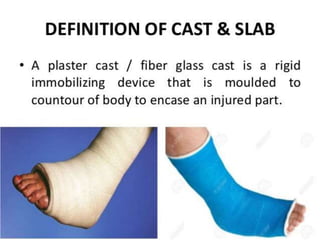

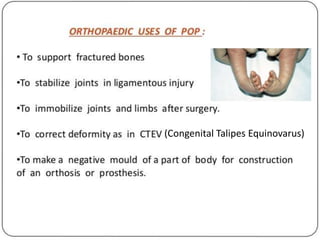

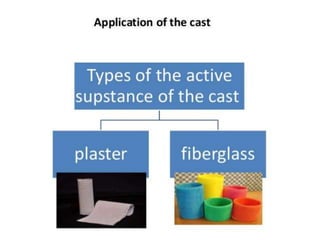










(Congenital Talipes Equinovarus)
EQUIPMENTS
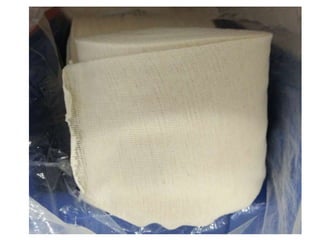
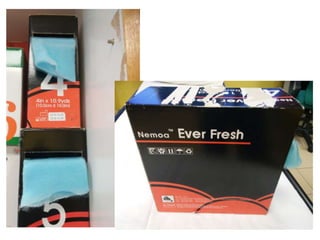
• Stockinette
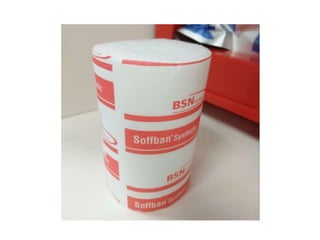
• Padding material
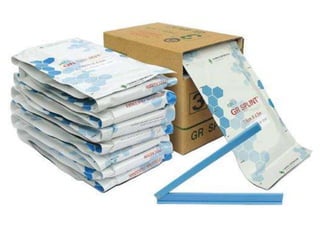
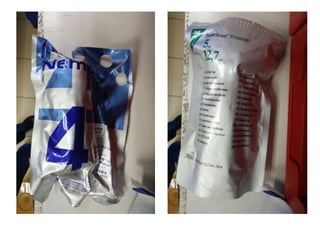
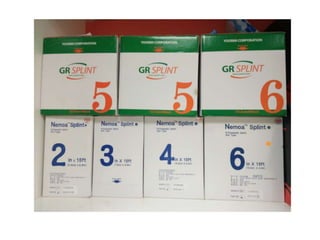
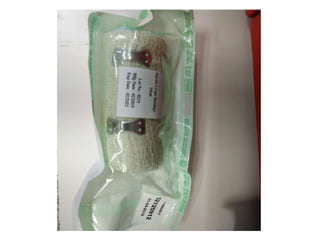
• Cast material
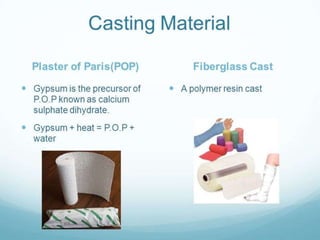
– Plaster: cheaper, long shelf life, easier to
work with
• May be fragile, disintegrate in water
– Fiberglass: more durable, lighter, dry
quicker, multiple colors, water tolerant
– Newer synthetic materials
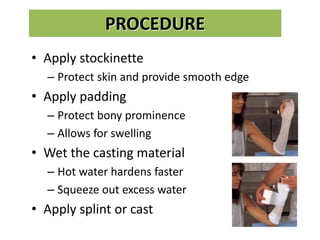
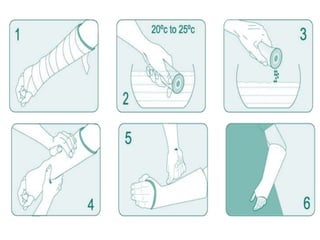
PROCEDURE
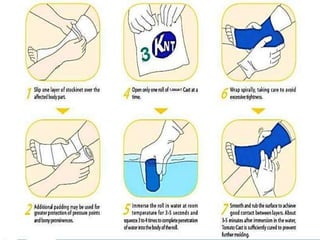
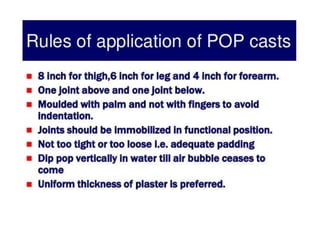
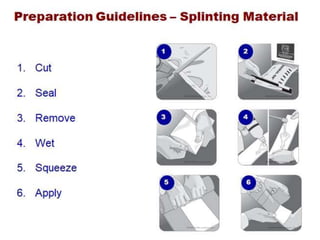
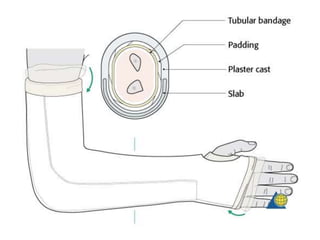
• Apply stockinette
– Protect skin and provide smooth edge
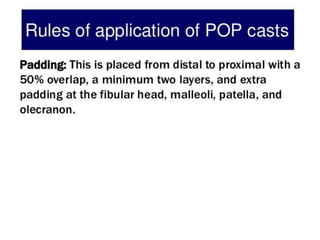
• Apply padding
– Protect bony prominence
– Allows for swelling
• Wet the casting material
– Hot water hardens faster
– Squeeze out excess water
• Apply splint or cast
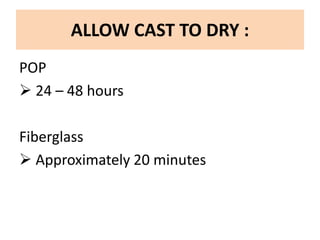
ALLOW CAST TO DRY :
POP
 24 – 48 hours
Fiberglass
 Approximately 20 minutes
Patient Assessment with Cast
ASSESS:
• Neurovascular status for signs of compromise
• Skin integrity
• Positioning and potential pressure sites
• Cardiovascular, respiratory, GI for possible
complications of immobility
• Psychological reaction
Medical Intervention
1. Elevate extremity
2. Avoid resting on hard surface
3. Handle moist cast with palms of hands
4. Turn every 2 hours while cast dries
5. Assess neurovascular status at least per
shift
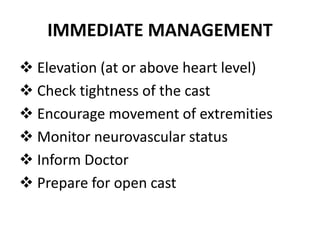
IMMEDIATE MANAGEMENT
 Elevation (at or above heart level)
 Check tightness of the cast
 Encourage movement of extremities
 Monitor neurovascular status
 Inform Doctor
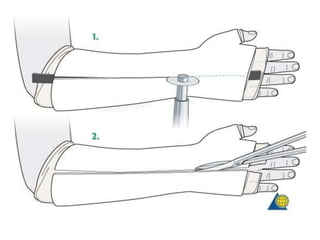
 Prepare for open cast
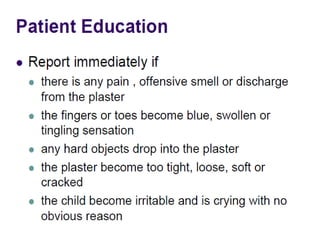
PATIENT EDUCATION
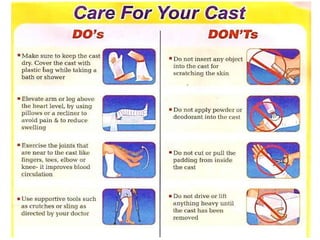
• Keep cast clean
• Do not stick objects into cast
• Do not pull out the padding
• Do not apply powder or deodorant inside cast
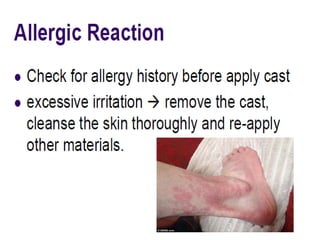
• Watch for skin irritation
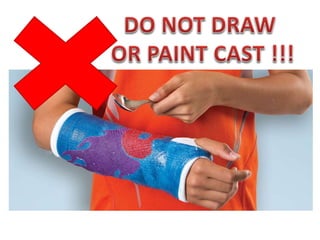
• Do not modify your cast
• Watch for cracking and breaking of cast
• Do not drive or lift anything heavy
Care of Cast
Care of Cast
Care of Cast
Care of Cast
Care of Cast
Care of Cast
Care of Cast
Care of Cast
Care of Cast
Care of Cast
Care of Cast
Care of Cast
Care of Cast
Care of Cast

Care of Cast

  • 5.
  • 9.
    EQUIPMENTS • Stockinette • Paddingmaterial • Cast material – Plaster: cheaper, long shelf life, easier to work with • May be fragile, disintegrate in water – Fiberglass: more durable, lighter, dry quicker, multiple colors, water tolerant – Newer synthetic materials
  • 15.
    PROCEDURE • Apply stockinette –Protect skin and provide smooth edge • Apply padding – Protect bony prominence – Allows for swelling • Wet the casting material – Hot water hardens faster – Squeeze out excess water • Apply splint or cast
  • 22.
    ALLOW CAST TODRY : POP  24 – 48 hours Fiberglass  Approximately 20 minutes
  • 29.
    Patient Assessment withCast ASSESS: • Neurovascular status for signs of compromise • Skin integrity • Positioning and potential pressure sites • Cardiovascular, respiratory, GI for possible complications of immobility • Psychological reaction
  • 30.
    Medical Intervention 1. Elevateextremity 2. Avoid resting on hard surface 3. Handle moist cast with palms of hands 4. Turn every 2 hours while cast dries 5. Assess neurovascular status at least per shift
  • 37.
    IMMEDIATE MANAGEMENT  Elevation(at or above heart level)  Check tightness of the cast  Encourage movement of extremities  Monitor neurovascular status  Inform Doctor  Prepare for open cast
  • 47.
    PATIENT EDUCATION • Keepcast clean • Do not stick objects into cast • Do not pull out the padding • Do not apply powder or deodorant inside cast • Watch for skin irritation • Do not modify your cast • Watch for cracking and breaking of cast • Do not drive or lift anything heavy