ORTHOPAEDIC TRACTION
Outline 
 Definition 
 History 
 General Considerations 
 Purpose of traction 
 Disadvantages 
 Types 
 Principles of Effective Traction 
 Management of Patient in Traction 
 Skin/Skeletal Traction 
 Specific Tractions 
 Modern Techniques
Definition 
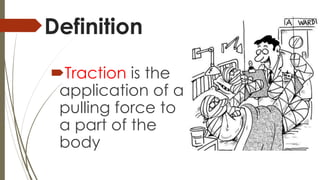
Traction is the 
application of a 
pulling force to 
a part of the 
body
History 
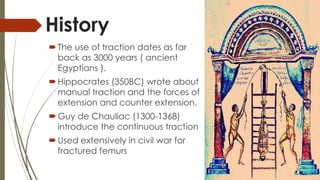
 The use of traction dates as far 
back as 3000 years ( ancient 
Egyptians ). 
 Hippocrates (350BC) wrote about 
manual traction and the forces of 
extension and counter extension. 
Guy de Chauliac (1300-1368) 
introduce the continuous traction 
Used extensively in civil war for 
fractured femurs
General Considerations 
Safe and dependable way of treating 
fractures for more than 100 years 
Bone reduced and held by soft tissue 
Less risk of infection at fracture site 
Allows more joint mobility than plaster
Purpose of traction 
To regain normal length and alignment of 
involved bone. 
To reduce and immobilize a fracture bone 
To relieve or eliminate muscle spasm. 
To relieve pressure on nerves. 
To prevent or reduce skeletal deformities or 
muscle contractures.
Disadvantages 
Costly in terms of hospital stay 
Hazards of prolonged bed rest 
DVT/Thromboembolism 
Pneumonia 
Requires continuous nursing care 
Can develop contractures
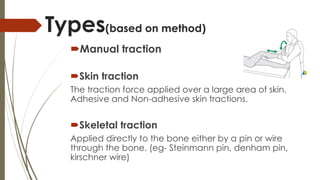
Types(based on method) 
Manual traction 
Skin traction 
The traction force applied over a large area of skin. 
Adhesive and Non-adhesive skin tractions. 
Skeletal traction 
Applied directly to the bone either by a pin or wire 
through the bone. (eg- Steinmann pin, denham pin, 
kirschner wire)
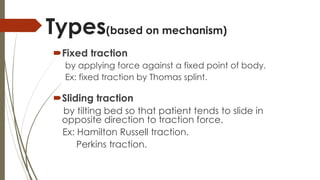
Types(based on mechanism) 
Fixed traction 
by applying force against a fixed point of body. 
Ex: fixed traction by Thomas splint. 
Sliding traction 
by tilting bed so that patient tends to slide in 
opposite direction to traction force. 
Ex: Hamilton Russell traction. 
Perkins traction.
Principles Of Effective Traction 
Counter traction must be used to achieve 
effective traction. 
Counter traction is the force acting the 
opposite direction . 
Usually, the patient's body weight and bed 
position adjustments supply the needed 
counter traction.
Management of Patients in 
Traction Care of the patient 
Care of the traction suspension system 
Radiographic examination 
Physiotherapy 
Removal of traction
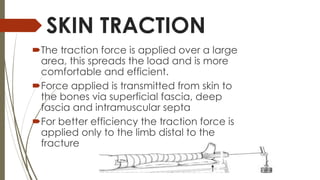
SKIN TRACTION 
The traction force is applied over a large 
area, this spreads the load and is more 
comfortable and efficient. 
Force applied is transmitted from skin to 
the bones via superficial fascia, deep 
fascia and intramuscular septa 
For better efficiency the traction force is 
applied only to the limb distal to the 
fracture
Weight 
Skin damage can 
result from too much 
of traction force. 
Maximum weight 
recommended for skin 
traction is 6.7 kgs 
depending on size 
and weight of the 
patient
Application 
Adhesive skin traction : 
Prepare the skin by shaving as well as 
washing & applying tincture benzoin 
which protects the skin and acts as an 
additional adhesive. 
Avoid placing adhesive strapping over 
bony prominences, if not, cover them 
with cotton padding and do the 
strapping. 
Leave a loop of 5 cm projecting 
beyond the distal end of limb to allow 
movement of fingers and foot.
Non adhesive skin traction 
 Useful in thin and atrophic skin. 
Frequent reapplication may be 
necessary. 
Attached traction wt. must not be 
more than 4.5 kgs.
Indications 
Temporary management of neck of femur 
fracture. 
Femoral shaft fracture in children. 
Un displaced fracture of acetabulum. 
After reduction of dislocation of Hip. 
To correct minor fixed flexion deformities 
of hip and knee.
Contraindications 
Abrasions and lacerations of skin in the 
area to which traction is to be applied 
Varicose veins, impending gangrene 
Dermatitis 
When there is marked shortening of the 
bony fragments as the traction weight 
required is greater than which can be 
applied through the skin
Complications 
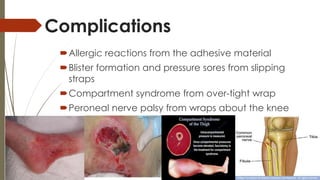
Allergic reactions from the adhesive material 
Blister formation and pressure sores from slipping 
straps 
Compartment syndrome from over-tight wrap 
Peroneal nerve palsy from wraps about the knee
SKELETAL TRACTION 
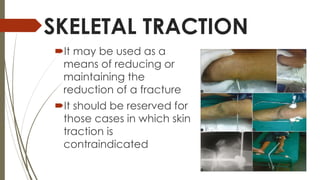
It may be used as a 
means of reducing or 
maintaining the 
reduction of a fracture 
It should be reserved for 
those cases in which skin 
traction is 
contraindicated
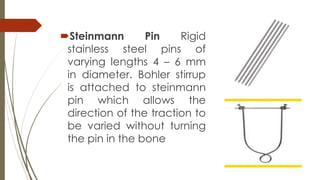
Steinmann Pin Rigid 
stainless steel pins of 
varying lengths 4 – 6 mm 
in diameter. Bohler stirrup 
is attached to steinmann 
pin which allows the 
direction of the traction to 
be varied without turning 
the pin in the bone
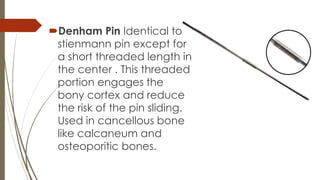
Denham Pin Identical to 
stienmann pin except for 
a short threaded length in 
the center . This threaded 
portion engages the 
bony cortex and reduce 
the risk of the pin sliding. 
Used in cancellous bone 
like calcaneum and 
osteoporitic bones.
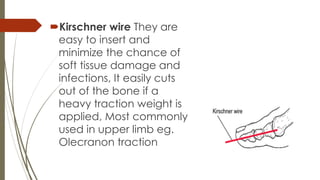
Kirschner wire They are 
easy to insert and 
minimize the chance of 
soft tissue damage and 
infections, It easily cuts 
out of the bone if a 
heavy traction weight is 
applied, Most commonly 
used in upper limb eg. 
Olecranon traction
Application 
Use GA or LA. 
Paint the skin with iodine and spirit. 
Mount the pin/wire on the hand drill. 
Hold the limb in same degree of lateral 
rotation as the normal limb and with 
ankle at right angles.
Identify the site of insertion and make a 
stab wound. 
Hold the pin horizontally at right angles to 
the long axis of the limb. 
Apply small cotton woolen pads soaked in 
tincture around the pins to seal the wound. 
The pin should pass only through skin, SC 
tissue and bone avoiding muscles and 
tendons.
Complications 
Introduction of infection into bone. 
Distraction at fracture site. 
Ligamentous damage. 
Damage to epiphyseal growth plates. 
Depressed scars.
Specific Tractions 
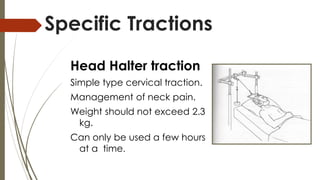
Head Halter traction 
Simple type cervical traction. 
Management of neck pain. 
Weight should not exceed 2.3 
kg. 
Can only be used a few hours 
at a time.
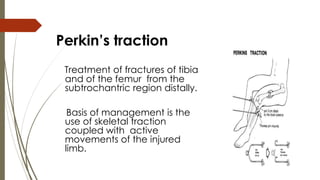
Perkin’s traction 
Treatment of fractures of tibia 
and of the femur from the 
subtrochantric region distally. 
Basis of management is the 
use of skeletal traction 
coupled with active 
movements of the injured 
limb.
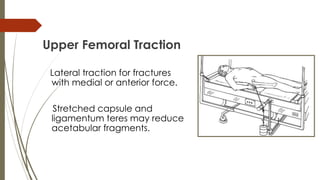
Upper Femoral Traction 
Lateral traction for fractures 
with medial or anterior force. 
Stretched capsule and 
ligamentum teres may reduce 
acetabular fragments.
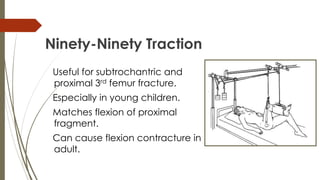
Ninety-Ninety Traction 
Useful for subtrochantric and 
proximal 3rd femur fracture. 
Especially in young children. 
Matches flexion of proximal 
fragment. 
Can cause flexion contracture in 
adult.
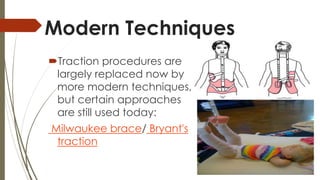
Modern Techniques 
Traction procedures are 
largely replaced now by 
more modern techniques, 
but certain approaches 
are still used today: 
Milwaukee brace/ Bryant's 
traction
Thank you

Traction(orthopedics)

  • 1.
  • 2.
    Outline  Definition  History  General Considerations  Purpose of traction  Disadvantages  Types  Principles of Effective Traction  Management of Patient in Traction  Skin/Skeletal Traction  Specific Tractions  Modern Techniques
  • 3.
    Definition Traction isthe application of a pulling force to a part of the body
  • 4.
    History  Theuse of traction dates as far back as 3000 years ( ancient Egyptians ).  Hippocrates (350BC) wrote about manual traction and the forces of extension and counter extension. Guy de Chauliac (1300-1368) introduce the continuous traction Used extensively in civil war for fractured femurs
  • 5.
    General Considerations Safeand dependable way of treating fractures for more than 100 years Bone reduced and held by soft tissue Less risk of infection at fracture site Allows more joint mobility than plaster
  • 6.
    Purpose of traction To regain normal length and alignment of involved bone. To reduce and immobilize a fracture bone To relieve or eliminate muscle spasm. To relieve pressure on nerves. To prevent or reduce skeletal deformities or muscle contractures.
  • 7.
    Disadvantages Costly interms of hospital stay Hazards of prolonged bed rest DVT/Thromboembolism Pneumonia Requires continuous nursing care Can develop contractures
  • 8.
    Types(based on method) Manual traction Skin traction The traction force applied over a large area of skin. Adhesive and Non-adhesive skin tractions. Skeletal traction Applied directly to the bone either by a pin or wire through the bone. (eg- Steinmann pin, denham pin, kirschner wire)
  • 9.
    Types(based on mechanism) Fixed traction by applying force against a fixed point of body. Ex: fixed traction by Thomas splint. Sliding traction by tilting bed so that patient tends to slide in opposite direction to traction force. Ex: Hamilton Russell traction. Perkins traction.
  • 10.
    Principles Of EffectiveTraction Counter traction must be used to achieve effective traction. Counter traction is the force acting the opposite direction . Usually, the patient's body weight and bed position adjustments supply the needed counter traction.
  • 11.
    Management of Patientsin Traction Care of the patient Care of the traction suspension system Radiographic examination Physiotherapy Removal of traction
  • 12.
    SKIN TRACTION Thetraction force is applied over a large area, this spreads the load and is more comfortable and efficient. Force applied is transmitted from skin to the bones via superficial fascia, deep fascia and intramuscular septa For better efficiency the traction force is applied only to the limb distal to the fracture
  • 13.
    Weight Skin damagecan result from too much of traction force. Maximum weight recommended for skin traction is 6.7 kgs depending on size and weight of the patient
  • 14.
    Application Adhesive skintraction : Prepare the skin by shaving as well as washing & applying tincture benzoin which protects the skin and acts as an additional adhesive. Avoid placing adhesive strapping over bony prominences, if not, cover them with cotton padding and do the strapping. Leave a loop of 5 cm projecting beyond the distal end of limb to allow movement of fingers and foot.
  • 15.
    Non adhesive skintraction  Useful in thin and atrophic skin. Frequent reapplication may be necessary. Attached traction wt. must not be more than 4.5 kgs.
  • 16.
    Indications Temporary managementof neck of femur fracture. Femoral shaft fracture in children. Un displaced fracture of acetabulum. After reduction of dislocation of Hip. To correct minor fixed flexion deformities of hip and knee.
  • 17.
    Contraindications Abrasions andlacerations of skin in the area to which traction is to be applied Varicose veins, impending gangrene Dermatitis When there is marked shortening of the bony fragments as the traction weight required is greater than which can be applied through the skin
  • 18.
    Complications Allergic reactionsfrom the adhesive material Blister formation and pressure sores from slipping straps Compartment syndrome from over-tight wrap Peroneal nerve palsy from wraps about the knee
  • 19.
    SKELETAL TRACTION Itmay be used as a means of reducing or maintaining the reduction of a fracture It should be reserved for those cases in which skin traction is contraindicated
  • 20.
    Steinmann Pin Rigid stainless steel pins of varying lengths 4 – 6 mm in diameter. Bohler stirrup is attached to steinmann pin which allows the direction of the traction to be varied without turning the pin in the bone
  • 21.
    Denham Pin Identicalto stienmann pin except for a short threaded length in the center . This threaded portion engages the bony cortex and reduce the risk of the pin sliding. Used in cancellous bone like calcaneum and osteoporitic bones.
  • 22.
    Kirschner wire Theyare easy to insert and minimize the chance of soft tissue damage and infections, It easily cuts out of the bone if a heavy traction weight is applied, Most commonly used in upper limb eg. Olecranon traction
  • 23.
    Application Use GAor LA. Paint the skin with iodine and spirit. Mount the pin/wire on the hand drill. Hold the limb in same degree of lateral rotation as the normal limb and with ankle at right angles.
  • 24.
    Identify the siteof insertion and make a stab wound. Hold the pin horizontally at right angles to the long axis of the limb. Apply small cotton woolen pads soaked in tincture around the pins to seal the wound. The pin should pass only through skin, SC tissue and bone avoiding muscles and tendons.
  • 25.
    Complications Introduction ofinfection into bone. Distraction at fracture site. Ligamentous damage. Damage to epiphyseal growth plates. Depressed scars.
  • 26.
    Specific Tractions HeadHalter traction Simple type cervical traction. Management of neck pain. Weight should not exceed 2.3 kg. Can only be used a few hours at a time.
  • 27.
    Perkin’s traction Treatmentof fractures of tibia and of the femur from the subtrochantric region distally. Basis of management is the use of skeletal traction coupled with active movements of the injured limb.
  • 28.
    Upper Femoral Traction Lateral traction for fractures with medial or anterior force. Stretched capsule and ligamentum teres may reduce acetabular fragments.
  • 29.
    Ninety-Ninety Traction Usefulfor subtrochantric and proximal 3rd femur fracture. Especially in young children. Matches flexion of proximal fragment. Can cause flexion contracture in adult.
  • 30.
    Modern Techniques Tractionprocedures are largely replaced now by more modern techniques, but certain approaches are still used today: Milwaukee brace/ Bryant's traction
  • 31.