LITHOTRIPSY
 Introduction
 History
 Purpose of lithotripsy
 Symptoms
 Techniques
 Procedure
 Risks
 Advantages and disadvantages
COMPONENTS
 Lithotripsy is a medical procedure used to
treat certain types of kidney stones and stones
in the other organs such as gallblader or liver.
 Lithotripsy is the uses of high energy shock
waves to break up stones in the kidney.
 In Greek word litho means STONE, trip means
break.
LITHOTRIPSY
. Frenchsurgeon and urologist jean civiale
invented a surgical instrument in 1832.
. Lithotripsy was developed,and replaced in the
treatment of beginning in the year 1980.
. ESWL was first used on kidney stones
In the year of 1980.
. Electrohydraulic lithotripsy was introduced in the year
of 1975.
. Laser lithotripsy was introduced in the year of 1980.
HISTORY
 It is used for removing kidney stones without
Surgery that causes.
. pain
. bleeding
. damage to kidney due to blockage.
. urinary tract infections
PURPOSE OF LITHOTRIPSY
 The symptoms are:
. Bleeding disorder
. Abdnominal pain
. Urinary tract infection
. Damaged kidney infection
. Nausea
SYMPTOMS
 Extracorpeal shockwave
lithotripsy
 Intracorpeal (endoscopic lithotripsy)
. laser lithotripsy
. Electrohydraulic lithotripsy
. Mechanical lithotripsy
. Ultrasonic lithotripsy
TECHNIQUES
Extracorpeal lithotripsy is the least invasive
surgical stone treatment.
 It using high frequency sound waves from an
external sources to break up kidney stones into
smaller pieces.
 And allow them pass through the urinary tract.
 It is not performed in pregnant,bleeding
disorder,urinary infection.
EXTRACORPEAL LITHOTRIPSY
 Endoscopic lithotripsy refers to the
visualization of a calculus in the urinary tract
 And the stimultaneous application of energy to
fragment the stones.
 Many calculi in the upper urinary tract are
treated with endoscopic lithotripsy.
 Ureteroscope is the most common means of
visualizing an upper urinary tract calculus.
ENDOSCOPIC LITHOTRIPSY
 Pneumatic mechanical devices, such as the
lithoclast ,are small endoscopic jackhammers.
 The lithoclast can be used through rigid
endoscopes.
 The lithoclast is an efficient and economical
means of fragmenting calculi.
 It is particularly useful for managing large and
hard stones.
MECHANICAL LITHOTRIPSY
 The pulsed dye laser, which uses 504nm of
light delivered through optical quartz fibers.
 The laser produced plasma between the tip of
the fiber and the calculus,fragmenting the stone
with a photo acoustic effect.
 The 200mm fiber allows the most endoscopic
deflection but can deliver only 80mj
energy,which is to fragment the calculi.
LASER LITHOTRIPSY
 It creates a small park of high temperature
that vaporise a small volume of water into
gasseous bubble.
 The bubble expands circumferentially.
 Its damaging adjacent large fragments and
falling to fragment the hardest calculi.
ELECTROHYDRAULIC LITHOTRIPSY
 Ultrasonic lithotripsy was used intially.
 This modality requires a rigid endoscope and
is commonly used via percutaneous real
approch.
 It is less useful WITH URETEROSCOPY.
ULTRASONIC LITHOTRIPSY
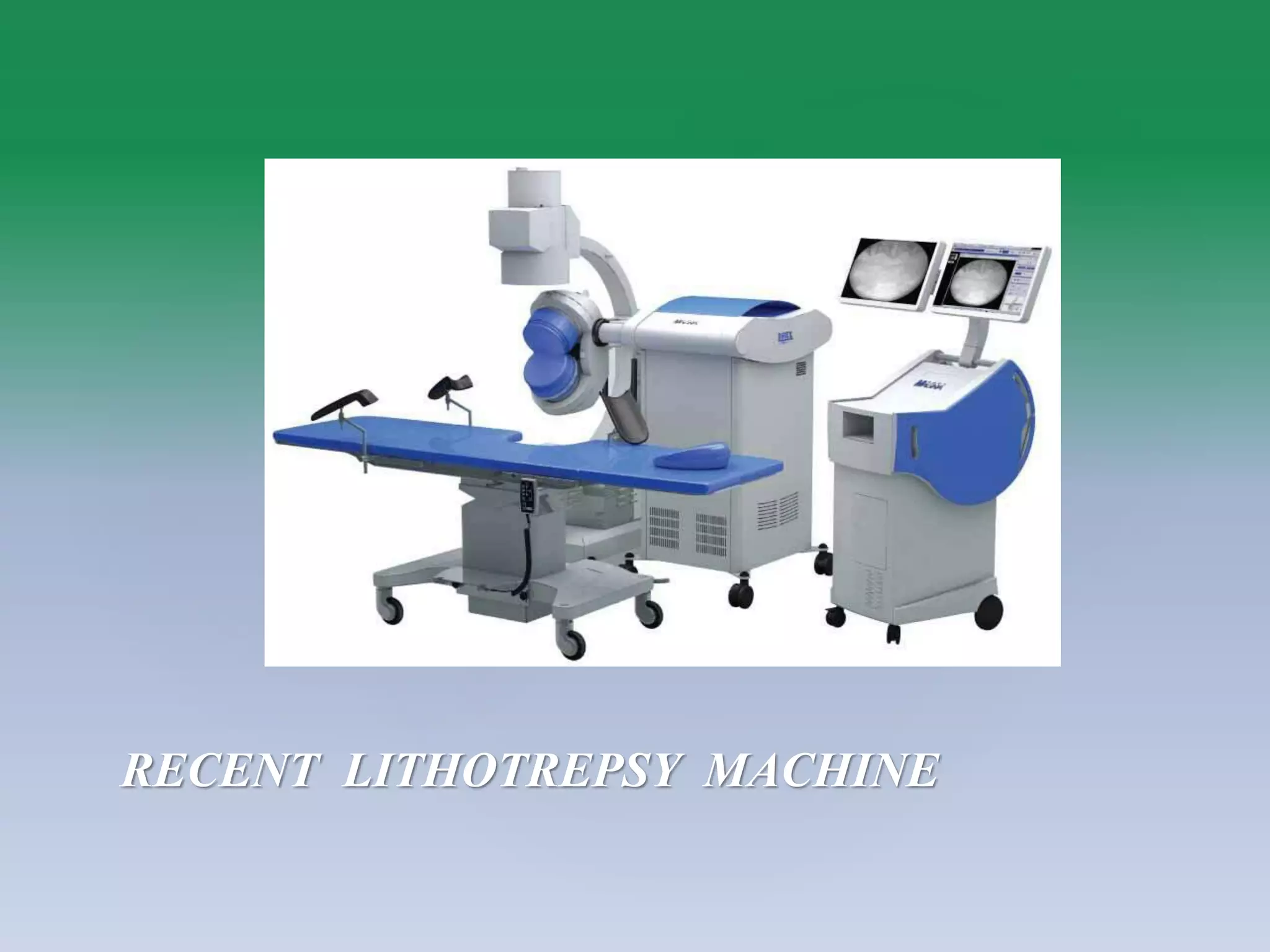
RECENT LITHOTREPSY MACHINE
WORKING…
 Are pregnant
 Have bleeding problems
 Have non working kidneys
 Have pacemaker
 People who cannot have anaesthesia or x-rays.
WHY SHOULD NOT HAVE LITHOTRIPSY?
 Blood in the urine.
 Pain and discomfort due to passage to
remaining stone fragments.
 Frequent and urgency of urination.
 Persistent abnomial pain due to injury to
internal organs.
 Repeat lithotripsy procedure may be needed.
RISKS
 It is non invasive treatment.
 No length hospital stays.
 NO Surgery
 No incisions
 No length recovery periods.
ADVANTAGES
 Medicine to prevent infections.
 Some discomfort.
 Passing sand like particles in the urine for a
few weeks after the lithotripsy.
DISADVANTAGES
THANK YOU

LITHOTRIPSY

  • 1.
  • 2.
     Introduction  History Purpose of lithotripsy  Symptoms  Techniques  Procedure  Risks  Advantages and disadvantages COMPONENTS
  • 3.
     Lithotripsy isa medical procedure used to treat certain types of kidney stones and stones in the other organs such as gallblader or liver.  Lithotripsy is the uses of high energy shock waves to break up stones in the kidney.  In Greek word litho means STONE, trip means break. LITHOTRIPSY
  • 4.
    . Frenchsurgeon andurologist jean civiale invented a surgical instrument in 1832. . Lithotripsy was developed,and replaced in the treatment of beginning in the year 1980. . ESWL was first used on kidney stones In the year of 1980. . Electrohydraulic lithotripsy was introduced in the year of 1975. . Laser lithotripsy was introduced in the year of 1980. HISTORY
  • 5.
     It isused for removing kidney stones without Surgery that causes. . pain . bleeding . damage to kidney due to blockage. . urinary tract infections PURPOSE OF LITHOTRIPSY
  • 6.
     The symptomsare: . Bleeding disorder . Abdnominal pain . Urinary tract infection . Damaged kidney infection . Nausea SYMPTOMS
  • 7.
     Extracorpeal shockwave lithotripsy Intracorpeal (endoscopic lithotripsy) . laser lithotripsy . Electrohydraulic lithotripsy . Mechanical lithotripsy . Ultrasonic lithotripsy TECHNIQUES
  • 8.
    Extracorpeal lithotripsy isthe least invasive surgical stone treatment.  It using high frequency sound waves from an external sources to break up kidney stones into smaller pieces.  And allow them pass through the urinary tract.  It is not performed in pregnant,bleeding disorder,urinary infection. EXTRACORPEAL LITHOTRIPSY
  • 9.
     Endoscopic lithotripsyrefers to the visualization of a calculus in the urinary tract  And the stimultaneous application of energy to fragment the stones.  Many calculi in the upper urinary tract are treated with endoscopic lithotripsy.  Ureteroscope is the most common means of visualizing an upper urinary tract calculus. ENDOSCOPIC LITHOTRIPSY
  • 10.
     Pneumatic mechanicaldevices, such as the lithoclast ,are small endoscopic jackhammers.  The lithoclast can be used through rigid endoscopes.  The lithoclast is an efficient and economical means of fragmenting calculi.  It is particularly useful for managing large and hard stones. MECHANICAL LITHOTRIPSY
  • 11.
     The pulseddye laser, which uses 504nm of light delivered through optical quartz fibers.  The laser produced plasma between the tip of the fiber and the calculus,fragmenting the stone with a photo acoustic effect.  The 200mm fiber allows the most endoscopic deflection but can deliver only 80mj energy,which is to fragment the calculi. LASER LITHOTRIPSY
  • 12.
     It createsa small park of high temperature that vaporise a small volume of water into gasseous bubble.  The bubble expands circumferentially.  Its damaging adjacent large fragments and falling to fragment the hardest calculi. ELECTROHYDRAULIC LITHOTRIPSY
  • 13.
     Ultrasonic lithotripsywas used intially.  This modality requires a rigid endoscope and is commonly used via percutaneous real approch.  It is less useful WITH URETEROSCOPY. ULTRASONIC LITHOTRIPSY
  • 15.
  • 16.
  • 17.
     Are pregnant Have bleeding problems  Have non working kidneys  Have pacemaker  People who cannot have anaesthesia or x-rays. WHY SHOULD NOT HAVE LITHOTRIPSY?
  • 18.
     Blood inthe urine.  Pain and discomfort due to passage to remaining stone fragments.  Frequent and urgency of urination.  Persistent abnomial pain due to injury to internal organs.  Repeat lithotripsy procedure may be needed. RISKS
  • 19.
     It isnon invasive treatment.  No length hospital stays.  NO Surgery  No incisions  No length recovery periods. ADVANTAGES
  • 20.
     Medicine toprevent infections.  Some discomfort.  Passing sand like particles in the urine for a few weeks after the lithotripsy. DISADVANTAGES
  • 21.