CT AND MRI PREPARATION
NUR FADZLINA ZABRI
08201310006
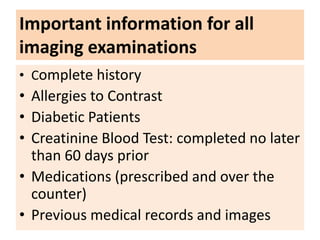
Important information for all
imaging examinations
• Complete history
• Allergies to Contrast
• Diabetic Patients
• Creatinine Blood Test: completed no later
than 60 days prior
• Medications (prescribed and over the
counter)
• Previous medical records and images
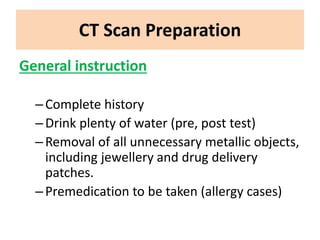
CT Scan Preparation
General instruction
–Complete history
–Drink plenty of water (pre, post test)
–Removal of all unnecessary metallic objects,
including jewellery and drug delivery
patches.
–Premedication to be taken (allergy cases)
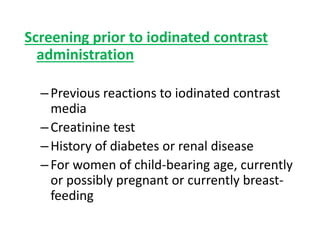
Screening prior to iodinated contrast
administration
–Previous reactions to iodinated contrast
media
–Creatinine test
–History of diabetes or renal disease
–For women of child-bearing age, currently
or possibly pregnant or currently breast-
feeding
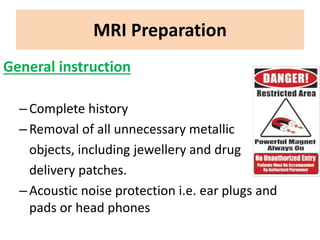
MRI Preparation
General instruction
–Complete history
–Removal of all unnecessary metallic
objects, including jewellery and drug
delivery patches.
–Acoustic noise protection i.e. ear plugs and
pads or head phones
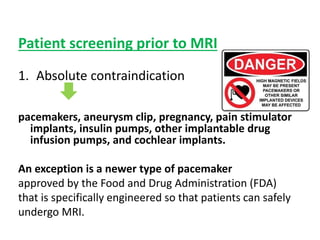
Patient screening prior to MRI
1. Absolute contraindication
pacemakers, aneurysm clip, pregnancy, pain stimulator
implants, insulin pumps, other implantable drug
infusion pumps, and cochlear implants.
An exception is a newer type of pacemaker
approved by the Food and Drug Administration (FDA)
that is specifically engineered so that patients can safely
undergo MRI.
2. Creatinine Testing Prior to Gadolinium
Administration
– In patient with following risk factors
Age over 60
History of kidney disease, including tumor and
transplant
Family history or kidney failure or disease
Diabetes treated with insulin or other prescribed
medications
Hypertension requiring medication
Multiple myeloma
Solid organ transplant
History of severe liver disease
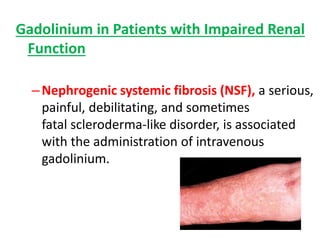
Gadolinium in Patients with Impaired Renal
Function
–Nephrogenic systemic fibrosis (NSF), a serious,
painful, debilitating, and sometimes
fatal scleroderma-like disorder, is associated
with the administration of intravenous
gadolinium.
MRI in pregnant lady
– ONLY if the procedure cannot be reasonably
postponed until after the pregnancy.
– Intravenous gadolinium is contraindicated in
pregnancy - hence clinician should discussed with
patient thoroughly
– MUST obtain written consent.
During the scan
– Patient should avoid coughing, wriggling or
producing other large motion during the scans
– Patient with claustrophobia/children may require
sedation (diazepam,midazolam)
References
• William Herring, Learning radiology and
Recognizing the Basics by Elsevier
• https://medschool.vanderbilt.edu/radiology/
medical-professionals/prepare#collapse-520
• https://medschool.vanderbilt.edu/radiology/
medical-professionals/prepare

Ct and mri preparation

  • 1.
    CT AND MRIPREPARATION NUR FADZLINA ZABRI 08201310006
  • 2.
    Important information forall imaging examinations • Complete history • Allergies to Contrast • Diabetic Patients • Creatinine Blood Test: completed no later than 60 days prior • Medications (prescribed and over the counter) • Previous medical records and images
  • 3.
    CT Scan Preparation Generalinstruction –Complete history –Drink plenty of water (pre, post test) –Removal of all unnecessary metallic objects, including jewellery and drug delivery patches. –Premedication to be taken (allergy cases)
  • 4.
    Screening prior toiodinated contrast administration –Previous reactions to iodinated contrast media –Creatinine test –History of diabetes or renal disease –For women of child-bearing age, currently or possibly pregnant or currently breast- feeding
  • 6.
    MRI Preparation General instruction –Completehistory –Removal of all unnecessary metallic objects, including jewellery and drug delivery patches. –Acoustic noise protection i.e. ear plugs and pads or head phones
  • 7.
    Patient screening priorto MRI 1. Absolute contraindication pacemakers, aneurysm clip, pregnancy, pain stimulator implants, insulin pumps, other implantable drug infusion pumps, and cochlear implants. An exception is a newer type of pacemaker approved by the Food and Drug Administration (FDA) that is specifically engineered so that patients can safely undergo MRI.
  • 8.
    2. Creatinine TestingPrior to Gadolinium Administration – In patient with following risk factors Age over 60 History of kidney disease, including tumor and transplant Family history or kidney failure or disease Diabetes treated with insulin or other prescribed medications Hypertension requiring medication Multiple myeloma Solid organ transplant History of severe liver disease
  • 9.
    Gadolinium in Patientswith Impaired Renal Function –Nephrogenic systemic fibrosis (NSF), a serious, painful, debilitating, and sometimes fatal scleroderma-like disorder, is associated with the administration of intravenous gadolinium.
  • 10.
    MRI in pregnantlady – ONLY if the procedure cannot be reasonably postponed until after the pregnancy. – Intravenous gadolinium is contraindicated in pregnancy - hence clinician should discussed with patient thoroughly – MUST obtain written consent.
  • 11.
    During the scan –Patient should avoid coughing, wriggling or producing other large motion during the scans – Patient with claustrophobia/children may require sedation (diazepam,midazolam)
  • 12.
    References • William Herring,Learning radiology and Recognizing the Basics by Elsevier • https://medschool.vanderbilt.edu/radiology/ medical-professionals/prepare#collapse-520 • https://medschool.vanderbilt.edu/radiology/ medical-professionals/prepare

Editor's Notes

  • #4 Methylprednisolone, prednisolone, or hydrocortisone should be tken 7 hours prior to administration of contrast
  • #5 Metformin shud be discontinued 48 hours prior to the test
  • #7 All patients and other individuals in the room during the actual scan receive acoustic noise protection. When possible, two forms of noise protection are utilized, i.e. ear plugs and pads or head phones
  • #10 NSF produces fibrosis resembling scleroderma of the skin,eyes, joints, and internal organs. Caution must be exercised when administering gadolinium to patients who have moderate renal disease (particularly with estimated glomerular filtration
  • #11 MRI should probably not be performed electively in earlyterm pregnancy due to the unknown risk to the fetus. ■ The use of gadolinium contrast agents is not recommendedin pregnant patients, because gadolinium crosses the placenta, is subsequently excreted by the fetal kidneys, and has unknown effects on the fetus.