LITHOTRIPSY
WHAT IS LITHOTRIPSY?
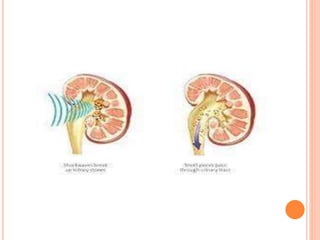
Lithotripsy is a noninvasive procedure used to treat kidney
stones that are too large to pass the urinary tract. Lithotripsy
treats kidney stones by sending focused ultrasonic energy or
shock waves directly to the stone first located
with fluoroscopy (a type of X-ray “movie”) or ultrasound (high
frequency sound waves). The shock waves break a large
stone into smaller stones that will pass through the urinary
system. Lithotripsy allows persons with certain types of
stones in the urinary system to avoid an invasive surgical
procedure for stone removal. In order to aim the waves, your
doctor must be able to see the stones under X-
ray or ultrasound.
WHY THE PROCEDURE IS PERFORMED
 Lithotripsy is used to remove kidney stones that are
causing:
 Bleeding
 Damage to your kidney
 Pain
 Urinary tract infections
USING LITHOTRIPSY. THE STONE MAY ALSO
BE REMOVED WITH:
 A tube (endoscope) inserted into the kidney through
a small surgical cut in the back.
 A small lighted tube (ureteroscope) inserted through
the bladder into ureters. Ureters are the tubes that
connect the kidneys to the bladder.
 Open surgery (rarely needed).
LITHOTRIPSY IS SAFE MOST OF THE TIME. TALK TO
YOUR HEALTH CARE PROVIDER ABOUT POSSIBLE
COMPLICATIONS SUCH AS:
 Bleeding around your kidney, which may require
you to get a blood transfusion.
 Kidney infection.
 Pieces of the stone block urine flow from your
kidney (this may cause severe pain or damage to
your kidney). If this happens, you may need
additional procedures.
 Pieces of stone are left in your body (you may need
more treatments).
 Ulcers in your stomach or small intestine.
 Problems with kidney function after the procedure.
OTHER PROCEDURES THAT MAY BE USED TO
TREAT KIDNEY STONES INCLUDE:
 Urethroscopy or ureteroscopy. Endoscopic
procedures in which stones in the urethra or ureter
may be removed with a device inserted through a
short, flexible, lighted tube, called an endoscope.
 Percutaneous nephrolithotomy (tunnel
surgery). A surgical procedure for stones that
cannot be treated with lithotripsy or endoscopic
procedures. It involves the removal of a stone
through a thin tube tunneled through a small
incision in the back into the kidney.
 Open surgery. A more invasive surgical procedure
using a larger incision to directly access the stone.
 Stent
Prepared by the student:
Amran Odeh
Under the supervision of Dr.:
Muhammad Awwad

Lithotripsy.pptx

  • 1.
  • 2.
    WHAT IS LITHOTRIPSY? Lithotripsyis a noninvasive procedure used to treat kidney stones that are too large to pass the urinary tract. Lithotripsy treats kidney stones by sending focused ultrasonic energy or shock waves directly to the stone first located with fluoroscopy (a type of X-ray “movie”) or ultrasound (high frequency sound waves). The shock waves break a large stone into smaller stones that will pass through the urinary system. Lithotripsy allows persons with certain types of stones in the urinary system to avoid an invasive surgical procedure for stone removal. In order to aim the waves, your doctor must be able to see the stones under X- ray or ultrasound.
  • 4.
    WHY THE PROCEDUREIS PERFORMED  Lithotripsy is used to remove kidney stones that are causing:  Bleeding  Damage to your kidney  Pain  Urinary tract infections
  • 5.
    USING LITHOTRIPSY. THESTONE MAY ALSO BE REMOVED WITH:  A tube (endoscope) inserted into the kidney through a small surgical cut in the back.  A small lighted tube (ureteroscope) inserted through the bladder into ureters. Ureters are the tubes that connect the kidneys to the bladder.  Open surgery (rarely needed).
  • 6.
    LITHOTRIPSY IS SAFEMOST OF THE TIME. TALK TO YOUR HEALTH CARE PROVIDER ABOUT POSSIBLE COMPLICATIONS SUCH AS:  Bleeding around your kidney, which may require you to get a blood transfusion.  Kidney infection.  Pieces of the stone block urine flow from your kidney (this may cause severe pain or damage to your kidney). If this happens, you may need additional procedures.  Pieces of stone are left in your body (you may need more treatments).  Ulcers in your stomach or small intestine.  Problems with kidney function after the procedure.
  • 7.
    OTHER PROCEDURES THATMAY BE USED TO TREAT KIDNEY STONES INCLUDE:  Urethroscopy or ureteroscopy. Endoscopic procedures in which stones in the urethra or ureter may be removed with a device inserted through a short, flexible, lighted tube, called an endoscope.  Percutaneous nephrolithotomy (tunnel surgery). A surgical procedure for stones that cannot be treated with lithotripsy or endoscopic procedures. It involves the removal of a stone through a thin tube tunneled through a small incision in the back into the kidney.
  • 8.
     Open surgery.A more invasive surgical procedure using a larger incision to directly access the stone.  Stent
  • 9.
    Prepared by thestudent: Amran Odeh Under the supervision of Dr.: Muhammad Awwad