Angiography/
Interventional Basics
How do we perform an angiographic
procedure?
Dr. ABEER FAWZY EL-SOBKY
MASTER of RADIOLOGY
© Vascular 2007 2
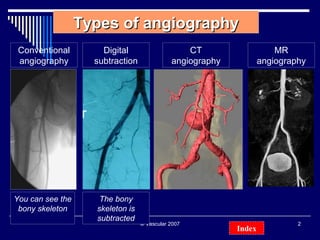
Types of angiographyTypes of angiography
Conventional
angiography
Digital
subtraction
CT
angiography
MR
angiography
You can see the
bony skeleton
The bony
skeleton is
subtracted
Index
So advanced CT, US and
MRA techniques made
conventional angiography
limited to therapeutic
purposes (Angioplasty).
Technique
of
angiography
Personnel in the Angio Room
 Radiologist ( or other specialist)
 Cardiovascular nurse
 2-3 Radiologic Technologists (CV)
 Sometimes Anesthesiologist depending
on the procedure
Technologist Responsibilities
 Prepare Room/ consent forms
 Provide radiographic positioning / Dr Assistance
 Knowledge of exam, anatomy, pathology
 Prepare sterile tray, prep patient
 Knowledge of catheters and guide wires
 Know sterile technique/ safe clean up
 Monitor ECG + pressure
 Patient care skills and pharmacology
Angiography/ Interventional/
Cardiovascular
 Procedure Room
(Suite)
 Room size- 400-
600 square feet
 Easily cleaned
(floors, wall, etc.)
 Outlets needed for
O2, suction.
 Control Room
 100-150 square feet
 Easy access and
communication to
procedure room
 Computers, monitors and
un sterile personnel
 Storage area- guide
wires, catheters and
needles
Equipment found in all
Advanced Procedure Rooms
 X-ray generators
 Controls
 X-ray Tubes
 System to record events of procedure
 Automatic Injectors
X-Ray Tube Requirements
 Detail
 Withstand high heat- rapid exposure
sequences
 Use smallest possible focal spot
Equipment Requirements
 High heat load tubes w/ rapid cooling
 Series imaging (up to 3-4 films/sec),
intense heat
 Analog- to- Digital Conversion System
 Programmable digital image acquisition
system
 PACS
 Electromagnetic Injectors
 Monitoring Equipment- BP & ECG
 Island Tables- access from all sides,
height adjustments, floor controls
 Tables do not usually tilt
Digital Imaging- Analog VS
Digital Concepts
 Analog- image seen after chemical
process
 Digital- image manipulated by software
 Information changed through use of
computer algorithm
Digital Subtraction
Angiography (DSA)
 Computer “ subtracts” out all anatomy
except contrast-filled vessels
 Looks like a reverse image
 Can be more diagnostic for vessels
( clots, constrictions)
Electromechanical Injector
 Used in Angio, CT, MRI
 Overcome arterial pressure + maintains
bolus
 Maintains flow rate
 Flow rate affected by
 Viscosity
 Length + diameter catheter
 Injection pressure
 Vessel selected
Seldinger Technique
 Method for catheterization of vessels
 Developed 1950’s still popular today
 Percutaneous (through the skin)
technique for arterial and venous access
 3 vessels considered:
 Femoral –preferred site for arterial (size +
accessibility)
 Brachial
 Axillary
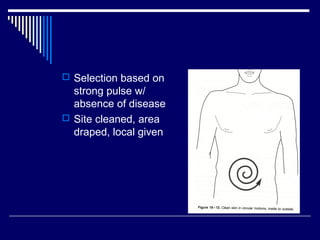
 Selection based on
strong pulse w/
absence of disease
 Site cleaned, area
draped, local given
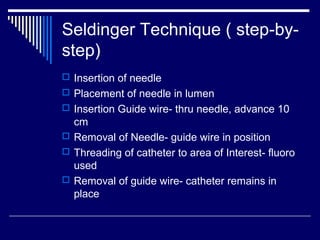
Seldinger Technique ( step-by-
step)
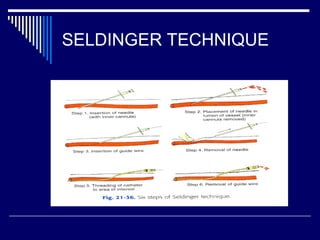
 Insertion of needle
 Placement of needle in lumen
 Insertion Guide wire- thru needle, advance 10
cm
 Removal of Needle- guide wire in position
 Threading of catheter to area of Interest- fluoro
used
 Removal of guide wire- catheter remains in
place
SELDINGER TECHNIQUE
 Two less common methods used
 Cut down- minor surgical procedure to
expose vessel of interest
 Translumbar- patient prone, long needle
passed thru T12- L2 into aorta
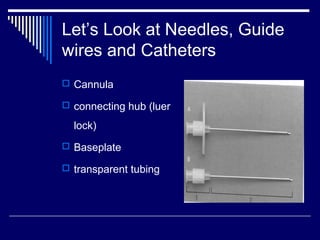
Let’s Look at Needles, Guide
wires and Catheters
 Cannula
 connecting hub (luer
lock)
 Baseplate
 transparent tubing
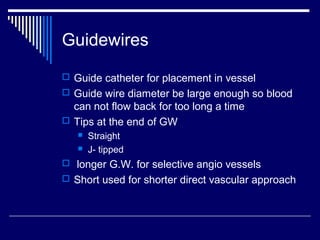
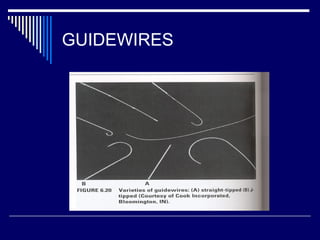
Guidewires
 Guide catheter for placement in vessel
 Guide wire diameter be large enough so blood
can not flow back for too long a time
 Tips at the end of GW
 Straight
 J- tipped
 longer G.W. for selective angio vessels
 Short used for shorter direct vascular approach
GUIDEWIRES
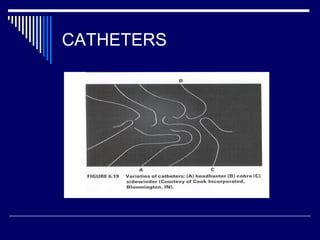
CATHETERS
 Straight- end hole only
 Pigtail- circular tip w/ multiple side
holes to reduce whiplash and control
contrast
 Sidewinder- curved to facilitate vessel
selection
 Cobra- variation in curvature to facilitate
selection of vessels
 The more holes at the end / the more
contrast used/ large vessels
 Catheter with only end hole/ smaller
vessels/ carotid
 Combo end and side holes reduce risk of
trauma to vessel, enhances contrast
CATHETERS
Interventional Imaging
Procedures
 Intervene w/ disease, provide
therapeutic outcome
 Purpose/ benefits
 Lower risk compared to surgery
 Less $
 Shorter hospital stay and recovery
 Alternative for non surgical patient
Preparation to procedure
 Anti coagulants- what do these do?
 Consent form
 NPO 8 hours
 Lab tests to test kidney function?
Post Procedure Care
 Catheter removed – compression
applied
 Bed rest- min 4 hrs/ head elevated 30
degrees
 Vital signs
 Extremity watch
Radiation Protection
 > radiation dose to angio team- fluoro
 Proximity to patient
 Radiation protection devices
 Leaded glasses pulled into place
 Minimal fluoro use as possible
 Collimation
 Angio personnel wear badges and ring
monitors
Contra Indications
 Contrast allergy
 Impaired renal function
 Blood- clotting disorders
 Anti coagulant medication
 Unstable cardio pulmonary/ neurological
status
Risks/ Complications
 Bleeding at puncture site
 Thrombus formation
 Embolus formation –plaque dislodged
from vessel wall by catheter
 Dissection of vessel
 Puncture site infection ( contaminated
sterile field)
 Contrast reaction
Angiography basics and seldinger technique

Angiography basics and seldinger technique

  • 1.
    Angiography/ Interventional Basics How dowe perform an angiographic procedure? Dr. ABEER FAWZY EL-SOBKY MASTER of RADIOLOGY
  • 2.
    © Vascular 20072 Types of angiographyTypes of angiography Conventional angiography Digital subtraction CT angiography MR angiography You can see the bony skeleton The bony skeleton is subtracted Index
  • 4.
    So advanced CT,US and MRA techniques made conventional angiography limited to therapeutic purposes (Angioplasty).
  • 5.
  • 6.
    Personnel in theAngio Room  Radiologist ( or other specialist)  Cardiovascular nurse  2-3 Radiologic Technologists (CV)  Sometimes Anesthesiologist depending on the procedure
  • 7.
    Technologist Responsibilities  PrepareRoom/ consent forms  Provide radiographic positioning / Dr Assistance  Knowledge of exam, anatomy, pathology  Prepare sterile tray, prep patient  Knowledge of catheters and guide wires  Know sterile technique/ safe clean up  Monitor ECG + pressure  Patient care skills and pharmacology
  • 8.
    Angiography/ Interventional/ Cardiovascular  ProcedureRoom (Suite)  Room size- 400- 600 square feet  Easily cleaned (floors, wall, etc.)  Outlets needed for O2, suction.  Control Room  100-150 square feet  Easy access and communication to procedure room  Computers, monitors and un sterile personnel  Storage area- guide wires, catheters and needles
  • 9.
    Equipment found inall Advanced Procedure Rooms  X-ray generators  Controls  X-ray Tubes  System to record events of procedure  Automatic Injectors
  • 10.
    X-Ray Tube Requirements Detail  Withstand high heat- rapid exposure sequences  Use smallest possible focal spot
  • 11.
    Equipment Requirements  Highheat load tubes w/ rapid cooling  Series imaging (up to 3-4 films/sec), intense heat  Analog- to- Digital Conversion System  Programmable digital image acquisition system  PACS
  • 12.
     Electromagnetic Injectors Monitoring Equipment- BP & ECG  Island Tables- access from all sides, height adjustments, floor controls  Tables do not usually tilt
  • 13.
    Digital Imaging- AnalogVS Digital Concepts  Analog- image seen after chemical process  Digital- image manipulated by software  Information changed through use of computer algorithm
  • 14.
    Digital Subtraction Angiography (DSA) Computer “ subtracts” out all anatomy except contrast-filled vessels  Looks like a reverse image  Can be more diagnostic for vessels ( clots, constrictions)
  • 15.
    Electromechanical Injector  Usedin Angio, CT, MRI  Overcome arterial pressure + maintains bolus  Maintains flow rate  Flow rate affected by  Viscosity  Length + diameter catheter  Injection pressure  Vessel selected
  • 16.
    Seldinger Technique  Methodfor catheterization of vessels  Developed 1950’s still popular today  Percutaneous (through the skin) technique for arterial and venous access  3 vessels considered:  Femoral –preferred site for arterial (size + accessibility)  Brachial  Axillary
  • 17.
     Selection basedon strong pulse w/ absence of disease  Site cleaned, area draped, local given
  • 18.
    Seldinger Technique (step-by- step)  Insertion of needle  Placement of needle in lumen  Insertion Guide wire- thru needle, advance 10 cm  Removal of Needle- guide wire in position  Threading of catheter to area of Interest- fluoro used  Removal of guide wire- catheter remains in place
  • 19.
  • 20.
     Two lesscommon methods used  Cut down- minor surgical procedure to expose vessel of interest  Translumbar- patient prone, long needle passed thru T12- L2 into aorta
  • 21.
    Let’s Look atNeedles, Guide wires and Catheters  Cannula  connecting hub (luer lock)  Baseplate  transparent tubing
  • 22.
    Guidewires  Guide catheterfor placement in vessel  Guide wire diameter be large enough so blood can not flow back for too long a time  Tips at the end of GW  Straight  J- tipped  longer G.W. for selective angio vessels  Short used for shorter direct vascular approach
  • 23.
  • 24.
    CATHETERS  Straight- endhole only  Pigtail- circular tip w/ multiple side holes to reduce whiplash and control contrast  Sidewinder- curved to facilitate vessel selection  Cobra- variation in curvature to facilitate selection of vessels
  • 25.
     The moreholes at the end / the more contrast used/ large vessels  Catheter with only end hole/ smaller vessels/ carotid  Combo end and side holes reduce risk of trauma to vessel, enhances contrast
  • 26.
  • 27.
    Interventional Imaging Procedures  Intervenew/ disease, provide therapeutic outcome  Purpose/ benefits  Lower risk compared to surgery  Less $  Shorter hospital stay and recovery  Alternative for non surgical patient
  • 28.
    Preparation to procedure Anti coagulants- what do these do?  Consent form  NPO 8 hours  Lab tests to test kidney function?
  • 29.
    Post Procedure Care Catheter removed – compression applied  Bed rest- min 4 hrs/ head elevated 30 degrees  Vital signs  Extremity watch
  • 30.
    Radiation Protection  >radiation dose to angio team- fluoro  Proximity to patient  Radiation protection devices  Leaded glasses pulled into place  Minimal fluoro use as possible  Collimation  Angio personnel wear badges and ring monitors
  • 31.
    Contra Indications  Contrastallergy  Impaired renal function  Blood- clotting disorders  Anti coagulant medication  Unstable cardio pulmonary/ neurological status
  • 32.
    Risks/ Complications  Bleedingat puncture site  Thrombus formation  Embolus formation –plaque dislodged from vessel wall by catheter  Dissection of vessel  Puncture site infection ( contaminated sterile field)  Contrast reaction