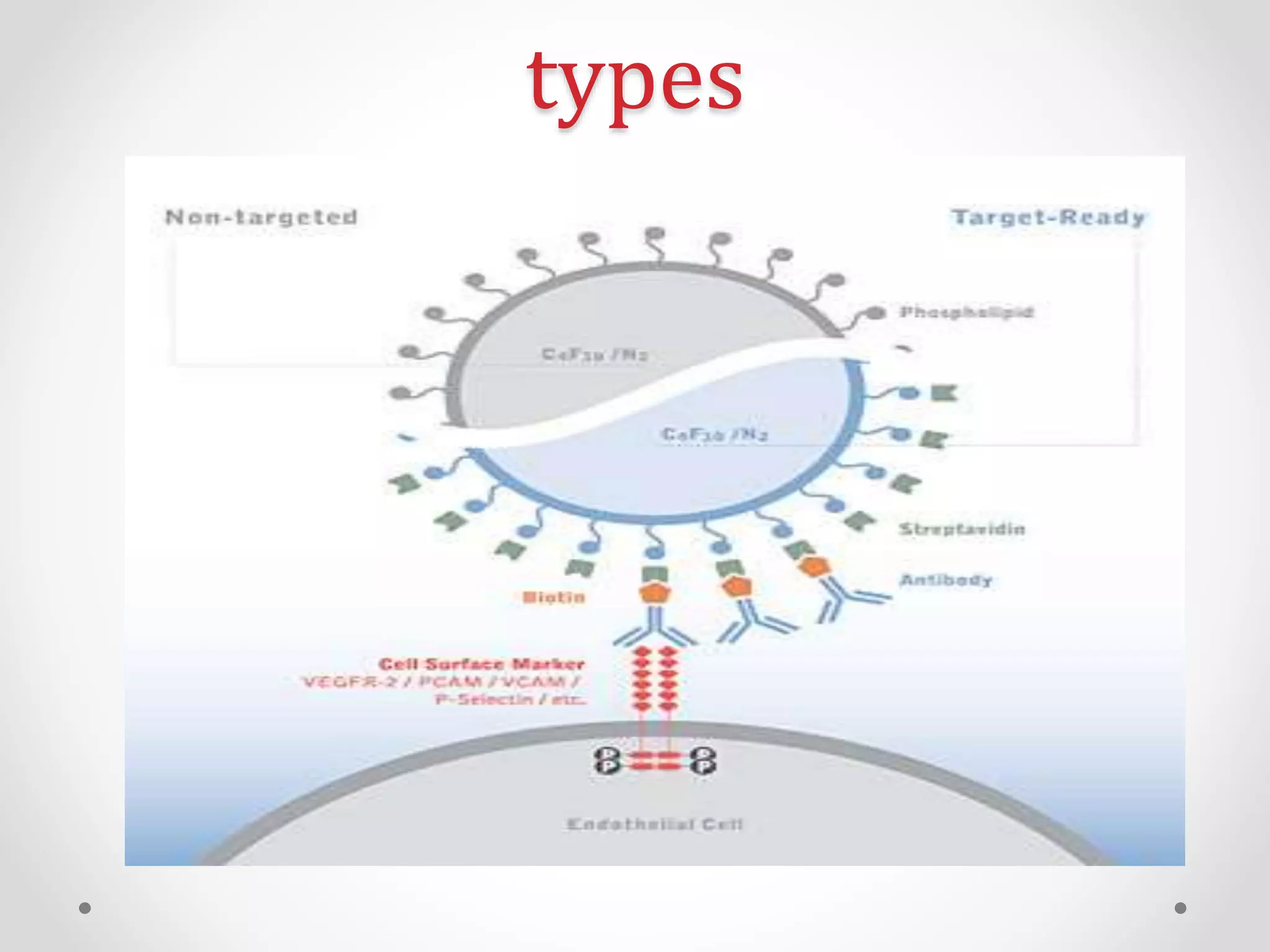
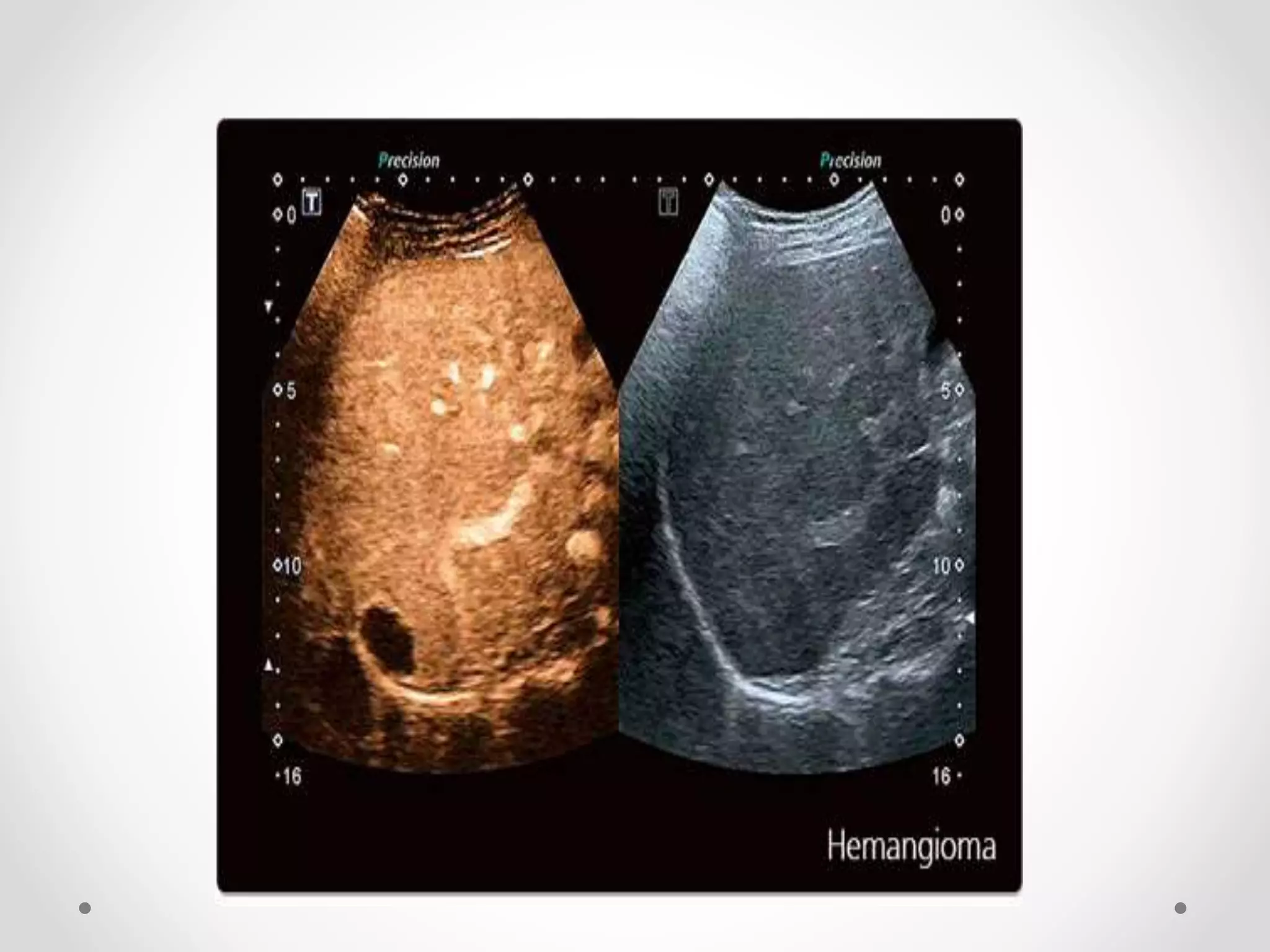
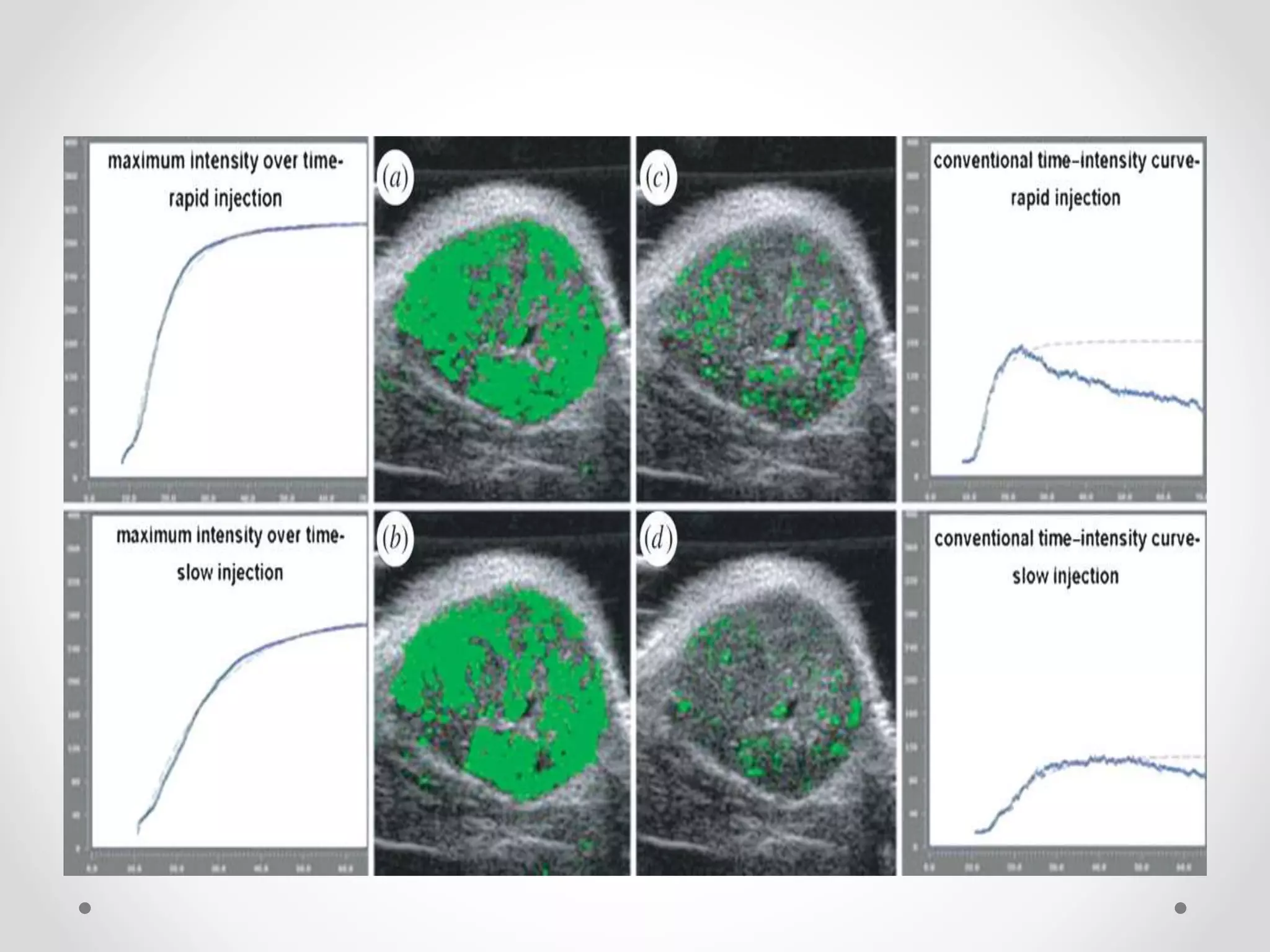
Ultrasound contrast agents rely on the different ways sound waves are reflected at interfaces between substances. Commercially available contrast media are gas-filled microbubbles administered intravenously, which have a high echogenicity compared to soft tissues. Contrast-enhanced ultrasound can image blood perfusion in organs and measure blood flow. Microbubbles are around 1-4 μm, similar to red blood cell size, and consist of a gas core surrounded by a lipid shell. Non-targeted contrast agents remain in circulation temporarily, while targeted agents are designed to bind specific molecules expressed in tissues of interest. Contrast imaging techniques include linear and nonlinear methods.