Methods
of
Teaching
By- R Dhaker, PCNMS
1
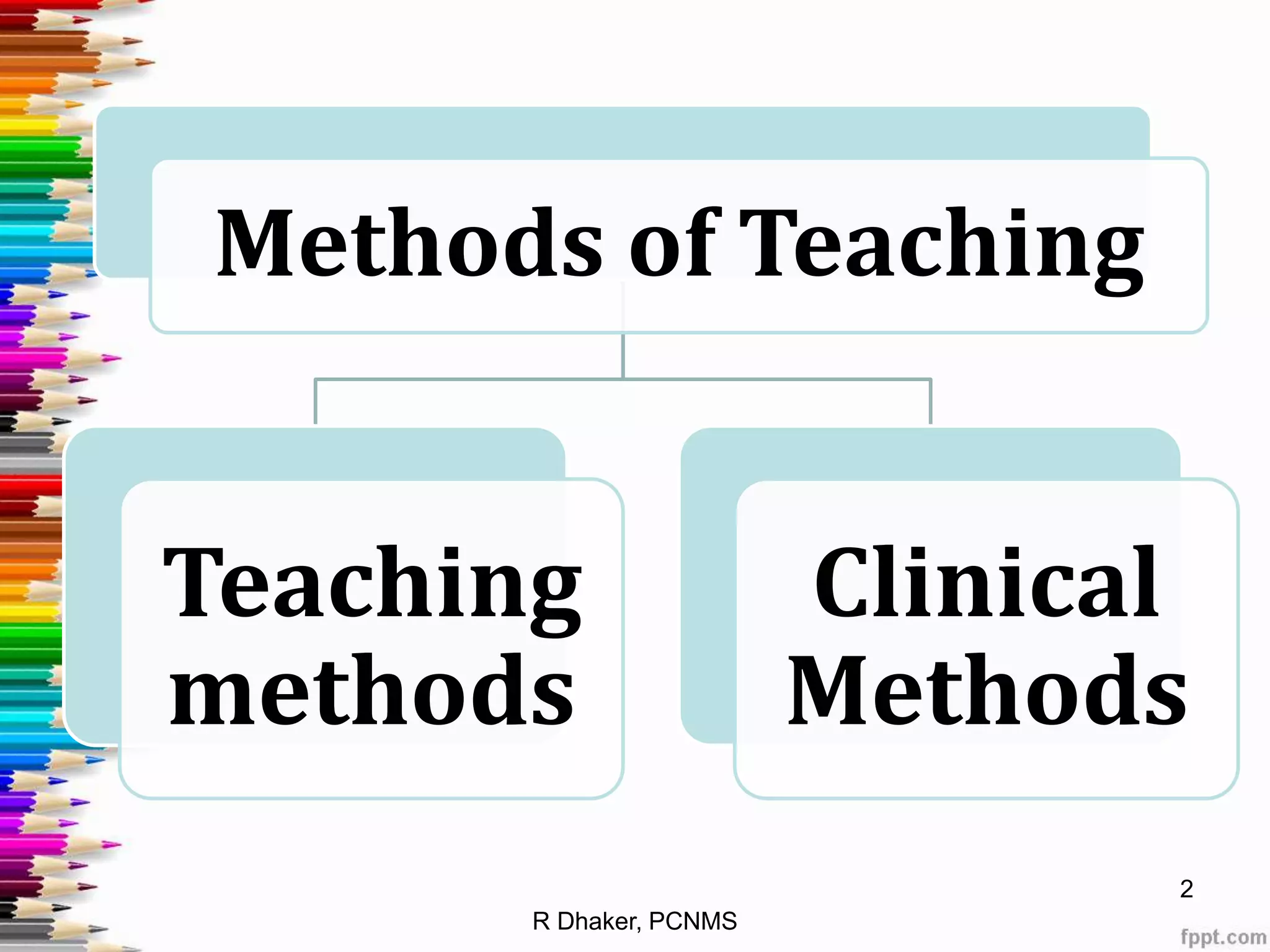
Methods of Teaching
Teaching
methods
Clinical
Methods
R Dhaker, PCNMS
2
Clinical
Methods
R Dhaker, PCNMS 3
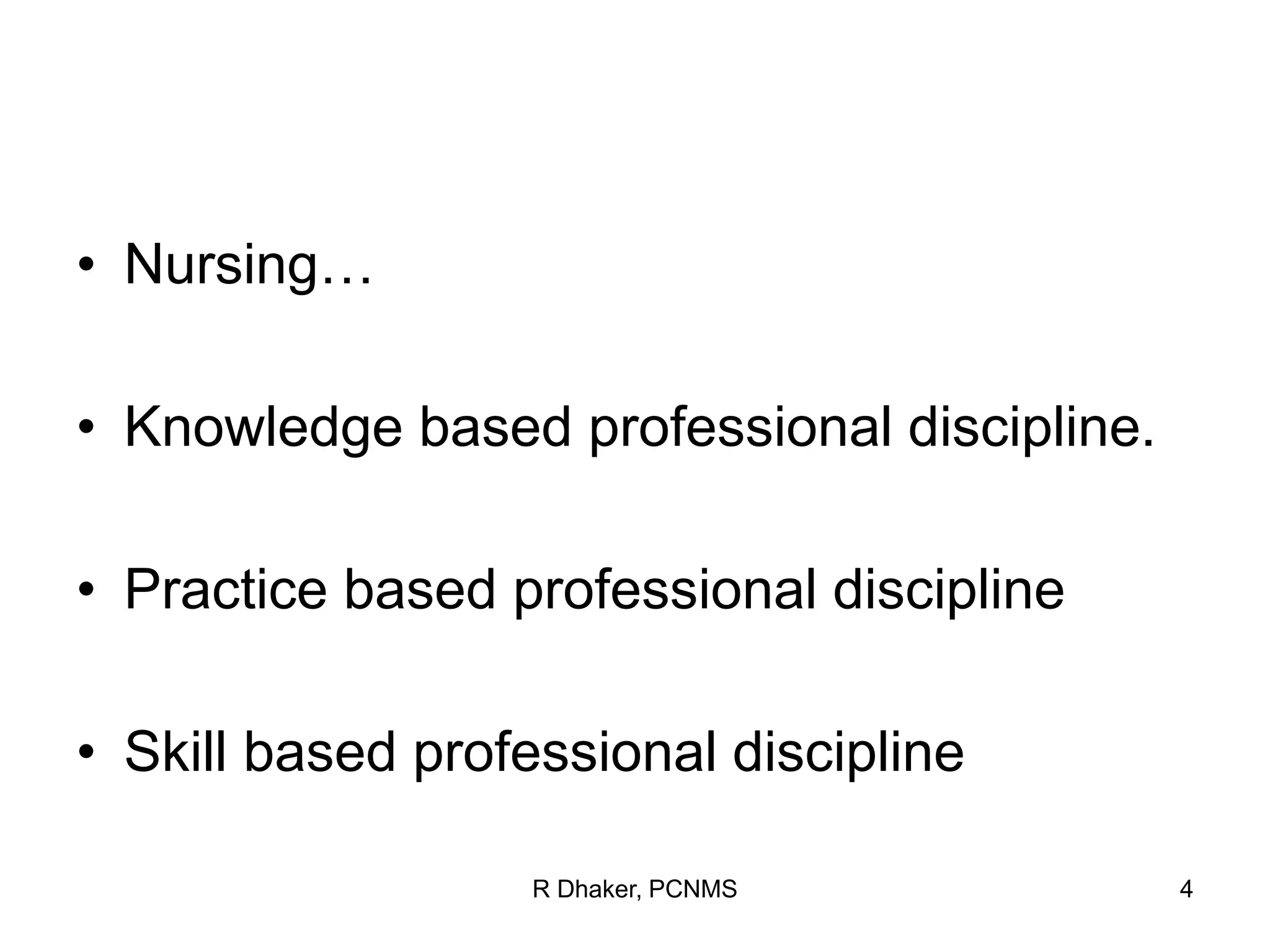
• Nursing…
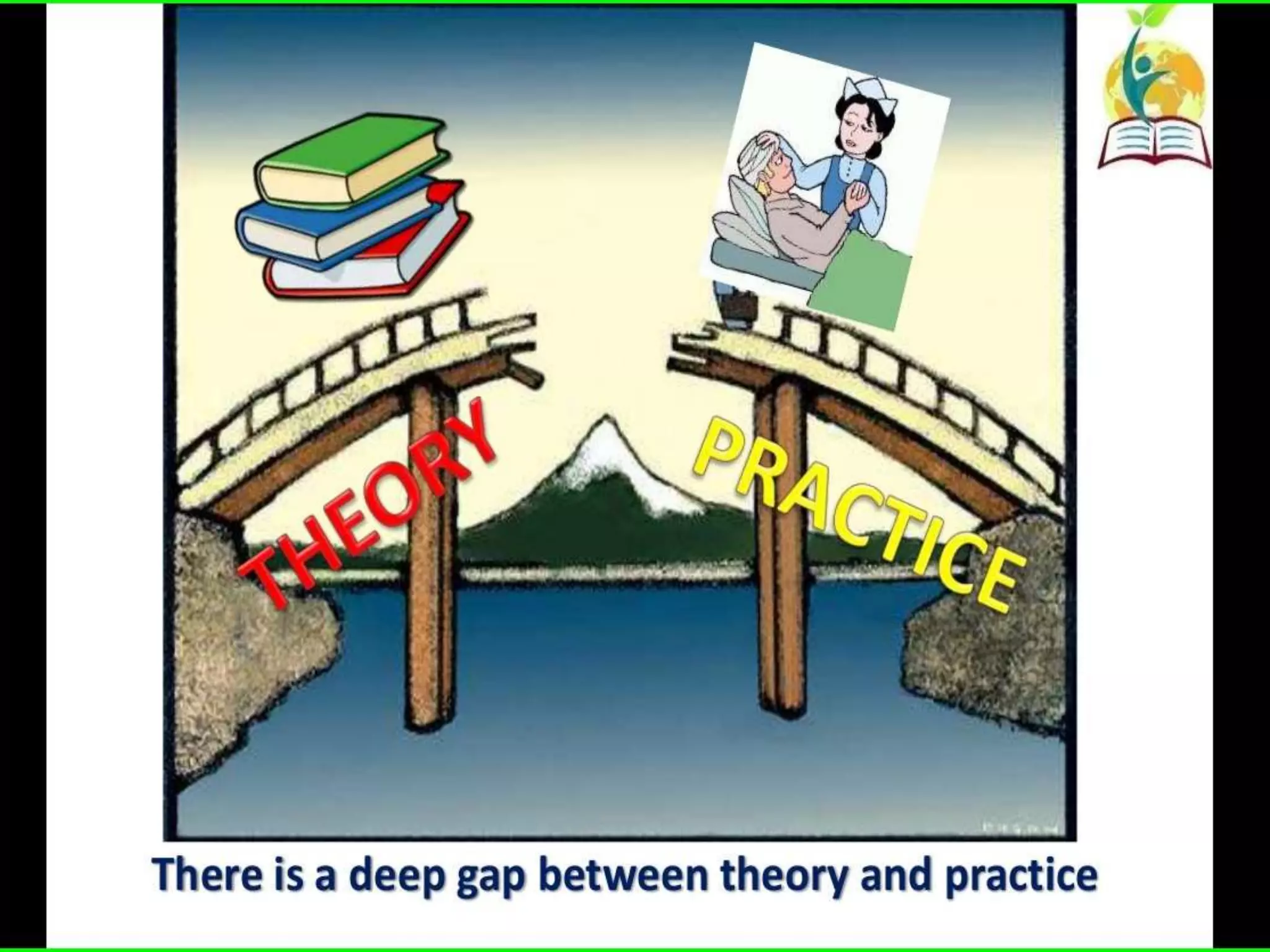
• Knowledge based professional discipline.
• Practice based professional discipline
• Skill based professional discipline
R Dhaker, PCNMS 4
R Dhaker, PCNMS 5
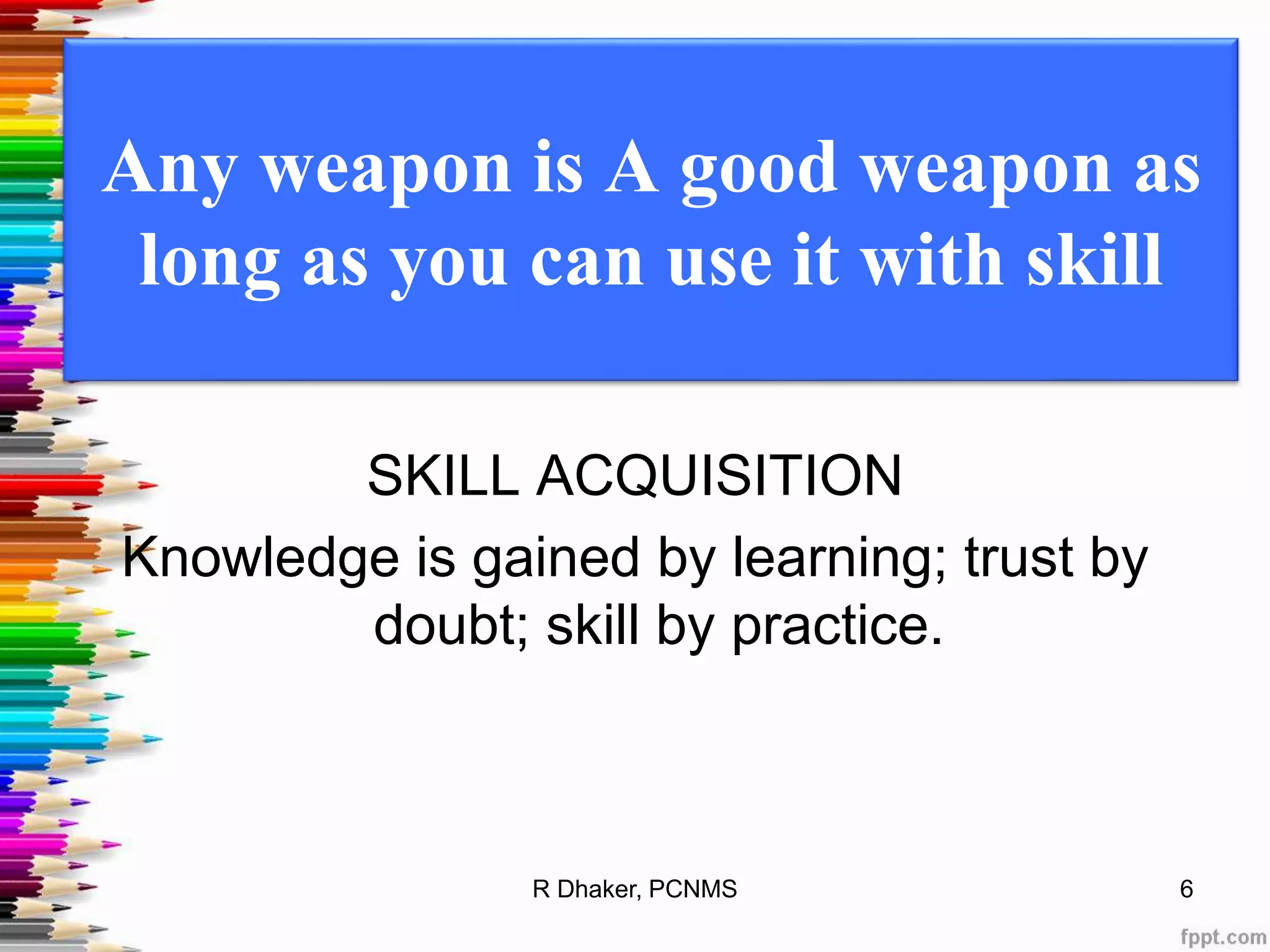
Any weapon is A good weapon as
long as you can use it with skill
SKILL ACQUISITION
Knowledge is gained by learning; trust by
doubt; skill by practice.
R Dhaker, PCNMS 6
R Dhaker, PCNMS 7
Introduction
• Nursing education is a practice discipline;
the students will learn the subject matter by
doing the things and practice the skill. It is
a sciences, it is based on systematic body
knowledge and principles of education.
R Dhaker, PCNMS
8
Cont… Introduction
• It is also implies as an art. Nursing
education is having more emphasis on skill
development based upon tow things-
– Theory of nursing
– Nursing practice.
R Dhaker, PCNMS 9
DEFINITION
• Clinical teaching is an individualized or group
teaching to the nursing students in the clinical
area by the nurse educators, staff nurse and
clinical nurse manager.
R Dhaker, PCNMS
10
Clinical Experience-
• The nursing care activities performance by the
student for the care of clients as a part of education
programme. Clinical experiences are divided into 3
types.
– Laboratory experience
– Supervised nursing care practice
– Interneeship
R Dhaker, PCNMS
11
Cont…Clinical Experience-
• Laboratory experience-
student will learn the skill in laboratory situation on
dummy or doll under supervision and guidance of
clinical experts in specific field, the experience will
be selected according to the needs of the students and
the requirements of the curriculum.
R Dhaker, PCNMS
12
Supervised nursing care practice
• Student after practice on the ideal situation (lab),
they will practice nursing care procedure in the
real field under expert’s supervision. Nursing care
experience will be planned, allotted, guidance and
supervised. The nursing care experience will be
provided for the students in each subject area.
R Dhaker, PCNMS 13
Interneeship
• After acquiring knowledge and practice in all
areas, according to the needs, requirement and
interest of the student, the faculty allow the
student to practice skills, here the teacher will act
an coordinator of the programme.
R Dhaker, PCNMS
14
Purpose of Clinical Teaching
• To provide individualize care in a systematic,
holistic approach.
• To develop high technical competent skills.
• To practice various procedures.
• To collect and analysis the data
• To conduct research
R Dhaker, PCNMS
15
Cont…Purpose of Clinical Teaching
• To maintain high standards of nursing practice.
• To become independence enough to practice nursing.
• To develop cognitive, affective and psychomotor
skills.
• To identify the problems of clients.
• To learn various skill in giving health education
teaching to the clients and significant others.
• To develop the communication skill and to maintain
IPR.
• To assist physician in assisting procedures.
R Dhaker, PCNMS
16
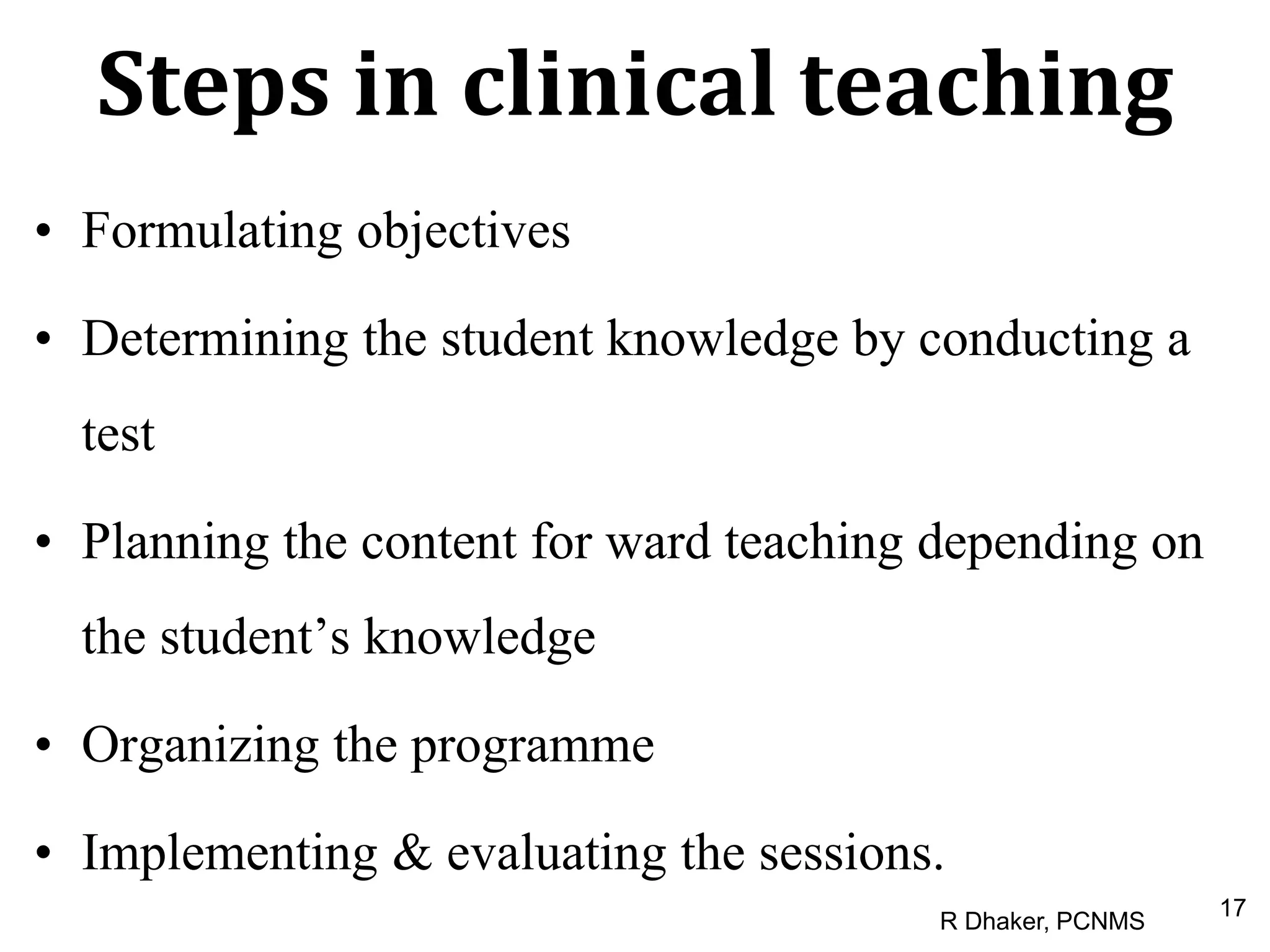
Steps in clinical teaching
• Formulating objectives
• Determining the student knowledge by conducting a
test
• Planning the content for ward teaching depending on
the student’s knowledge
• Organizing the programme
• Implementing & evaluating the sessions.
R Dhaker, PCNMS
17
Methods of
teaching in
clinical area
R Dhaker, PCNMS 18
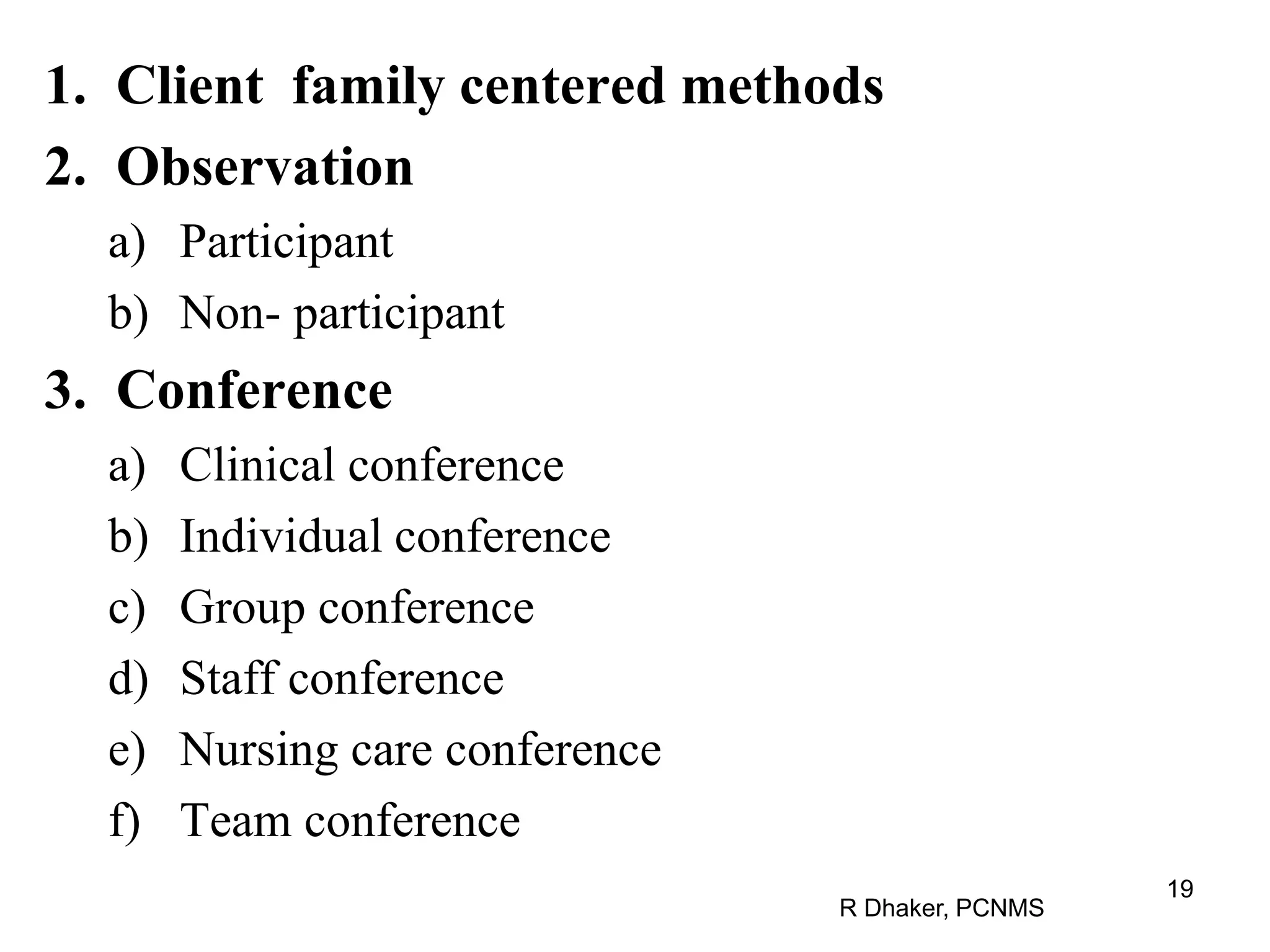
1. Client family centered methods
2. Observation
a) Participant
b) Non- participant
3. Conference
a) Clinical conference
b) Individual conference
c) Group conference
d) Staff conference
e) Nursing care conference
f) Team conference
R Dhaker, PCNMS
19
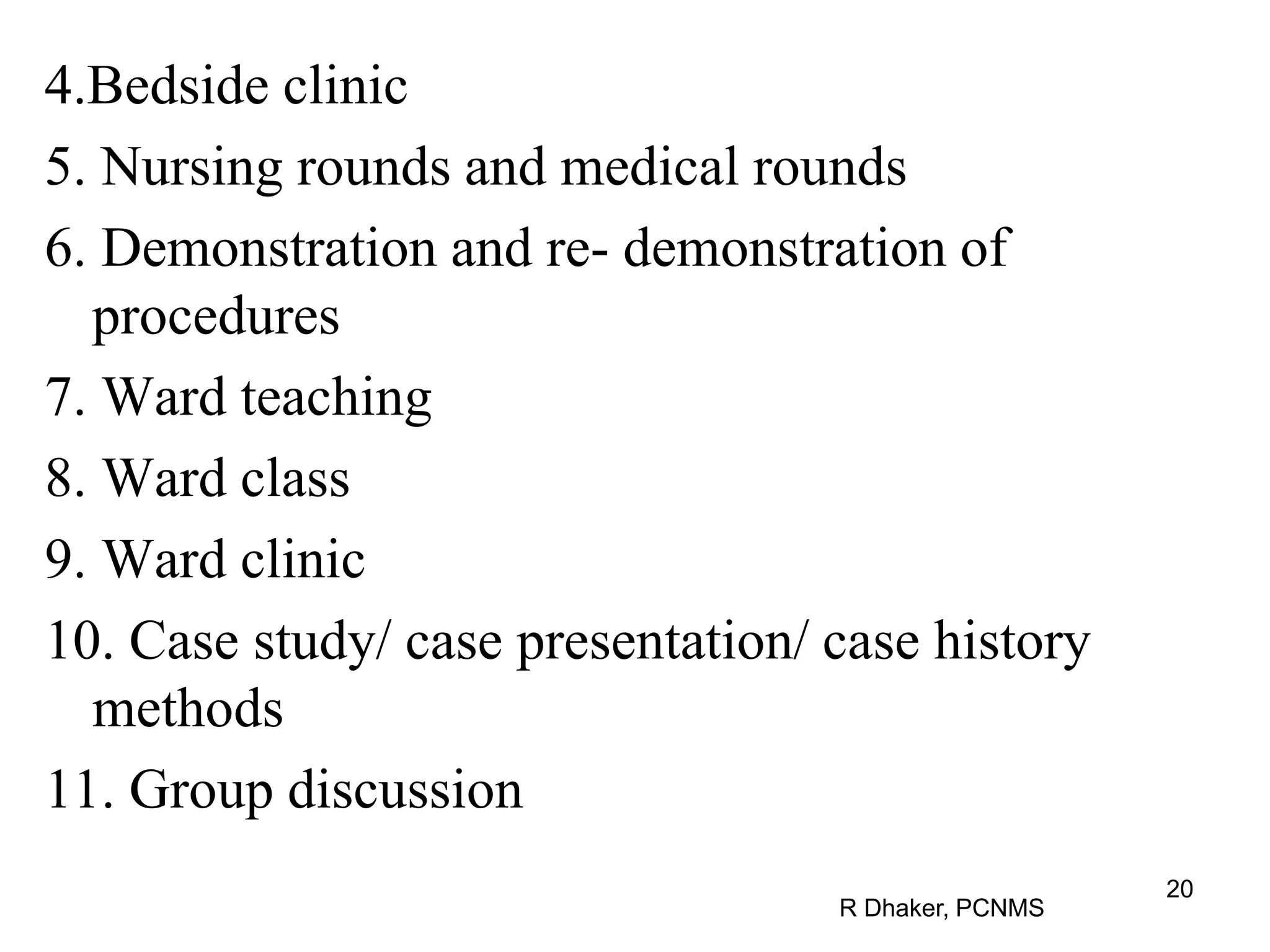
4.Bedside clinic
5. Nursing rounds and medical rounds
6. Demonstration and re- demonstration of
procedures
7. Ward teaching
8. Ward class
9. Ward clinic
10. Case study/ case presentation/ case history
methods
11. Group discussion
R Dhaker, PCNMS
20
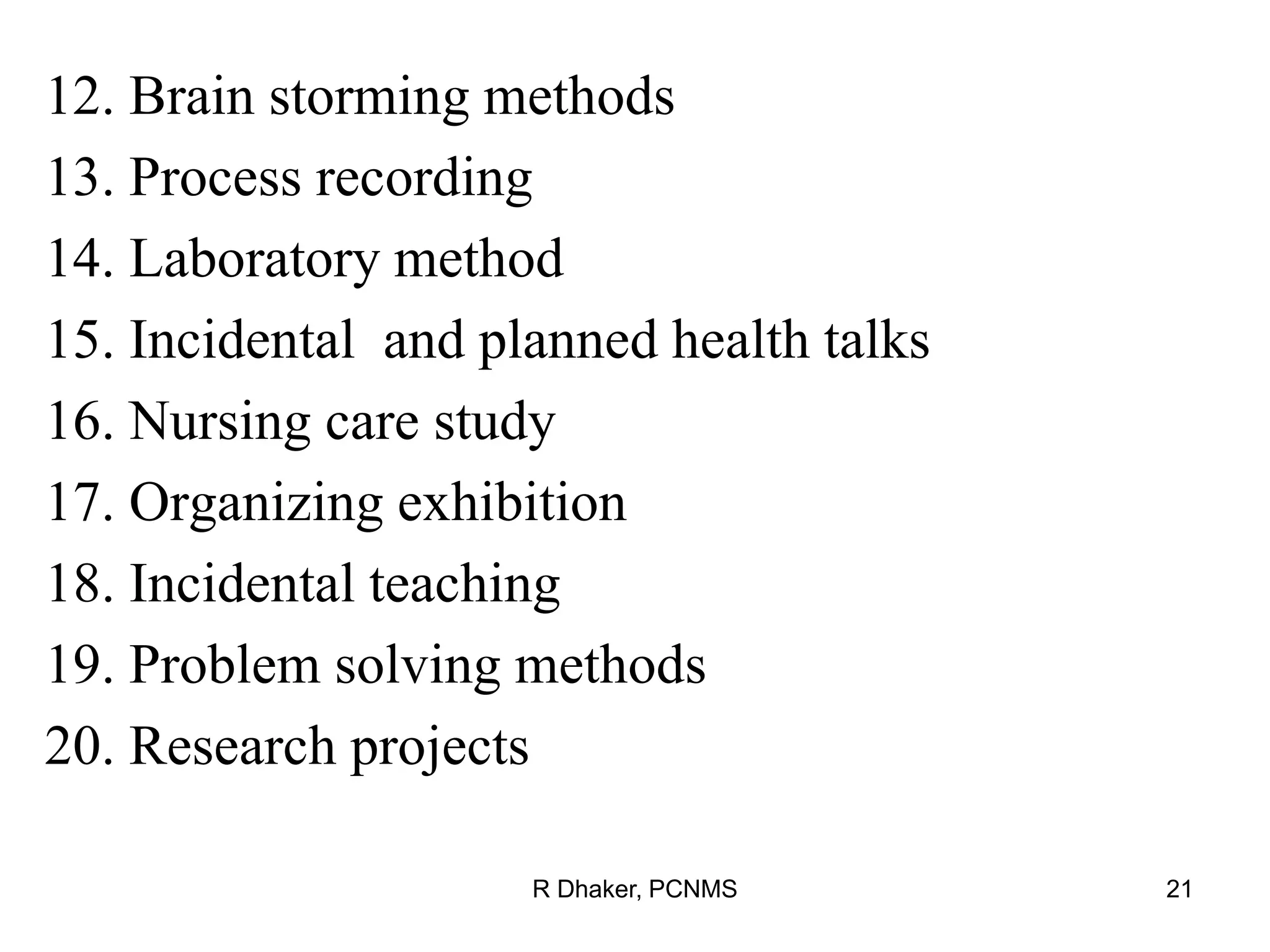
12. Brain storming methods
13. Process recording
14. Laboratory method
15. Incidental and planned health talks
16. Nursing care study
17. Organizing exhibition
18. Incidental teaching
19. Problem solving methods
20. Research projects
R Dhaker, PCNMS 21
R Dhaker, PCNMS 22

Methods of teaching...ppt

  • 1.
  • 2.
  • 3.
  • 4.
    • Nursing… • Knowledgebased professional discipline. • Practice based professional discipline • Skill based professional discipline R Dhaker, PCNMS 4
  • 5.
  • 6.
    Any weapon isA good weapon as long as you can use it with skill SKILL ACQUISITION Knowledge is gained by learning; trust by doubt; skill by practice. R Dhaker, PCNMS 6
  • 7.
  • 8.
    Introduction • Nursing educationis a practice discipline; the students will learn the subject matter by doing the things and practice the skill. It is a sciences, it is based on systematic body knowledge and principles of education. R Dhaker, PCNMS 8
  • 9.
    Cont… Introduction • Itis also implies as an art. Nursing education is having more emphasis on skill development based upon tow things- – Theory of nursing – Nursing practice. R Dhaker, PCNMS 9
  • 10.
    DEFINITION • Clinical teachingis an individualized or group teaching to the nursing students in the clinical area by the nurse educators, staff nurse and clinical nurse manager. R Dhaker, PCNMS 10
  • 11.
    Clinical Experience- • Thenursing care activities performance by the student for the care of clients as a part of education programme. Clinical experiences are divided into 3 types. – Laboratory experience – Supervised nursing care practice – Interneeship R Dhaker, PCNMS 11
  • 12.
    Cont…Clinical Experience- • Laboratoryexperience- student will learn the skill in laboratory situation on dummy or doll under supervision and guidance of clinical experts in specific field, the experience will be selected according to the needs of the students and the requirements of the curriculum. R Dhaker, PCNMS 12
  • 13.
    Supervised nursing carepractice • Student after practice on the ideal situation (lab), they will practice nursing care procedure in the real field under expert’s supervision. Nursing care experience will be planned, allotted, guidance and supervised. The nursing care experience will be provided for the students in each subject area. R Dhaker, PCNMS 13
  • 14.
    Interneeship • After acquiringknowledge and practice in all areas, according to the needs, requirement and interest of the student, the faculty allow the student to practice skills, here the teacher will act an coordinator of the programme. R Dhaker, PCNMS 14
  • 15.
    Purpose of ClinicalTeaching • To provide individualize care in a systematic, holistic approach. • To develop high technical competent skills. • To practice various procedures. • To collect and analysis the data • To conduct research R Dhaker, PCNMS 15
  • 16.
    Cont…Purpose of ClinicalTeaching • To maintain high standards of nursing practice. • To become independence enough to practice nursing. • To develop cognitive, affective and psychomotor skills. • To identify the problems of clients. • To learn various skill in giving health education teaching to the clients and significant others. • To develop the communication skill and to maintain IPR. • To assist physician in assisting procedures. R Dhaker, PCNMS 16
  • 17.
    Steps in clinicalteaching • Formulating objectives • Determining the student knowledge by conducting a test • Planning the content for ward teaching depending on the student’s knowledge • Organizing the programme • Implementing & evaluating the sessions. R Dhaker, PCNMS 17
  • 18.
    Methods of teaching in clinicalarea R Dhaker, PCNMS 18
  • 19.
    1. Client familycentered methods 2. Observation a) Participant b) Non- participant 3. Conference a) Clinical conference b) Individual conference c) Group conference d) Staff conference e) Nursing care conference f) Team conference R Dhaker, PCNMS 19
  • 20.
    4.Bedside clinic 5. Nursingrounds and medical rounds 6. Demonstration and re- demonstration of procedures 7. Ward teaching 8. Ward class 9. Ward clinic 10. Case study/ case presentation/ case history methods 11. Group discussion R Dhaker, PCNMS 20
  • 21.
    12. Brain stormingmethods 13. Process recording 14. Laboratory method 15. Incidental and planned health talks 16. Nursing care study 17. Organizing exhibition 18. Incidental teaching 19. Problem solving methods 20. Research projects R Dhaker, PCNMS 21
  • 22.