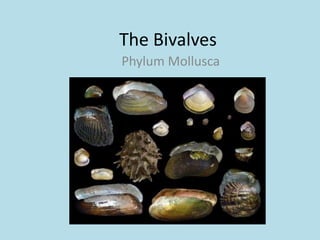
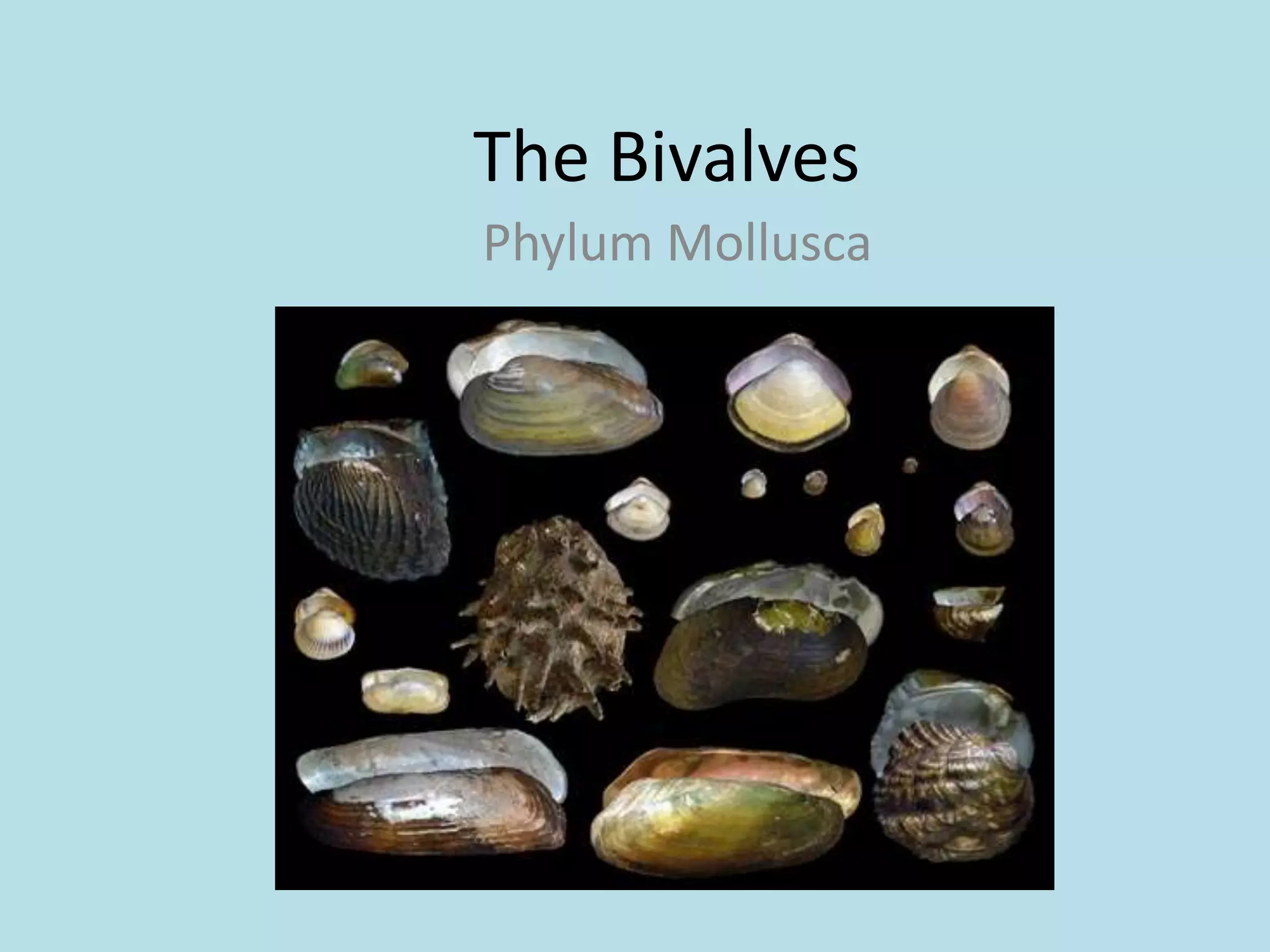
The Bivalves
Phylum Mollusca
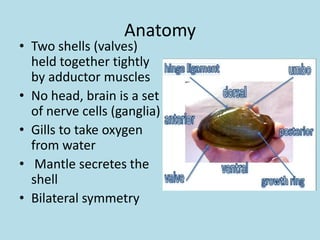
Anatomy
• Two shells (valves)
  held together tightly
  by adductor muscles
• No head, brain is a set
  of nerve cells (ganglia)
• Gills to take oxygen
  from water
• Mantle secretes the
  shell
• Bilateral symmetry
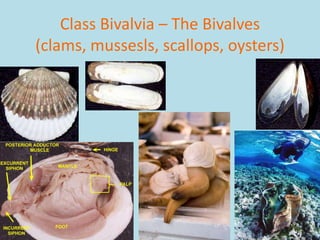
Class Bivalvia – The Bivalves
(clams, mussesls, scallops, oysters)
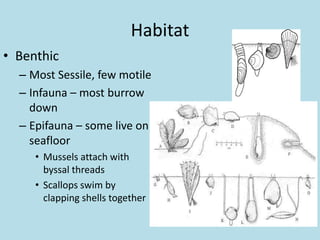
Habitat
• Benthic
  – Most Sessile, few motile
  – Infauna – most burrow
    down
  – Epifauna – some live on
    seafloor
     • Mussels attach with
       byssal threads
     • Scallops swim by
       clapping shells together
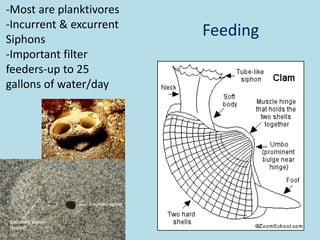
-Most are planktivores
-Incurrent & excurrent
Siphons
                         Feeding
-Important filter
feeders-up to 25
gallons of water/day
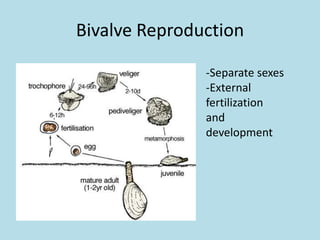
Bivalve Reproduction

               -Separate sexes
               -External
               fertilization
               and
               development
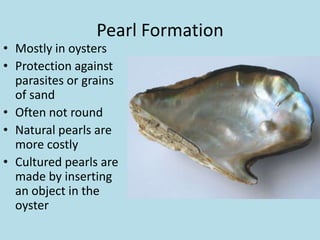
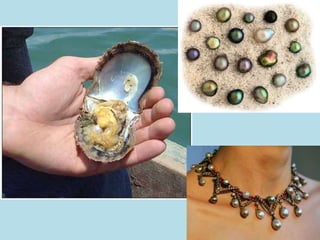
Pearl Formation
• Mostly in oysters
• Protection against
  parasites or grains
  of sand
• Often not round
• Natural pearls are
  more costly
• Cultured pearls are
  made by inserting
  an object in the
  oyster
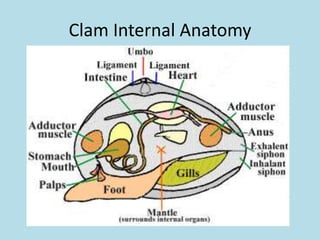
Clam Internal Anatomy

The bivalves

  • 1.
  • 2.
    Anatomy • Two shells(valves) held together tightly by adductor muscles • No head, brain is a set of nerve cells (ganglia) • Gills to take oxygen from water • Mantle secretes the shell • Bilateral symmetry
  • 3.
    Class Bivalvia –The Bivalves (clams, mussesls, scallops, oysters)
  • 4.
    Habitat • Benthic – Most Sessile, few motile – Infauna – most burrow down – Epifauna – some live on seafloor • Mussels attach with byssal threads • Scallops swim by clapping shells together
  • 5.
    -Most are planktivores -Incurrent& excurrent Siphons Feeding -Important filter feeders-up to 25 gallons of water/day
  • 6.
    Bivalve Reproduction -Separate sexes -External fertilization and development
  • 7.
    Pearl Formation • Mostlyin oysters • Protection against parasites or grains of sand • Often not round • Natural pearls are more costly • Cultured pearls are made by inserting an object in the oyster
  • 9.