7TYPES OF MUDA
Terminologies
• Value adding: The customer must be willing to pay for it.
• Non value adding: Does not add value but necessary
• Muda:Waste
• Mura: Uneven workload
• Muri: Unnecessary strain
• Cycle time: Time between the start of the work/task till the end
• Lead time: Time between the start of the whole process till the end
• 5S: 5s step process to create and keep a workplace efficient
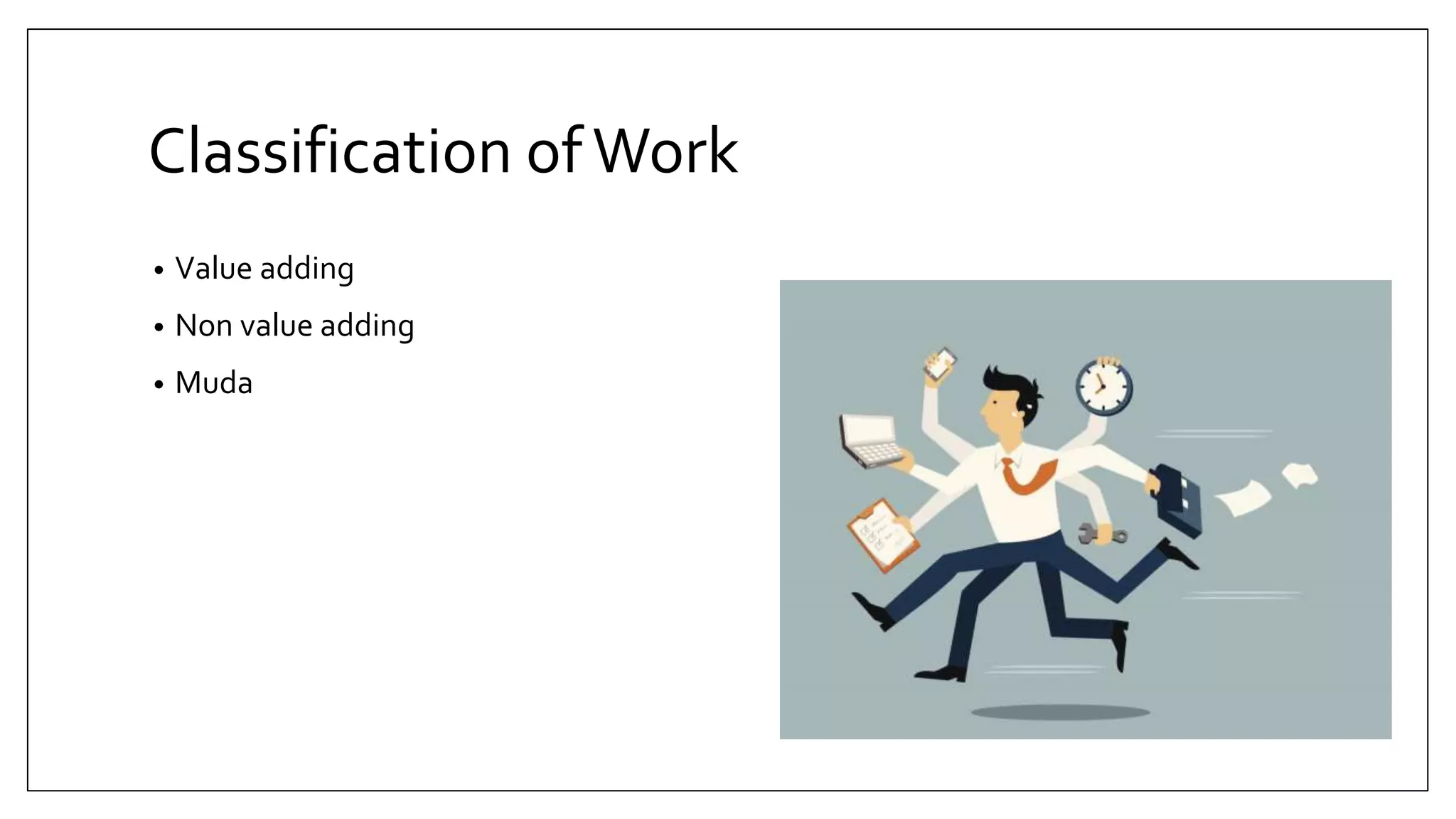
Classification ofWork
• Value adding
• Non value adding
• Muda
Waste
Muda
7Types of Muda
Transportation
Inventory
Waiting
Overproduction
Waiting
Over processing
Defects
Why EliminateWaste?
Transportation
Inventory
Waiting
Overproduction
Waiting
Over processing
Defects
X
X X
X
X
X X
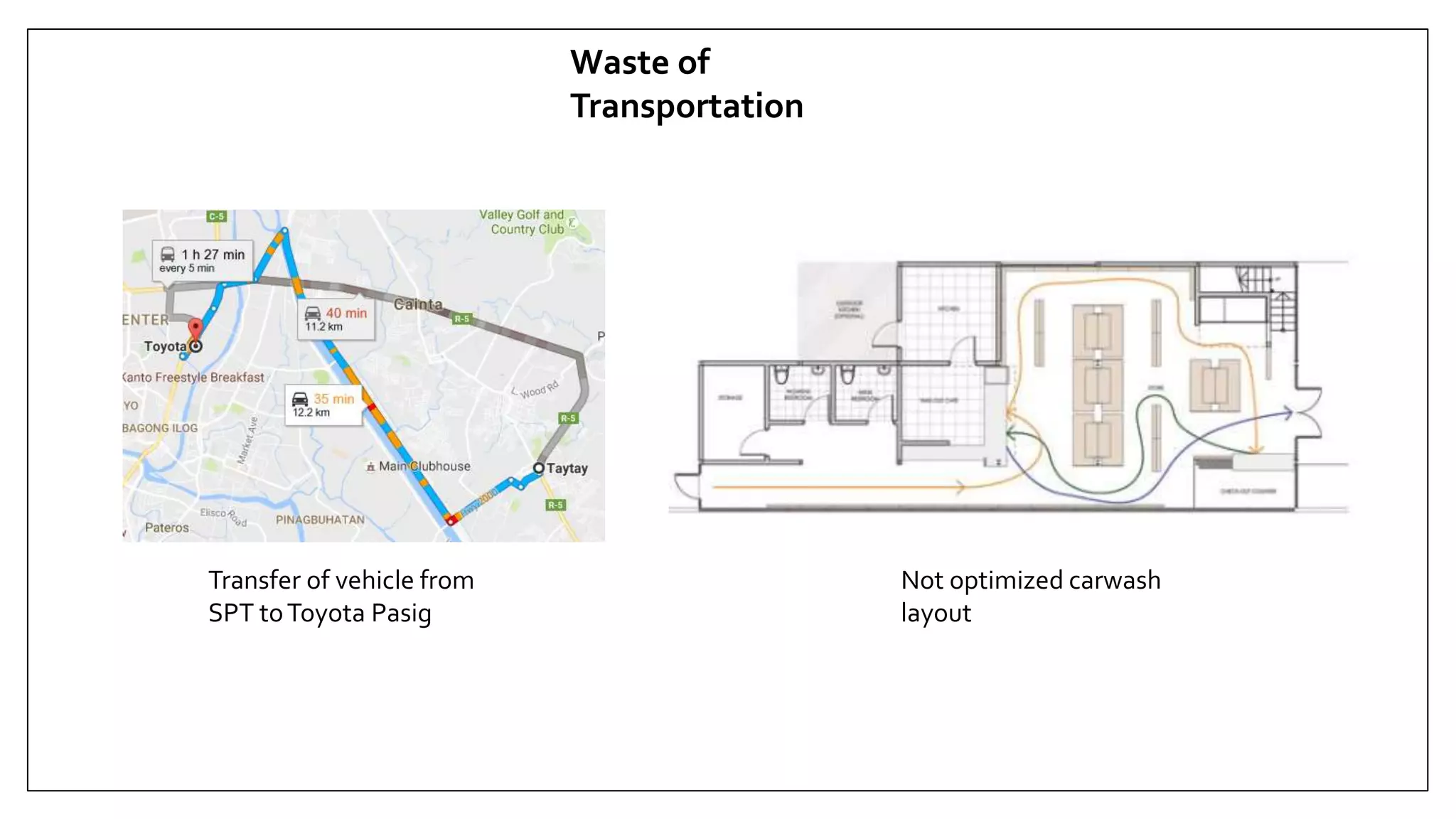
Transfer of vehicle from
SPT toToyota Pasig
Not optimized carwash
layout
Waste of
Transportation
Causes
Outdated layouts The need to transfer
materials to another
process
High inventory
Waste of
Transportation
Effects
Adds to cycle time
Labor cost
Transportation cost
Purchasing and storing unneeded parts
at the moment
Waste of Inventory
Purchasing and storing excess office
supplies.
Purchasing and storing unneeded parts
at the moment
Causes
Forecasting Reward system on
how much an
employee produced
Making extra parts
just in case of
problems
Waste of Inventory
Effects
Low asset turnover
Storage cost
Waste of transportation
Need extra effort to manage
Waste of Motion
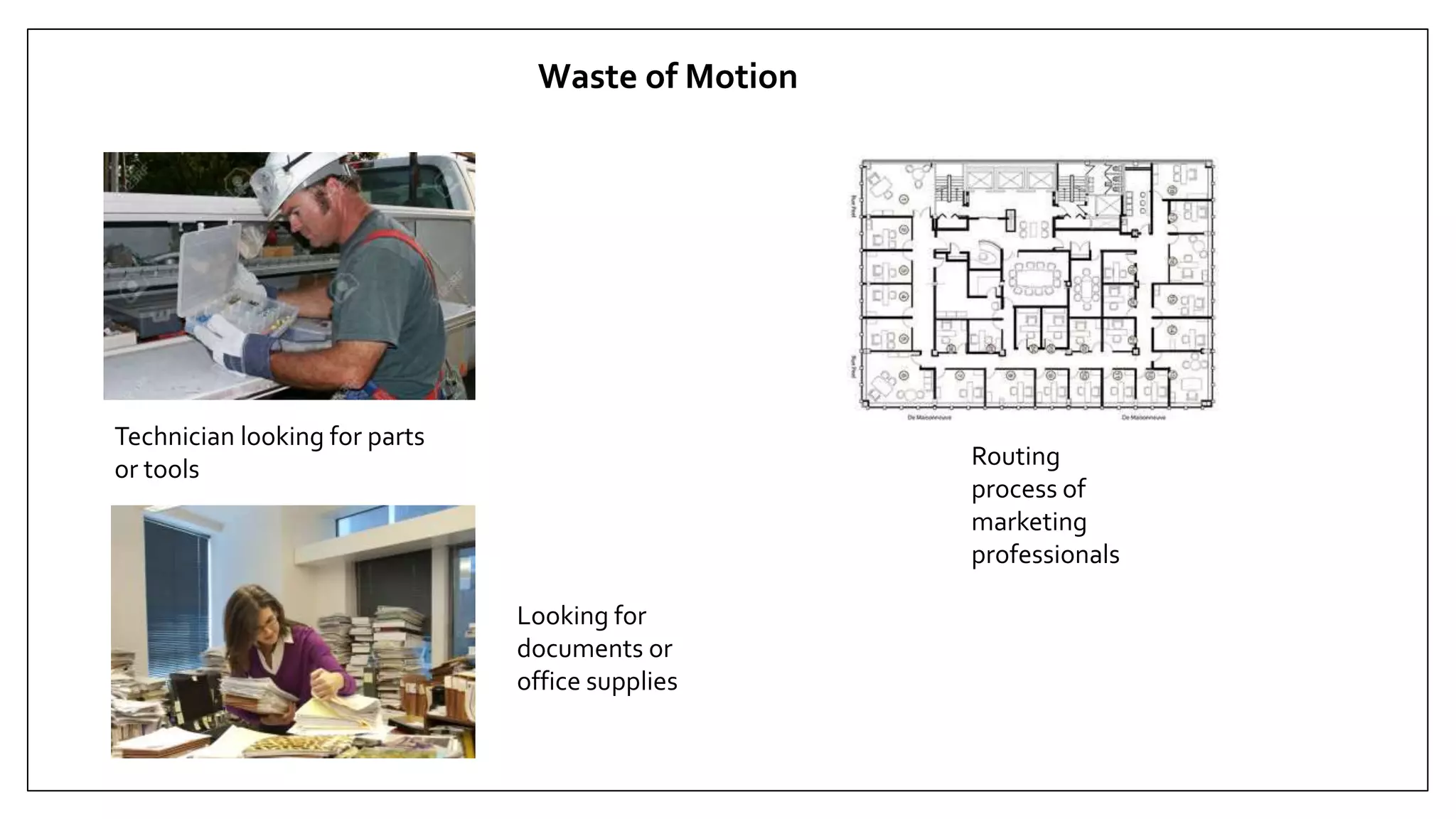
Technician looking for parts
or tools
Looking for
documents or
office supplies
Routing
process of
marketing
professionals
Causes
Poorly designed
processes
Poor work area
layout
Disorganization
Waste of Motion
Effects
Labor costAdds to cycle time
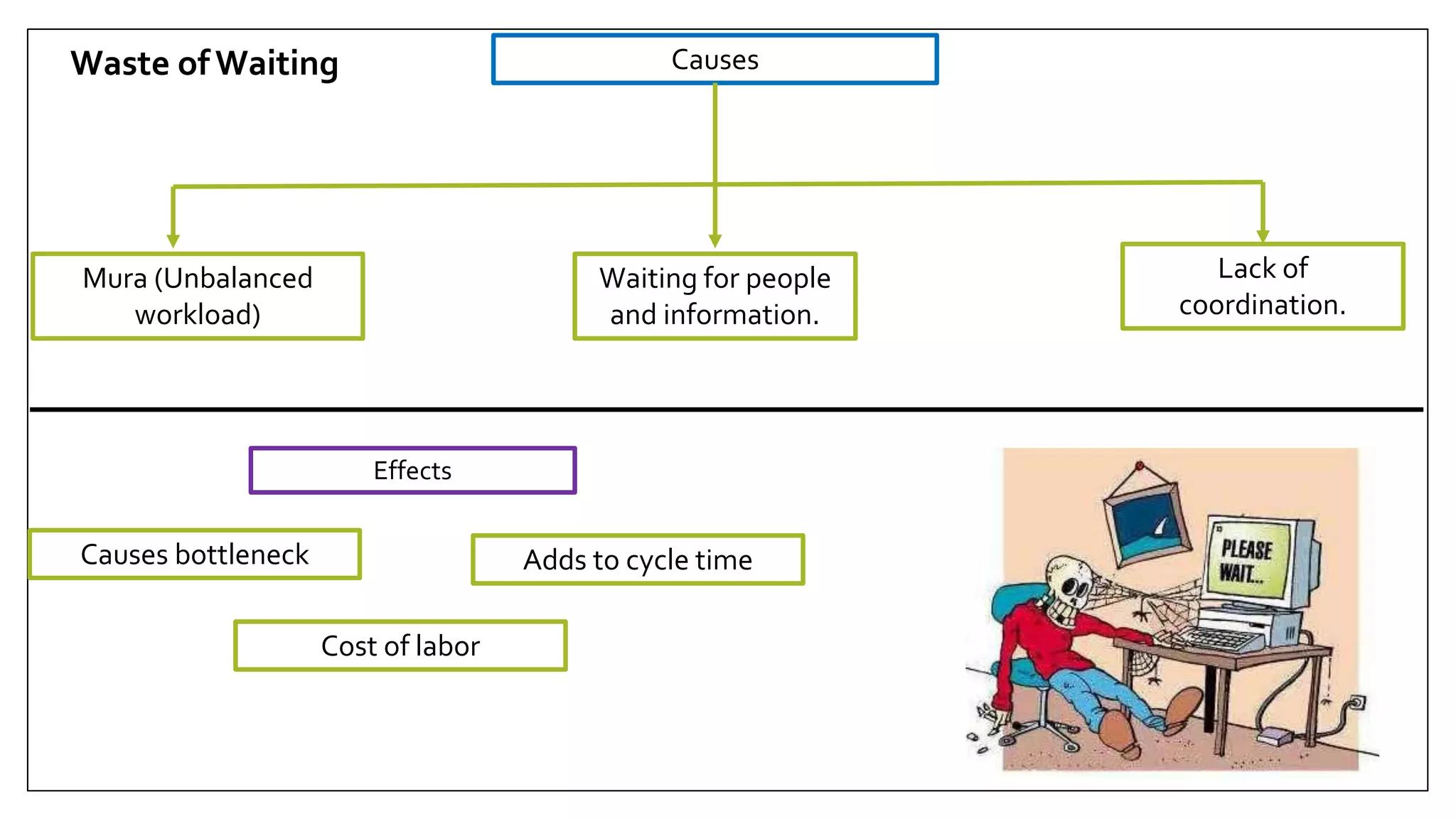
Waste of Waiting
The first worker is idleThe employee is bored to
death
Causes
Mura (Unbalanced
workload)
Waiting for people
and information.
Lack of
coordination.
Waste of Waiting
Effects
Adds to cycle time
Cost of labor
Causes bottleneck
Waste of
Overproduction
For
Sale!
Holding on to vehicles
that are hard to sell
Causes
Long set up times Making more in
order to keep us
busy
Just in case thinking
Waste of
Overproduction
Effects
Waste of motion
Waste of inventory
Waste of transportation
Waste of Over
processing
Ordered Delivered
Causes
Not understanding the
customer’s needs
Lack of
communication
Muri (Unnecessary
strain)
Waste of Over
processing
Effects
Cost of waiting
Cost of materials
Cost of labor
Waste of Defects
Car scratch Dirty car
Causes
Lack in process checks Low quality material Lack of clarity in
requirement
Waste of Defects
Effects
Labor costs
Additional lead time
Material costs
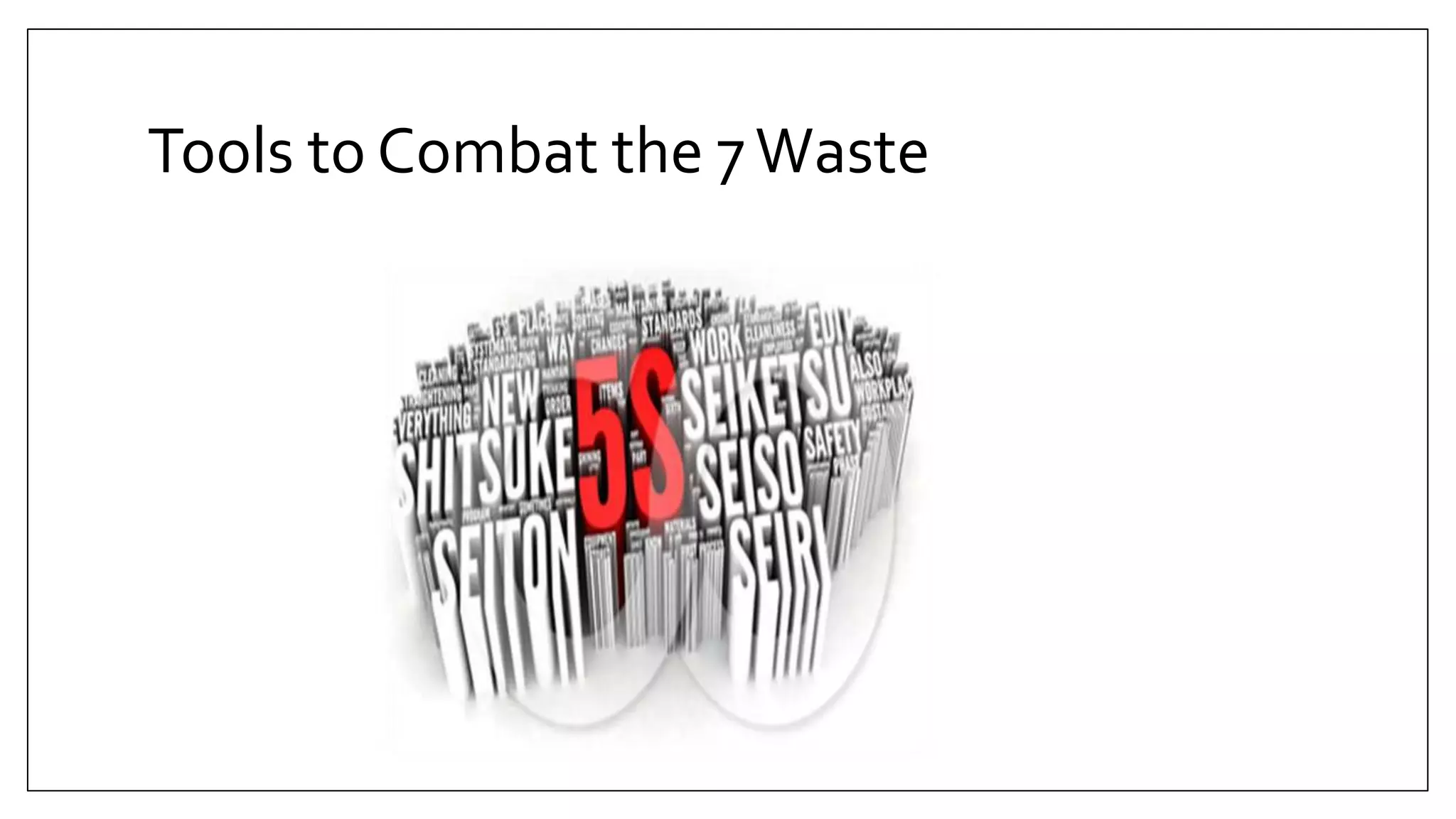
Tools to Combat the 7Waste
Sort
• Remove what is unnecessary in the workplace.
• Keep only what is needed.
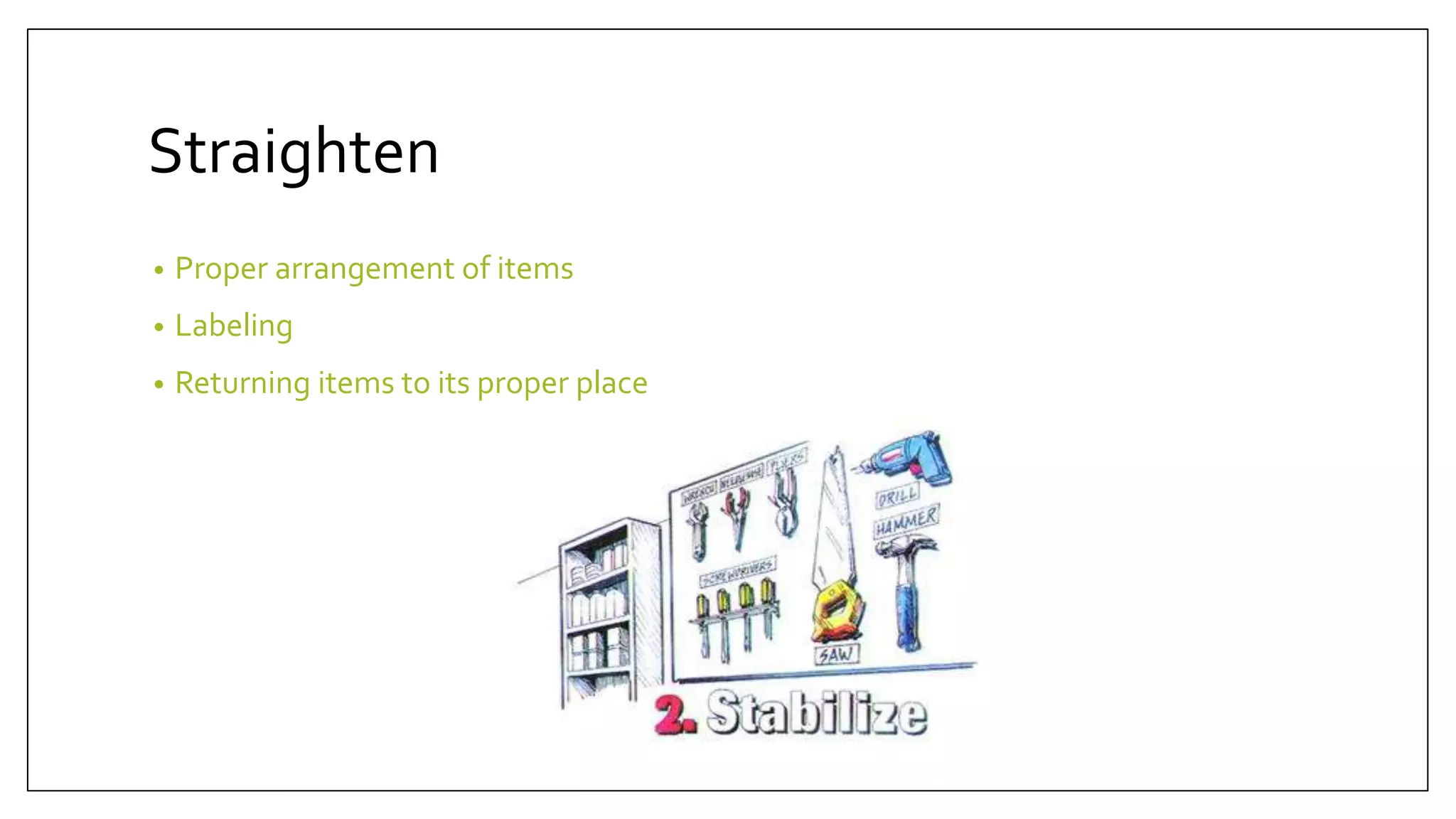
Straighten
• Proper arrangement of items
• Labeling
• Returning items to its proper place
Shine/Sweep
• Physically and visually cleaning the workplace
Standardize
• Create checklists
• Do steps 1 to 3 correctly
Sustain
• Have the discipline to do steps 1 to 4
• Do everything as part of your routine
Thank you!

7 Types of Muda

Editor's Notes

  • #4 To understand Muda better we must know the elements of work. Value adding: The customer must be willing to pay for it, the fit or function must be changed and must be done correctly the first time Non value adding: Necessary but does not add value. Example: Creation of invoices or documentation Waste: Completely unnecessary. Must be prioritized when for improvement.
  • #6 Remember the acronym TIMWOOD
  • #7 Why do we need to eliminate waste? Simple, by eliminating waste, we cut cost, reduce lead time and strain or effort. Also we prevent problem from arising.
  • #8 Waste of transportation is movement of materials that does not add value. Examples: Transferring of our vehicles from SPT to Toyota Pasig, transferring vehicles does not add value to the customer. Another example is when we had a stationary carwash layout before, we had a longer lead time and moving one vehicle to the next process required more effort. After doing a kaizen activity, we applied a Toyota production system layout, lead time was significantly reduced and moving of vehicles required less effort.
  • #9 Causes Outdated plant layouts: If you do not update you layout depending on you need. The need to transfer materials to another process: If you do not streamline tasks. High inventory: The need to transfer and store excess inventory
  • #10 Waste of inventory is any material that is not needed at the moment. Three types of inventory, cycle stock, buffer stock and safety stock. Example: Ordering and storing unneeded parts. Purchasing and storing excess office supplies. Purchasing and storing unneeded parts at the moment: Causes us expense in swapping.
  • #11  Causes Forecasting: Most of the time forecasts are not accurate thus we hold extra inventory. Reward system: If rewards are given to high producers, we will most likely have high inventory. Making extra parts just in case of problems: Producing extra parts just in case of error will lead to high inventory as well.
  • #12 Any form of movement of people that does not value.
  • #13 Causes. Poorly designed process: If tasks are not streamlined we will create waste of motion. Poor work area layout: If our process require us to go to one place to another and the each place are distant from each other we will have waste of motion Disorganization: Searching and reaching for tools creates waste of motion.
  • #14 Waste of waiting is a situation when there is idle time. Example: When we are waiting for information from another process owner.
  • #15  Causes. Unbalanced workload (Muri): If a process owner’s workload is greater than yours and their cycle time is a lot longer, you will surely have idle time. Waiting for people and information: Waiting for information or approval from a process owner creates idle time as well. Lack of coordination: If tasks are not well coordinated, you will have doubts and tend to ask the process owner before you can start.
  • #16 Known as mother of waste. Producing or purchasing what more than what is needed Waste of overproduction is the mother of all waste. It usually leads to waste of transportation, inventory and motion. So what’s the result when we have a vehicle we don’t need? Swapping
  • #17  Causes. When we usually have long setup times, we compensate by making more than what we need. Making more in order to keep us busy is also a factor in overproduction Producing just in case of errors also lead to overproduction.
  • #18 Waste of over processing is providing or doing something more than what is required.
  • #19  Causes. Not understanding the customer’s needs: If you provide more than what the customer needs without their consent, you will incur additional costs. Lack of communication leads to not understanding your customer’s needs. Muri or unnecessary strain: Doing something the hard way or overcomplicating your task
  • #20 What will the customer do if the customer encountered these defects?
  • #21 Any work or product that is less than what the customer required. Example. Turning over a vehicle with scratches or defect in its engine. Or turning over a dirty vehicle. Causes. Lack in process checks: Not doing audits or supervision causes defects. Using of low quality material maybe cheaper but it is more expensive in the long run as it may produce defective products. Lack of clarity in requirement may also produce defects, not knowing what the customer requests may yield a lower output.
  • #22 Using a spaghetti diagram helps us document the current state when it comes to movements. By identifying the movement of employees in the process, we identify the shortest route or rearrange the layout of the work area. This may help reduce waste of motion.
  • #23 One of the most simple but effective way to combat the 7 waste is applying 5s.
  • #24 What is unnecessary? Ask yourselves these question to help you sort. much do you need? How often do you use the item? Importance of the item.
  • #25 Three F standards Fixed items Fixed location Fixed quantity
  • #26 Identify the root cause on why and where is the dirt coming from. Then address the cause of the dirt.
  • #27 Have SOPs If there are no standards, there can be no improvement.
  • #28 By doing 5s, we eliminate the waste of motion like searching or reaching for tools, we eliminate waste of waiting, the more organized a workplace is, the faster we may move.