Single Minute Exchange of Die
Reema Mangtani PG14063
Simran Jain PG14074
Deepak Nadar PG14094
Frahvak Dumasia PG14095
Chaitra Mhatre PG14101
Gaurav Sonwani PG14117
Team Members
Introduction
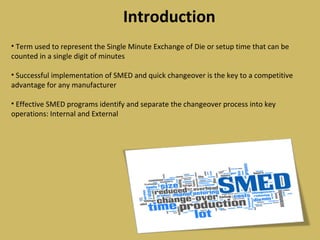
• Term used to represent the Single Minute Exchange of Die or setup time that can be
counted in a single digit of minutes
• Successful implementation of SMED and quick changeover is the key to a competitive
advantage for any manufacturer
• Effective SMED programs identify and separate the changeover process into key
operations: Internal and External
How Can SMED Help Any Organization
• Reducing downtime associated with the changeover process
• Reducing the waste created during startup
• Accelerate progress: Focus on people first
History
Developed by Shigeo Shingo
( in the late 1950’s and early
1960’s) chief engineer of
Toyota
• Shigeo Shingo was a Japanese industrial engineer and
father of SMED
• He developed SMED while working for Toyo
Industries in 1950
• He sought to eliminate bottlenecks by looking
at changeover operations on large presses
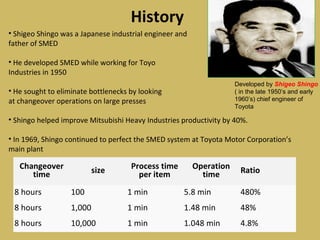
• Shingo helped improve Mitsubishi Heavy Industries productivity by 40%.
• In 1969, Shingo continued to perfect the SMED system at Toyota Motor Corporation’s
main plant
Changeover
time size Process time
per item
Operation
time Ratio
8 hours 100 1 min 5.8 min 480%
8 hours 1,000 1 min 1.48 min 48%
8 hours 10,000 1 min 1.048 min 4.8%
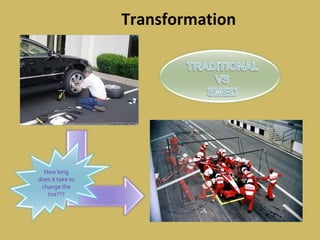
Transformation
How long
does it take to
change the
tire???
Implementation/Working of SMED
• Step One – Identify Pilot Area
• Step Two – Identify Elements
• Step Three – Separate External Elements
• Step Four – Convert Internal Elements to External
• Step Five – Streamline Remaining Elements
Implementation Techniques Of SMED
1. Separate internal from external setup operations.
2. Convert internal to external set-up
3. Standardize
4. Use clamps and “one-touch” fasteners
5. Use intermediate jigs
6. Adopt parallel operations
7. Eliminate adjustments
8. Mechanization: This should be used as the last resort
Benefits of SMED
• Lower manufacturing cost
• Smaller lot sizes
• Improved responsiveness to customer demand
• Lower inventory levels
• Smoother startups
Practical Use of SMED
DID YOU KNOW?
 10 min/day of downtime is more than one week per year of lost
production
 Surely you can save more than 10 minutes each day
 What is a week’s production worth?
Some effective techniques:
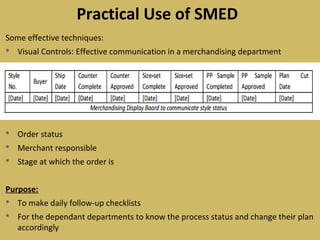
 Visual Controls: Effective communication in a merchandising department
 Order status
 Merchant responsible
 Stage at which the order is
Purpose:
 To make daily follow-up checklists
 For the dependant departments to know the process status and change their plan
accordingly
Practical Use of SMED
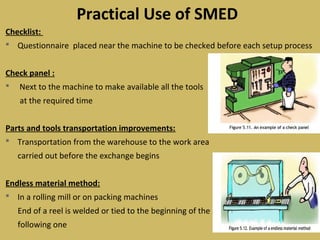
Checklist:
 Questionnaire placed near the machine to be checked before each setup process
Check panel :
 Next to the machine to make available all the tools
at the required time
Parts and tools transportation improvements:
 Transportation from the warehouse to the work area
carried out before the exchange begins
Endless material method:
 In a rolling mill or on packing machines
End of a reel is welded or tied to the beginning of the
following one
Practical Use of SMED
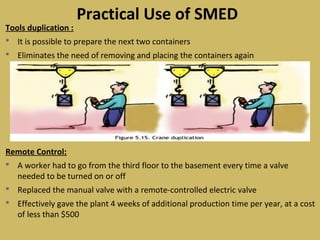
Tools duplication :
 It is possible to prepare the next two containers
 Eliminates the need of removing and placing the containers again
Remote Control:
 A worker had to go from the third floor to the basement every time a valve
needed to be turned on or off
 Replaced the manual valve with a remote-controlled electric valve
 Effectively gave the plant 4 weeks of additional production time per year, at a cost
of less than $500
Practical Use of SMED
 Formula 1 Pit Stop
 Changing tyres and refuelling goes lightning fast
Practical Use of SMED
Cruise Ship
 Dock and disembark some 3,000 passengers, luggage and take on
3,000 new ones
 Restock tons of food and supplies
 Perform necessary maintenance to the ship
 Sail again all in the course of a few hours
 Equipped with specially designed devices and a very well trained
crew
Practical Use of SMED
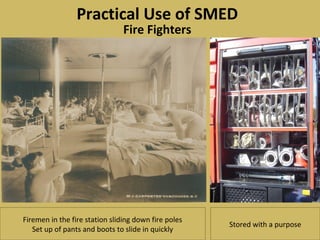
Stored with a purpose
Firemen in the fire station sliding down fire poles
Set up of pants and boots to slide in quickly
Practical Use of SMED
Fire Fighters
Conclusion
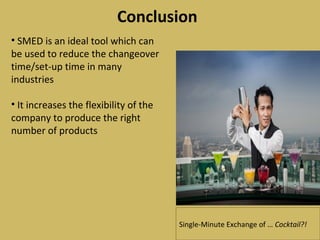
• SMED is an ideal tool which can
be used to reduce the changeover
time/set-up time in many
industries
• It increases the flexibility of the
company to produce the right
number of products
Single-Minute Exchange of … Cocktail?!
Weblography
• http://en.wikipedia.org/wiki/Single-Minute_Exchange_of_Die
• http://www.vorne.com/learning-center/smed-quick-changeover.htm
• http://www.leanproduction.com/smed.html
• http://www.makigami.info/cms/smed
• http://www.processexcellencenetwork.com/business-process-management-
bpm/articles/single-minute-exchange-of-dies-smed/
SMED Final

SMED Final

  • 1.
    Single Minute Exchangeof Die Reema Mangtani PG14063 Simran Jain PG14074 Deepak Nadar PG14094 Frahvak Dumasia PG14095 Chaitra Mhatre PG14101 Gaurav Sonwani PG14117 Team Members
  • 2.
    Introduction • Term usedto represent the Single Minute Exchange of Die or setup time that can be counted in a single digit of minutes • Successful implementation of SMED and quick changeover is the key to a competitive advantage for any manufacturer • Effective SMED programs identify and separate the changeover process into key operations: Internal and External
  • 3.
    How Can SMEDHelp Any Organization • Reducing downtime associated with the changeover process • Reducing the waste created during startup • Accelerate progress: Focus on people first
  • 4.
    History Developed by ShigeoShingo ( in the late 1950’s and early 1960’s) chief engineer of Toyota • Shigeo Shingo was a Japanese industrial engineer and father of SMED • He developed SMED while working for Toyo Industries in 1950 • He sought to eliminate bottlenecks by looking at changeover operations on large presses • Shingo helped improve Mitsubishi Heavy Industries productivity by 40%. • In 1969, Shingo continued to perfect the SMED system at Toyota Motor Corporation’s main plant Changeover time size Process time per item Operation time Ratio 8 hours 100 1 min 5.8 min 480% 8 hours 1,000 1 min 1.48 min 48% 8 hours 10,000 1 min 1.048 min 4.8%
  • 5.
    Transformation How long does ittake to change the tire???
  • 6.
    Implementation/Working of SMED •Step One – Identify Pilot Area • Step Two – Identify Elements • Step Three – Separate External Elements • Step Four – Convert Internal Elements to External • Step Five – Streamline Remaining Elements
  • 7.
    Implementation Techniques OfSMED 1. Separate internal from external setup operations. 2. Convert internal to external set-up 3. Standardize 4. Use clamps and “one-touch” fasteners 5. Use intermediate jigs 6. Adopt parallel operations 7. Eliminate adjustments 8. Mechanization: This should be used as the last resort
  • 8.
    Benefits of SMED •Lower manufacturing cost • Smaller lot sizes • Improved responsiveness to customer demand • Lower inventory levels • Smoother startups
  • 9.
    Practical Use ofSMED DID YOU KNOW?  10 min/day of downtime is more than one week per year of lost production  Surely you can save more than 10 minutes each day  What is a week’s production worth?
  • 10.
    Some effective techniques: Visual Controls: Effective communication in a merchandising department  Order status  Merchant responsible  Stage at which the order is Purpose:  To make daily follow-up checklists  For the dependant departments to know the process status and change their plan accordingly Practical Use of SMED
  • 11.
    Checklist:  Questionnaire placednear the machine to be checked before each setup process Check panel :  Next to the machine to make available all the tools at the required time Parts and tools transportation improvements:  Transportation from the warehouse to the work area carried out before the exchange begins Endless material method:  In a rolling mill or on packing machines End of a reel is welded or tied to the beginning of the following one Practical Use of SMED
  • 12.
    Tools duplication : It is possible to prepare the next two containers  Eliminates the need of removing and placing the containers again Remote Control:  A worker had to go from the third floor to the basement every time a valve needed to be turned on or off  Replaced the manual valve with a remote-controlled electric valve  Effectively gave the plant 4 weeks of additional production time per year, at a cost of less than $500 Practical Use of SMED
  • 13.
     Formula 1Pit Stop  Changing tyres and refuelling goes lightning fast Practical Use of SMED
  • 14.
    Cruise Ship  Dockand disembark some 3,000 passengers, luggage and take on 3,000 new ones  Restock tons of food and supplies  Perform necessary maintenance to the ship  Sail again all in the course of a few hours  Equipped with specially designed devices and a very well trained crew Practical Use of SMED
  • 15.
    Stored with apurpose Firemen in the fire station sliding down fire poles Set up of pants and boots to slide in quickly Practical Use of SMED Fire Fighters
  • 16.
    Conclusion • SMED isan ideal tool which can be used to reduce the changeover time/set-up time in many industries • It increases the flexibility of the company to produce the right number of products Single-Minute Exchange of … Cocktail?!
  • 17.
    Weblography • http://en.wikipedia.org/wiki/Single-Minute_Exchange_of_Die • http://www.vorne.com/learning-center/smed-quick-changeover.htm •http://www.leanproduction.com/smed.html • http://www.makigami.info/cms/smed • http://www.processexcellencenetwork.com/business-process-management- bpm/articles/single-minute-exchange-of-dies-smed/