MUDA TRAINING MODULEMUDA TRAINING MODULE
Kaizen Department
Introduction
 MUDA- any activity in your process that
does not add value. MUDA is not creating
value for the customer. In short: WASTE
 MURA - Any variation leading to unbalanced
situations. In short: UNEVENNESS,
inconsistent, irregular.
 MURI - Any activity asking unreasonable
stress or effort from personnel, material or
equipment. In short: OVERBURDEN
Why Muda? Not Mura and Muri
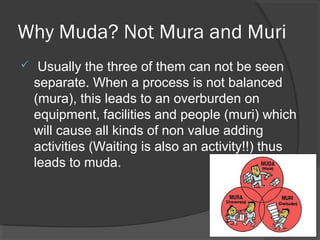
 Usually the three of them can not be seen
separate. When a process is not balanced
(mura), this leads to an overburden on
equipment, facilities and people (muri) which
will cause all kinds of non value adding
activities (Waiting is also an activity!!) thus
leads to muda.
What is MUDA?
 a Japanese term which means “WASTE”
 Any activity that adds costs or time but does not
add value
 Consuming more resources (time, money,
space, etc) than are necessary to produce the
goods, or services, that the customer wants
 Pure Waste: Actions that could be stopped
without affecting the customer
 Incidental Waste: Actions that need to be done
based on how the current system operates but
do not add value
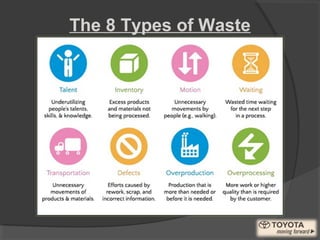
The 8 Types of Waste
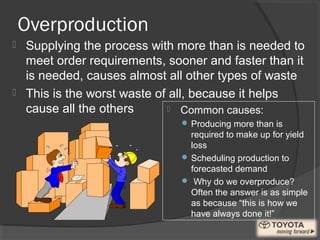
Overproduction
 Common causes:
 Producing more than is
required to make up for yield
loss
 Scheduling production to
forecasted demand
 Why do we overproduce?
Often the answer is as simple
as because “this is how we
have always done it!”
 Supplying the process with more than is needed to
meet order requirements, sooner and faster than it
is needed, causes almost all other types of waste
 This is the worst waste of all, because it helps
cause all the others
How to eliminate Overproduction?
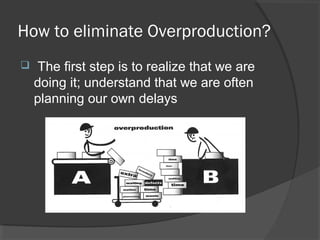
 The first step is to realize that we are
doing it; understand that we are often
planning our own delays
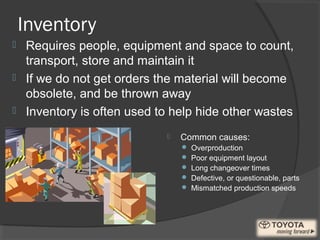
Inventory
 Common causes:
 Overproduction
 Poor equipment layout
 Long changeover times
 Defective, or questionable, parts
 Mismatched production speeds
 Requires people, equipment and space to count,
transport, store and maintain it
 If we do not get orders the material will become
obsolete, and be thrown away
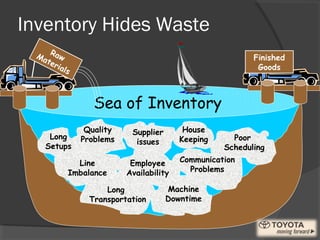
 Inventory is often used to help hide other wastes
Inventory Hides Waste
Sea of Inventory
Long
Transportation
Communication
Problems
Machine
Downtime
Employee
Availability
Poor
Scheduling
Quality
Problems
Line
Imbalance
Long
Setups
Supplier
issues
House
Keeping
Employee
Availability
Finished
Goods
RawMaterials
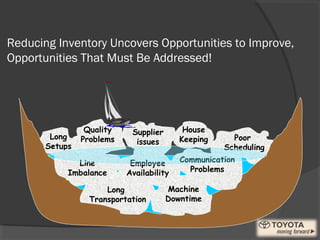
Reducing Inventory Uncovers Opportunities to Improve,
Opportunities That Must Be Addressed!
Poor
Scheduling
Long
Setups
Long
Transportation
Communication
Problems
Machine
Downtime
Employee
Availability
Quality
Problems
Line
Imbalance
Supplier
issues
House
Keeping
Employee
Availability
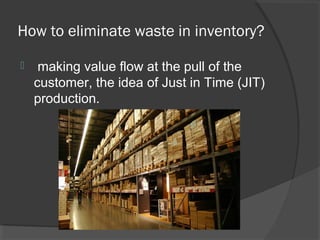
How to eliminate waste in inventory?
 making value flow at the pull of the
customer, the idea of Just in Time (JIT)
production.
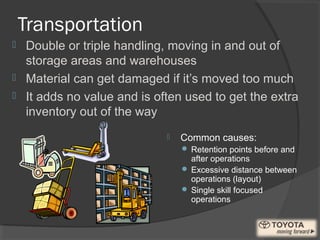
Transportation
 Common causes:
 Retention points before and
after operations
 Excessive distance between
operations (layout)
 Single skill focused
operations
 Double or triple handling, moving in and out of
storage areas and warehouses
 Material can get damaged if it’s moved too much
 It adds no value and is often used to get the extra
inventory out of the way
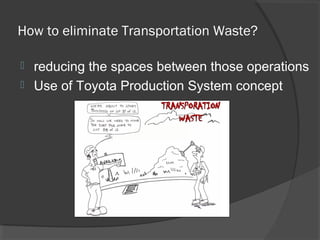
How to eliminate Transportation Waste?
 reducing the spaces between those operations
 Use of Toyota Production System concept
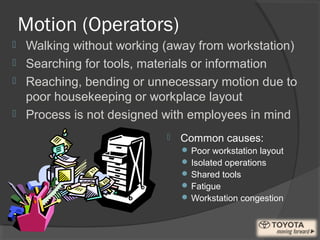
Motion (Operators)
 Common causes:
 Poor workstation layout
 Isolated operations
 Shared tools
 Fatigue
 Workstation congestion
 Walking without working (away from workstation)
 Searching for tools, materials or information
 Reaching, bending or unnecessary motion due to
poor housekeeping or workplace layout
 Process is not designed with employees in mind
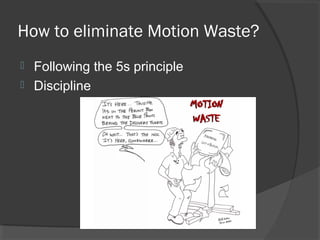
How to eliminate Motion Waste?
 Following the 5s principle
 Discipline
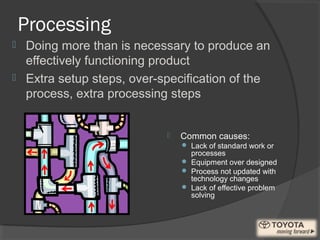
Processing
 Common causes:
 Lack of standard work or
processes
 Equipment over designed
 Process not updated with
technology changes
 Lack of effective problem
solving
 Doing more than is necessary to produce an
effectively functioning product
 Extra setup steps, over-specification of the
process, extra processing steps
How to eliminate Waste in Processing?
 Identify where delays occur in the
process and quantify if it is avoidable
delay and unavoidable delays
 Eliminate avoidable delay in the
process. This is a waste in processing
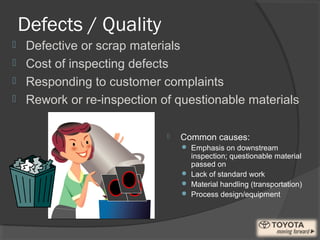
Defects / Quality
 Common causes:
 Emphasis on downstream
inspection; questionable material
passed on
 Lack of standard work
 Material handling (transportation)
 Process design/equipment
 Defective or scrap materials
 Cost of inspecting defects
 Responding to customer complaints
 Rework or re-inspection of questionable materials
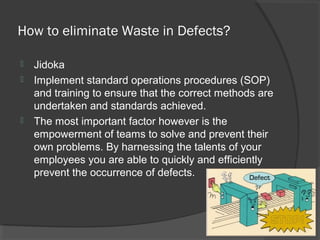
How to eliminate Waste in Defects?
 Jidoka
 Implement standard operations procedures (SOP)
and training to ensure that the correct methods are
undertaken and standards achieved.
 The most important factor however is the
empowerment of teams to solve and prevent their
own problems. By harnessing the talents of your
employees you are able to quickly and efficiently
prevent the occurrence of defects.
Waiting
 Common causes:
 Mismatched production rates
 Poor layout
 Machine breakdowns
○ Ours or upstream
 Insufficiently staffed
 Operator waiting for machines to run or cycle
 Machine waiting for operator
 Waiting for parts, instructions, approval,
information, maintenance, decisions…
How to eliminate Waste in Waiting?
 Balance the workload by redistributing tasks in the
process
 Establish a pull system
 Eliminate unnecessary approval processes
 Build other tasks into the daily work schedule so
that employees are occupied during waiting
periods
 Prevent delays by providing for backups
People’s Skills
 Common causes:
 Management does not
involve employees in
problem solving
 Narrowly defined jobs and
expectations
 Old school management,
worker relationships
 Employees are seen as a source of labor only, not
seen as true process experts
 People are told what to do, and asked not to think
 Employees are not involved in finding solutions,
opportunities to improve our process are missed
How to eliminate Waste in People’s Skills?
 Team working, training, and clear leadership are
required to begin to involve all of your employees
with companies drive towards perfection, for
continuous improvement it will need to involve
each and every one of all employees
 People are the biggest asset, respect them,
nurture them and involve them
How Does Waste Get There?
 Forget to change solutions when we change
the process
 Fail to understand why we do something a
certain way, so we continue doing that way
even if the limitation has been removed
 Build it into our processes
 Root cause of problems is not addressed or a
band aid solution is implemented
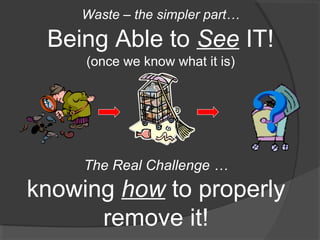
Waste – the simpler part…
Being Able to See IT!
(once we know what it is)
The Real Challenge …
knowing how to properly
remove it!

Perceiving Muda

  • 1.
    MUDA TRAINING MODULEMUDATRAINING MODULE Kaizen Department
  • 2.
    Introduction  MUDA- anyactivity in your process that does not add value. MUDA is not creating value for the customer. In short: WASTE  MURA - Any variation leading to unbalanced situations. In short: UNEVENNESS, inconsistent, irregular.  MURI - Any activity asking unreasonable stress or effort from personnel, material or equipment. In short: OVERBURDEN
  • 3.
    Why Muda? NotMura and Muri  Usually the three of them can not be seen separate. When a process is not balanced (mura), this leads to an overburden on equipment, facilities and people (muri) which will cause all kinds of non value adding activities (Waiting is also an activity!!) thus leads to muda.
  • 4.
    What is MUDA? a Japanese term which means “WASTE”  Any activity that adds costs or time but does not add value  Consuming more resources (time, money, space, etc) than are necessary to produce the goods, or services, that the customer wants  Pure Waste: Actions that could be stopped without affecting the customer  Incidental Waste: Actions that need to be done based on how the current system operates but do not add value
  • 5.
    The 8 Typesof Waste
  • 6.
    Overproduction  Common causes: Producing more than is required to make up for yield loss  Scheduling production to forecasted demand  Why do we overproduce? Often the answer is as simple as because “this is how we have always done it!”  Supplying the process with more than is needed to meet order requirements, sooner and faster than it is needed, causes almost all other types of waste  This is the worst waste of all, because it helps cause all the others
  • 7.
    How to eliminateOverproduction?  The first step is to realize that we are doing it; understand that we are often planning our own delays
  • 8.
    Inventory  Common causes: Overproduction  Poor equipment layout  Long changeover times  Defective, or questionable, parts  Mismatched production speeds  Requires people, equipment and space to count, transport, store and maintain it  If we do not get orders the material will become obsolete, and be thrown away  Inventory is often used to help hide other wastes
  • 9.
    Inventory Hides Waste Seaof Inventory Long Transportation Communication Problems Machine Downtime Employee Availability Poor Scheduling Quality Problems Line Imbalance Long Setups Supplier issues House Keeping Employee Availability Finished Goods RawMaterials
  • 10.
    Reducing Inventory UncoversOpportunities to Improve, Opportunities That Must Be Addressed! Poor Scheduling Long Setups Long Transportation Communication Problems Machine Downtime Employee Availability Quality Problems Line Imbalance Supplier issues House Keeping Employee Availability
  • 11.
    How to eliminatewaste in inventory?  making value flow at the pull of the customer, the idea of Just in Time (JIT) production.
  • 12.
    Transportation  Common causes: Retention points before and after operations  Excessive distance between operations (layout)  Single skill focused operations  Double or triple handling, moving in and out of storage areas and warehouses  Material can get damaged if it’s moved too much  It adds no value and is often used to get the extra inventory out of the way
  • 13.
    How to eliminateTransportation Waste?  reducing the spaces between those operations  Use of Toyota Production System concept
  • 14.
    Motion (Operators)  Commoncauses:  Poor workstation layout  Isolated operations  Shared tools  Fatigue  Workstation congestion  Walking without working (away from workstation)  Searching for tools, materials or information  Reaching, bending or unnecessary motion due to poor housekeeping or workplace layout  Process is not designed with employees in mind
  • 15.
    How to eliminateMotion Waste?  Following the 5s principle  Discipline
  • 16.
    Processing  Common causes: Lack of standard work or processes  Equipment over designed  Process not updated with technology changes  Lack of effective problem solving  Doing more than is necessary to produce an effectively functioning product  Extra setup steps, over-specification of the process, extra processing steps
  • 17.
    How to eliminateWaste in Processing?  Identify where delays occur in the process and quantify if it is avoidable delay and unavoidable delays  Eliminate avoidable delay in the process. This is a waste in processing
  • 18.
    Defects / Quality Common causes:  Emphasis on downstream inspection; questionable material passed on  Lack of standard work  Material handling (transportation)  Process design/equipment  Defective or scrap materials  Cost of inspecting defects  Responding to customer complaints  Rework or re-inspection of questionable materials
  • 19.
    How to eliminateWaste in Defects?  Jidoka  Implement standard operations procedures (SOP) and training to ensure that the correct methods are undertaken and standards achieved.  The most important factor however is the empowerment of teams to solve and prevent their own problems. By harnessing the talents of your employees you are able to quickly and efficiently prevent the occurrence of defects.
  • 20.
    Waiting  Common causes: Mismatched production rates  Poor layout  Machine breakdowns ○ Ours or upstream  Insufficiently staffed  Operator waiting for machines to run or cycle  Machine waiting for operator  Waiting for parts, instructions, approval, information, maintenance, decisions…
  • 21.
    How to eliminateWaste in Waiting?  Balance the workload by redistributing tasks in the process  Establish a pull system  Eliminate unnecessary approval processes  Build other tasks into the daily work schedule so that employees are occupied during waiting periods  Prevent delays by providing for backups
  • 22.
    People’s Skills  Commoncauses:  Management does not involve employees in problem solving  Narrowly defined jobs and expectations  Old school management, worker relationships  Employees are seen as a source of labor only, not seen as true process experts  People are told what to do, and asked not to think  Employees are not involved in finding solutions, opportunities to improve our process are missed
  • 23.
    How to eliminateWaste in People’s Skills?  Team working, training, and clear leadership are required to begin to involve all of your employees with companies drive towards perfection, for continuous improvement it will need to involve each and every one of all employees  People are the biggest asset, respect them, nurture them and involve them
  • 24.
    How Does WasteGet There?  Forget to change solutions when we change the process  Fail to understand why we do something a certain way, so we continue doing that way even if the limitation has been removed  Build it into our processes  Root cause of problems is not addressed or a band aid solution is implemented
  • 25.
    Waste – thesimpler part… Being Able to See IT! (once we know what it is) The Real Challenge … knowing how to properly remove it!

Editor's Notes

  • #5 If Value is something that transforms the product into a form that is closer to what the customer wants, then waste is everything else. No transformation equals waste! Anything that does not add value but does add cost; does not result in transformation Imagine you were a customer and upon receiving our material you received an itemized bill for everything that went into making a product, What sort of things that we do today would you not be willing to pay for? Examples: Pure Waste – carrying inventory Incidental Waste – cycle counts
  • #6 Here are the 8 kinds originally listed by Taiichi Ohno (Toyota) I will explain each kind in more detail.
  • #7 Possible Examples: Large Funnel, Small Funnel, overflow bowl Overproduction is a key cause of all of the other 8 types of waste. Remember that the “need” is defined by the customer! In a Lean environment customer demand pulls material through the process. Ways to solve: MTO Smaller Batch sizes Kanban Reduced changeover times
  • #9 Inventory as we will discuss further is the main way company’s hide the other types of waste. Obviously inventory storing any material for any period of time. Ways to solve: MTO Kanban Consolidated layout Zero Defect Quality (mistake proof / failsafe) Source Inspection Line Balance to Takt Time
  • #10 As we said inventory hides our wastes, this slide is used to help show how. Remember inventory covers up problems it never solves them.
  • #11 We do have to be careful. We can’t just get rid of all our inventory today. We must work to remove the waste within the process that causes us to have to carry inventory. We can’t leave our customers stranded.
  • #13 Example: movement of materials between CV and RPR Every time we touch a product we increase the risk of scrap or damage Ways to solve: Consolidated layout Kanban Remove storage areas Workforce flexibility
  • #15 Example: Toolbox, layout (outlined) Movement that does not add value is waste. On top of reducing wasted motion we must also find ways to reduce movement required for value added work. Put things where it makes the most sense Ways to solve: 5S Point of Use Supplies Workstation design
  • #17 Example: Screwing together, could use glue; screw parts - Wilson “Everything should be made as simple as possible, but no simpler” Ways to solve: Zero Defect Quality (mistake proof and failsafe) Standard Work Employee involvement / empowerment
  • #19 Example – Quarantined material. Re-inspecting the 362’s “make it right the first time” – to do so we need effective root cause investigation and corrective action implementation Ways to solve: Zero Defect Quality (mistake proof and failsafe) Design for manufacturability
  • #21 Make decisions at the lowest possible level to avoid waiting on the decision maker Examples Operators waiting on machine repairs Machine idle because we do not have an available operator to run it Waiting for parts Machine idle while the operator completes paperwork Machine idle while operator completes external task Ways to solve: Kanban Workforce flexibility Consolidated layout Produce to Takt time
  • #23 Utilize the knowledge we have available Uninvolved employees are typically unmotivated employees Uninvolved people are unmotivated at work Ways to Solve: Kaizens Communication Gemba (“go and see” management) Small Group Activities (problems solving, kaizen bursts)
  • #26 Waste is easy to see, once you know what you’re looking for, the hard part is removing it. One of the things we must learn how to do is to “see things differently” seeing from the customer’s perspective and not just our own – what do they expect? Seeing waste in what we accept as the norm today In order to learn see the waste, we need to understand what the different types of waste are. What types of waste do we know we have based on what we’ve heard today?