Is ultrasound useful in
shock?
Jo McDonnell
Aim
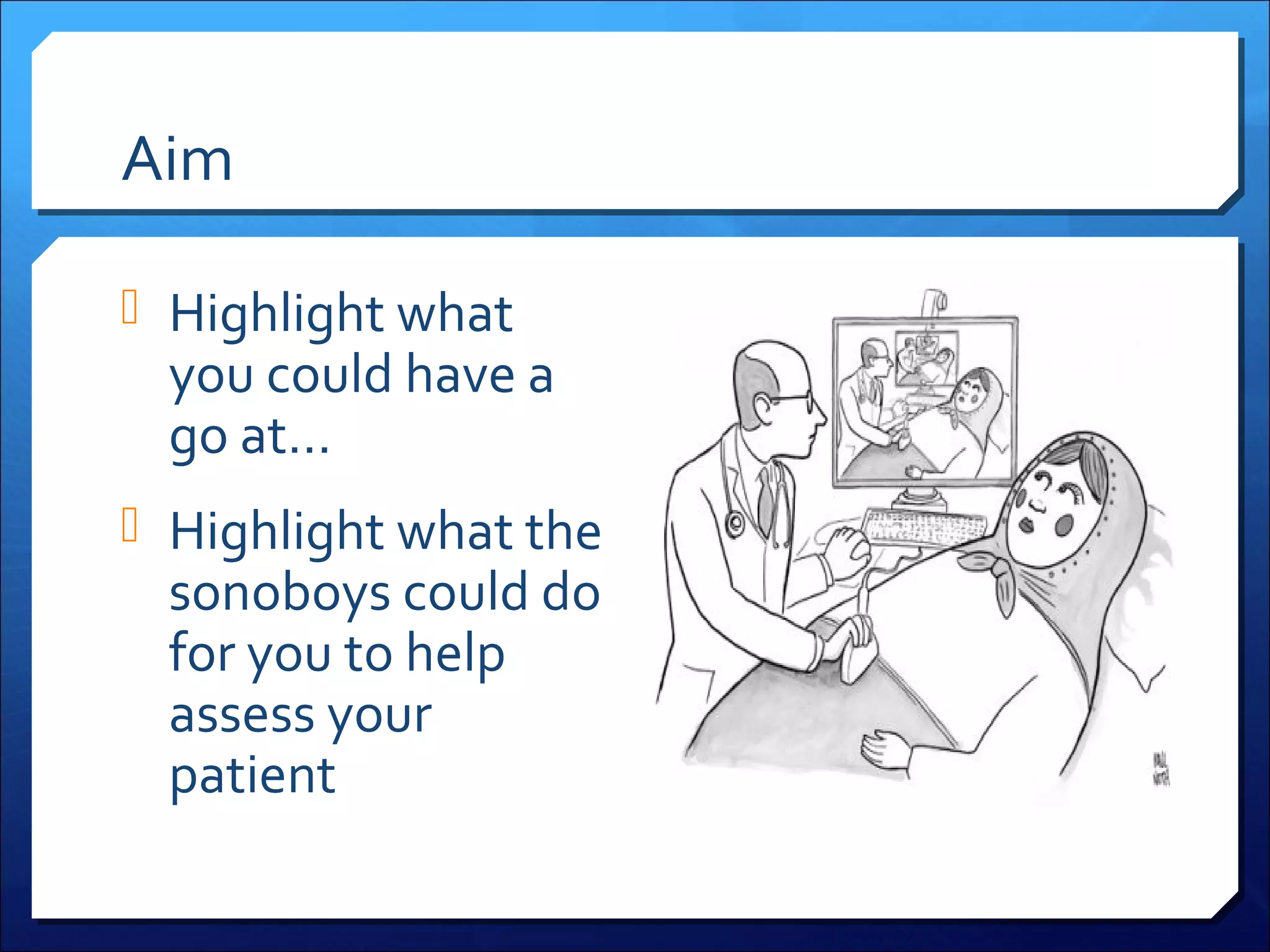
 Highlight what

you could have a
go at…

 Highlight what the

sonoboys could do
for you to help
assess your
patient
Shock

Clinical situation where there is
hypoperfusion of the cells and tissues
Background
 Patients with shock have high mortality rates and these

rates are correlated to the amount and duration of
hypotension.

 Diagnosis and initial care must be accurate and prompt

to optimise patient outcomes.

 Studies have demonstrated that initial integration of

bedside ultrasound into the evaluation of the patient with
shock results in a more accurate initial diagnosis with
earlier definitive treatment.

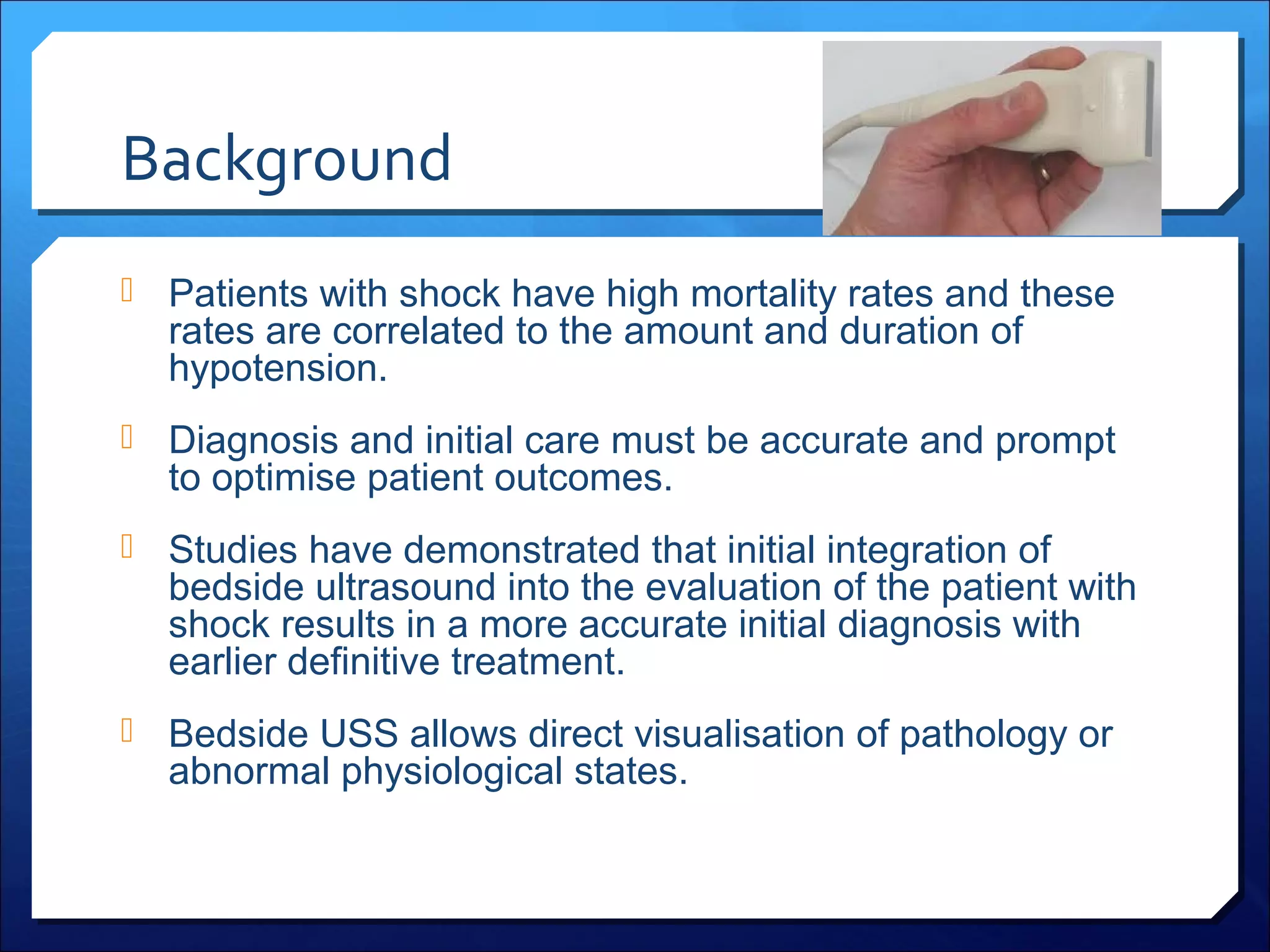
 Bedside USS allows direct visualisation of pathology or

abnormal physiological states.
Remember…
 Ultrasound is a tool to aid diagnosis, but it won’t tell you

everything…

 When using it we should always have a clinical question you

would like it to answer
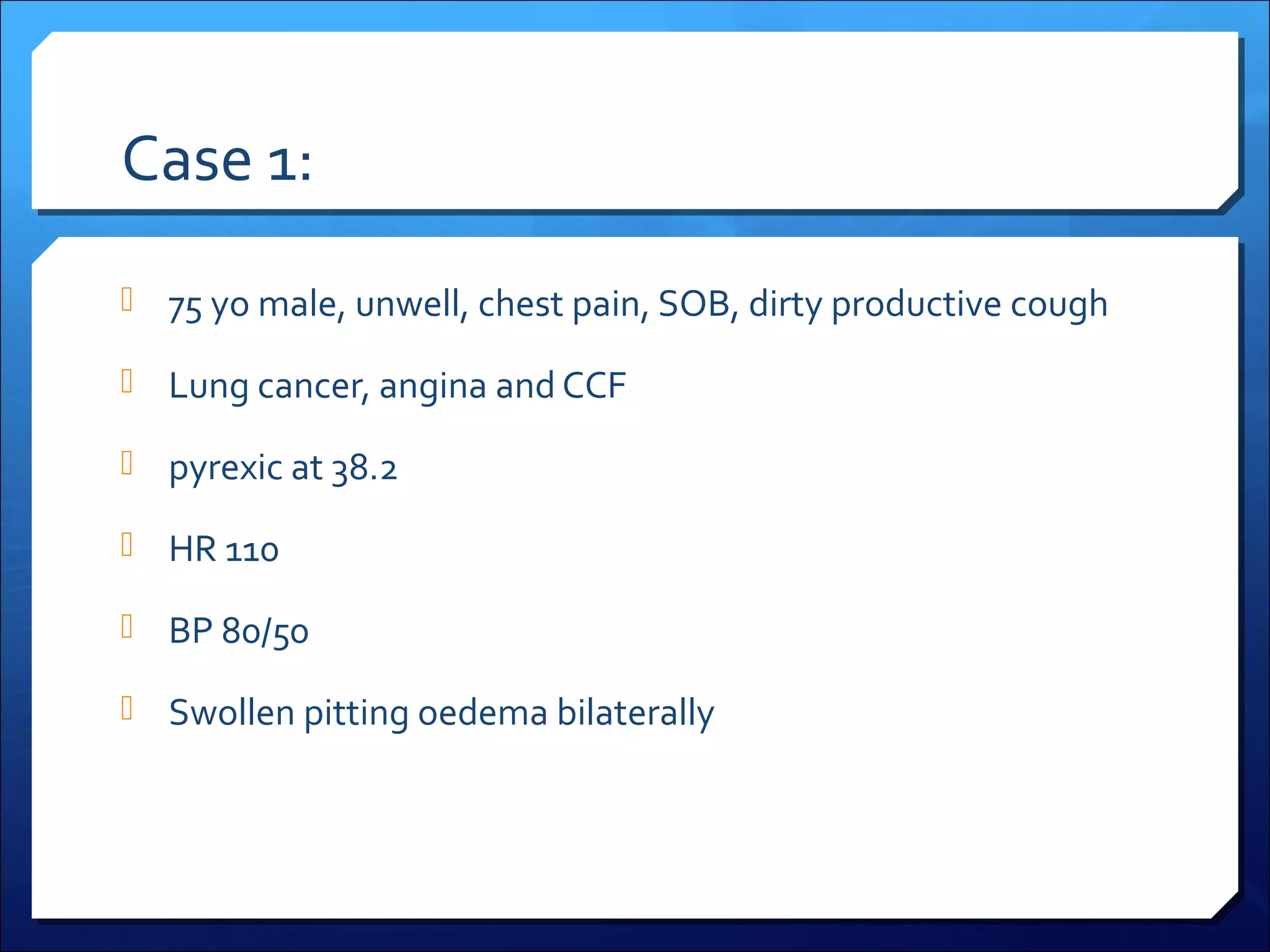
Case 1:
 75 yo male, unwell, chest pain, SOB, dirty productive cough
 Lung cancer, angina and CCF
 pyrexic at 38.2
 HR 110
 BP 80/50
 Swollen pitting oedema bilaterally
Case 1-

What clinical question can the
probe answer for you with this
patient?
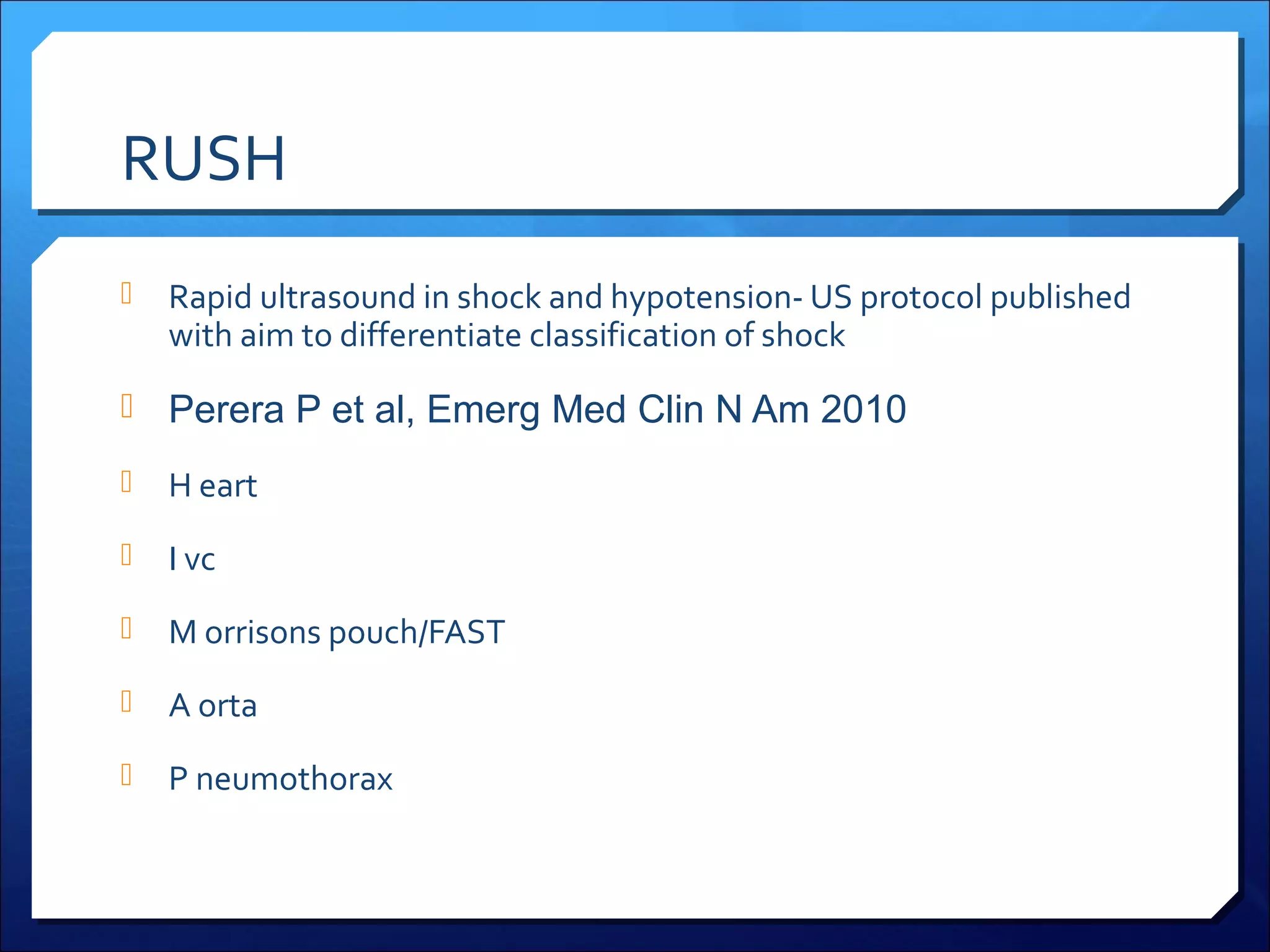
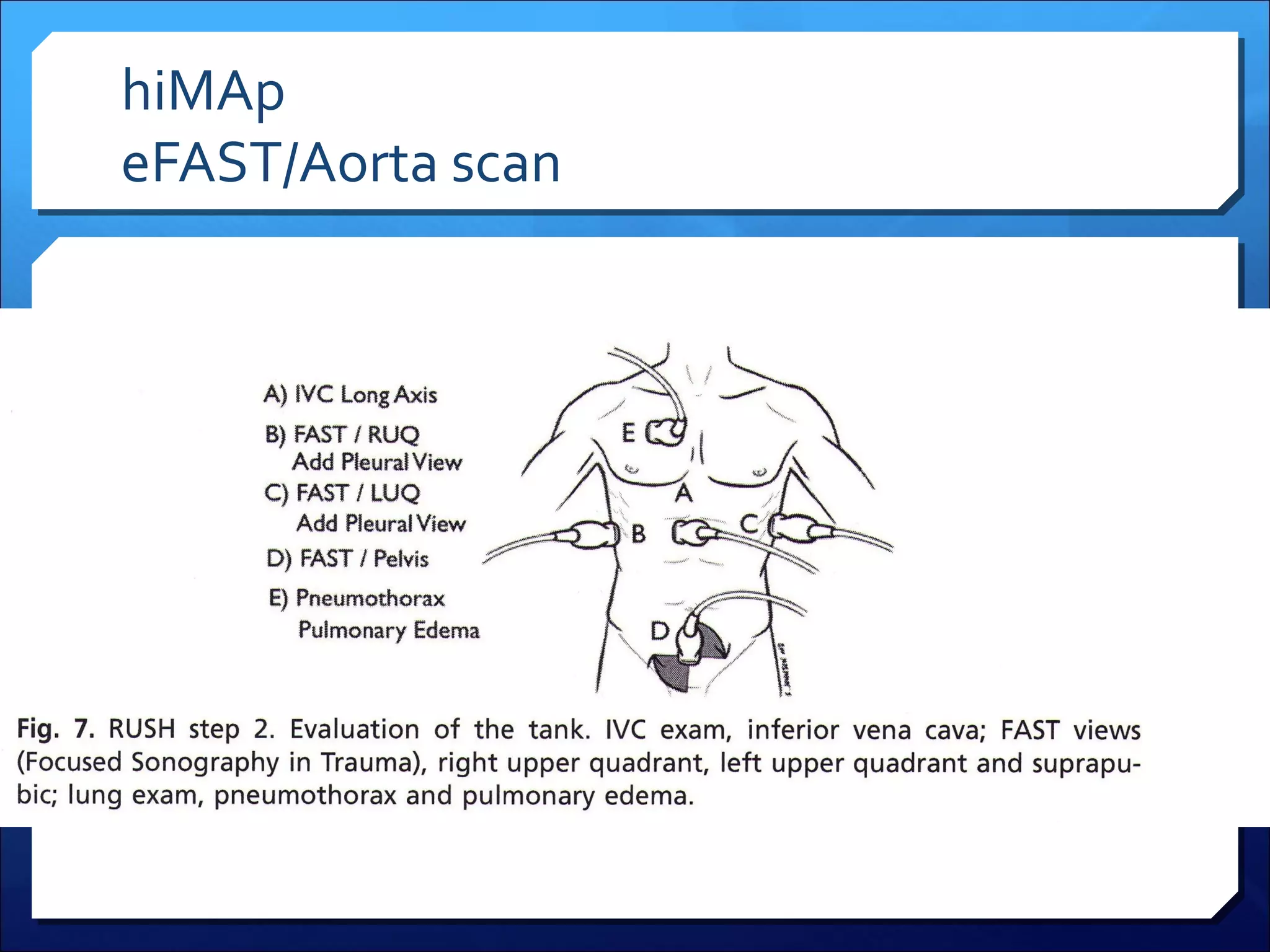
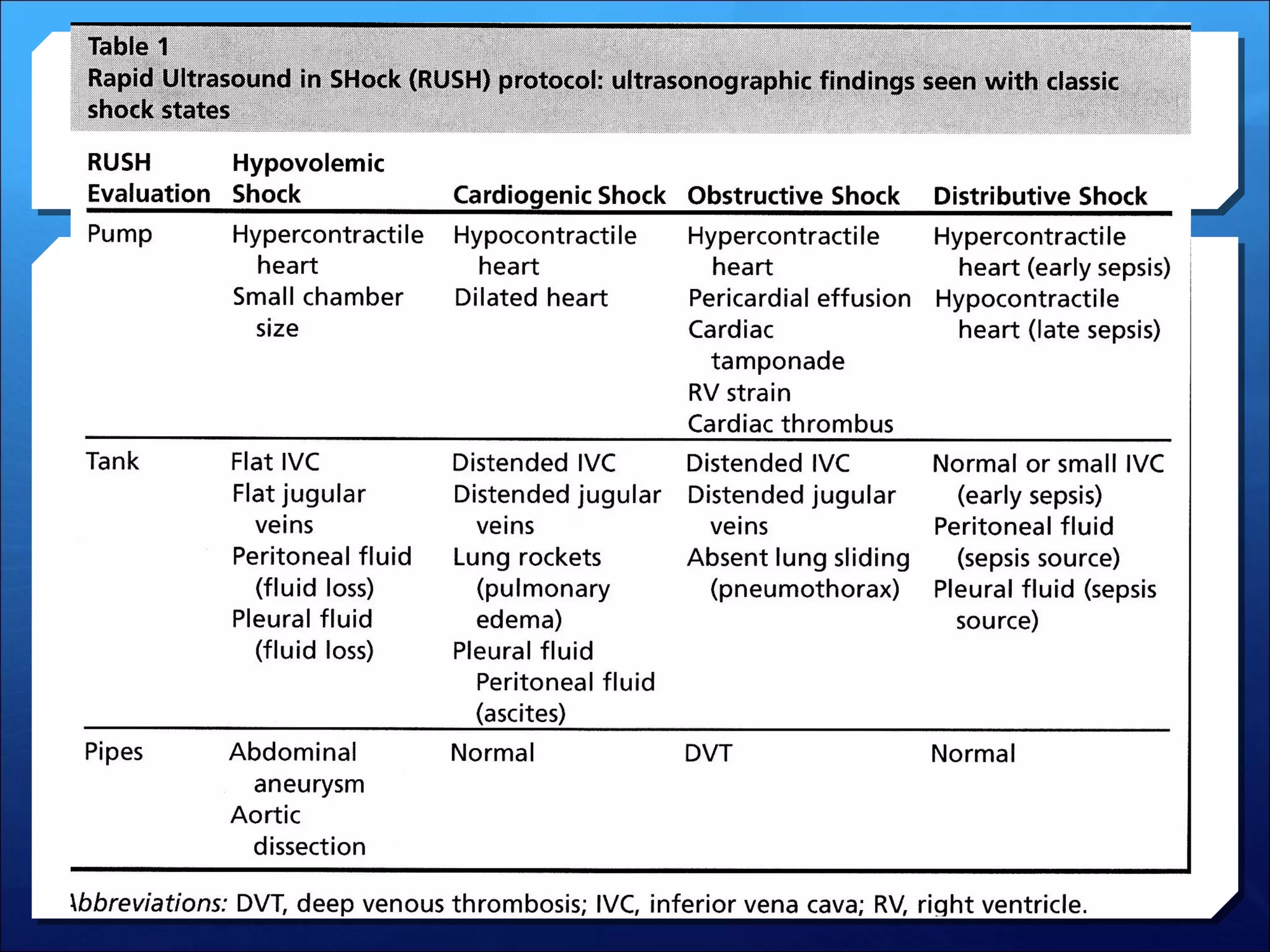
RUSH


Rapid ultrasound in shock and hypotension- US protocol published
with aim to differentiate classification of shock

 Perera P et al, Emerg Med Clin N Am 2010


H eart



I vc



M orrisons pouch/FAST



A orta



P neumothorax
Himap-THE PUMP
 Contractility-

Hyperdynamic LV- sepsis, hypovolaemia
 Hypodynamic- late sepsis, cardiogenic shock
 What’s the RV like? – collapsing? Dilated?


 Obstructive shock
 Gross valvular dysfunction
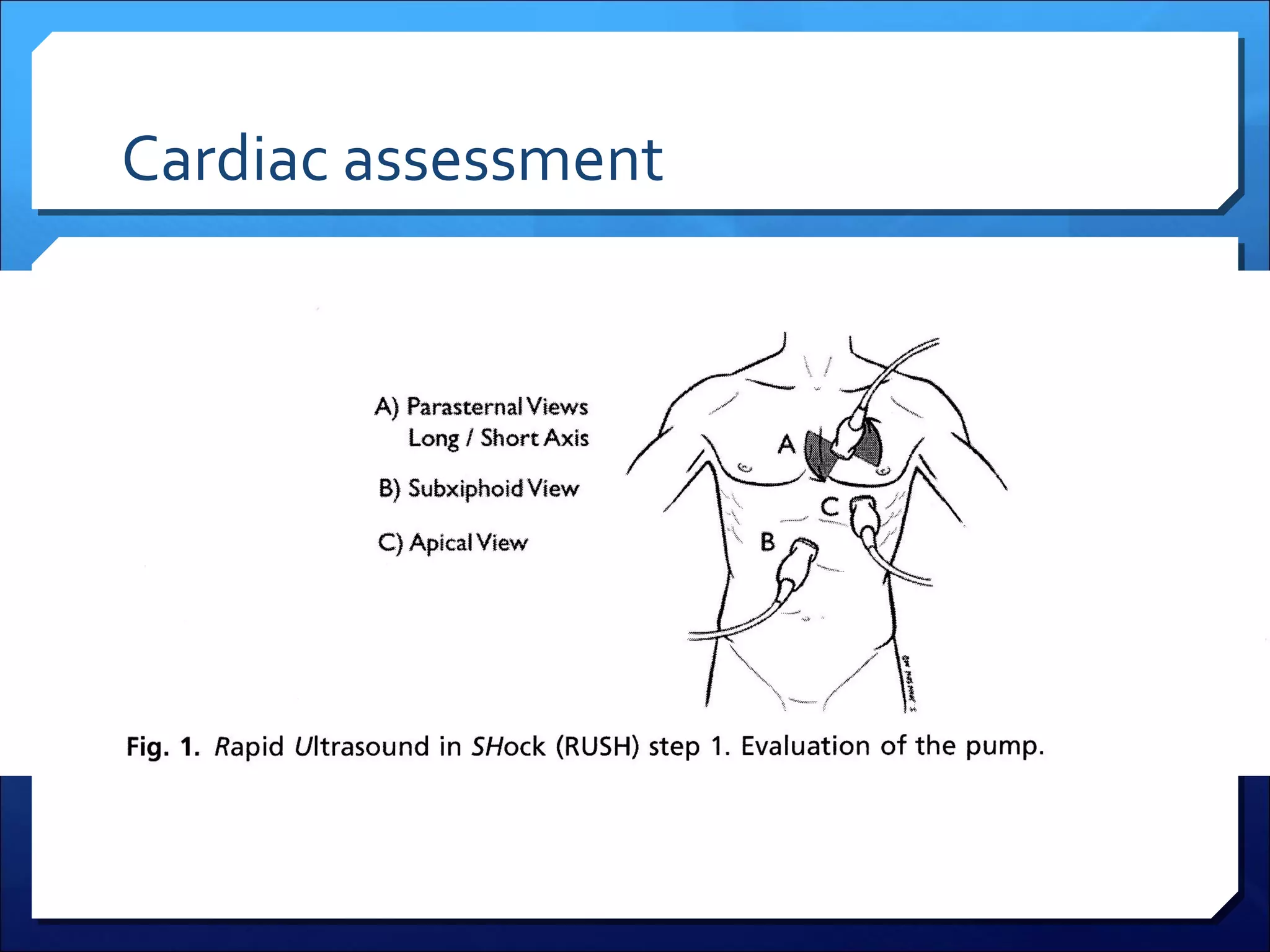
Cardiac assessment
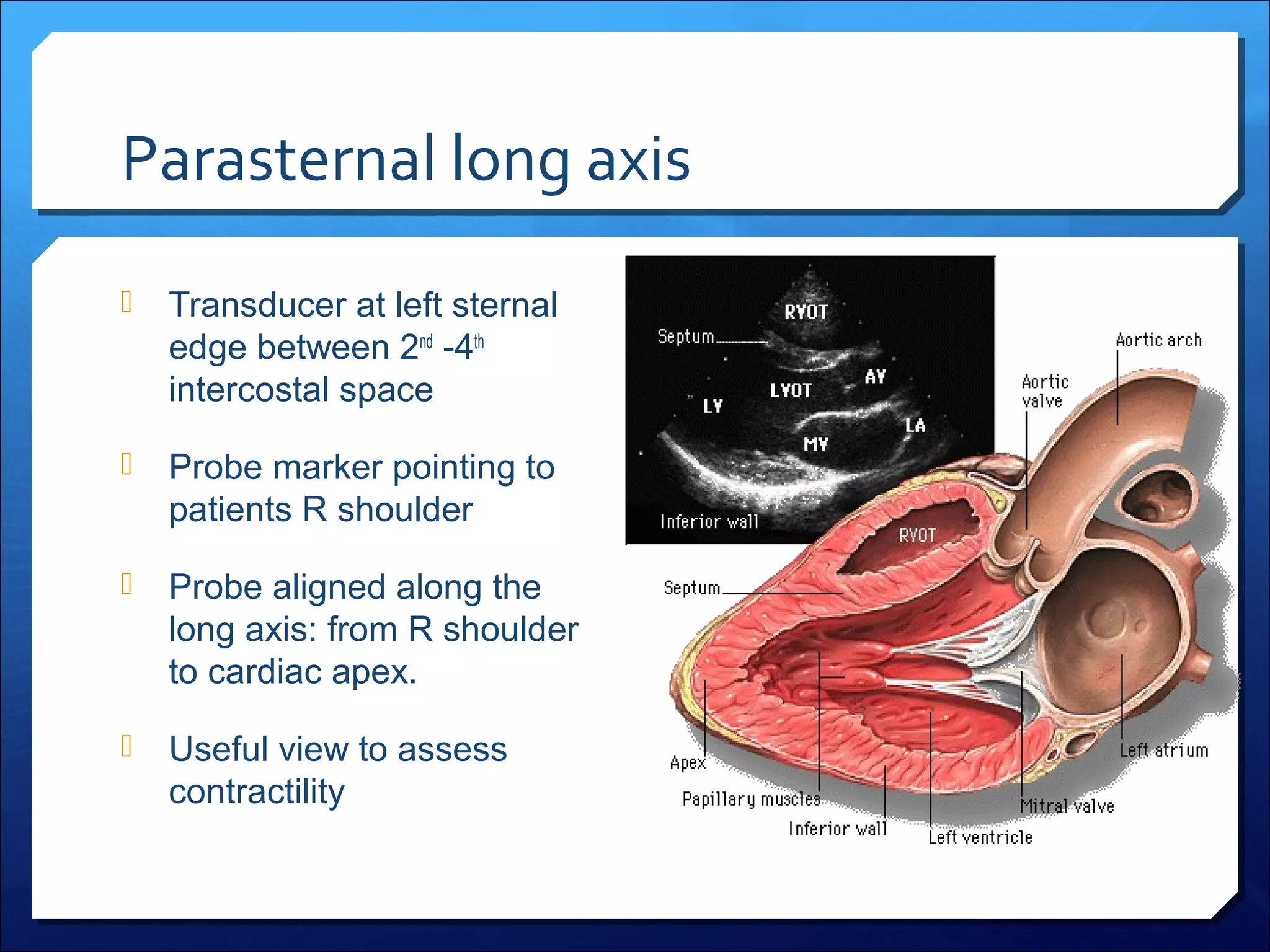
Parasternal long axis


Transducer at left sternal
edge between 2nd -4th
intercostal space



Probe marker pointing to
patients R shoulder



Probe aligned along the
long axis: from R shoulder
to cardiac apex.



Useful view to assess
contractility


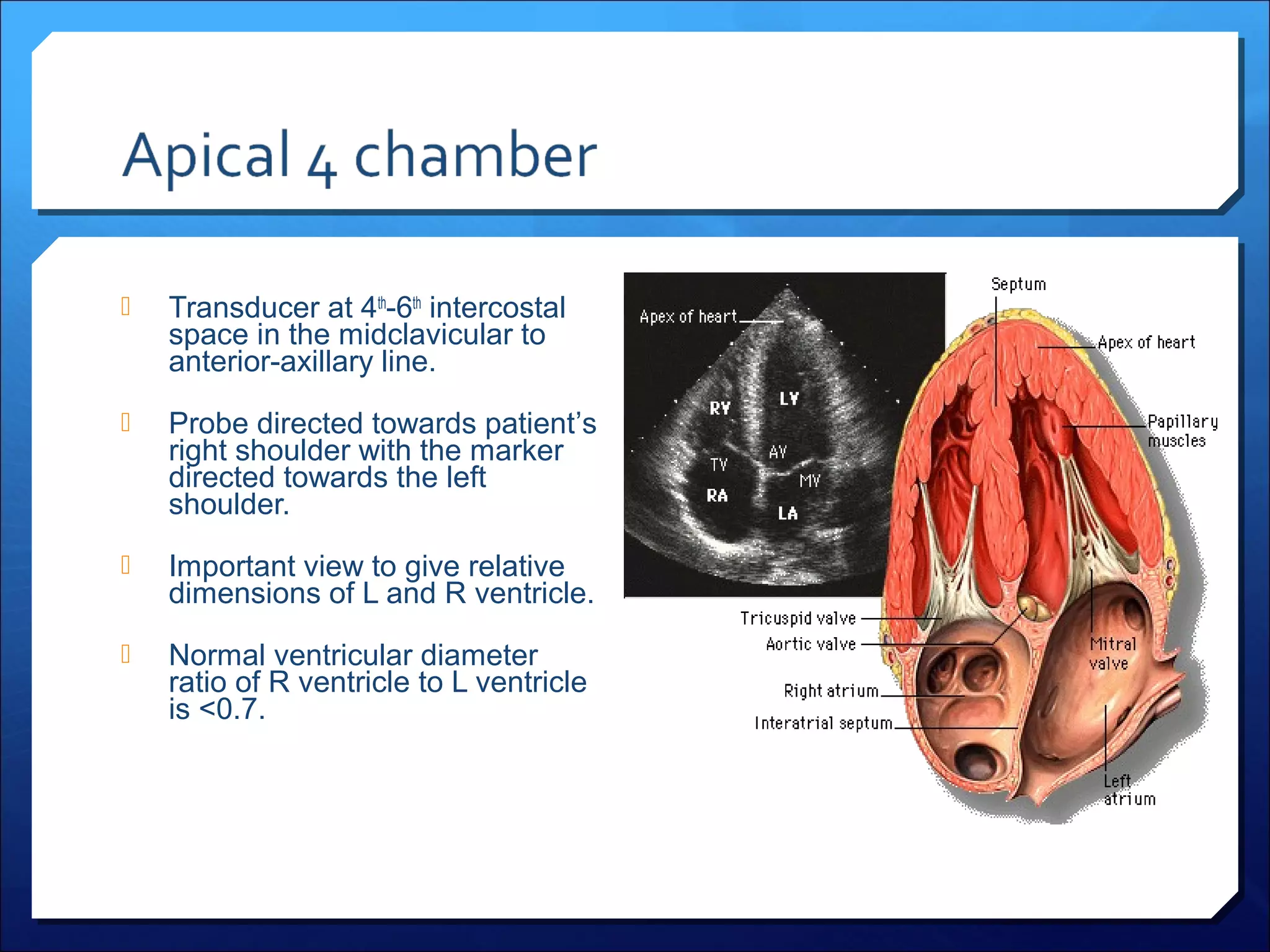
Transducer at 4th-6th intercostal
space in the midclavicular to
anterior-axillary line.



Probe directed towards patient’s
right shoulder with the marker
directed towards the left
shoulder.



Important view to give relative
dimensions of L and R ventricle.



Normal ventricular diameter
ratio of R ventricle to L ventricle
is <0.7.
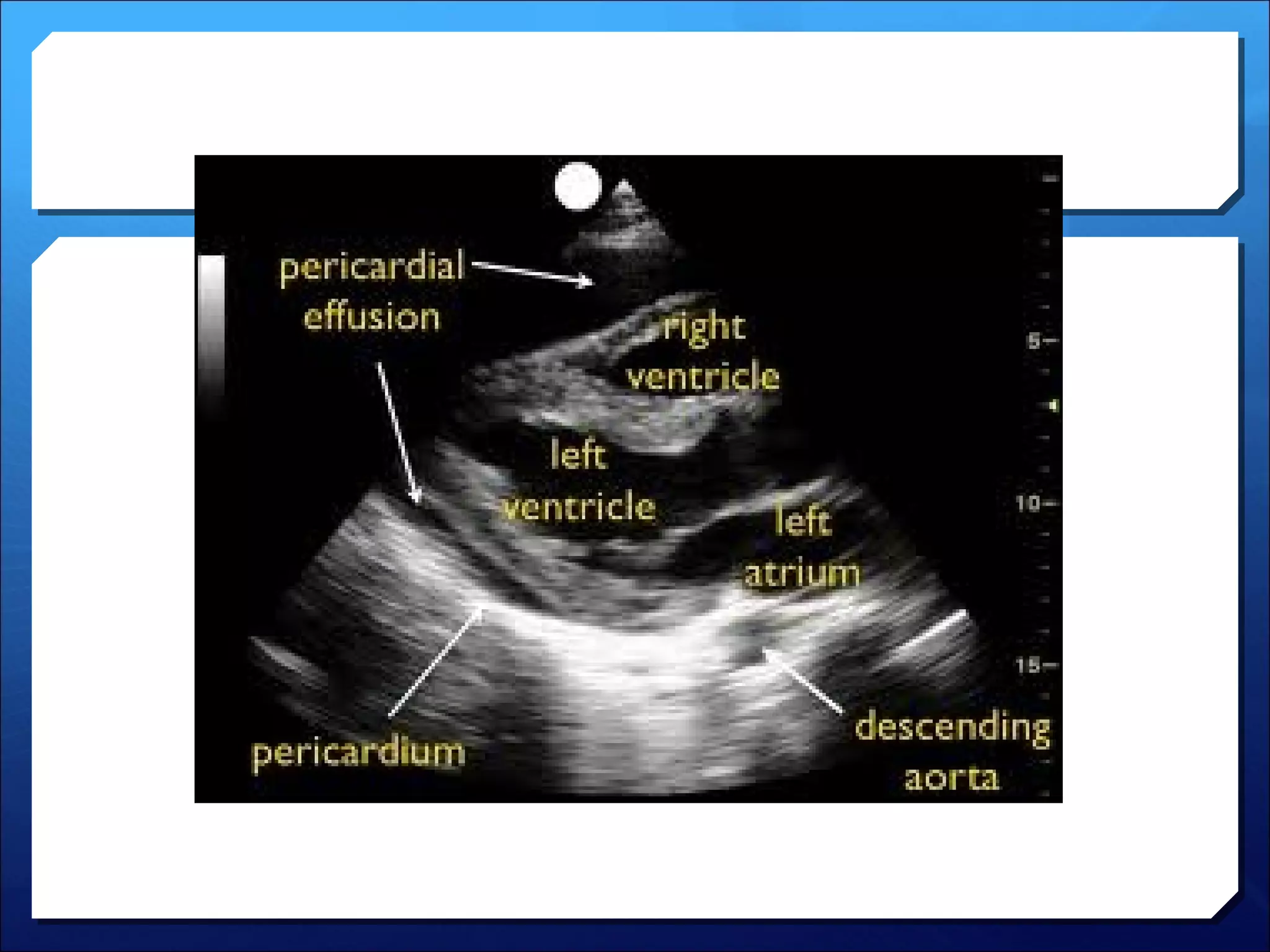
Pericardial Tamponade


Remember tamponade is a clinical diagnosis based on
patient’s haemodynamics and clinical picture.



Ultrasound may demonstrate early warning signs of
tamponade before the patient becomes haemodynamically
unstable.



Haemodynamic effects
 Its PRESSURE NOT SIZE THAT COUNTS!
 Rate of formation affects pressure-volume relationship and
is therefore more important than volume of fluid.
Tamponade using ultrasound
 A moderate-large effusion.
 Right atrial collapse
 Atrial contraction normal in atrial systole
 Collapse throughout diastole or inversion is abnormal.
 RV collapse during diastole when meant to be filling

(‘scalloping’ seen)

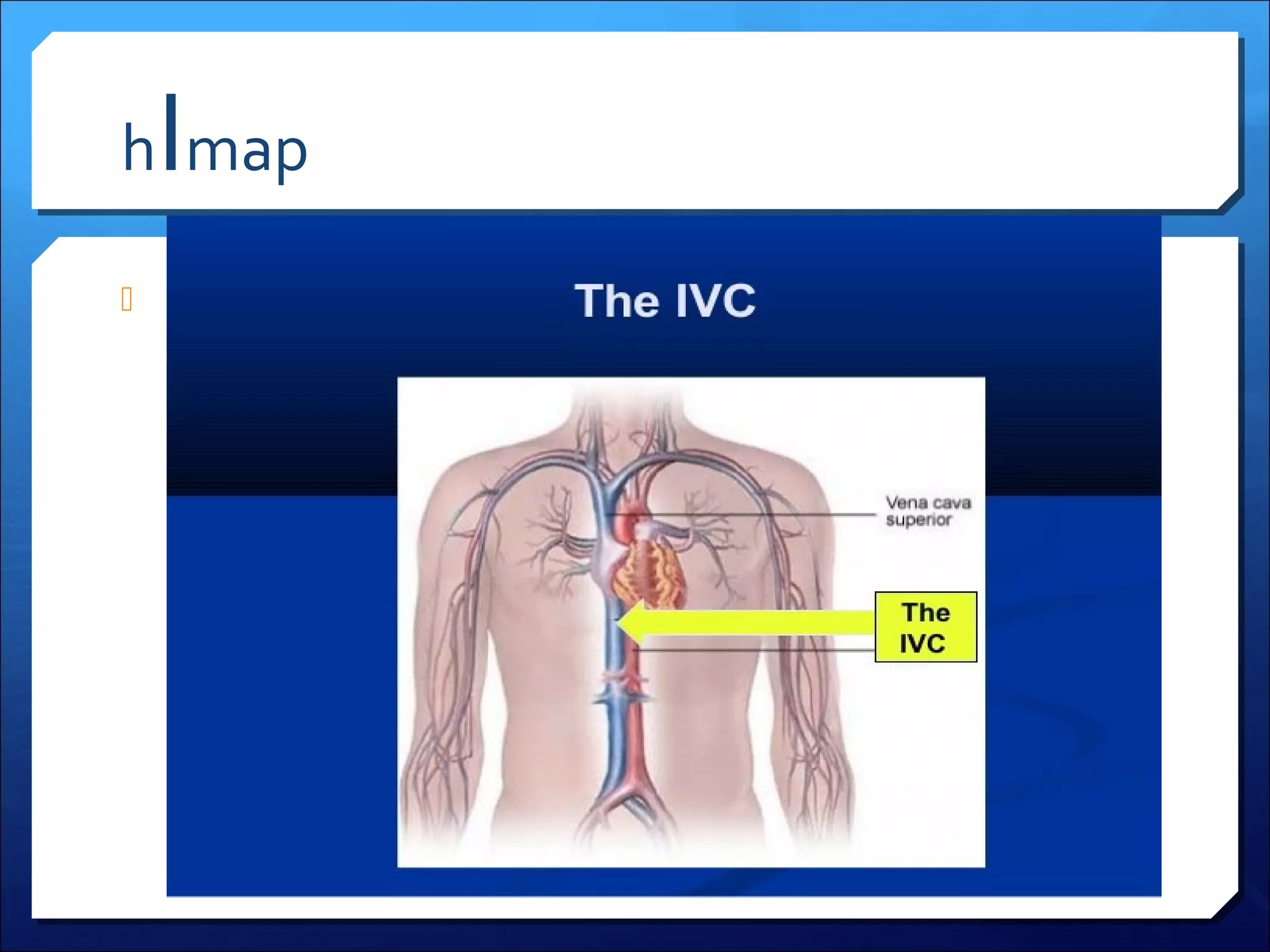
 Whats seen in the IVC…
I

h map
 IVC
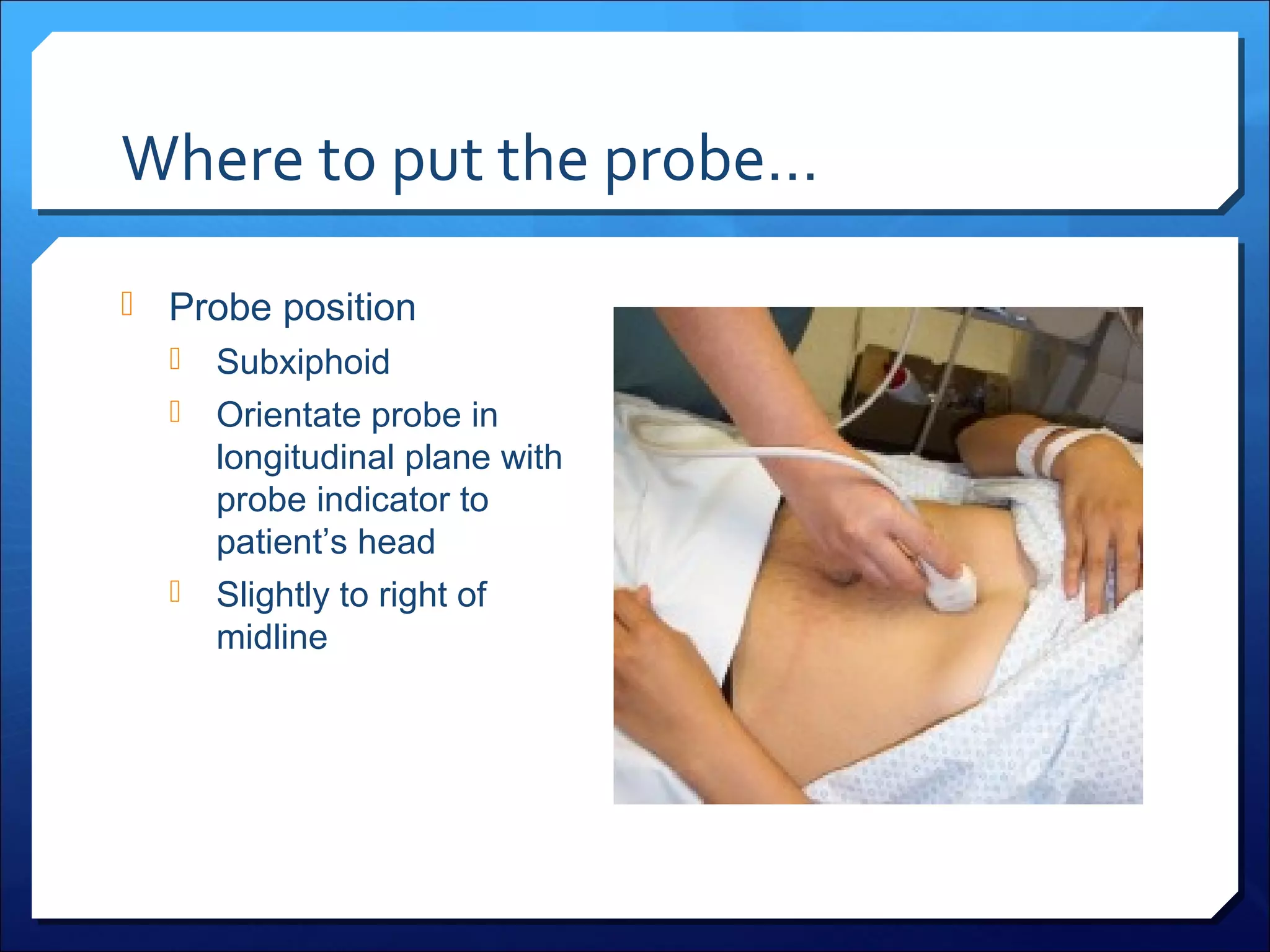
Where to put the probe…
 Probe position

Subxiphoid
 Orientate probe in
longitudinal plane with
probe indicator to
patient’s head
 Slightly to right of
midline

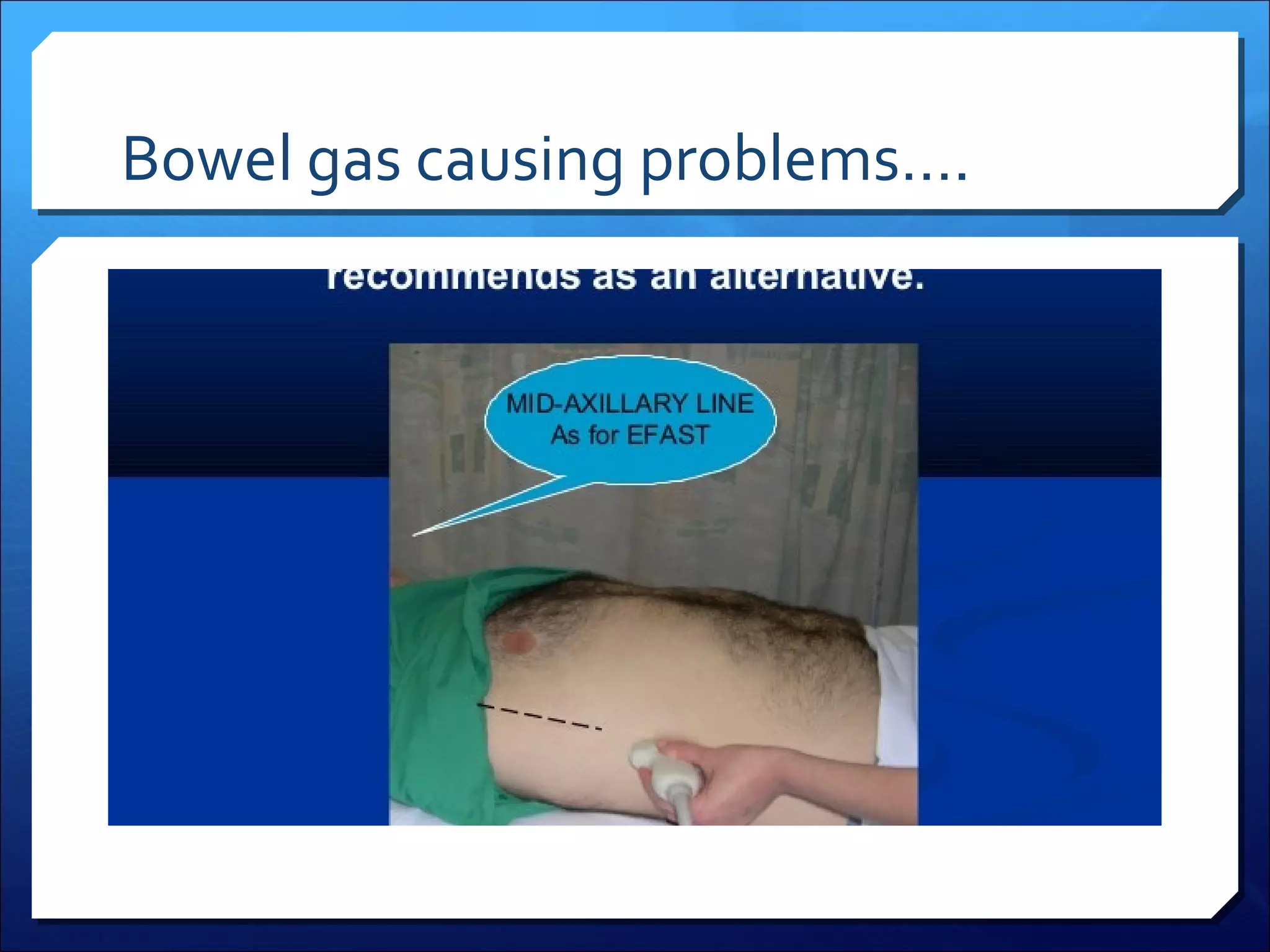
Bowel gas causing problems….
The FAST view…
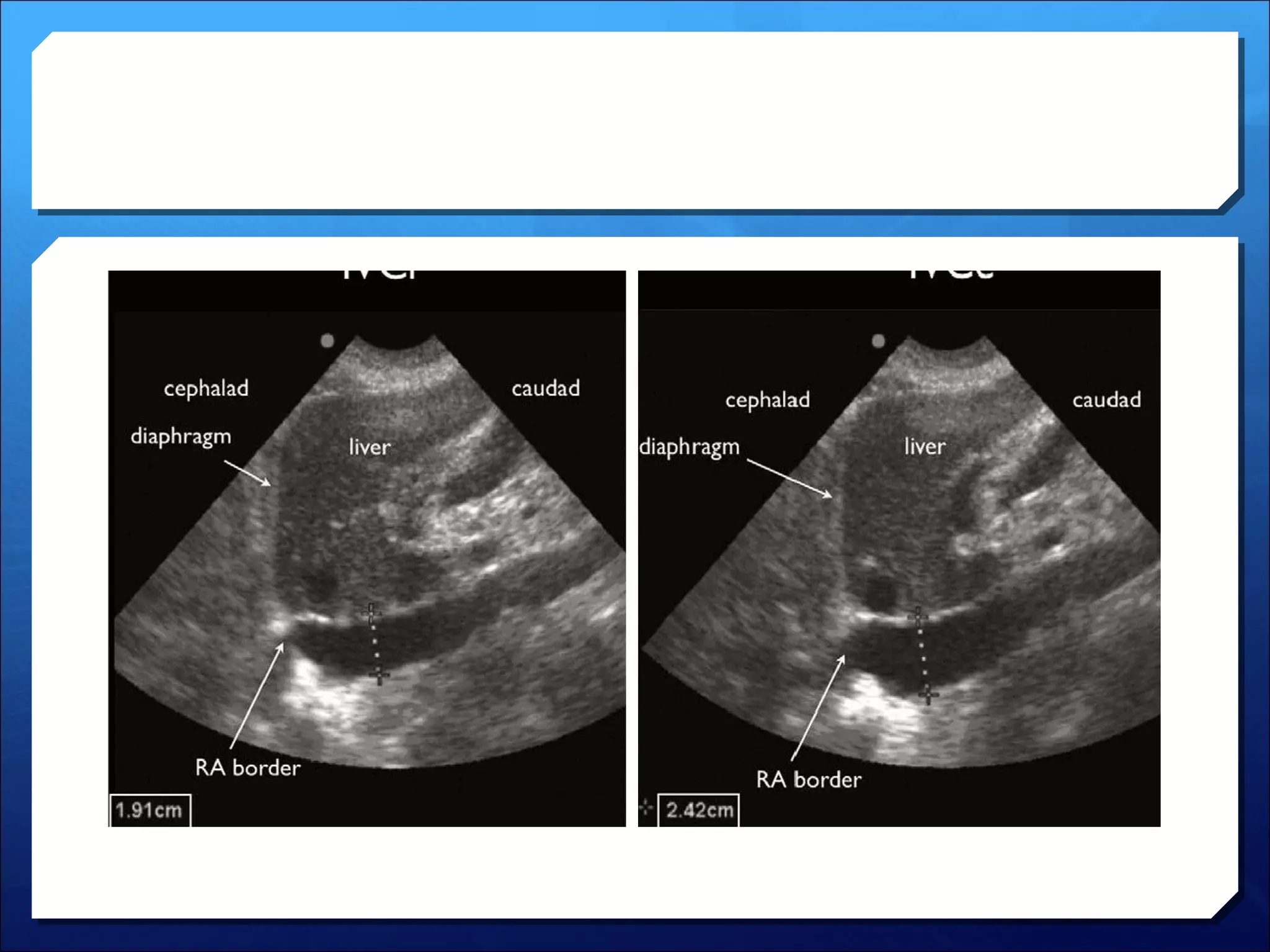
 Probe goes longitudinally in right mid axillary line with

marker towards head.

 Look for IVC running longitudinally adjacent to the liver

crossing the diaphragm

 Track superiorly until it enters the RA confirms it’s the IVC not

the aorta
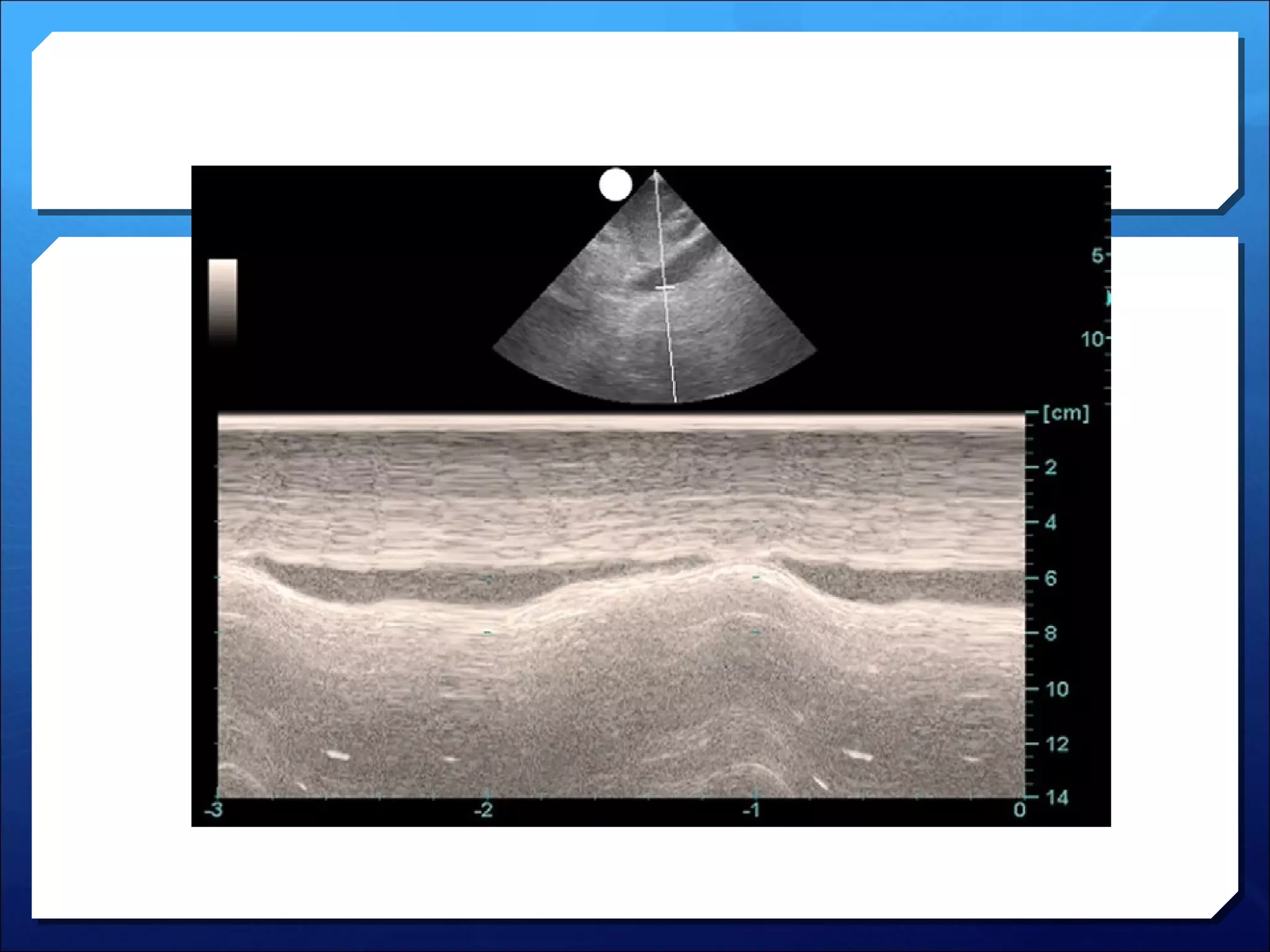
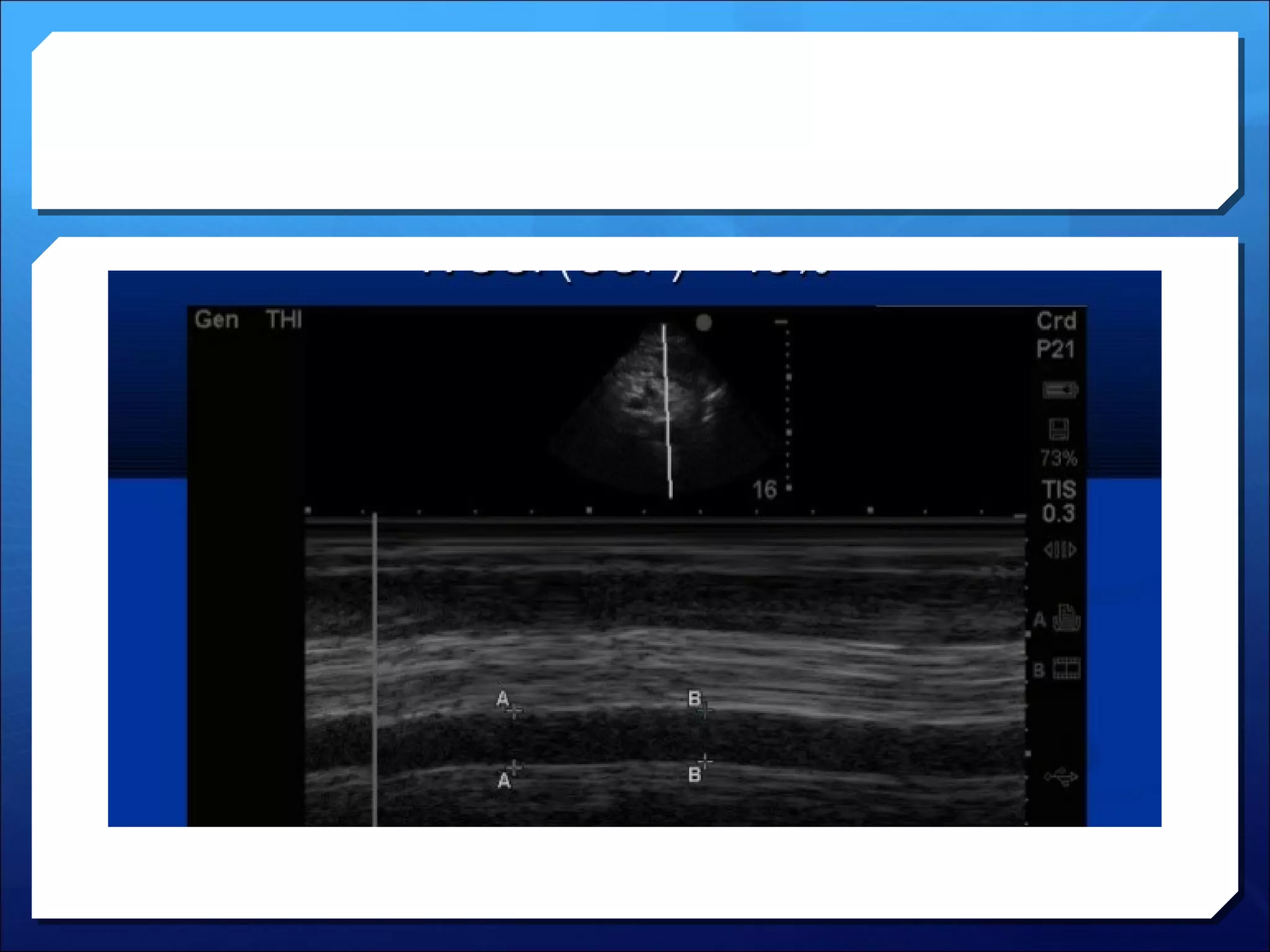
Assessing the IVC
 During inspiration, intrathoracic pressure becomes more

negative, abdominal pressure becomes more positive,
resultant increase in the pressure gradient between the
supra and infra-diaphragmatic vena cava, increases
venous return to the heart.

 Given the extrathoracic IVC is a very compliant vessel

this causes diameter of IVC to decrease with normal
inspiration.

 In patients with low intravascular volume, the inspiration

to expiration diameters change much more than those
who have normal or high intravascular volume.
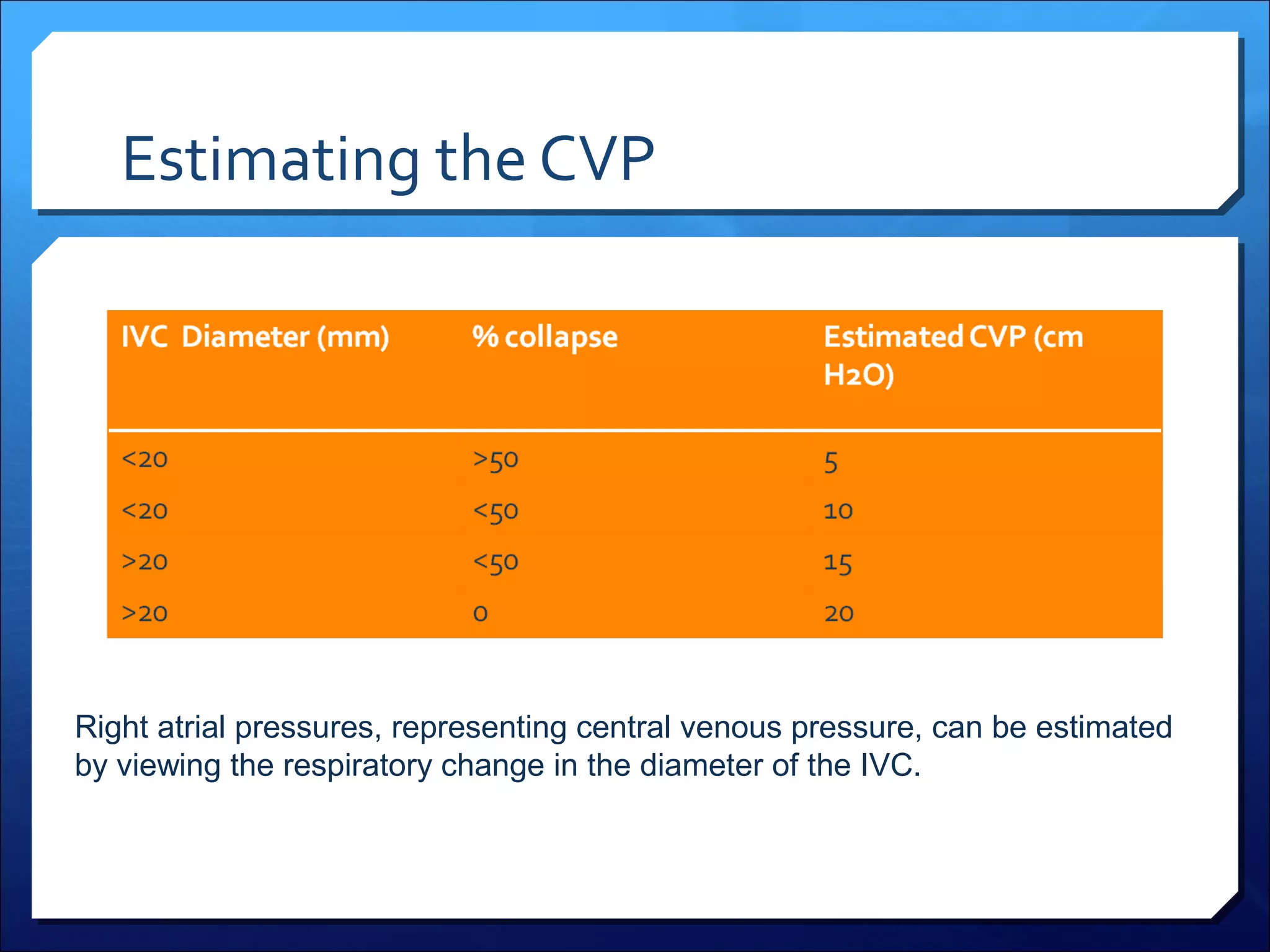
Estimating the CVP

Right atrial pressures, representing central venous pressure, can be estimated
by viewing the respiratory change in the diameter of the IVC.
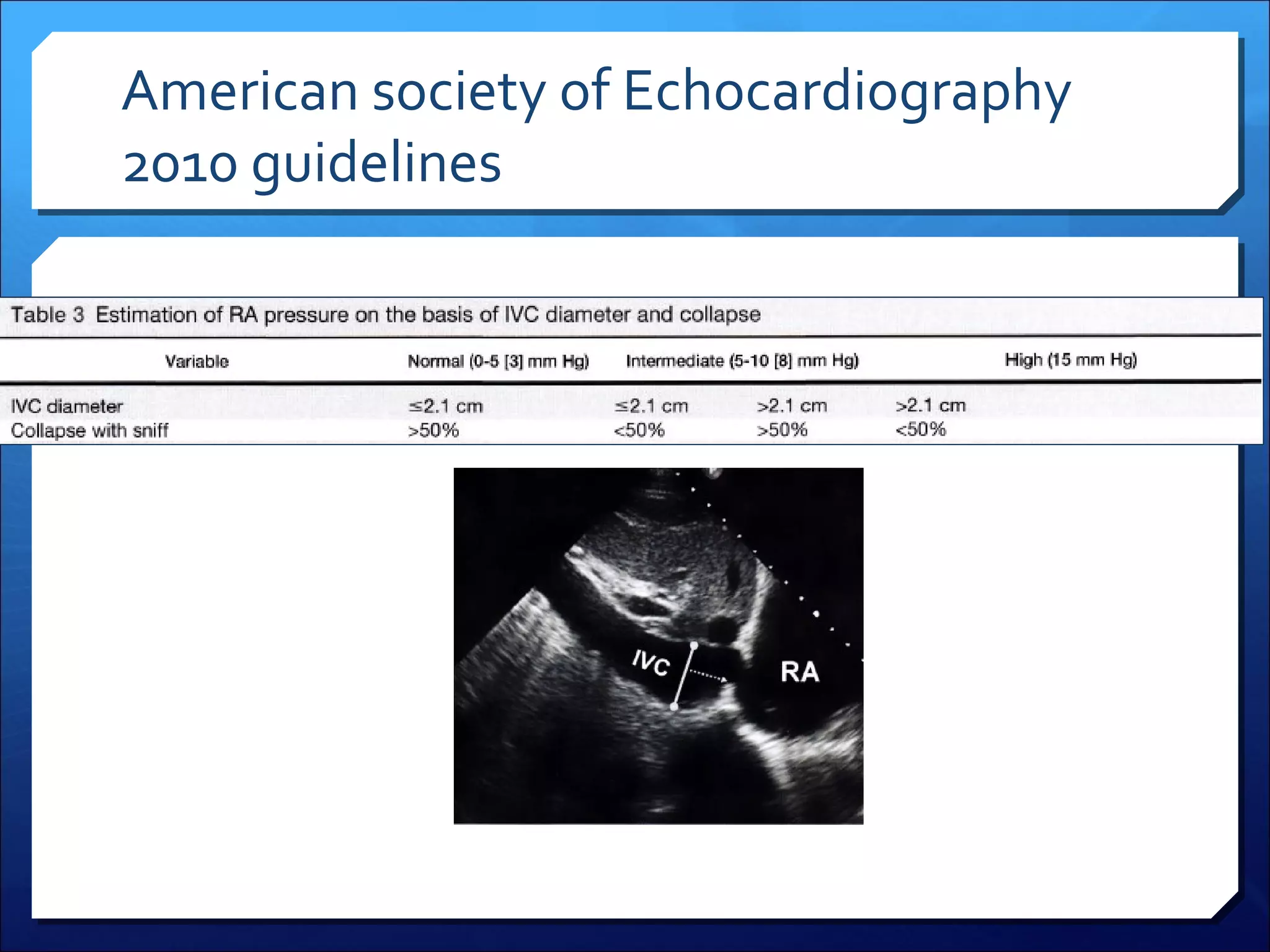
American society of Echocardiography
2010 guidelines
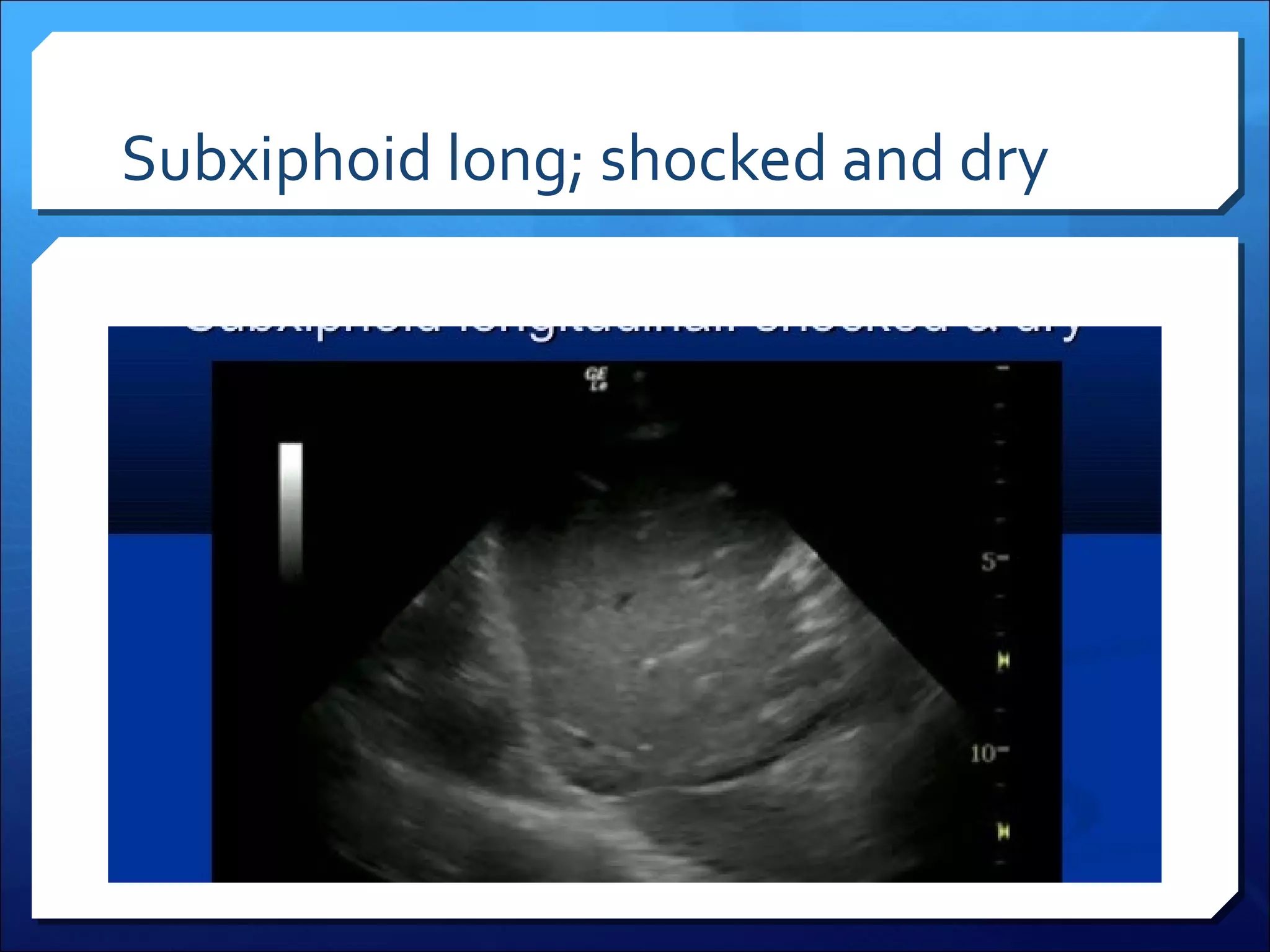
Subxiphoid long; shocked and dry
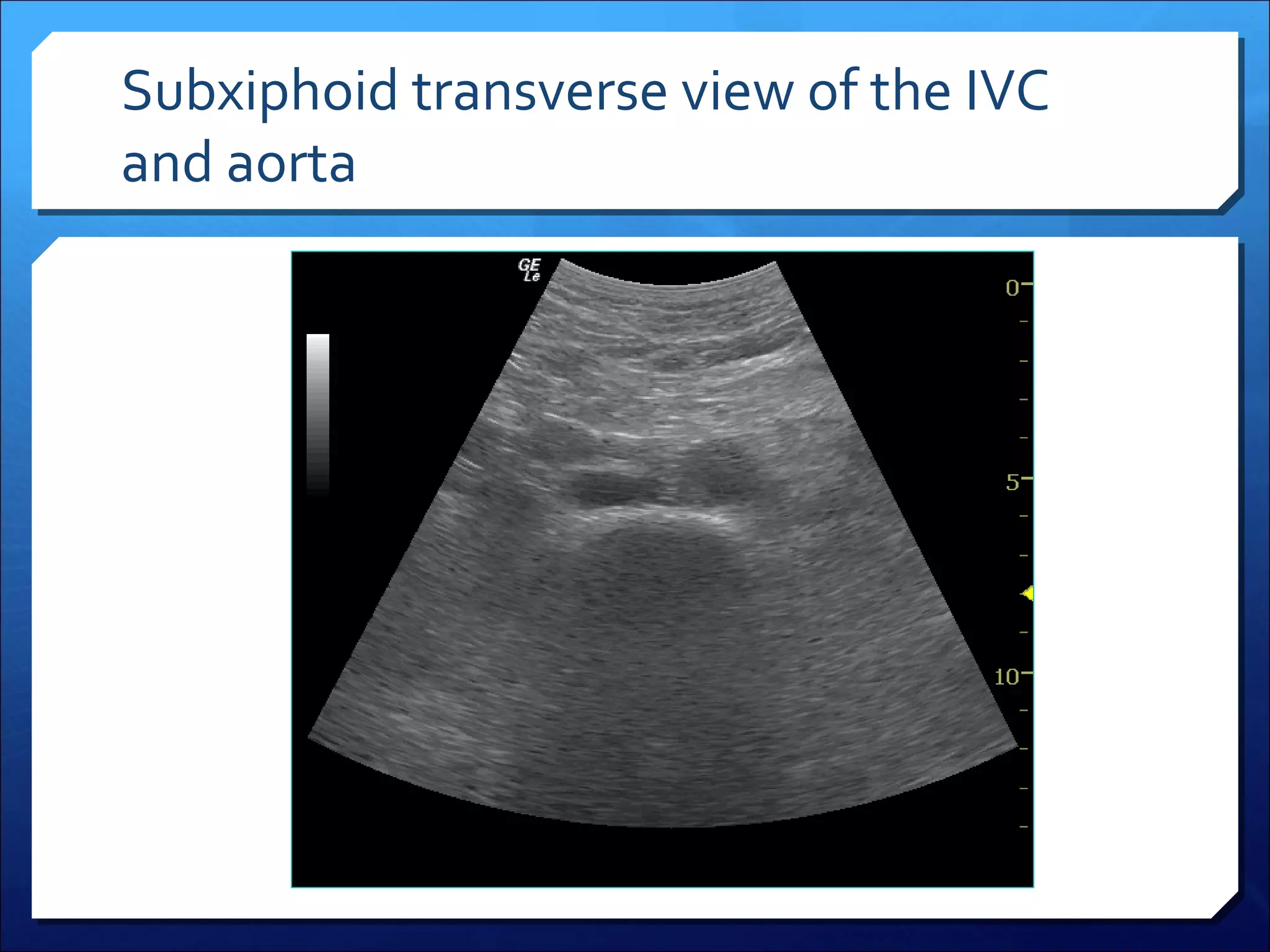
Subxiphoid transverse view of the IVC
and aorta
Complicating the picture
 Valvular disease
 Pulmonary hypertension
 Increased intraabdominal pressure
hiMAp
eFAST/Aorta scan
himaP
 Multiple studies have shown ultrasound to be more

sensitive than supine CXR for the detection of
pneumothorax.

 Sensitivities ranged from 86-100% with specificities from

92-100%.

 Furthermore USS can be performed more rapidly at the

bedside.

 Detection with ultrasound relies on the fact that free air is

lighter than normal aerated lung tissue, and thus will
accumulate in the nondependent areas of the thoracic
cavity. (ie anteriorly when patient is supine).
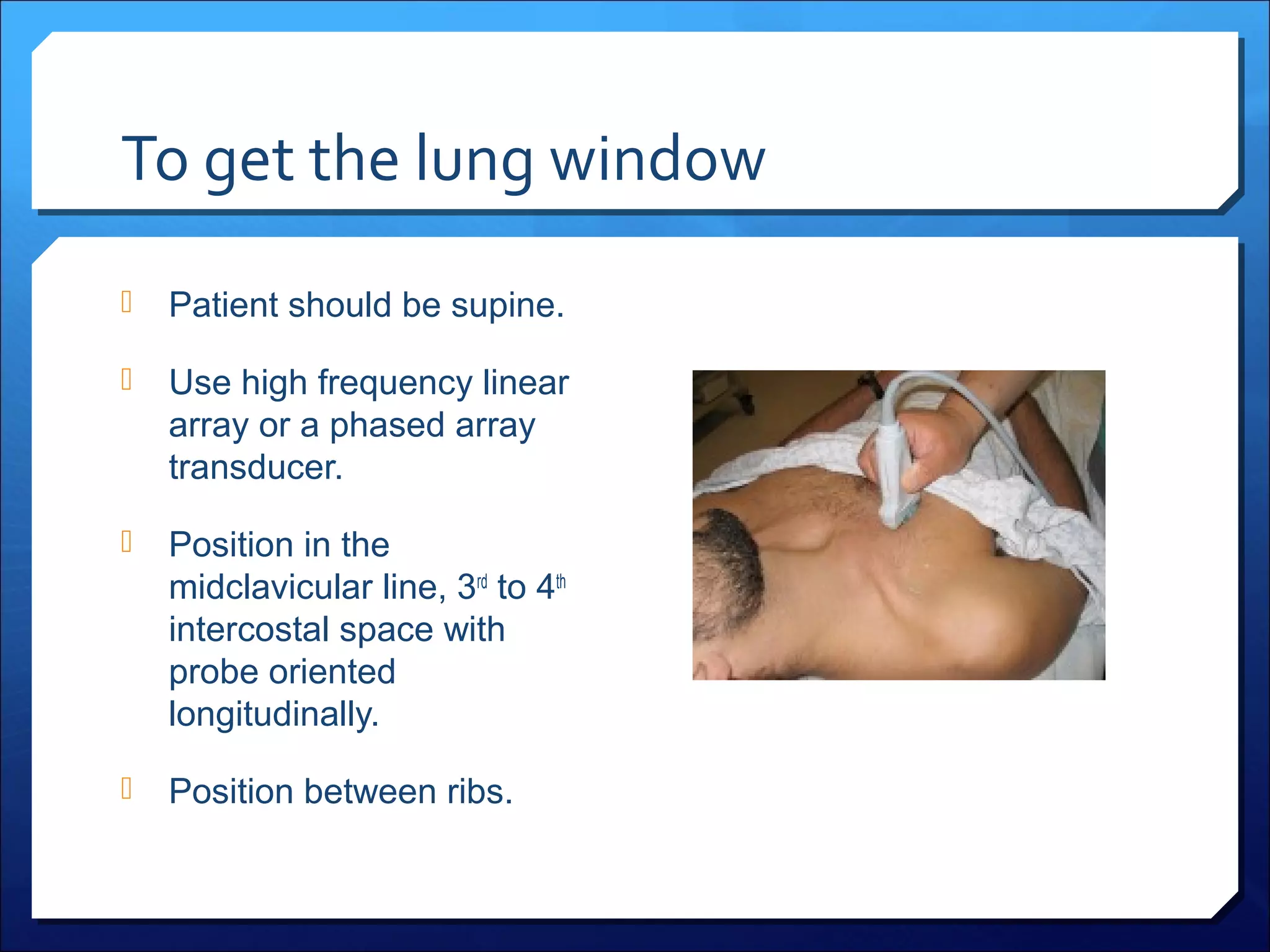
To get the lung window


Patient should be supine.



Use high frequency linear
array or a phased array
transducer.



Position in the
midclavicular line, 3rd to 4th
intercostal space with
probe oriented
longitudinally.



Position between ribs.
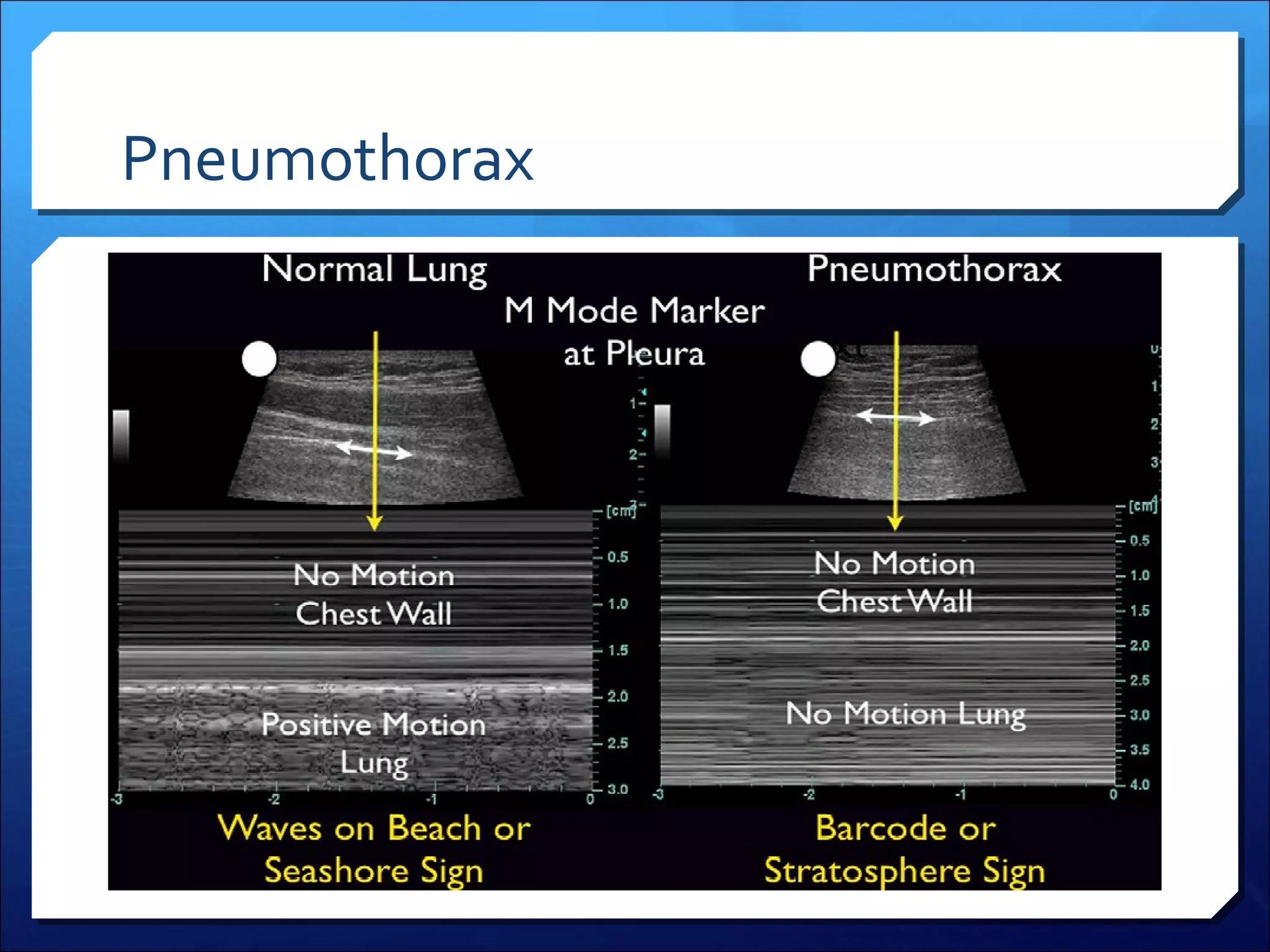
Pneumothorax
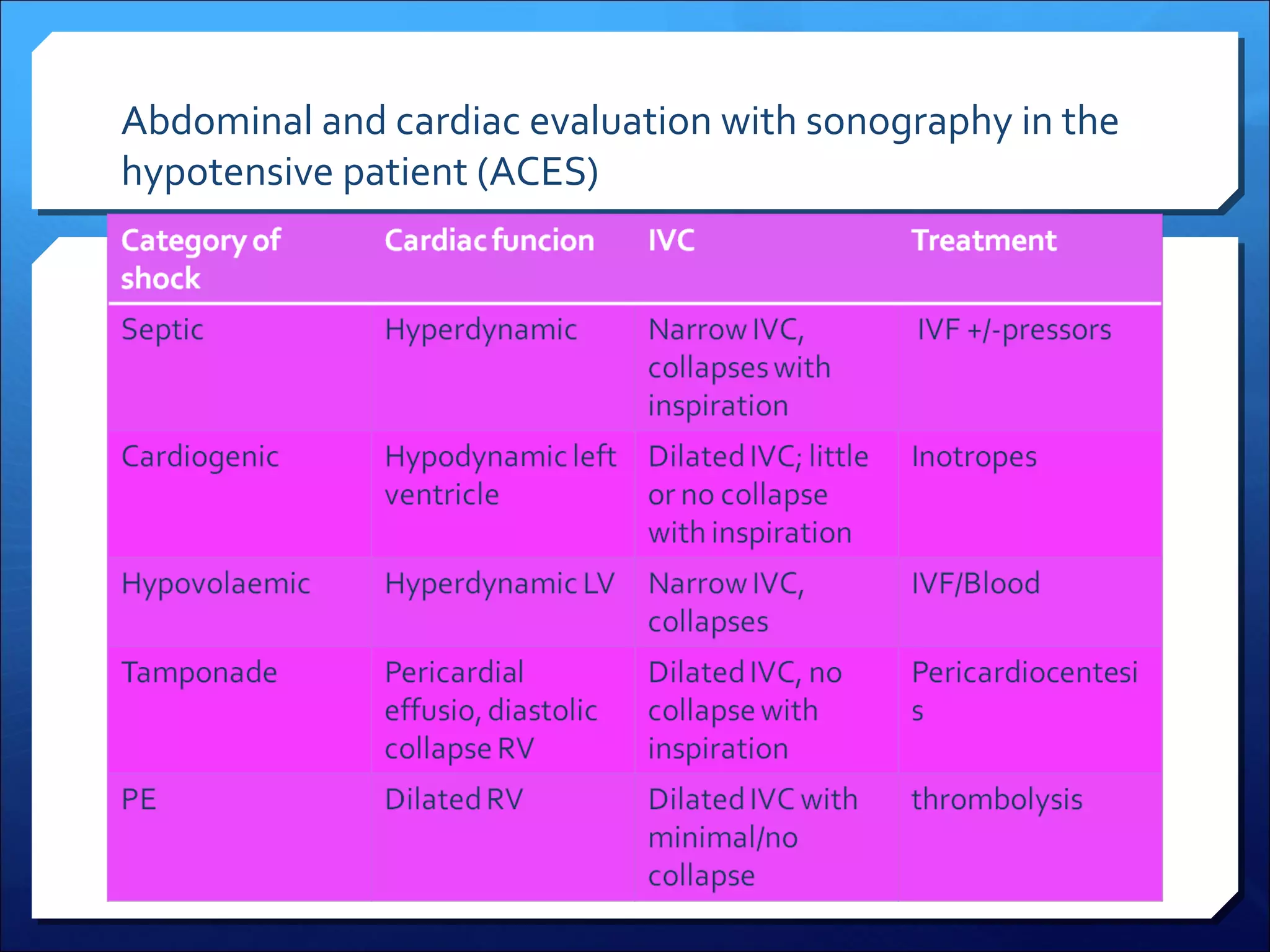
Abdominal and cardiac evaluation with sonography in the
hypotensive patient (ACES)
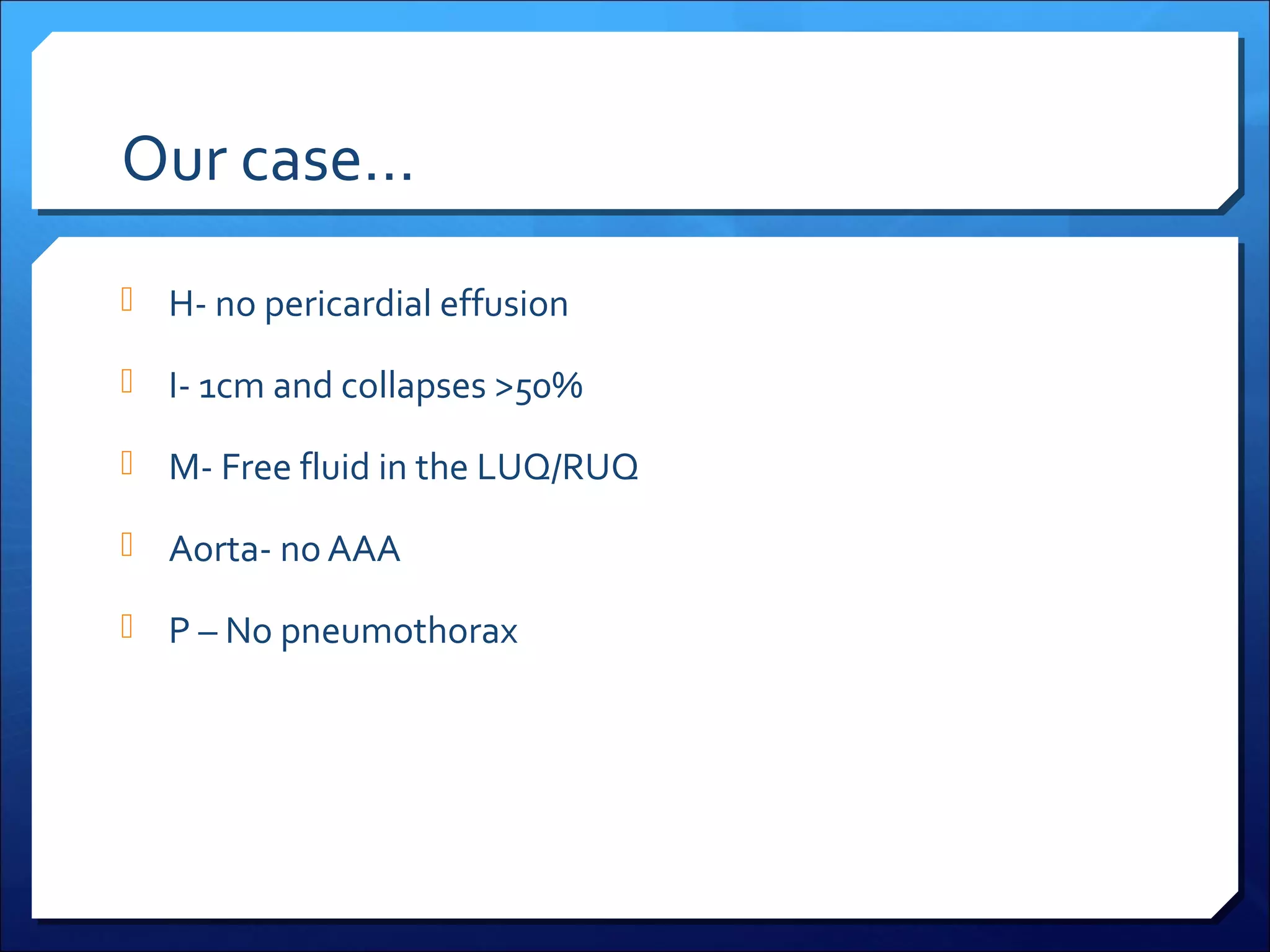
Our case…
 H- no pericardial effusion
 I- 1cm and collapses >50%
 M- Free fluid in the LUQ/RUQ
 Aorta- no AAA
 P – No pneumothorax
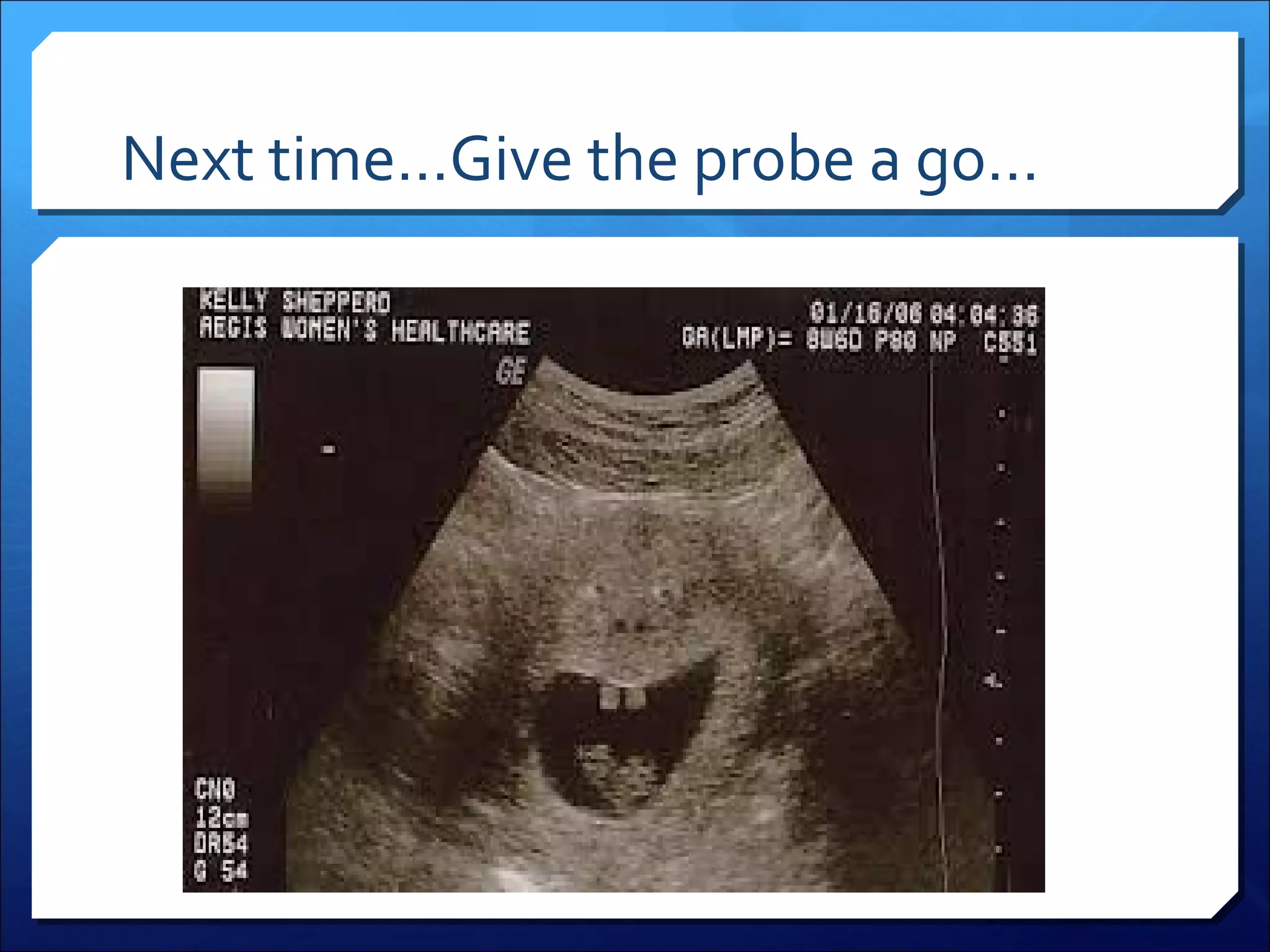
Next time…Give the probe a go…

Ultrasound use in shock

  • 1.
    Is ultrasound usefulin shock? Jo McDonnell
  • 2.
    Aim  Highlight what youcould have a go at…  Highlight what the sonoboys could do for you to help assess your patient
  • 3.
    Shock Clinical situation wherethere is hypoperfusion of the cells and tissues
  • 4.
    Background  Patients withshock have high mortality rates and these rates are correlated to the amount and duration of hypotension.  Diagnosis and initial care must be accurate and prompt to optimise patient outcomes.  Studies have demonstrated that initial integration of bedside ultrasound into the evaluation of the patient with shock results in a more accurate initial diagnosis with earlier definitive treatment.  Bedside USS allows direct visualisation of pathology or abnormal physiological states.
  • 5.
    Remember…  Ultrasound isa tool to aid diagnosis, but it won’t tell you everything…  When using it we should always have a clinical question you would like it to answer
  • 6.
    Case 1:  75yo male, unwell, chest pain, SOB, dirty productive cough  Lung cancer, angina and CCF  pyrexic at 38.2  HR 110  BP 80/50  Swollen pitting oedema bilaterally
  • 7.
    Case 1- What clinicalquestion can the probe answer for you with this patient?
  • 8.
    RUSH  Rapid ultrasound inshock and hypotension- US protocol published with aim to differentiate classification of shock  Perera P et al, Emerg Med Clin N Am 2010  H eart  I vc  M orrisons pouch/FAST  A orta  P neumothorax
  • 9.
    Himap-THE PUMP  Contractility- HyperdynamicLV- sepsis, hypovolaemia  Hypodynamic- late sepsis, cardiogenic shock  What’s the RV like? – collapsing? Dilated?   Obstructive shock  Gross valvular dysfunction
  • 10.
  • 11.
    Parasternal long axis  Transducerat left sternal edge between 2nd -4th intercostal space  Probe marker pointing to patients R shoulder  Probe aligned along the long axis: from R shoulder to cardiac apex.  Useful view to assess contractility
  • 12.
     Transducer at 4th-6thintercostal space in the midclavicular to anterior-axillary line.  Probe directed towards patient’s right shoulder with the marker directed towards the left shoulder.  Important view to give relative dimensions of L and R ventricle.  Normal ventricular diameter ratio of R ventricle to L ventricle is <0.7.
  • 14.
    Pericardial Tamponade  Remember tamponadeis a clinical diagnosis based on patient’s haemodynamics and clinical picture.  Ultrasound may demonstrate early warning signs of tamponade before the patient becomes haemodynamically unstable.  Haemodynamic effects  Its PRESSURE NOT SIZE THAT COUNTS!  Rate of formation affects pressure-volume relationship and is therefore more important than volume of fluid.
  • 15.
    Tamponade using ultrasound A moderate-large effusion.  Right atrial collapse  Atrial contraction normal in atrial systole  Collapse throughout diastole or inversion is abnormal.  RV collapse during diastole when meant to be filling (‘scalloping’ seen)  Whats seen in the IVC…
  • 16.
  • 17.
    Where to putthe probe…  Probe position Subxiphoid  Orientate probe in longitudinal plane with probe indicator to patient’s head  Slightly to right of midline 
  • 18.
    Bowel gas causingproblems….
  • 19.
    The FAST view… Probe goes longitudinally in right mid axillary line with marker towards head.  Look for IVC running longitudinally adjacent to the liver crossing the diaphragm  Track superiorly until it enters the RA confirms it’s the IVC not the aorta
  • 20.
    Assessing the IVC During inspiration, intrathoracic pressure becomes more negative, abdominal pressure becomes more positive, resultant increase in the pressure gradient between the supra and infra-diaphragmatic vena cava, increases venous return to the heart.  Given the extrathoracic IVC is a very compliant vessel this causes diameter of IVC to decrease with normal inspiration.  In patients with low intravascular volume, the inspiration to expiration diameters change much more than those who have normal or high intravascular volume.
  • 21.
    Estimating the CVP Rightatrial pressures, representing central venous pressure, can be estimated by viewing the respiratory change in the diameter of the IVC.
  • 22.
    American society ofEchocardiography 2010 guidelines
  • 24.
  • 27.
    Subxiphoid transverse viewof the IVC and aorta
  • 28.
    Complicating the picture Valvular disease  Pulmonary hypertension  Increased intraabdominal pressure
  • 29.
  • 30.
    himaP  Multiple studieshave shown ultrasound to be more sensitive than supine CXR for the detection of pneumothorax.  Sensitivities ranged from 86-100% with specificities from 92-100%.  Furthermore USS can be performed more rapidly at the bedside.  Detection with ultrasound relies on the fact that free air is lighter than normal aerated lung tissue, and thus will accumulate in the nondependent areas of the thoracic cavity. (ie anteriorly when patient is supine).
  • 31.
    To get thelung window  Patient should be supine.  Use high frequency linear array or a phased array transducer.  Position in the midclavicular line, 3rd to 4th intercostal space with probe oriented longitudinally.  Position between ribs.
  • 32.
  • 33.
    Abdominal and cardiacevaluation with sonography in the hypotensive patient (ACES)
  • 35.
    Our case…  H-no pericardial effusion  I- 1cm and collapses >50%  M- Free fluid in the LUQ/RUQ  Aorta- no AAA  P – No pneumothorax
  • 36.
    Next time…Give theprobe a go…

Editor's Notes

  • #5 Patients come in sick cant get to CT using us to diagnose ?pressors? ?fluid
  • #15 malig/ develop lomg time Traumatic even 200ml have give tamponade When intrapericardial pressure equal or exceeds right diastolic filling pressures