Focused Assessment with
Sonography in Trauma (FAST)
in 2017
Dr Varun Bansal
Deptt of Radio-diagnosis
Objectives
• Discuss the accuracy and utility of FAST in clinical decision
making, as well as limitations and pitfalls
• Describe newer protocols such as eFAST, BLUE, RADIUS, RUSH
and their uses
• Discuss the use of FAST in special populations such as
pregnant and pediatric patients
• The advent of FAST , 3 decades ago enabled clinicians -
 to rapidly screen for injury at the bedside of patients,
especially those patients too hemodynamically
unstable for transport to the CT suite
 Identification of free fluid in potential spaces
 Detection of solid organ injury, pneumothorax,
fractures, serial examinations,
 as well as use in prehospital transport and multiple
casualty settings as a triage tool.
The Evolution of FAST
• “focused abdominal sonography for trauma”
• “focused assessment with sonography for
trauma”
• included in the Advanced Trauma Life Support
program for evaluation of the hypotensive
trauma patient
Accuracy of FAST and Clinical Decision
Making
• sensitivity (69%–98%) for detection of free fluid
and lower sensitivity (63%) for detection of solid
organ injury
• underestimation of injuries and severity,
especially in stable trauma patients without
detectable free fluid.
• high specificity (94%– 100%) for detection of free
fluid and/or solid organ injury
• Serial FAST examinations increase overall
sensitivity (72%–93%).
Diagnostic algorithm for the use of FAST for triage of trauma patients. CEUS =
contrast enhanced US.
FAST Technique and Interpretation
• Probe selection
• (3–5 MHz) is best utilized as a multipurpose
probe.
• examining solid organs and determining presence
of free fluid in the abdomen or pelvis.
• examine the heart for a pericardial effusion or
hemorrhage.
• useful to scan between the ribs for
pneumothorax.
(a) the right upper quadrant,
perihepatic area and
hepatorenal recess or Morison
pouch
(b) the left upper quadrant, the
perisplenic view
(c) the suprapubic view (pouch of
Douglas),
(d) a subxiphoid pericardial view
• The preferred initial site - free
fluid with FAST - right upper
quadrant view, scanned by
using a lower frequency (3.5–5
MHz).
Limitations to the FAST
• Detection of blunt mesenteric, bowel,
diaphragmatic, and retroperitoneal injuries can
be difficult, as well as isolated penetrating injury
to the peritoneum.
• False-positive scans - detection of ascites,
peritoneal dialysate, ventriculo peritoneal shunt
outflow, ovarian hyperstimulation, and ovarian
cyst rupture.
• Massive intravascular volume resuscitation 
false-positive FAST examination -intravascularto-
intraperitoneal fluid transudation .
• Free fluid detected with FAST in trauma patients
is assumed to be hemoperitoneum, can also
represent injury-related urine, bile, and bowel
contents.
• Bowel gas, subcutaneous emphysema, and
obesity represent common obstacles to full US
visualization.
• delayed presentation after trauma 
hemoperitoneum containing clots which can have
mixed echogenicity and be missed
Newer Protocols
• In the mid-2000s, the addition of US
evaluation of the thorax to detect
pneumothorax to the traditional FAST
examination resulted in extended FAST
(eFAST)
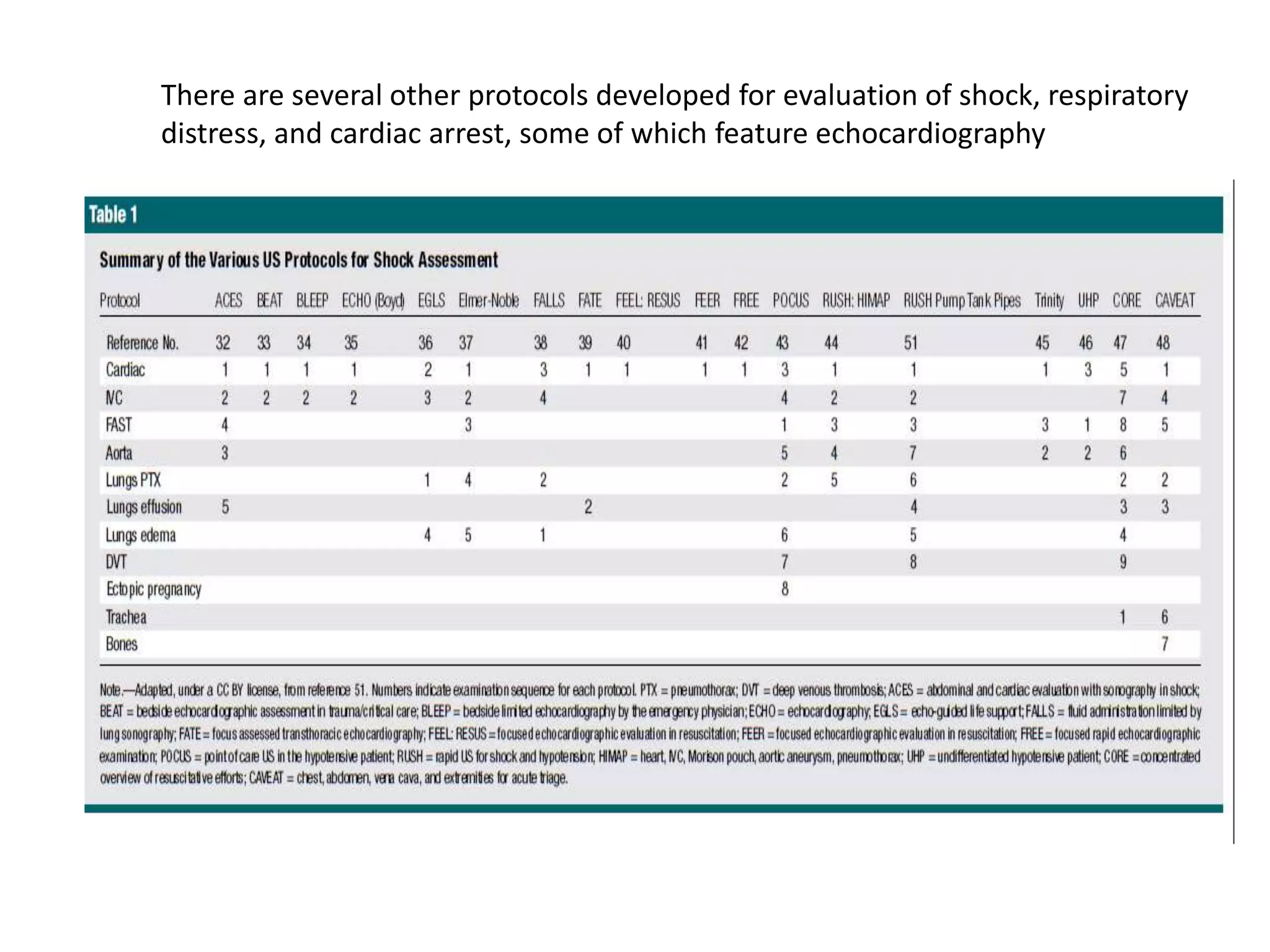
There are several other protocols developed for evaluation of shock, respiratory
distress, and cardiac arrest, some of which feature echocardiography
• Other protocols for evaluation of dyspnea BLUE
(bedside lung US in emergency) and RADIUS
(rapid assessment of dyspnea with US).
• The BLUE protocol includes only lung US for
detection of pneumothoraces, as well as
pulmonary edema, consolidation, and effusion .
• The RADIUS protocol is similar but includes
cardiac and inferior vena cava (IVC) evaluation
RUSH protocol
• (Rapid US for Shock and Hypotension)
• The “pump’ evaluation  parasternal long and short
axis of the heart, plus subxiphoid and apical views.
• The “tank” evaluation  IVC, FAST abdomen including
pleural views, and US of the lung.
• The “pipes” portion of RUSH involves scanning the
suprasternal, parasternal, epigastric, and
supraumbilical aorta, with additional scans of the
femoral and popliteal veins for deep venous
thrombosis.
• “pipes” portion of the protocol is usually not
performed in the setting of acute trauma.
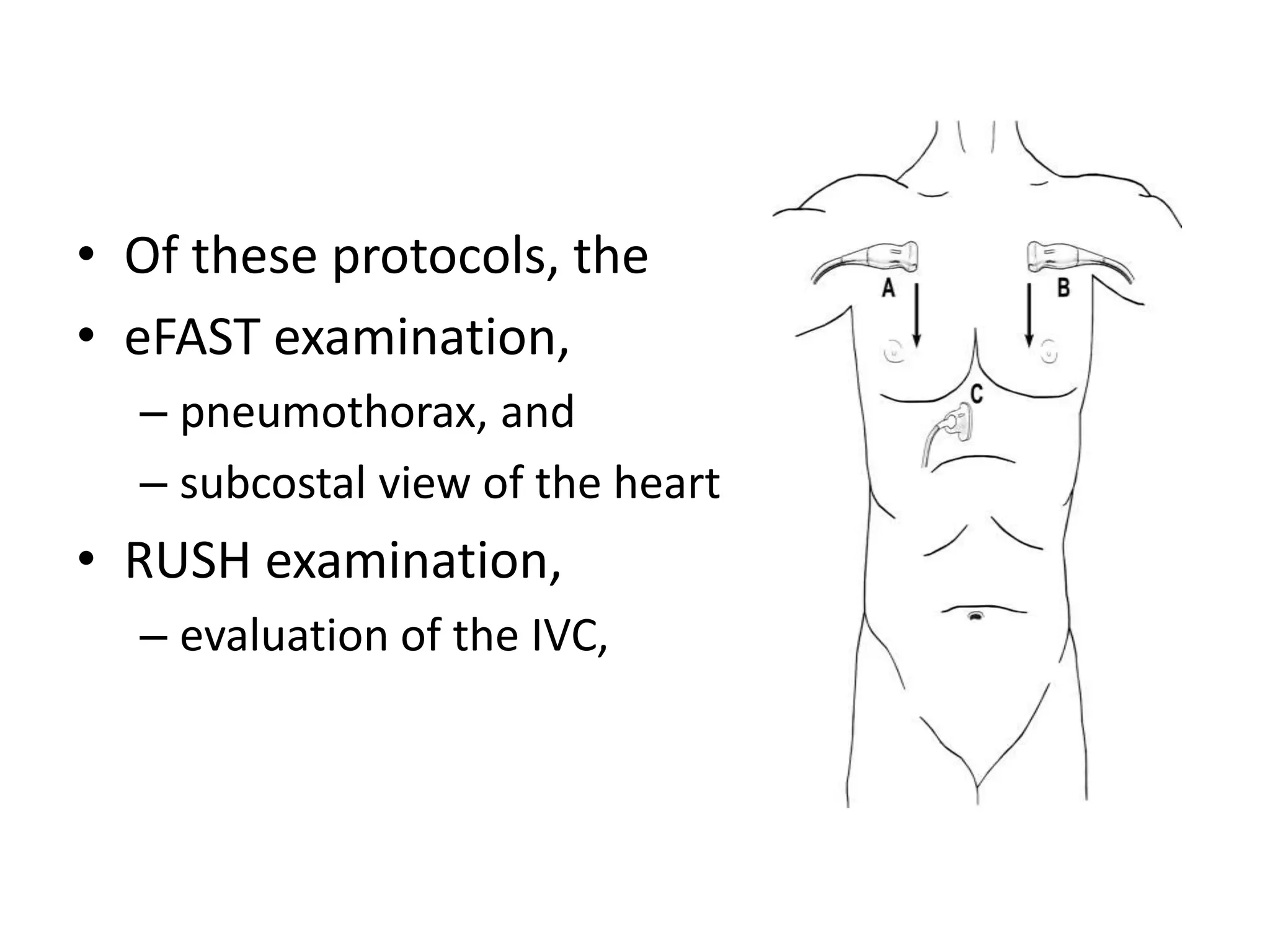
• Of these protocols, the
• eFAST examination,
– pneumothorax, and
– subcostal view of the heart
• RUSH examination,
– evaluation of the IVC,
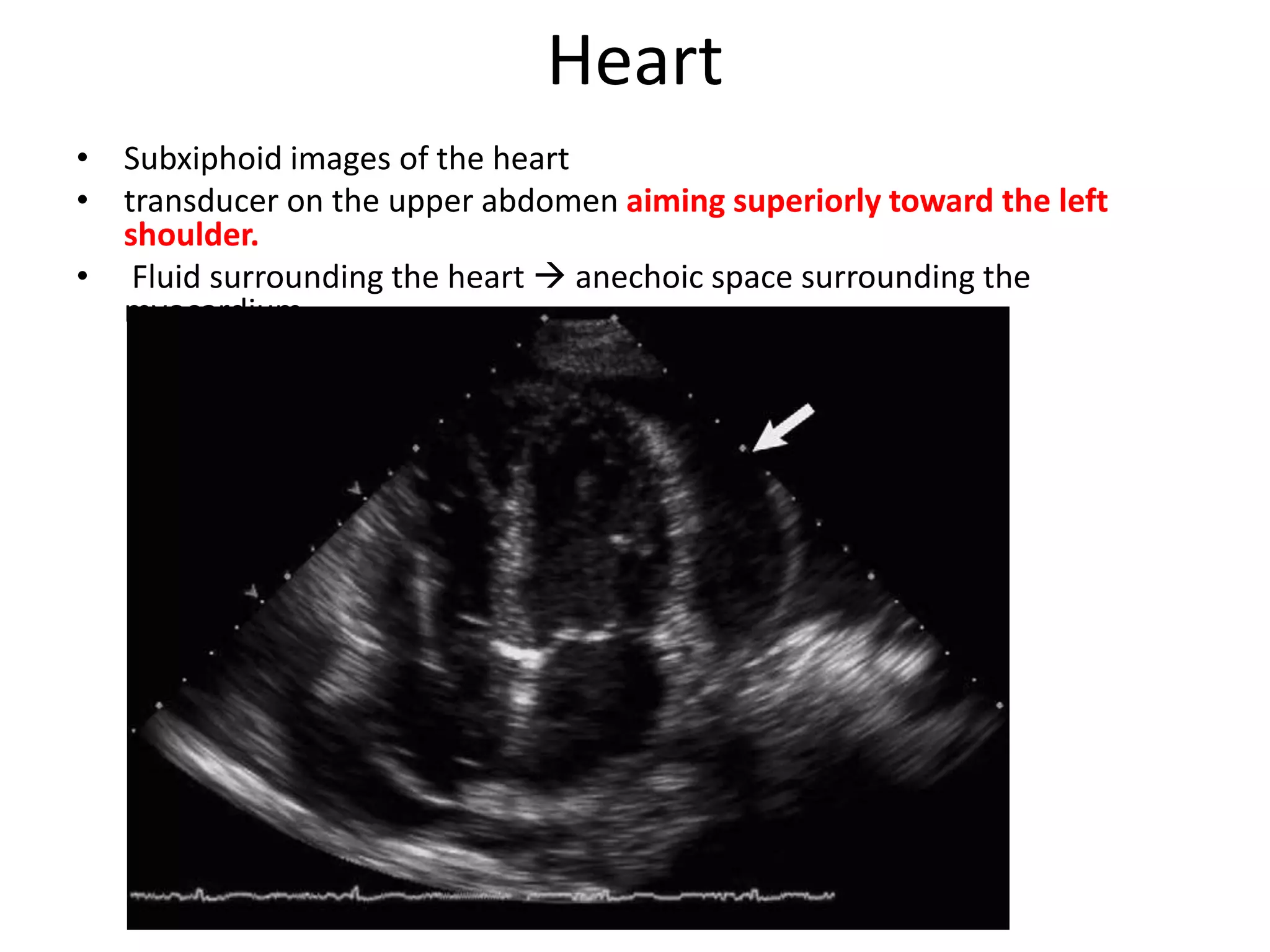
Heart
• Subxiphoid images of the heart
• transducer on the upper abdomen aiming superiorly toward the left
shoulder.
• Fluid surrounding the heart  anechoic space surrounding the
myocardium
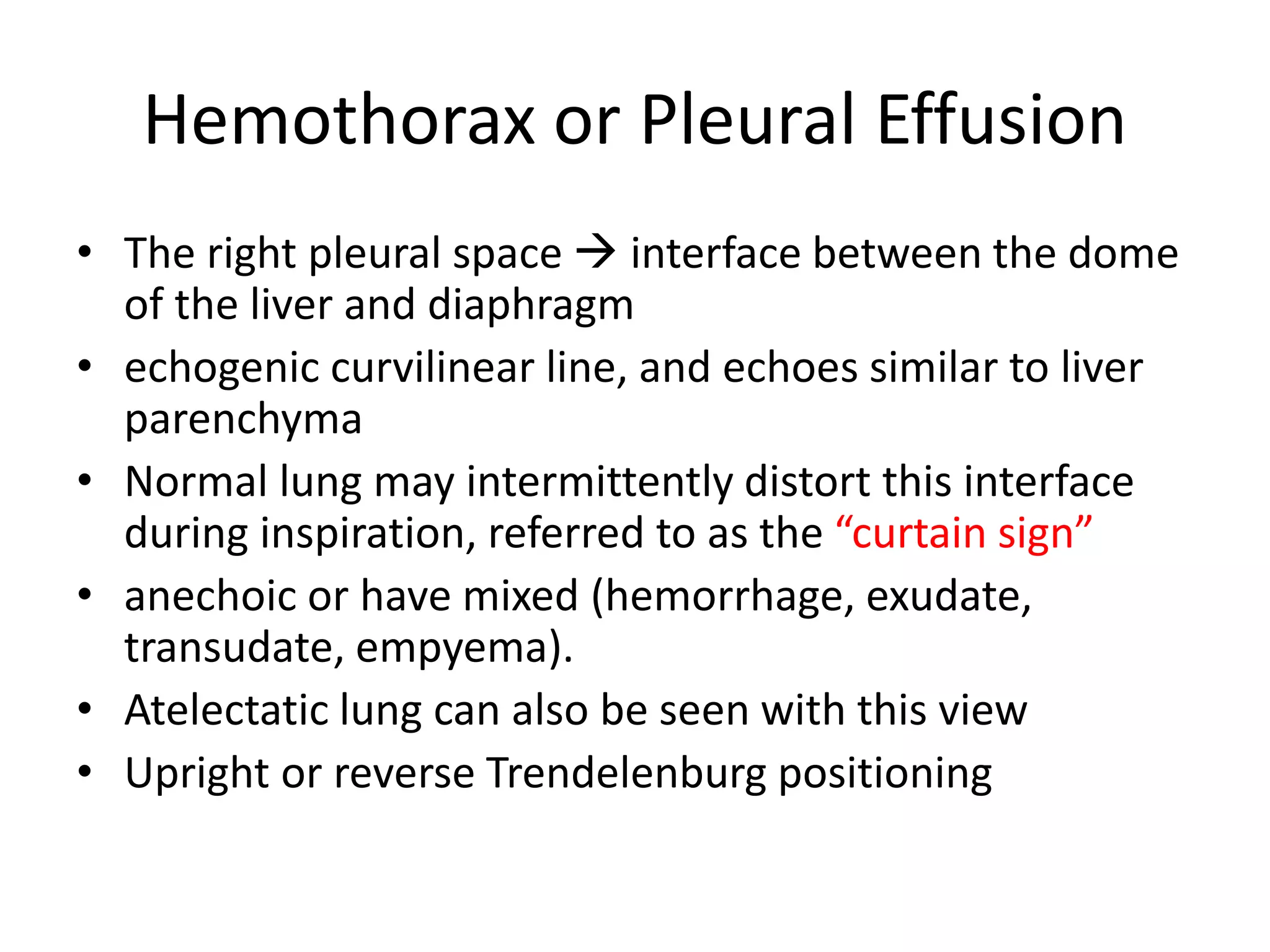
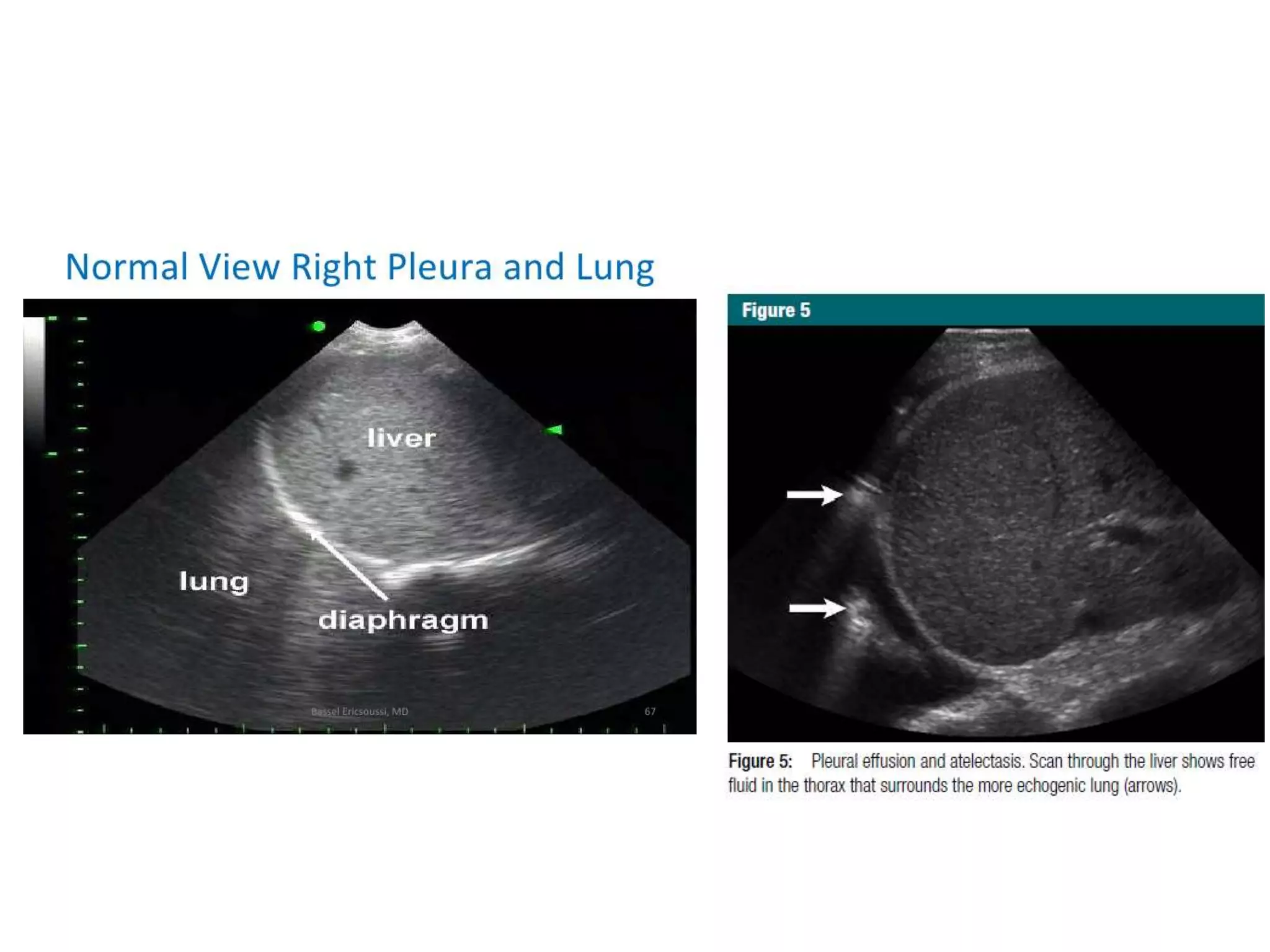
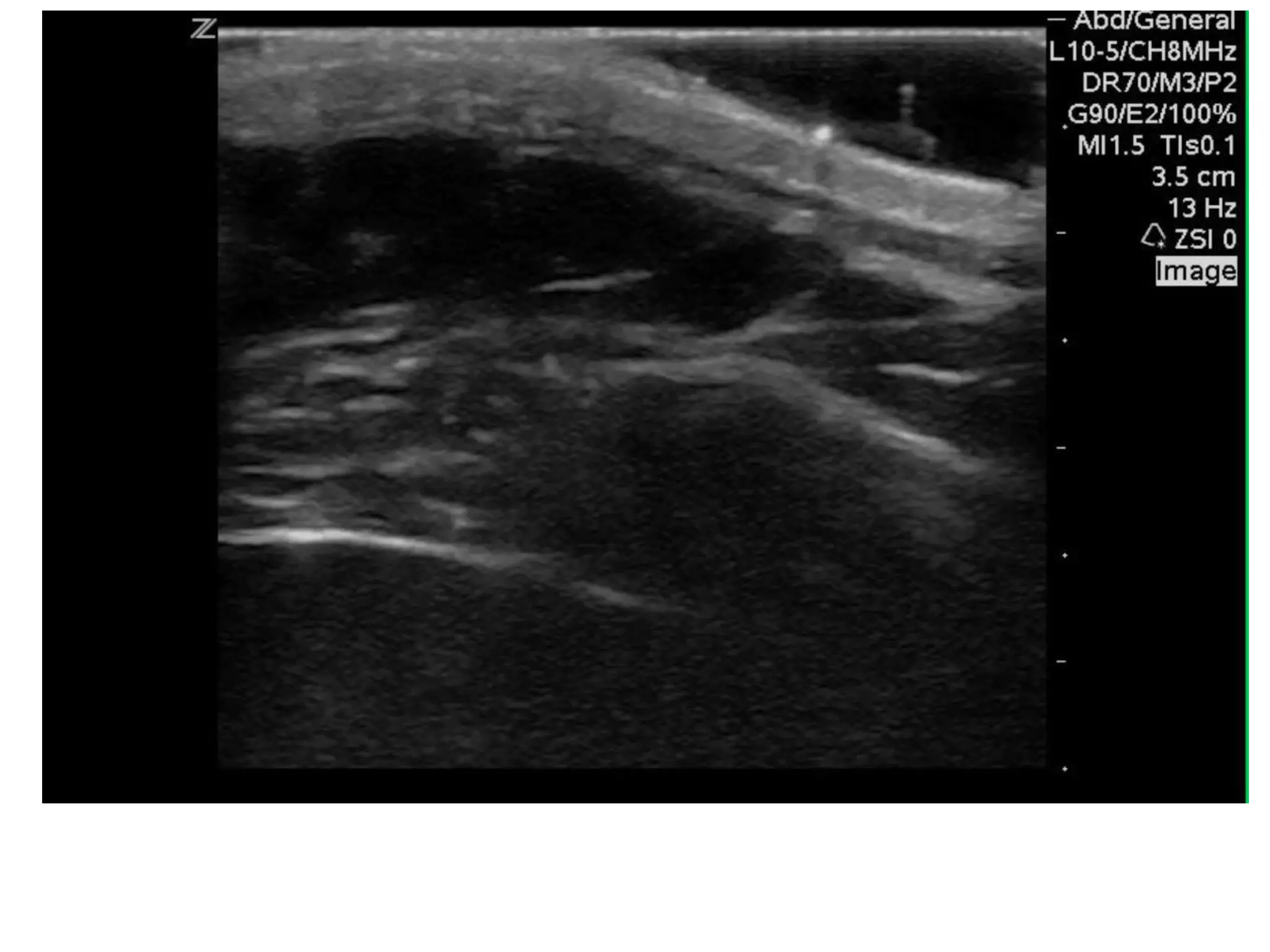
Hemothorax or Pleural Effusion
• The right pleural space  interface between the dome
of the liver and diaphragm
• echogenic curvilinear line, and echoes similar to liver
parenchyma
• Normal lung may intermittently distort this interface
during inspiration, referred to as the “curtain sign”
• anechoic or have mixed (hemorrhage, exudate,
transudate, empyema).
• Atelectatic lung can also be seen with this view
• Upright or reverse Trendelenburg positioning
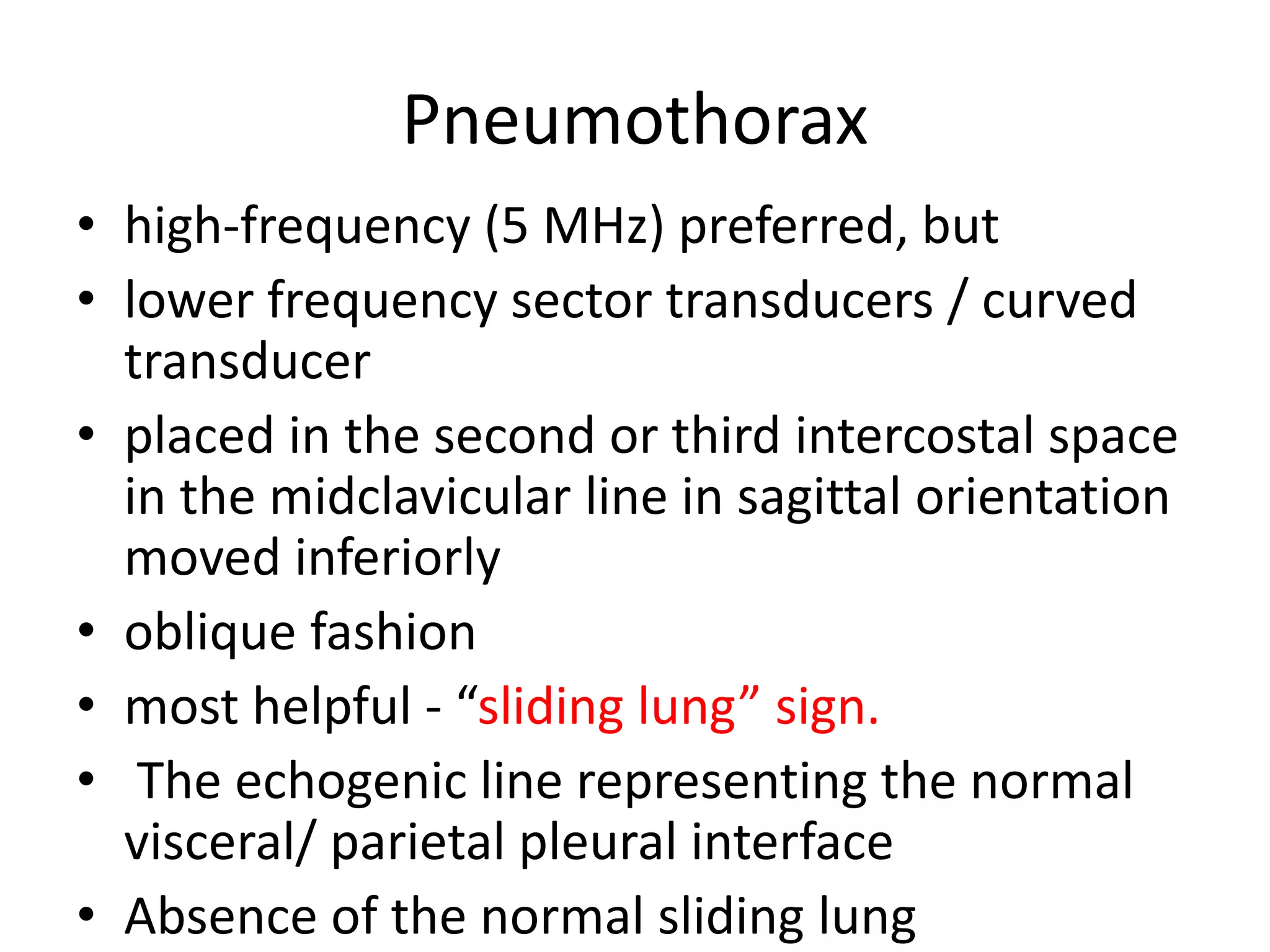
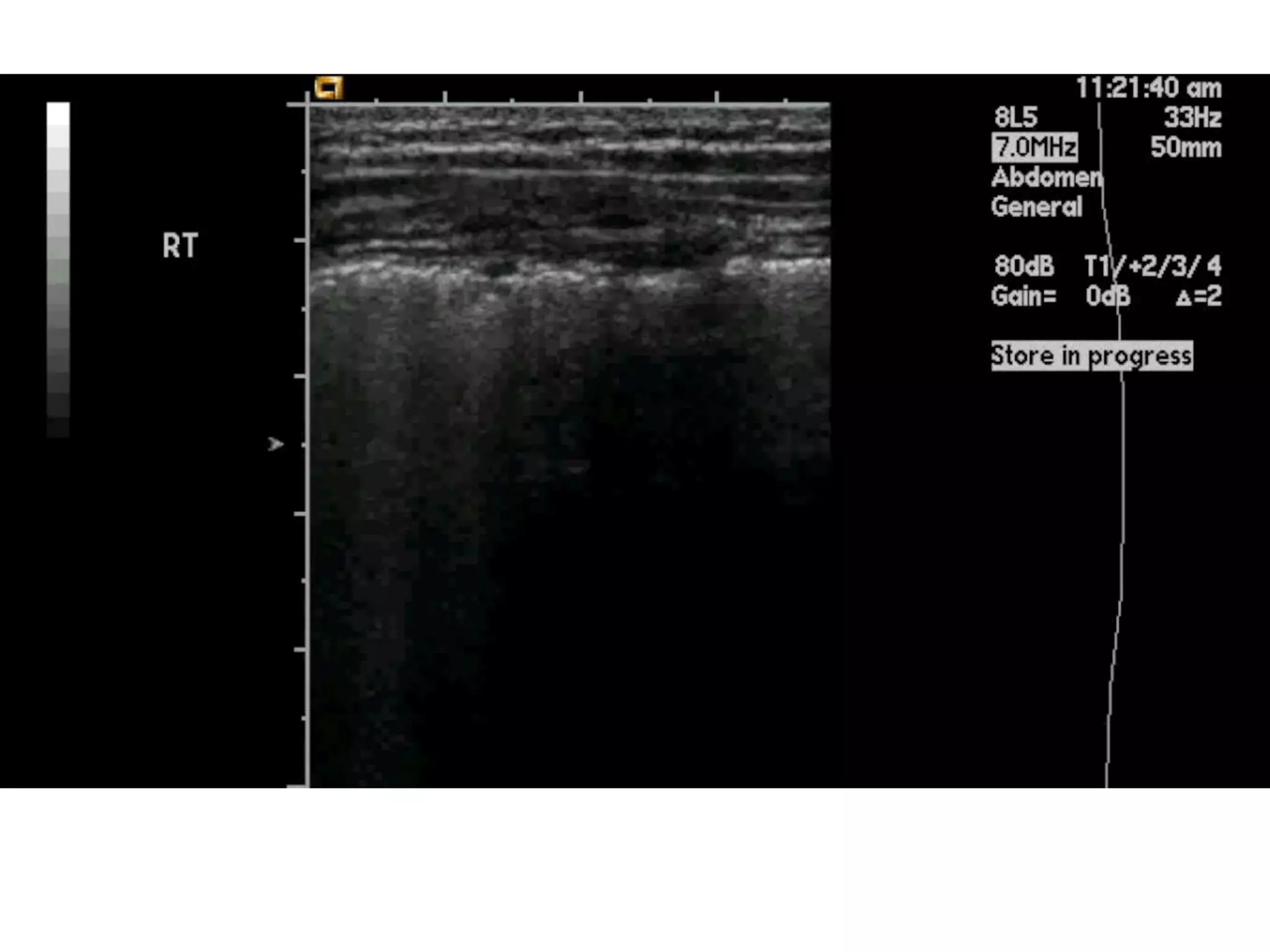
Pneumothorax
• high-frequency (5 MHz) preferred, but
• lower frequency sector transducers / curved
transducer
• placed in the second or third intercostal space
in the midclavicular line in sagittal orientation
moved inferiorly
• oblique fashion
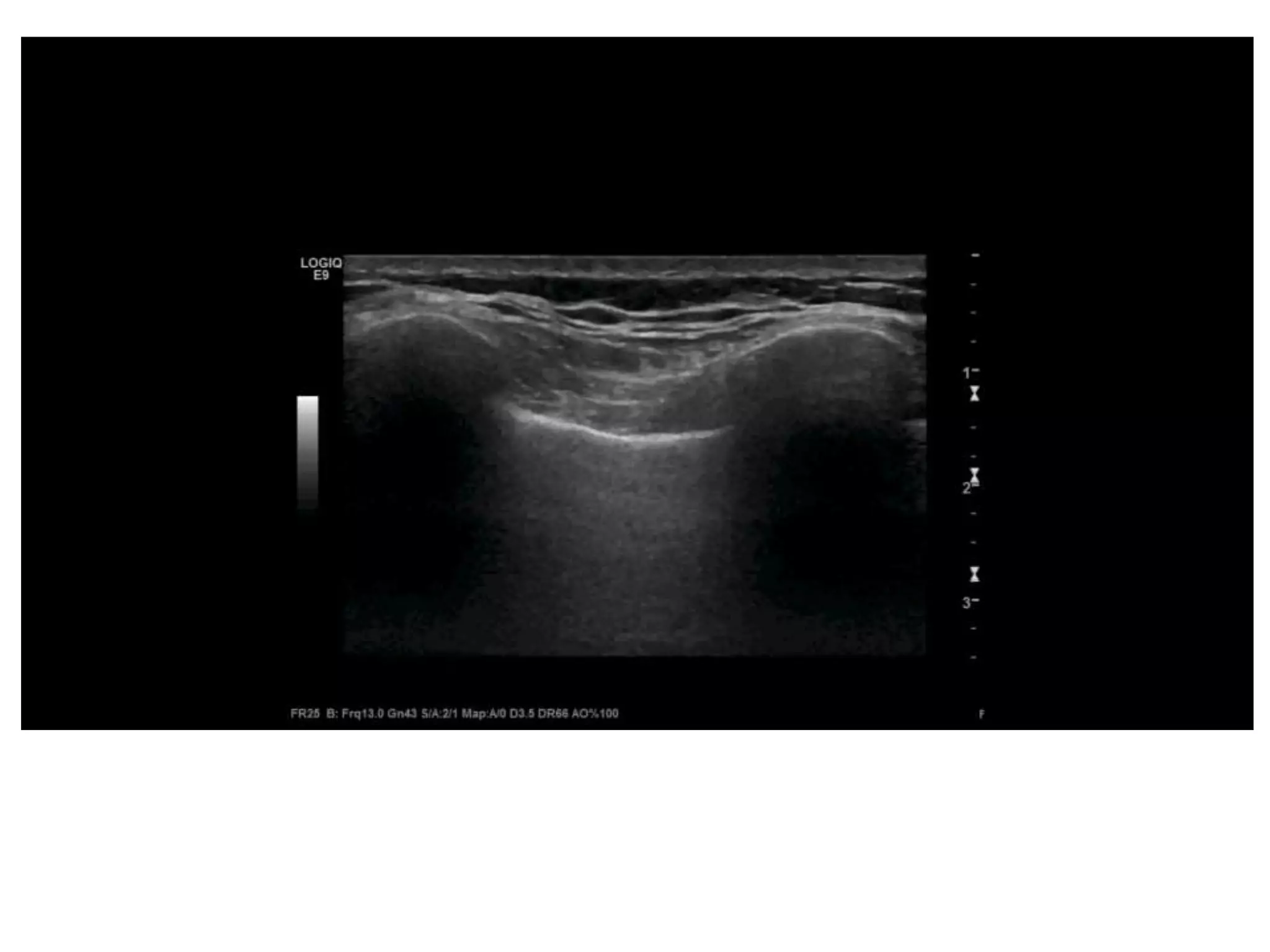
• most helpful - “sliding lung” sign.
• The echogenic line representing the normal
visceral/ parietal pleural interface
• Absence of the normal sliding lung
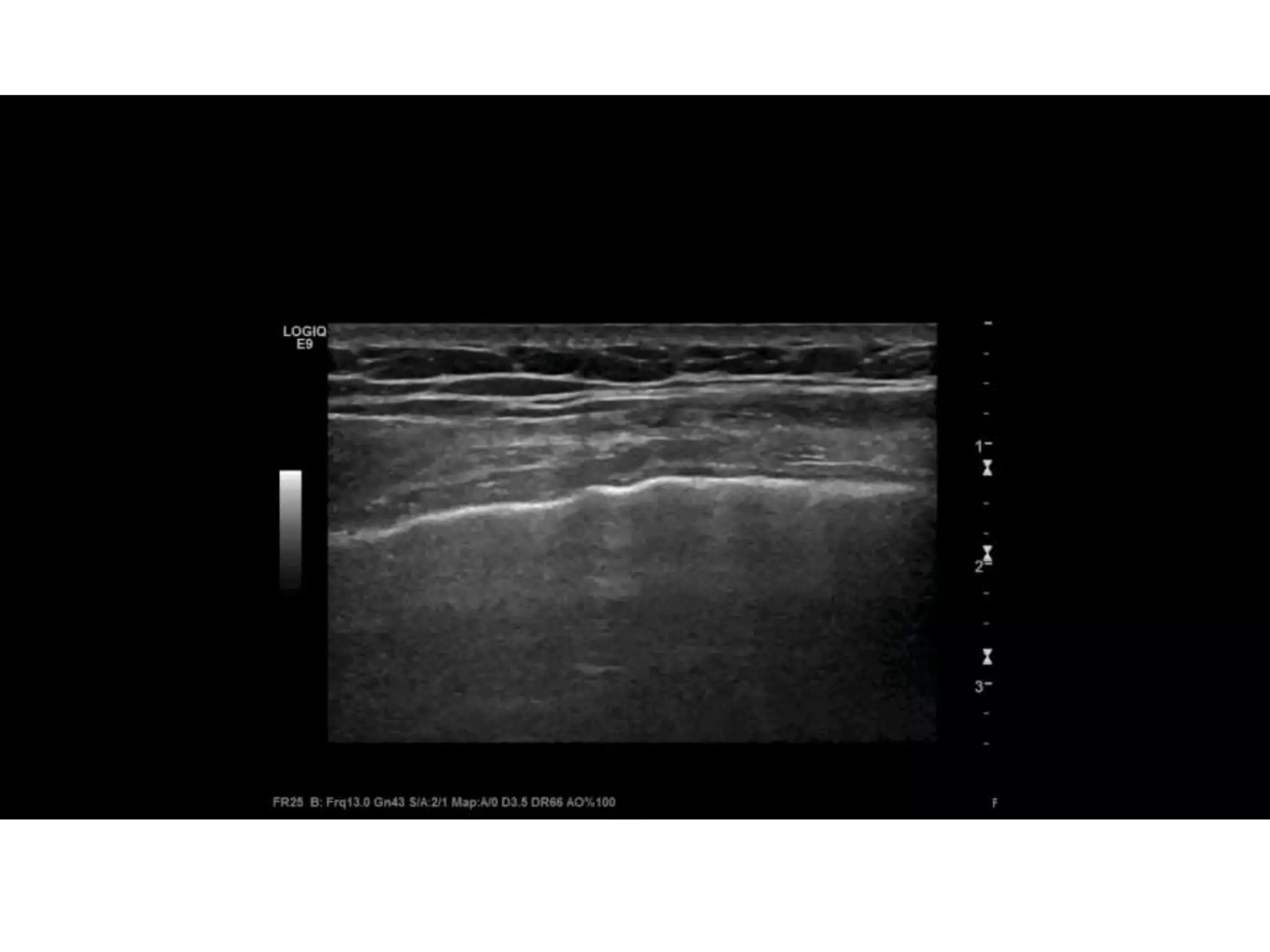
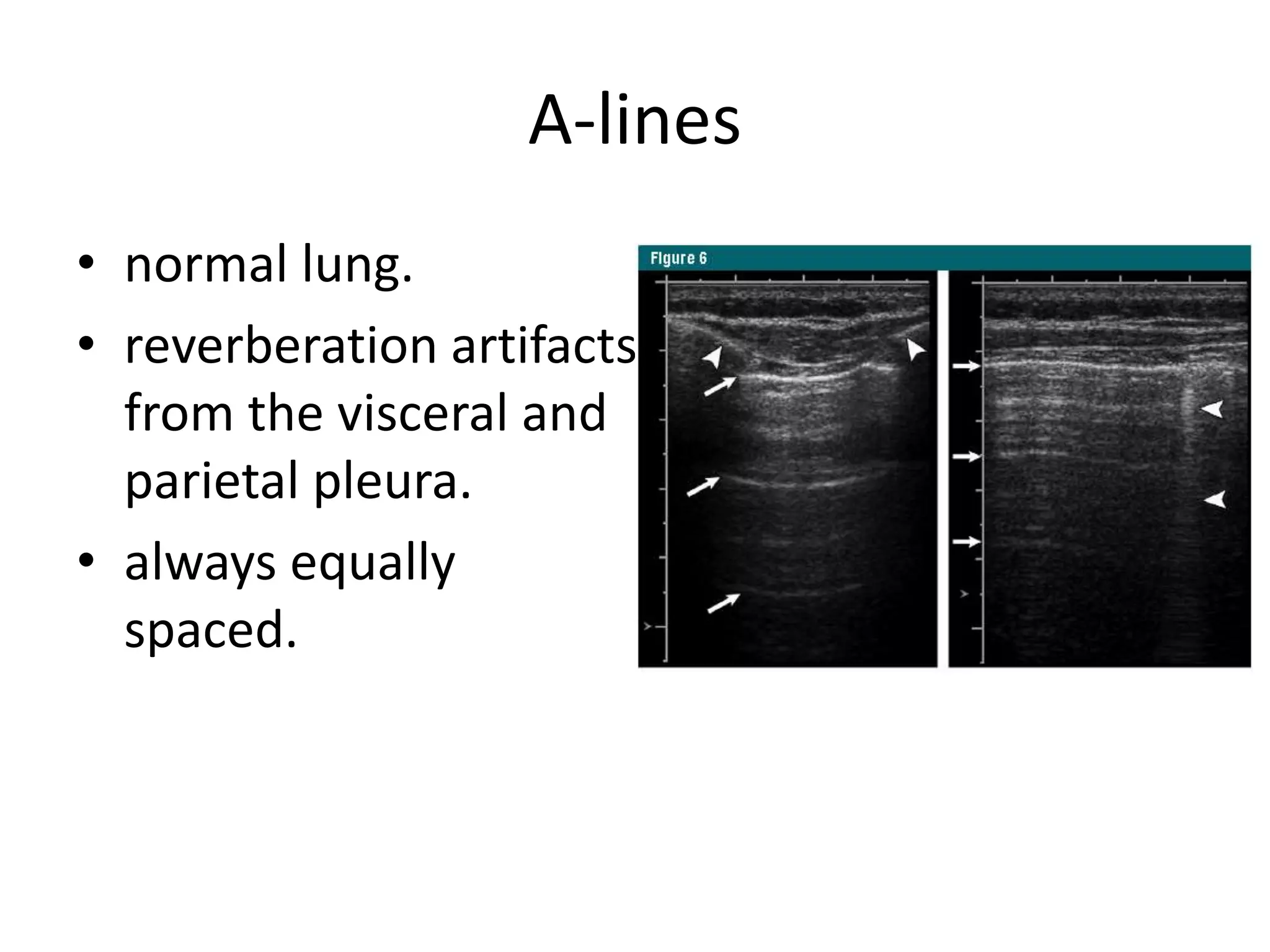
A-lines
• normal lung.
• reverberation artifacts
from the visceral and
parietal pleura.
• always equally
spaced.
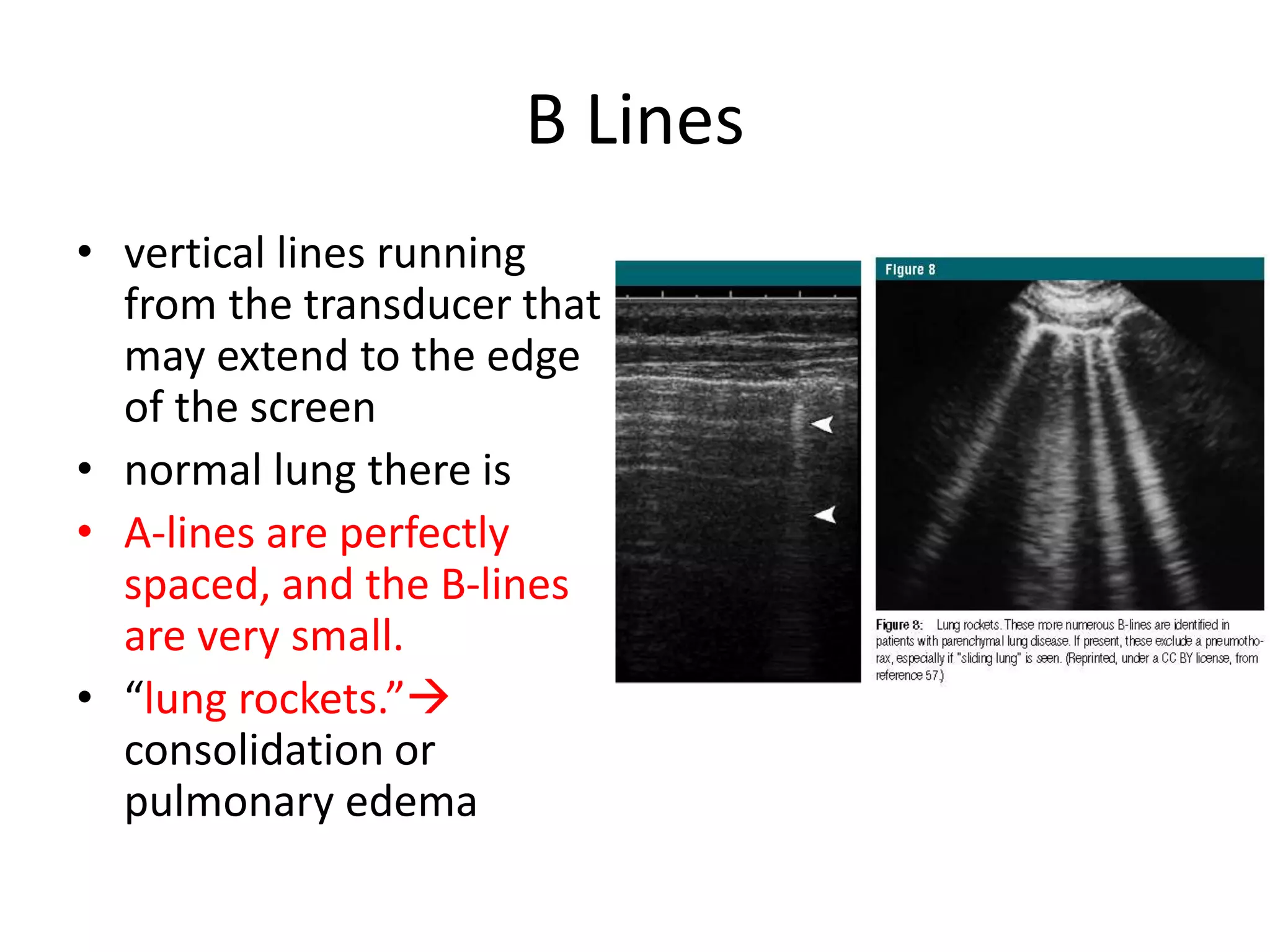
B Lines
• vertical lines running
from the transducer that
may extend to the edge
of the screen
• normal lung there is
• A-lines are perfectly
spaced, and the B-lines
are very small.
• “lung rockets.”
consolidation or
pulmonary edema
With pneumothorax
• (a) there is absent sliding lung;
• (b) A lines may be present, more numerous than
normal, and not evenly spaced;
• (c) B-lines are no longer present
• Visualization of B-lines with absent sliding lung is
not diagnostic of a pneumothorax, as
– B-lines usually are never present with a
pneumothorax;
– if present  lung is not moving but may be diseased.
• junction between normal and
abnormal lung can be seen and
is called a “lung point” .
• Can estimate size of the
pneumothorax
• M-mode equivalent of lung
sliding  “seashore sign,” and
when absent, the “barcode
sign” is seen corresponding to
pneumothorax
• “stratosphere sign.”
Inferior Vena Cava
• supine position, low-frequency curvilinear
transducer.
• A subxiphoid approach & sagittal orientation
• diameter is measured 2 cm below the cavoatrial
junction.
• Inspiratory and expiratory diameters are obtained
for comparison
• Interpretation - diameter and degree of
inspiratory collapse of the IVC (nonintubated)
• caval index : [(IVC expiratory diameter - IVC
inspiratory diameter)/ IVC expiratory diameter] x
100 .
• approaching 100%  complete collapse and
likely volume depletion
• close to 0%  indicates minimal collapse,
suggesting volume overload
• For trauma, simplest approach:
– if substantial collapse with small diameter (1.5 cm),
indicating volume depletion.
limitations
• estimation of shock in intubated patients with
positive-pressure ventilation
– Severe chronic obstructive pulmonary disease,
– pulmonary hypertension,
– Right-sided heart failure,
– cardiac tamponade, and
– tricuspid regurgitation.
• hypotensive trauma patients with hypovolemic
shock owing to its reduced diameter.
Serial FAST
• Examination after stabilization
• more time for a comprehensive scan
• active intraperitoneal hemorrhagefree fluid should
increase.
• decreased the false-negative rate by 50%
• increased sensitivity for free fluid detection from 69%
to 85%
• logical alternative for stable trauma patients,
– sudden change in hemodynamic status or physical
examination, and
– pregnant patients to mitigate radiation exposure.
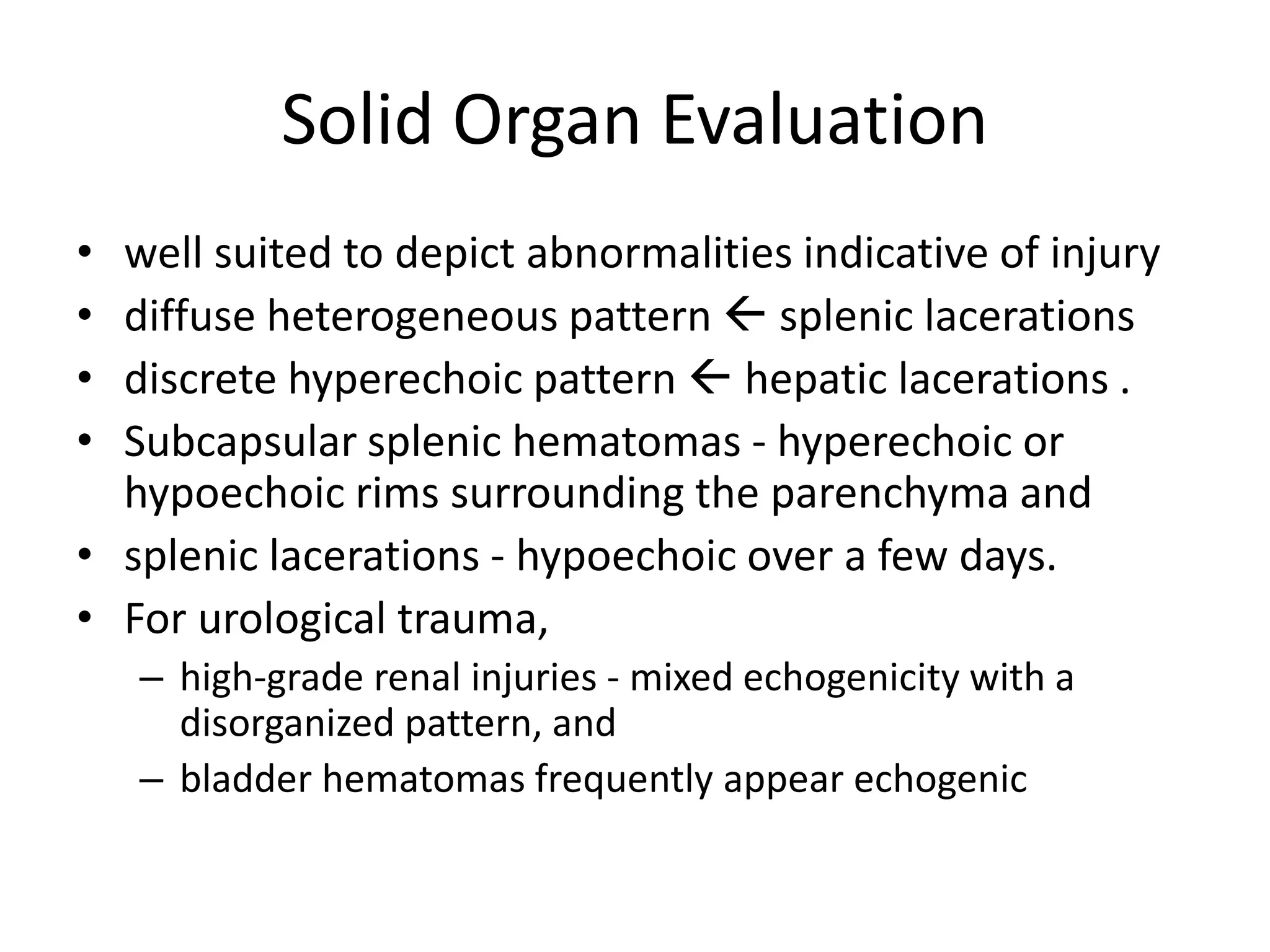
Solid Organ Evaluation
• well suited to depict abnormalities indicative of injury
• diffuse heterogeneous pattern  splenic lacerations
• discrete hyperechoic pattern  hepatic lacerations .
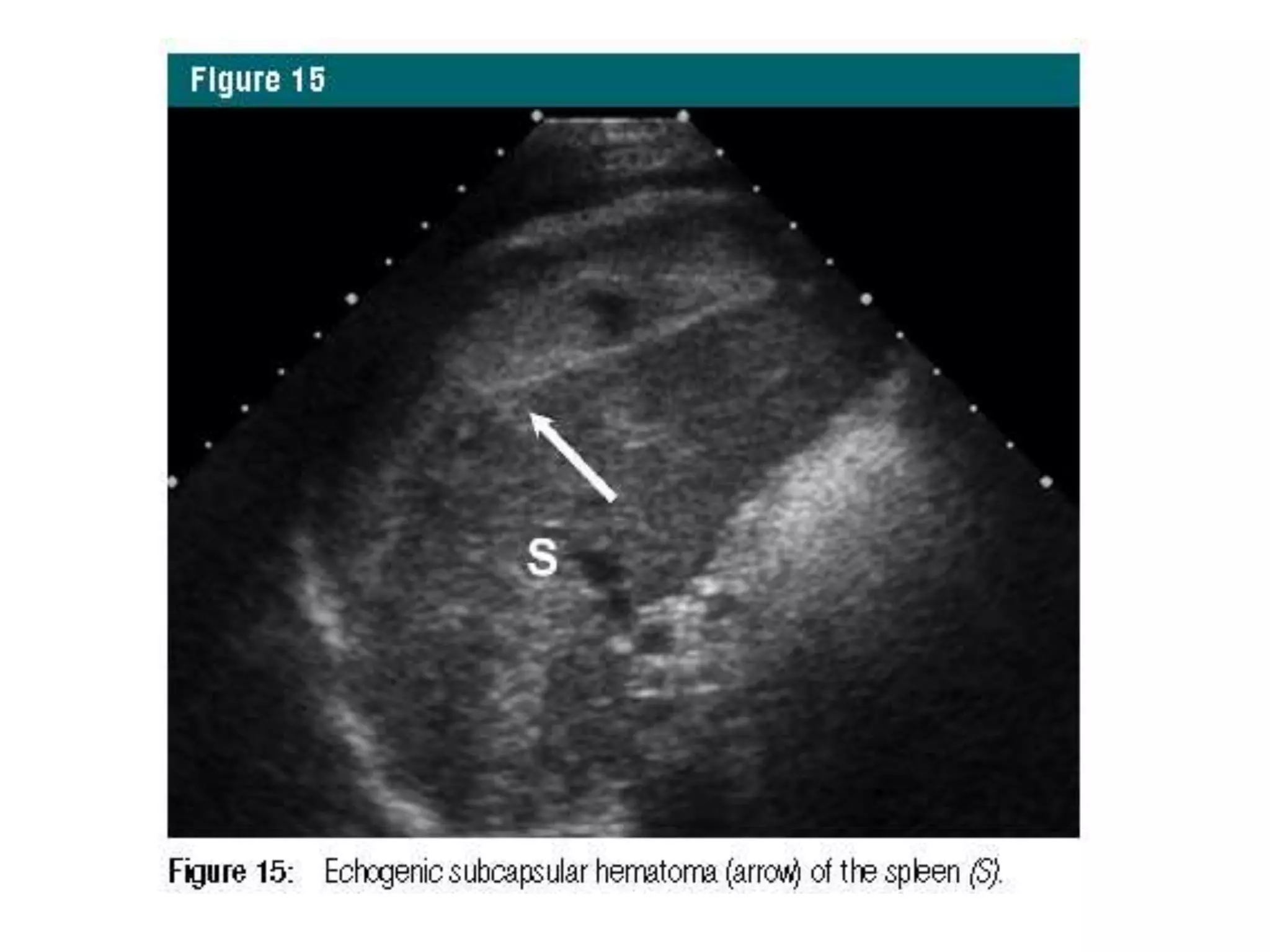
• Subcapsular splenic hematomas - hyperechoic or
hypoechoic rims surrounding the parenchyma and
• splenic lacerations - hypoechoic over a few days.
• For urological trauma,
– high-grade renal injuries - mixed echogenicity with a
disorganized pattern, and
– bladder hematomas frequently appear echogenic
Bowel and Mesenteric Injury
• Early detection is difficult
– volume of hemorrhage and/or extravasated bowel
contents is usually minimal
• Loops of fluid-filled bowel should not be
confused with free intraperitoneal fluid.
• Bowel loops - round and have peristalsis.
• pneumoperitoneum from bowel perforation
can mimic air within small and large bowel
loops
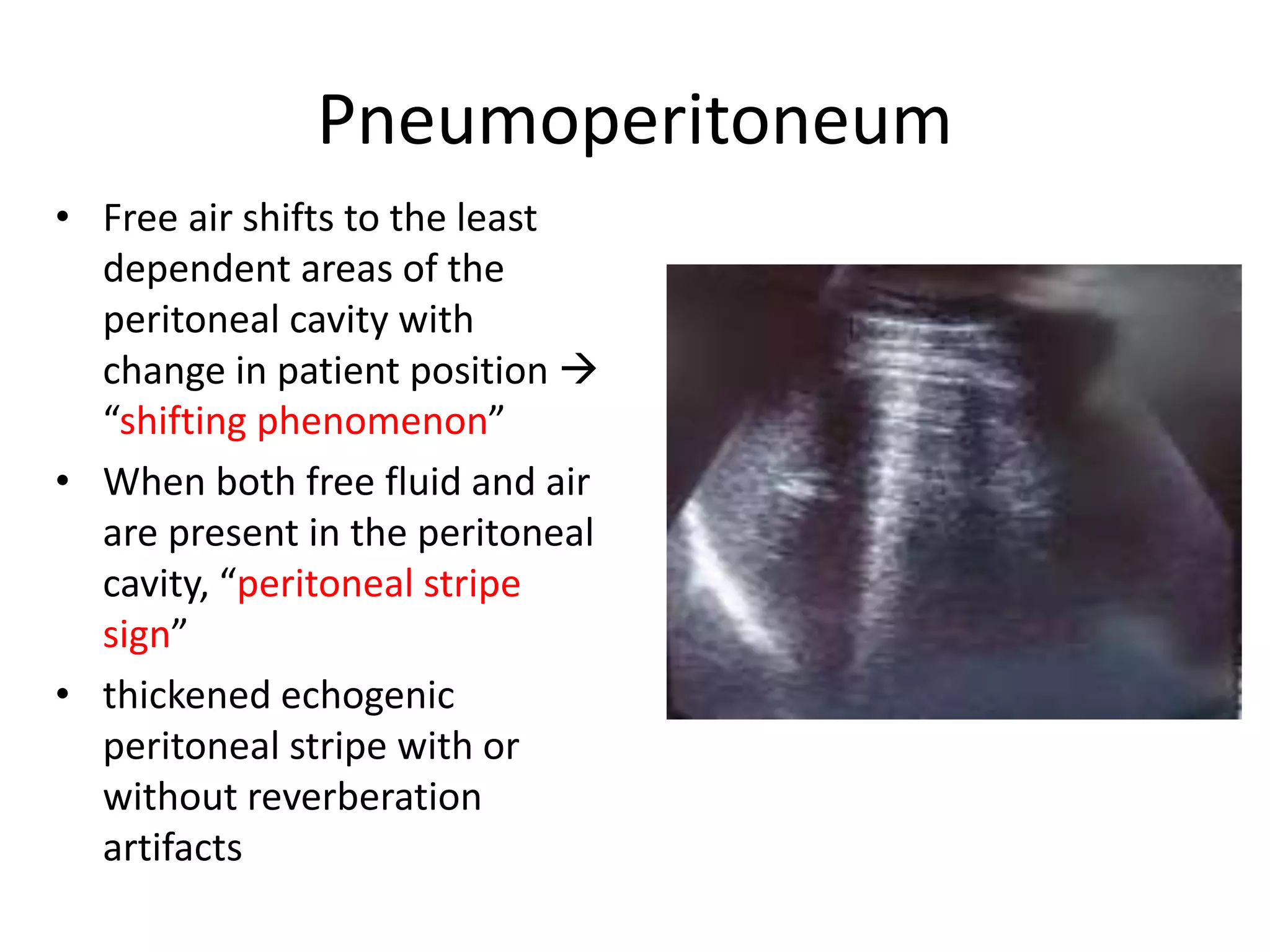
Pneumoperitoneum
• Free air shifts to the least
dependent areas of the
peritoneal cavity with
change in patient position 
“shifting phenomenon”
• When both free fluid and air
are present in the peritoneal
cavity, “peritoneal stripe
sign”
• thickened echogenic
peritoneal stripe with or
without reverberation
artifacts
Pregnant Patients
• no contrast material or radiation exposure to
the mother or fetus.
• rapid assessment for free fluid
• assess for fetal heart motion, fetal activity,
amniotic fluid volume, approximate
gestational age, and placenta.
• Similar sensitivity and specificity as non
pregnant
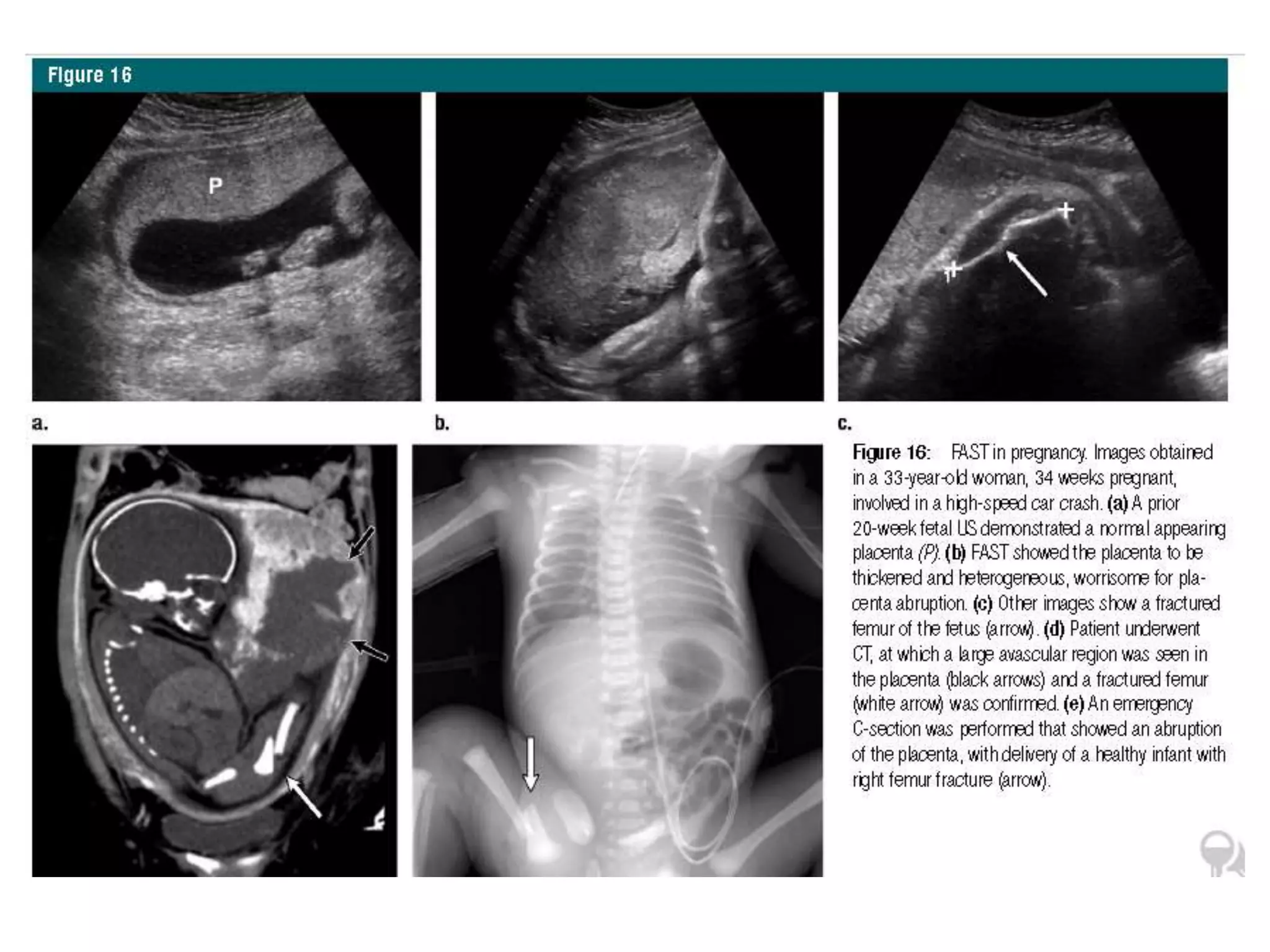
• Placenta examination is very important, as
abruption may have a variety of appearances,
such as thickened or avascular regions in the
placenta without accompanying free fluid in
the pelvis
• Fetal organs and cardiac activity
• Free intraperitoneal fluid may result from
hemorrhage due to solid organ IAI, amniotic
fluid from uterine rupture, or both.
FAST and Pediatric Patients
• sensitivities, specificities, and accuracies
similar to those in adults
• used to decrease radiation exposure from CT.
• Children with low or moderate suspicion of IAI
were less likely to undergo CT if they had a
negative FAST examination
Future Applications
• prehospital setting is becoming more
commonplace as US equipment becomes more
compact and lightweight.
• use in the field - ideal for rapid triage of injured
patients in multiple casualty
• The use of US for detecting long bone and pelvis
fractures, especially in mass casualty incidents
• Outcome prediction for trauma patients arriving
in pulseless traumatic arrest
• weightless situations and on the International
Space Station
• role of contrast-enhanced US for trauma -
appears to be a promising method to improve
detection of parenchymal organ IAI
Conclusion
• Ideal for conservative injury management,
especially in children and pregnant or fertile
female patients.
• Potential applications of contrast-enhanced
US include
– serial scanning of known organ injuries,
– follow- up imaging in patients with inconclusive CT
findings
– hypersensitivity to iodinated contrast agents.
Reference
• Focused Assessment with
Sonography in Trauma (FAST)
in 2017: What Radiologist can learn.
Radiology: April 2017: 283; (1); 30 - 48

Focused Assessment with Sonography in Trauma (FAST) in 2017

  • 1.
    Focused Assessment with Sonographyin Trauma (FAST) in 2017 Dr Varun Bansal Deptt of Radio-diagnosis
  • 2.
    Objectives • Discuss theaccuracy and utility of FAST in clinical decision making, as well as limitations and pitfalls • Describe newer protocols such as eFAST, BLUE, RADIUS, RUSH and their uses • Discuss the use of FAST in special populations such as pregnant and pediatric patients
  • 3.
    • The adventof FAST , 3 decades ago enabled clinicians -  to rapidly screen for injury at the bedside of patients, especially those patients too hemodynamically unstable for transport to the CT suite  Identification of free fluid in potential spaces  Detection of solid organ injury, pneumothorax, fractures, serial examinations,  as well as use in prehospital transport and multiple casualty settings as a triage tool.
  • 4.
    The Evolution ofFAST • “focused abdominal sonography for trauma” • “focused assessment with sonography for trauma” • included in the Advanced Trauma Life Support program for evaluation of the hypotensive trauma patient
  • 5.
    Accuracy of FASTand Clinical Decision Making • sensitivity (69%–98%) for detection of free fluid and lower sensitivity (63%) for detection of solid organ injury • underestimation of injuries and severity, especially in stable trauma patients without detectable free fluid. • high specificity (94%– 100%) for detection of free fluid and/or solid organ injury • Serial FAST examinations increase overall sensitivity (72%–93%).
  • 6.
    Diagnostic algorithm forthe use of FAST for triage of trauma patients. CEUS = contrast enhanced US.
  • 7.
    FAST Technique andInterpretation • Probe selection • (3–5 MHz) is best utilized as a multipurpose probe. • examining solid organs and determining presence of free fluid in the abdomen or pelvis. • examine the heart for a pericardial effusion or hemorrhage. • useful to scan between the ribs for pneumothorax.
  • 8.
    (a) the rightupper quadrant, perihepatic area and hepatorenal recess or Morison pouch (b) the left upper quadrant, the perisplenic view (c) the suprapubic view (pouch of Douglas), (d) a subxiphoid pericardial view • The preferred initial site - free fluid with FAST - right upper quadrant view, scanned by using a lower frequency (3.5–5 MHz).
  • 9.
    Limitations to theFAST • Detection of blunt mesenteric, bowel, diaphragmatic, and retroperitoneal injuries can be difficult, as well as isolated penetrating injury to the peritoneum. • False-positive scans - detection of ascites, peritoneal dialysate, ventriculo peritoneal shunt outflow, ovarian hyperstimulation, and ovarian cyst rupture. • Massive intravascular volume resuscitation  false-positive FAST examination -intravascularto- intraperitoneal fluid transudation .
  • 10.
    • Free fluiddetected with FAST in trauma patients is assumed to be hemoperitoneum, can also represent injury-related urine, bile, and bowel contents. • Bowel gas, subcutaneous emphysema, and obesity represent common obstacles to full US visualization. • delayed presentation after trauma  hemoperitoneum containing clots which can have mixed echogenicity and be missed
  • 11.
    Newer Protocols • Inthe mid-2000s, the addition of US evaluation of the thorax to detect pneumothorax to the traditional FAST examination resulted in extended FAST (eFAST)
  • 12.
    There are severalother protocols developed for evaluation of shock, respiratory distress, and cardiac arrest, some of which feature echocardiography
  • 13.
    • Other protocolsfor evaluation of dyspnea BLUE (bedside lung US in emergency) and RADIUS (rapid assessment of dyspnea with US). • The BLUE protocol includes only lung US for detection of pneumothoraces, as well as pulmonary edema, consolidation, and effusion . • The RADIUS protocol is similar but includes cardiac and inferior vena cava (IVC) evaluation
  • 14.
    RUSH protocol • (RapidUS for Shock and Hypotension) • The “pump’ evaluation  parasternal long and short axis of the heart, plus subxiphoid and apical views. • The “tank” evaluation  IVC, FAST abdomen including pleural views, and US of the lung. • The “pipes” portion of RUSH involves scanning the suprasternal, parasternal, epigastric, and supraumbilical aorta, with additional scans of the femoral and popliteal veins for deep venous thrombosis. • “pipes” portion of the protocol is usually not performed in the setting of acute trauma.
  • 15.
    • Of theseprotocols, the • eFAST examination, – pneumothorax, and – subcostal view of the heart • RUSH examination, – evaluation of the IVC,
  • 16.
    Heart • Subxiphoid imagesof the heart • transducer on the upper abdomen aiming superiorly toward the left shoulder. • Fluid surrounding the heart  anechoic space surrounding the myocardium
  • 17.
    Hemothorax or PleuralEffusion • The right pleural space  interface between the dome of the liver and diaphragm • echogenic curvilinear line, and echoes similar to liver parenchyma • Normal lung may intermittently distort this interface during inspiration, referred to as the “curtain sign” • anechoic or have mixed (hemorrhage, exudate, transudate, empyema). • Atelectatic lung can also be seen with this view • Upright or reverse Trendelenburg positioning
  • 19.
    Pneumothorax • high-frequency (5MHz) preferred, but • lower frequency sector transducers / curved transducer • placed in the second or third intercostal space in the midclavicular line in sagittal orientation moved inferiorly • oblique fashion • most helpful - “sliding lung” sign. • The echogenic line representing the normal visceral/ parietal pleural interface • Absence of the normal sliding lung
  • 22.
    A-lines • normal lung. •reverberation artifacts from the visceral and parietal pleura. • always equally spaced.
  • 23.
    B Lines • verticallines running from the transducer that may extend to the edge of the screen • normal lung there is • A-lines are perfectly spaced, and the B-lines are very small. • “lung rockets.” consolidation or pulmonary edema
  • 24.
    With pneumothorax • (a)there is absent sliding lung; • (b) A lines may be present, more numerous than normal, and not evenly spaced; • (c) B-lines are no longer present • Visualization of B-lines with absent sliding lung is not diagnostic of a pneumothorax, as – B-lines usually are never present with a pneumothorax; – if present  lung is not moving but may be diseased.
  • 25.
    • junction betweennormal and abnormal lung can be seen and is called a “lung point” . • Can estimate size of the pneumothorax • M-mode equivalent of lung sliding  “seashore sign,” and when absent, the “barcode sign” is seen corresponding to pneumothorax • “stratosphere sign.”
  • 28.
    Inferior Vena Cava •supine position, low-frequency curvilinear transducer. • A subxiphoid approach & sagittal orientation • diameter is measured 2 cm below the cavoatrial junction. • Inspiratory and expiratory diameters are obtained for comparison • Interpretation - diameter and degree of inspiratory collapse of the IVC (nonintubated)
  • 30.
    • caval index: [(IVC expiratory diameter - IVC inspiratory diameter)/ IVC expiratory diameter] x 100 . • approaching 100%  complete collapse and likely volume depletion • close to 0%  indicates minimal collapse, suggesting volume overload • For trauma, simplest approach: – if substantial collapse with small diameter (1.5 cm), indicating volume depletion.
  • 31.
    limitations • estimation ofshock in intubated patients with positive-pressure ventilation – Severe chronic obstructive pulmonary disease, – pulmonary hypertension, – Right-sided heart failure, – cardiac tamponade, and – tricuspid regurgitation. • hypotensive trauma patients with hypovolemic shock owing to its reduced diameter.
  • 32.
    Serial FAST • Examinationafter stabilization • more time for a comprehensive scan • active intraperitoneal hemorrhagefree fluid should increase. • decreased the false-negative rate by 50% • increased sensitivity for free fluid detection from 69% to 85% • logical alternative for stable trauma patients, – sudden change in hemodynamic status or physical examination, and – pregnant patients to mitigate radiation exposure.
  • 34.
    Solid Organ Evaluation •well suited to depict abnormalities indicative of injury • diffuse heterogeneous pattern  splenic lacerations • discrete hyperechoic pattern  hepatic lacerations . • Subcapsular splenic hematomas - hyperechoic or hypoechoic rims surrounding the parenchyma and • splenic lacerations - hypoechoic over a few days. • For urological trauma, – high-grade renal injuries - mixed echogenicity with a disorganized pattern, and – bladder hematomas frequently appear echogenic
  • 36.
    Bowel and MesentericInjury • Early detection is difficult – volume of hemorrhage and/or extravasated bowel contents is usually minimal • Loops of fluid-filled bowel should not be confused with free intraperitoneal fluid. • Bowel loops - round and have peristalsis. • pneumoperitoneum from bowel perforation can mimic air within small and large bowel loops
  • 37.
    Pneumoperitoneum • Free airshifts to the least dependent areas of the peritoneal cavity with change in patient position  “shifting phenomenon” • When both free fluid and air are present in the peritoneal cavity, “peritoneal stripe sign” • thickened echogenic peritoneal stripe with or without reverberation artifacts
  • 38.
    Pregnant Patients • nocontrast material or radiation exposure to the mother or fetus. • rapid assessment for free fluid • assess for fetal heart motion, fetal activity, amniotic fluid volume, approximate gestational age, and placenta. • Similar sensitivity and specificity as non pregnant
  • 39.
    • Placenta examinationis very important, as abruption may have a variety of appearances, such as thickened or avascular regions in the placenta without accompanying free fluid in the pelvis • Fetal organs and cardiac activity • Free intraperitoneal fluid may result from hemorrhage due to solid organ IAI, amniotic fluid from uterine rupture, or both.
  • 41.
    FAST and PediatricPatients • sensitivities, specificities, and accuracies similar to those in adults • used to decrease radiation exposure from CT. • Children with low or moderate suspicion of IAI were less likely to undergo CT if they had a negative FAST examination
  • 42.
    Future Applications • prehospitalsetting is becoming more commonplace as US equipment becomes more compact and lightweight. • use in the field - ideal for rapid triage of injured patients in multiple casualty • The use of US for detecting long bone and pelvis fractures, especially in mass casualty incidents • Outcome prediction for trauma patients arriving in pulseless traumatic arrest
  • 43.
    • weightless situationsand on the International Space Station • role of contrast-enhanced US for trauma - appears to be a promising method to improve detection of parenchymal organ IAI
  • 45.
    Conclusion • Ideal forconservative injury management, especially in children and pregnant or fertile female patients. • Potential applications of contrast-enhanced US include – serial scanning of known organ injuries, – follow- up imaging in patients with inconclusive CT findings – hypersensitivity to iodinated contrast agents.
  • 46.
    Reference • Focused Assessmentwith Sonography in Trauma (FAST) in 2017: What Radiologist can learn. Radiology: April 2017: 283; (1); 30 - 48