Emergency 
Thoracotomy 
Johnny Iliff
Thoracic Trauma 
 25-50% of all traumatic injuries. 
 Most thoracic trauma patients managed conservatively. 
 Deterioration in pre-hospital or ED leads to Emergency 
Thoracotomy. 
 “occurring either immediately at the site of injury, or 
in the emergency department or operating room as 
an integral part of the resuscitation process”.
Increased Chance of Survival 
 Signs of life in the ED 
 Penetrating>Blunt thoracic injury 
 Stab wounds > Gun Shots 
 Thoracic injuries: 
 However, some studies suggest there is up to a 10% 
neurologically intact survival rate for patients with 
penetrating abdominal injury undergoing cross 
clamping of the descending aorta as part of emergency 
thoracotomy.
Aims of the procedure 
 Resuscitation of a patient in extremis with a penetrating 
injury by: 
  Release cardiac tamponade 
  Control haemorrhage 
  Perform open cardiac massage 
  Cross clamp the descending thoracic aorta 
  Control air embolism
Indications- Penetrating Injury 
 Previously witnessed cardiac activity (pre-hospital 
or in-hospital) 
 Unresponsive hypotension (SBP <70mmHg) despite 
vigorous resuscitation
Indications- Blunt injury 
 Rapid exsanguination from chest tube (>1,500mL 
immediately returned) 
 Unresponsive hypotension (SBP <70mmHg) despite 
vigorous resuscitation
Relative Indications 
 Penetrating thoracic injury with traumatic arrest without 
previously without previously witnessed cardiac activity 
 Penetrating non-thoracic injury (e.g. abdominal, 
peripheral) with traumatic arrest with previously 
witnessed cardiac activity (pre-hospital or in-hospital) 
 Blunt thoracic injuries with traumatic arrest with 
previously witnessed cardiac activity (pre-hospital or in-hospital)
Contraindications 
 Blunt injury without witnessed cardiac activity (pre-hospital) 
 Penetrating abdominal trauma without cardiac activity (pre-hospital) 
 Non-traumatic cardiac arrest 
 Severe head injury 
 severe multisystem injury 
 Improperly trained team 
 Insufficient equipment
Lorenz et al (1992 
 h 
t 
t 
p 
: 
/ 
/ 
i 
0 
. 
w 
p 
. 
c 
o 
m 
/ 
s 
c 
g 
h 
e 
d 
. 
c 
o 
m 
/ 
w 
p 
- 
c 
o 
n 
t 
e 
n 
t 
/ 
u 
p 
l 
o 
a 
d 
s 
/ 
2 
0 
1 
4 
/ 
0 
4 
/ 
e 
m 
e 
r 
g 
e 
n 
c 
y 
- 
t 
h 
o 
r 
Lorenz et al (1992 Hunt et al (2005)
Equipment- Thoracotomy tray 
in T2 
 Scalpel–—no. 10 blade 
Suitable retractor, such as Finochietto’s rib spreader, or 
Balfour abdominal retractor 
Lebschke’s knife and mallet, or Gigli saw 
Curved Mayo’s scissors 
Toothed forceps 
Large vascular clamps, such as Satinsky 
DeBakey aortic clamp 
Mosquito/Dunhill artery forceps 
Foley catheter 
Long and short needle holders 
Internal defibrillator paddles 
Sutures, Teflon pledgets, sternal wires
MAJOR TRAUMA CALL 
 Anaesthetics 
 Orthopedics 
 General Surgeons 
 Cardiothoracics 
 Radiology
Procedure 
 Intubated and Ventilated (Airway Doc and Nurse)- discussion for 
right main bronchus intubation 
*seek and treat Pneumothorax in Blunt chest trauma 
 Fluid Resus with blood products (Circ Doc and Nurse) 
*Ultrasound if qualified staff available 
 Mask, visor, scrub, gown and glove (Proceduralist) 
 Appropriate area 
 15* head up- left arm abducted and lights on 
 Prep area 
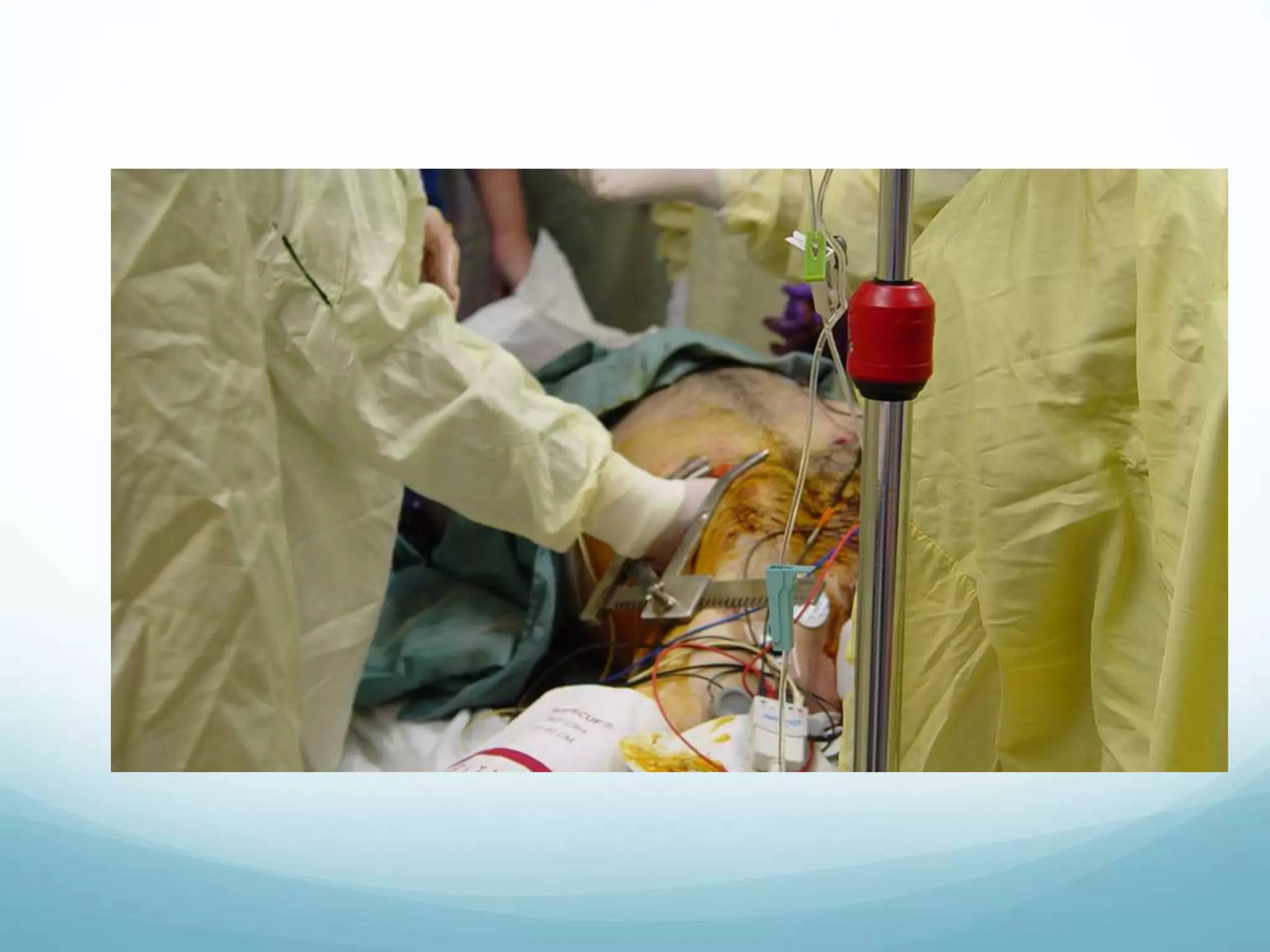
 Incise through skin, subcut tissue in 5th Intercostal Space above 
6th Rib- costochondral junction to MAL
 Divide the muscle, periosteum and parietal pleura in 
one layer with scissors and blunt dissection 
 Insert a rib-spreading retractor with the handle towards 
the axilla 
 To extend the incision to the right side, use strong 
scissors, bone cutters or a Gigli saw to cut through the 
sternum and into the right fifth intercostal space, 
mirroring the incision above. 
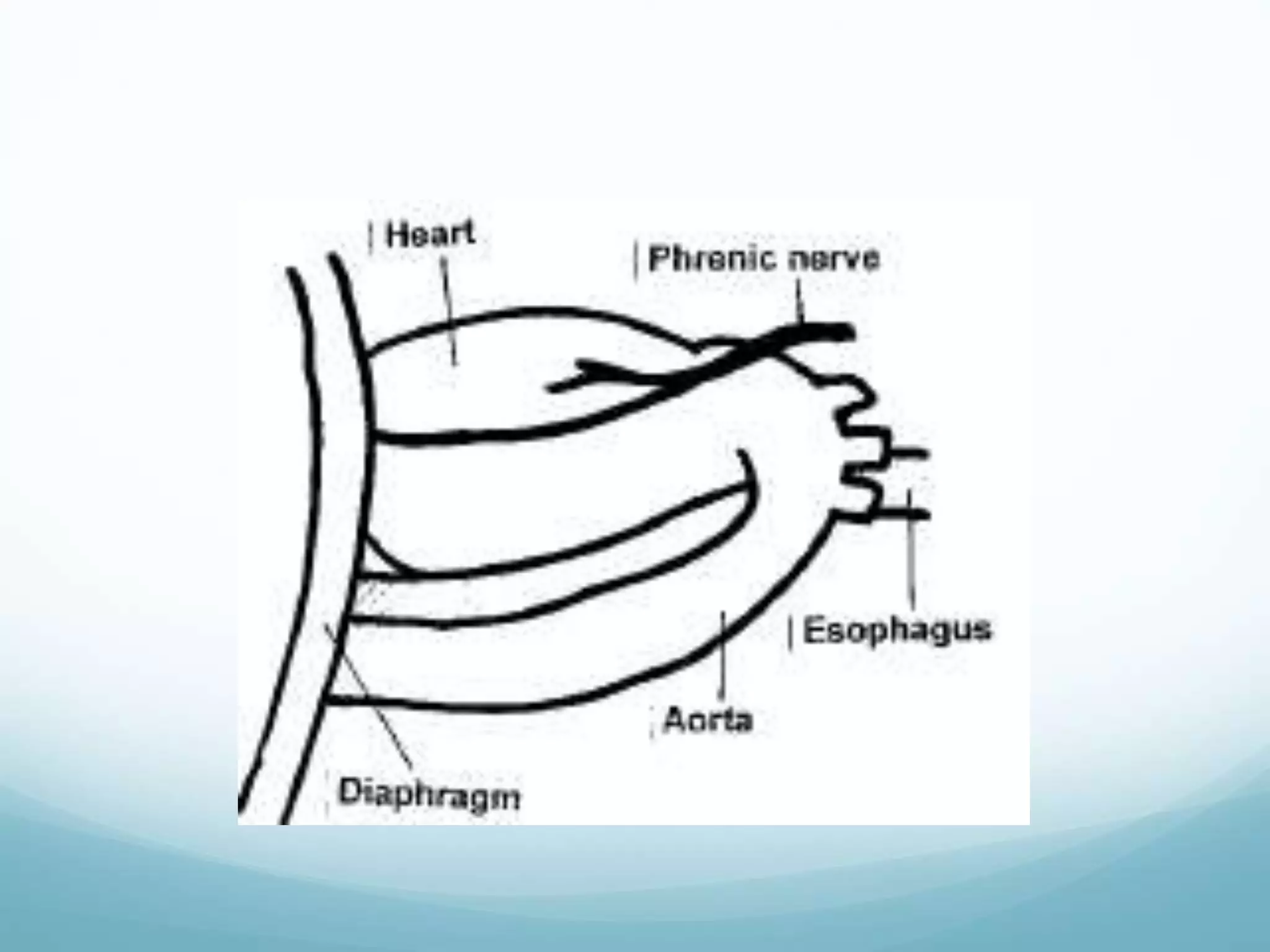
 TAMPONADE- Pericardiotomy- Anterior to Phrenic 
Nerve
 CARDIAC DEFECT- Finger/Foley catheter with gentle 
traction to repair defect 
 MAJOR ABDO HAEMORRHAGE or HYPOPERFUSION 
Cross clamp aorta- passage of NGT helps identify 
Oesophagus 
 SIGNIFICANT LUNG LACERATION OR AOR EMBOLISM 
FROM BRONCHIAL_VASCULAR COMMUNICATION-Cross 
clamp Hilum 
 Cardiac Arrest- Compression with paddles 
 VF/VT- Shock 15-30J
 http://www.trauma.org/arch 
ive/atlas/images/clamshell 
04.jpg
 Book a bed
When to Stop?? 
  Irreparable damage 
  Massive head injuries 
  Pulseless electrical activity (PEA) 
  Systolic BP<70after15-20mins 
  Asystolic arrest
 https://www.youtube.com/watch?v=8BlPxQI2C90 
 https://www.youtube.com/watch?v=A57ZB_J4FuY
Resources 
 http://lifeinthefastlane.com/ed-thoracotomy-is-it-just-the-first-part-of-the-autopsy/ 
 Hunt PA, Greaves I, Owens WA. Emergency thoracotomy in thoracic trauma 
— a review. Injury. 2006 Jan;37(1):1-19. Epub 2005 Apr 20. Review. PMID: 
16410079. 
 Lorenz HP, Steinmetz B, Lieberman J, Schecoter WP, Macho JR. Emergency 
thoracotomy: survival correlates with physiologic status. J Trauma. 1992 
Jun;32(6):780-5; discussion 785-8. PMID: 1613839. 
 http://www.trauma.org/index.php/main/article/361/ 
 http://emedicine.medscape.com/article/82584-overview 
 The Royal Hospital Melbourne 
http://clinicalguidelines.mh.org.au/brochures/TRM04.02.pdf

Emergency Thoracotomy

  • 1.
  • 3.
    Thoracic Trauma 25-50% of all traumatic injuries.  Most thoracic trauma patients managed conservatively.  Deterioration in pre-hospital or ED leads to Emergency Thoracotomy.  “occurring either immediately at the site of injury, or in the emergency department or operating room as an integral part of the resuscitation process”.
  • 4.
    Increased Chance ofSurvival  Signs of life in the ED  Penetrating>Blunt thoracic injury  Stab wounds > Gun Shots  Thoracic injuries:  However, some studies suggest there is up to a 10% neurologically intact survival rate for patients with penetrating abdominal injury undergoing cross clamping of the descending aorta as part of emergency thoracotomy.
  • 5.
    Aims of theprocedure  Resuscitation of a patient in extremis with a penetrating injury by:   Release cardiac tamponade   Control haemorrhage   Perform open cardiac massage   Cross clamp the descending thoracic aorta   Control air embolism
  • 6.
    Indications- Penetrating Injury  Previously witnessed cardiac activity (pre-hospital or in-hospital)  Unresponsive hypotension (SBP <70mmHg) despite vigorous resuscitation
  • 7.
    Indications- Blunt injury  Rapid exsanguination from chest tube (>1,500mL immediately returned)  Unresponsive hypotension (SBP <70mmHg) despite vigorous resuscitation
  • 8.
    Relative Indications Penetrating thoracic injury with traumatic arrest without previously without previously witnessed cardiac activity  Penetrating non-thoracic injury (e.g. abdominal, peripheral) with traumatic arrest with previously witnessed cardiac activity (pre-hospital or in-hospital)  Blunt thoracic injuries with traumatic arrest with previously witnessed cardiac activity (pre-hospital or in-hospital)
  • 9.
    Contraindications  Bluntinjury without witnessed cardiac activity (pre-hospital)  Penetrating abdominal trauma without cardiac activity (pre-hospital)  Non-traumatic cardiac arrest  Severe head injury  severe multisystem injury  Improperly trained team  Insufficient equipment
  • 10.
    Lorenz et al(1992  h t t p : / / i 0 . w p . c o m / s c g h e d . c o m / w p - c o n t e n t / u p l o a d s / 2 0 1 4 / 0 4 / e m e r g e n c y - t h o r Lorenz et al (1992 Hunt et al (2005)
  • 12.
    Equipment- Thoracotomy tray in T2  Scalpel–—no. 10 blade Suitable retractor, such as Finochietto’s rib spreader, or Balfour abdominal retractor Lebschke’s knife and mallet, or Gigli saw Curved Mayo’s scissors Toothed forceps Large vascular clamps, such as Satinsky DeBakey aortic clamp Mosquito/Dunhill artery forceps Foley catheter Long and short needle holders Internal defibrillator paddles Sutures, Teflon pledgets, sternal wires
  • 13.
    MAJOR TRAUMA CALL  Anaesthetics  Orthopedics  General Surgeons  Cardiothoracics  Radiology
  • 16.
    Procedure  Intubatedand Ventilated (Airway Doc and Nurse)- discussion for right main bronchus intubation *seek and treat Pneumothorax in Blunt chest trauma  Fluid Resus with blood products (Circ Doc and Nurse) *Ultrasound if qualified staff available  Mask, visor, scrub, gown and glove (Proceduralist)  Appropriate area  15* head up- left arm abducted and lights on  Prep area  Incise through skin, subcut tissue in 5th Intercostal Space above 6th Rib- costochondral junction to MAL
  • 17.
     Divide themuscle, periosteum and parietal pleura in one layer with scissors and blunt dissection  Insert a rib-spreading retractor with the handle towards the axilla  To extend the incision to the right side, use strong scissors, bone cutters or a Gigli saw to cut through the sternum and into the right fifth intercostal space, mirroring the incision above.  TAMPONADE- Pericardiotomy- Anterior to Phrenic Nerve
  • 19.
     CARDIAC DEFECT-Finger/Foley catheter with gentle traction to repair defect  MAJOR ABDO HAEMORRHAGE or HYPOPERFUSION Cross clamp aorta- passage of NGT helps identify Oesophagus  SIGNIFICANT LUNG LACERATION OR AOR EMBOLISM FROM BRONCHIAL_VASCULAR COMMUNICATION-Cross clamp Hilum  Cardiac Arrest- Compression with paddles  VF/VT- Shock 15-30J
  • 24.
  • 26.
  • 27.
    When to Stop??   Irreparable damage   Massive head injuries   Pulseless electrical activity (PEA)   Systolic BP<70after15-20mins   Asystolic arrest
  • 28.
     https://www.youtube.com/watch?v=8BlPxQI2C90 https://www.youtube.com/watch?v=A57ZB_J4FuY
  • 29.
    Resources  http://lifeinthefastlane.com/ed-thoracotomy-is-it-just-the-first-part-of-the-autopsy/  Hunt PA, Greaves I, Owens WA. Emergency thoracotomy in thoracic trauma — a review. Injury. 2006 Jan;37(1):1-19. Epub 2005 Apr 20. Review. PMID: 16410079.  Lorenz HP, Steinmetz B, Lieberman J, Schecoter WP, Macho JR. Emergency thoracotomy: survival correlates with physiologic status. J Trauma. 1992 Jun;32(6):780-5; discussion 785-8. PMID: 1613839.  http://www.trauma.org/index.php/main/article/361/  http://emedicine.medscape.com/article/82584-overview  The Royal Hospital Melbourne http://clinicalguidelines.mh.org.au/brochures/TRM04.02.pdf