
Download as PPSX, PPTX


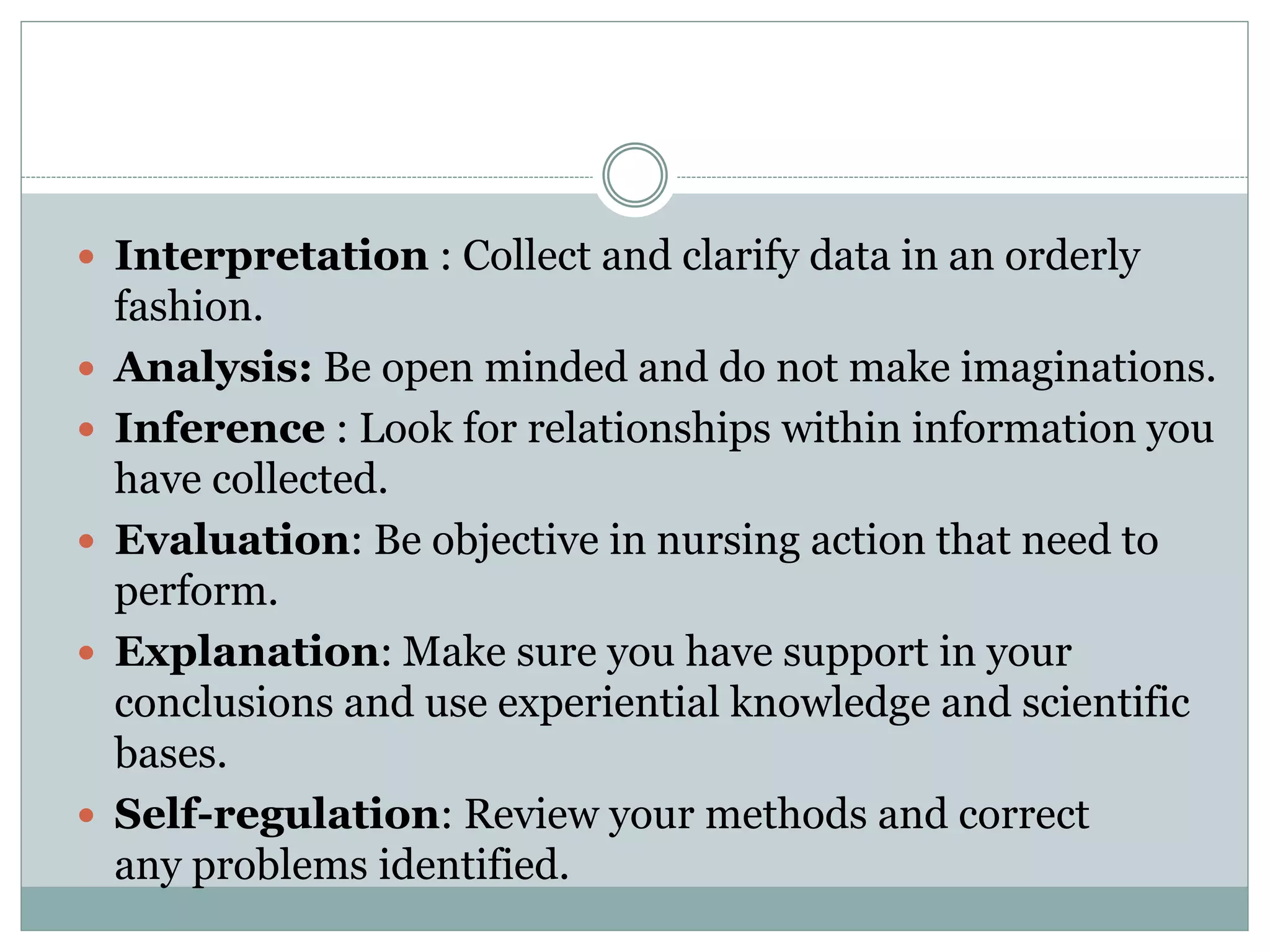


Critical thinking in nursing involves recognizing issues, analyzing clinical data, evaluating information, and making conclusions. It is a continuous process of open-minded inquiry to determine which assumptions are true and relevant for each unique patient situation. Critical thinking skills for nurses include interpretation, analysis, inference, evaluation, explanation, and self-regulation. There are three levels of critical thinking - basic, complex, and commitment. Critical thinking competencies for nurses encompass general skills like scientific method and problem solving, as well as specific skills like diagnostic reasoning, clinical inference, and clinical decision making. Attitudes that are important for critical thinking include confidence, independent thinking, fairness, responsibility, risk taking, discipline, perseverance, creativity, curiosity, integrity, and


![Peer educator group formation [compatibility mode]](https://cdn.slidesharecdn.com/ss_thumbnails/peer-20educator-20group-20formation-20-5bcompatibility-20mode-5d-140330114140-phpapp02-thumbnail.jpg?width=640&height=640&fit=bounds)


