



ANILKUMAR BR
LECTURER
MEDICAL SURGICAL NURSING
HOSPITAL
ADMISSION AND
DISCHARGE
 Admission to the hospital
 Unit and it’s preparation admission
bed
 Admission procedure
 Special consideration
 Medico-legal issues
 Role and responsibilities of the nurse
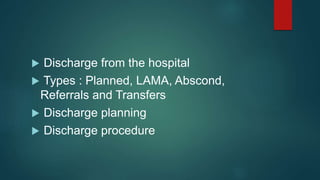
 Discharge from the hospital
 Types : Planned, LAMA, Abscond,
Referrals and Transfers
 Discharge planning
 Discharge procedure
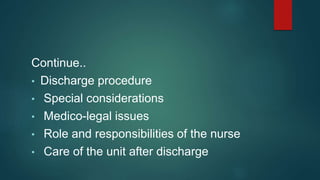
Continue..
• Discharge procedure
• Special considerations
• Medico-legal issues
• Role and responsibilities of the nurse
• Care of the unit after discharge
ADMISSION
 Admission is defined as allowing a
patient to stay in hospital for
observation, investigation, treatment
and care.
 Admission is the entry of a patient into a
hospital /ward for therapeutic /diagnostic
purposes.
Types of admission
1) Emergency admission
2) Routine admission
 Emergency admission : in this, patients
are admitted in acute conditions requiring
immediate treatment. Examples. Patient
with RTA, Poisoning, burns and cardiac
or respiratory emergency.
Routine admission : in this, patients are
admitted for investigation, diagnostic and
medical or surgical treatment. Treatment
is given according to patients problem.
Examples patient with hypertension,
diabetes mellitus etc.
UNIT AND IT’S PREPARATION
Unit: It is a place where the patient is kept
during hospital stay.
The admitting department notifies the unit
prior to the patients arrival so that room
/bed can be prepared.
Unit‘s and it’s preparation
 Prepare the treatment table
 Ensure all the equipment are completed
 Check ventilation
 Ensure patient privacy
SPECIAL CONSDIRATION
 Admission cause undue stress (emotional
factors as well as financial capability must
given utmost importance)
 Be observant consider the individual patient
needs
 Provide an individual admission procedure
 show may efficiency and concerns
Admission procedure
 Meet and receive the patient
- Verify the patient data, by checking the
record sheet, chart
- Introduce immediate personal
- Assist patient to the treatment area
- Ask the patient to change clothes into
hospital gown if necessary
Perform examination and evaluation
procedure.
 Perform examination and evaluation
procedure establish base line valves like vital
signs, do history taking, physical examination
etc.
 Coordinate with the physician and carry out
initial orders
 Give the treatment and instructions as need
Orientation to the patient and others
 The equipments /instruments
 Use of call system and telephone
 Treatment schedule
 Vistors timings
 Other health care team members
 Policy and rules and regulations
 Care of patients valuable etc
Role and responsibilities of nurse in
admission procedure :
 Nurse should deal every effort to be
friendly and courteous with the patient
and family members
 Make proper observation of patients
condition
Continue
 Orient patient and relatives regarding
hospital polices
 Deal with patient carefully who is suffering
from communicable disease or illness.
Isolate if necessary
 Patients valuables and clothes should be
handed over to relatives with proper
recording.

admission procedure in nursing

  • 1.
  • 2.
  • 3.
     Admission tothe hospital  Unit and it’s preparation admission bed  Admission procedure  Special consideration  Medico-legal issues  Role and responsibilities of the nurse
  • 4.
     Discharge fromthe hospital  Types : Planned, LAMA, Abscond, Referrals and Transfers  Discharge planning  Discharge procedure
  • 5.
    Continue.. • Discharge procedure •Special considerations • Medico-legal issues • Role and responsibilities of the nurse • Care of the unit after discharge
  • 6.
  • 7.
     Admission isdefined as allowing a patient to stay in hospital for observation, investigation, treatment and care.
  • 8.
     Admission isthe entry of a patient into a hospital /ward for therapeutic /diagnostic purposes.
  • 9.
    Types of admission 1)Emergency admission 2) Routine admission
  • 10.
     Emergency admission: in this, patients are admitted in acute conditions requiring immediate treatment. Examples. Patient with RTA, Poisoning, burns and cardiac or respiratory emergency.
  • 11.
    Routine admission :in this, patients are admitted for investigation, diagnostic and medical or surgical treatment. Treatment is given according to patients problem. Examples patient with hypertension, diabetes mellitus etc.
  • 12.
    UNIT AND IT’SPREPARATION Unit: It is a place where the patient is kept during hospital stay. The admitting department notifies the unit prior to the patients arrival so that room /bed can be prepared.
  • 13.
    Unit‘s and it’spreparation  Prepare the treatment table  Ensure all the equipment are completed  Check ventilation  Ensure patient privacy
  • 14.
    SPECIAL CONSDIRATION  Admissioncause undue stress (emotional factors as well as financial capability must given utmost importance)  Be observant consider the individual patient needs  Provide an individual admission procedure  show may efficiency and concerns
  • 15.
    Admission procedure  Meetand receive the patient - Verify the patient data, by checking the record sheet, chart - Introduce immediate personal - Assist patient to the treatment area - Ask the patient to change clothes into hospital gown if necessary
  • 16.
    Perform examination andevaluation procedure.  Perform examination and evaluation procedure establish base line valves like vital signs, do history taking, physical examination etc.  Coordinate with the physician and carry out initial orders  Give the treatment and instructions as need
  • 17.
    Orientation to thepatient and others  The equipments /instruments  Use of call system and telephone  Treatment schedule  Vistors timings  Other health care team members  Policy and rules and regulations  Care of patients valuable etc
  • 18.
    Role and responsibilitiesof nurse in admission procedure :  Nurse should deal every effort to be friendly and courteous with the patient and family members  Make proper observation of patients condition
  • 19.
    Continue  Orient patientand relatives regarding hospital polices  Deal with patient carefully who is suffering from communicable disease or illness. Isolate if necessary  Patients valuables and clothes should be handed over to relatives with proper recording.