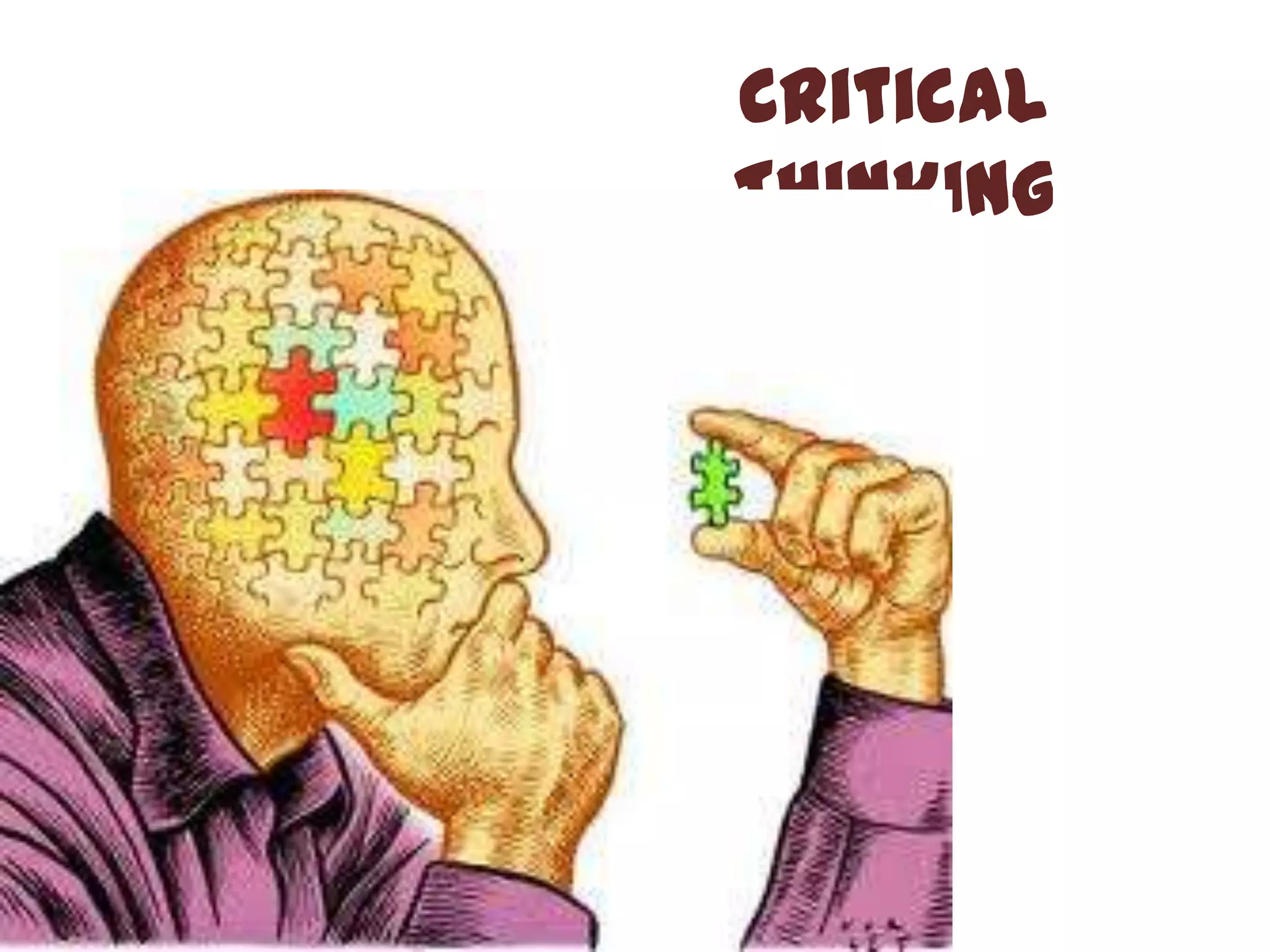
Critical
Thinking
CRITICAL THINKING
                    DEFINITION

    Critical thinking is the intellectually disciplined process of actively and skillfully
conceptualizing, applying, analyzing, synthesizing, and/or evaluating information gathered
        from, or generated by, observation, experience, reflection, reasoning, or
  communication, as a guide to belief and action – by Michael Scriven & Richard Paul
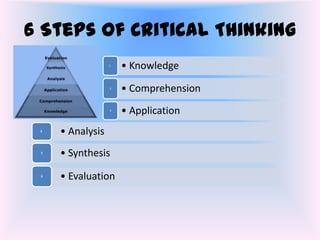
6 Steps of Critical Thinking
                  1
                      • Knowledge
                  2
                      • Comprehension
                  3
                      • Application
 4
     • Analysis
 5
     • Synthesis
 6
     • Evaluation
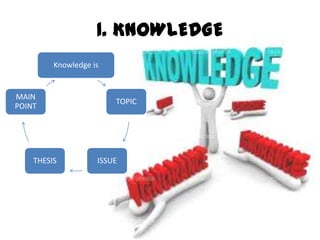
1. KNOWLEDGE
         Knowledge is


MAIN
                        TOPIC
POINT


    THESIS          ISSUE
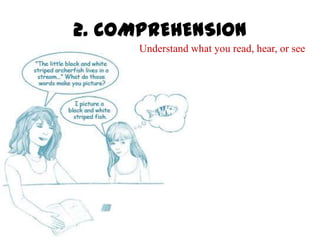
2. COMPREHENSION
      Understand what you read, hear, or see
3. APPLICATION
• To know and to apply what you comprehend
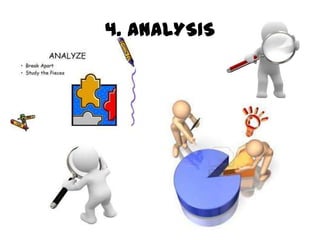
4. ANALYSIS
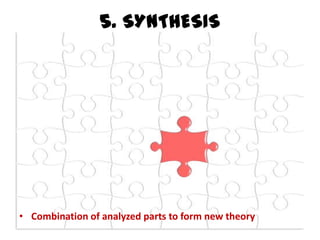
5. SYNTHESIS


• Combination of analyzed parts to form new theory
6. EVALUATION
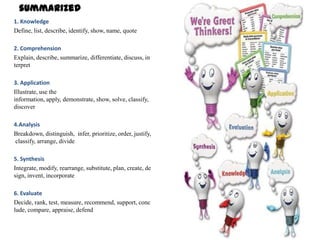
summarized
1. Knowledge
Define, list, describe, identify, show, name, quote

2. Comprehension
Explain, describe, summarize, differentiate, discuss, in
terpret

3. Application
Illustrate, use the
information, apply, demonstrate, show, solve, classify,
discover

4.Analysis
Breakdown, distinguish, infer, prioritize, order, justify,
classify, arrange, divide

5. Synthesis
Integrate, modify, rearrange, substitute, plan, create, de
sign, invent, incorporate

6. Evaluate
Decide, rank, test, measure, recommend, support, conc
lude, compare, appraise, defend

6 Steps to Critical Thinking

  • 1.
  • 2.
    CRITICAL THINKING DEFINITION Critical thinking is the intellectually disciplined process of actively and skillfully conceptualizing, applying, analyzing, synthesizing, and/or evaluating information gathered from, or generated by, observation, experience, reflection, reasoning, or communication, as a guide to belief and action – by Michael Scriven & Richard Paul
  • 3.
    6 Steps ofCritical Thinking 1 • Knowledge 2 • Comprehension 3 • Application 4 • Analysis 5 • Synthesis 6 • Evaluation
  • 4.
    1. KNOWLEDGE Knowledge is MAIN TOPIC POINT THESIS ISSUE
  • 5.
    2. COMPREHENSION Understand what you read, hear, or see
  • 6.
    3. APPLICATION • Toknow and to apply what you comprehend
  • 7.
  • 8.
    5. SYNTHESIS • Combinationof analyzed parts to form new theory
  • 9.
  • 10.
    summarized 1. Knowledge Define, list,describe, identify, show, name, quote 2. Comprehension Explain, describe, summarize, differentiate, discuss, in terpret 3. Application Illustrate, use the information, apply, demonstrate, show, solve, classify, discover 4.Analysis Breakdown, distinguish, infer, prioritize, order, justify, classify, arrange, divide 5. Synthesis Integrate, modify, rearrange, substitute, plan, create, de sign, invent, incorporate 6. Evaluate Decide, rank, test, measure, recommend, support, conc lude, compare, appraise, defend