
FORMULATION OF NURSING
DIAGNOSIS
Presented by:
Priyanka Kumari
Specific Objective
 Define nursing diagnosis.
 Discuss the characteristics of nursing diagnosis.
 Enlist the components of nursing diagnosis.
 Explain the types of nursing diagnosis.
 Explain the process of nursing diagnosis.
 Discuss the formulation of nursing diagnosis.
Nursing Diagnosis
DEFINITON
A clinical judgement about individuals of community
responses to actual or potential health problem.
Nursing diagnosis provides the basis for selection of nursing
interventions to achieve outcomes for which the nurse is
accountable.
CHARACTERISTICS OF NURSING DIAGNOSIS
 It states a clear and concise health problem.
 It is derived from existing evidences about the client.
 It is the basis for planning and carrying out nursing care.
COMPONANTS
 Diagnostic label.
 Qualifiers.
 Definition.
 Defining characteristics.
 Risk factors.

Diagnostic label:
 It is the name of the nursing diagnosis. It describes the
essence of the problem using as few words as possible.
 Example: Impaired physical mobility.
Qualifiers:
 These are words used to give additional meaning to a
nursing diagnosis.
 Example: altered, dysfunctional, increased, impaired,
disturbed, acute, deficient, ineffective, chronic, excessive,
decreased.
 Definition: it describes the characteristics of the human
response under consideration.
 Defining characteristics: these are major and minor clinical
cues that validate the presence of an actual nursing diagnosis
example: As evidenced by.
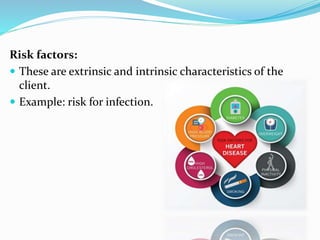
Risk factors:
 These are extrinsic and intrinsic characteristics of the
client.
 Example: risk for infection.
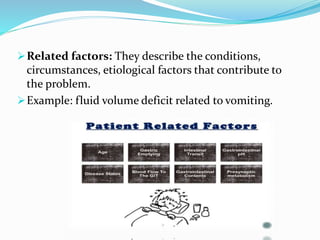
Related factors: They describe the conditions,
circumstances, etiological factors that contribute to
the problem.
Example: fluid volume deficit related to vomiting.
Components Of A Nursing Diagnosis:
PES Or PE
 P=Problem statement/diagnostic label/definition.
 E=Etiology/related factors/causes.
 S=Defining characteristics/signs and symptoms.
 An actual nursing diagnosis is a clinical judgment about a
current patient health problem, which is present at the
time of the nursing assessment.
 Example: Ineffective airway
clearance characterized by an
ineffective cough.
Actual nursing diagnosis
Risk nursing diagnosis
 A risk nursing diagnosis is clinical judgment about a
health problem which does not yet exist, but with
respect to which the individual, family or community
has risk factors.
 Example: Risk for infection related
to a compromised immune system.
Possible Nursing diagnosis
One in which evidence about a health problem is
incomplete or unclear therefore requires more data to
support or reject it; or the causative factors are unknown.
Examples: Possible nutritional deficit RT nausea.
Wellness nursing diagnosis
 A wellness nursing diagnosis statement is a clinical
judgment that an individual, family or community is
able to transition to a level of higher wellness.
 Individual must possess effective present status and
show a desire for increased wellness.
 Example: family coping potential for
growth related to unexpected birth of twins.
Syndrome nursing diagnosis
 A syndrome nursing diagnosis statement is a clinical
judgment, which is associated with a cluster of predicted
high-risk or actual nursing diagnosis, related to a certain
situation or event.
 Example: Rape trauma syndrome manifested by sleep
pattern disturbance, anger and genitourinary discomfort
and related to feeling anxious about possible resulting
health problems.
FORMULATION OF NURSING DIAGNOSIS: PES OR PE
 Actual nursing diagnosis = Patient problem + Etiology –
replace the (+) symbol with the words “RELATED TO”
abbreviated as r/t. = Problem + Etiology + S/S.
 Risk Nursing diagnosis = Problem + Risk Factors.
 Possible nursing diagnosis = Problem +Etiology.
 Example: Activity intolerance related to decreased cardiac
output.
 Altered bowel elimination; constipation related to insufficient
fluid intake.
CONCLUSION
Nursing diagnosis is a diagnosis that is based upon the response
of the patient to the medical condition. This is why it is called a
‘nursing diagnosis’ because these are things that have a specific
action that is related to what nurses have autonomy to take
action about. Nurses treat the patient with everything that is
related to human response to a specific disease. This includes
anything that is a physical, mental, and spiritual type of
response. Simply put, a nursing diagnosis is care focused.
Bibliography
 Potter and Perry (2005) “Fundamental of nursing” Elsevier
Publisher, 6th edition.
 Navdeep Kaur Brar, HC Rawat (2017) “Textbook of Advanced
Nursing Practice” JAYPEE Brothers 1st edition. Page no 722-
723.
 Stephanie’s Principles and practice of Nursing, Sr. Nancy 6th
edition. Page no.- 59-60
 https://acceleratednursing.roseman.edu/blog/three-part-nursing-
diagnosis/
 https://en.wikipedia.org/wiki/nursingdiagnosis
 https://www.slideshare.net?ShaellsJoshi/nsg-diagnosis
formulation of nsg dianosis

formulation of nsg dianosis

  • 1.
  • 2.
    Specific Objective  Definenursing diagnosis.  Discuss the characteristics of nursing diagnosis.  Enlist the components of nursing diagnosis.  Explain the types of nursing diagnosis.  Explain the process of nursing diagnosis.  Discuss the formulation of nursing diagnosis.
  • 3.
  • 4.
    DEFINITON A clinical judgementabout individuals of community responses to actual or potential health problem. Nursing diagnosis provides the basis for selection of nursing interventions to achieve outcomes for which the nurse is accountable.
  • 5.
    CHARACTERISTICS OF NURSINGDIAGNOSIS  It states a clear and concise health problem.  It is derived from existing evidences about the client.  It is the basis for planning and carrying out nursing care.
  • 6.
    COMPONANTS  Diagnostic label. Qualifiers.  Definition.  Defining characteristics.  Risk factors.
  • 7.
     Diagnostic label:  Itis the name of the nursing diagnosis. It describes the essence of the problem using as few words as possible.  Example: Impaired physical mobility.
  • 8.
    Qualifiers:  These arewords used to give additional meaning to a nursing diagnosis.  Example: altered, dysfunctional, increased, impaired, disturbed, acute, deficient, ineffective, chronic, excessive, decreased.
  • 9.
     Definition: itdescribes the characteristics of the human response under consideration.  Defining characteristics: these are major and minor clinical cues that validate the presence of an actual nursing diagnosis example: As evidenced by.
  • 10.
    Risk factors:  Theseare extrinsic and intrinsic characteristics of the client.  Example: risk for infection.
  • 11.
    Related factors: Theydescribe the conditions, circumstances, etiological factors that contribute to the problem. Example: fluid volume deficit related to vomiting.
  • 12.
    Components Of ANursing Diagnosis: PES Or PE  P=Problem statement/diagnostic label/definition.  E=Etiology/related factors/causes.  S=Defining characteristics/signs and symptoms.
  • 13.
     An actualnursing diagnosis is a clinical judgment about a current patient health problem, which is present at the time of the nursing assessment.  Example: Ineffective airway clearance characterized by an ineffective cough. Actual nursing diagnosis
  • 14.
    Risk nursing diagnosis A risk nursing diagnosis is clinical judgment about a health problem which does not yet exist, but with respect to which the individual, family or community has risk factors.  Example: Risk for infection related to a compromised immune system.
  • 15.
    Possible Nursing diagnosis Onein which evidence about a health problem is incomplete or unclear therefore requires more data to support or reject it; or the causative factors are unknown. Examples: Possible nutritional deficit RT nausea.
  • 16.
    Wellness nursing diagnosis A wellness nursing diagnosis statement is a clinical judgment that an individual, family or community is able to transition to a level of higher wellness.  Individual must possess effective present status and show a desire for increased wellness.  Example: family coping potential for growth related to unexpected birth of twins.
  • 17.
    Syndrome nursing diagnosis A syndrome nursing diagnosis statement is a clinical judgment, which is associated with a cluster of predicted high-risk or actual nursing diagnosis, related to a certain situation or event.  Example: Rape trauma syndrome manifested by sleep pattern disturbance, anger and genitourinary discomfort and related to feeling anxious about possible resulting health problems.
  • 18.
    FORMULATION OF NURSINGDIAGNOSIS: PES OR PE  Actual nursing diagnosis = Patient problem + Etiology – replace the (+) symbol with the words “RELATED TO” abbreviated as r/t. = Problem + Etiology + S/S.  Risk Nursing diagnosis = Problem + Risk Factors.  Possible nursing diagnosis = Problem +Etiology.  Example: Activity intolerance related to decreased cardiac output.  Altered bowel elimination; constipation related to insufficient fluid intake.
  • 19.
    CONCLUSION Nursing diagnosis isa diagnosis that is based upon the response of the patient to the medical condition. This is why it is called a ‘nursing diagnosis’ because these are things that have a specific action that is related to what nurses have autonomy to take action about. Nurses treat the patient with everything that is related to human response to a specific disease. This includes anything that is a physical, mental, and spiritual type of response. Simply put, a nursing diagnosis is care focused.
  • 20.
    Bibliography  Potter andPerry (2005) “Fundamental of nursing” Elsevier Publisher, 6th edition.  Navdeep Kaur Brar, HC Rawat (2017) “Textbook of Advanced Nursing Practice” JAYPEE Brothers 1st edition. Page no 722- 723.  Stephanie’s Principles and practice of Nursing, Sr. Nancy 6th edition. Page no.- 59-60  https://acceleratednursing.roseman.edu/blog/three-part-nursing- diagnosis/  https://en.wikipedia.org/wiki/nursingdiagnosis  https://www.slideshare.net?ShaellsJoshi/nsg-diagnosis

Editor's Notes