NUTRITIONAL NEEDS
Vikash kumar
NUTRITION
DEFINITION-
Nutrients are defined as the constituents of food,
which perform important functions in our body. If
these nutrients are not present in our body in
sufficient amount, the result is ill health.
Important nutrients include carbohydrate,
proteins, lipids, vitamins, minerals & water.
IMPORTANCE-
• Supplies nutrients for energy. Energy nutrients
include carbohydrate, fats,& proteins.
• Supplies nutrients to build & maintain body tissues.
• Food supplies heat & energy for work & play.
• Food supplies materials for regulation or control of
body process & protection of the body.
• It gives a feeling of security.
FACTOR AFFECTING NUTRITIONAL NEEDS-
❖Physical , mental fatigue.
❖Hurry, worry & fear.
❖Unpleasant environment & experiences.
❖Lack of exercise.
❖Irregular meals.
❖Long spacing of meal timings.
❖Hospitalization.
ASSESSMENT OF NUTRITIONAL NEEDS:
VARIABLES-
Anthropometry measurement- it is
measurement of body height, weight,
length & head circumference.
Clinical Methods Of Assessing The
Nutritional Status- clinical methods of
assessing nutritional status involve checking
sign of deficiency at specific places on the
body or asking the patient whether they
have any symptoms that might suggest
nutrient deficiency includes-
Pale palm & conjunctiva or gets tired
easily ,loss of appetite indicate anaemia,
deficiency of iron, folic etc.
Bitot’s spot ( whitish patchy triangular
lesions on the side of the eyes) indicate
vitamin A deficiency.
Goitre ( swelling on the front of the neck)
indicate iodine deficiency disorder.
PEM ( PROTEIN ENERGY MALNUTRITION)
indicate protein deficiency.
BIOCHEMICAL TEST-
Biochemical test can be used to
detect the deficiency by analyzing blood, urine,
stool. For eg. Estimation of haemoglobin in blood
to detect iron deficiency.
THERAPEUTIC DIET
Diet in disease must be planned as part of the
complete care of the patient. Many
modification may have to be made according to
the disease and condition of the patient.
OBJECTIVE-
• To improve the general health
• To promote healing
• To prevent dehydration
• To facilitate tissue repair & growth.
PRINCIPALS-
• The diet must be planned according to the habits
of the patient based on culture, religion,
socioeconomic status, personal preference.
• As far as possible, changes in the diet should be
brought gradually and adequate explanation are
given with the changes made, if any.
• Whatever diet prescribed , there should be
variety of selection
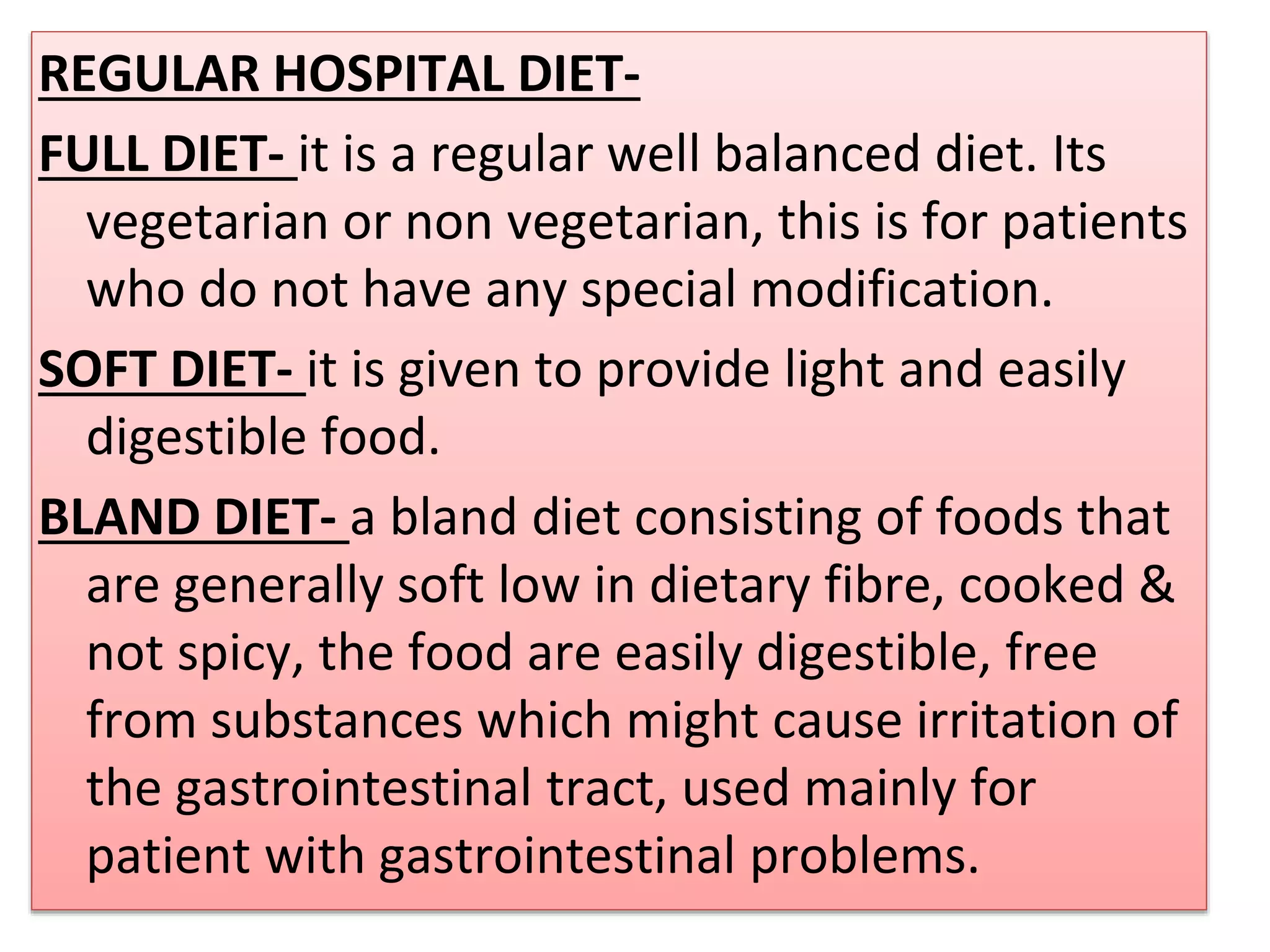
REGULAR HOSPITAL DIET-
FULL DIET- it is a regular well balanced diet. Its
vegetarian or non vegetarian, this is for patients
who do not have any special modification.
SOFT DIET- it is given to provide light and easily
digestible food.
BLAND DIET- a bland diet consisting of foods that
are generally soft low in dietary fibre, cooked &
not spicy, the food are easily digestible, free
from substances which might cause irritation of
the gastrointestinal tract, used mainly for
patient with gastrointestinal problems.
FEEDING PATIENTS
• Enteral
• Means “within or by means of the
gastrointestinal tract.”
• Oral
• Tube feedings
Parenteral
• Uses the veins
• Persons with inadequate GI function
Enteral Nutrition:
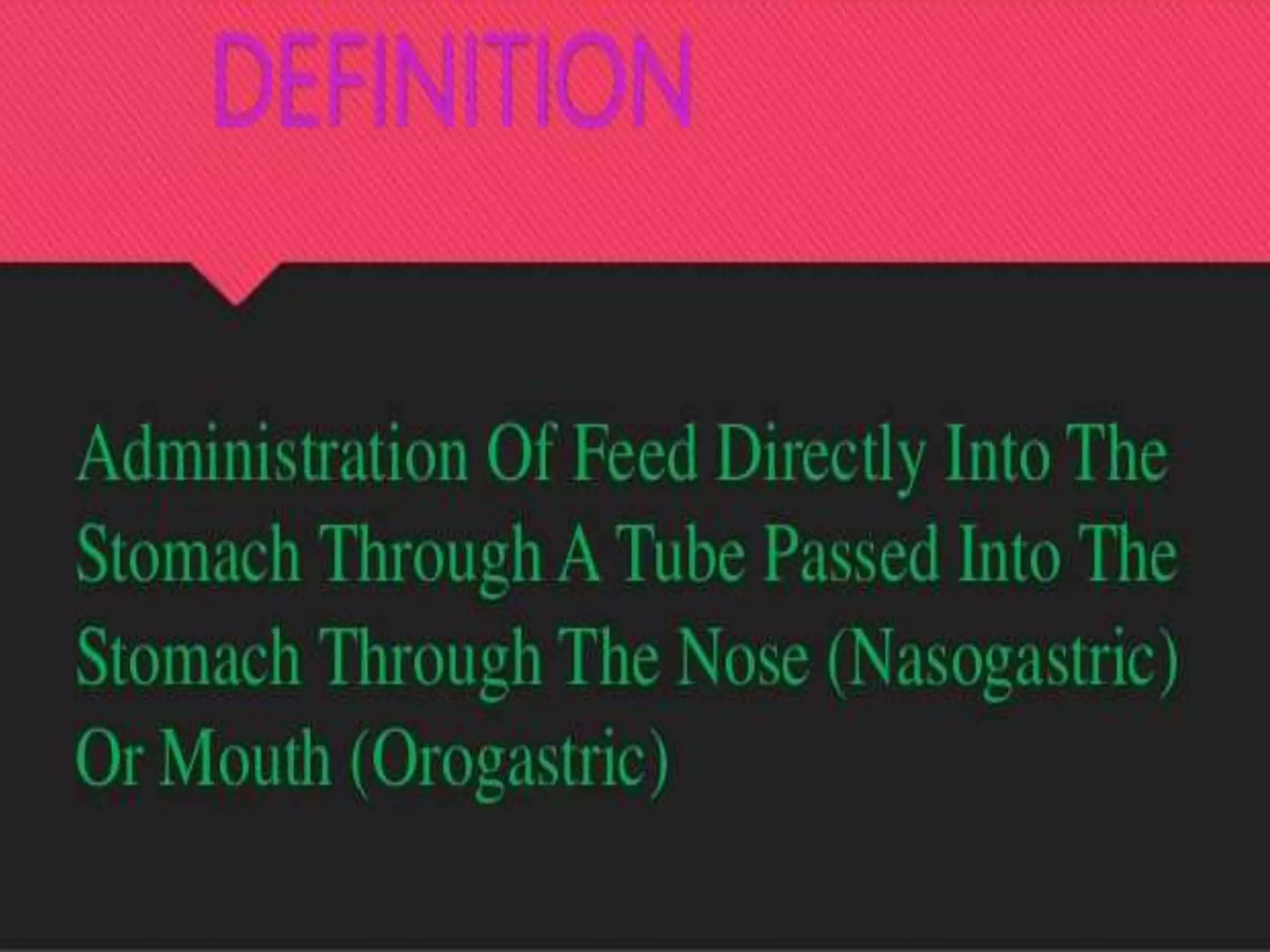
• Enteral nutrition: The delivery of nutrients by
tube into the gastrointestinal tract, commonly
known as tube feeding.
• Parenteral Nutrition: Parenteral nutrition: The
delivery of nutrients by vein.
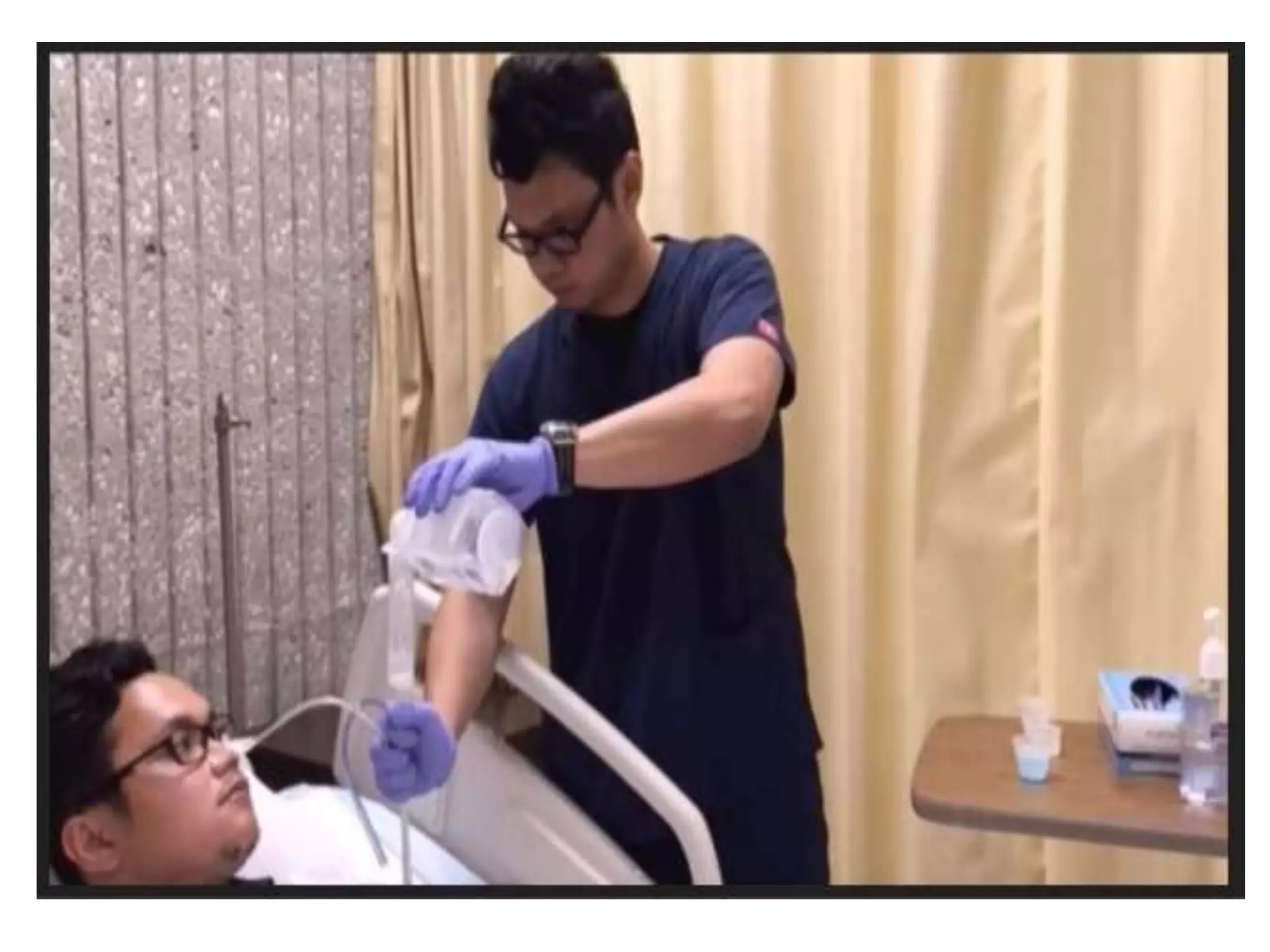
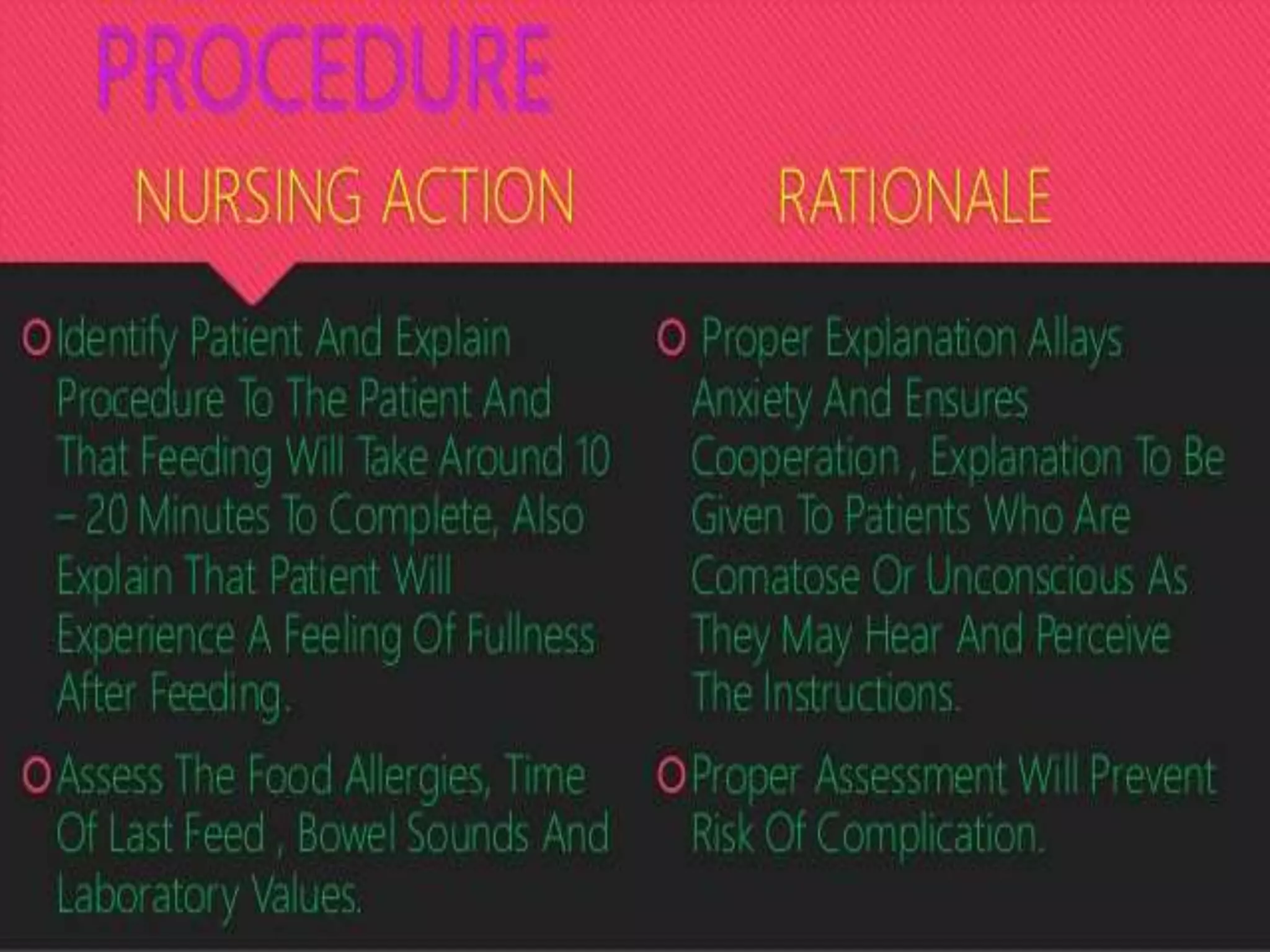
NASOGASTRIC TUBE INSERTION
Nutritional need for patient

Nutritional need for patient

  • 1.
  • 2.
    NUTRITION DEFINITION- Nutrients are definedas the constituents of food, which perform important functions in our body. If these nutrients are not present in our body in sufficient amount, the result is ill health. Important nutrients include carbohydrate, proteins, lipids, vitamins, minerals & water.
  • 3.
    IMPORTANCE- • Supplies nutrientsfor energy. Energy nutrients include carbohydrate, fats,& proteins. • Supplies nutrients to build & maintain body tissues. • Food supplies heat & energy for work & play. • Food supplies materials for regulation or control of body process & protection of the body. • It gives a feeling of security.
  • 4.
    FACTOR AFFECTING NUTRITIONALNEEDS- ❖Physical , mental fatigue. ❖Hurry, worry & fear. ❖Unpleasant environment & experiences. ❖Lack of exercise. ❖Irregular meals. ❖Long spacing of meal timings. ❖Hospitalization.
  • 5.
    ASSESSMENT OF NUTRITIONALNEEDS: VARIABLES- Anthropometry measurement- it is measurement of body height, weight, length & head circumference. Clinical Methods Of Assessing The Nutritional Status- clinical methods of assessing nutritional status involve checking sign of deficiency at specific places on the body or asking the patient whether they have any symptoms that might suggest nutrient deficiency includes-
  • 6.
    Pale palm &conjunctiva or gets tired easily ,loss of appetite indicate anaemia, deficiency of iron, folic etc. Bitot’s spot ( whitish patchy triangular lesions on the side of the eyes) indicate vitamin A deficiency. Goitre ( swelling on the front of the neck) indicate iodine deficiency disorder. PEM ( PROTEIN ENERGY MALNUTRITION) indicate protein deficiency.
  • 7.
    BIOCHEMICAL TEST- Biochemical testcan be used to detect the deficiency by analyzing blood, urine, stool. For eg. Estimation of haemoglobin in blood to detect iron deficiency.
  • 8.
    THERAPEUTIC DIET Diet indisease must be planned as part of the complete care of the patient. Many modification may have to be made according to the disease and condition of the patient. OBJECTIVE- • To improve the general health • To promote healing • To prevent dehydration • To facilitate tissue repair & growth.
  • 9.
    PRINCIPALS- • The dietmust be planned according to the habits of the patient based on culture, religion, socioeconomic status, personal preference. • As far as possible, changes in the diet should be brought gradually and adequate explanation are given with the changes made, if any. • Whatever diet prescribed , there should be variety of selection
  • 10.
    REGULAR HOSPITAL DIET- FULLDIET- it is a regular well balanced diet. Its vegetarian or non vegetarian, this is for patients who do not have any special modification. SOFT DIET- it is given to provide light and easily digestible food. BLAND DIET- a bland diet consisting of foods that are generally soft low in dietary fibre, cooked & not spicy, the food are easily digestible, free from substances which might cause irritation of the gastrointestinal tract, used mainly for patient with gastrointestinal problems.
  • 11.
    FEEDING PATIENTS • Enteral •Means “within or by means of the gastrointestinal tract.” • Oral • Tube feedings Parenteral • Uses the veins • Persons with inadequate GI function
  • 12.
    Enteral Nutrition: • Enteralnutrition: The delivery of nutrients by tube into the gastrointestinal tract, commonly known as tube feeding. • Parenteral Nutrition: Parenteral nutrition: The delivery of nutrients by vein.
  • 13.