Downloaded 1,377 times


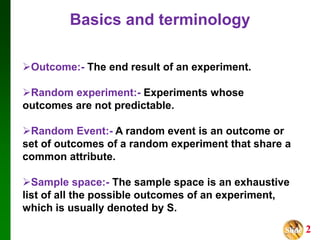
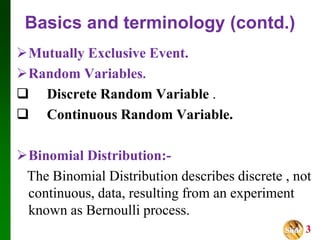
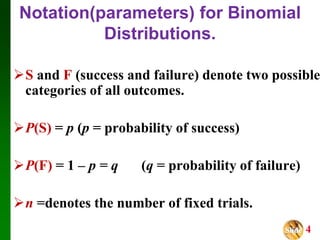
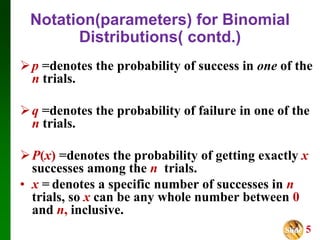
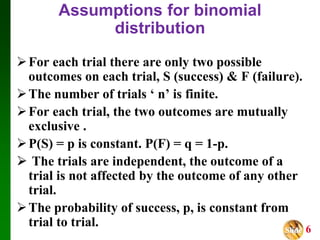
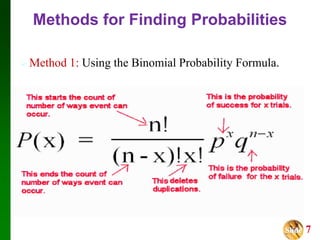
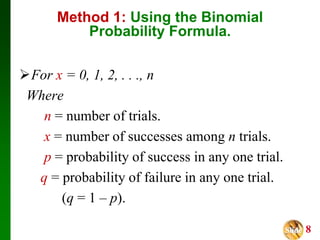
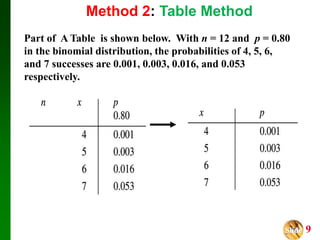
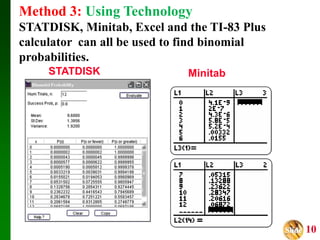
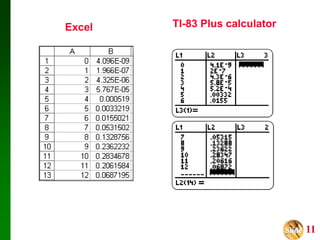
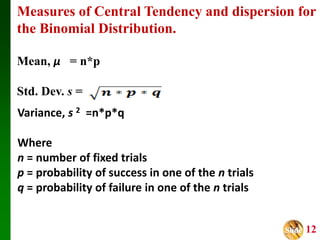
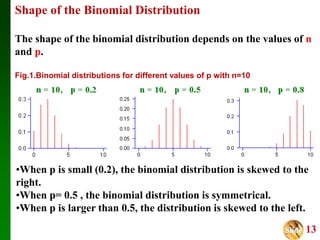
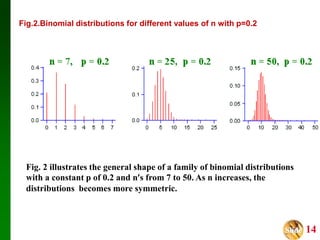
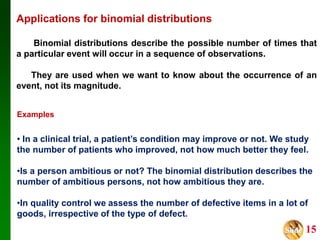



This presentation discusses binomial probability distributions through the following key points: - It defines basic terminology related to random experiments, events, and variables. The binomial distribution specifically describes discrete data from Bernoulli processes. - It outlines the notation and assumptions for binomial distributions, including that there are two possible outcomes for each trial (success/failure), a fixed number of trials, and constant probabilities of success/failure. - It presents three methods for calculating binomial probabilities: the binomial probability formula, table method, and using technology like Excel. - It discusses measures of central tendency and dispersion for binomial distributions and how the shape of the distribution depends on the number of trials and probability of success. - Real-world


