 Soaps are the sodium and potassium salts of
the long chain carboxylic acid.A soap
molecule consists of a long hydrocarbon
chain (composed of carbons and hydrogens)
with a carboxylic acid on one end which is
ionic bonded to metal ion usually a sodium or
potassium.
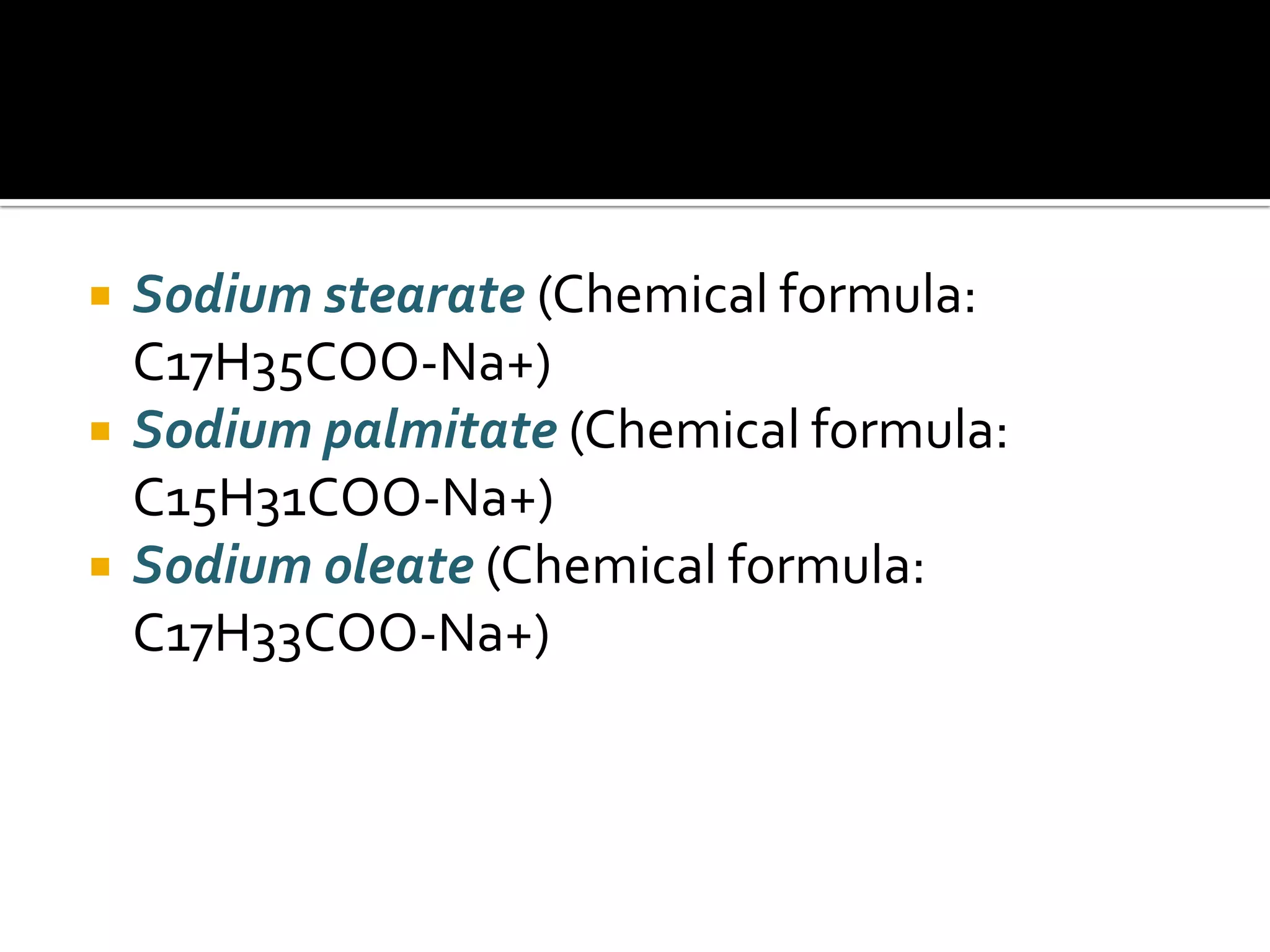
 Sodium stearate (Chemical formula:
C17H35COO-Na+)
 Sodium palmitate (Chemical formula:
C15H31COO-Na+)
 Sodium oleate (Chemical formula:
C17H33COO-Na+)
 The process of making soap by the
hydrolysis of fats and oils with alkalies is
called saponification.
 Soap is made by heating animal fats or
vegetable oil with concentrated sodium
hydroxide (NAOH).
 Fat or Oil + NaOH → Soap + Glycerol
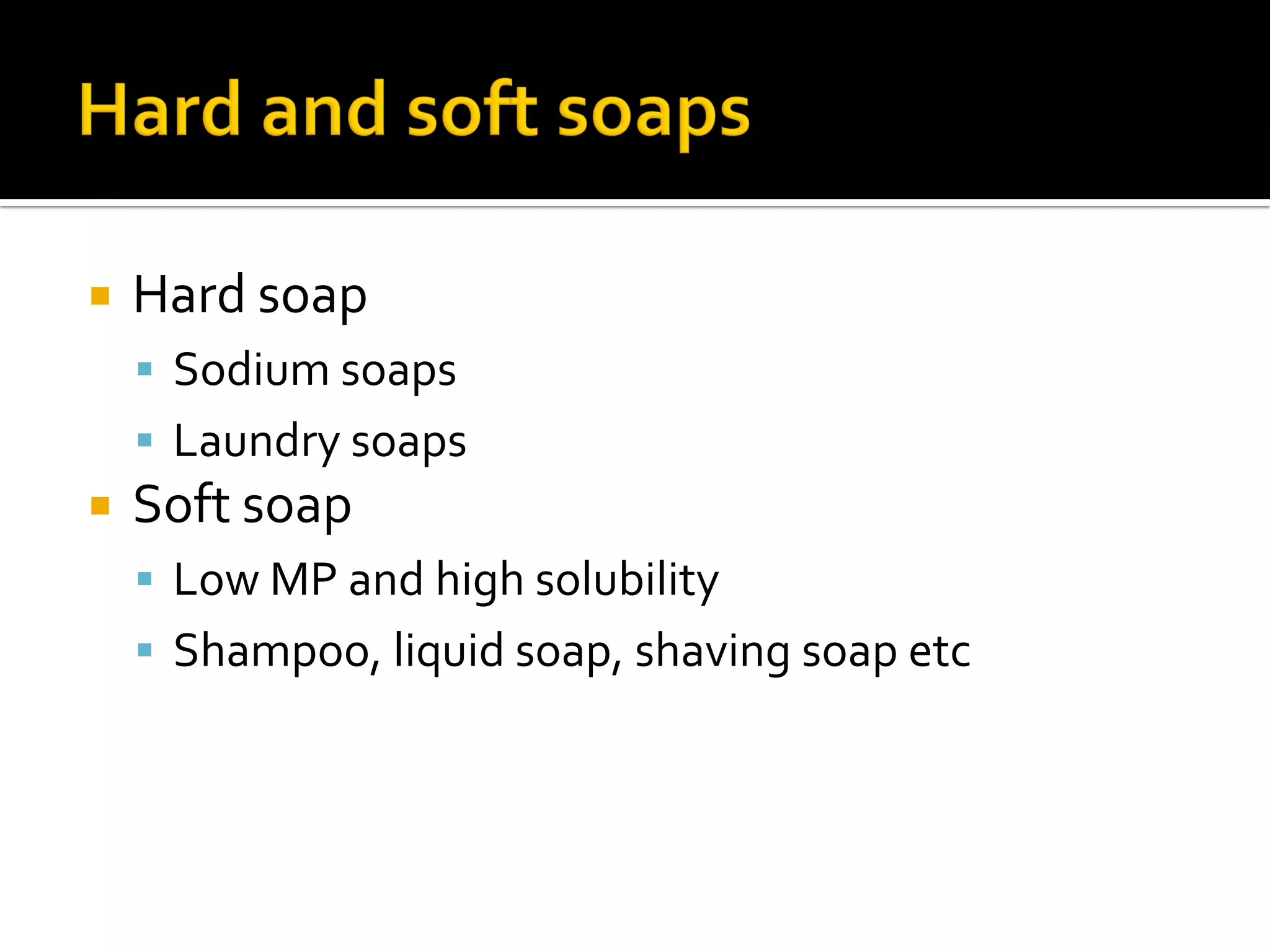
 Hard soap
 Sodium soaps
 Laundry soaps
 Soft soap
 Low MP and high solubility
 Shampoo, liquid soap, shaving soap etc
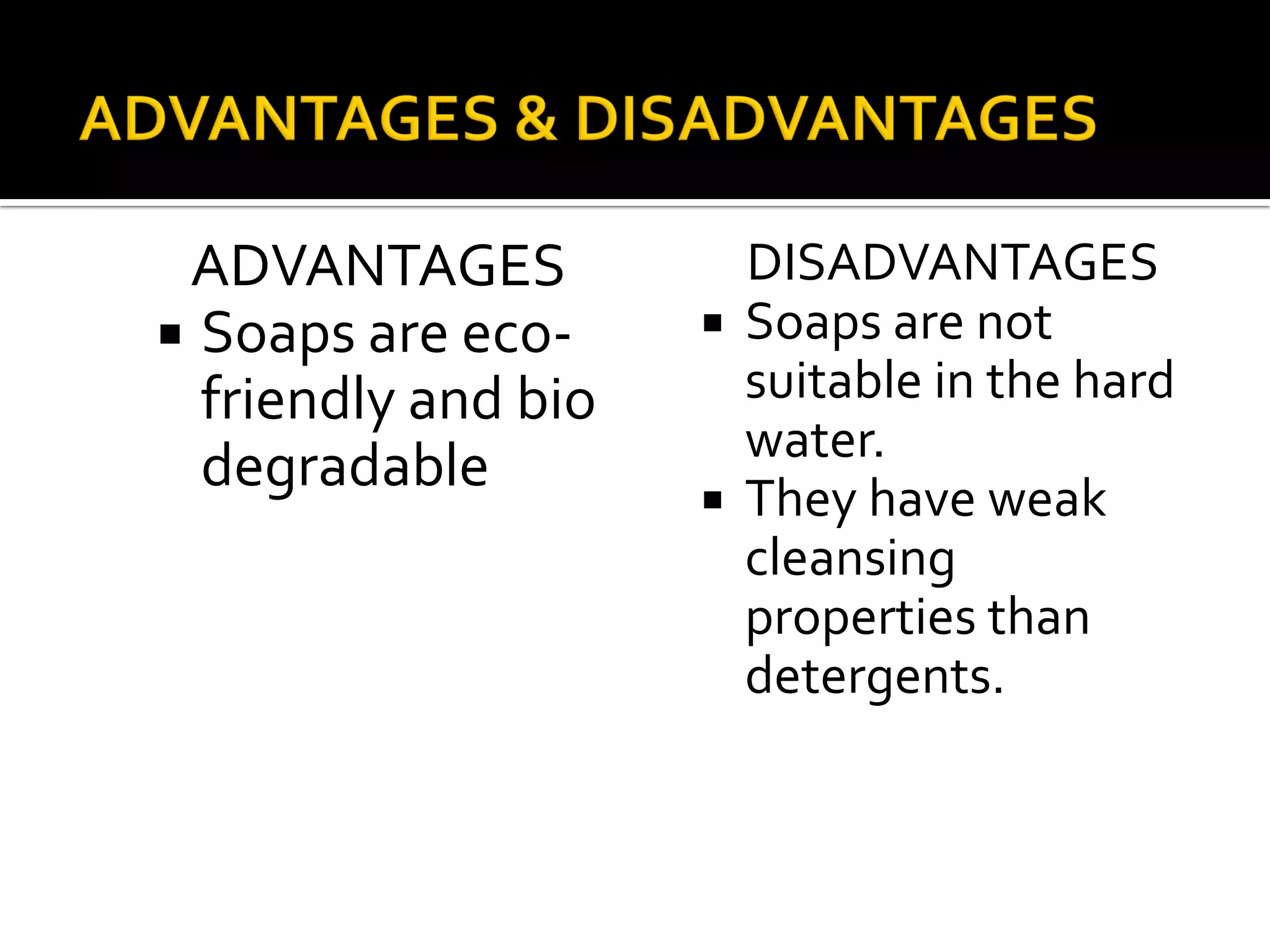
ADVANTAGES
 Soaps are eco-
friendly and bio
degradable
DISADVANTAGES
 Soaps are not
suitable in the hard
water.
 They have weak
cleansing
properties than
detergents.
 Detergents are the sodium salts of long chain
benzene sulphuric acids.
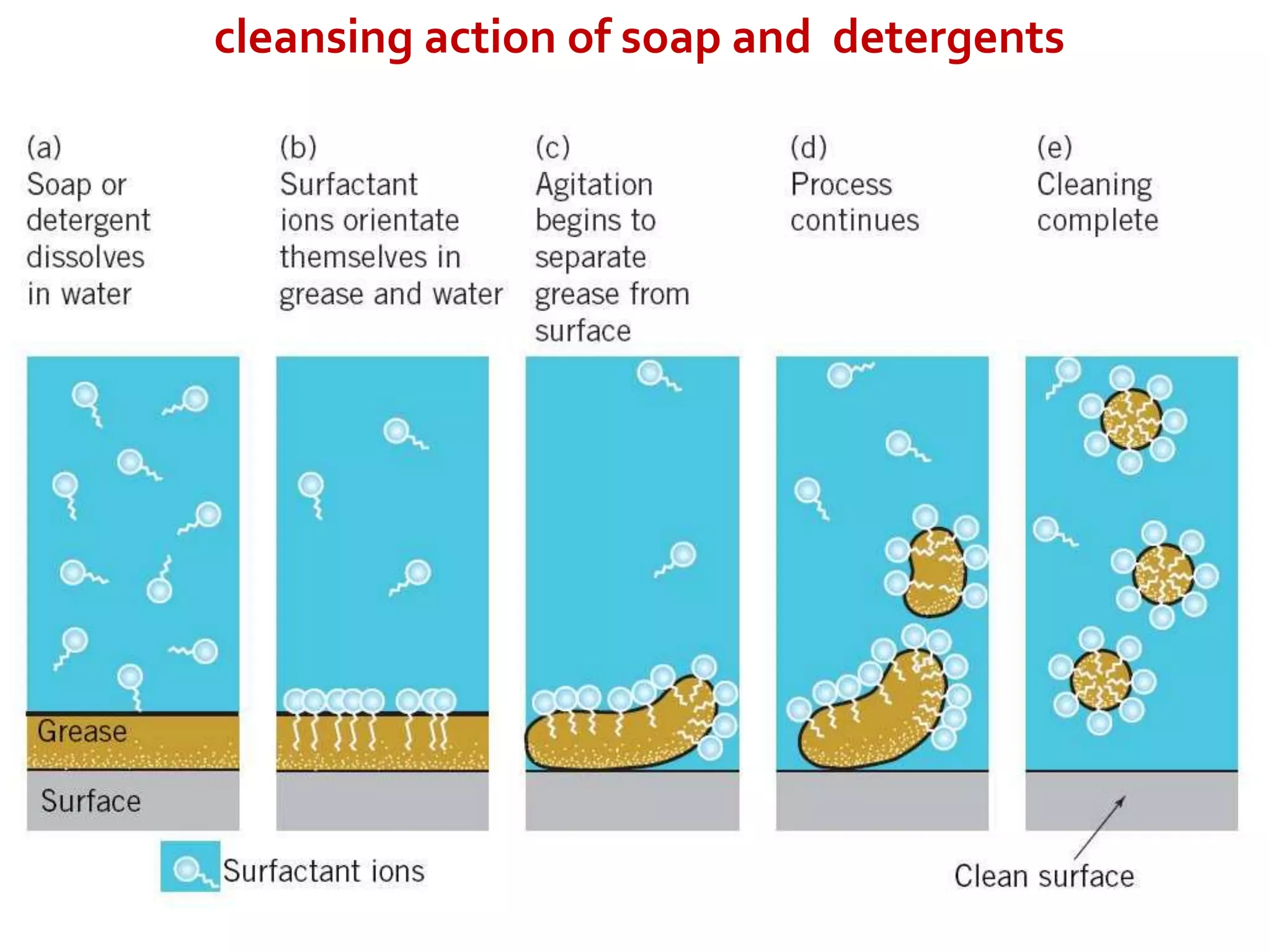
 Detergents are primarily surfactants, which
could be produced easily from
petrochemicals. Surfactants lower the
surface tension of water, essentially making it
'wetter' so that it is less likely to stick to itself
and more likely to interact with oil and
grease.
 Two basic examples of well-known detergents of the
sulphonate group or the sulphate group are:
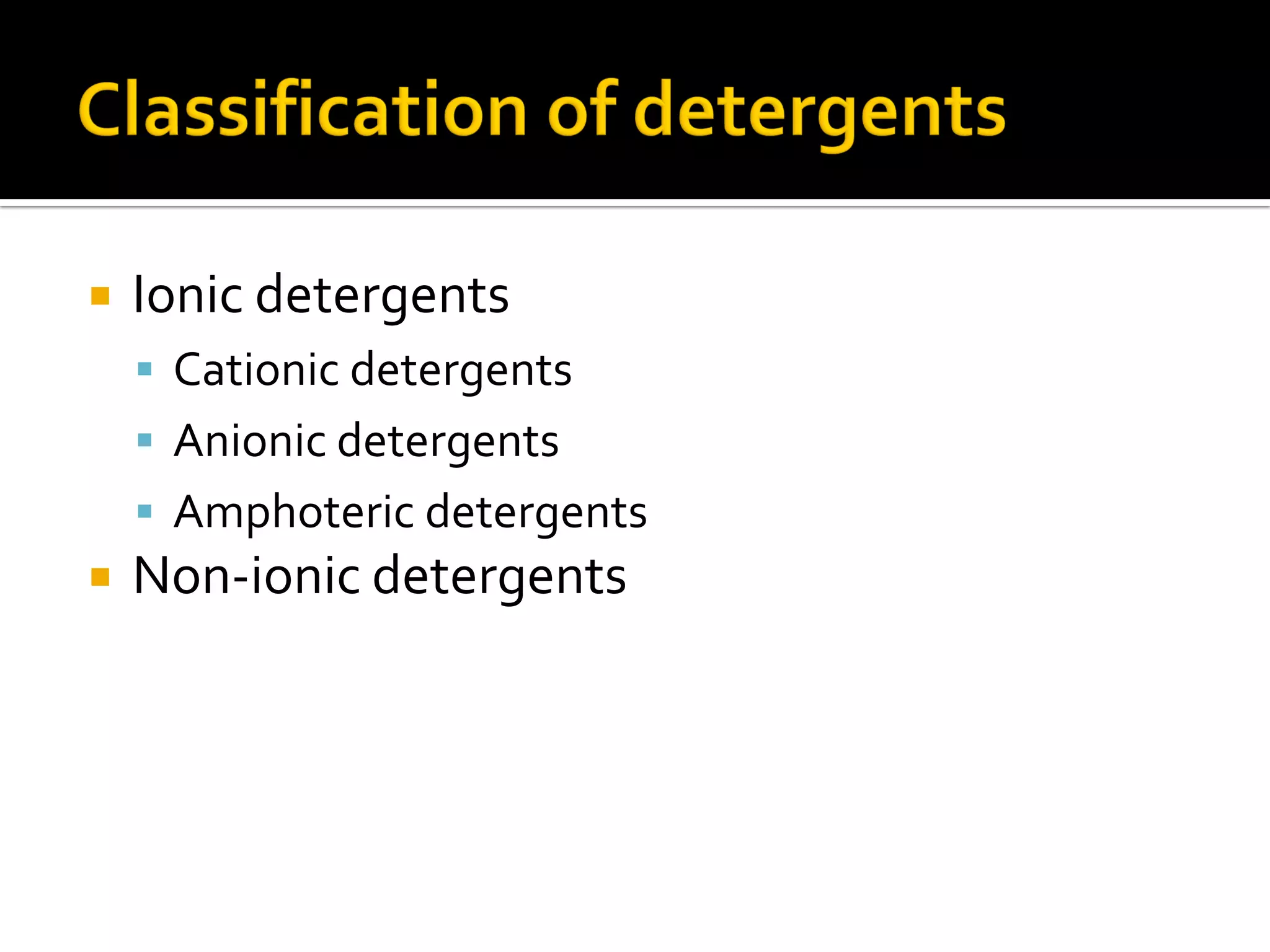
 Ionic detergents
 Cationic detergents
 Anionic detergents
 Amphoteric detergents
 Non-ionic detergents
 Since detergents are the salts of strong acids they
do not decompose in acidic medium.Thus
detergents can effectively clean fabric even if the
water is acidic.
 Synthetic detergents are more soluble in water
than soaps.
 They have a stronger cleansing action than soaps.
 As detergents are derived from petroleum they
save on natural vegetable oils, which are important
as essential cooking medium
 Many detergents are resistant to the action of
biological agents and thus are not biodegradable.
Their elimination from municipal wastewaters by the
usual treatments is a problem.
 They have a tendency to produce stable foams in
rivers that extend over several hundred meters of
the river water.This is due to the effects of
surfactants used in their preparation.Thus they pose
a danger to aquatic life.
 They tend to inhibit oxidation of organic substances
present in wastewaters because they form a sort of
envelope around them.
cleansing action of soap and detergents
 SOAPS
 They are metal salts of
long chain higher fatty
acids.
 These are prepared
from vegetable oils
and animal fats.
 They cannot be used
effectively in hard
water as they produce
scum i.e., insoluble
precipitates of Ca2+,
Mg2+, Fe2+ etc.
 DETERGENTS
 These are sodium salts of
long chain hydrocarbons
like alkyl sulphates or alkyl
benzene sulphonates.
 They are prepared from
hydrocarbons of petroleum
or coal.
 These do not produce
insoluble precipitates in
hard water.They are
effective in soft, hard or salt
water.
Thank youThank you

4 cleansing agents

  • 3.
     Soaps arethe sodium and potassium salts of the long chain carboxylic acid.A soap molecule consists of a long hydrocarbon chain (composed of carbons and hydrogens) with a carboxylic acid on one end which is ionic bonded to metal ion usually a sodium or potassium.
  • 4.
     Sodium stearate(Chemical formula: C17H35COO-Na+)  Sodium palmitate (Chemical formula: C15H31COO-Na+)  Sodium oleate (Chemical formula: C17H33COO-Na+)
  • 5.
     The processof making soap by the hydrolysis of fats and oils with alkalies is called saponification.  Soap is made by heating animal fats or vegetable oil with concentrated sodium hydroxide (NAOH).  Fat or Oil + NaOH → Soap + Glycerol
  • 6.
     Hard soap Sodium soaps  Laundry soaps  Soft soap  Low MP and high solubility  Shampoo, liquid soap, shaving soap etc
  • 7.
    ADVANTAGES  Soaps areeco- friendly and bio degradable DISADVANTAGES  Soaps are not suitable in the hard water.  They have weak cleansing properties than detergents.
  • 8.
     Detergents arethe sodium salts of long chain benzene sulphuric acids.  Detergents are primarily surfactants, which could be produced easily from petrochemicals. Surfactants lower the surface tension of water, essentially making it 'wetter' so that it is less likely to stick to itself and more likely to interact with oil and grease.
  • 9.
     Two basicexamples of well-known detergents of the sulphonate group or the sulphate group are:
  • 10.
     Ionic detergents Cationic detergents  Anionic detergents  Amphoteric detergents  Non-ionic detergents
  • 12.
     Since detergentsare the salts of strong acids they do not decompose in acidic medium.Thus detergents can effectively clean fabric even if the water is acidic.  Synthetic detergents are more soluble in water than soaps.  They have a stronger cleansing action than soaps.  As detergents are derived from petroleum they save on natural vegetable oils, which are important as essential cooking medium
  • 13.
     Many detergentsare resistant to the action of biological agents and thus are not biodegradable. Their elimination from municipal wastewaters by the usual treatments is a problem.  They have a tendency to produce stable foams in rivers that extend over several hundred meters of the river water.This is due to the effects of surfactants used in their preparation.Thus they pose a danger to aquatic life.  They tend to inhibit oxidation of organic substances present in wastewaters because they form a sort of envelope around them.
  • 14.
    cleansing action ofsoap and detergents
  • 15.
     SOAPS  Theyare metal salts of long chain higher fatty acids.  These are prepared from vegetable oils and animal fats.  They cannot be used effectively in hard water as they produce scum i.e., insoluble precipitates of Ca2+, Mg2+, Fe2+ etc.  DETERGENTS  These are sodium salts of long chain hydrocarbons like alkyl sulphates or alkyl benzene sulphonates.  They are prepared from hydrocarbons of petroleum or coal.  These do not produce insoluble precipitates in hard water.They are effective in soft, hard or salt water.
  • 16.