Also known as Soaps
Also known as
Synthetic detergents.
SOAPS
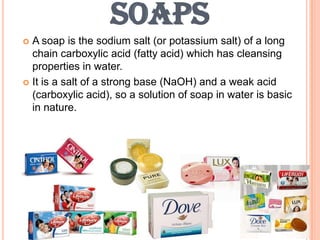
A soap is the sodium salt (or potassium salt) of a long
chain carboxylic acid (fatty acid) which has cleansing
properties in water.
 It is a salt of a strong base (NaOH) and a weak acid
(carboxylic acid), so a solution of soap in water is basic
in nature.

 Sodium Stearate
 Sodium Palmitate
•

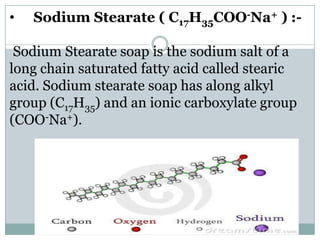
Sodium Stearate ( C17H35COO-Na+ ) :-

Sodium Stearate soap is the sodium salt of a
long chain saturated fatty acid called stearic
acid. Sodium stearate soap has along alkyl
group (C17H35) and an ionic carboxylate group
(COO-Na+).
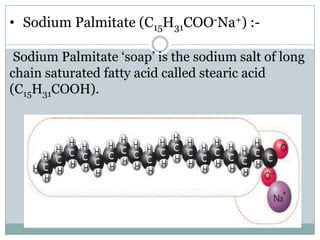
• Sodium Palmitate (C15H31COO-Na+) :Sodium Palmitate ‘soap’ is the sodium salt of long
chain saturated fatty acid called stearic acid
(C15H31COOH).
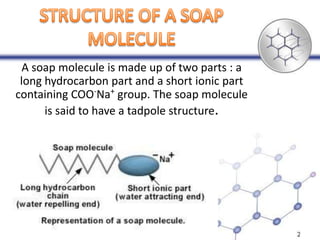
A soap molecule is made up of two parts : a
long hydrocarbon part and a short ionic part
containing COO-Na+ group. The soap molecule
is said to have a tadpole structure.
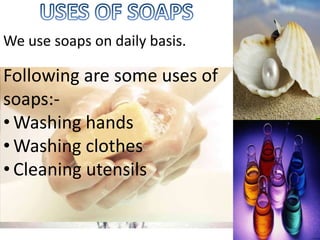
We use soaps on daily basis.

Following are some uses of
soaps:• Washing hands
• Washing clothes
• Cleaning utensils
Hard water contains calcium and magnesium salts. Soap is not
suitable for washing clothes with hard water because of two
reasons : When soap is used for washing clothes with hard water, a large
amount of soap is wasted in reacting with the calcium and
magnesium ions of hard water to form an insoluble precipitate
called scum, before it can be used for the real purpose of
washing .
So a larger amount of soap is needed for washing clothes when
the water is hard.
 The scum (or the curdy precipitate) formed by the action of
hard water on soap, sticks to the clothes being washed and
interferes with the cleaning ability of the additional soap. This
makes the cleaning of clothes difficult.
Detergents are also called ‘soap-less soaps’
because they act like a soap in having the
cleansing properties, they do not contain the
usual ‘soaps’ like sodium stearate, etc.
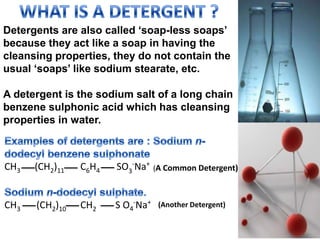
A detergent is the sodium salt of a long chain
benzene sulphonic acid which has cleansing
properties in water.

CH3

(CH2)11

C6H4

SO3-Na+ (A Common Detergent)

CH3

(CH2)10

CH2

S O4-Na+

(Another Detergent)
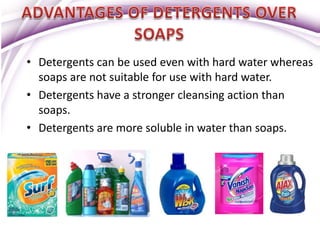
• Detergents can be used even with hard water whereas
soaps are not suitable for use with hard water.
• Detergents have a stronger cleansing action than
soaps.
• Detergents are more soluble in water than soaps.
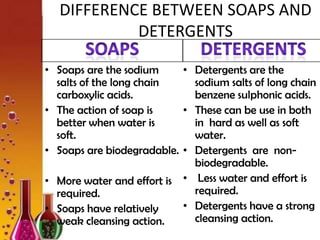
DIFFERENCE BETWEEN SOAPS AND
DETERGENTS
• Soaps are the sodium
• Detergents are the
salts of the long chain
sodium salts of long chain
carboxylic acids.
benzene sulphonic acids.
• The action of soap is
• These can be use in both
better when water is
in hard as well as soft
soft.
water.
• Soaps are biodegradable. • Detergents are nonbiodegradable.
• More water and effort is • Less water and effort is
required.
required.
• Detergents have a strong
• Soaps have relatively
cleansing action.
weak cleansing action.
SUBMITTED TO
MR. SATISH BHARDWAJ

Presentation on soaps and detergents

  • 3.
    Also known asSoaps Also known as Synthetic detergents.
  • 4.
    SOAPS A soap isthe sodium salt (or potassium salt) of a long chain carboxylic acid (fatty acid) which has cleansing properties in water.  It is a salt of a strong base (NaOH) and a weak acid (carboxylic acid), so a solution of soap in water is basic in nature. 
  • 6.
     Sodium Stearate Sodium Palmitate
  • 7.
    • Sodium Stearate (C17H35COO-Na+ ) :- Sodium Stearate soap is the sodium salt of a long chain saturated fatty acid called stearic acid. Sodium stearate soap has along alkyl group (C17H35) and an ionic carboxylate group (COO-Na+).
  • 8.
    • Sodium Palmitate(C15H31COO-Na+) :Sodium Palmitate ‘soap’ is the sodium salt of long chain saturated fatty acid called stearic acid (C15H31COOH).
  • 9.
    A soap moleculeis made up of two parts : a long hydrocarbon part and a short ionic part containing COO-Na+ group. The soap molecule is said to have a tadpole structure.
  • 10.
    We use soapson daily basis. Following are some uses of soaps:• Washing hands • Washing clothes • Cleaning utensils
  • 11.
    Hard water containscalcium and magnesium salts. Soap is not suitable for washing clothes with hard water because of two reasons : When soap is used for washing clothes with hard water, a large amount of soap is wasted in reacting with the calcium and magnesium ions of hard water to form an insoluble precipitate called scum, before it can be used for the real purpose of washing . So a larger amount of soap is needed for washing clothes when the water is hard.  The scum (or the curdy precipitate) formed by the action of hard water on soap, sticks to the clothes being washed and interferes with the cleaning ability of the additional soap. This makes the cleaning of clothes difficult.
  • 12.
    Detergents are alsocalled ‘soap-less soaps’ because they act like a soap in having the cleansing properties, they do not contain the usual ‘soaps’ like sodium stearate, etc. A detergent is the sodium salt of a long chain benzene sulphonic acid which has cleansing properties in water. CH3 (CH2)11 C6H4 SO3-Na+ (A Common Detergent) CH3 (CH2)10 CH2 S O4-Na+ (Another Detergent)
  • 13.
    • Detergents canbe used even with hard water whereas soaps are not suitable for use with hard water. • Detergents have a stronger cleansing action than soaps. • Detergents are more soluble in water than soaps.
  • 14.
    DIFFERENCE BETWEEN SOAPSAND DETERGENTS • Soaps are the sodium • Detergents are the salts of the long chain sodium salts of long chain carboxylic acids. benzene sulphonic acids. • The action of soap is • These can be use in both better when water is in hard as well as soft soft. water. • Soaps are biodegradable. • Detergents are nonbiodegradable. • More water and effort is • Less water and effort is required. required. • Detergents have a strong • Soaps have relatively cleansing action. weak cleansing action.
  • 16.