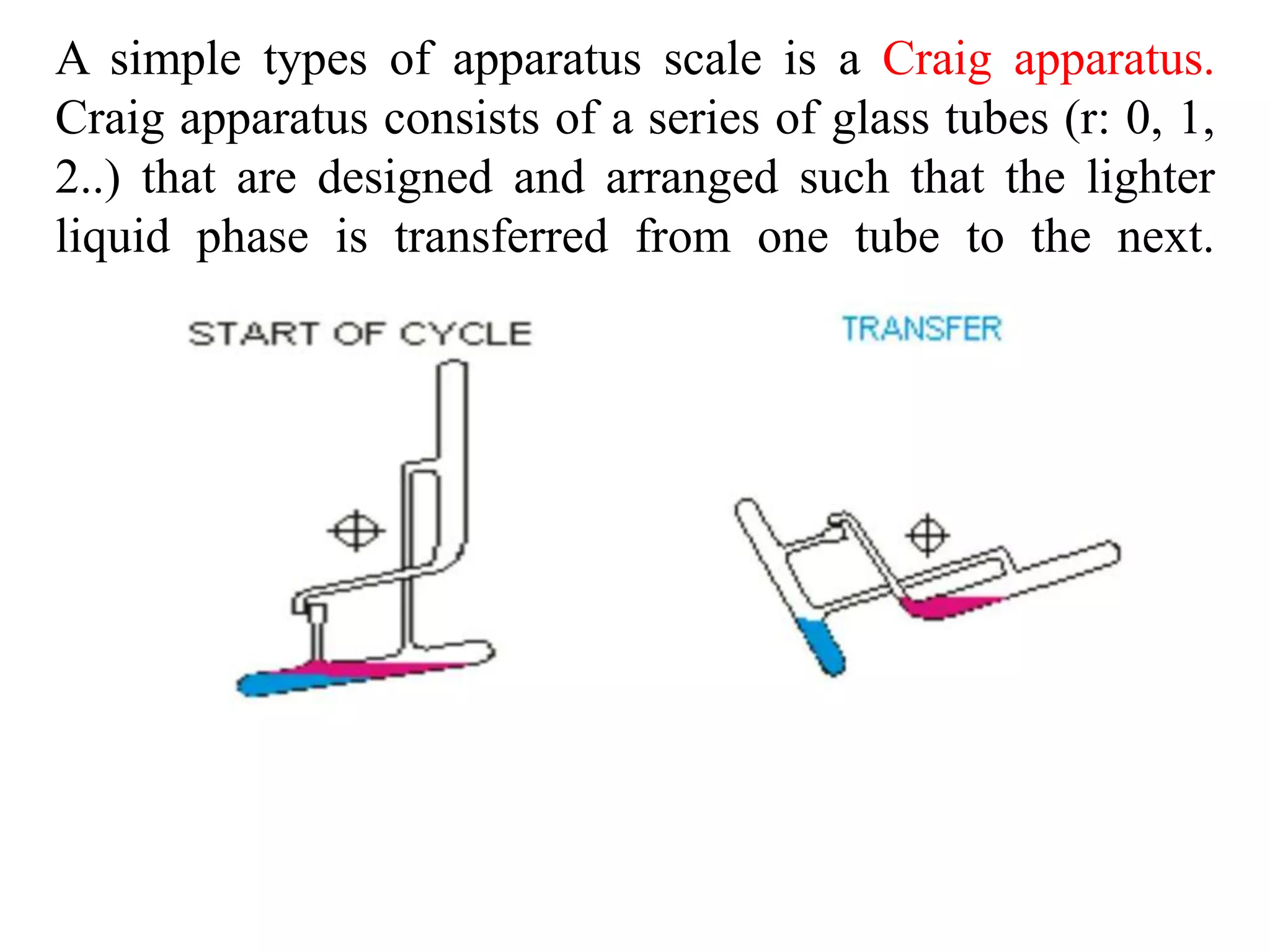
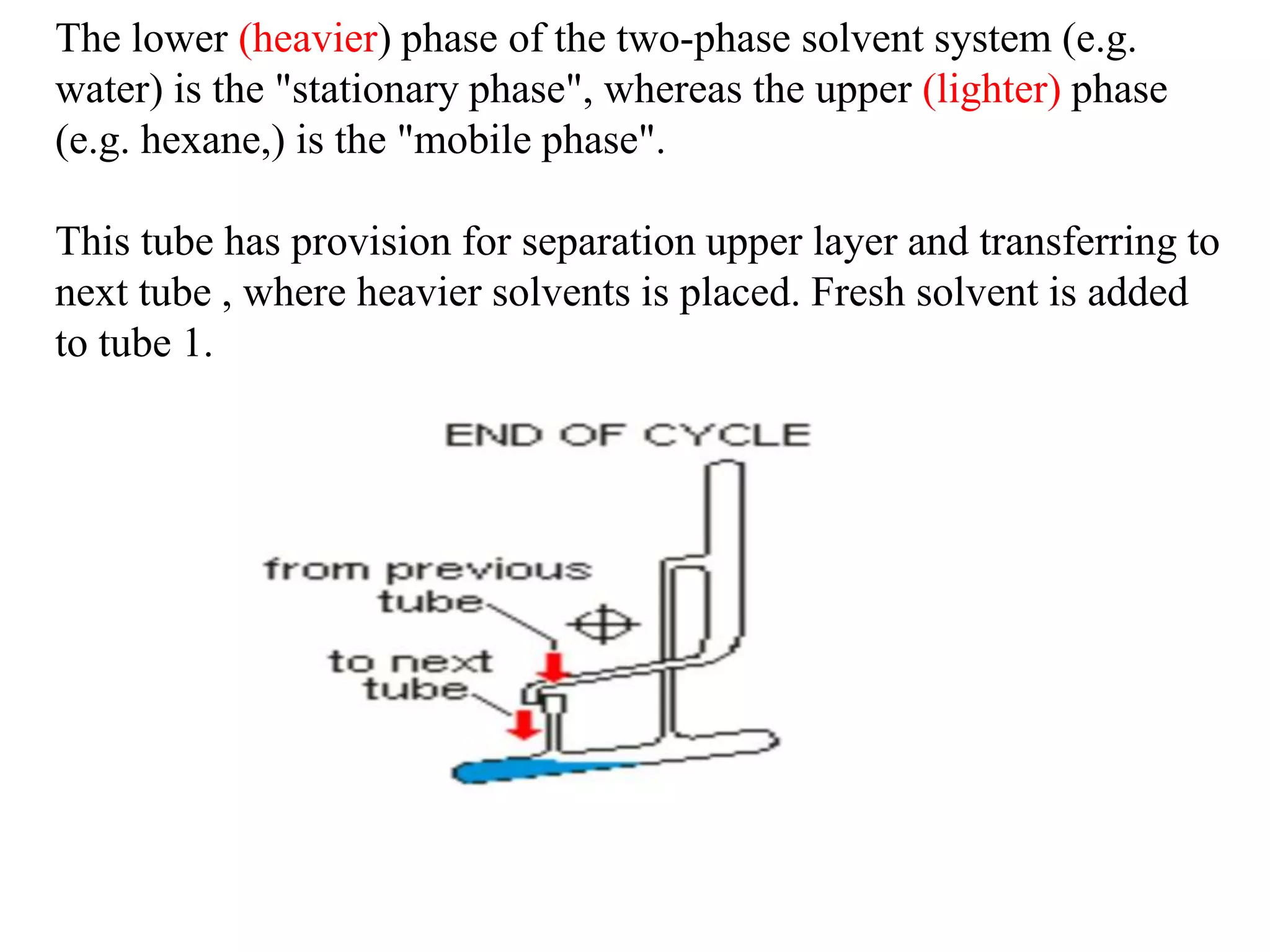
A countercurrent extraction involves separating components with varying solubility between two immiscible liquid phases through multiple stages. A Craig apparatus, consisting of a series of glass tubes arranged so the lighter liquid phase transfers between tubes in opposite flow of the heavier phase, is commonly used. This allows separation of substances with different distribution coefficients through repeated contact of solvents in each stage, ultimately obtaining pure solvent phases.