Soaps and Detergents are used for
washing. It dissolves dirt, but
some dirt will not dissolve in
water. Soaps and detergents help
water to remove dirt.
 Soaps are the sodium and potassium salts of
the long chain carboxylic acid.A soap
molecule consists of a long hydrocarbon
chain (composed of carbons and hydrogens)
with a carboxylic acid on one end which is
ionic bonded to metal ion usually a sodium or
potassium.
 A soap has a large non-ionic hydrocarbon
group and an ionic group COO-Na+.
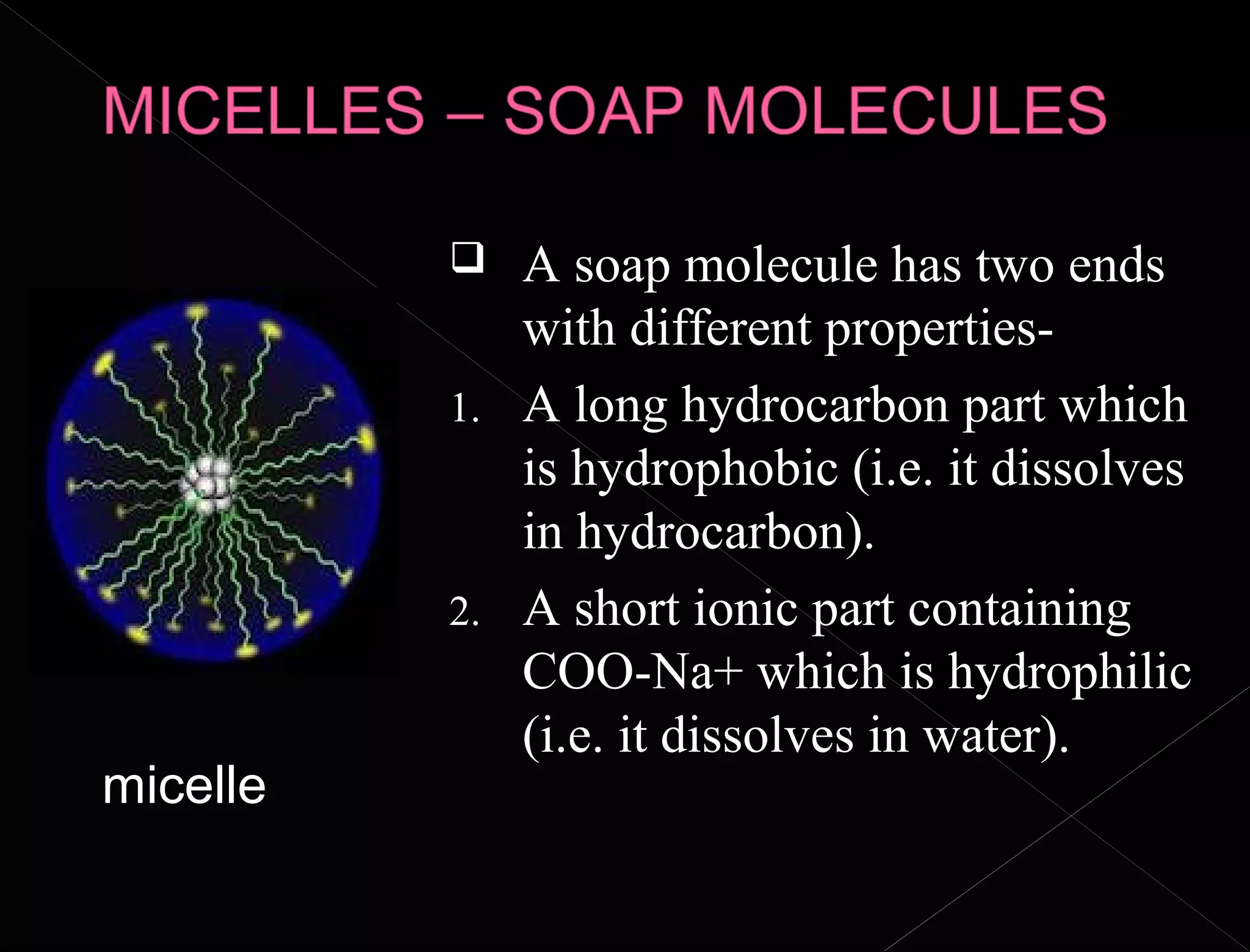
 A soap molecule has two ends
with different properties-
1. A long hydrocarbon part which
is hydrophobic (i.e. it dissolves
in hydrocarbon).
2. A short ionic part containing
COO-Na+ which is hydrophilic
(i.e. it dissolves in water).
micelle
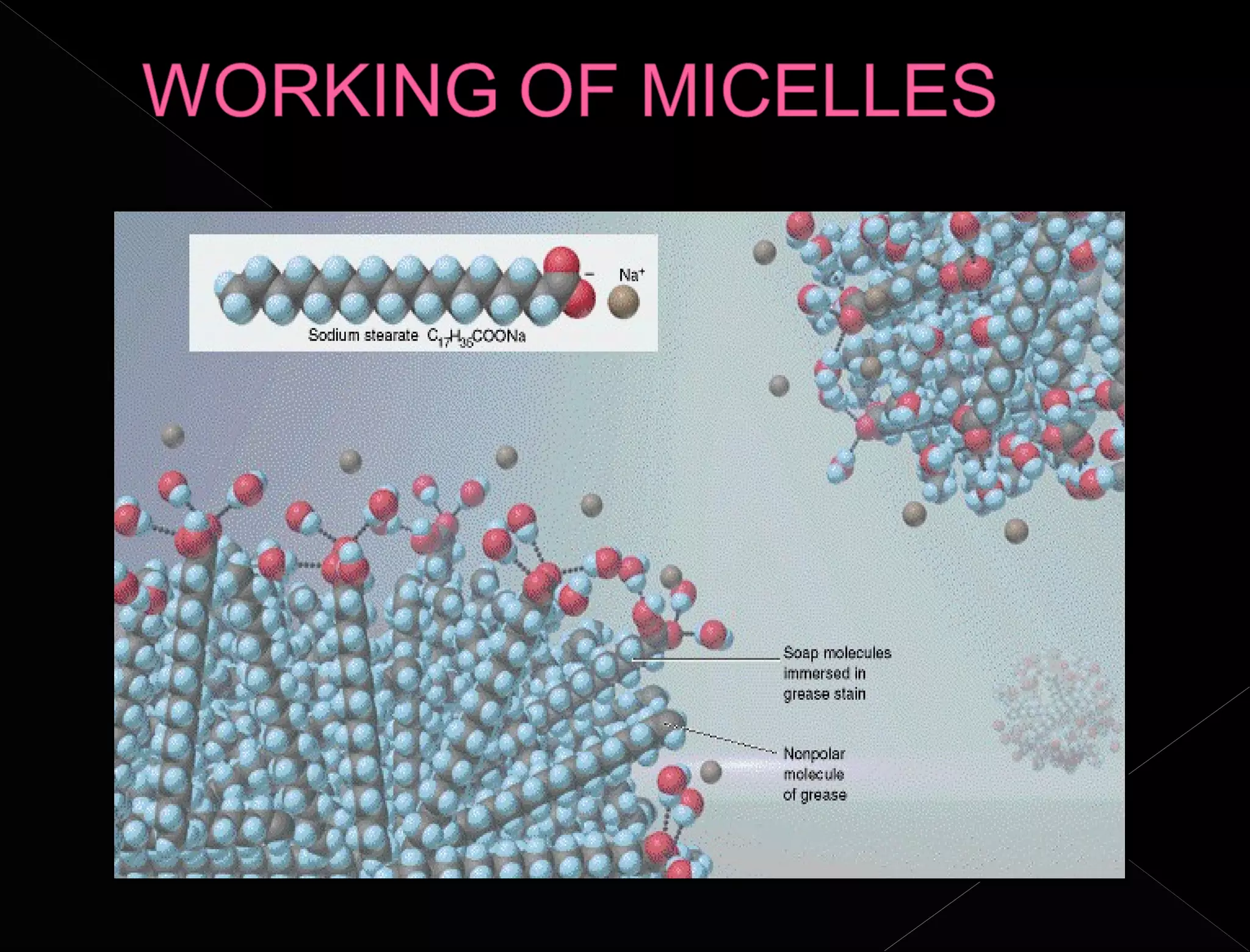
 When a dirty cloth is put is put in water
containing soap than the hydrocarbon
ends of the soap molecule in the
micelle attach to the oil or grease
particles present on the surface of dirty
cloth. In this way the soap micelles
entraps the oily particles by using the
hydrocarbon ends. The ionic ends of
the soap molecules remain attached to
the water when the dirty cloth is
agitated in soap solution. The oily
particles presents on its surface gets
dispersed in the water due to which the
cloth gets clean.
 Detergents are the sodium salts of long
chain benzene sulphuric acids.
 Detergents are primarily surfactants, which
could be produced easily from
petrochemicals. Surfactants lower the
surface tension of water, essentially
making it 'wetter' so that it is less likely to
stick to itself and more likely to interact
with oil and grease.
 The ionic group is in a detergent is
 A detergent is a surfactant or a mixture of surfactants
with cleaning properties in dilute solutions. These
substances are usually alkylbenzenesulfonates, a family
of compounds that are similar to soap but are more
soluble in hard water
 Synthetic detergents have the same type of molecular
structure as soaps i.e. a tadpole like molecule having two
parts at each end i.e., one large non-polar hydrocarbon group
that is water repelling (hydrophobic) and one short ionic
group usually containing the or group that is water
attracting (hydrophilic). Thus the cleansing action is exactly
similar to that of soaps whereby the formation of micelles
followed by emulsification occurs. However, synthetic
detergents can lather well even in hard water. This is because
they are soluble sodium or potassium salts of sulphonic acid
or alkyl hydrogen sulphate and similarly form soluble
calcium or magnesium salts on reacting with the calcium
ions or magnesium ions present in water. This is a major
advantage of the cleansing property of detergents over soap.
DETERGENTS are cleansing agents. They work by
reducing the surface tension of water, enabling it to wet
things more effectively, and by emulsifying grease.
THANK YOU
Done By:
Afnan Zoheb

Soaps and Detergents

  • 2.
    Soaps and Detergentsare used for washing. It dissolves dirt, but some dirt will not dissolve in water. Soaps and detergents help water to remove dirt.
  • 3.
     Soaps arethe sodium and potassium salts of the long chain carboxylic acid.A soap molecule consists of a long hydrocarbon chain (composed of carbons and hydrogens) with a carboxylic acid on one end which is ionic bonded to metal ion usually a sodium or potassium.  A soap has a large non-ionic hydrocarbon group and an ionic group COO-Na+.
  • 4.
     A soapmolecule has two ends with different properties- 1. A long hydrocarbon part which is hydrophobic (i.e. it dissolves in hydrocarbon). 2. A short ionic part containing COO-Na+ which is hydrophilic (i.e. it dissolves in water). micelle
  • 6.
     When adirty cloth is put is put in water containing soap than the hydrocarbon ends of the soap molecule in the micelle attach to the oil or grease particles present on the surface of dirty cloth. In this way the soap micelles entraps the oily particles by using the hydrocarbon ends. The ionic ends of the soap molecules remain attached to the water when the dirty cloth is agitated in soap solution. The oily particles presents on its surface gets dispersed in the water due to which the cloth gets clean.
  • 8.
     Detergents arethe sodium salts of long chain benzene sulphuric acids.  Detergents are primarily surfactants, which could be produced easily from petrochemicals. Surfactants lower the surface tension of water, essentially making it 'wetter' so that it is less likely to stick to itself and more likely to interact with oil and grease.  The ionic group is in a detergent is
  • 9.
     A detergentis a surfactant or a mixture of surfactants with cleaning properties in dilute solutions. These substances are usually alkylbenzenesulfonates, a family of compounds that are similar to soap but are more soluble in hard water
  • 10.
     Synthetic detergentshave the same type of molecular structure as soaps i.e. a tadpole like molecule having two parts at each end i.e., one large non-polar hydrocarbon group that is water repelling (hydrophobic) and one short ionic group usually containing the or group that is water attracting (hydrophilic). Thus the cleansing action is exactly similar to that of soaps whereby the formation of micelles followed by emulsification occurs. However, synthetic detergents can lather well even in hard water. This is because they are soluble sodium or potassium salts of sulphonic acid or alkyl hydrogen sulphate and similarly form soluble calcium or magnesium salts on reacting with the calcium ions or magnesium ions present in water. This is a major advantage of the cleansing property of detergents over soap.
  • 11.
    DETERGENTS are cleansingagents. They work by reducing the surface tension of water, enabling it to wet things more effectively, and by emulsifying grease.
  • 12.