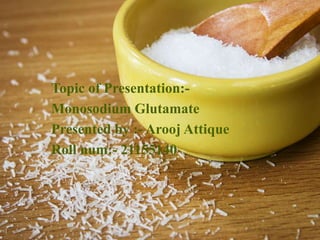
Topic of Presentation:-
Monosodium Glutamate
Presented by :- Arooj Attique
Roll num:- 21155140
Monosodium Glutamate
 Monosodium glutamate (MSG, also known as
sodium glutamate) is the sodium salt of glutamic
acid, one of the most abundant naturally occurring
non-essential amino acids. Monosodium
glutamate is found naturally in tomatoes, cheese
and other foods.MSG is used in the food industry
as a flavor enhancer with an umami taste that
intensifies the meaty, savory flavor of food, as
naturally occurring glutamate does in foods such
as stews and meat soups.
Monosodium Glutamate
Structure
Properties
Chemical Formula C5H8NO4Na
Molar mass 169.111 g/mol
Appearance White crystalline powder
Melting Point 232 °C (450 °F; 505 K)
Solubility of water 740 g/L
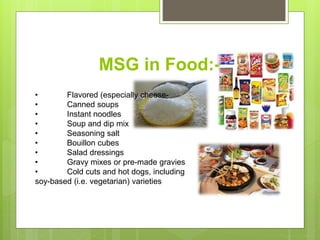
MSG in Food:-
• Flavored (especially cheese-
• Canned soups
• Instant noodles
• Soup and dip mix
• Seasoning salt
• Bouillon cubes
• Salad dressings
• Gravy mixes or pre-made gravies
• Cold cuts and hot dogs, including
soy-based (i.e. vegetarian) varieties
 Glutamate functions as a neurotransmitter in
the brain. It is an "excitatory" neurotransmitter,
meaning that it excites nerve cells in order to
relay its signal. Some have claimed that MSG
leads to excessive glutamate in the brain, and
excessive stimulation of nerve cells. For this
reason, MSG has been referred to as an
excitotoxin.
 In the year 1969, injecting large doses of
MSG into newborn mice was shown to cause
harmful neurological effects. This paper
ignited a fear of MSG, which remains to this
day.
Why Do People Think That It Is
Harmful
MSG Side Effects:-
 Some people find that consuming MSG, especially
in large quantities, can trigger various side effects
and symptoms, including
 Headaches
 Nausea
 Dizziness
 Rapid or irregular heartbeat
 Flushing or excessive sweating
 Skin rash
 Intense thirst
 Ringing ears
 Tingling in the mouth
Advantages:-
 MSG’s enhancement of flavor
encourages appetite, an
advantage in medical
situations where people lack
the desire to eat, through age
or illness, and need to be
encouraged to take food.
Another benefit is as a
substitute for the extra salt
often added to many
processed foods. Salt has
traditionally been used to
enhance the taste of food, but
is proved to have health risks.
Industry
 MSG has many business advantages for the
food industry, including its cheapness and
easy availability. But its biggest advantage is
that it encourages people to buy more of the
industry’s products.
Msg

Msg

  • 1.
    Topic of Presentation:- MonosodiumGlutamate Presented by :- Arooj Attique Roll num:- 21155140
  • 2.
    Monosodium Glutamate  Monosodiumglutamate (MSG, also known as sodium glutamate) is the sodium salt of glutamic acid, one of the most abundant naturally occurring non-essential amino acids. Monosodium glutamate is found naturally in tomatoes, cheese and other foods.MSG is used in the food industry as a flavor enhancer with an umami taste that intensifies the meaty, savory flavor of food, as naturally occurring glutamate does in foods such as stews and meat soups.
  • 3.
  • 4.
    Properties Chemical Formula C5H8NO4Na Molarmass 169.111 g/mol Appearance White crystalline powder Melting Point 232 °C (450 °F; 505 K) Solubility of water 740 g/L
  • 5.
    MSG in Food:- •Flavored (especially cheese- • Canned soups • Instant noodles • Soup and dip mix • Seasoning salt • Bouillon cubes • Salad dressings • Gravy mixes or pre-made gravies • Cold cuts and hot dogs, including soy-based (i.e. vegetarian) varieties
  • 6.
     Glutamate functionsas a neurotransmitter in the brain. It is an "excitatory" neurotransmitter, meaning that it excites nerve cells in order to relay its signal. Some have claimed that MSG leads to excessive glutamate in the brain, and excessive stimulation of nerve cells. For this reason, MSG has been referred to as an excitotoxin.  In the year 1969, injecting large doses of MSG into newborn mice was shown to cause harmful neurological effects. This paper ignited a fear of MSG, which remains to this day. Why Do People Think That It Is Harmful
  • 7.
    MSG Side Effects:- Some people find that consuming MSG, especially in large quantities, can trigger various side effects and symptoms, including  Headaches  Nausea  Dizziness  Rapid or irregular heartbeat  Flushing or excessive sweating  Skin rash  Intense thirst  Ringing ears  Tingling in the mouth
  • 8.
    Advantages:-  MSG’s enhancementof flavor encourages appetite, an advantage in medical situations where people lack the desire to eat, through age or illness, and need to be encouraged to take food. Another benefit is as a substitute for the extra salt often added to many processed foods. Salt has traditionally been used to enhance the taste of food, but is proved to have health risks.
  • 9.
    Industry  MSG hasmany business advantages for the food industry, including its cheapness and easy availability. But its biggest advantage is that it encourages people to buy more of the industry’s products.