 Preservation
 Improving appeal
 Maintain and enhance nutritional quality
 Categories
 Food preservatives
 Artificial sweeteners
 Antioxidants
 Flavour enhancers
 Food colours
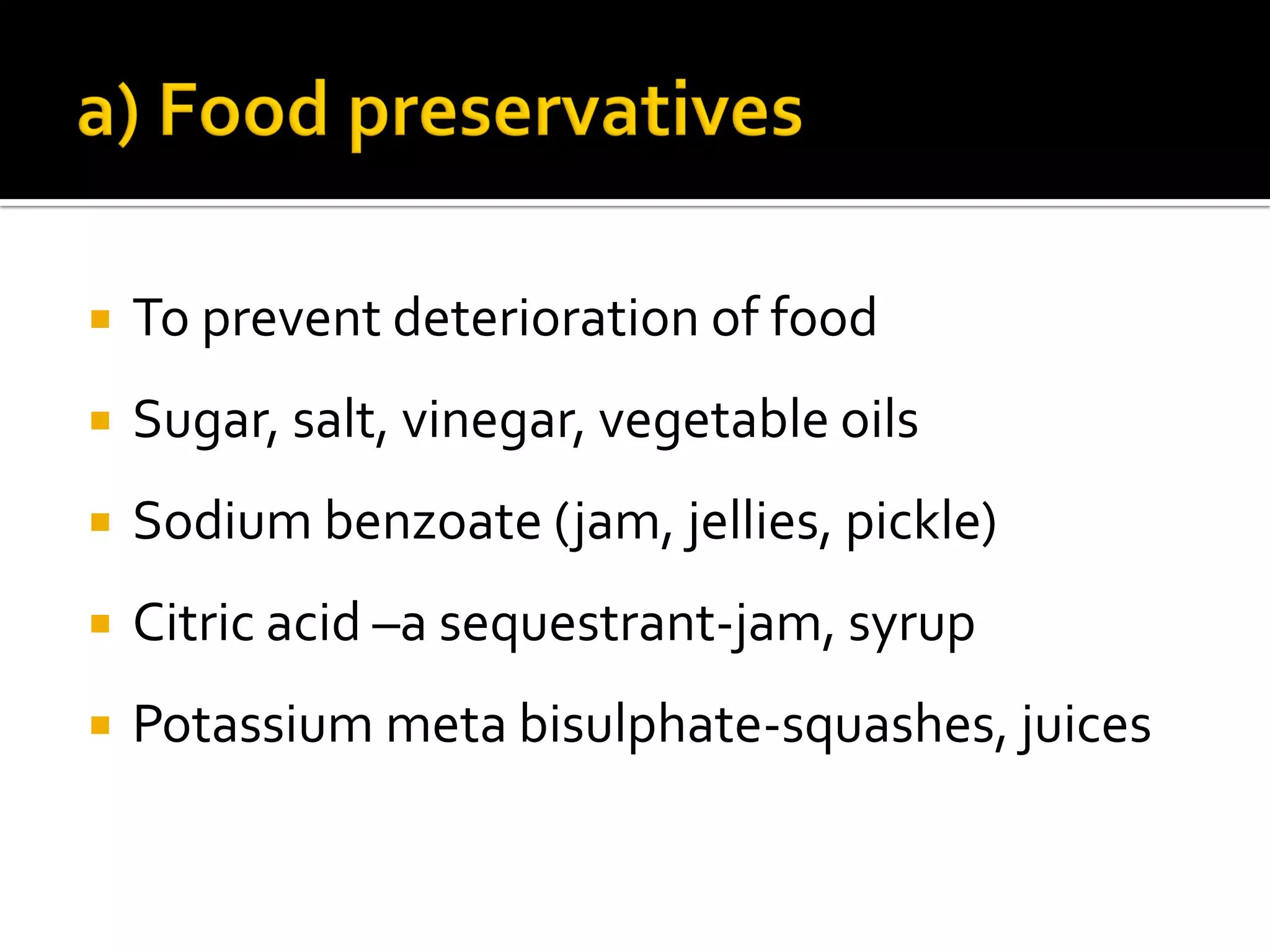
 To prevent deterioration of food
 Sugar, salt, vinegar, vegetable oils
 Sodium benzoate (jam, jellies, pickle)
 Citric acid –a sequestrant-jam, syrup
 Potassium meta bisulphate-squashes, juices
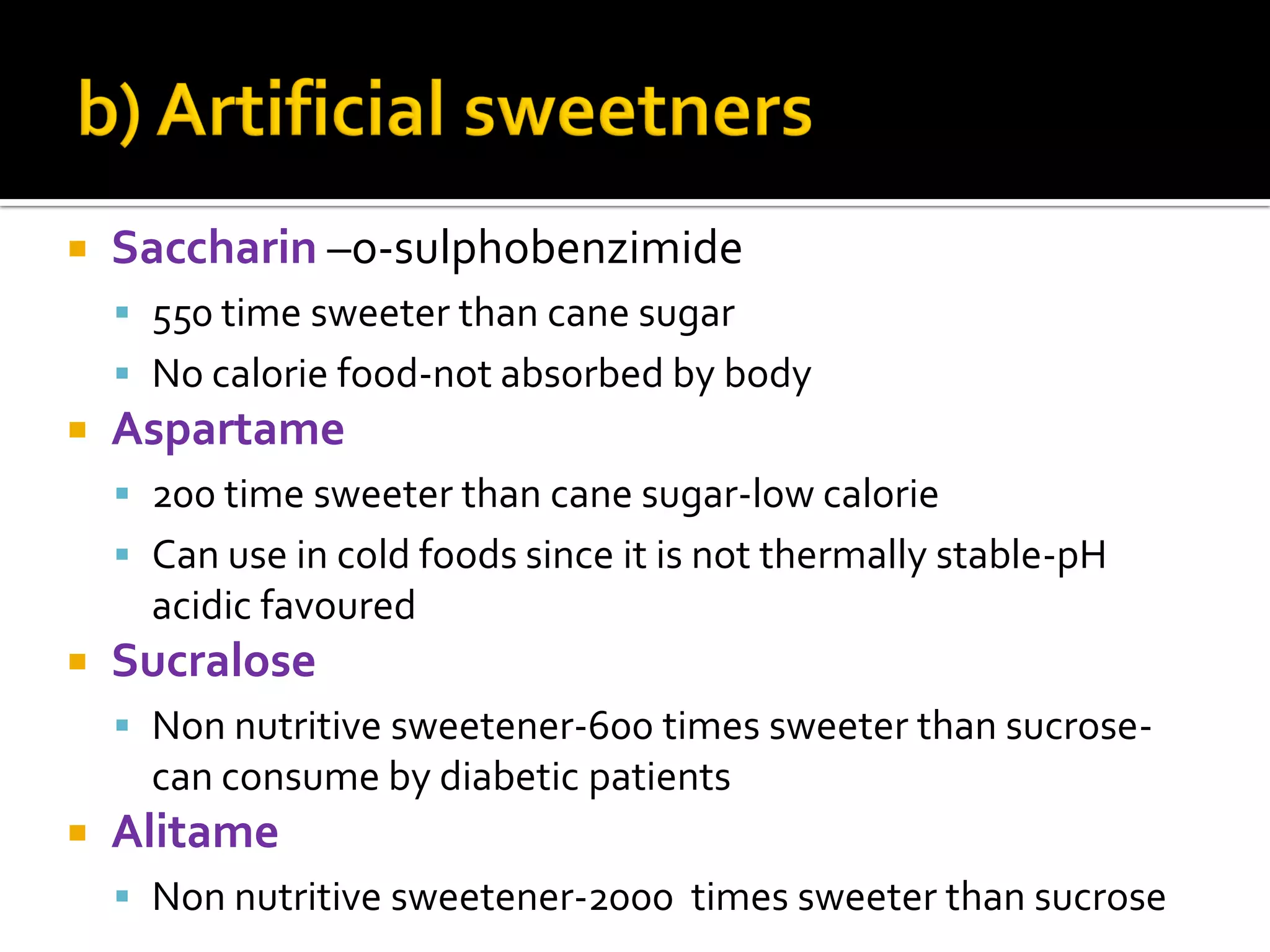
 Saccharin –o-sulphobenzimide
 550 time sweeter than cane sugar
 No calorie food-not absorbed by body
 Aspartame
 200 time sweeter than cane sugar-low calorie
 Can use in cold foods since it is not thermally stable-pH
acidic favoured
 Sucralose
 Non nutritive sweetener-600 times sweeter than sucrose-
can consume by diabetic patients
 Alitame
 Non nutritive sweetener-2000 times sweeter than sucrose
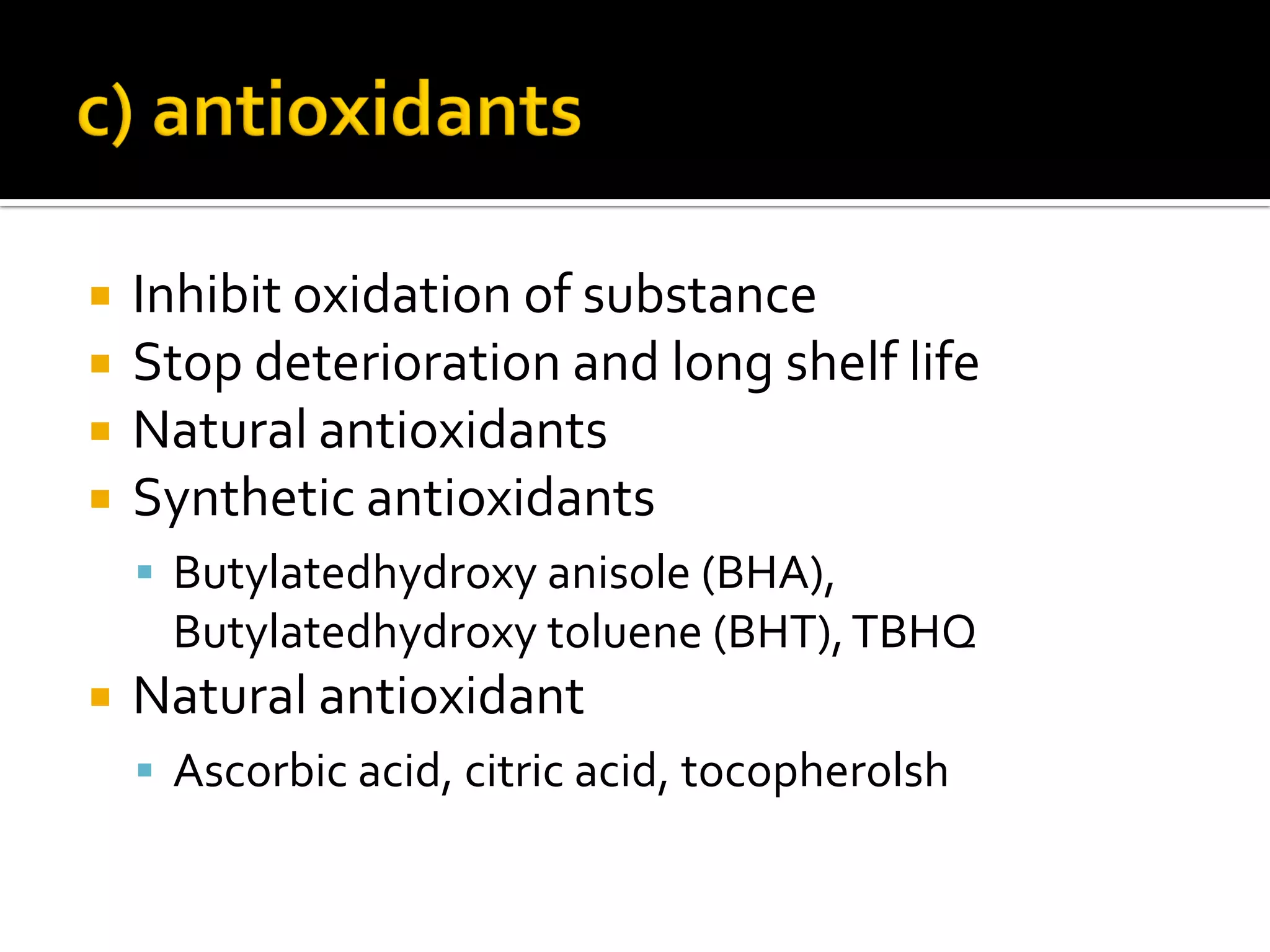
 Inhibit oxidation of substance
 Stop deterioration and long shelf life
 Natural antioxidants
 Synthetic antioxidants
 Butylatedhydroxy anisole (BHA),
Butylatedhydroxy toluene (BHT),TBHQ
 Natural antioxidant
 Ascorbic acid, citric acid, tocopherolsh
 Amplify flavour
 Disodium-5-iosinate, inosinic acid, inosine
monophosphate etc.
 Ajinomoto-MSG
 Permitted colours
 Natural
▪ Caramel-yellow, chlorophyll-green, beta carotene-
orange,saffrone-orange, curcumin-yellow brown
 Synthetic
▪ Fast green FCF, indigo carmine, brilliant blue, tartazine,
sunset yellow, carmoisine
 Non-permitted colours
 Banned
 Rhodamine B, orange II, metanil yellow, malachite
green, auramine, sudan dyes
 Fast food-prepared and served quickly
 Junk food-commercial food with poor
nutritional value(salted snack food, fried
food, carbonated drinks)
 Adverse health effects
 May cause gastric problems, allergy, cardio
vascular problems, obesity, nutritional deficiency
diseases etc
 May cause addiction
 Attention deficit hyperactivity disorder in children
 Ethylene/acetylene
 Methods
 Keep ripened and unripened fruits together in an air
tight container (no uniform ripening)
 Fruits kept in lined wooden crates and smoked-
banana, mango
 Ethephon (2-chloroethyl phosphoric acid) either
spraying or keeping in an air tight room.
 In large scale, fruits exposed to optimum rate of
ethylene in gaseous form
 Use calcium carbide
 Milk
 A complete food
 Vitamins, minerals
▪ Vit B2,B12, calcium, iodine, phosphorous, K
 Macronutrients
▪ Proteins (cow-3.5% protein, caesin and whey)
▪ Carbohydrates-lactose
▪ Fat-whole (4%), semi skimmed (1.6 %), skimmed (.1 %)
 Coconut water
 Contain carbohydrate, vitamins, minerals,
electrolytes, antioxidants, amino acids, cytikinins,
enzymes
 Low calorie, fat free, cholesterol free
 Health benefits
▪ Good for electrolyte deficiency, reduce BP, remove free
radicals from body, diuretic-remove toxins, can provide
large number of vitamins, enzymes etc
 Neera
 Sweet toddy-natural non alcoholic
beverage-high nutrition content
 Benefits
▪ 16% carbohydrates, 16 amino acids, vitamins,
Fe, P etc present
▪ Good for digestion, no side effects
Thank youThank you

6 chemicals in food

  • 2.
     Preservation  Improvingappeal  Maintain and enhance nutritional quality  Categories  Food preservatives  Artificial sweeteners  Antioxidants  Flavour enhancers  Food colours
  • 3.
     To preventdeterioration of food  Sugar, salt, vinegar, vegetable oils  Sodium benzoate (jam, jellies, pickle)  Citric acid –a sequestrant-jam, syrup  Potassium meta bisulphate-squashes, juices
  • 4.
     Saccharin –o-sulphobenzimide 550 time sweeter than cane sugar  No calorie food-not absorbed by body  Aspartame  200 time sweeter than cane sugar-low calorie  Can use in cold foods since it is not thermally stable-pH acidic favoured  Sucralose  Non nutritive sweetener-600 times sweeter than sucrose- can consume by diabetic patients  Alitame  Non nutritive sweetener-2000 times sweeter than sucrose
  • 5.
     Inhibit oxidationof substance  Stop deterioration and long shelf life  Natural antioxidants  Synthetic antioxidants  Butylatedhydroxy anisole (BHA), Butylatedhydroxy toluene (BHT),TBHQ  Natural antioxidant  Ascorbic acid, citric acid, tocopherolsh
  • 6.
     Amplify flavour Disodium-5-iosinate, inosinic acid, inosine monophosphate etc.  Ajinomoto-MSG
  • 7.
     Permitted colours Natural ▪ Caramel-yellow, chlorophyll-green, beta carotene- orange,saffrone-orange, curcumin-yellow brown  Synthetic ▪ Fast green FCF, indigo carmine, brilliant blue, tartazine, sunset yellow, carmoisine  Non-permitted colours  Banned  Rhodamine B, orange II, metanil yellow, malachite green, auramine, sudan dyes
  • 8.
     Fast food-preparedand served quickly  Junk food-commercial food with poor nutritional value(salted snack food, fried food, carbonated drinks)  Adverse health effects  May cause gastric problems, allergy, cardio vascular problems, obesity, nutritional deficiency diseases etc  May cause addiction  Attention deficit hyperactivity disorder in children
  • 9.
     Ethylene/acetylene  Methods Keep ripened and unripened fruits together in an air tight container (no uniform ripening)  Fruits kept in lined wooden crates and smoked- banana, mango  Ethephon (2-chloroethyl phosphoric acid) either spraying or keeping in an air tight room.  In large scale, fruits exposed to optimum rate of ethylene in gaseous form  Use calcium carbide
  • 10.
     Milk  Acomplete food  Vitamins, minerals ▪ Vit B2,B12, calcium, iodine, phosphorous, K  Macronutrients ▪ Proteins (cow-3.5% protein, caesin and whey) ▪ Carbohydrates-lactose ▪ Fat-whole (4%), semi skimmed (1.6 %), skimmed (.1 %)
  • 11.
     Coconut water Contain carbohydrate, vitamins, minerals, electrolytes, antioxidants, amino acids, cytikinins, enzymes  Low calorie, fat free, cholesterol free  Health benefits ▪ Good for electrolyte deficiency, reduce BP, remove free radicals from body, diuretic-remove toxins, can provide large number of vitamins, enzymes etc
  • 12.
     Neera  Sweettoddy-natural non alcoholic beverage-high nutrition content  Benefits ▪ 16% carbohydrates, 16 amino acids, vitamins, Fe, P etc present ▪ Good for digestion, no side effects
  • 13.