Downloaded 98 times
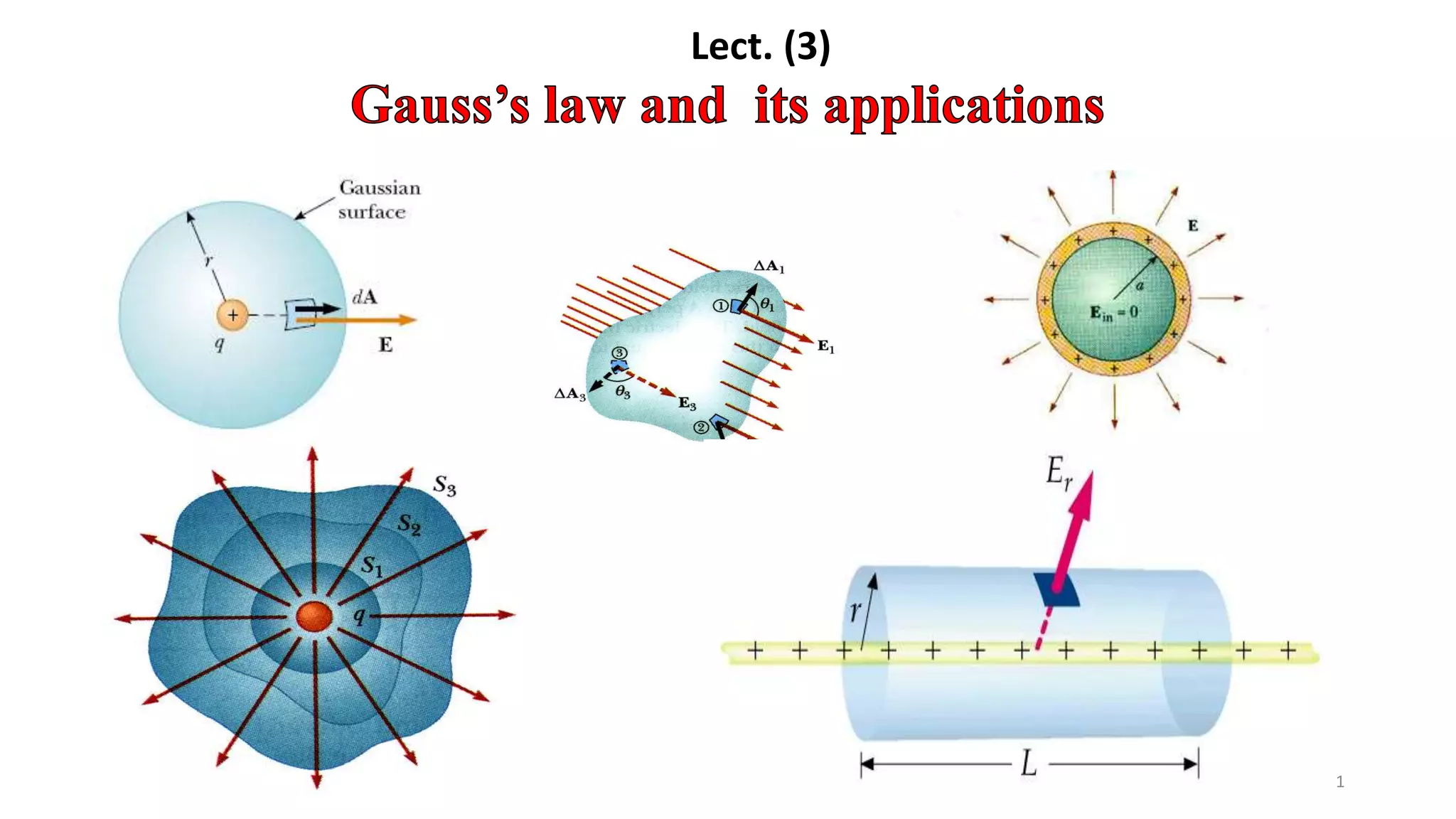
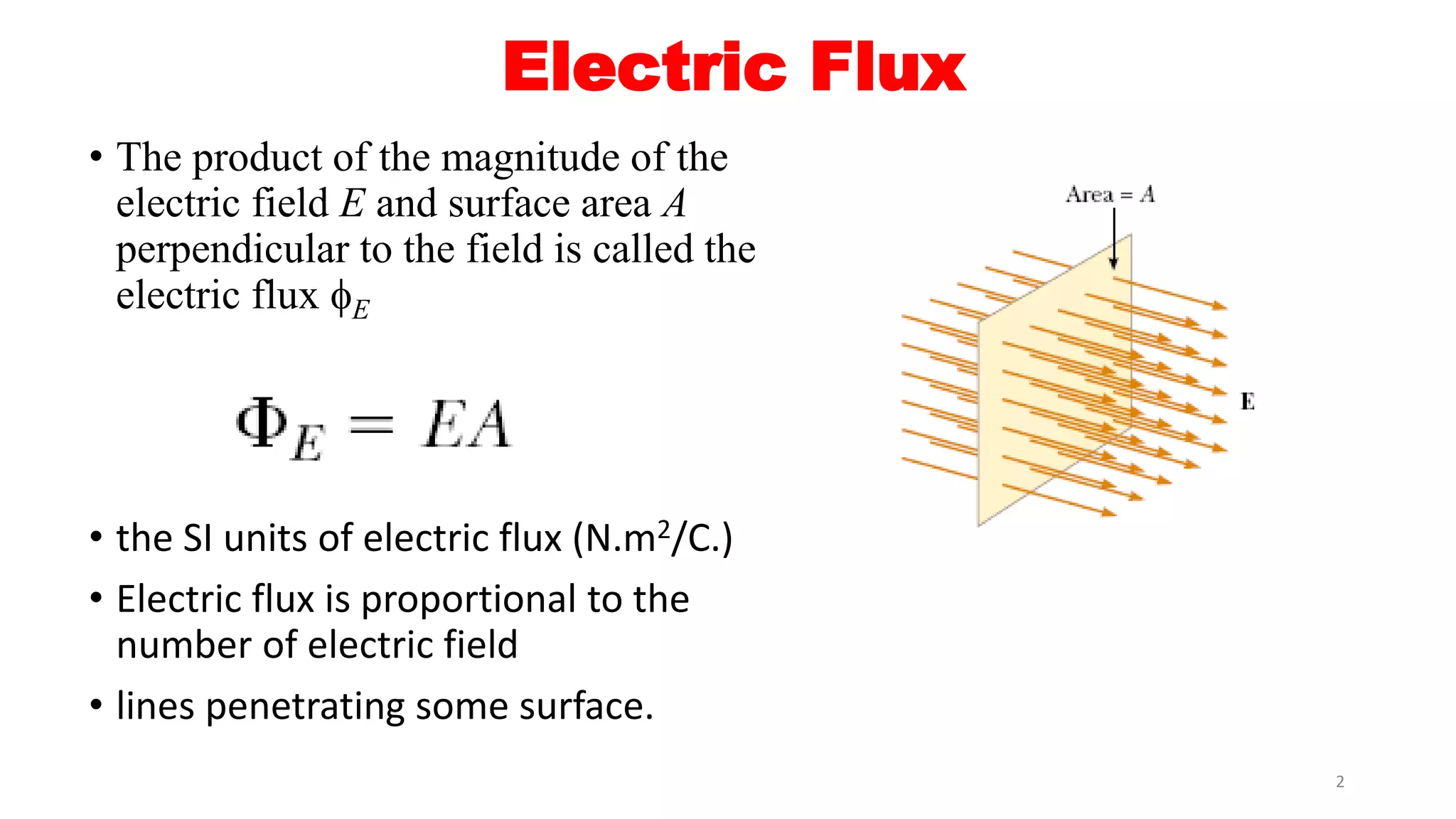
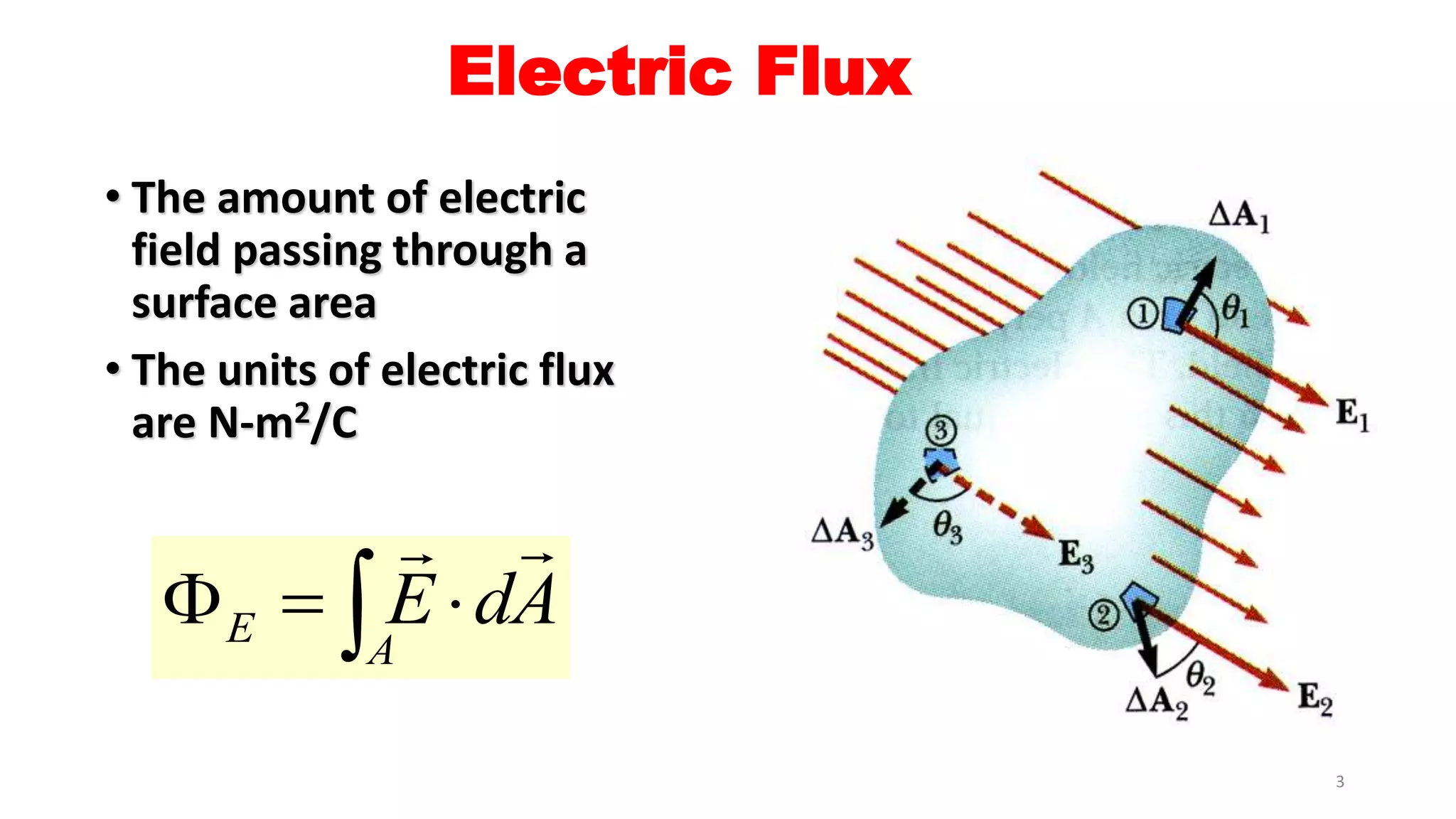
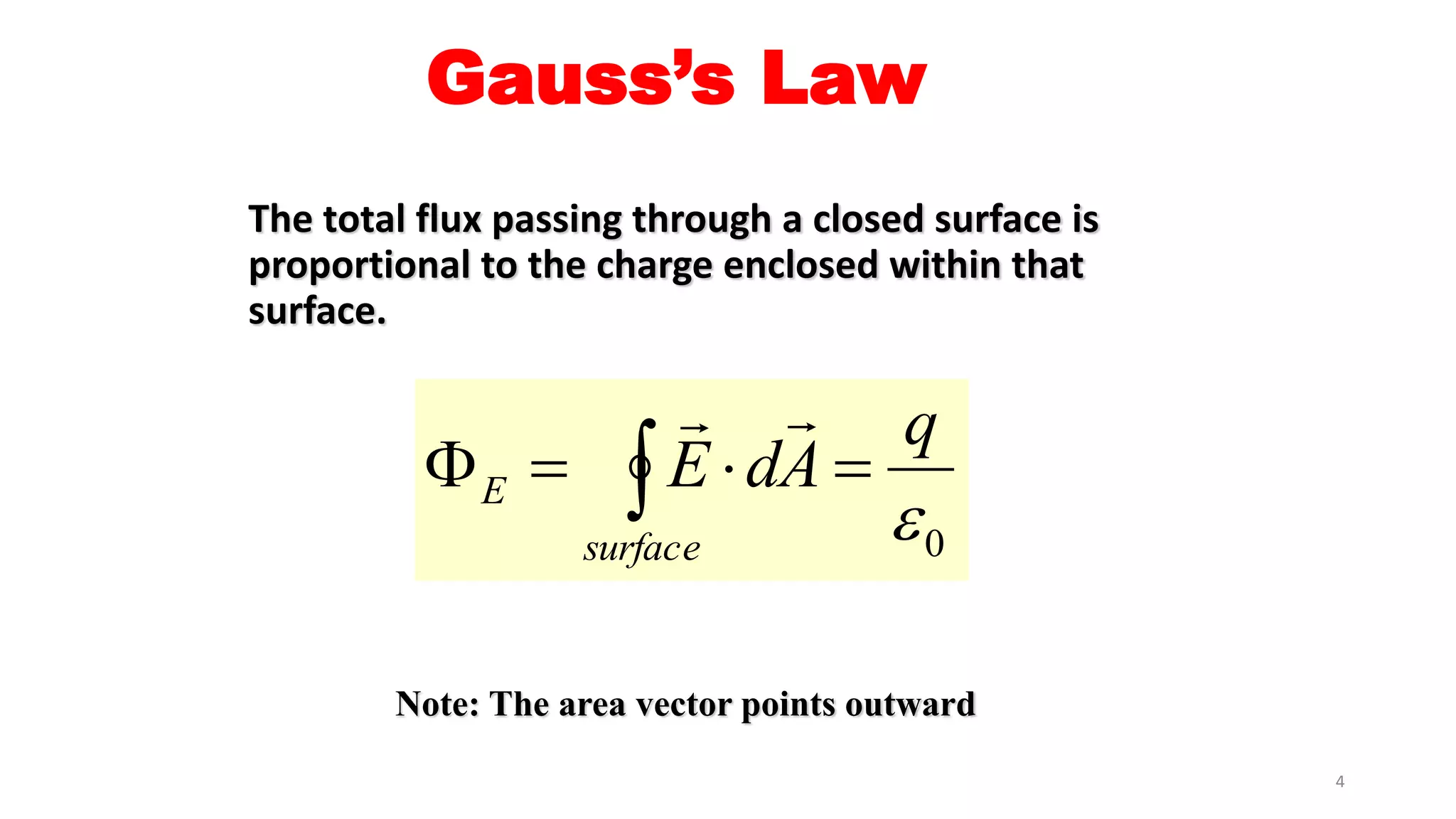
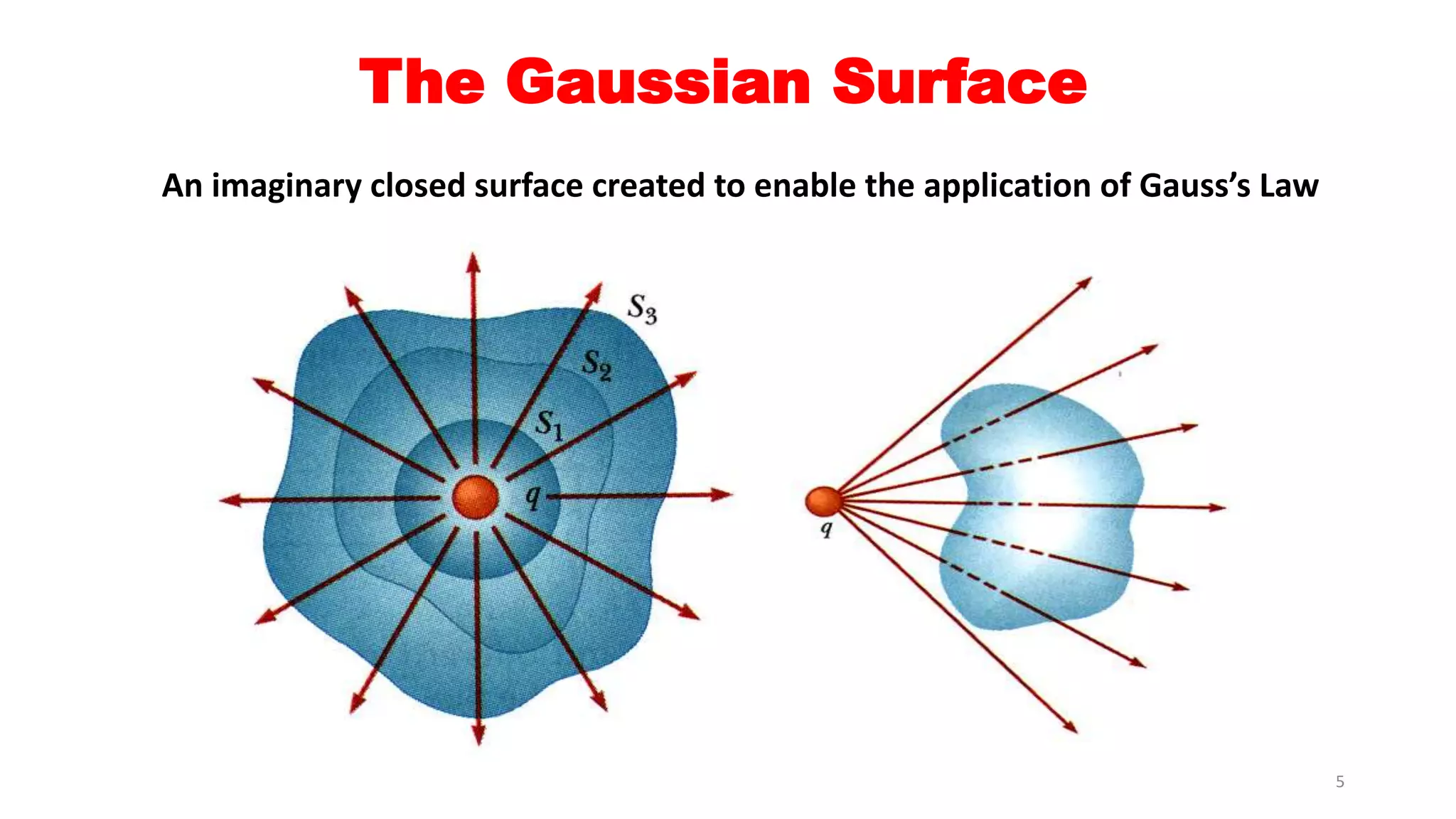
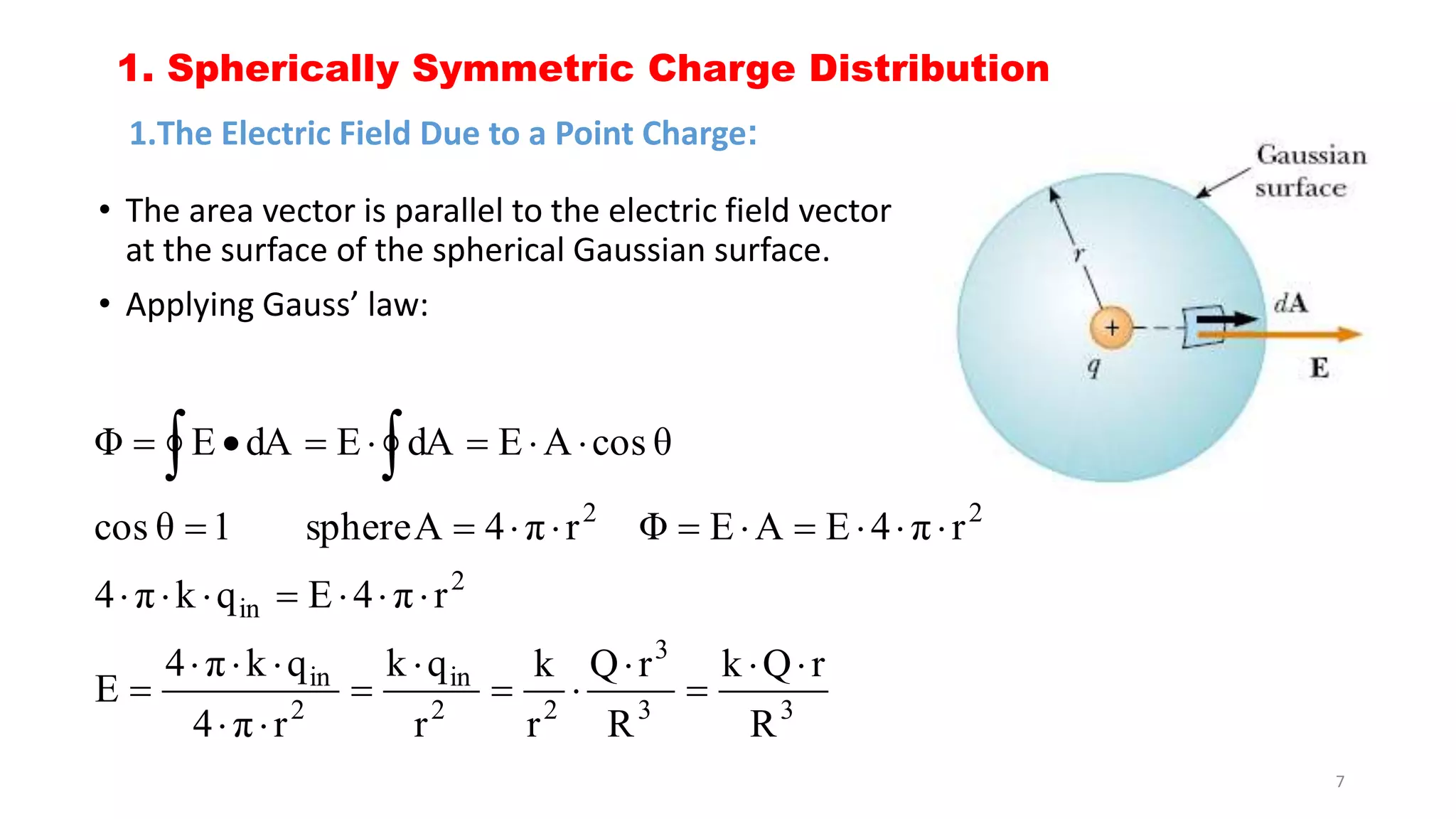
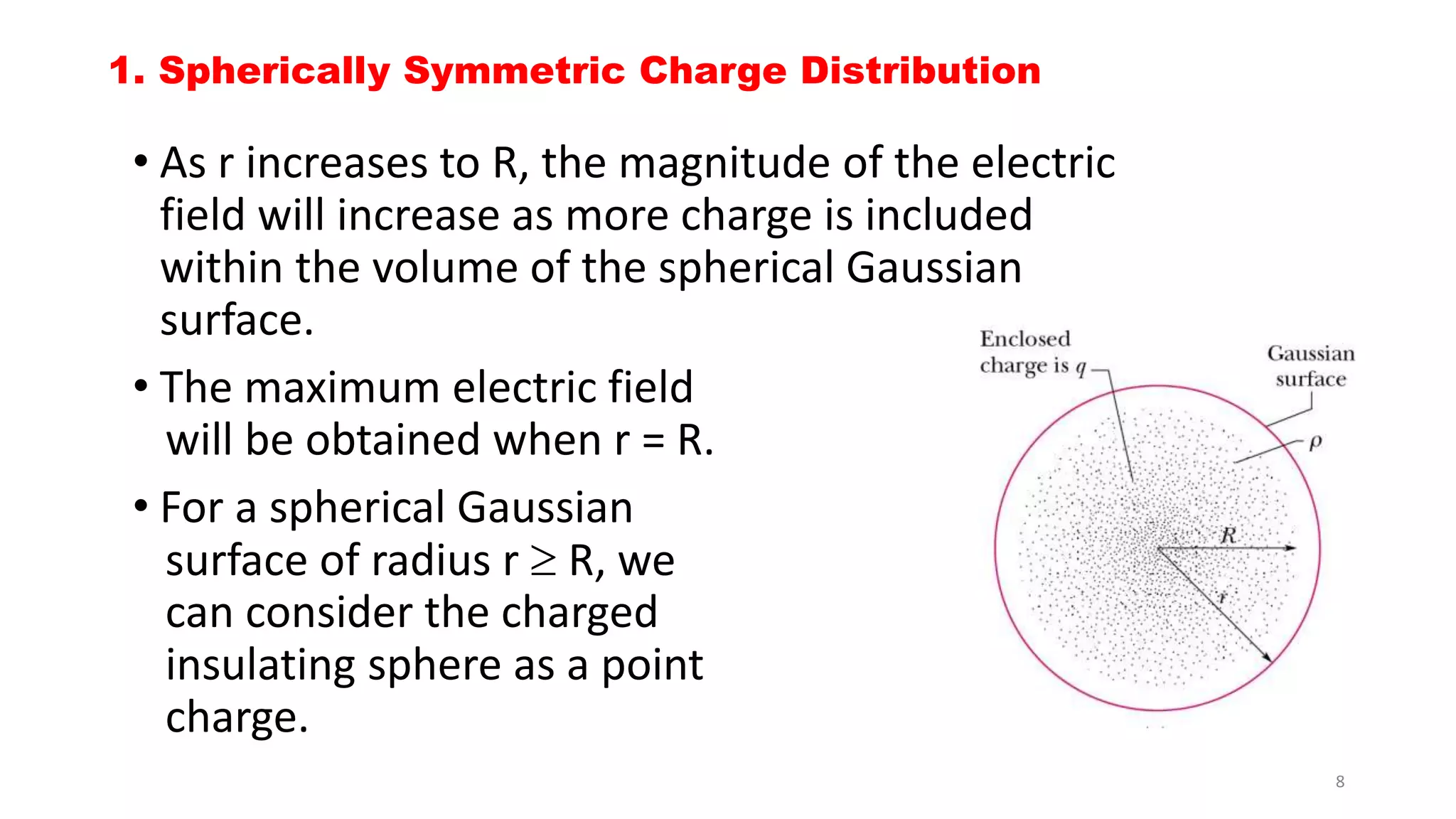
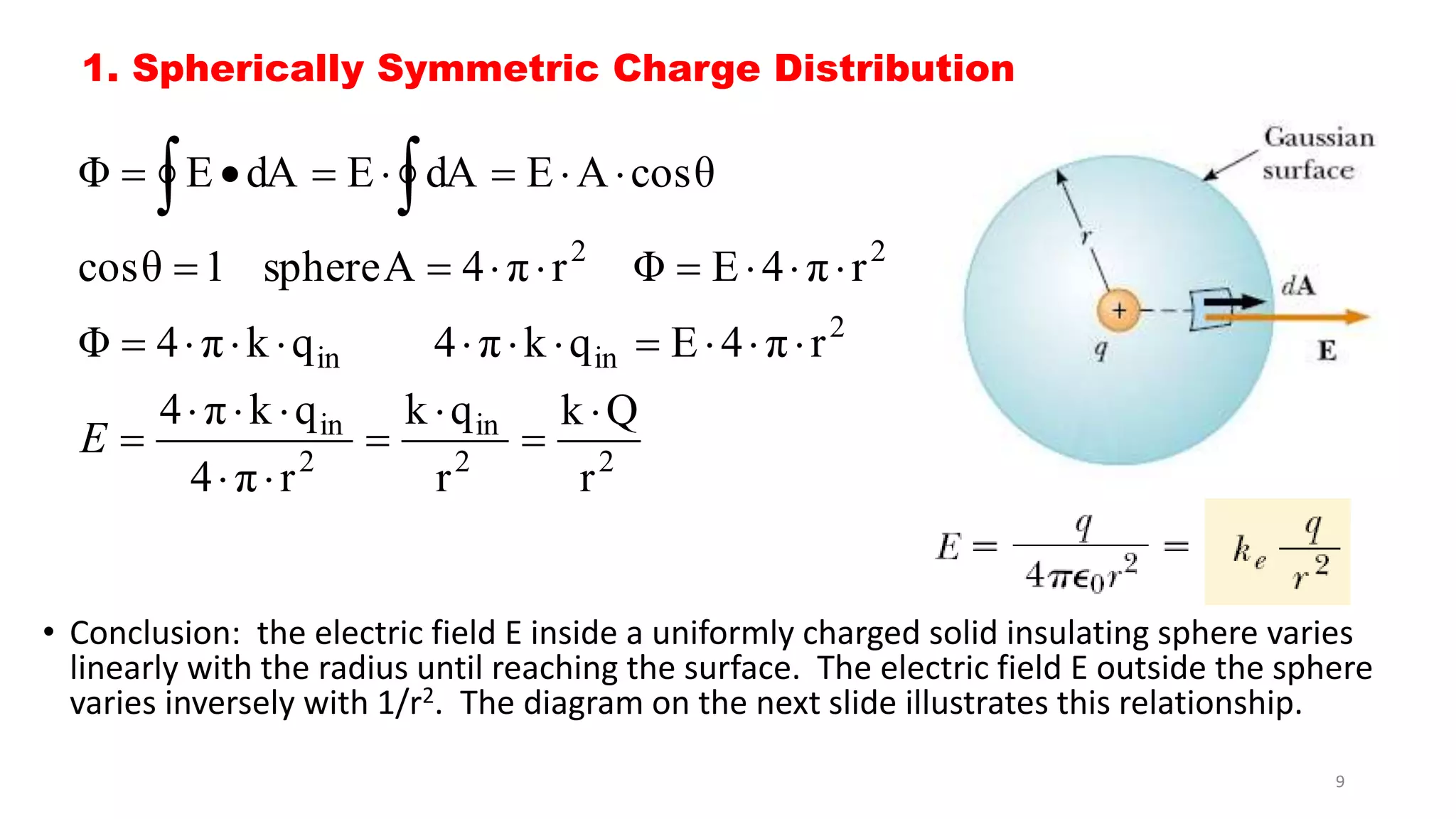
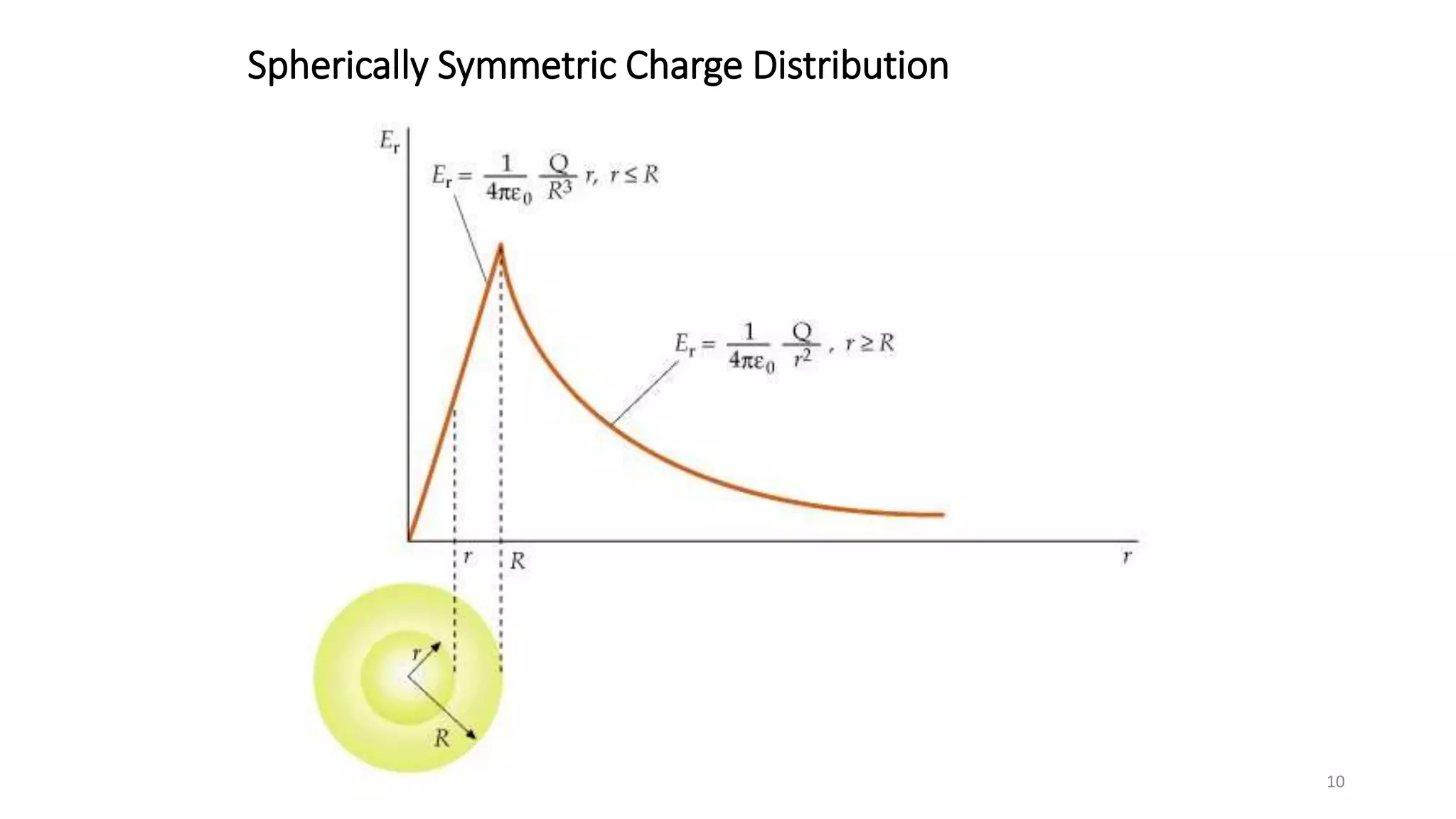
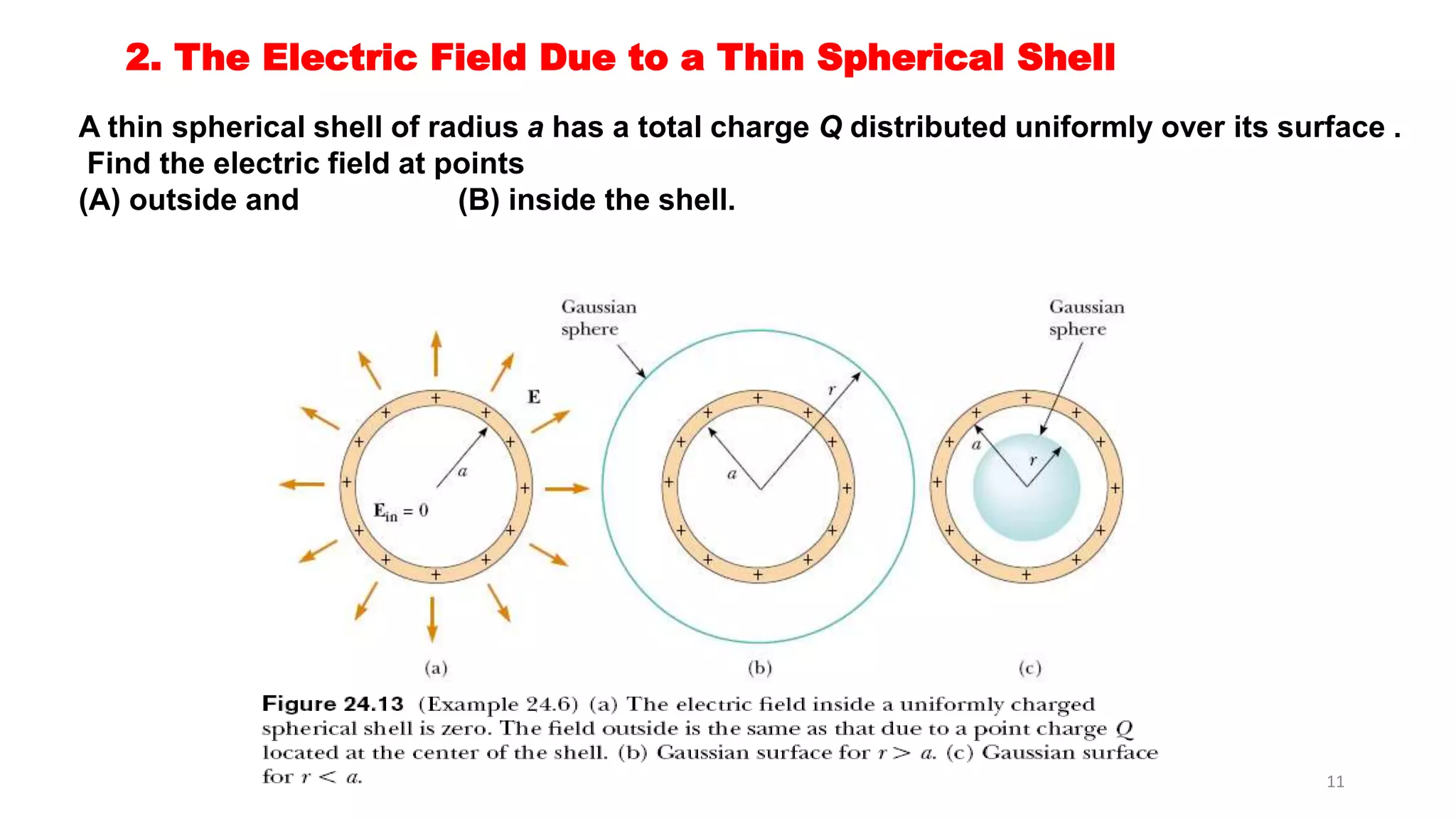
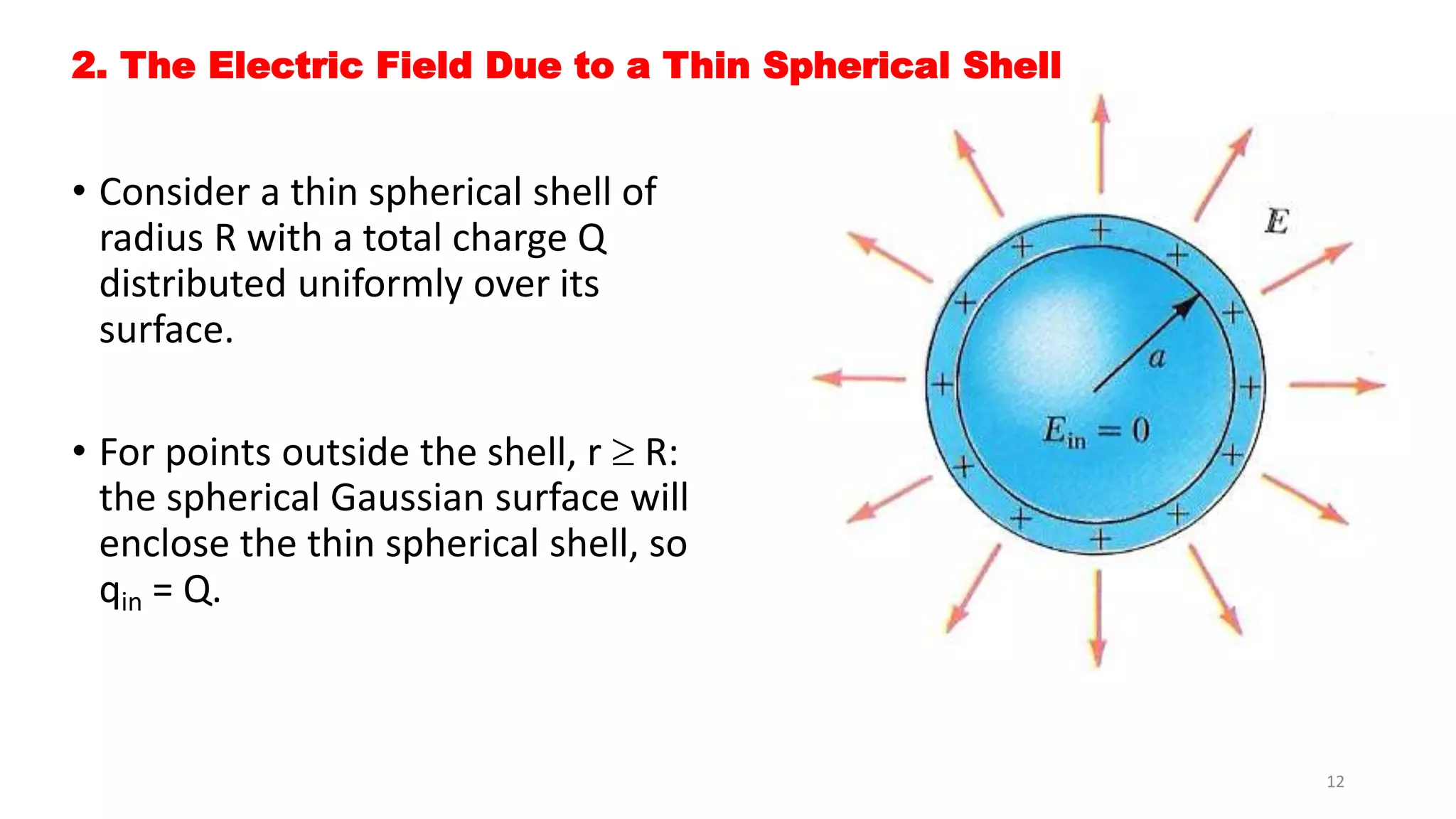
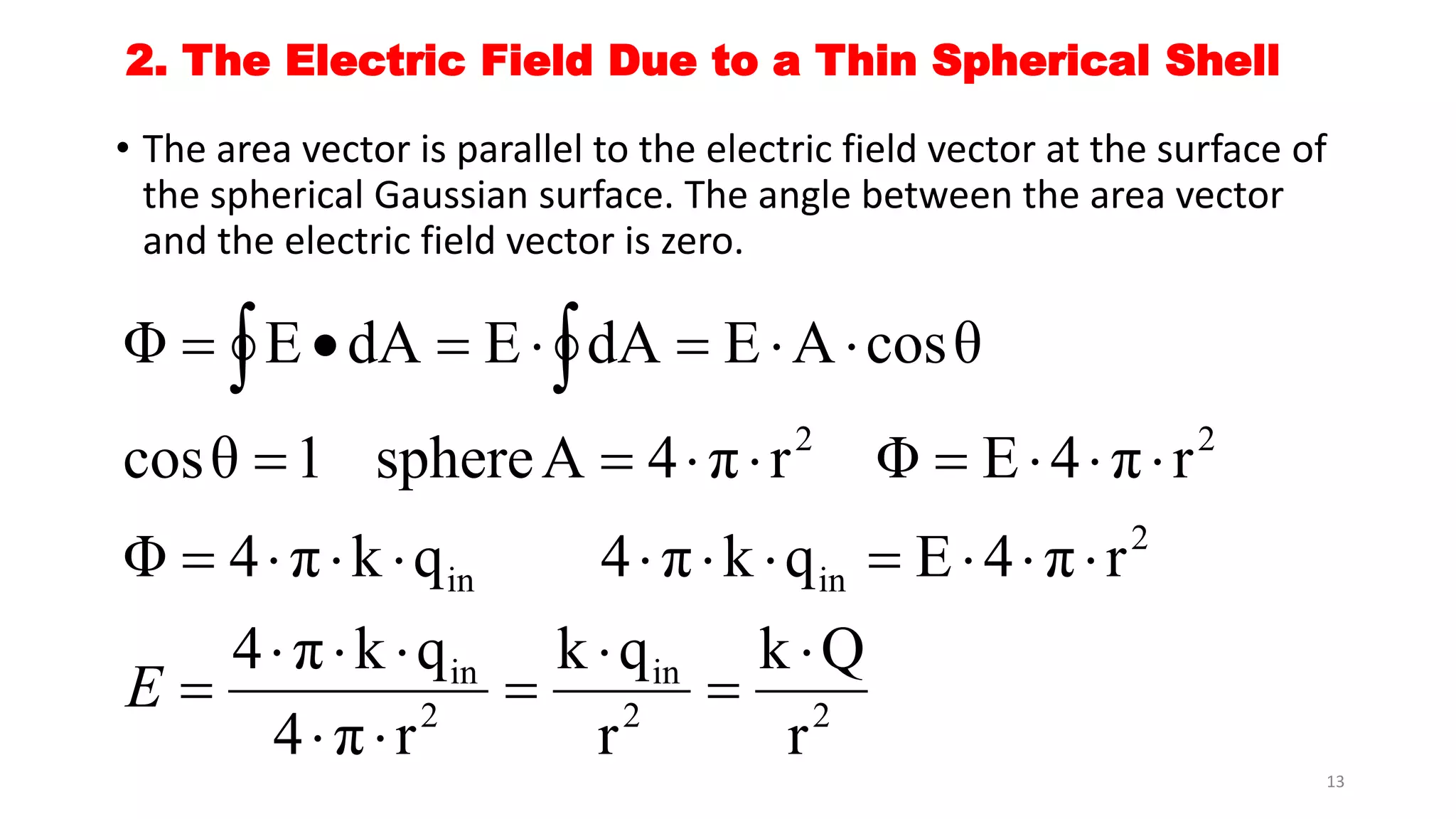
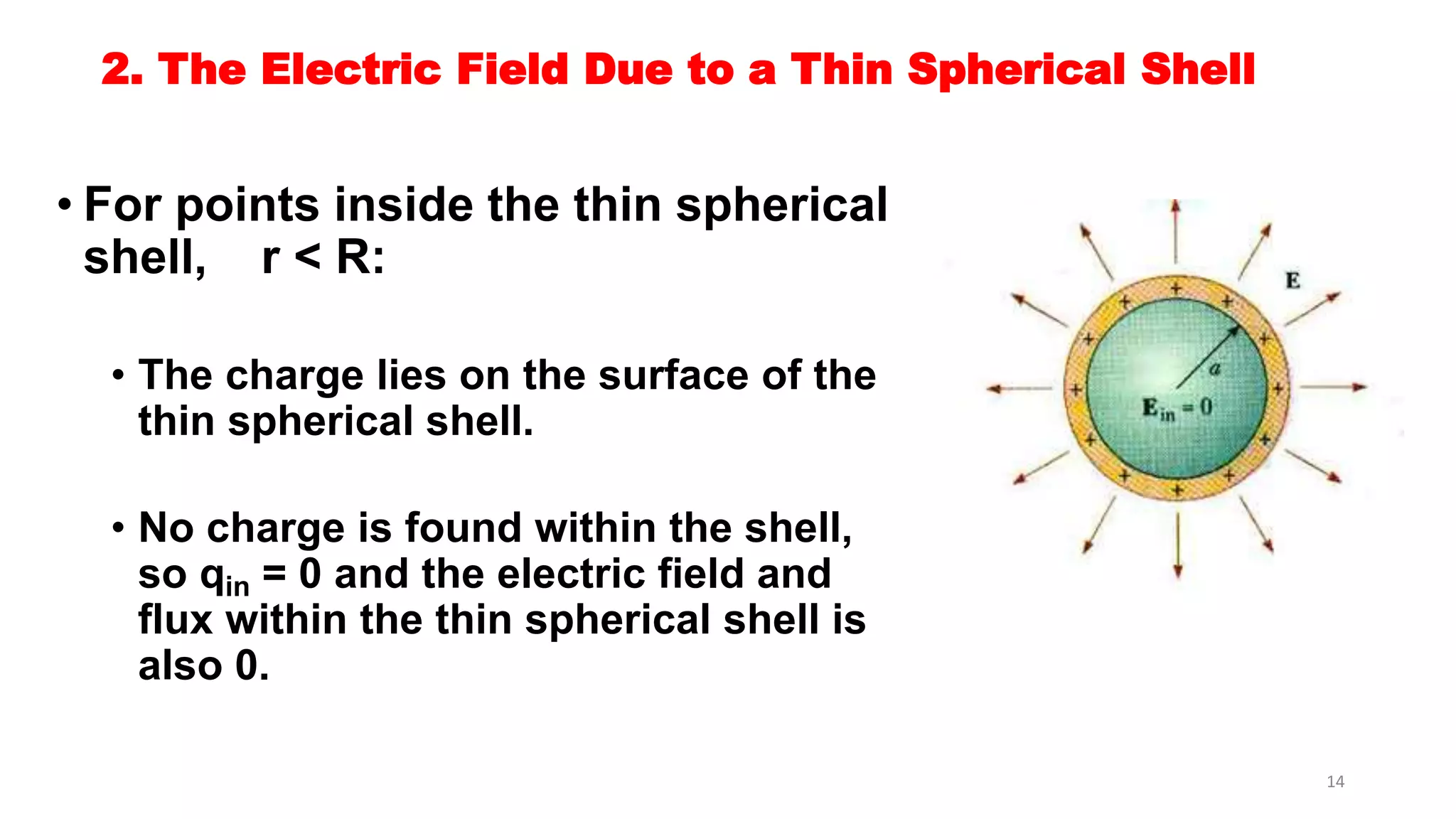
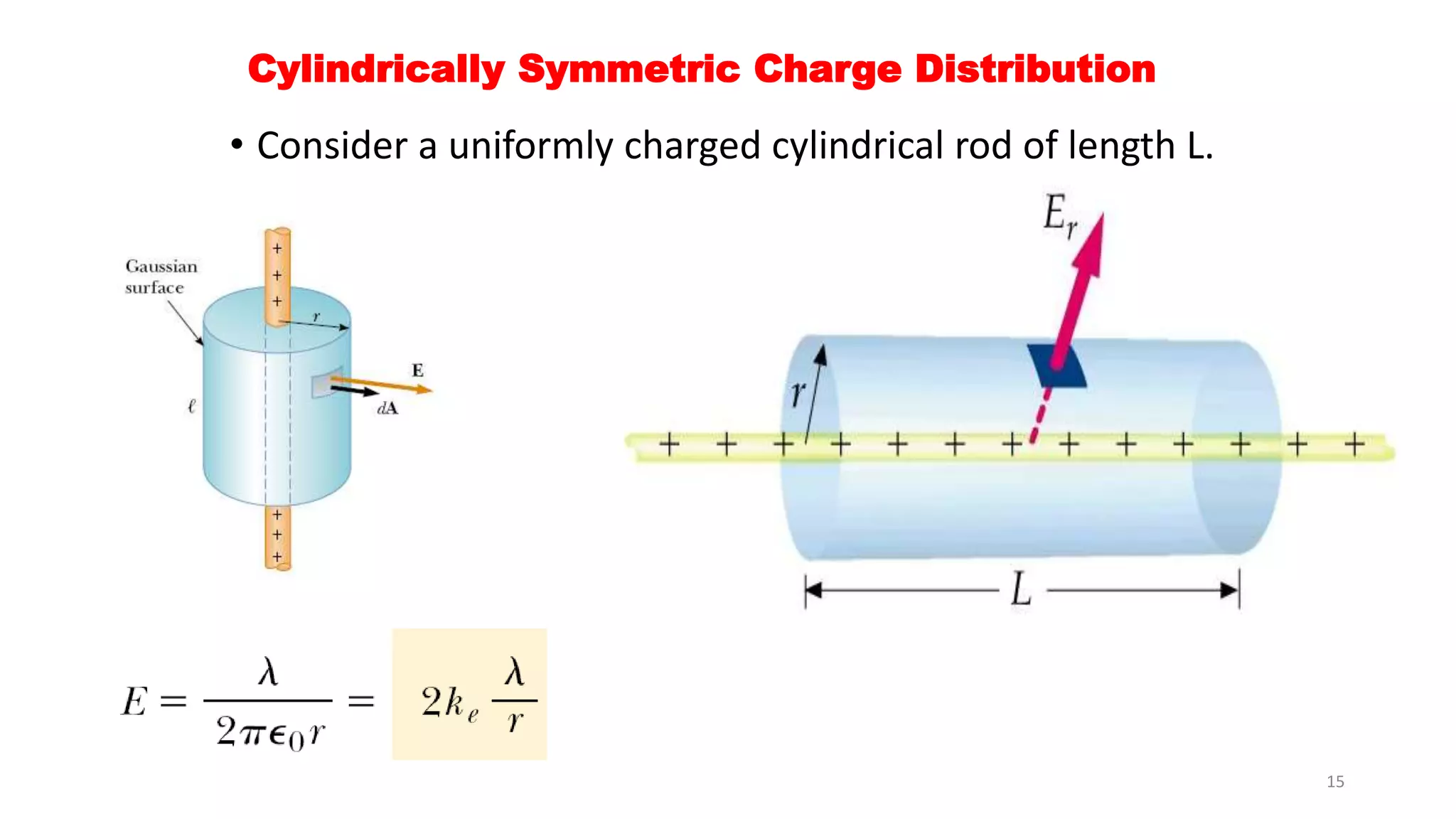
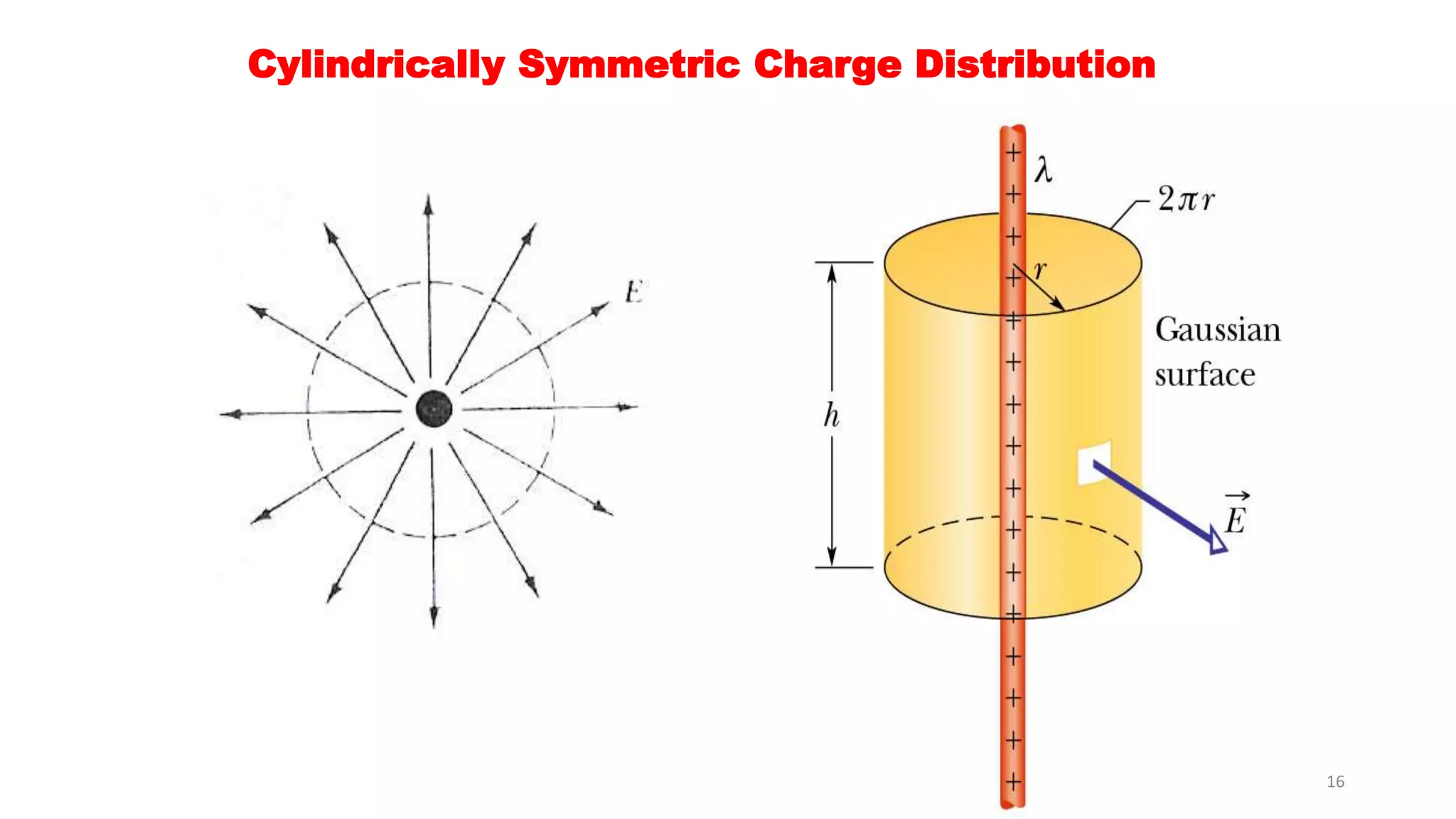
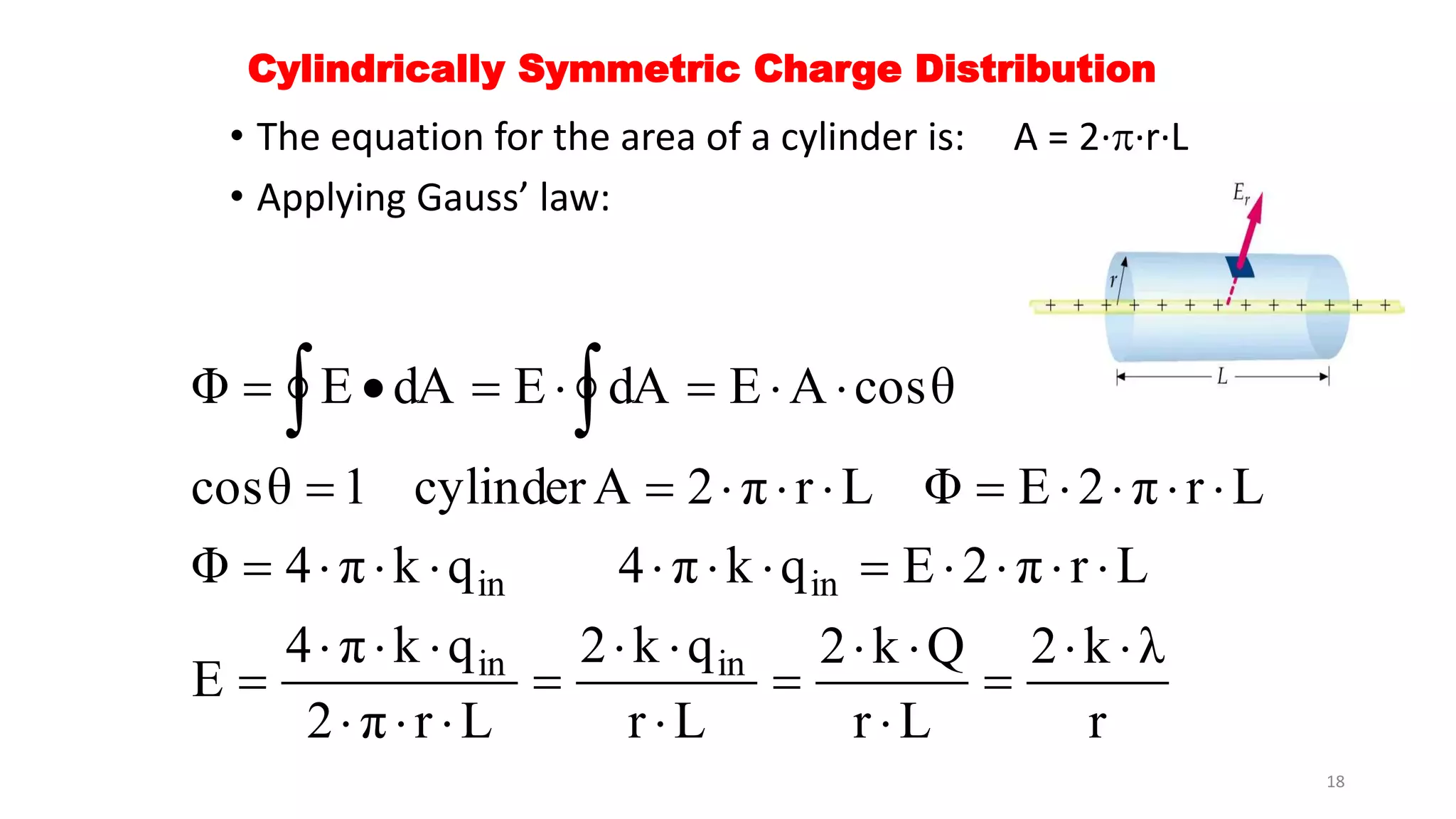

1. The document discusses electric flux and Gauss's law. Electric flux is defined as the product of the electric field and the perpendicular surface area. Gauss's law states that the total electric flux through a closed surface is proportional to the enclosed charge. 2. Examples are presented for applying Gauss's law to calculate electric fields produced by spherically symmetric charge distributions like a point charge or thin spherical shell, as well as a cylindrically symmetric charged rod. The calculations involve setting up Gaussian surfaces and relating the flux to the enclosed charge. 3. Key results are that the electric field of a point charge follows an inverse square law, a thin spherical shell produces no field inside but an inverse square field outside, and the


