Types of communication


Presented By:-
TANUJ KUMAR
HSB,HISAR
Types of Communication
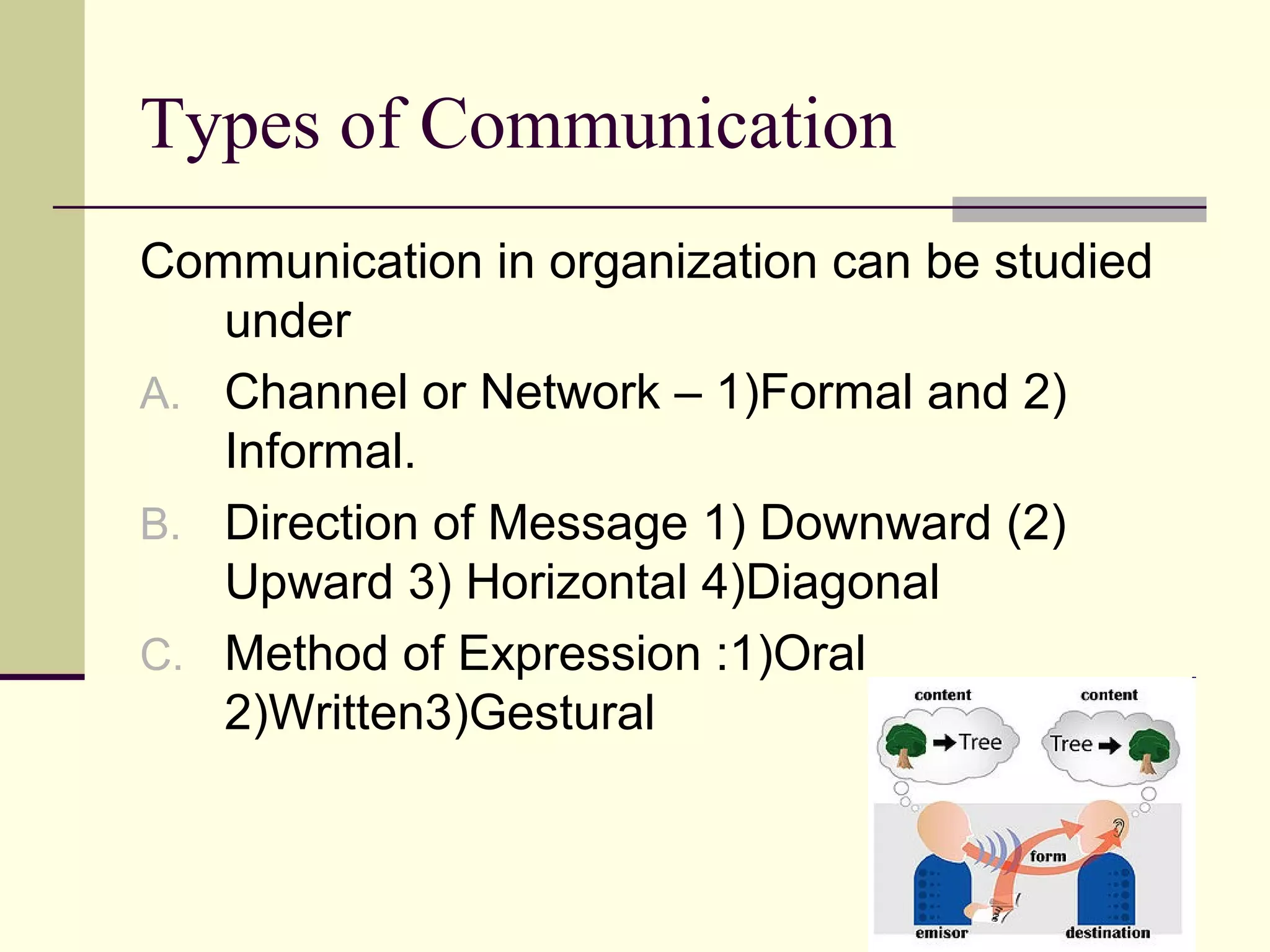
Communication in organization can be studied
   under
A. Channel or Network – 1)Formal and 2)
   Informal.
B. Direction of Message 1) Downward (2)
   Upward 3) Horizontal 4)Diagonal
C. Method of Expression :1)Oral
   2)Written3)Gestural
Channels of Communication
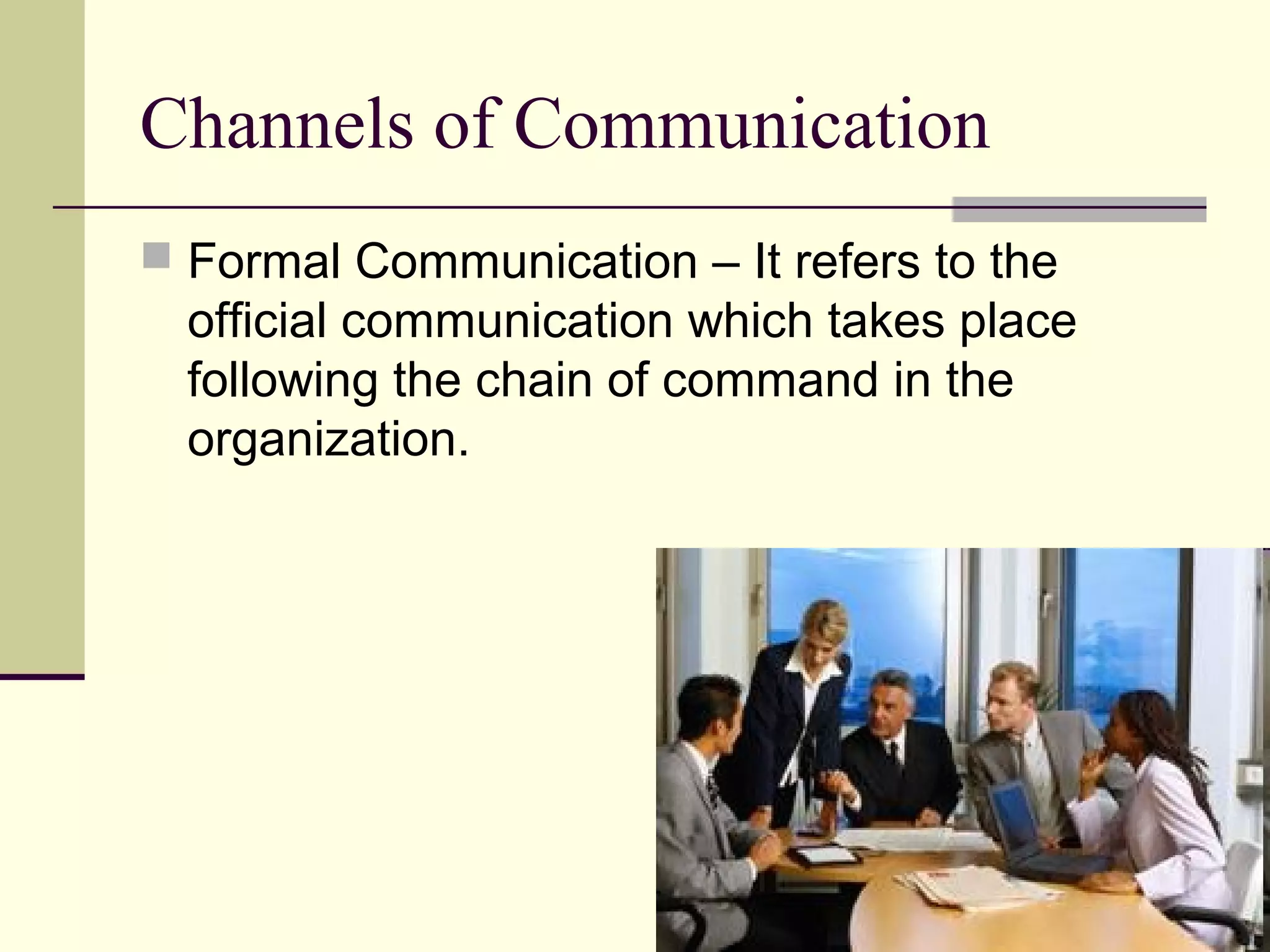
 Formal Communication – It refers to the
  official communication which takes place
  following the chain of command in the
  organization.
Advantages of Formal Communication

 1)Orderly Flow of Information
 2)Identified Source
 3)Control
 4)Answerability for Actions
 5)Justification of authority
 6)Authentic Information
Disadvantages of Formal
Communication
 1)Time consuming
 2)Lack of Personal Touch
 3)Distortion
 4) Expensive
Informal Communication –
 Communication between individuals and
 groups which are not officially recognised.
Grapevine has the following features

 1.It transmits in every direction
 2.Grapevine is selective with regard to the
  person who receives the information.
 3.Grapevine is based on people rather than
  task.
 4.Grapevine does not follow a fixed pattern.
 5)Grapevine generally occurs orally.
 6)Grapevine extends beyond the formal
  hierarchy system of an organization. It can
  occur off the job.
Channels of Communication
 Advantages of Informal Communication
 1)Social Relations
 2)Need satisfaction
 3)Speed
 4)Feedback
 5)Better Human Relations
Channels of Communication
Disadvantages of Informal Communication
 1.Incomplete Information
 2.Distortion
 3.Unrealiability
 4.Lack of Authenticity
 5.Problem in Fixing Responsibility
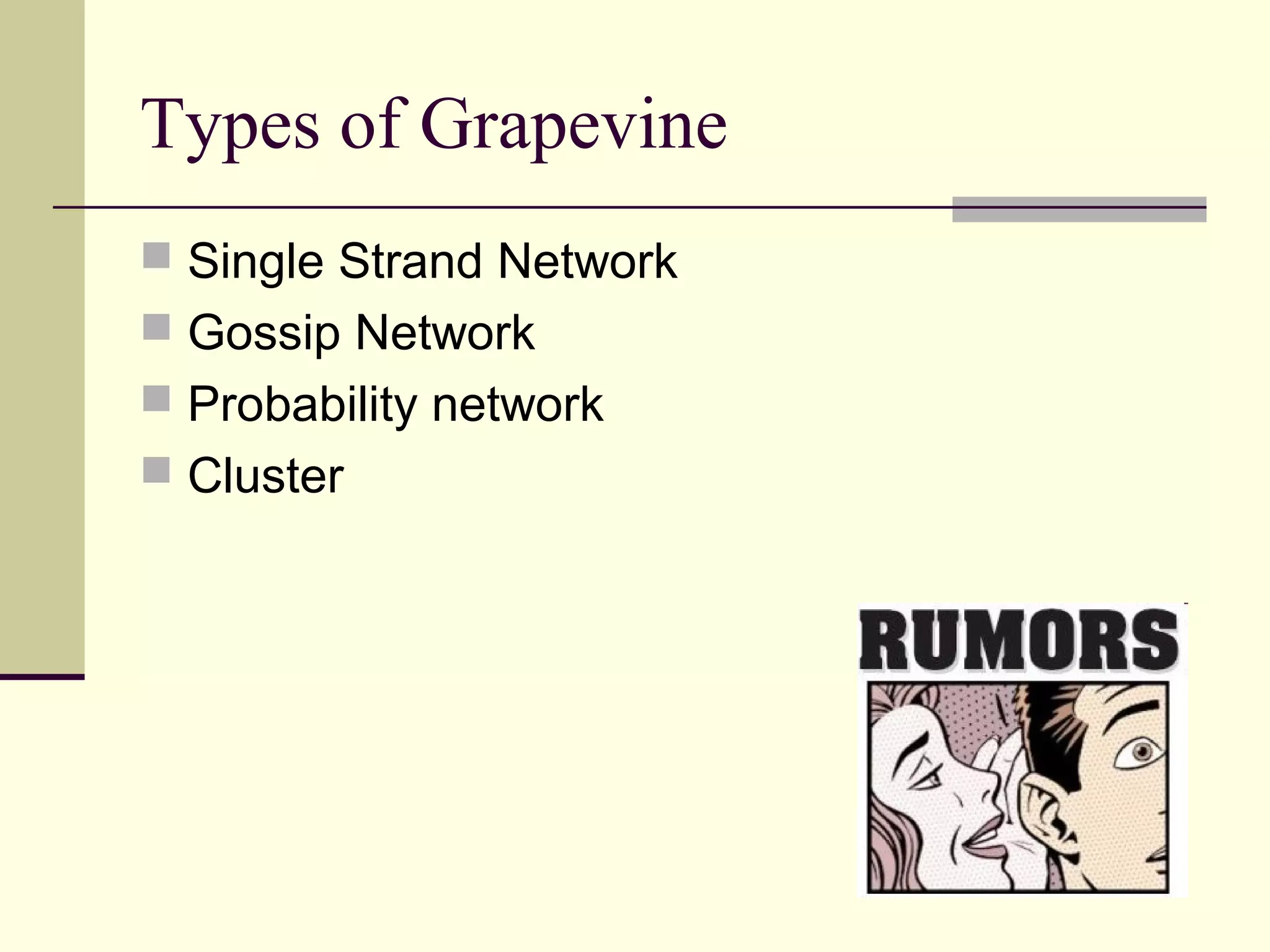
Types of Grapevine
 Single Strand Network
 Gossip Network
 Probability network
 Cluster
Direction or Flow of Communication
 Downward communication
 Upward communication
 Horizontal communication
 Diagonal communication
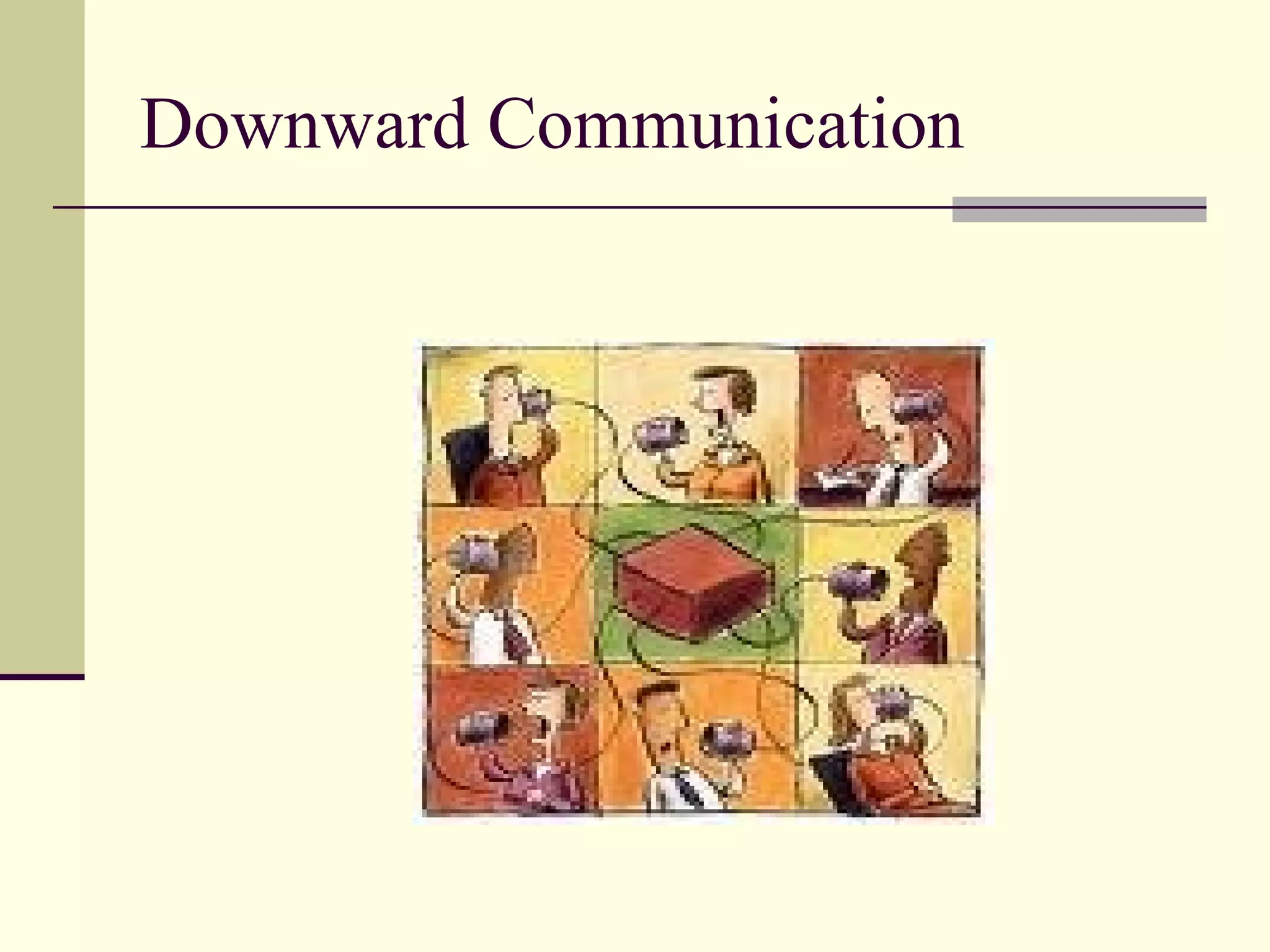
Downward Communication
Downward communication
Merits
1)Mission and Goals
2)Plans and Policies
3)Duty and authority
4)Job satisfaction
Limitations
1.Distortion
2.Incomplete Information
3.Time Consuming
4.Filteration of Information.
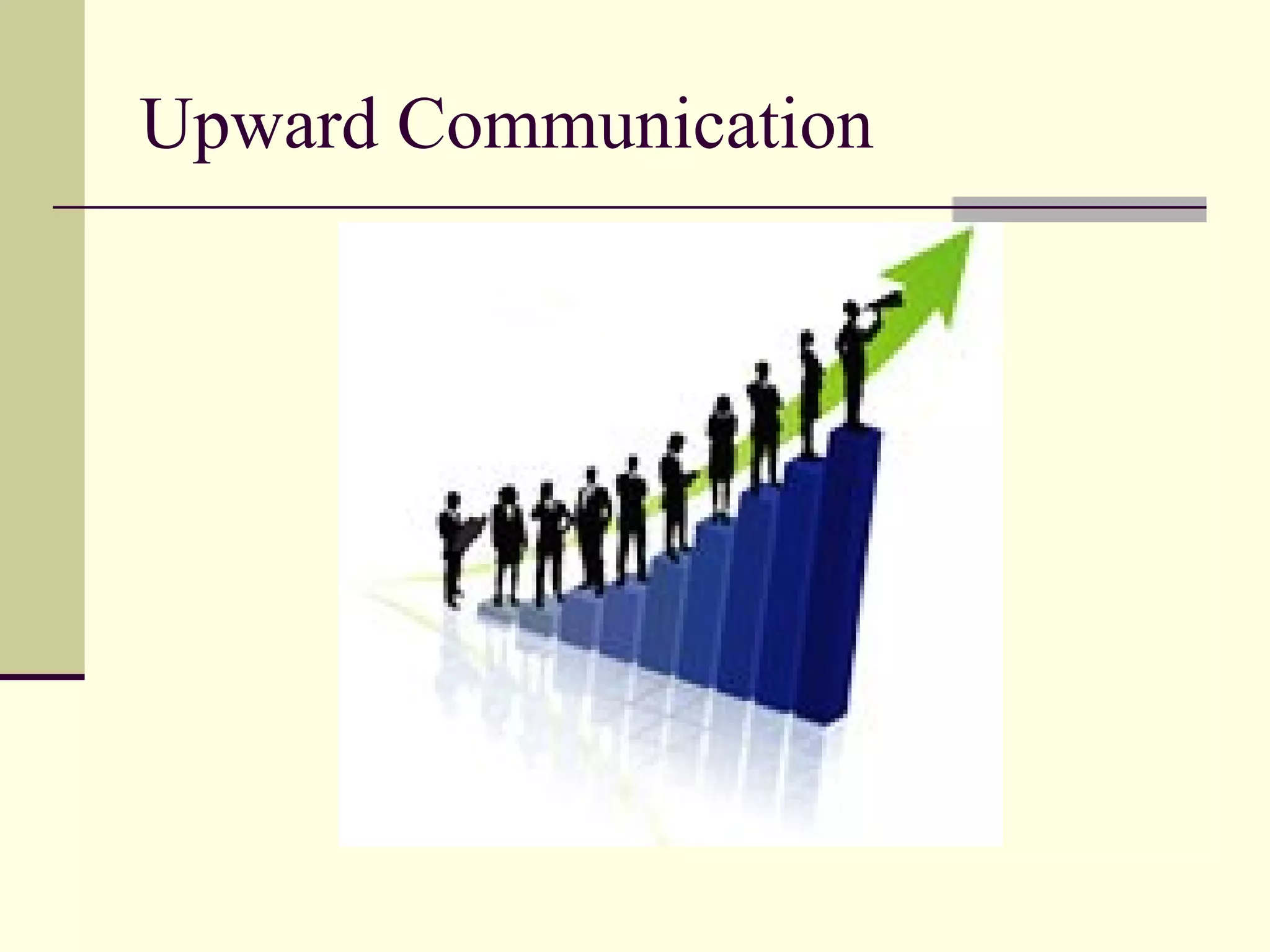
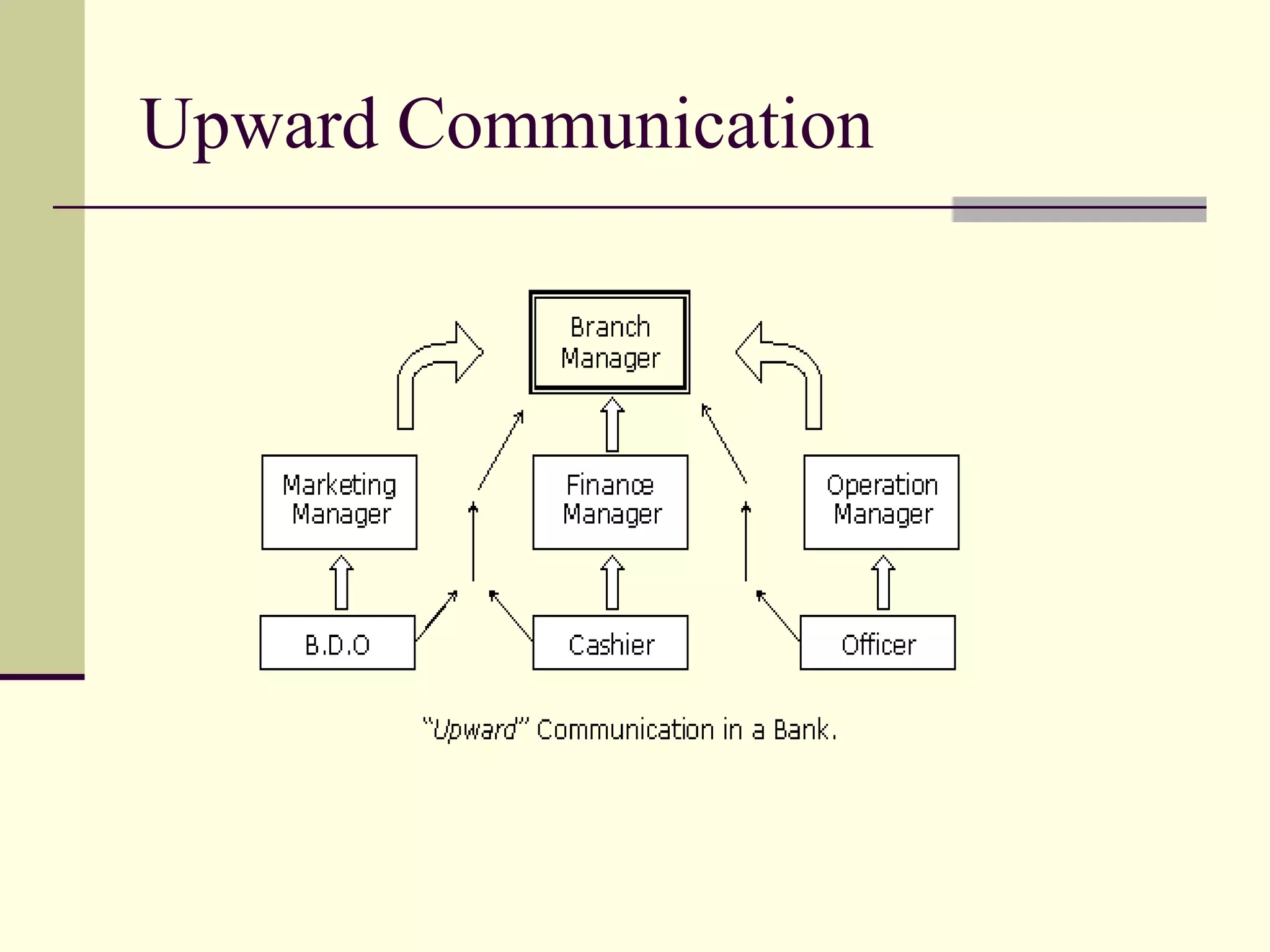
Upward Communication
Media of upward Communication
 1.Suggestion System.
 2.Grievance Procedure .
 3.Open-door Policy.
 4.Questionnaries
 5.Ombudsperson
Merits of Upward Communication
 Feedback
 Creative Ideas
 Better Relations
 Increased Motivation
 Overcome Resistance to Change
Limitations
of upward communication
 Fear and Apprehensions
 Filteration
 Time Consuming
 Inattention by Superiors
 Low Morale.
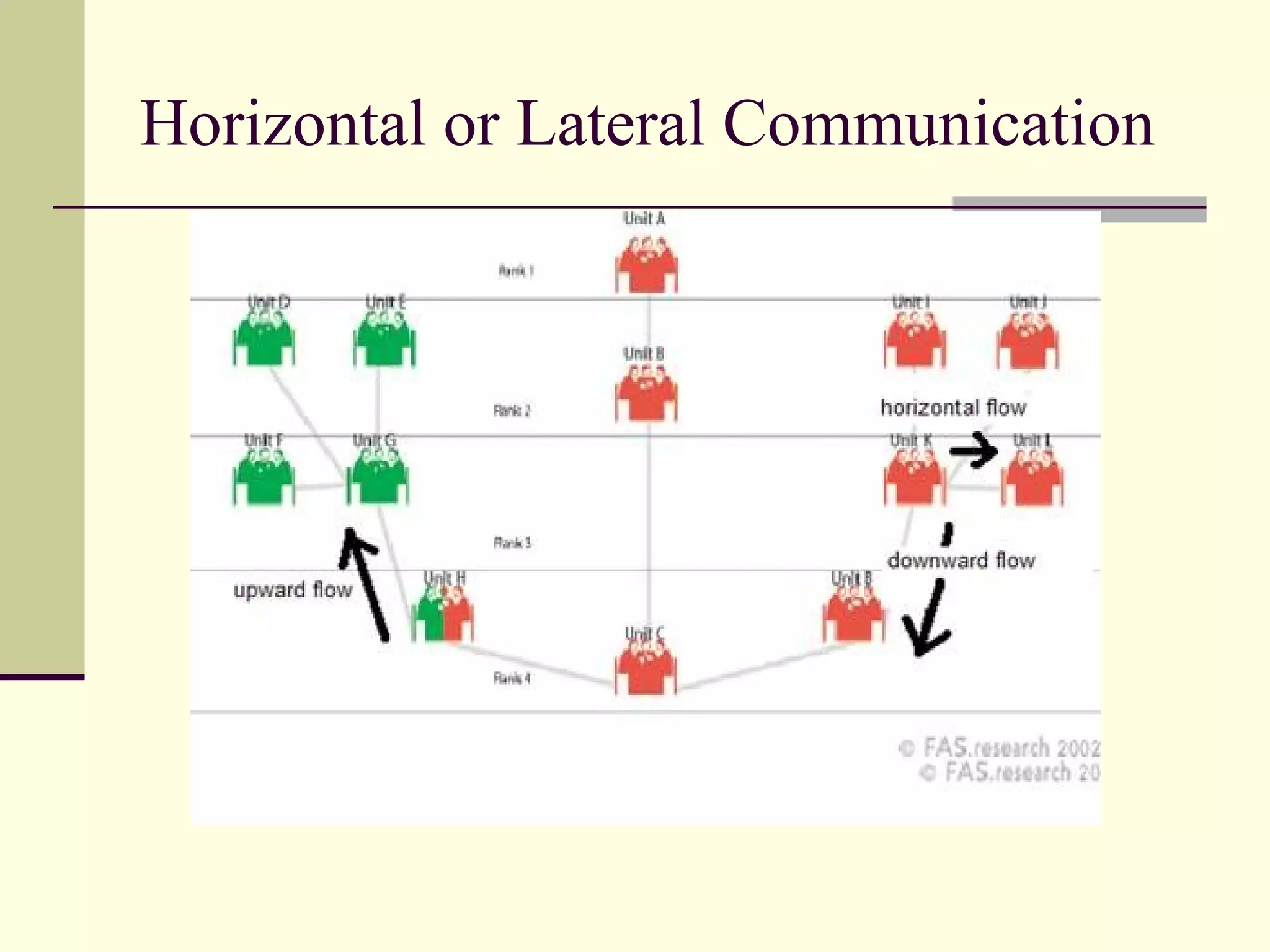
Horizontal or Lateral Communication

 It refers to the transmission of information
  among persons of the same level.
Horizontal or Lateral Communication
Merits of Horizontal communication

 It speeds up the flow of work in the organization

 It facilitates problem-solving among members at
  the same level and brings about co-ordination.

 It helps in reviewing activities assigned to people
  working at identical positions.

 It develops mutual trust and confidence.

 It relieves top managers burden of solving
  problems of lower levels.
Limitations of Horizontal
Communication
 1.Managers lack knowledge of other
  functional areas.
 2.Personal likes and dislikes among different
  work group can obstruct free flow of
  information.
 3. Differences in perception and attitudes of
  functional heads can be counter – productive
  in horizontal communication.
Diagonal Communication
 Diagonal communication cuts across different
  functions and level in an organization.
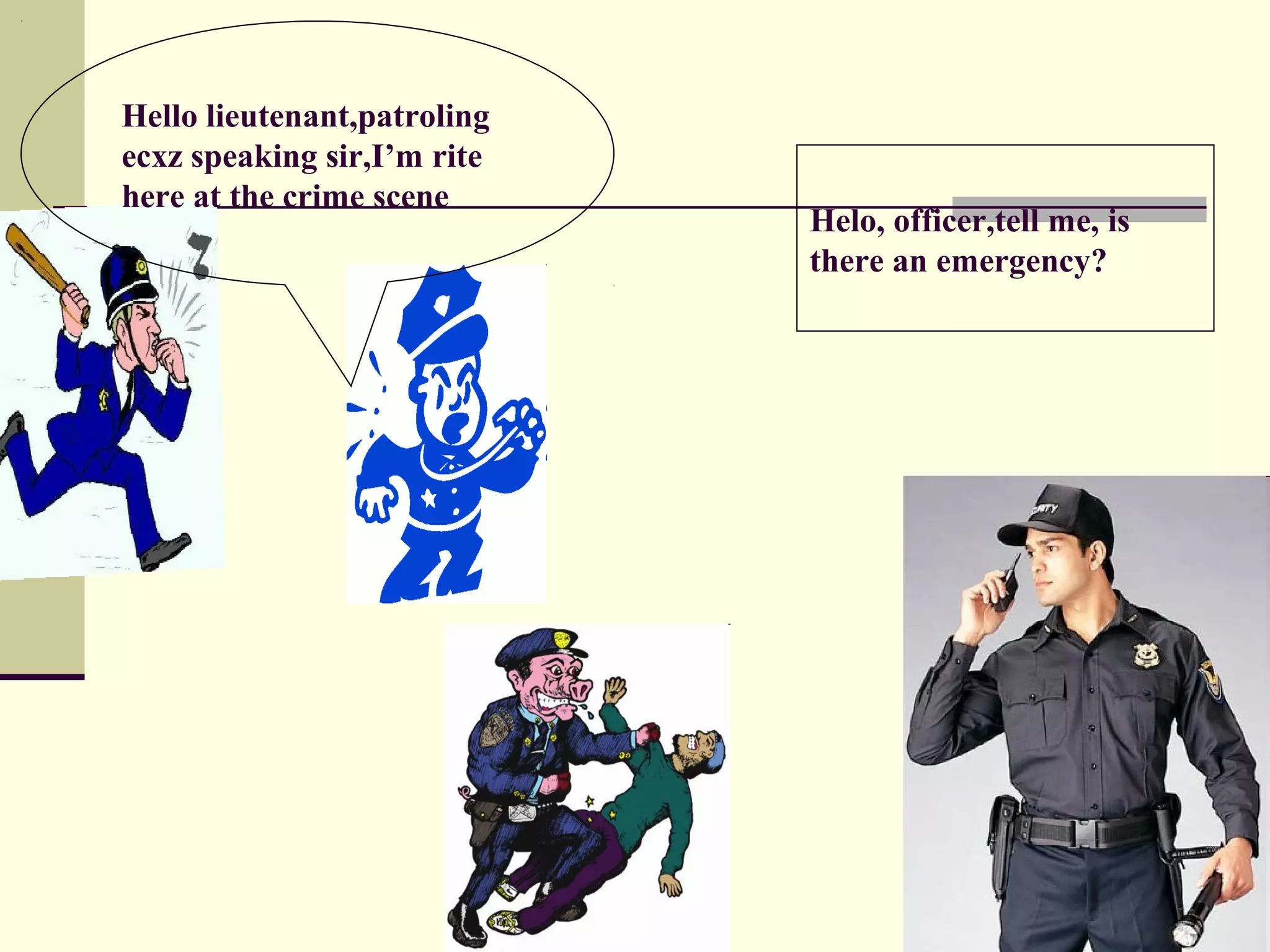
Hello lieutenant,patroling
ecxz speaking sir,I’m rite
here at the crime scene
                             Helo, officer,tell me, is
                             there an emergency?
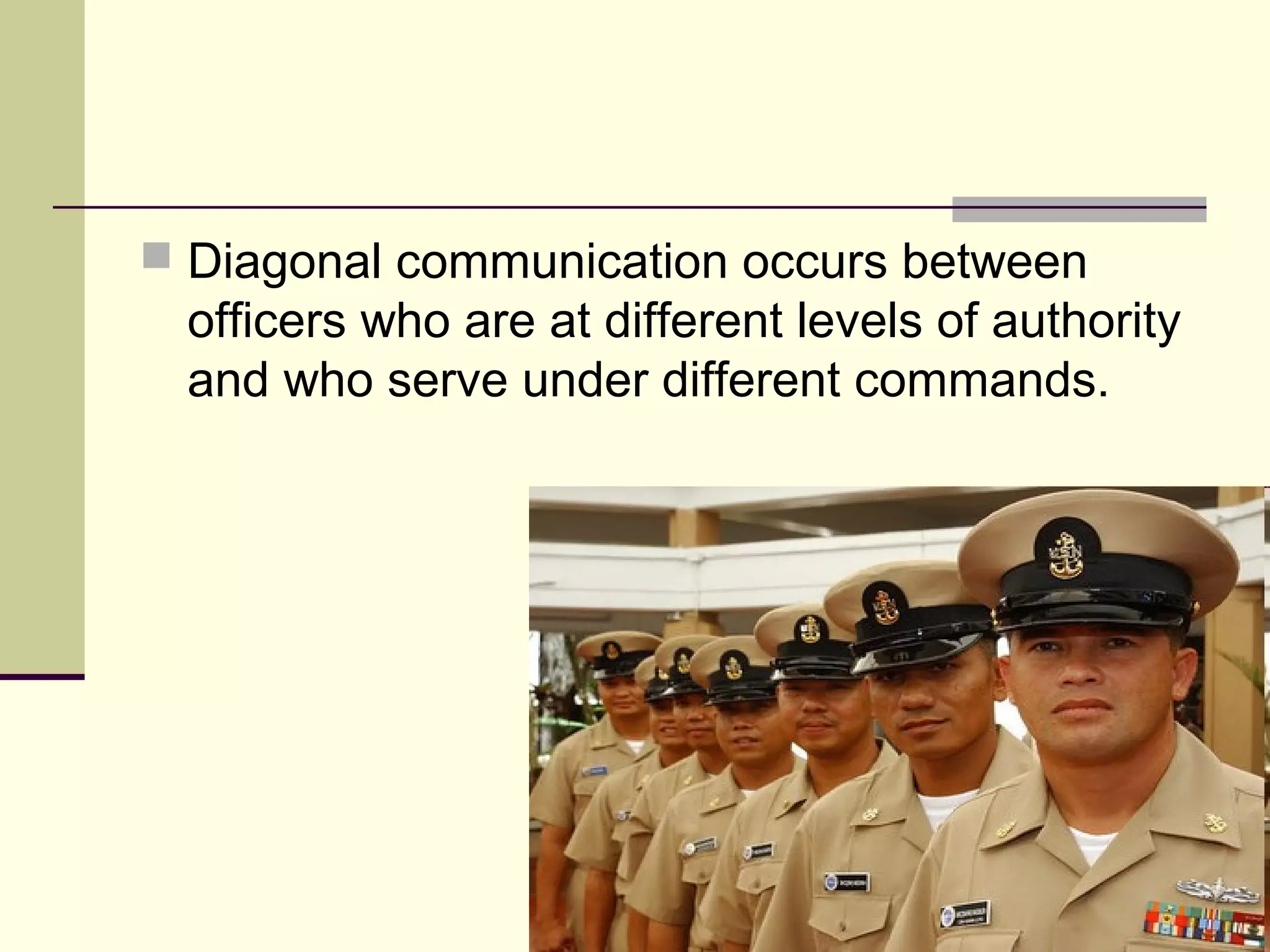
 Diagonal communication occurs between
 officers who are at different levels of authority
 and who serve under different commands.
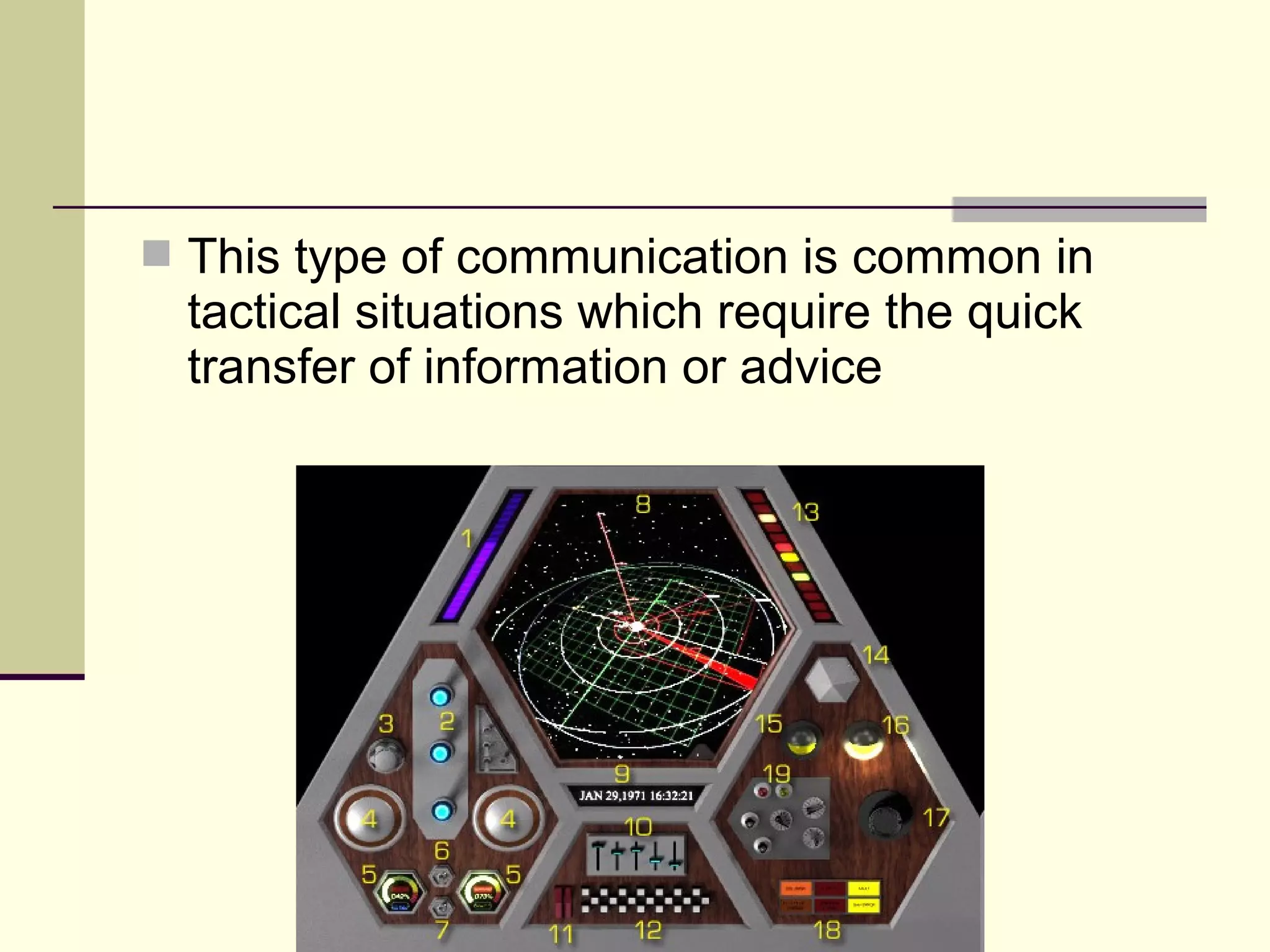
 This type of communication is common in
  tactical situations which require the quick
  transfer of information or advice
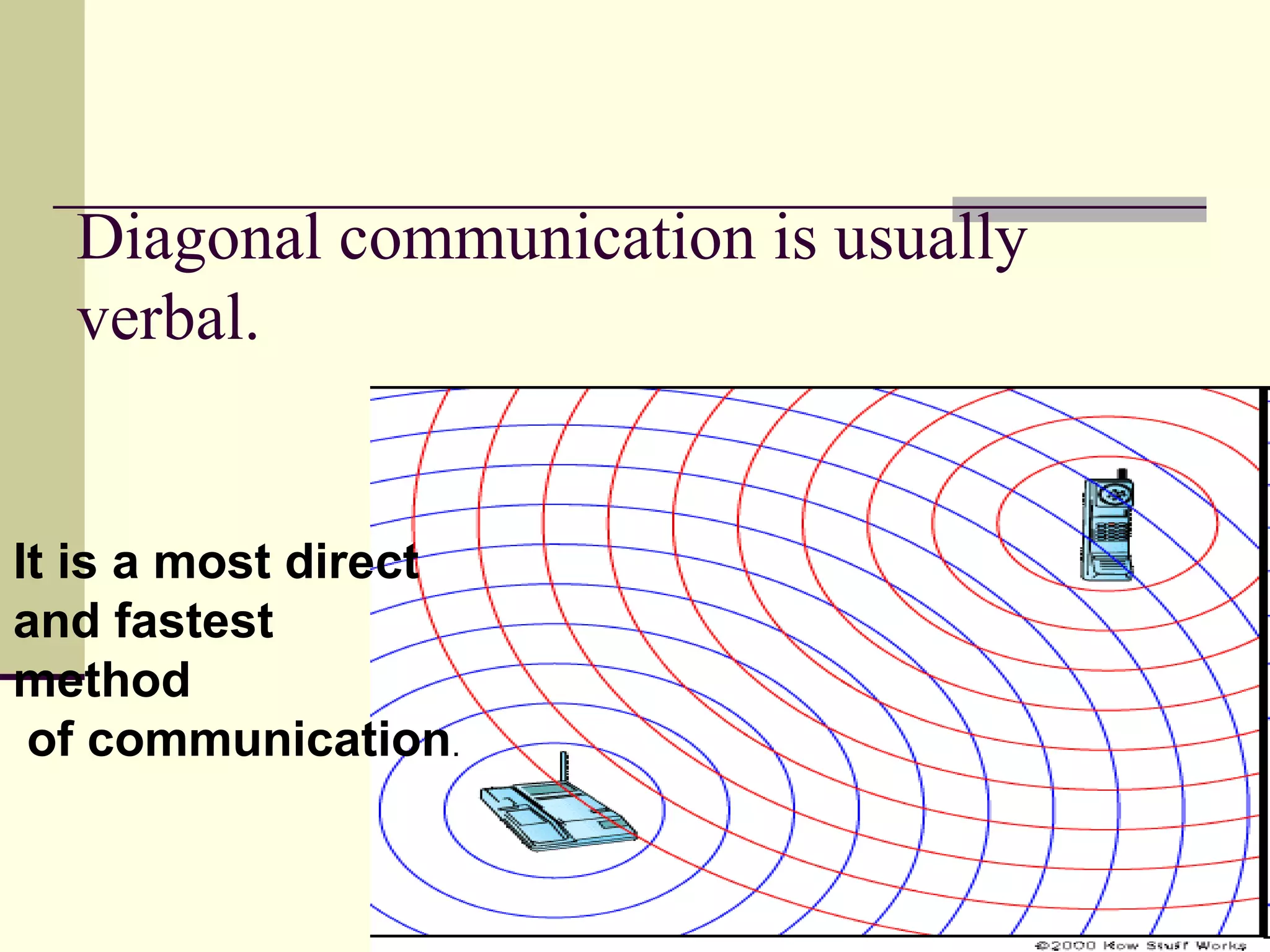
Diagonal communication is usually
  verbal.


It is a most direct
and fastest
method
 of communication.
Disadvantages
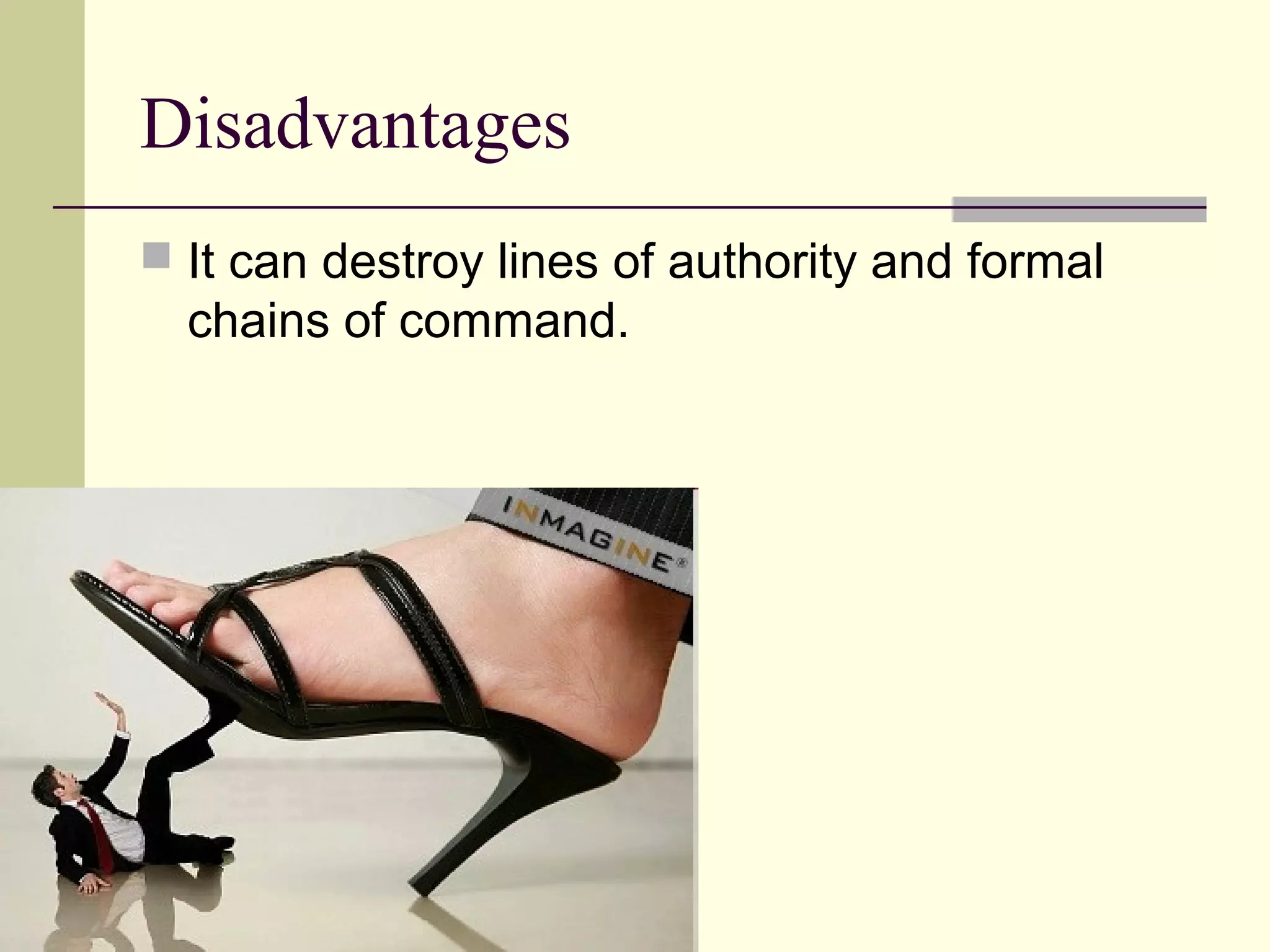
 It can destroy lines of authority and formal
  chains of command.
 It can lead to conflicting orders and hence to
  further confusion

Types of communication

  • 1.
    Types of communication PresentedBy:- TANUJ KUMAR HSB,HISAR
  • 2.
    Types of Communication Communicationin organization can be studied under A. Channel or Network – 1)Formal and 2) Informal. B. Direction of Message 1) Downward (2) Upward 3) Horizontal 4)Diagonal C. Method of Expression :1)Oral 2)Written3)Gestural
  • 3.
    Channels of Communication Formal Communication – It refers to the official communication which takes place following the chain of command in the organization.
  • 4.
    Advantages of FormalCommunication  1)Orderly Flow of Information  2)Identified Source  3)Control  4)Answerability for Actions  5)Justification of authority  6)Authentic Information
  • 5.
    Disadvantages of Formal Communication 1)Time consuming  2)Lack of Personal Touch  3)Distortion  4) Expensive
  • 6.
    Informal Communication – Communication between individuals and groups which are not officially recognised.
  • 7.
    Grapevine has thefollowing features  1.It transmits in every direction  2.Grapevine is selective with regard to the person who receives the information.  3.Grapevine is based on people rather than task.  4.Grapevine does not follow a fixed pattern.
  • 8.
     5)Grapevine generallyoccurs orally.  6)Grapevine extends beyond the formal hierarchy system of an organization. It can occur off the job.
  • 9.
    Channels of Communication Advantages of Informal Communication  1)Social Relations  2)Need satisfaction  3)Speed  4)Feedback  5)Better Human Relations
  • 10.
    Channels of Communication Disadvantagesof Informal Communication  1.Incomplete Information  2.Distortion  3.Unrealiability  4.Lack of Authenticity  5.Problem in Fixing Responsibility
  • 11.
    Types of Grapevine Single Strand Network  Gossip Network  Probability network  Cluster
  • 12.
    Direction or Flowof Communication  Downward communication  Upward communication  Horizontal communication  Diagonal communication
  • 13.
  • 14.
    Downward communication Merits 1)Mission andGoals 2)Plans and Policies 3)Duty and authority 4)Job satisfaction Limitations 1.Distortion 2.Incomplete Information 3.Time Consuming 4.Filteration of Information.
  • 15.
  • 16.
  • 17.
    Media of upwardCommunication  1.Suggestion System.  2.Grievance Procedure .  3.Open-door Policy.  4.Questionnaries  5.Ombudsperson
  • 18.
    Merits of UpwardCommunication  Feedback  Creative Ideas  Better Relations  Increased Motivation  Overcome Resistance to Change
  • 19.
    Limitations of upward communication Fear and Apprehensions  Filteration  Time Consuming  Inattention by Superiors  Low Morale.
  • 20.
    Horizontal or LateralCommunication  It refers to the transmission of information among persons of the same level.
  • 21.
    Horizontal or LateralCommunication
  • 22.
    Merits of Horizontalcommunication  It speeds up the flow of work in the organization  It facilitates problem-solving among members at the same level and brings about co-ordination.  It helps in reviewing activities assigned to people working at identical positions.  It develops mutual trust and confidence.  It relieves top managers burden of solving problems of lower levels.
  • 23.
    Limitations of Horizontal Communication 1.Managers lack knowledge of other functional areas.  2.Personal likes and dislikes among different work group can obstruct free flow of information.  3. Differences in perception and attitudes of functional heads can be counter – productive in horizontal communication.
  • 24.
    Diagonal Communication  Diagonalcommunication cuts across different functions and level in an organization.
  • 25.
    Hello lieutenant,patroling ecxz speakingsir,I’m rite here at the crime scene Helo, officer,tell me, is there an emergency?
  • 26.
     Diagonal communicationoccurs between officers who are at different levels of authority and who serve under different commands.
  • 27.
     This typeof communication is common in tactical situations which require the quick transfer of information or advice
  • 28.
    Diagonal communication isusually verbal. It is a most direct and fastest method of communication.
  • 29.
    Disadvantages  It candestroy lines of authority and formal chains of command.
  • 30.
     It canlead to conflicting orders and hence to further confusion