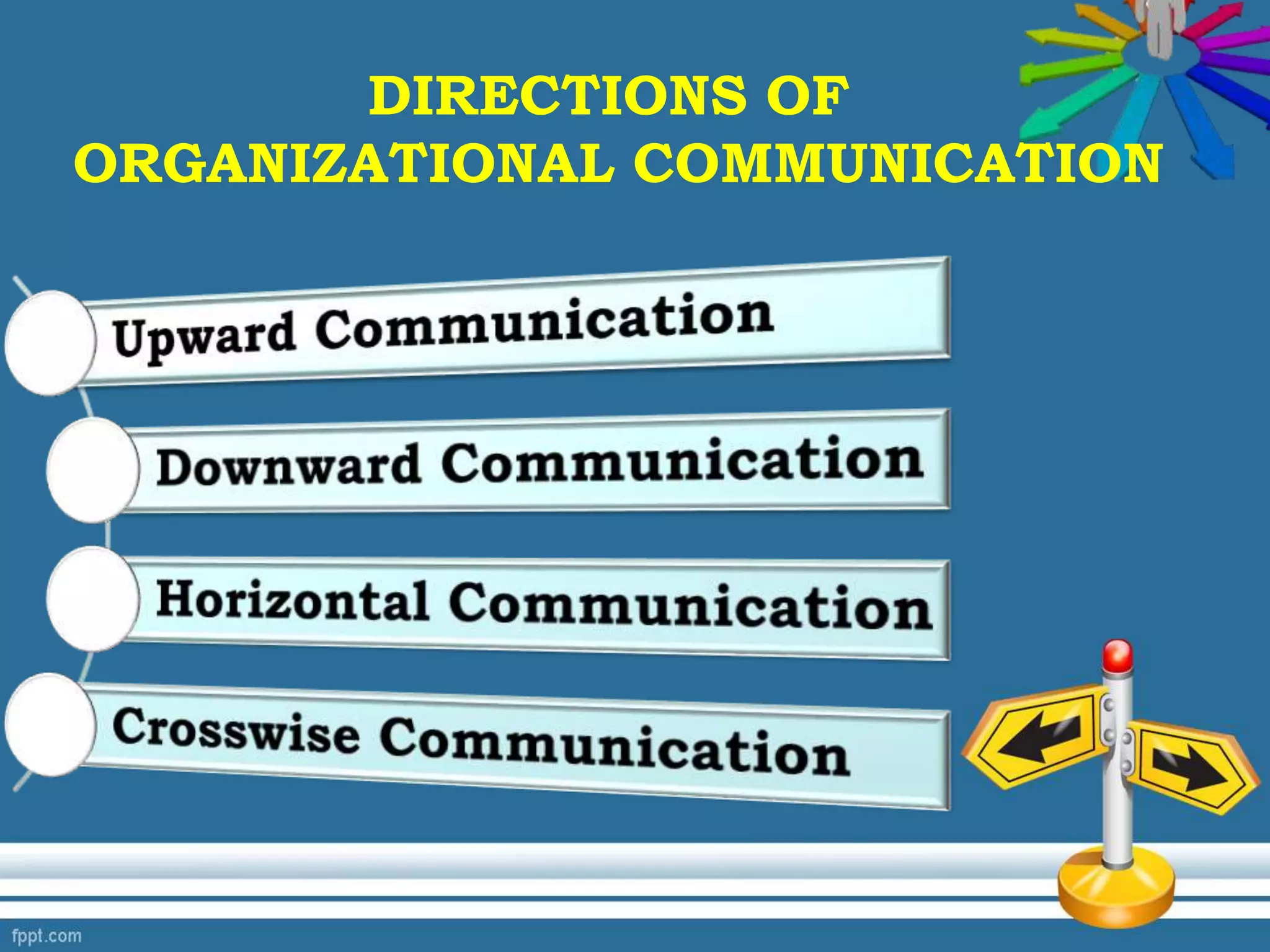
DIRECTIONS OF ORGANIZATIONAL COMMUNICATION - UPWARD AND DOWNWARD
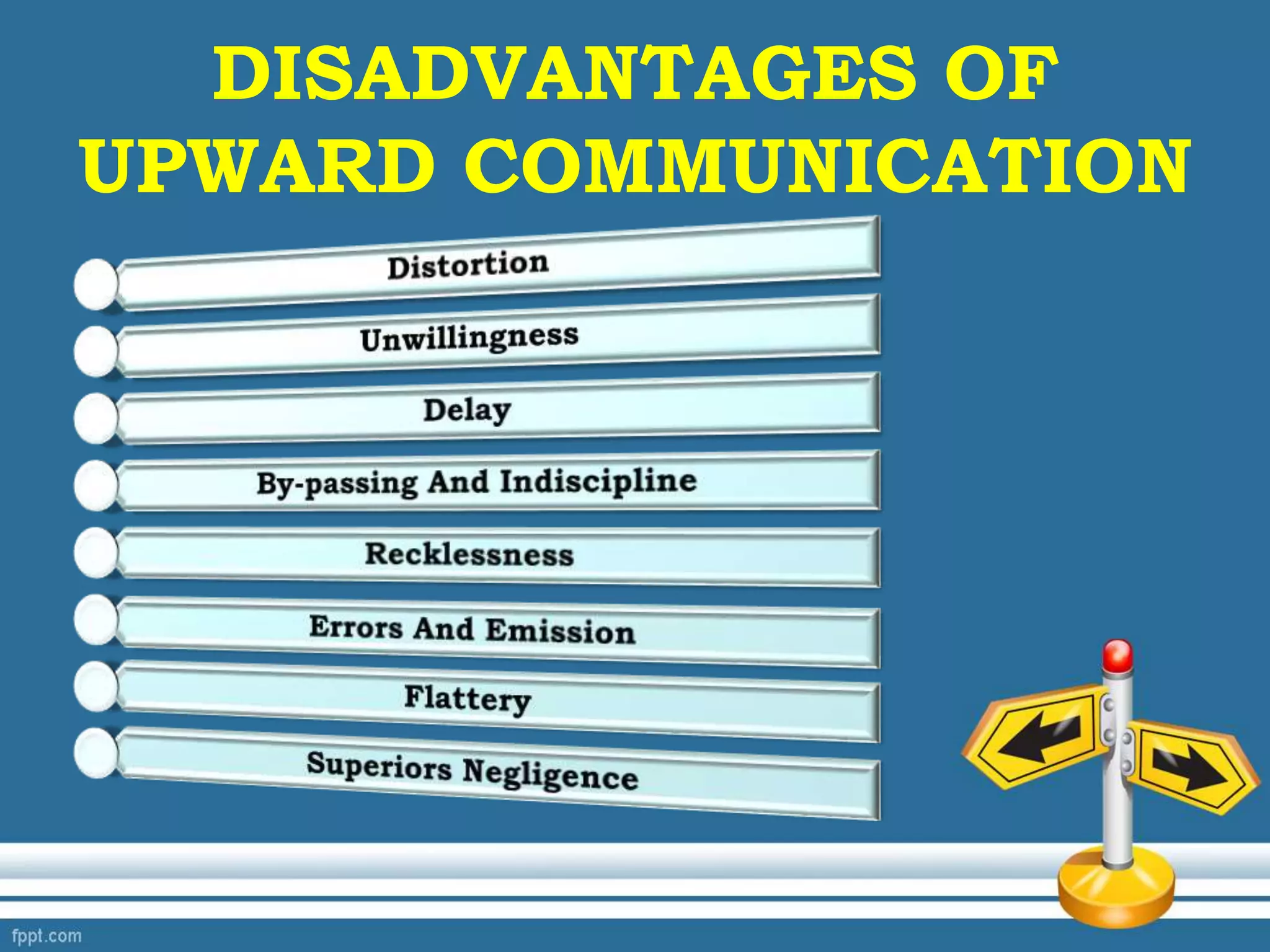
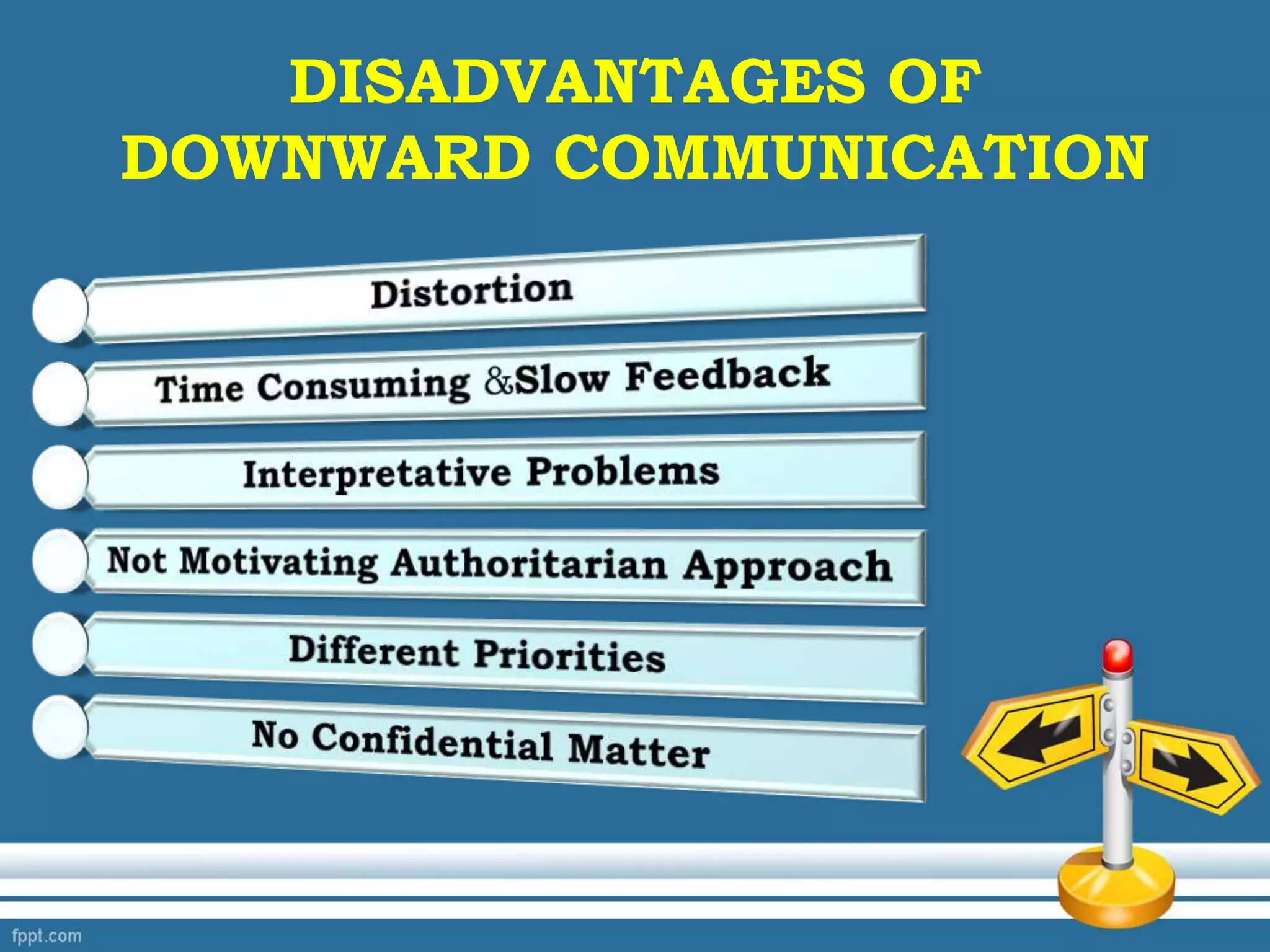
This document discusses the directions of organizational communication. It defines upward communication as information flowing from lower to higher levels in an organization, such as from employees to management. Some advantages are it informs management decision-making, while disadvantages include employees fearing retaliation. Downward communication is defined as information flowing from higher to lower levels, such as from management to employees, to provide instructions, goals, policies and feedback. Effective downward communication is important for organizational success, while potential disadvantages include misunderstandings due to differences in experience between levels.
COMMUNICATION
The ActOf Transferring Information From
One Place To Another
Process Of Sending, Receiving, Sharing
Ideas Attitudes, Values, Opinions And Facts
Verbal Or Non Verbal
Formal Or Informal
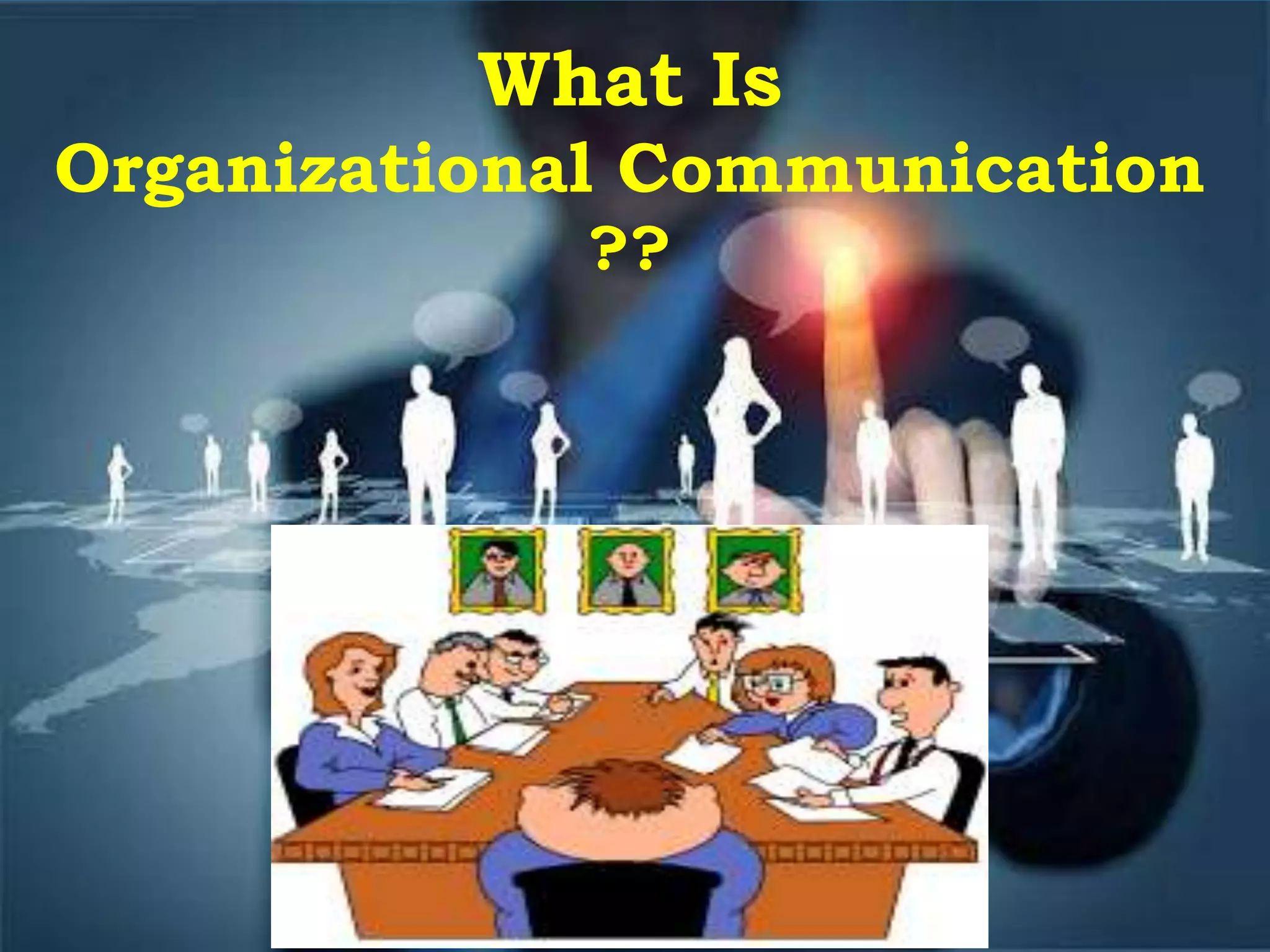
Organizational
Communication
Communication AmongPeople Within A Specific
Context For The Purpose Of Achieving Common
Goals Through Cooperative Effort
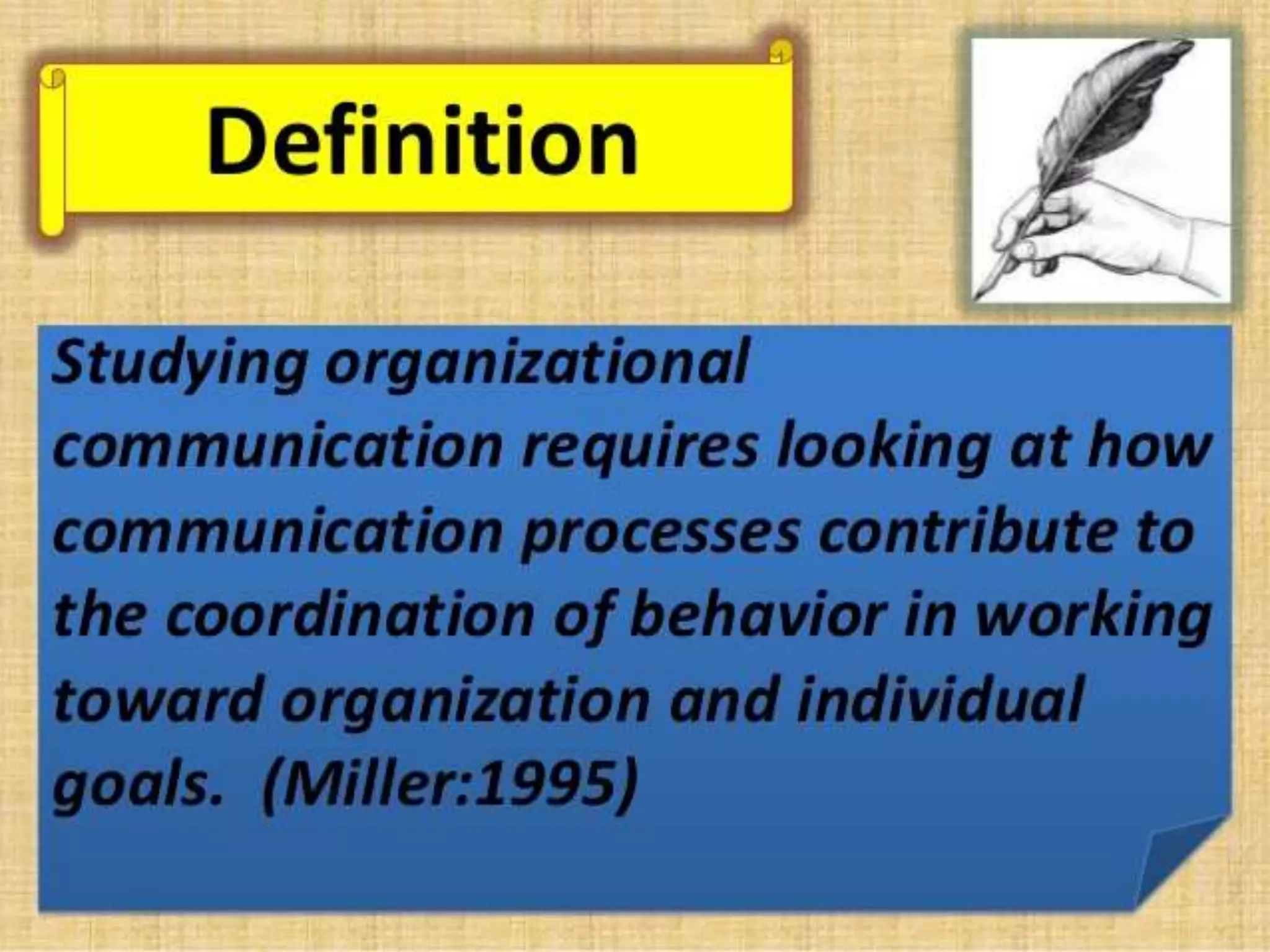
The Consideration, Analysis, And Criticism Of The
Role Of Communication In Organizational Contexts
Process By Which Activities Of A Society Are
Collected And Coordinated To Reach The Goals Of
Both Individuals And The Collective Group
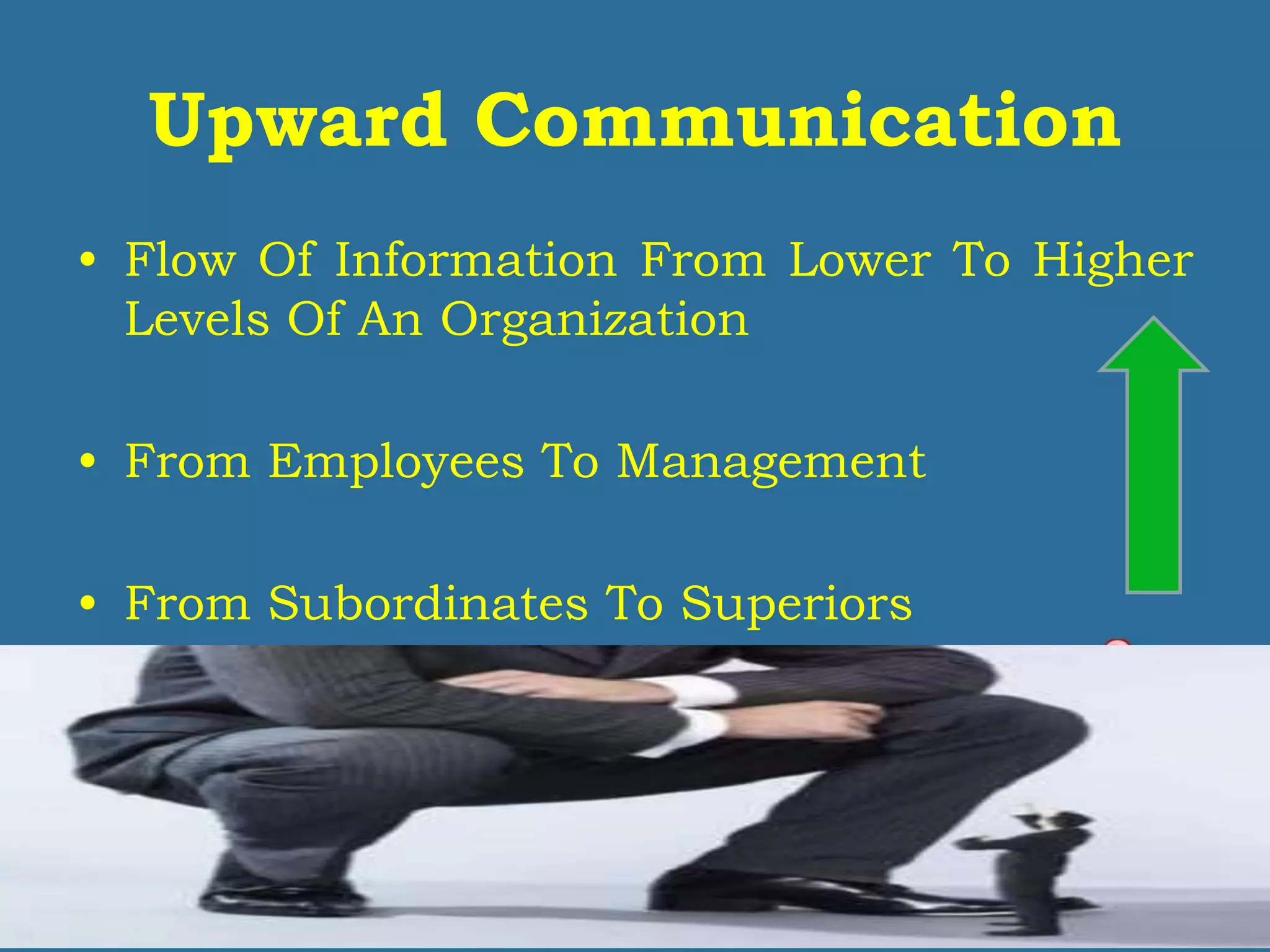
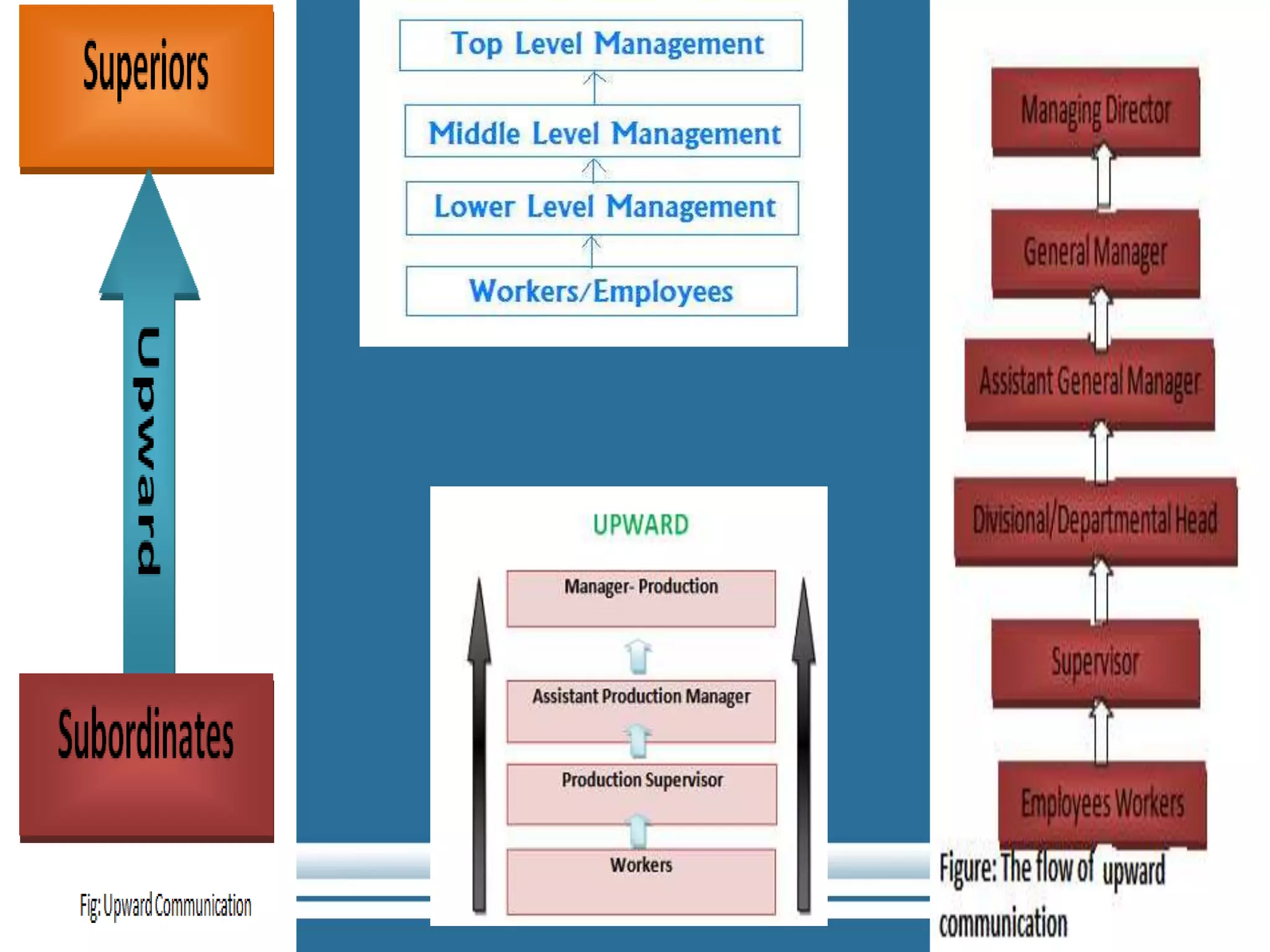
Upward Communication
• FlowOf Information From Lower To Higher
Levels Of An Organization
• From Employees To Management
• From Subordinates To Superiors
11.
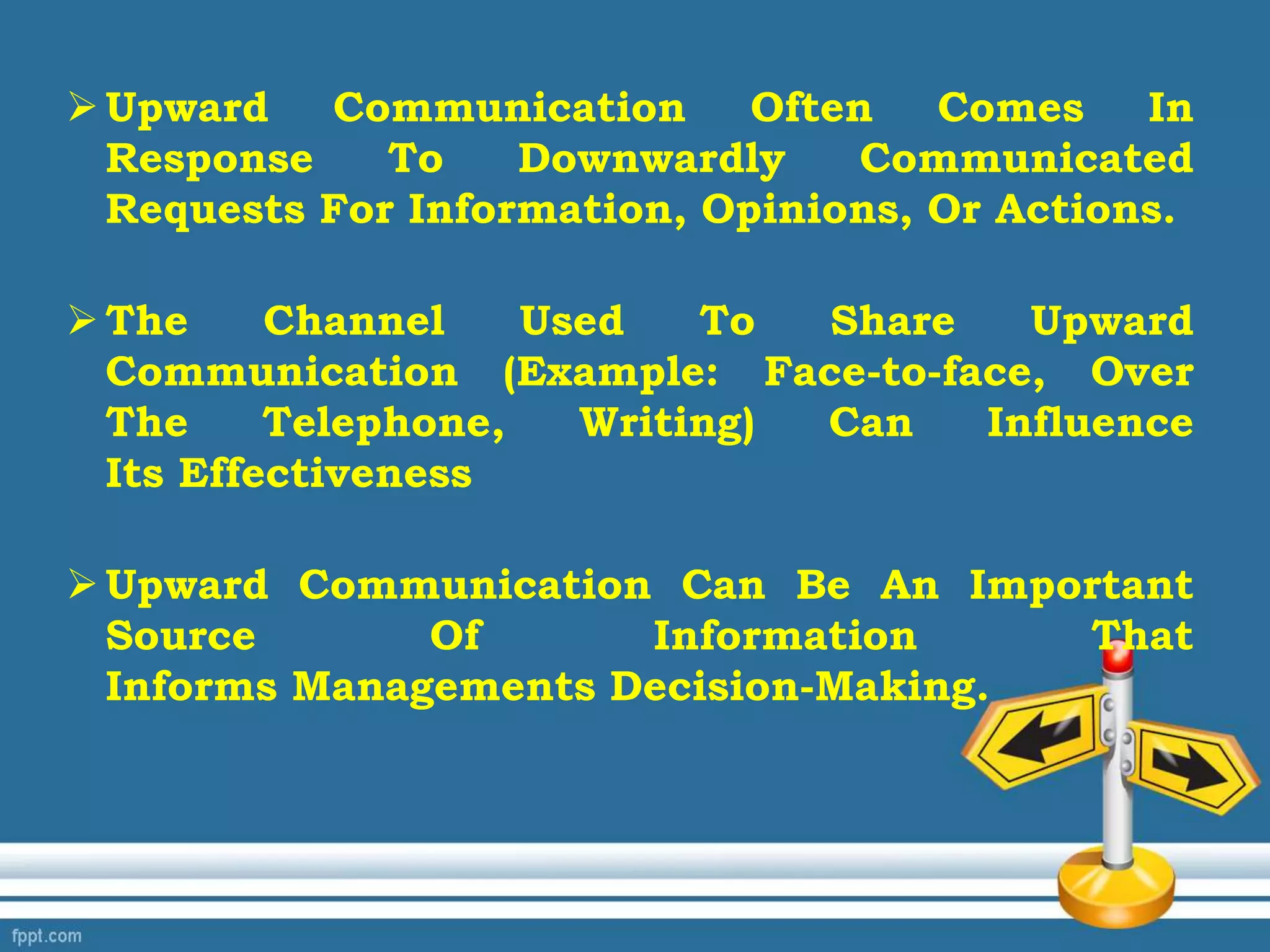
Upward Communication OftenComes In
Response To Downwardly Communicated
Requests For Information, Opinions, Or Actions.
The Channel Used To Share Upward
Communication (Example: Face-to-face, Over
The Telephone, Writing) Can Influence
Its Effectiveness
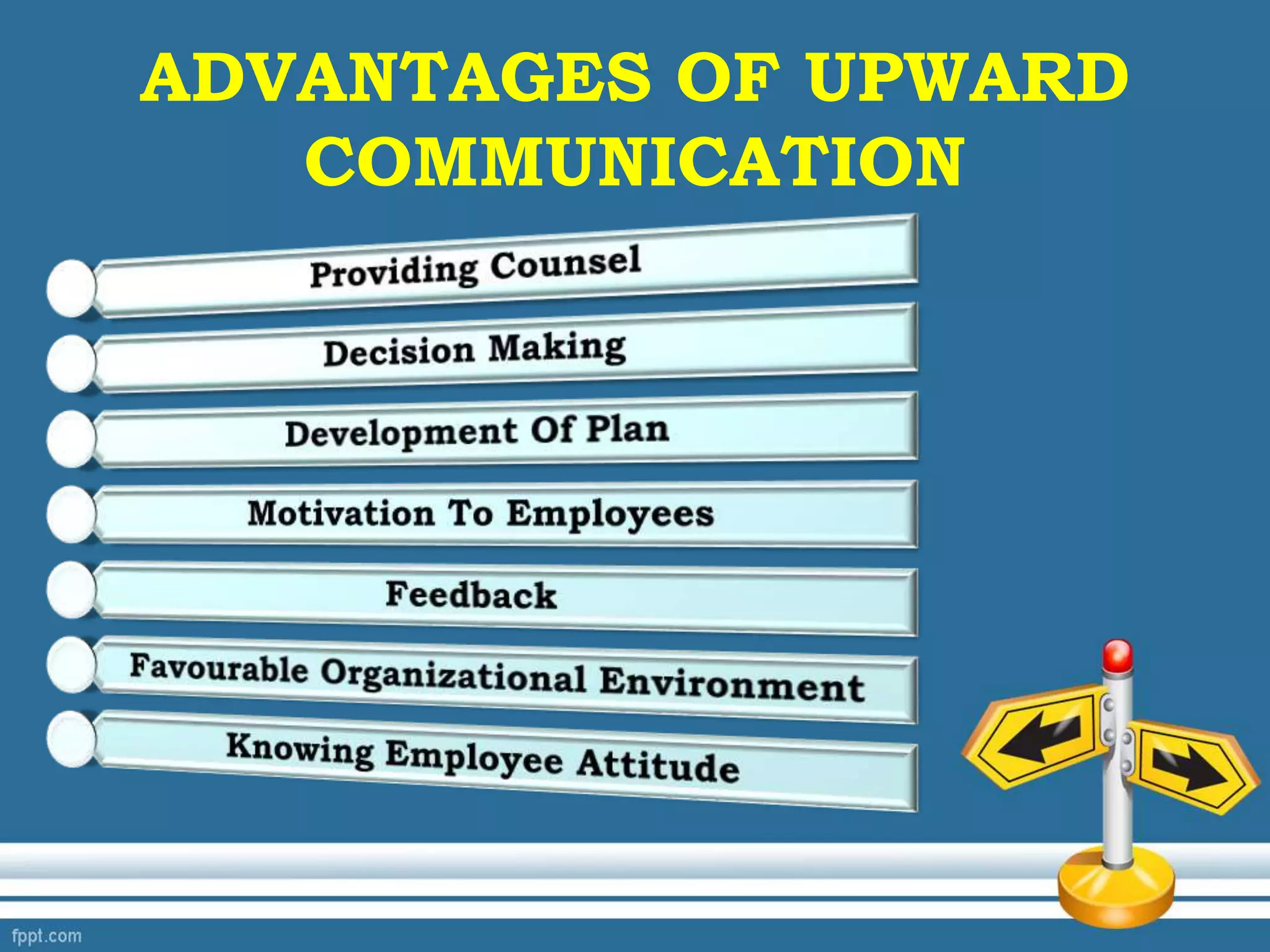
Upward Communication Can Be An Important
Source Of Information That
Informs Managements Decision-Making.
12.
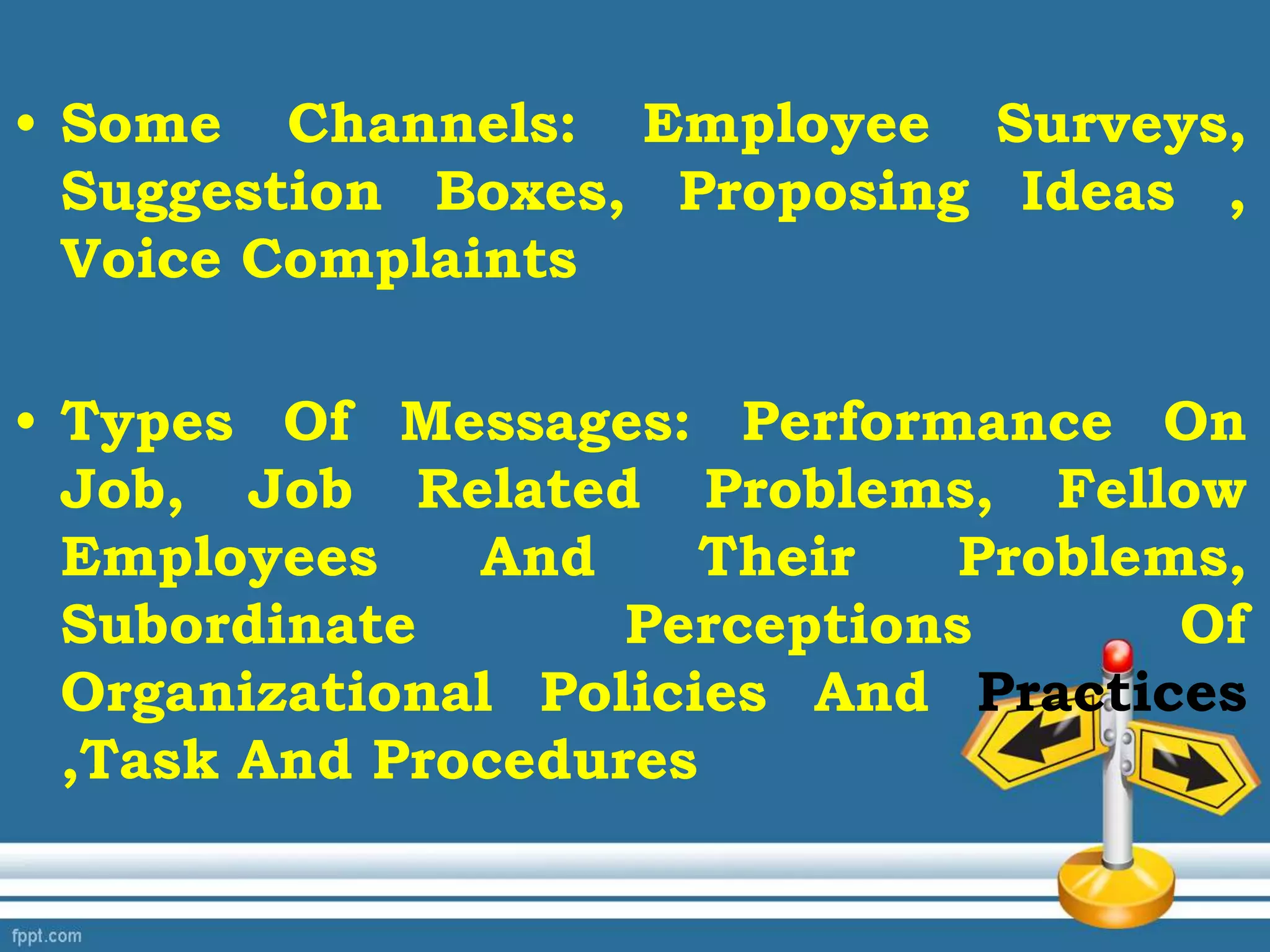
• Some Channels:Employee Surveys,
Suggestion Boxes, Proposing Ideas ,
Voice Complaints
• Types Of Messages: Performance On
Job, Job Related Problems, Fellow
Employees And Their Problems,
Subordinate Perceptions Of
Organizational Policies And Practices
,Task And Procedures
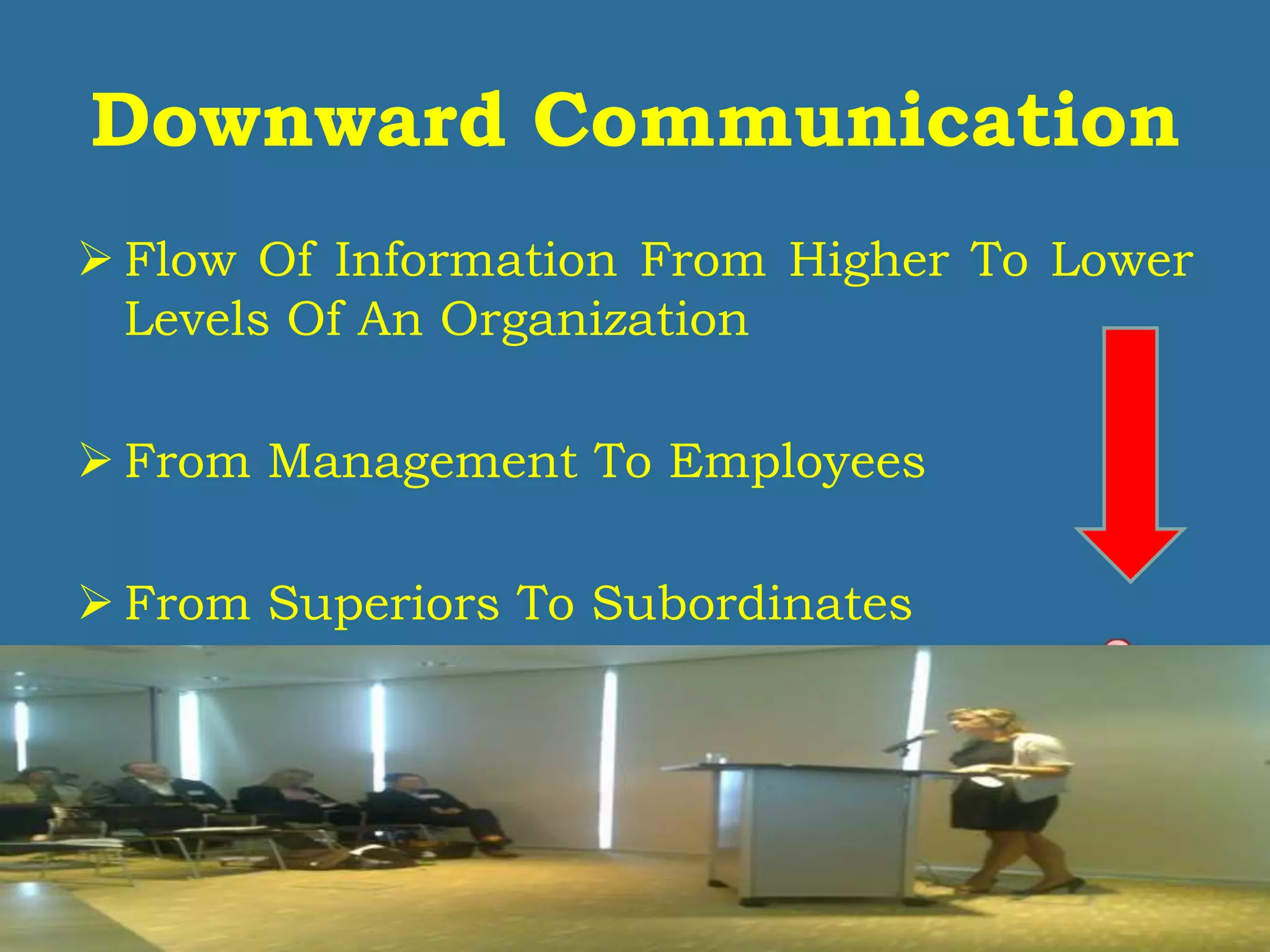
Downward Communication
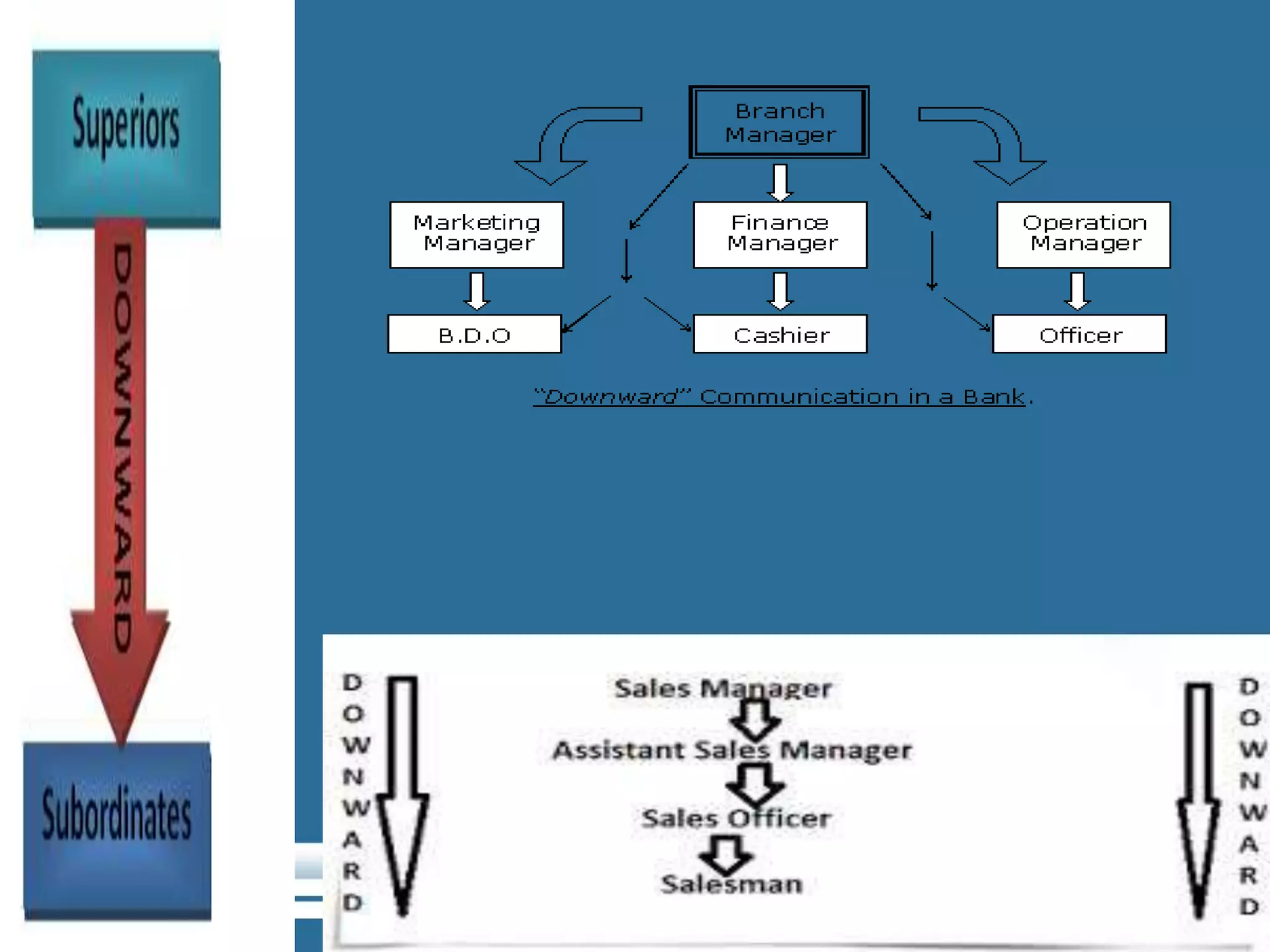
FlowOf Information From Higher To Lower
Levels Of An Organization
From Management To Employees
From Superiors To Subordinates
17.
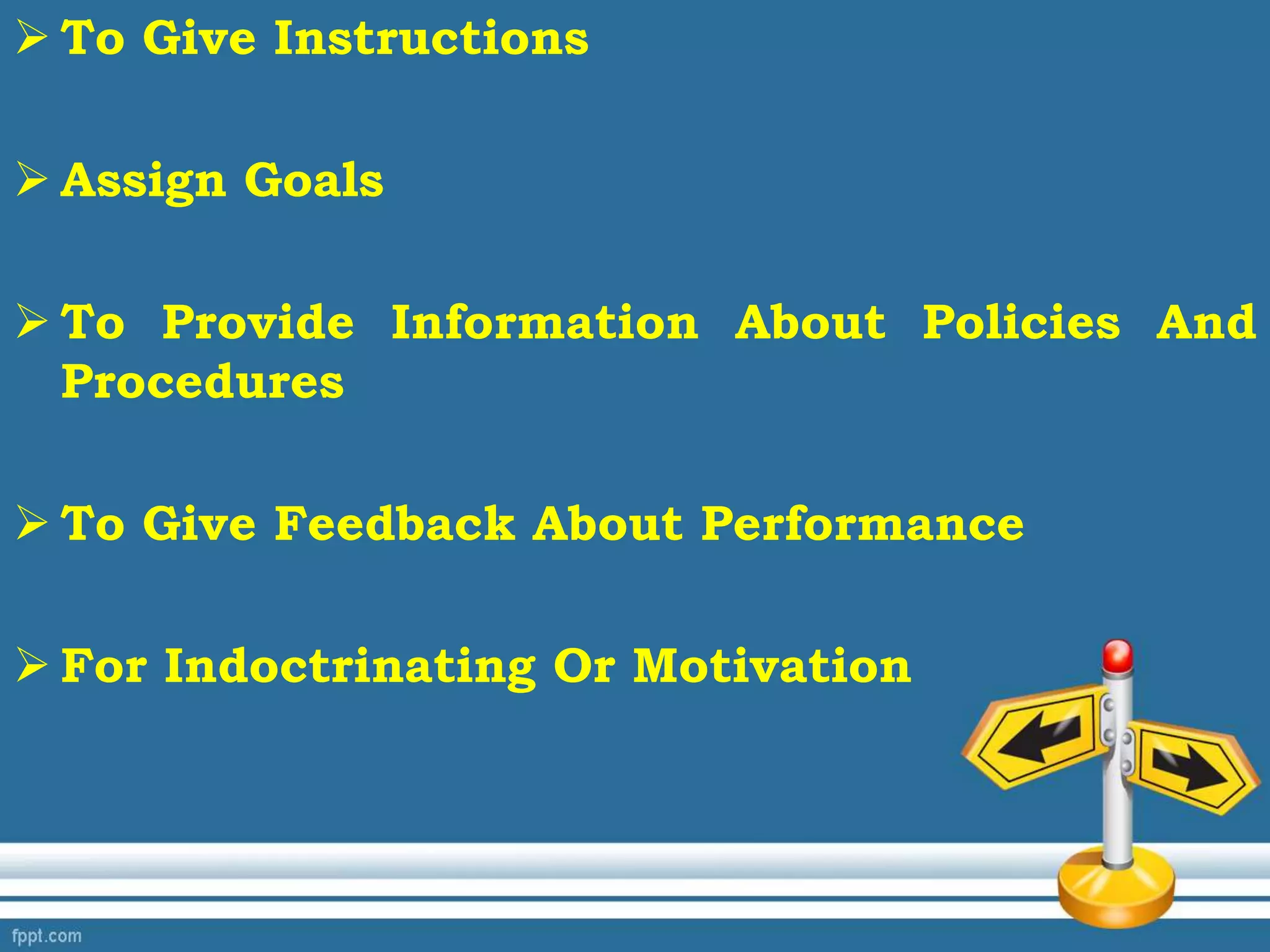
To GiveInstructions
Assign Goals
To Provide Information About Policies And
Procedures
To Give Feedback About Performance
For Indoctrinating Or Motivation
18.
Effective Downward CommunicationIs Crucial To An
Organization's Success
Creating Concise Communications And Maintaining A
Respectful Tone Help Ensure Effective Downward
Communication; Making Sure That Employees Clearly
Understand The Information Is Also Crucial
Differences In Experience, Knowledge, Levels Of Authority,
And Status Can Lead To Misunderstandings And
Misinterpretations