Interpersonal
Communication
By-
Jinesh Ahiya
Saumya Kasat
Anjali Singh
Kinjal Agarwal
Nidhi Kachadiya
Group-2
“Speak well of others, not of their faults.”
-Lord Buddha
“Communication must be HOT.
That is Honest, Open and Two-way.”
-Dan Oswald
Interpersonal Communication
Interpersonal Communication is the process by
which people exchange information through
verbal and non-verbal messages.
Interpersonal Communication skills includes :-

 Communication Skills
 Verbal Communication
 Assertiveness
 Non-verbal Communication
 Listening Skills
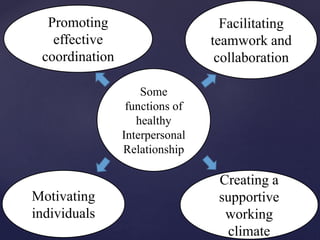
Some
functions of
healthy
Interpersonal
Relationship
Promoting
effective
coordination
Motivating
individuals
Facilitating
teamwork and
collaboration
Creating a
supportive
working
climate
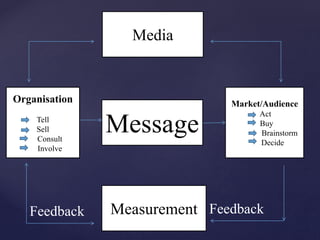
Media
Message
Measurement
Organisation
Tell
Sell
Consult
Involve
Market/Audience
Act
Buy
Brainstorm
Decide
FeedbackFeedback
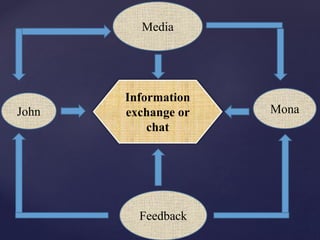
Information
exchange or
chat
Media
Mona
Feedback
John
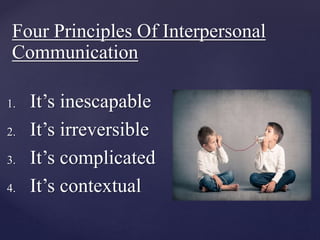
Four Principles Of Interpersonal
Communication
1. It’s inescapable
2. It’s irreversible
3. It’s complicated
4. It’s contextual
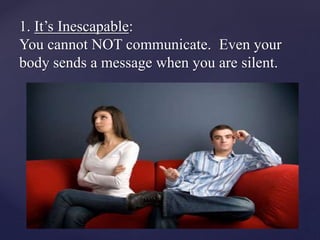
1. It’s Inescapable:
You cannot NOT communicate. Even your
body sends a message when you are silent.
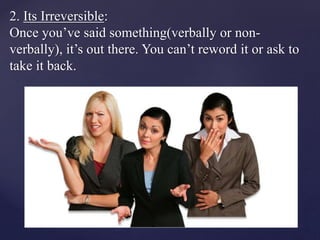
2. Its Irreversible:
Once you’ve said something(verbally or non-
verbally), it’s out there. You can’t reword it or ask to
take it back.
3. It’s Complicated:
Words are actually symbols, given different
meaning by different people in different
circumstances.
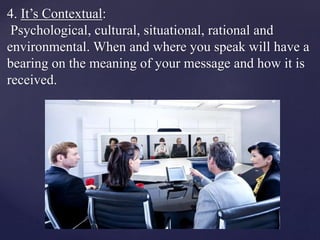
4. It’s Contextual:
Psychological, cultural, situational, rational and
environmental. When and where you speak will have a
bearing on the meaning of your message and how it is
received.
{
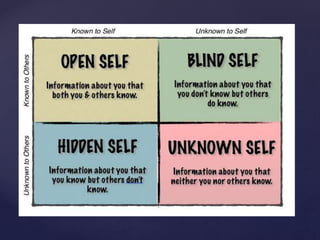
 The individual discloses these facts about himself or herself
to others, who then may pass this ahead.
 Behavior of individual is visible to all.
 Examples :
Mr. X Likes Bungee Jumping.
Mr. X dislikes being part of conflicts.
Open Area or The Arena
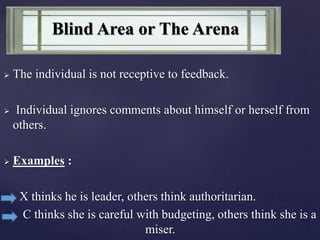
 The individual is not receptive to feedback.
 Individual ignores comments about himself or herself from
others.
 Examples :
X thinks he is leader, others think authoritarian.
C thinks she is careful with budgeting, others think she is a
miser.
Blind Area or The Arena
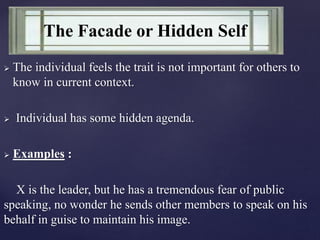
 The individual feels the trait is not important for others to
know in current context.
 Individual has some hidden agenda.
 Examples :
X is the leader, but he has a tremendous fear of public
speaking, no wonder he sends other members to speak on his
behalf in guise to maintain his image.
The Facade or Hidden Self
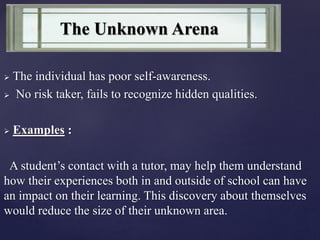
 The individual has poor self-awareness.
 No risk taker, fails to recognize hidden qualities.
 Examples :
A student’s contact with a tutor, may help them understand
how their experiences both in and outside of school can have
an impact on their learning. This discovery about themselves
would reduce the size of their unknown area.
The Unknown Arena
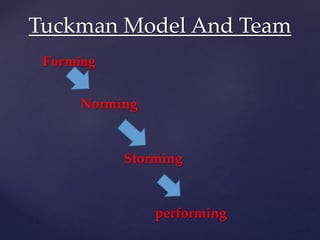
Forming
Norming
Storming
performing
Tuckman Model And Team
{Effective interpersonal communication
would help make the communication
process effortless and smooth.
Gateways to Effective
Interpersonal Communication
{
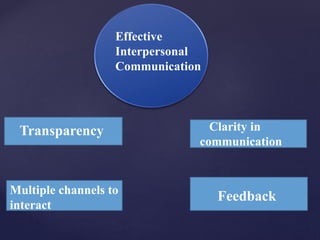
Effective
Interpersonal
Communication
Transparency
Multiple channels to
interact
Clarity in
communication
Feedback
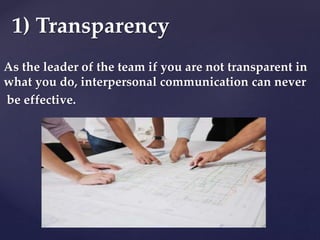
As the leader of the team if you are not transparent in
what you do, interpersonal communication can never
be effective.
1) Transparency
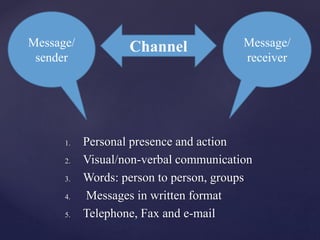
1. Personal presence and action
2. Visual/non-verbal communication
3. Words: person to person, groups
4. Messages in written format
5. Telephone, Fax and e-mail
ChannelMessage/
sender
Message/
receiver
As a leader subordinate or peer you should keep in
mind that preciseness and clarity in what you
communicate ae important because if you are not
clear interpersonal communication would fail.
3) Clarity in communication
If the team members are not open to receiving or
giving feedback the team would feel demoralized
hampering the interpersonal communication.
4) Feedback
{
Interpersonal
Communication Skills
Interpersonal skills are all about working with other
people.
Interpersonal skills are actually characteristic traits like
Manners, attitude, courtesy, habits, behavior and
appearance which helps us to communicate and maintain
relationship with others.
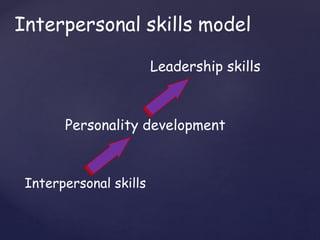
Interpersonal Skills
Interpersonal skills model
Interpersonal skills
Personality development
Leadership skills
{
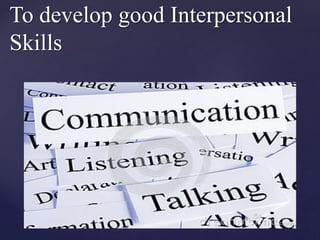
To develop good Interpersonal
Skills
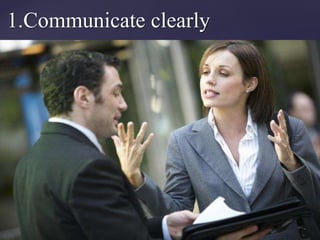
1.Communicate clearly
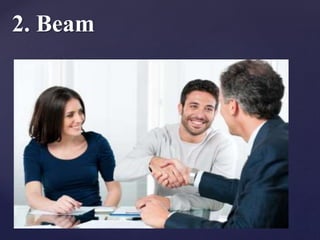
2. Beam
3. Be appreciative
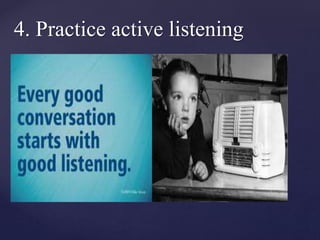
4. Practice active listening
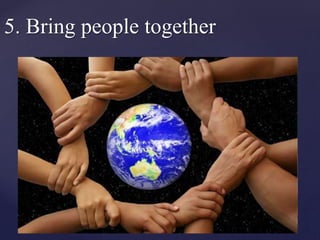
5. Bring people together
6. Resolve conflicts
7. Humor them
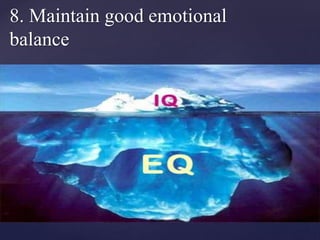
8. Maintain good emotional
balance
interpersonal communication

interpersonal communication