Cellular
Respiration
Introduction and Overview
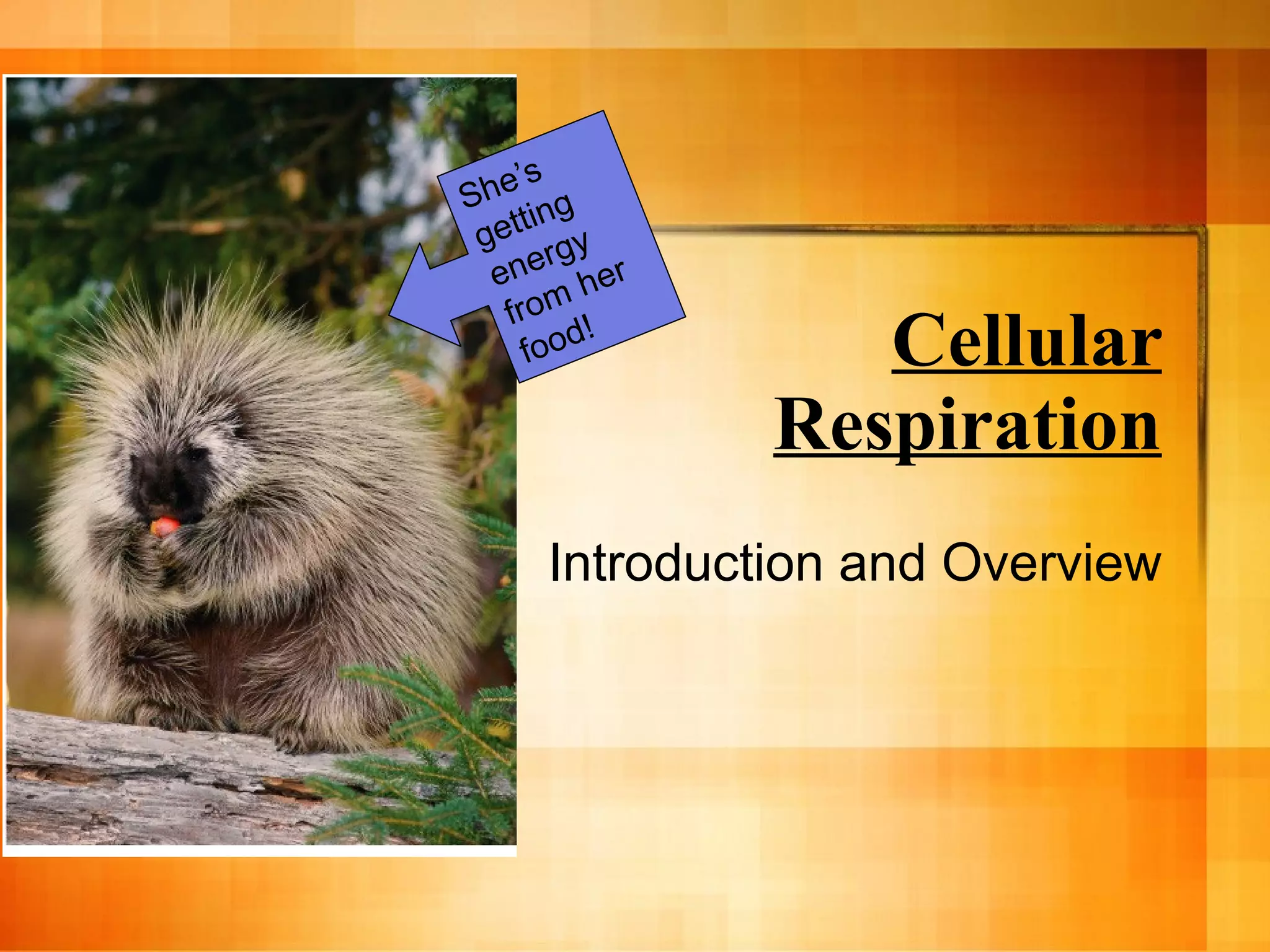
She’s
getting
energy
from her
food!
As always…
Key concepts are underlined
Vocabulary terms are in green
On your whiteboards
What are
some things
you feel
when you
have not
eaten in a
long time?
Energy for CellsEnergy for Cells
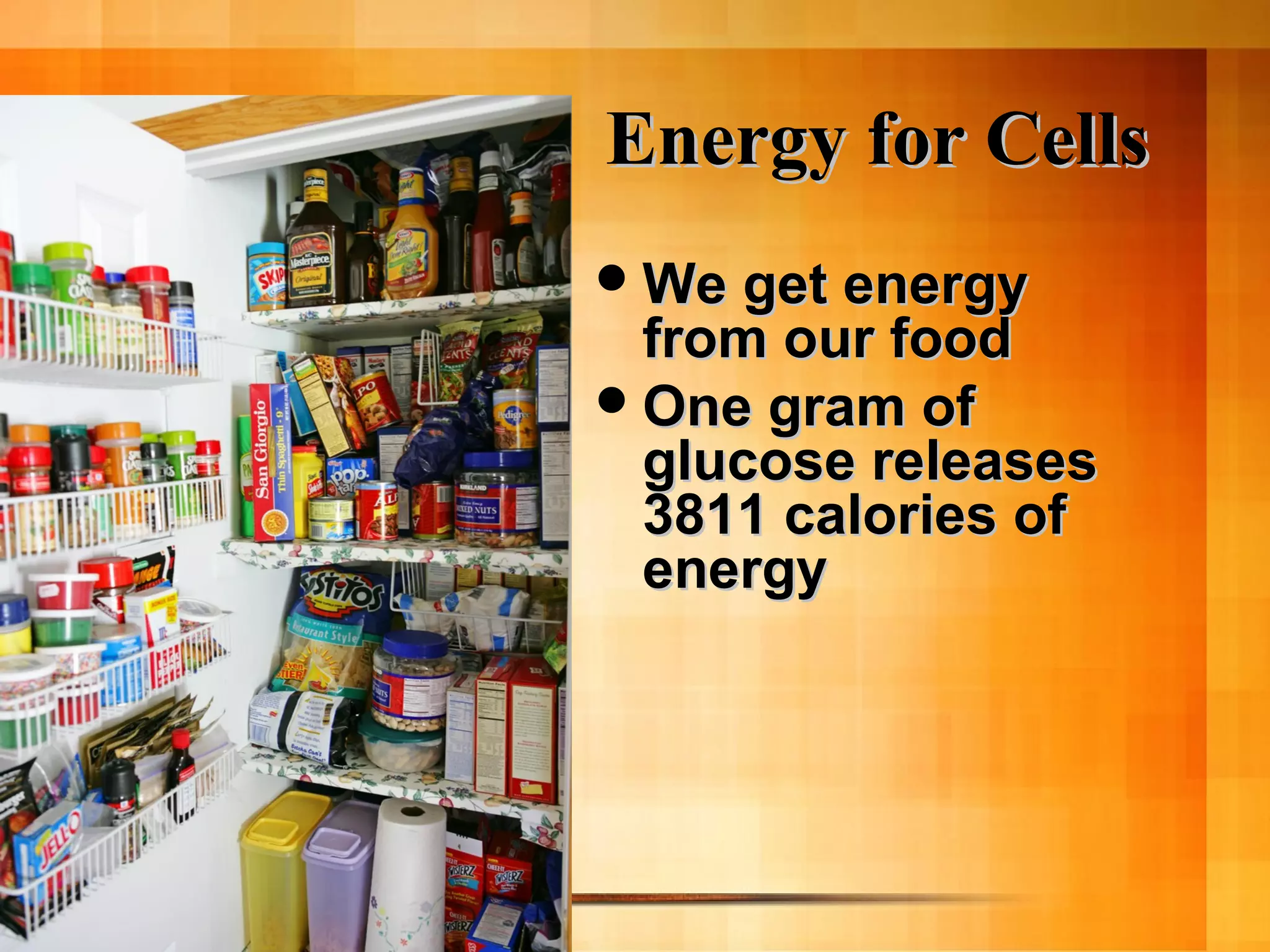
We get energyWe get energy
from our foodfrom our food
One gram ofOne gram of
glucose releasesglucose releases
3811 calories of3811 calories of
energyenergy
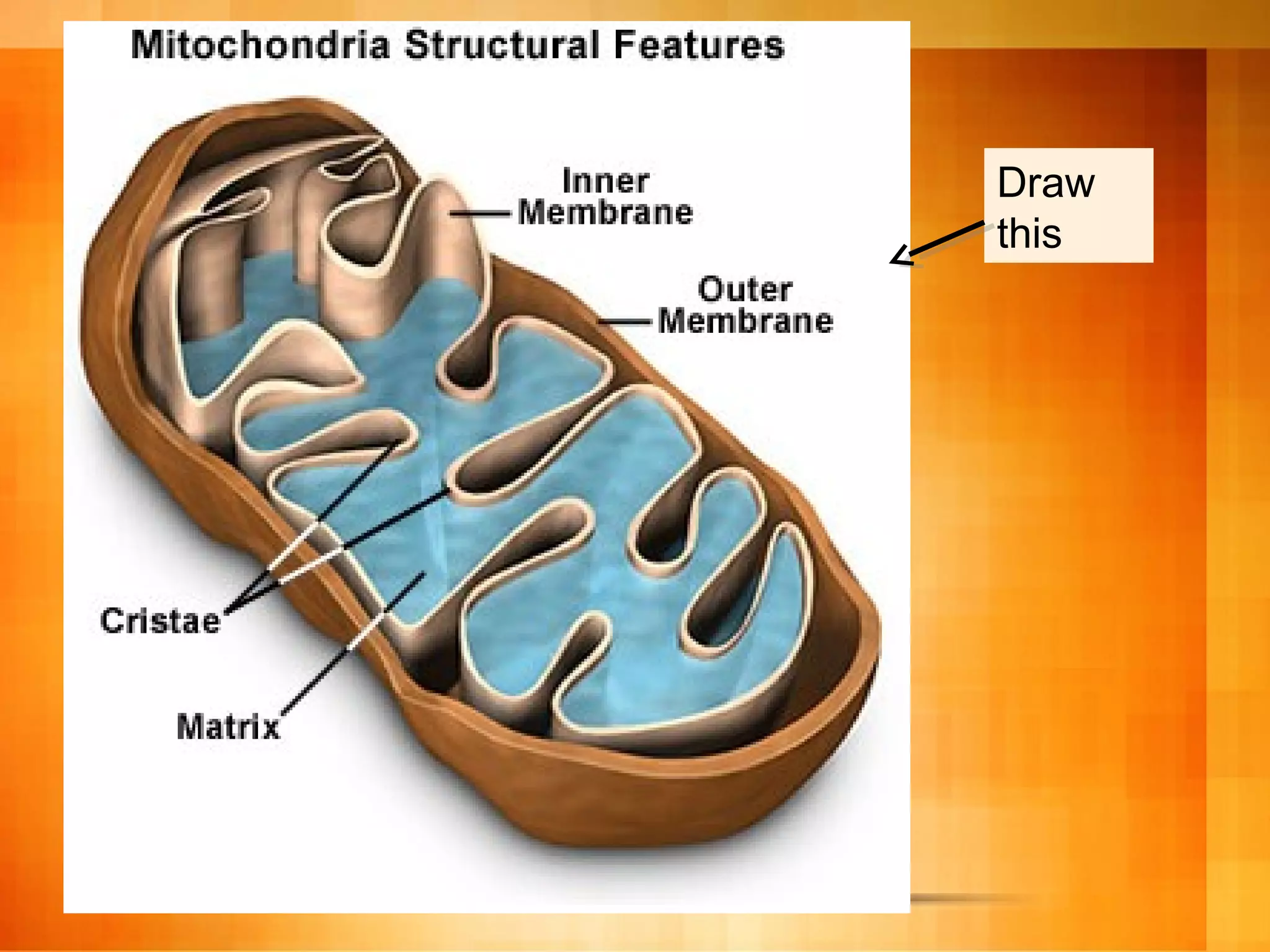
Draw
this
To make ATP we need 2*
things
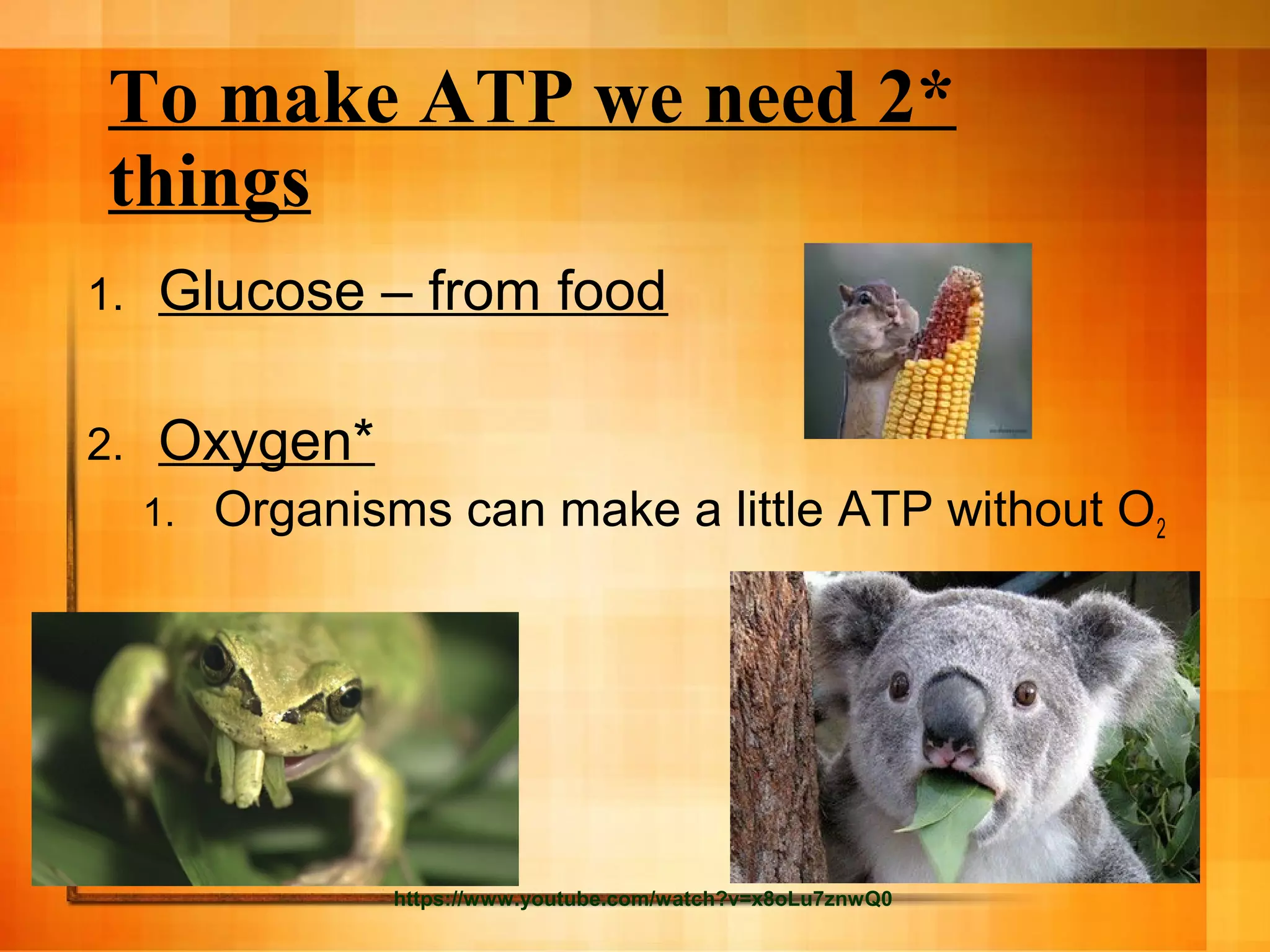
1. Glucose – from food
2. Oxygen*
1. Organisms can make a little ATP without O2
https://www.youtube.com/watch?v=x8oLu7znwQ0
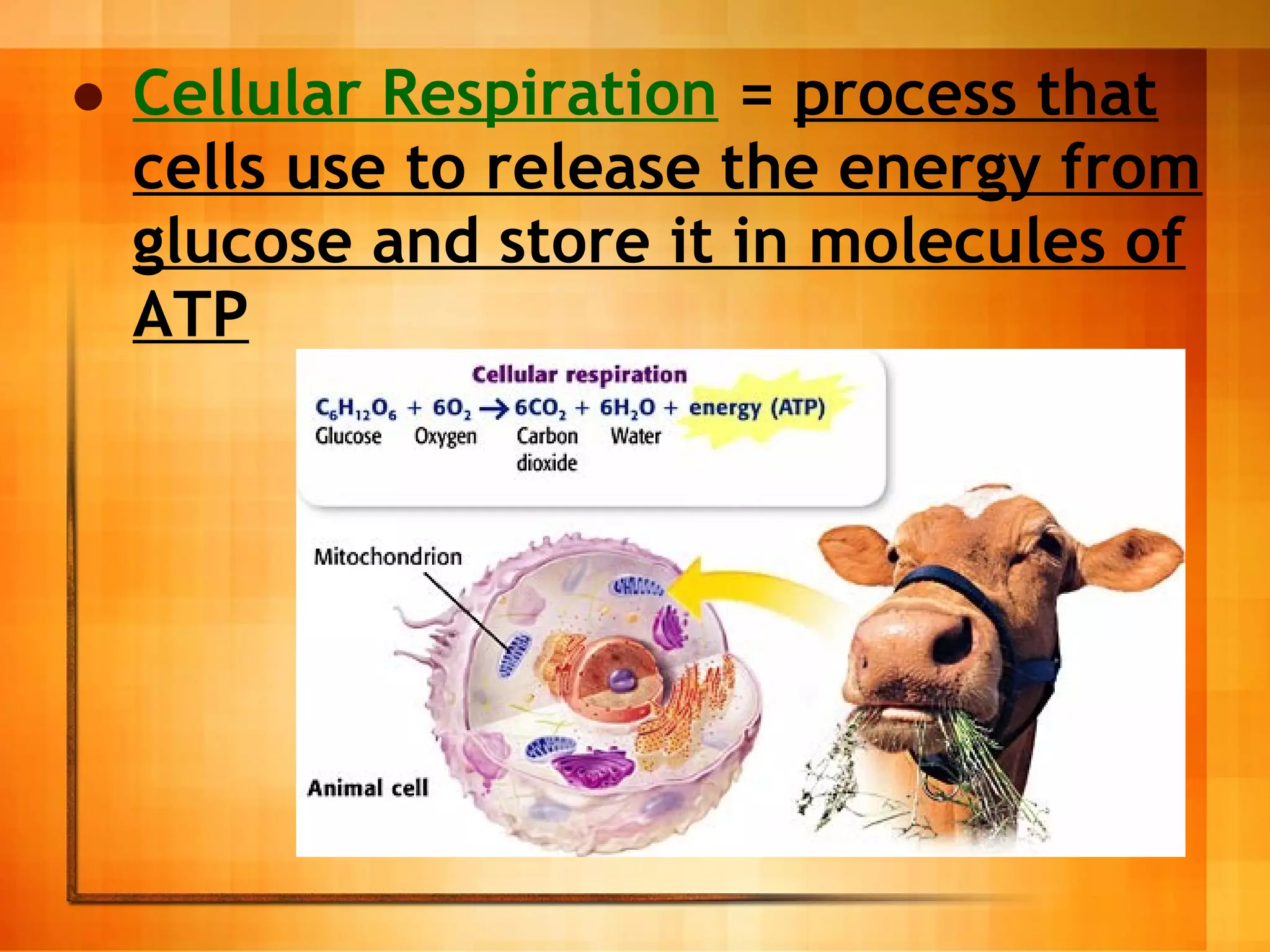
● Cellular Respiration = process that
cells use to release the energy from
glucose and store it in molecules of
ATP
On your whiteboards
What is the chemical symbol for:
Oxygen
Water
Carbon dioxide
Glucose
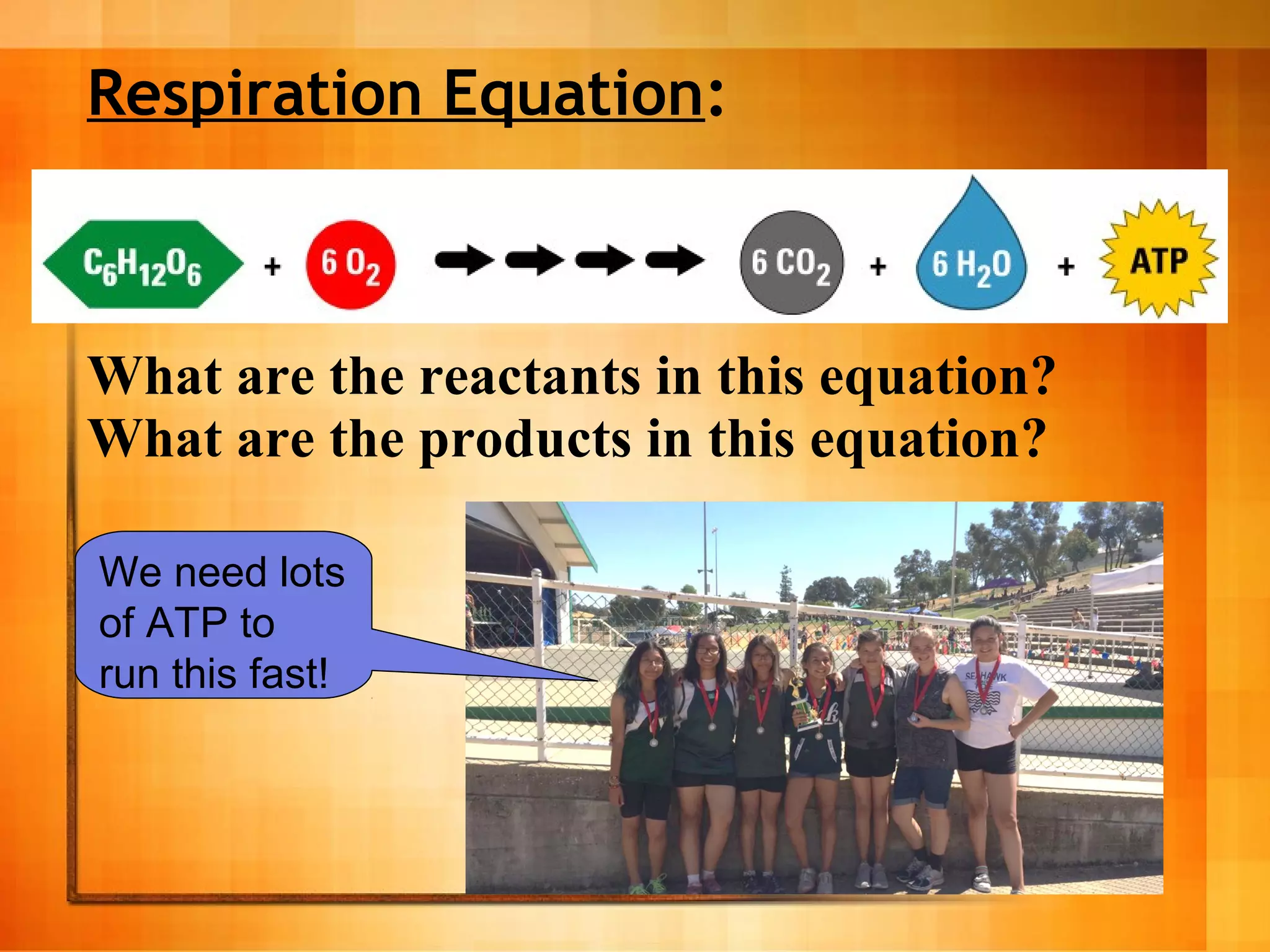
Respiration Equation:
What are the reactants in this equation?
What are the products in this equation?
We need lots
of ATP to
run this fast!
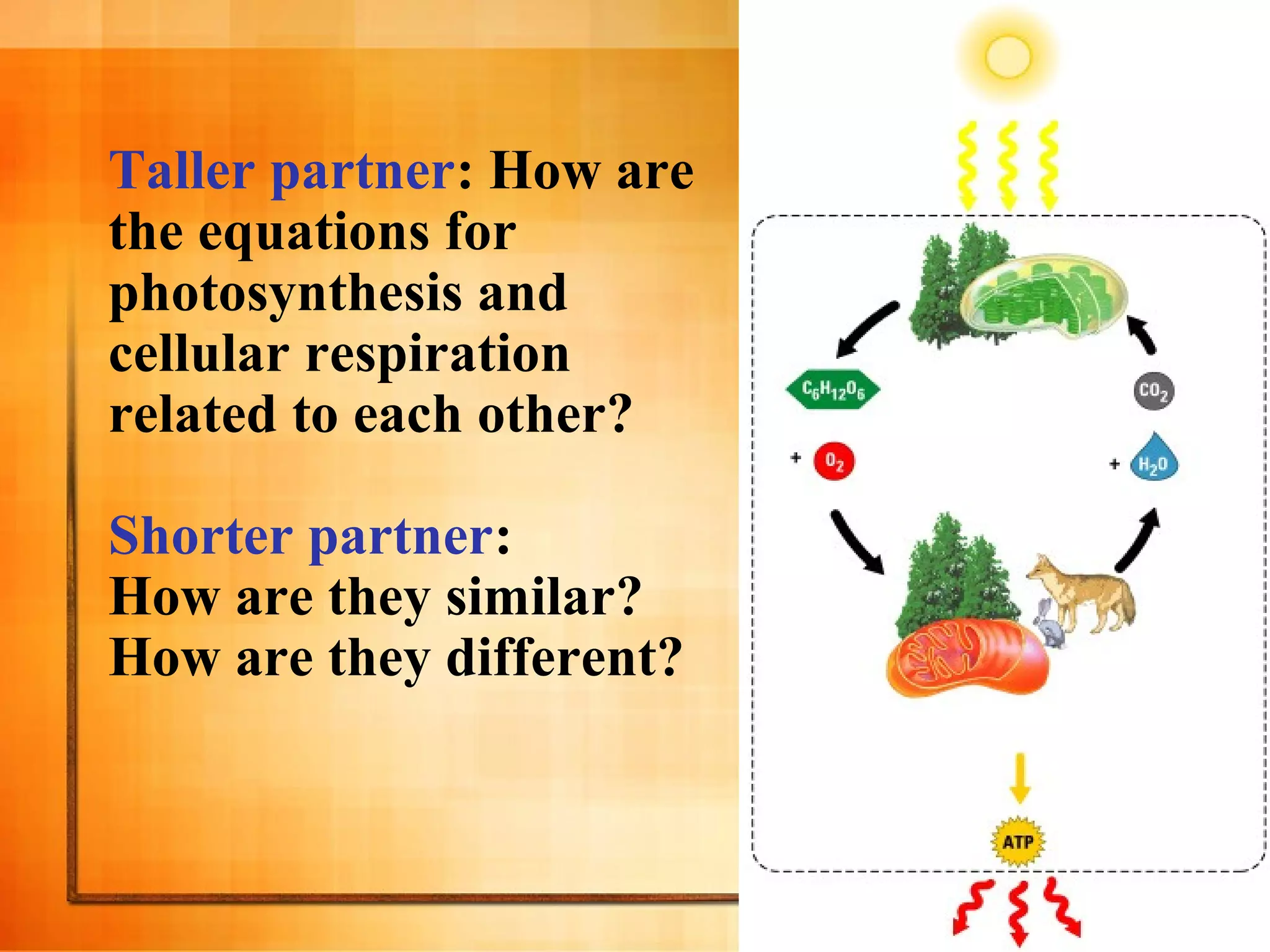
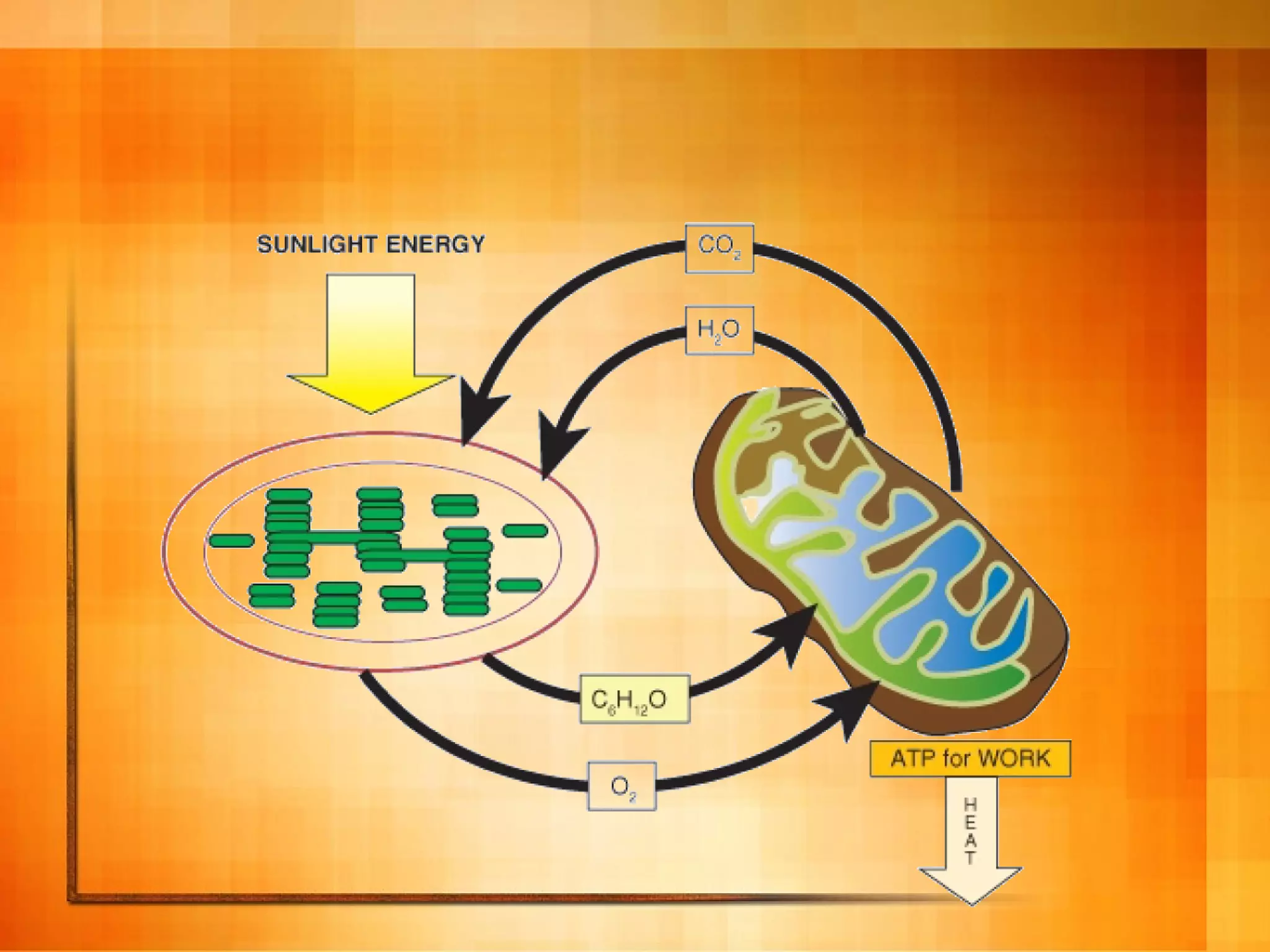
Taller partner: How are
the equations for
photosynthesis and
cellular respiration
related to each other?
Shorter partner:
How are they similar?
How are they different?
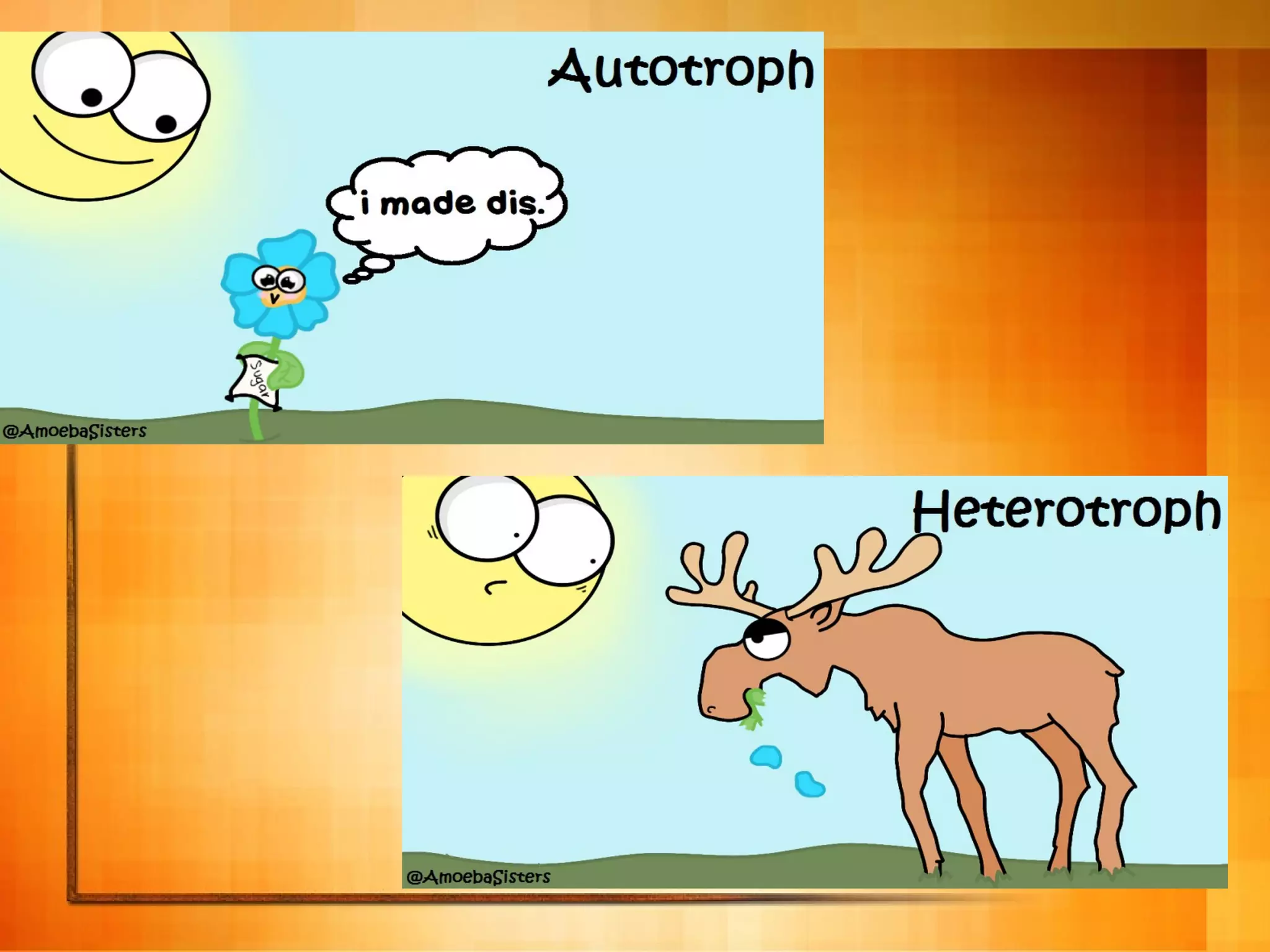
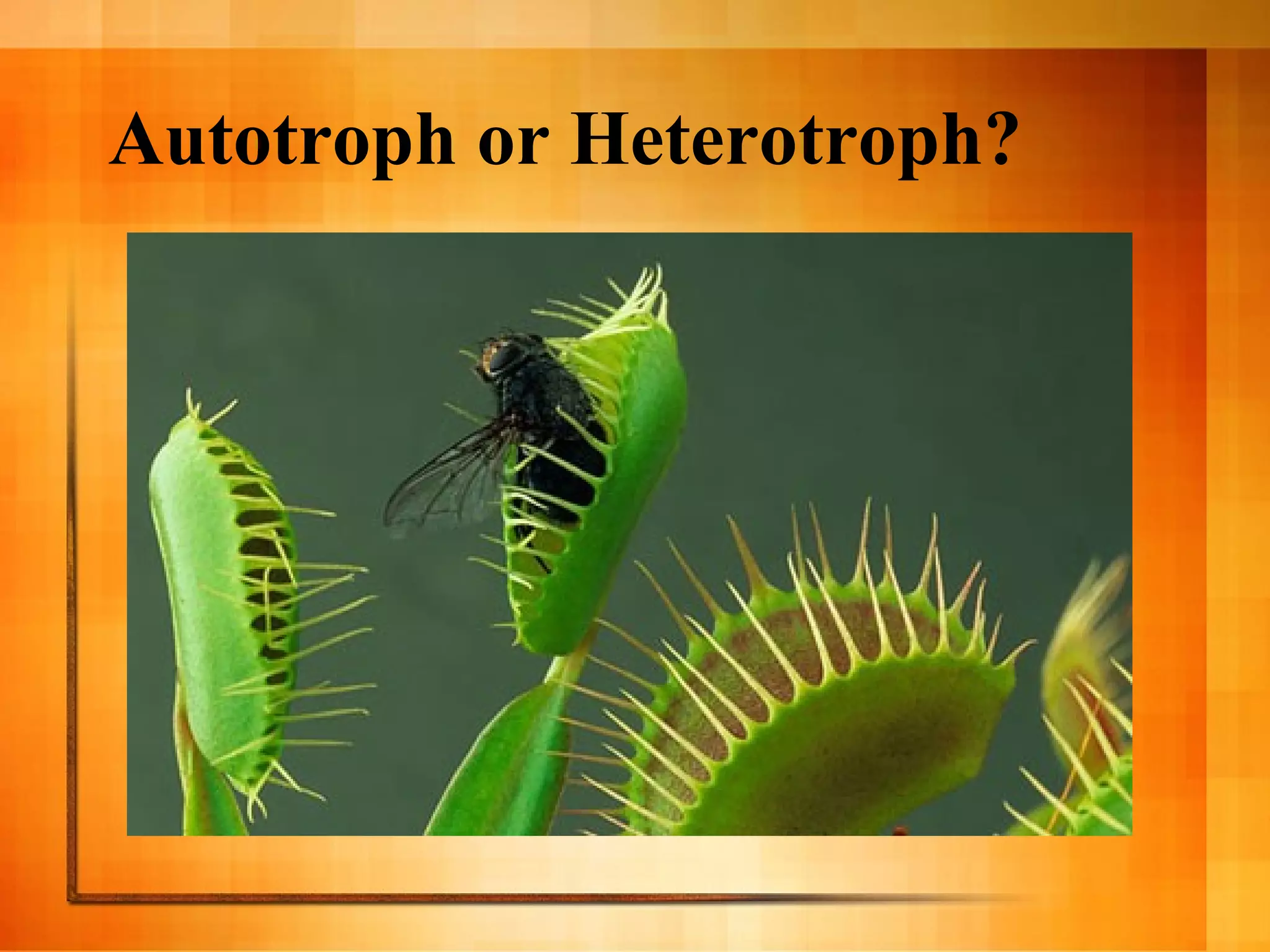
Autotroph or Heterotroph?
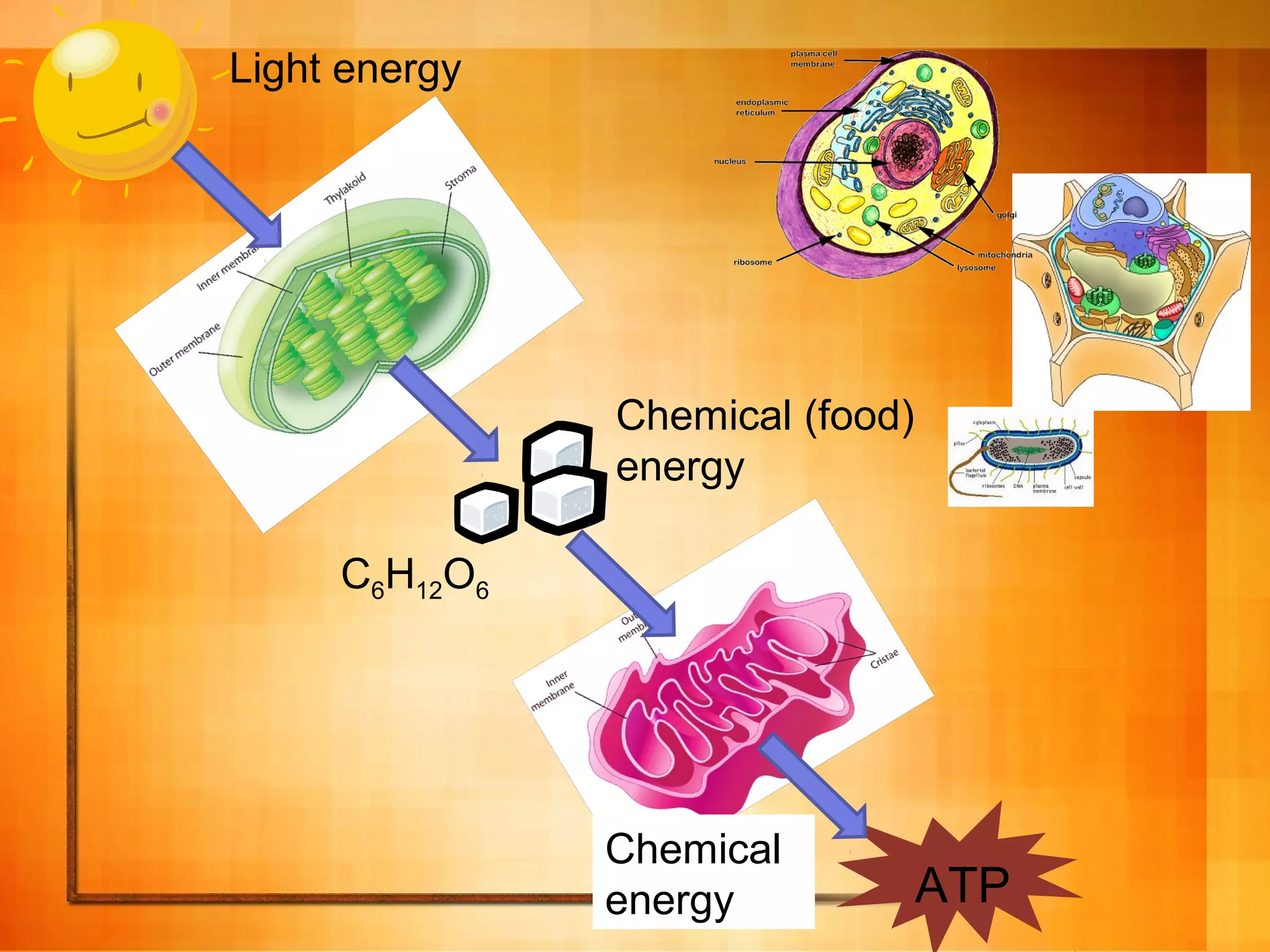
C6H12O6
ATP
Light energy
Chemical (food)
energy
Chemical
energy
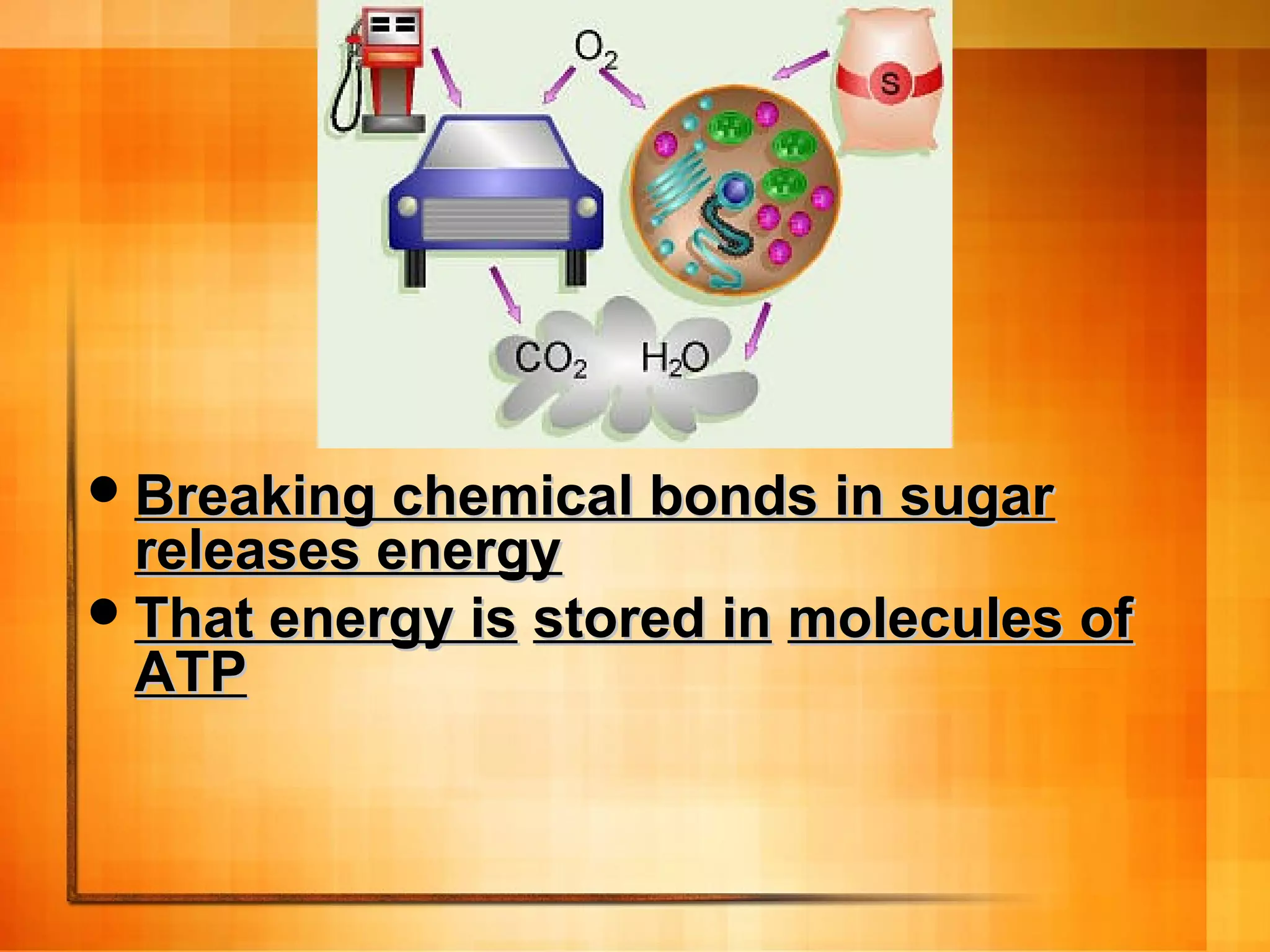
Breaking chemical bonds in sugarBreaking chemical bonds in sugar
releases energyreleases energy
That energy isThat energy is stored instored in molecules ofmolecules of
ATPATP
On your whiteboards
What is RELEASED
when chemical bonds are
broken?
So…what is STORED in
chemical bonds?
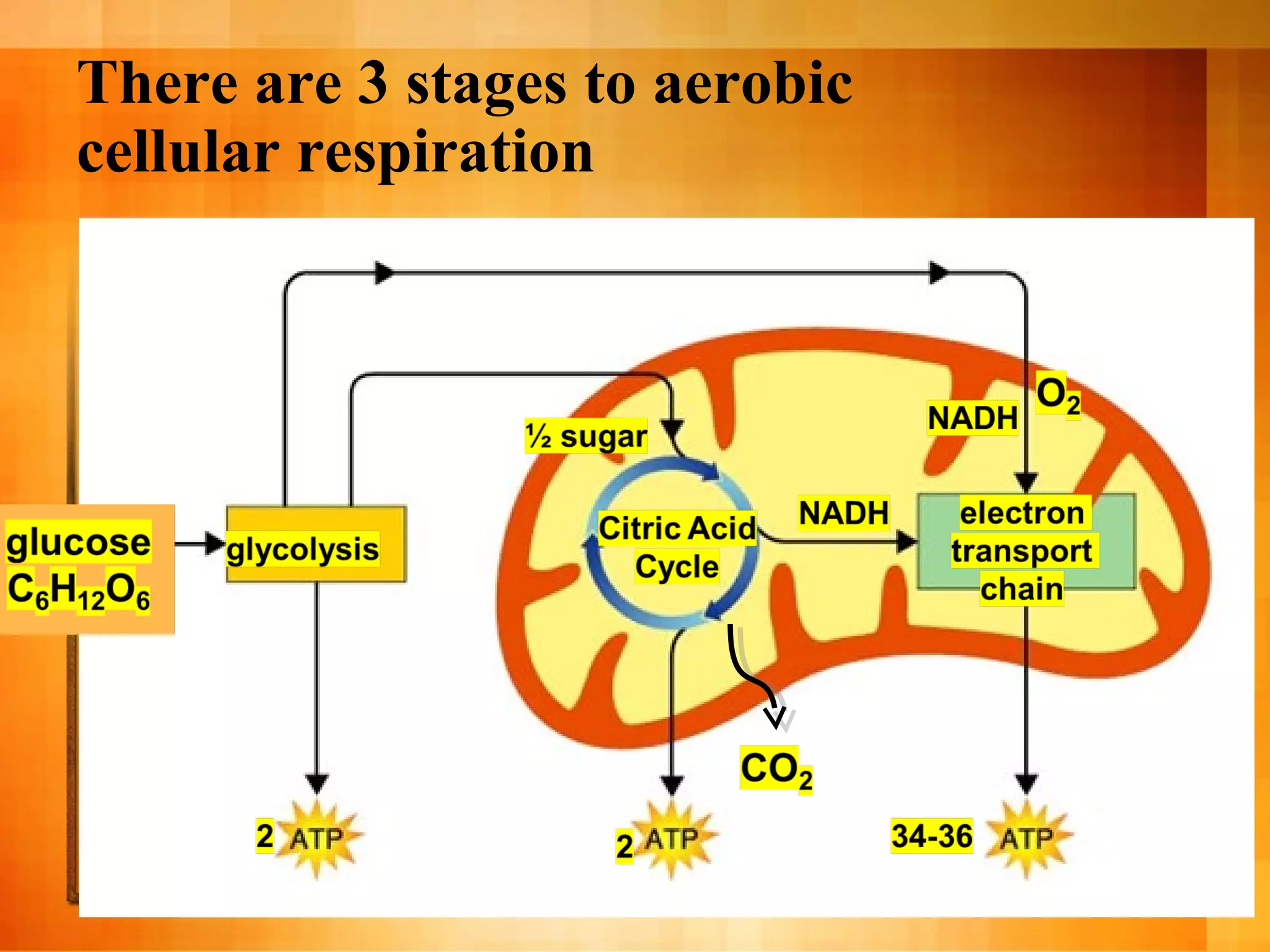
There are 3 stages to aerobic
cellular respiration
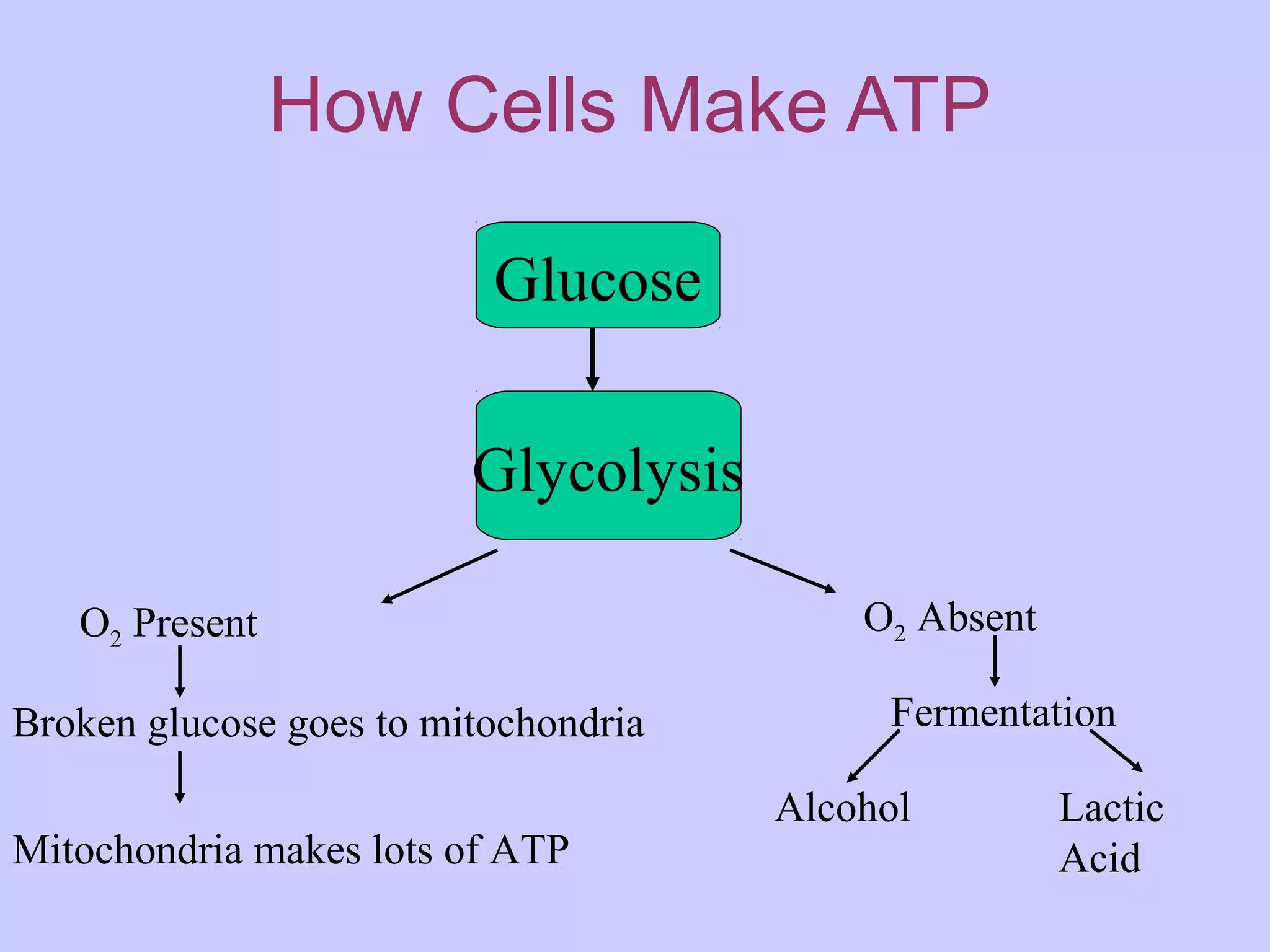
How Cells Make ATP
Glucose
Glycolysis
O2 Present O2 Absent
Broken glucose goes to mitochondria
Mitochondria makes lots of ATP
Fermentation
Alcohol Lactic
Acid
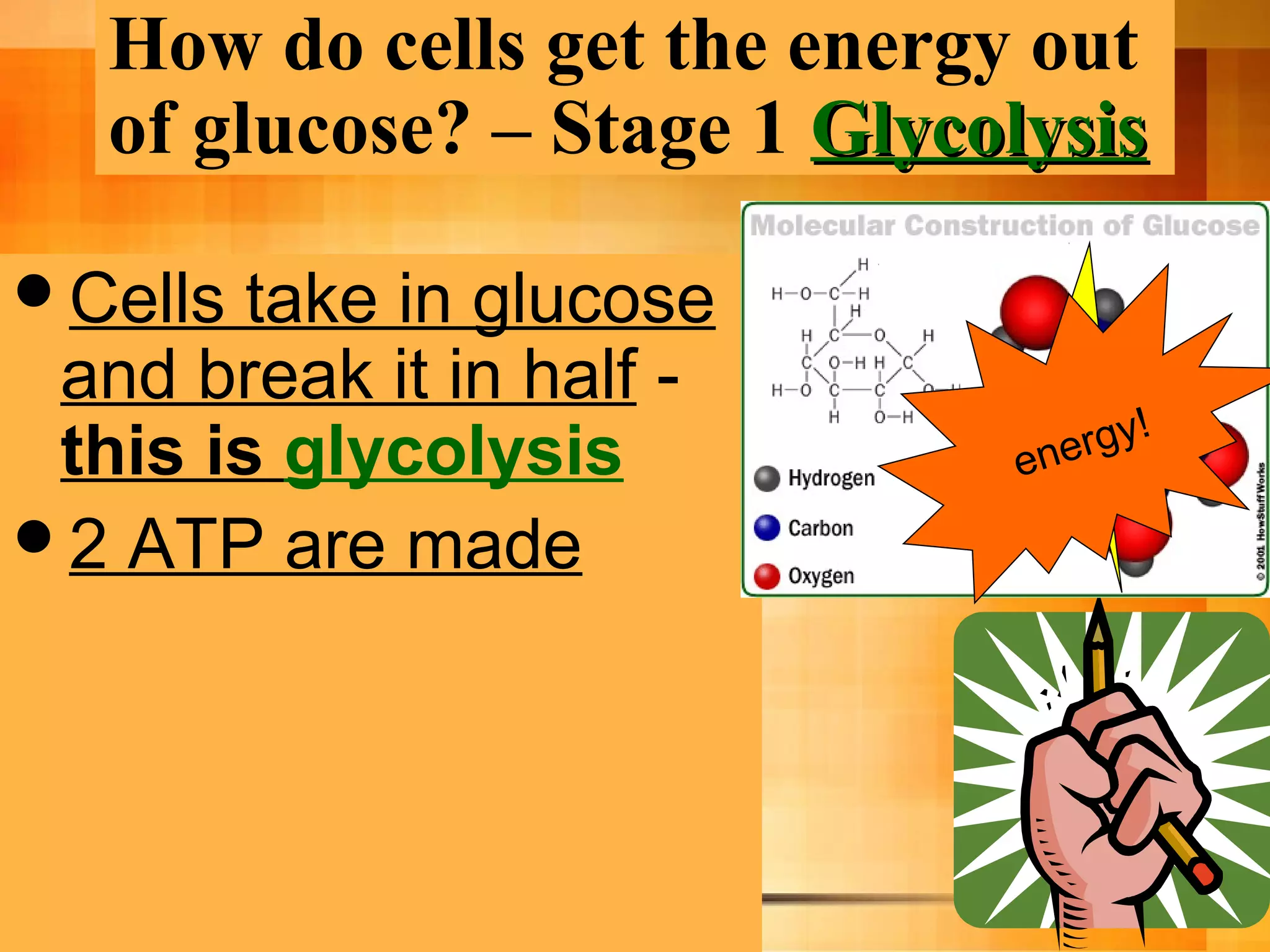
How do cells get the energy out
of glucose? – Stage 1 GlycolysisGlycolysis
Cells take in glucose
and break it in half -
this is glycolysis
2 ATP are made
energy!
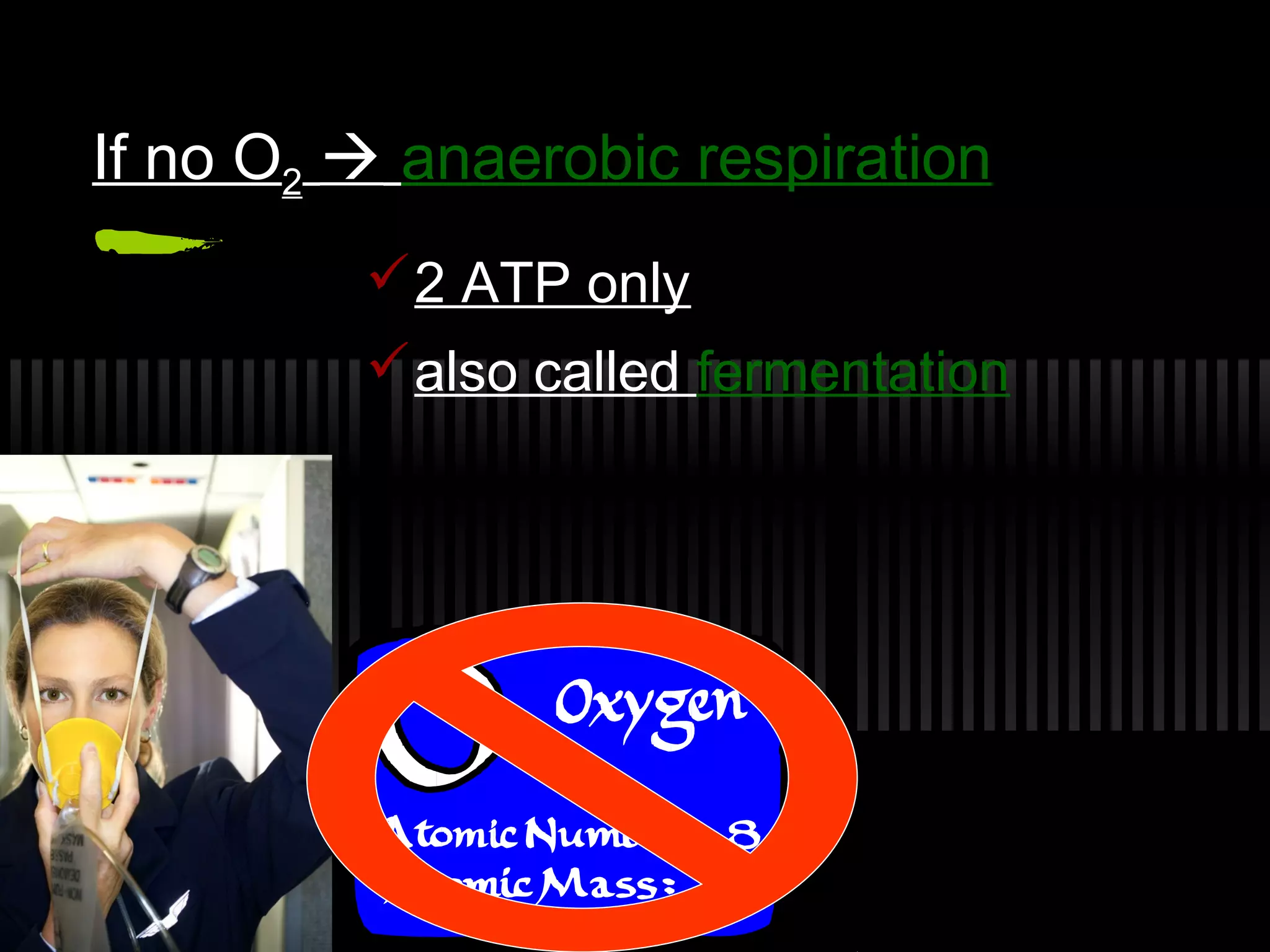
If no OIf no O22  anaerobic respirationanaerobic respiration
2 ATP only
also called fermentation
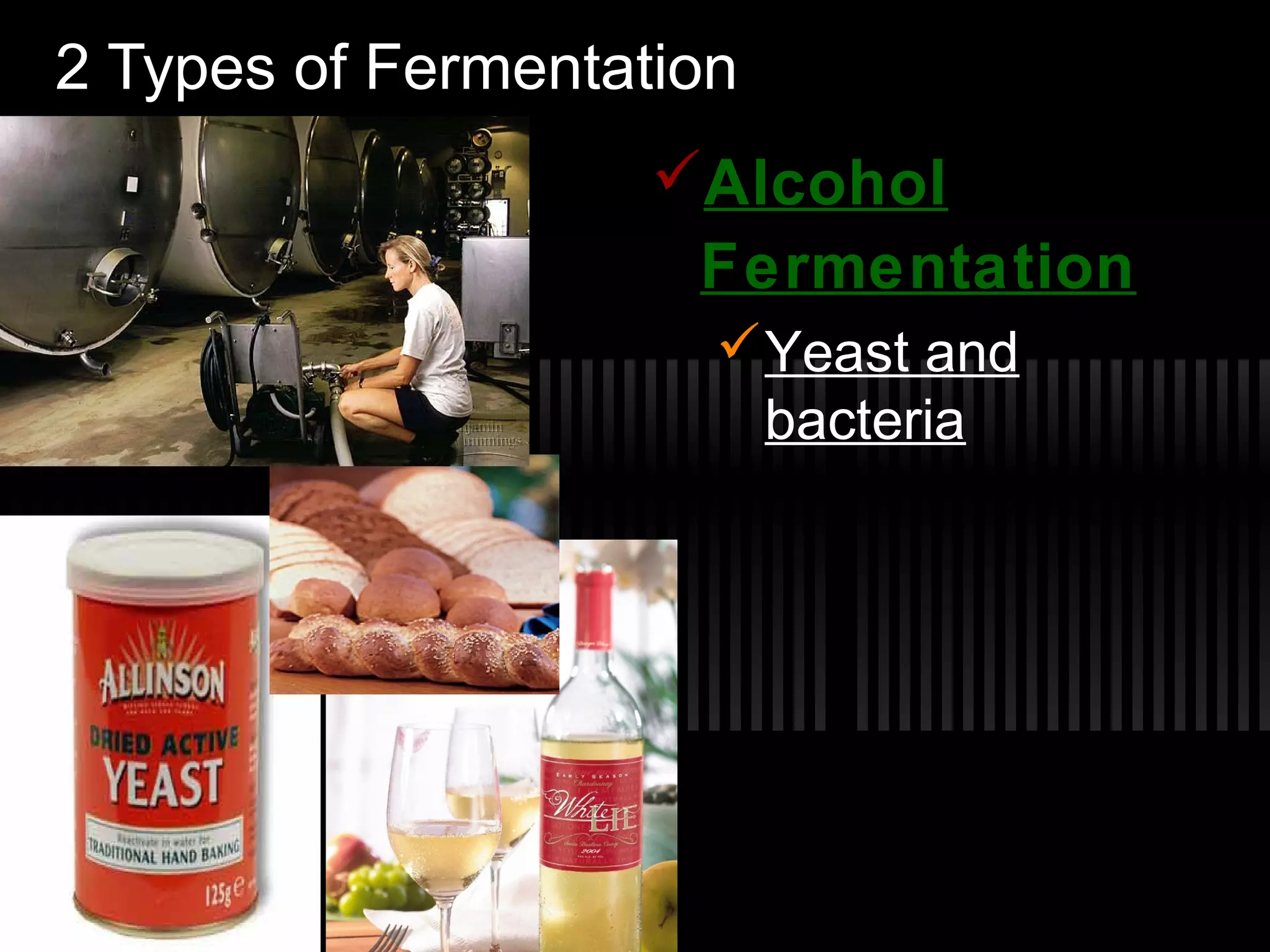
2 Types of Fermentation
AlcoholAlcohol
FermentationFermentation
Yeast and
bacteria
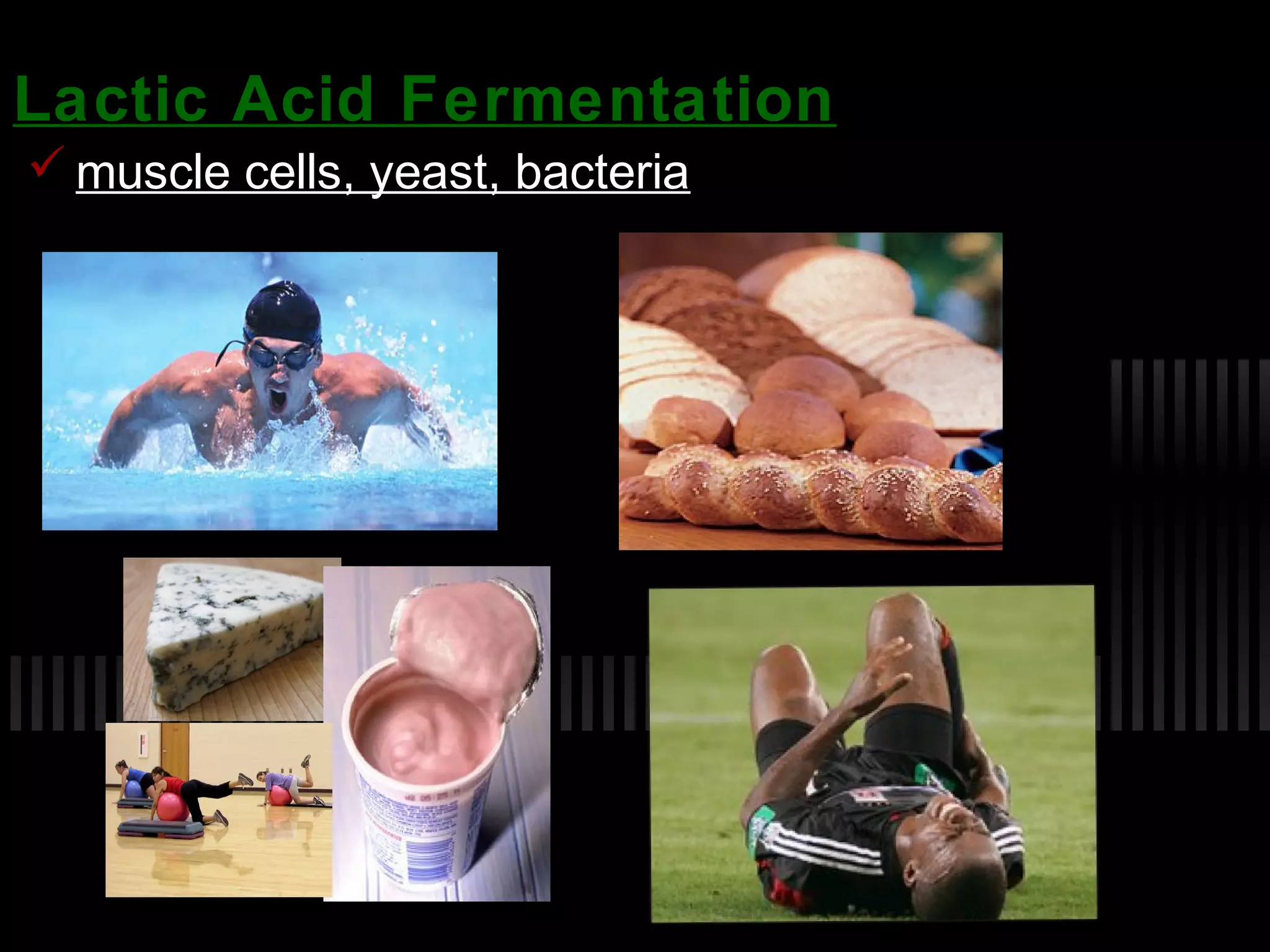
Lactic Acid FermentationLactic Acid Fermentation
 muscle cells, yeast, bacteria
11-2-16 Warm up
 Do all living things require oxygen to
make ATP? Explain.
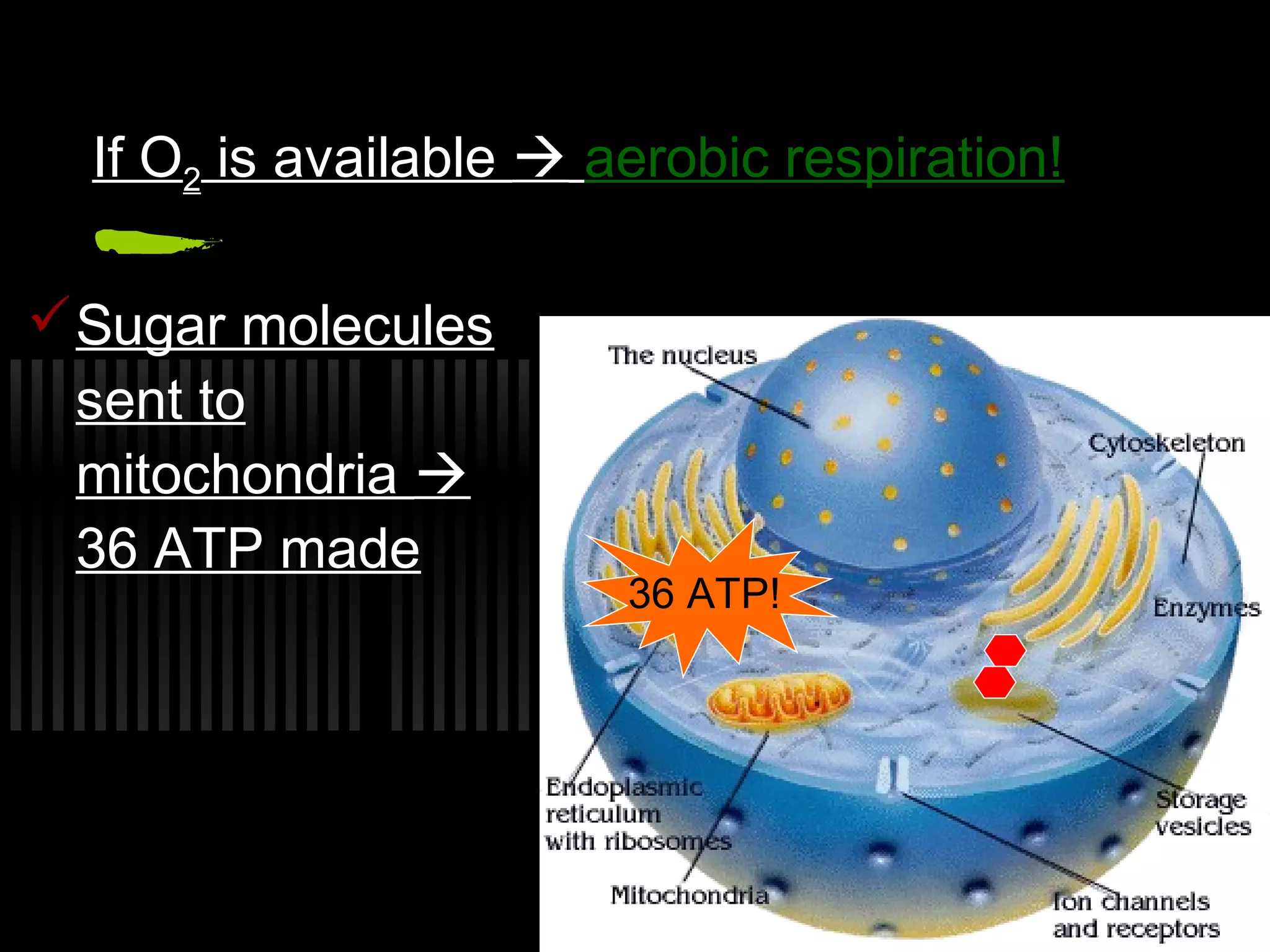
If O2 is available  aerobic respiration!aerobic respiration!
Sugar molecules
sent to
mitochondria 
36 ATP made
36 ATP!
2 ATP
36 ATP!
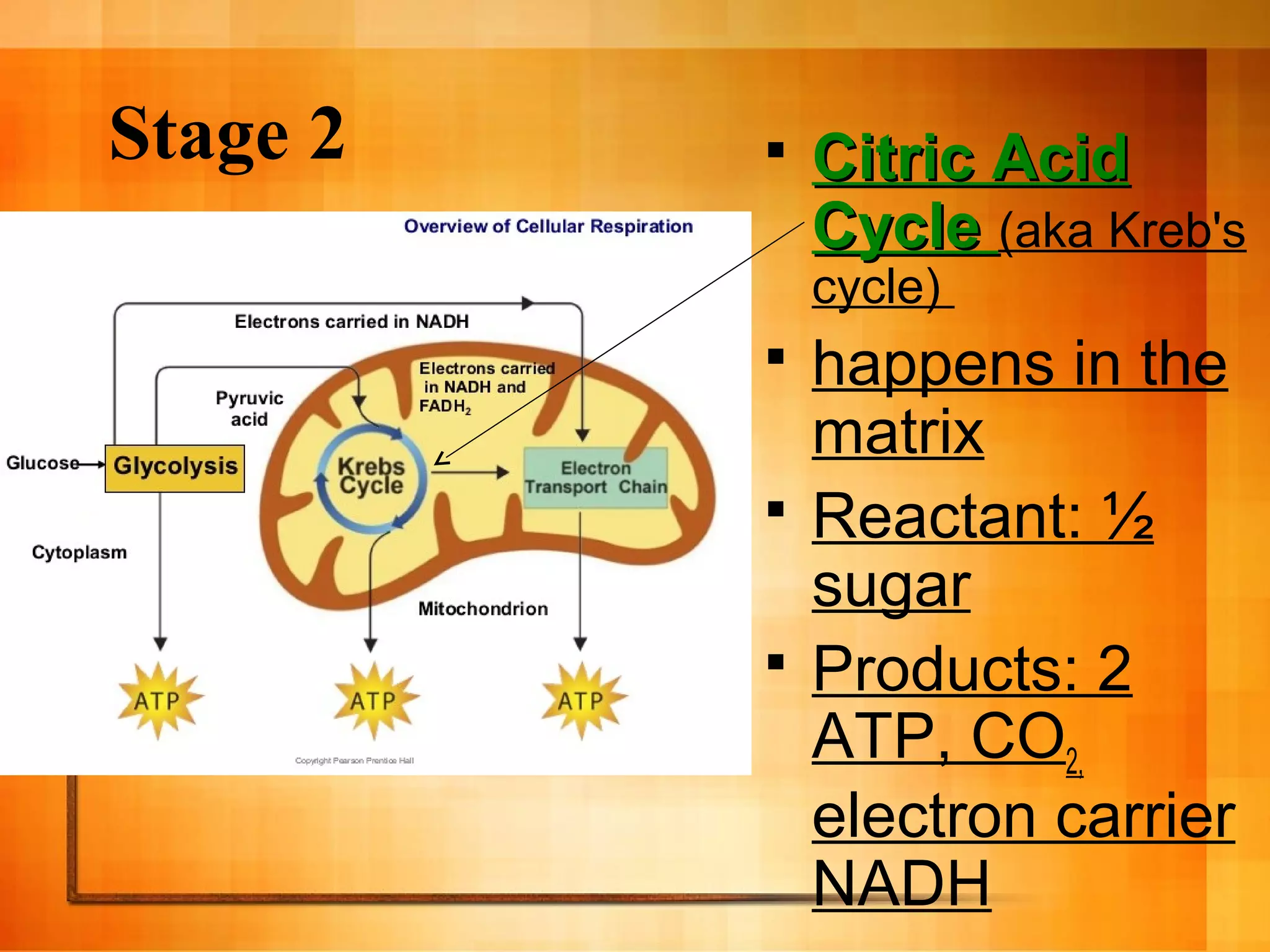
Stage 2  Citric AcidCitric Acid
CycleCycle (aka Kreb's
cycle)
 happens in the
matrix
 Reactant: ½
sugar
 Products: 2
ATP, CO2,
electron carrier
NADH
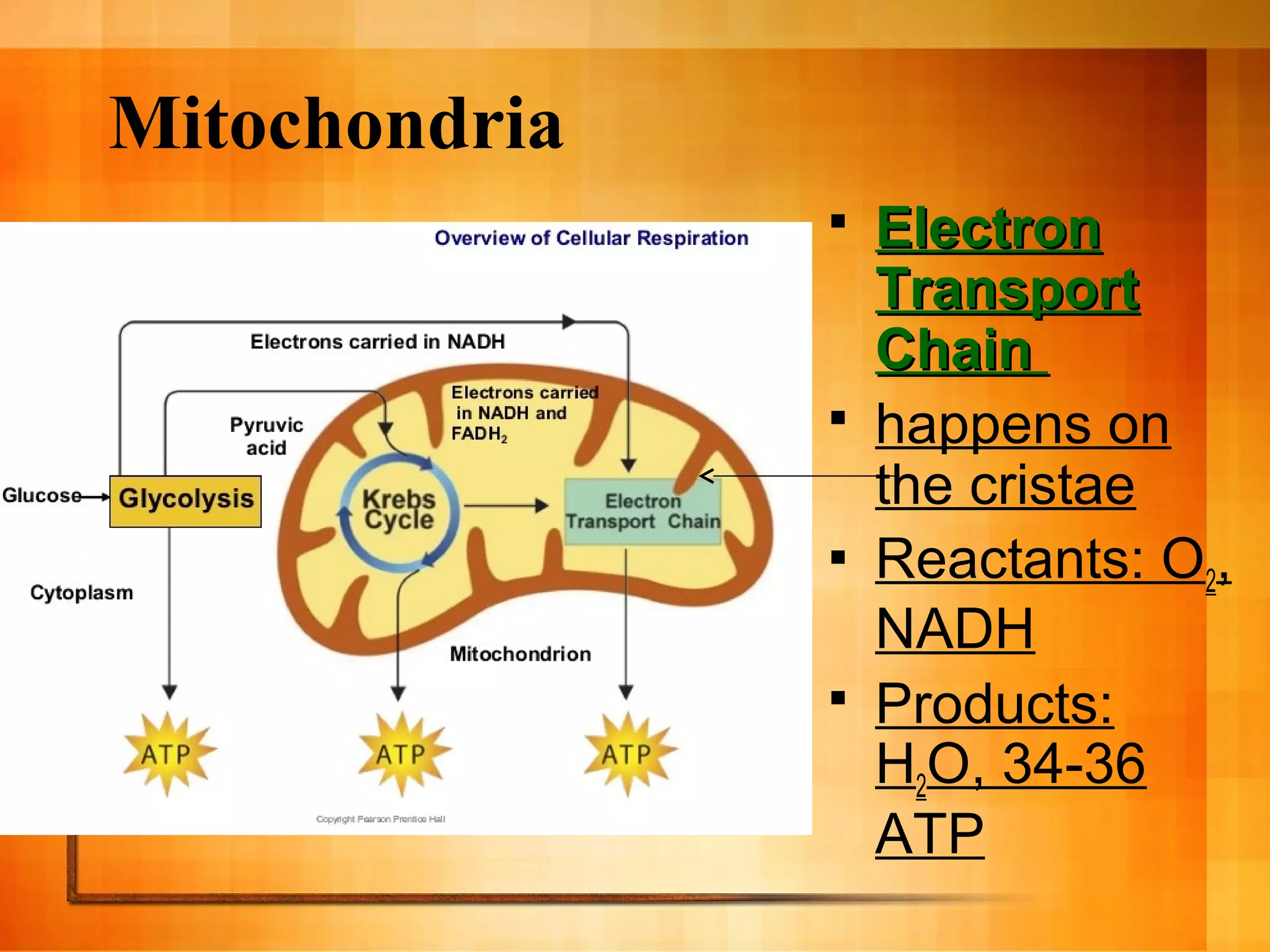
Mitochondria
 ElectronElectron
TransportTransport
ChainChain
 happens on
the cristae
 Reactants: O2,
NADH
 Products:
H2O, 34-36
ATP
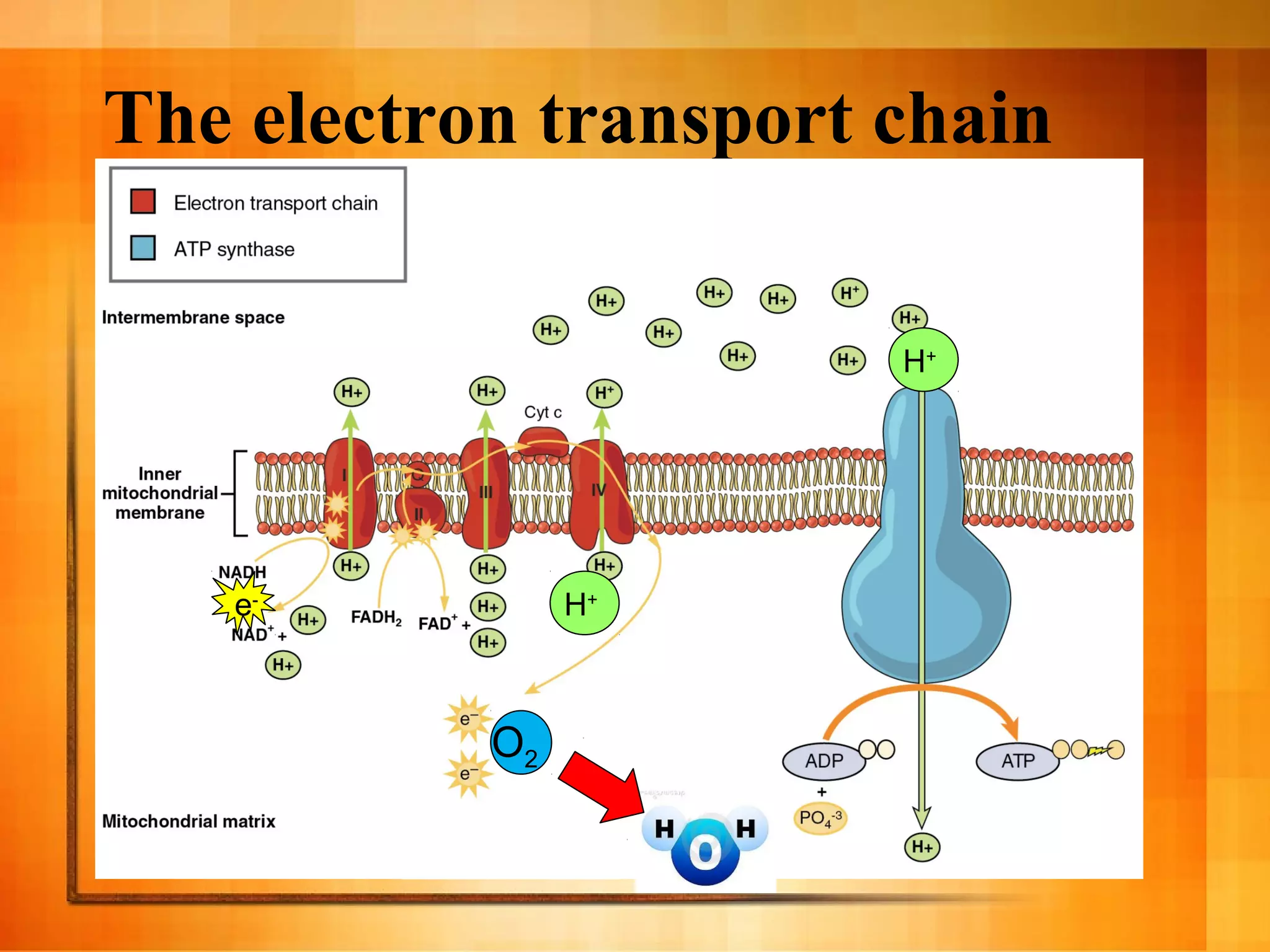
The electron transport chain
O2
e-
H+
H+
http://abcnews.go.com/Archives/video/oct-1982-tylenol-poisoning-9727309
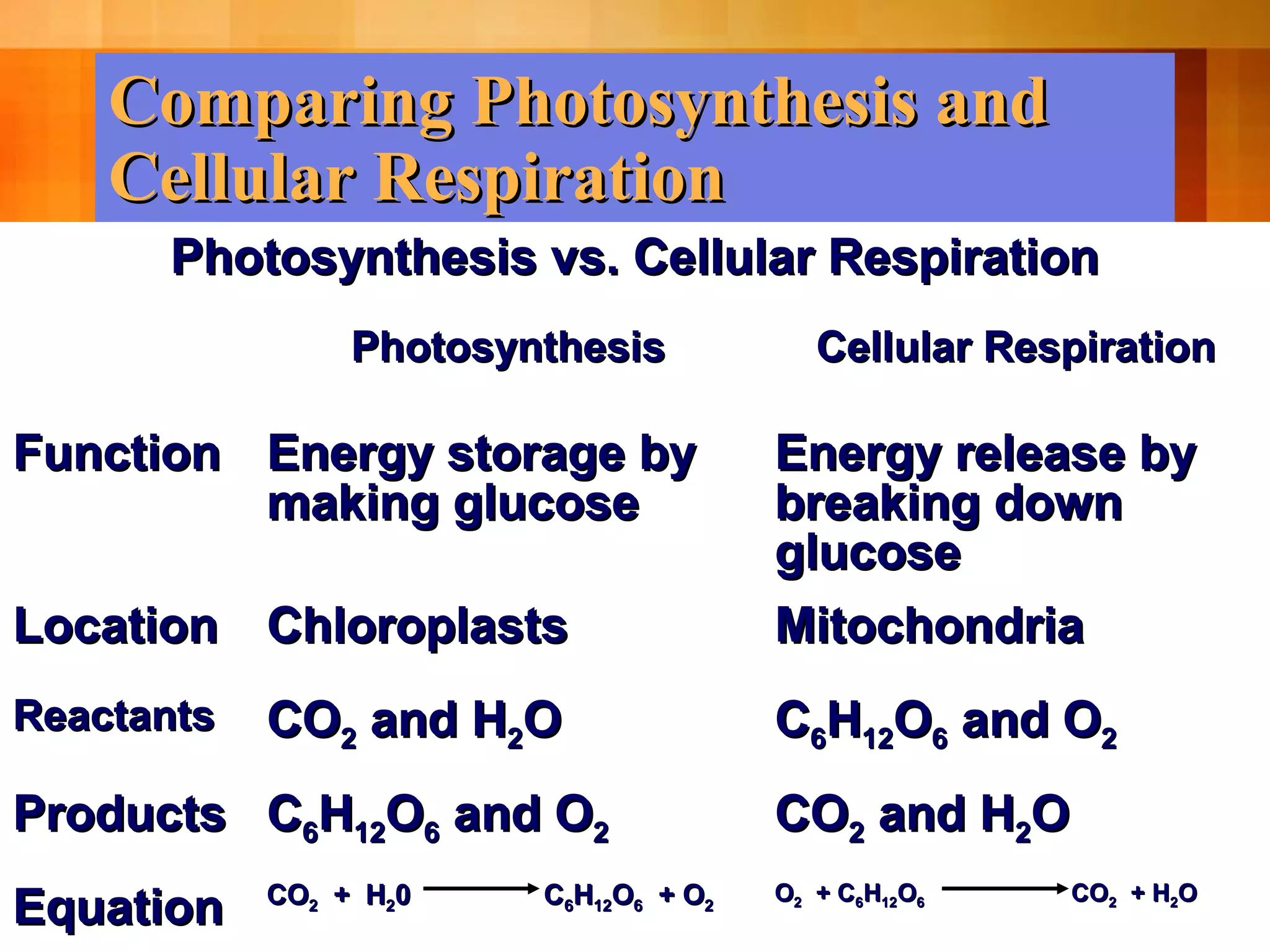
Comparing Photosynthesis andComparing Photosynthesis and
Cellular RespirationCellular Respiration
Photosynthesis vs. Cellular RespirationPhotosynthesis vs. Cellular Respiration
PhotosynthesisPhotosynthesis Cellular RespirationCellular Respiration
FunctionFunction Energy storage byEnergy storage by
making glucosemaking glucose
Energy release byEnergy release by
breaking downbreaking down
glucoseglucose
LocationLocation ChloroplastsChloroplasts MitochondriaMitochondria
ReactantsReactants COCO22 and Hand H22OO CC66HH1212OO66 and Oand O22
ProductsProducts CC66HH1212OO66 and Oand O22 COCO22 and Hand H22OO
EquationEquation COCO22 + H+ H220 C0 C66HH1212OO66 + O+ O22
OO22 + C+ C66HH1212OO66 COCO22 + H+ H22OO
So can you…
1. Write the equation for
respiration in symbols and
words?
2. Name the 3 stages of aerobic
cellular respiration and the
reactants and products for
each stage?

Cellular respiration introduction for 9th grade biology