SDS-PAGE Electrophoresis 
Excellent resources on the web: 
Wikipedia 
mullinslab.ucsf.edu/protocols/html/SDS_PAGE_protocol.htm 
Good videos, e.g., one by UC Davis people, available 
on YouTube: 
http://sdspage.homestead.com/ 
http://www.molecularstation.com/wiki/SDS-PAGE_protocol
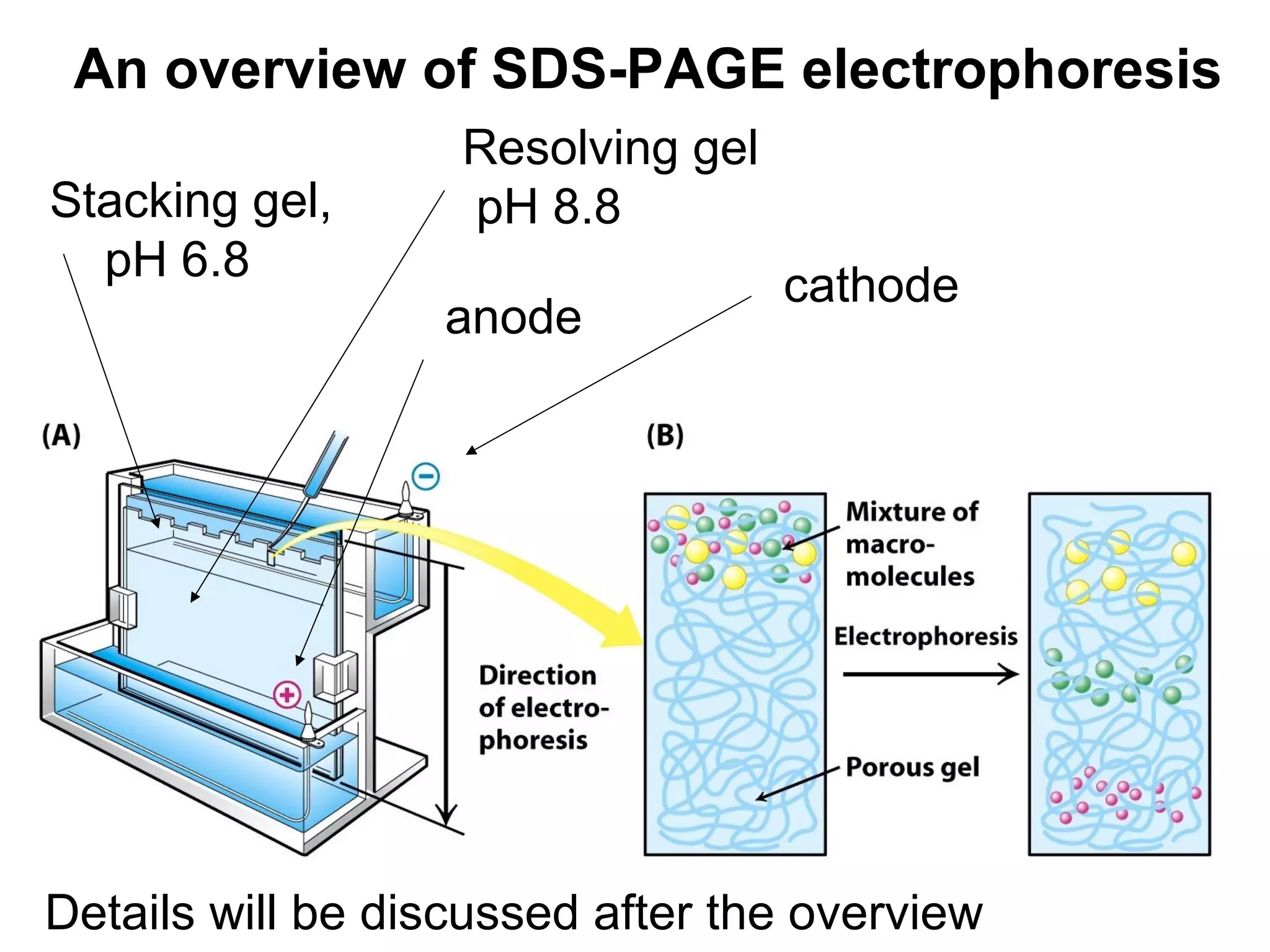
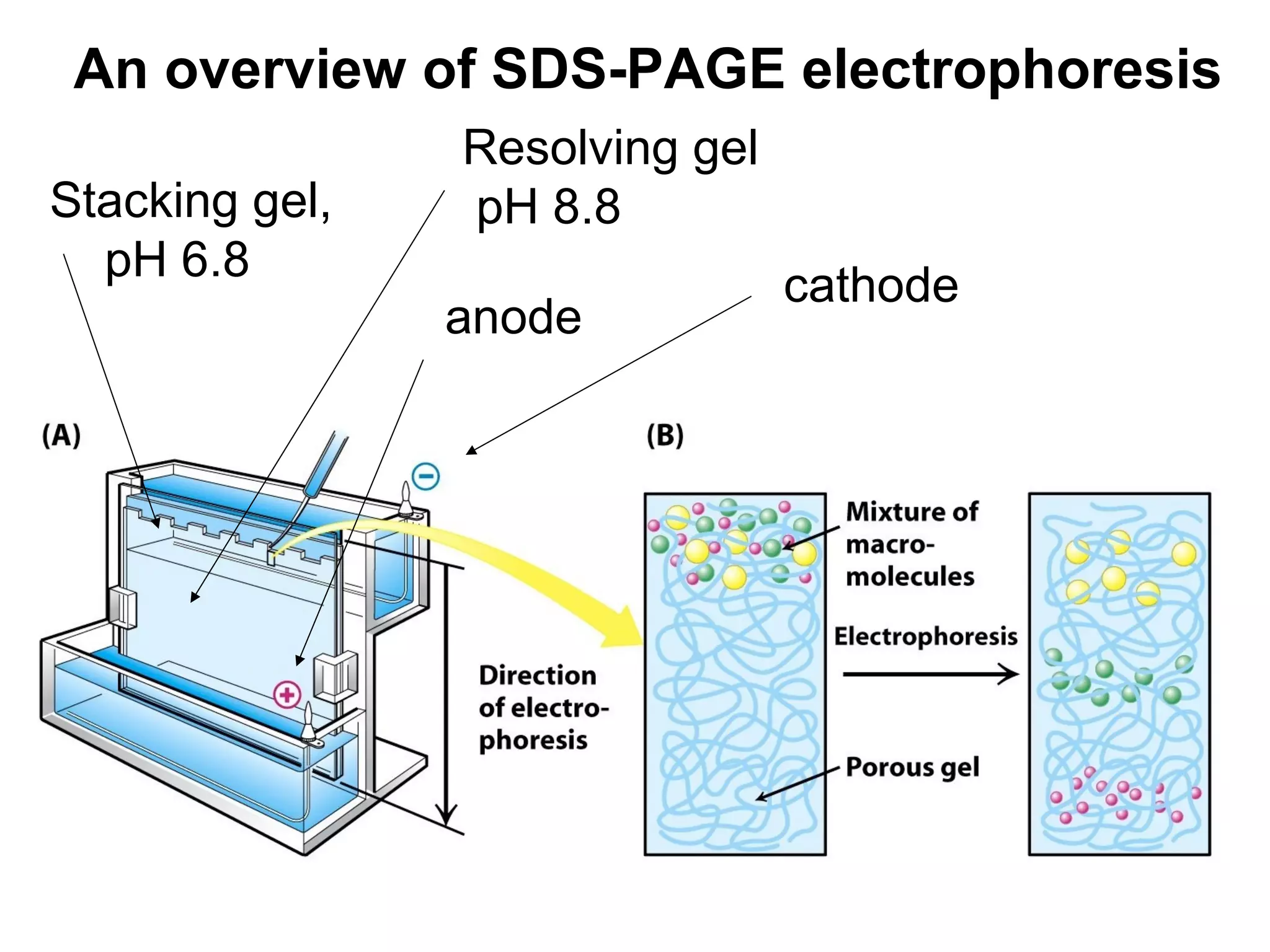
An overview of SDS-PAGE electrophoresis 
Stacking gel, 
pH 6.8 
Resolving gel 
pH 8.8 
anode cathode 
Details will be discussed after the overview
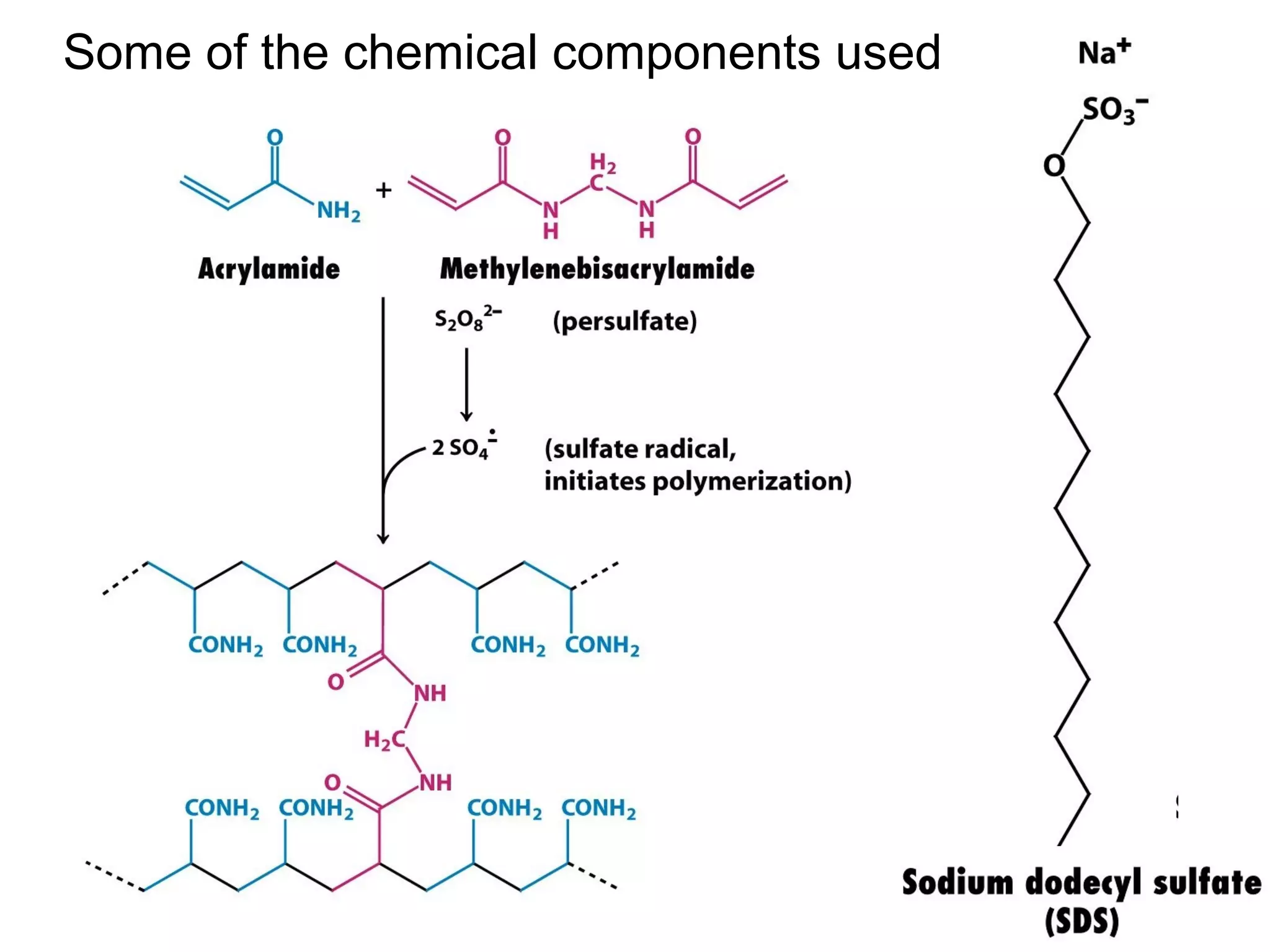
Some of the chemical components used
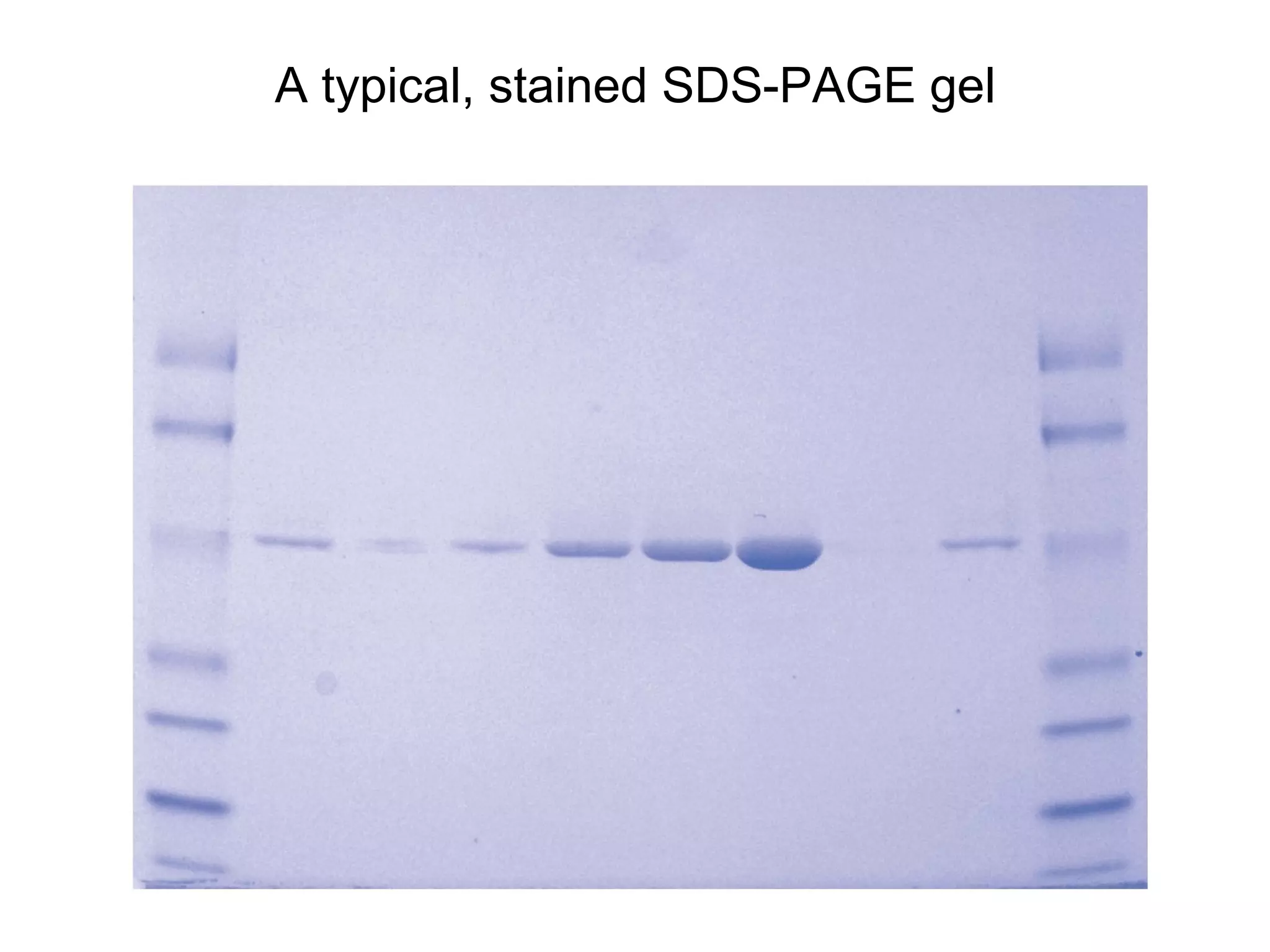
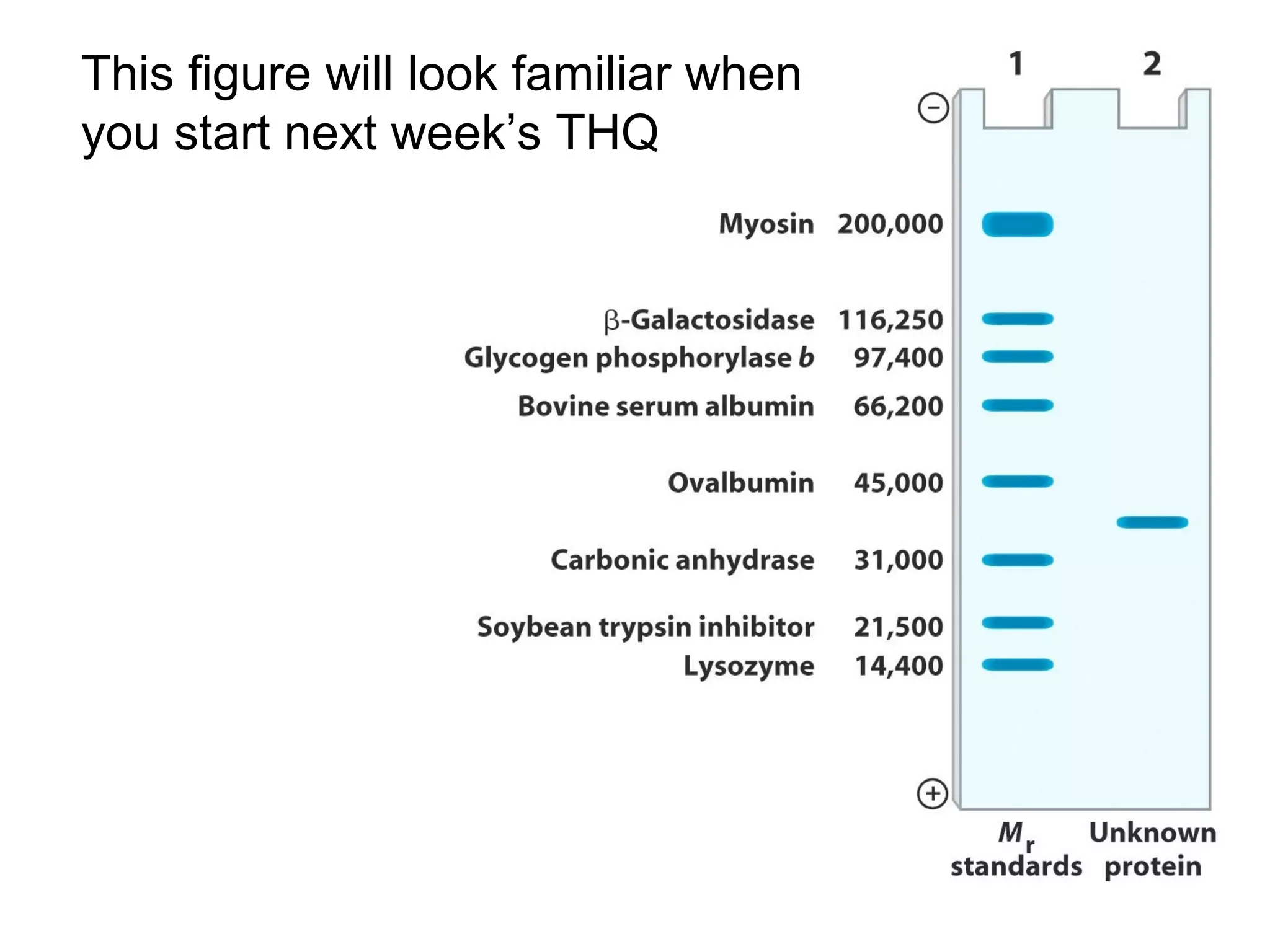
A typical, stained SDS-PAGE gel
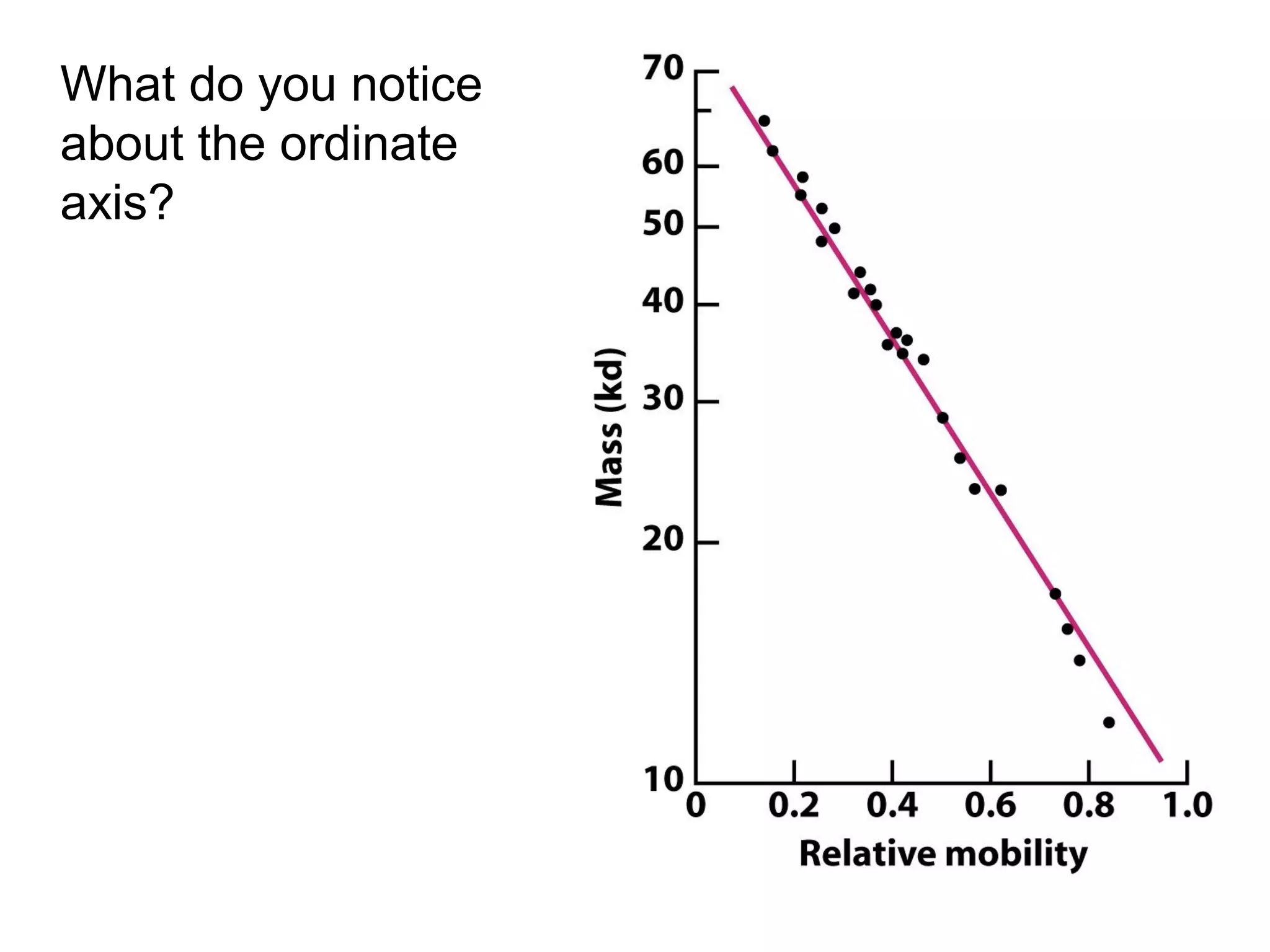
What do you notice 
about the ordinate 
axis?
This figure will look familiar when 
you start next week’s THQ
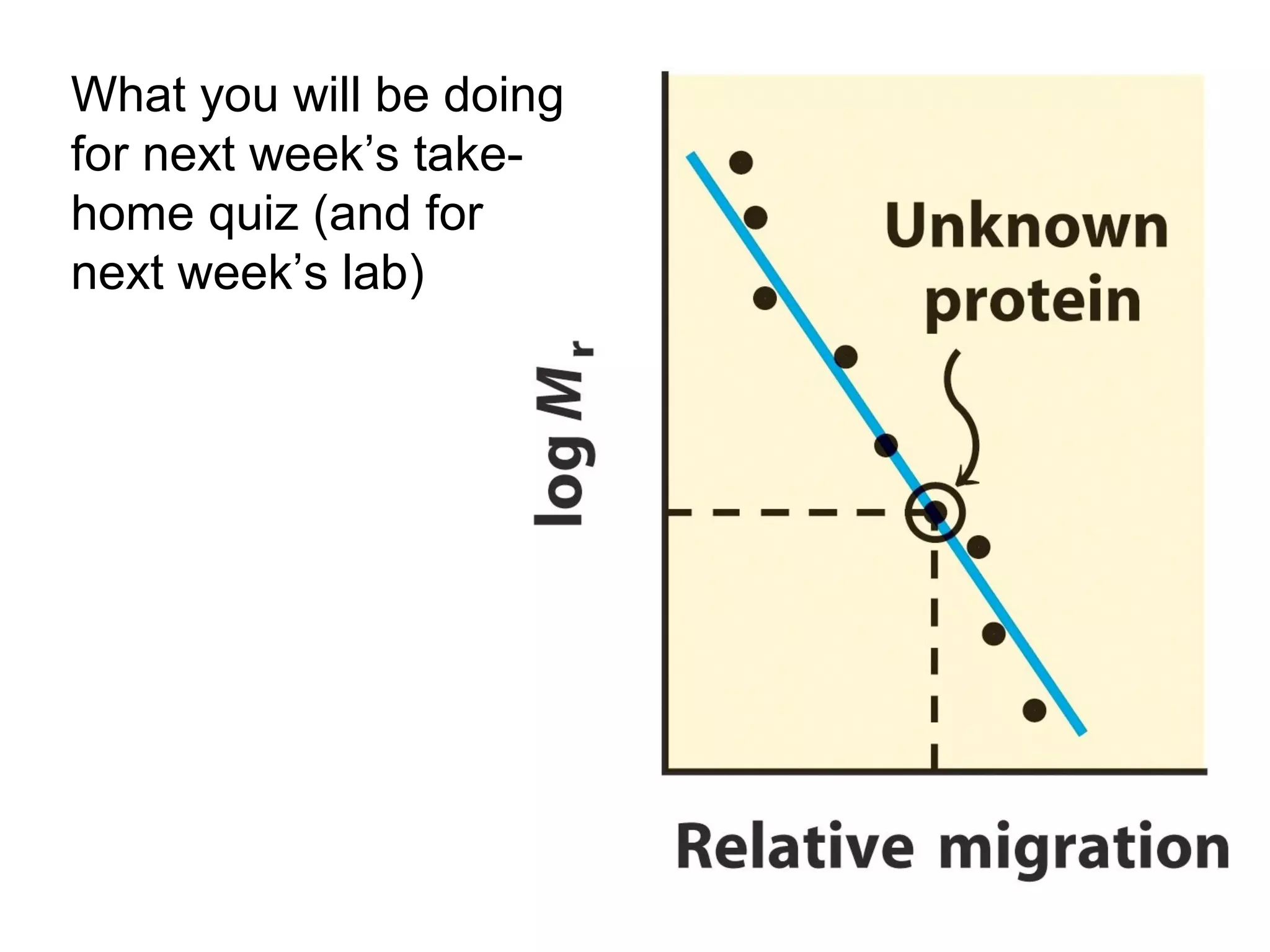
What you will be doing 
for next week’s take-home 
quiz (and for 
next week’s lab)
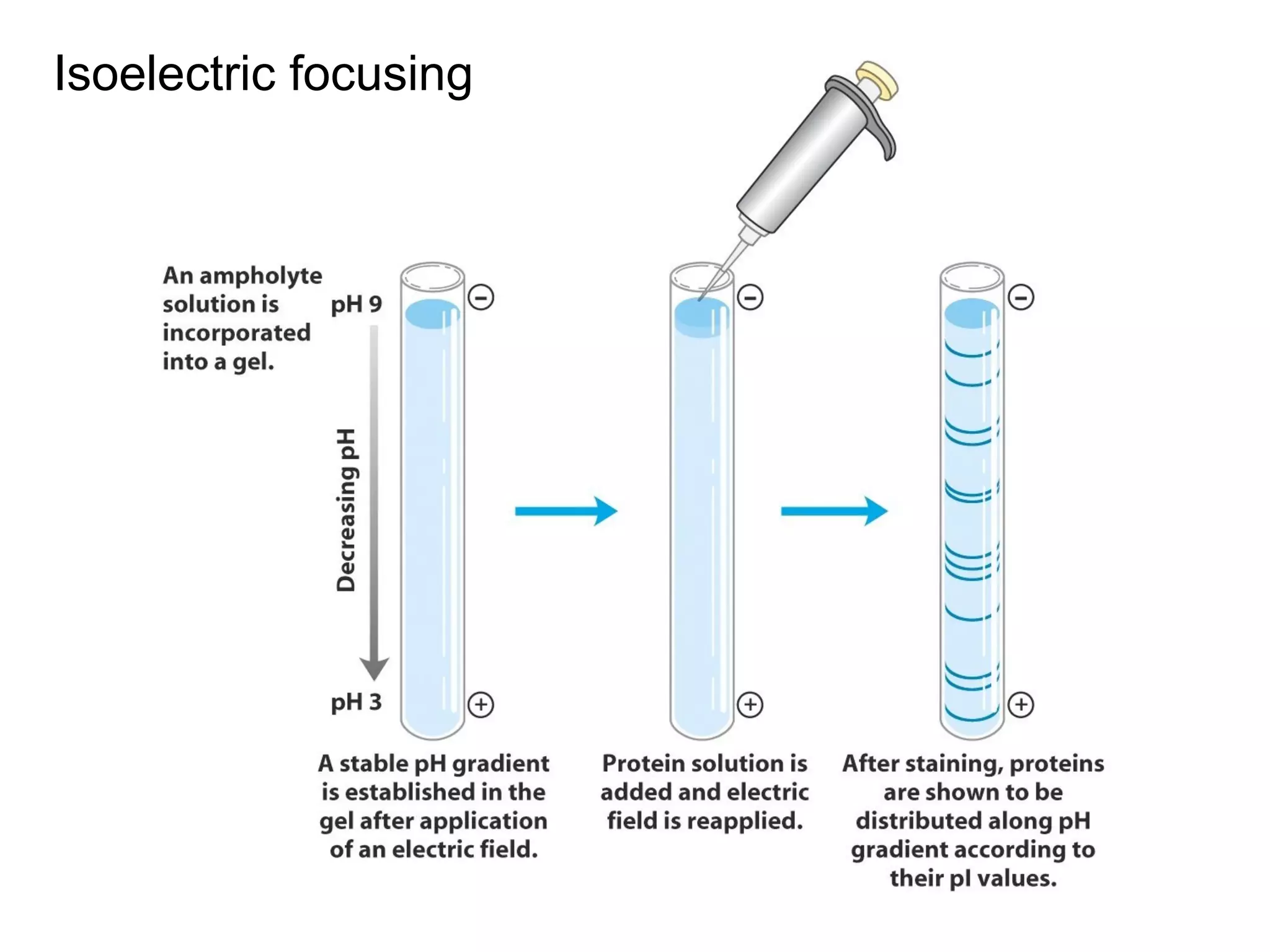
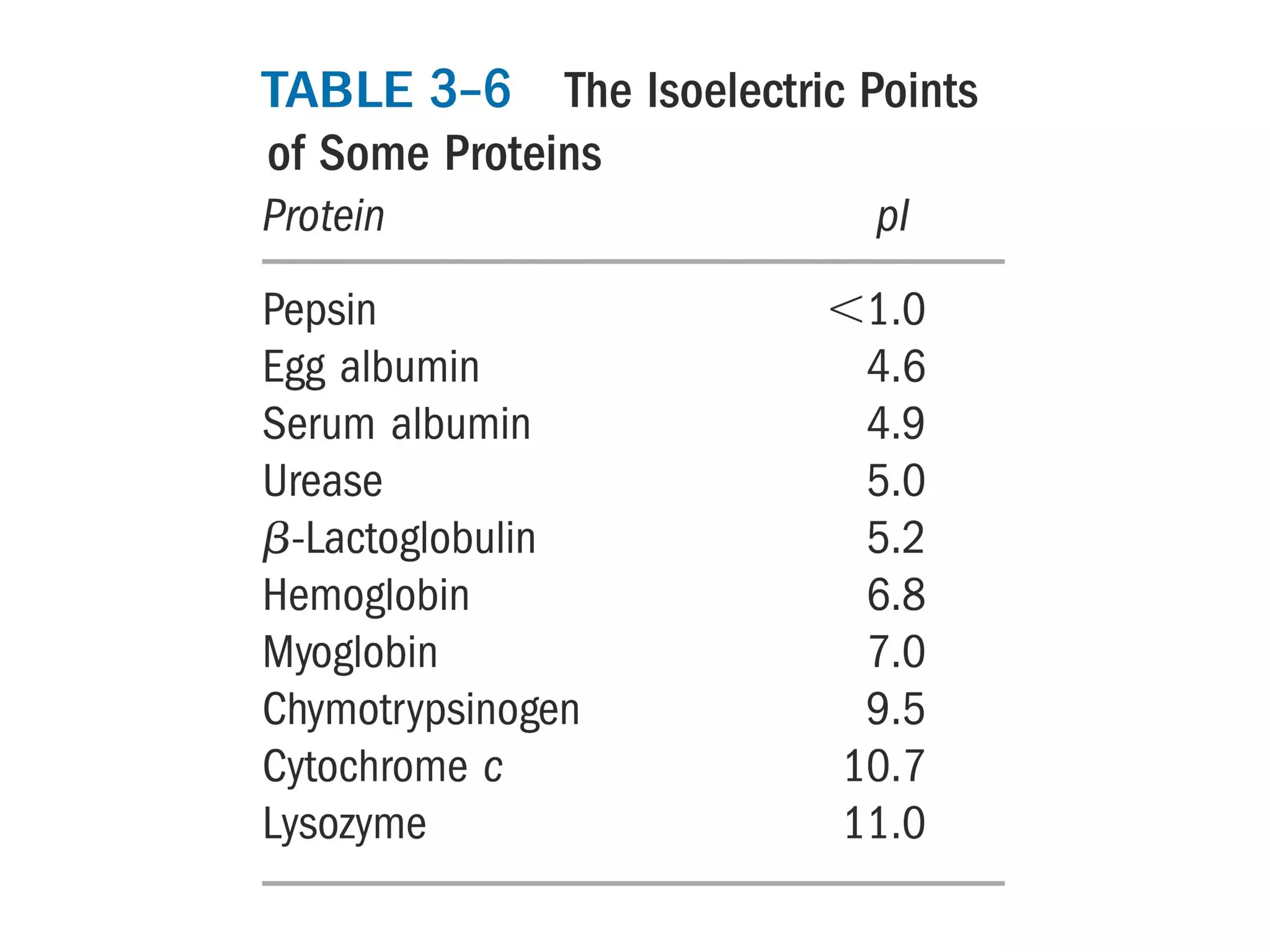
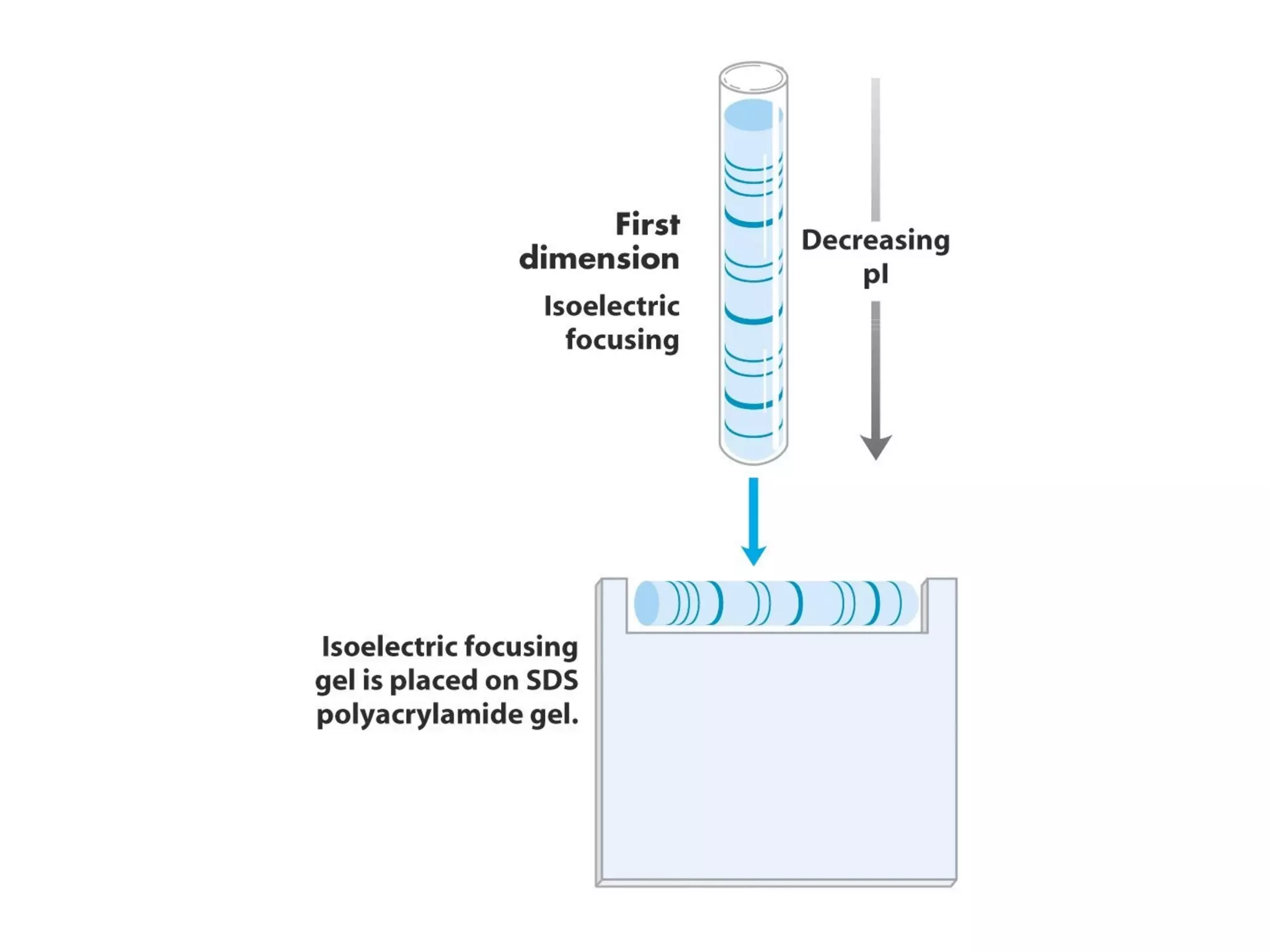
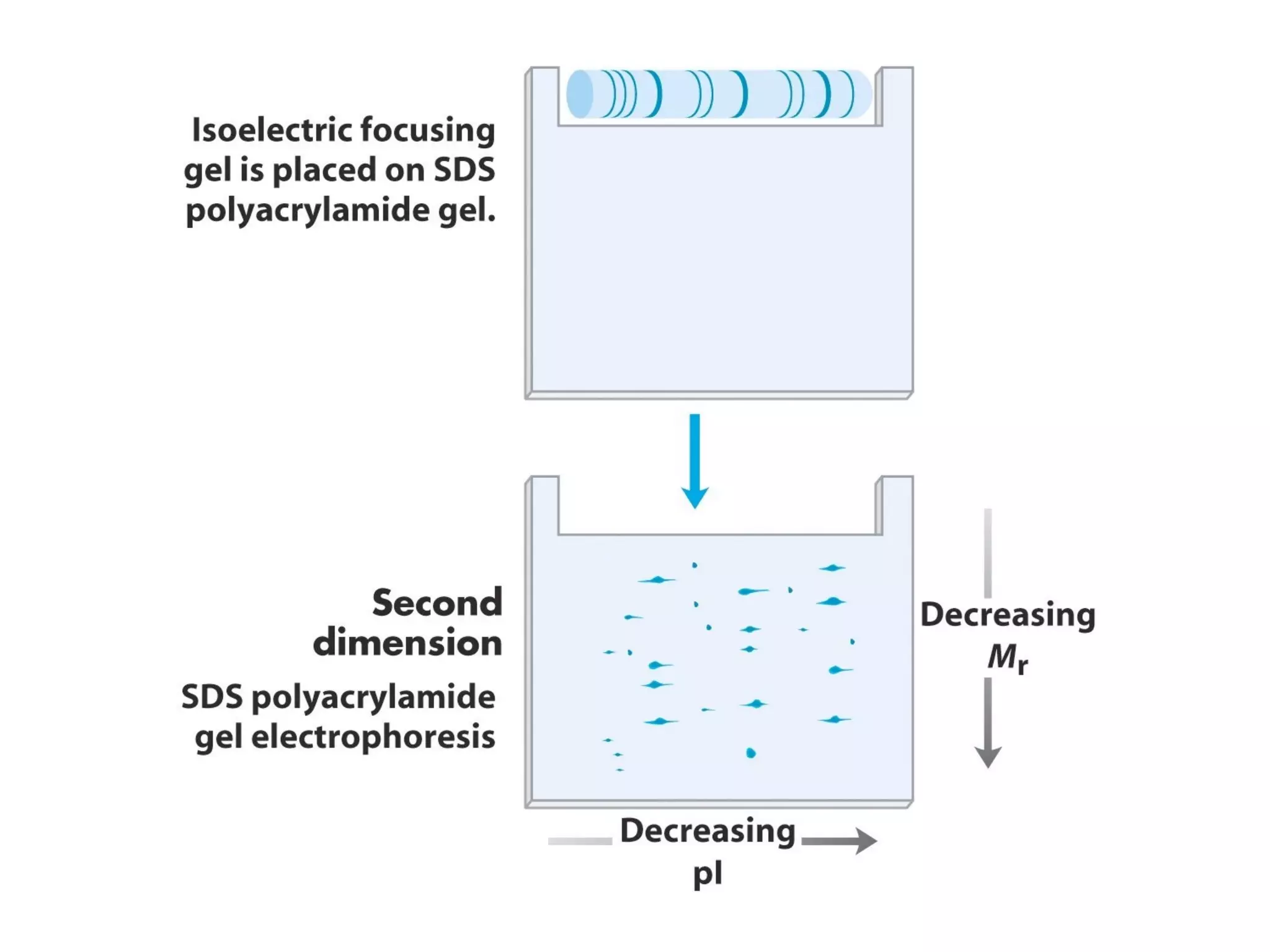
Isoelectric focusing
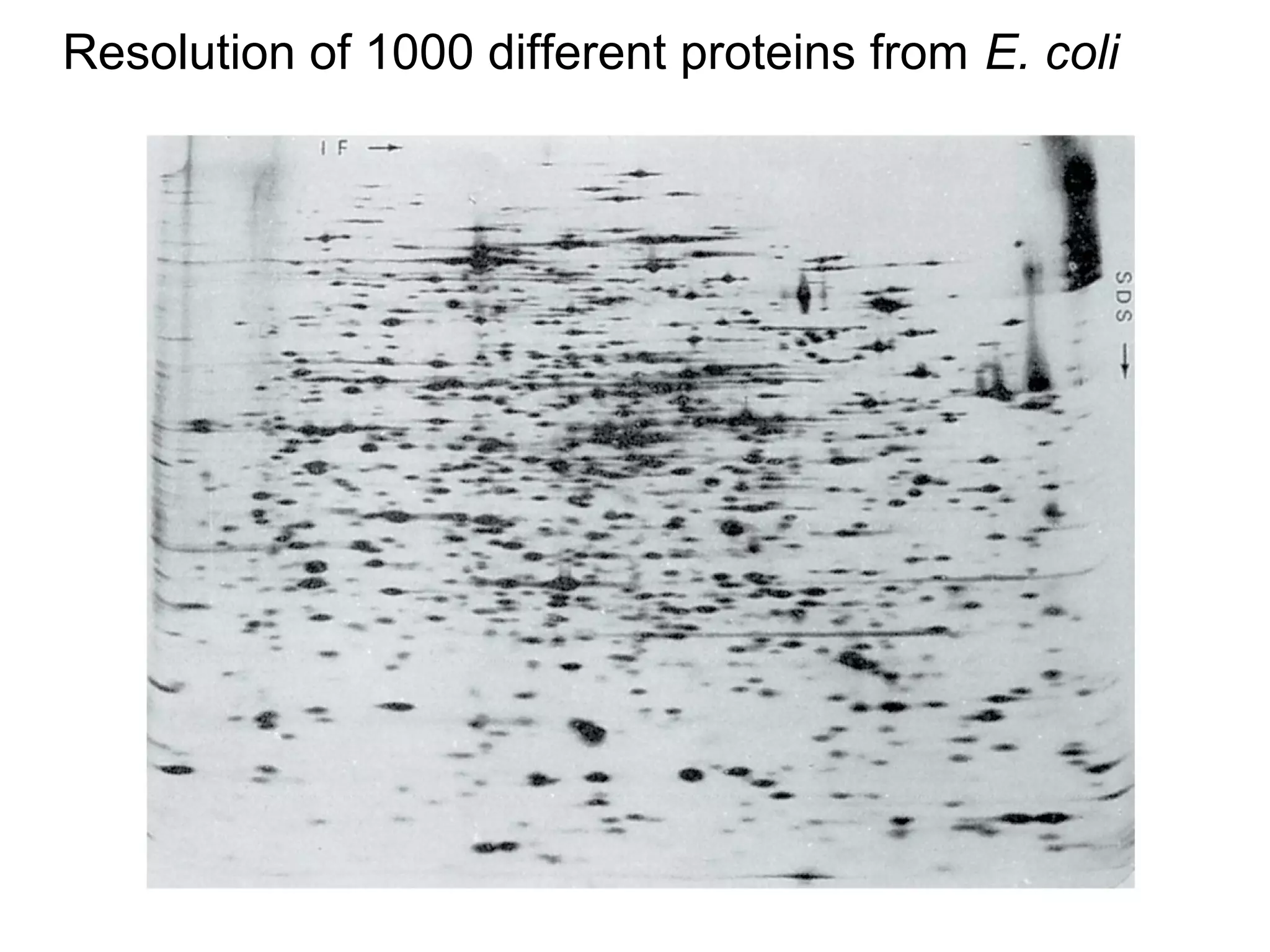
Resolution of 1000 different proteins from E. coli
Electrophoresis – some theory 
It involves the movement of charged particles under 
the influence of an electric field 
Very useful for separating amino acids, proteins, 
oligonucleotides, DNA, RNA, and DNA sequencing 
Negatively charged molecules move towards the 
positive (+) electrode (the anode in this set-up) 
Positively charged molecules move towards the 
negative (-) electrode (the cathode in this set-up)
Theory – cont’d 
Remember from General Chemistry: 
cathode is where reduction occurs (consonants) 
anode is where oxidation occurs (vowels) 
In an electrolytic cell, the cathode is negatively 
charged and can “give electrons away” (reduction); 
the anode is positively charged and can “take 
electrons away” (oxidation). 
In a battery, the convention is reversed: the anode 
has a negative charge and the cathode has a positive 
charge.
Electrode Reactions 
Cathode (reduction): 2e- + 2H2O Û 2OH- + H2­ 
Anode (oxidation): H2O Û 2H+ + ½O2­ + 2e-  
Twice as many bubbles arise from the cathode. pH 
increases in the cathode chamber. pH decreases in 
the anode chamber.
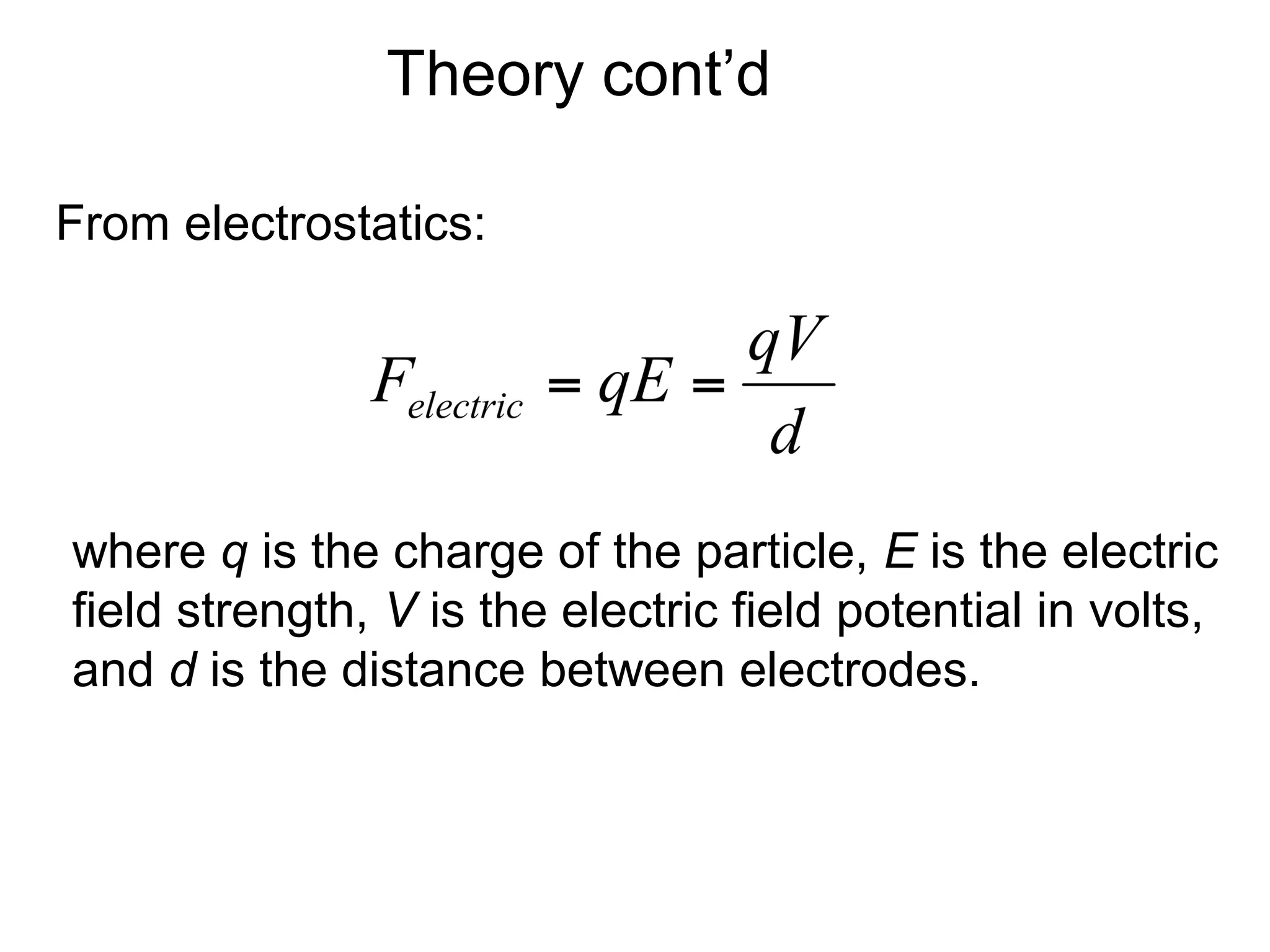
Theory cont’d 
From electrostatics: 
where q is the charge of the particle, E is the electric 
field strength, V is the electric field potential in volts, 
and d is the distance between electrodes.
Theory cont’d 
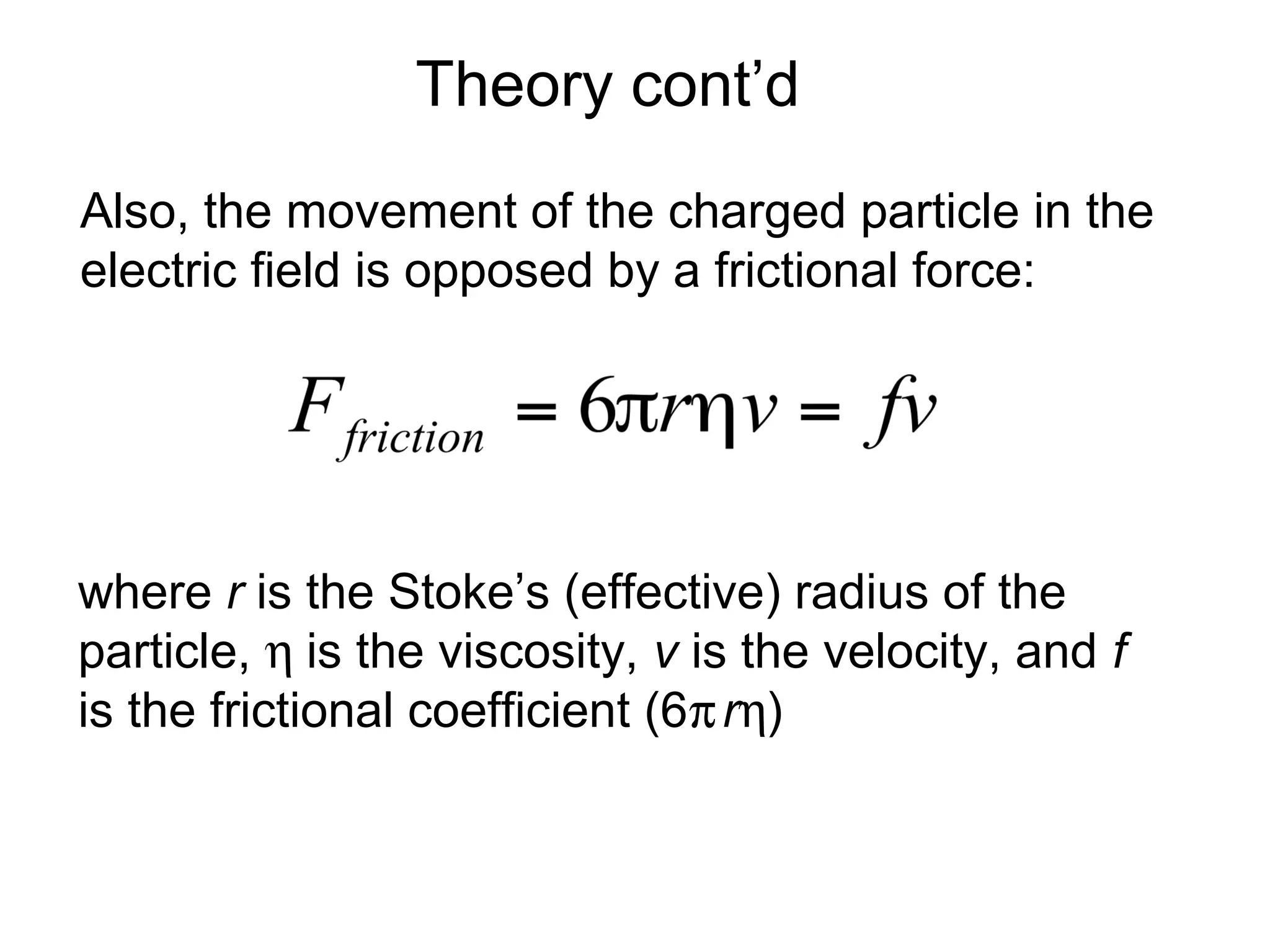
Also, the movement of the charged particle in the 
electric field is opposed by a frictional force: 
where r is the Stoke’s (effective) radius of the 
particle, h is the viscosity, v is the velocity, and f 
is the frictional coefficient (6prh)
Theory cont’d 
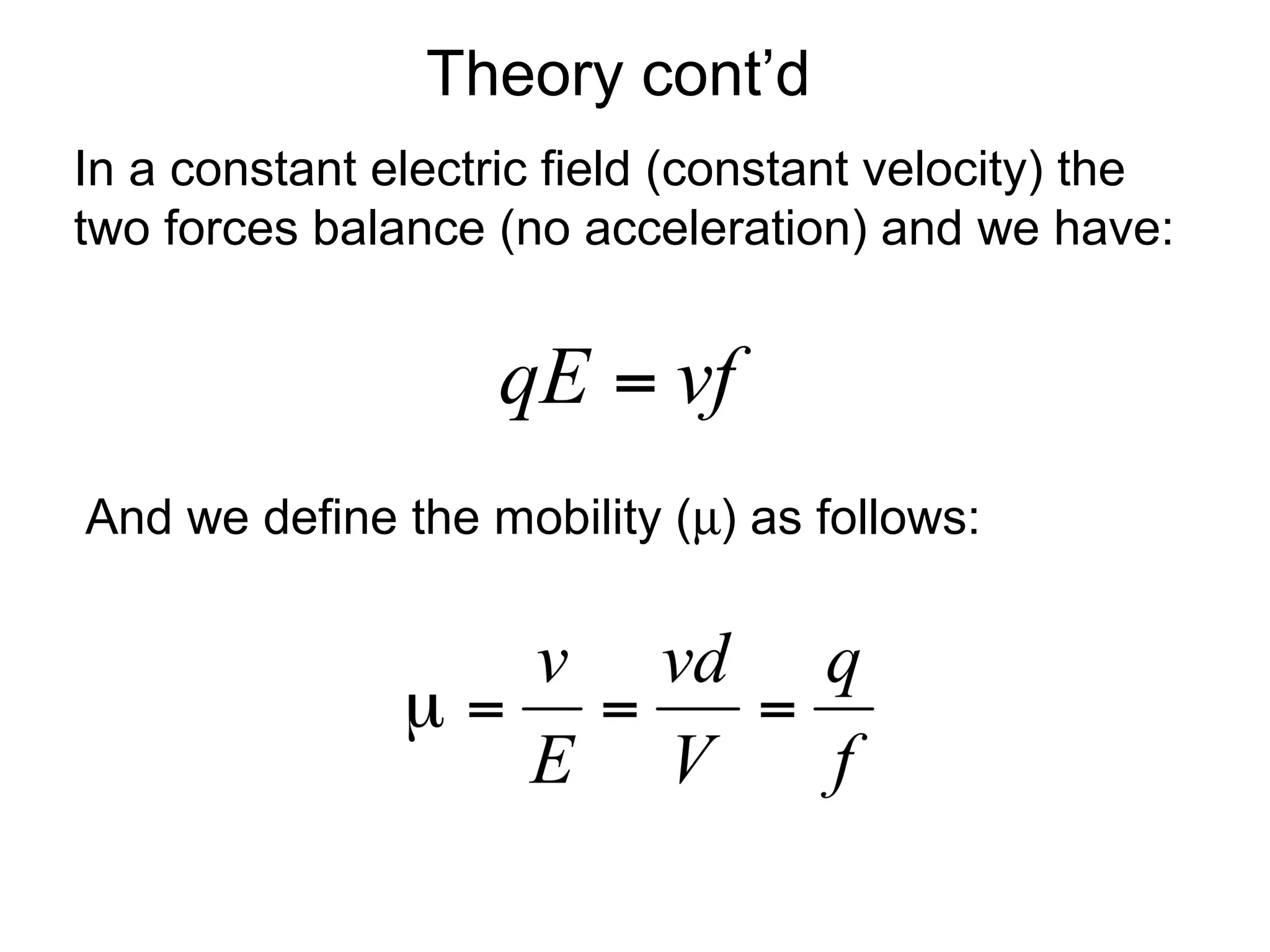
In a constant electric field (constant velocity) the 
two forces balance (no acceleration) and we have: 
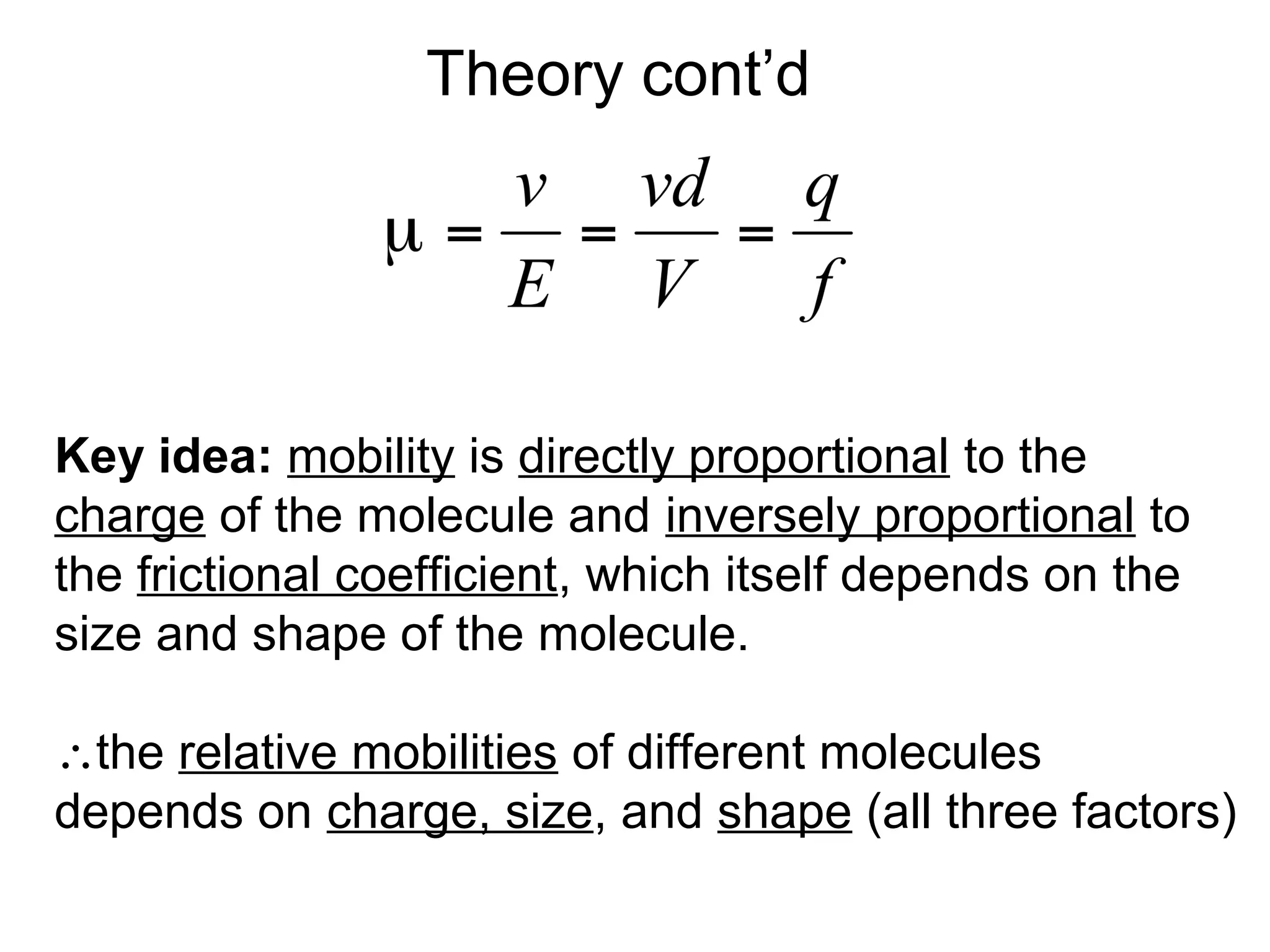
And we define the mobility (m) as follows:
Theory cont’d 
Key idea: mobility is directly proportional to the 
charge of the molecule and inversely proportional to 
the frictional coefficient, which itself depends on the 
size and shape of the molecule. 
 the relative mobilities of different molecules 
depends on charge, size, and shape (all three factors)
If electrophoresis occurred in a non-viscous solution, 
local heating effects would generate convective flows, 
which would interfere with the orderly separation of 
molecules. A stabilizing medium (i.e., gel) is used to 
greatly improve separation. 
Gels are a cross between a solid and a liquid; 
mechanically more stable than a liquid but they are 
not solid. Liquids are retained, and small molecules 
can pass through relatively freely. 
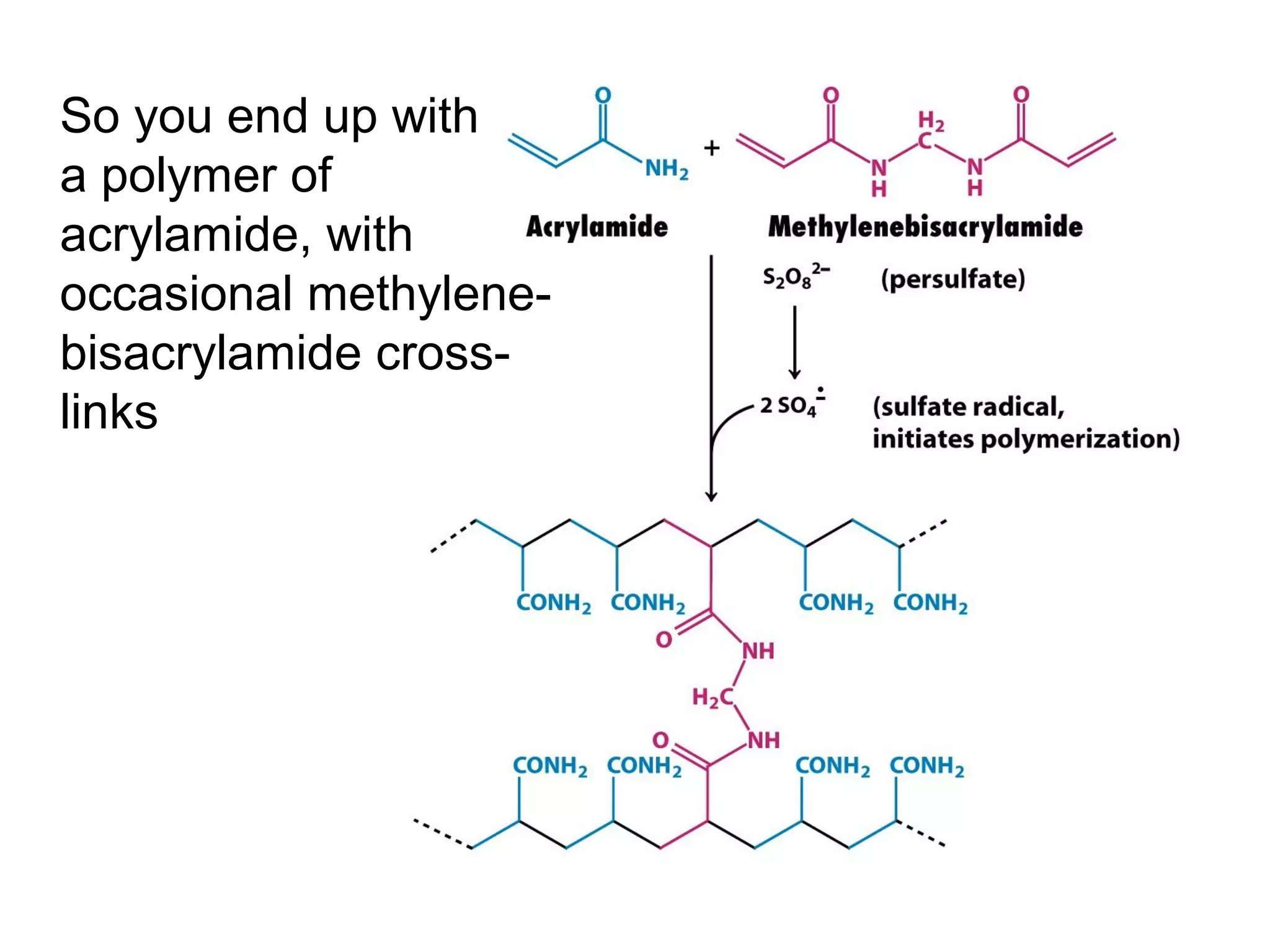
In SDS-PAGE, the polyacrylamide is cross-linked 
by N,N¢-methylene-bis-acrylamide, which provides 
a molecular sieving effect.
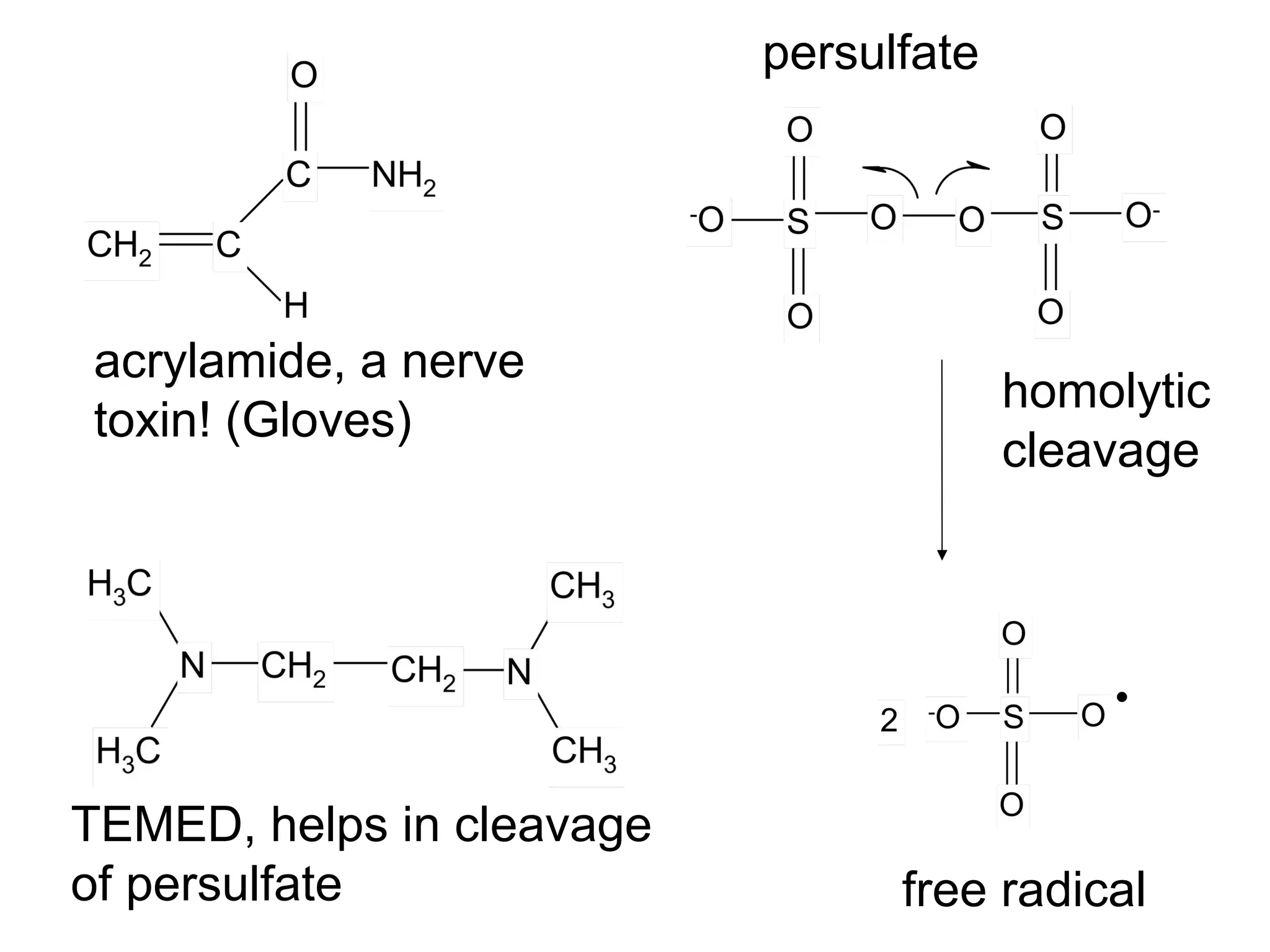
acrylamide, a nerve 
toxin! (Gloves) 
TEMED, helps in cleavage 
of persulfate 
persulfate 
homolytic 
cleavage 
· 
free radical
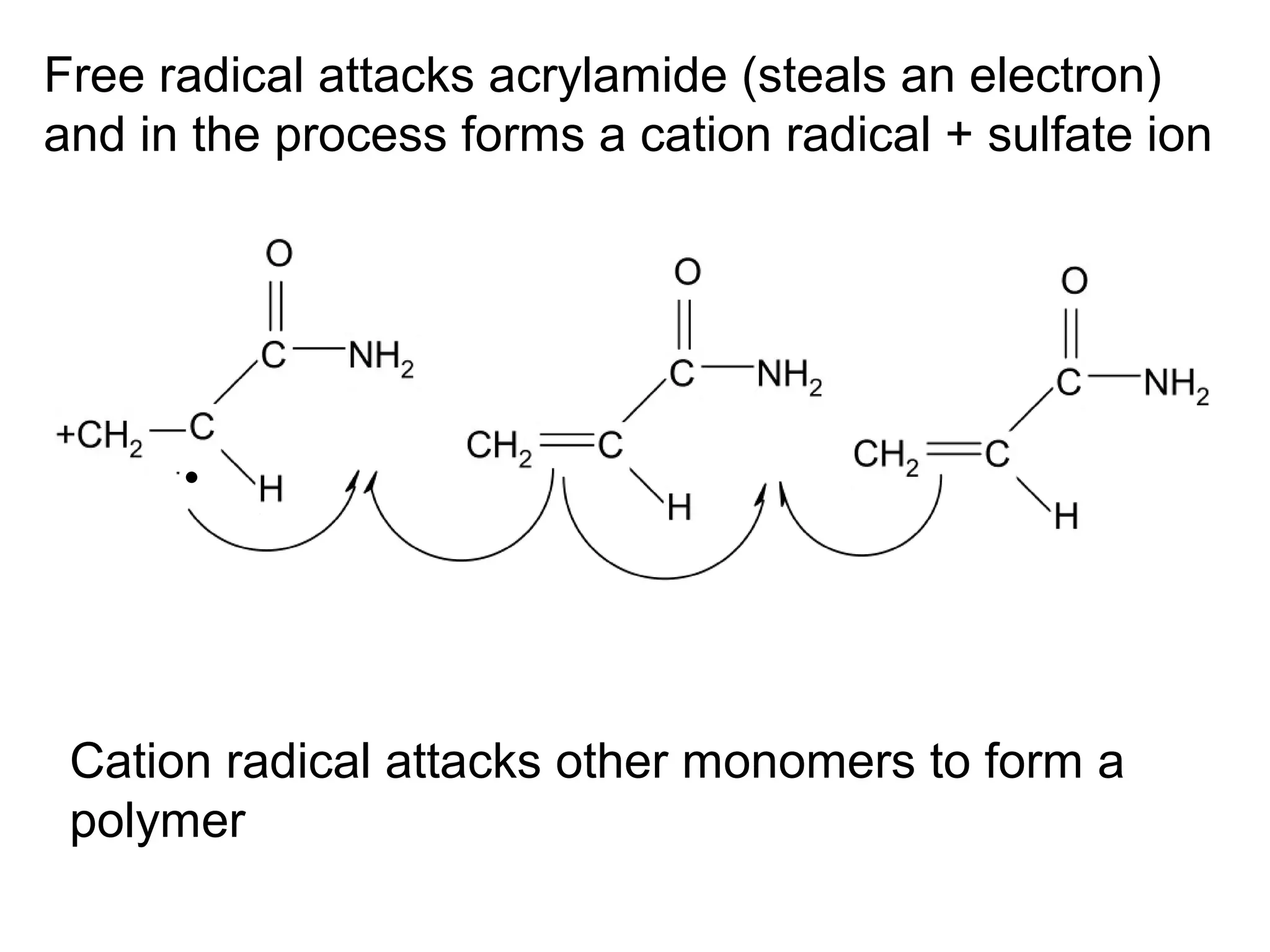
Free radical attacks acrylamide (steals an electron) 
and in the process forms a cation radical + sulfate ion 
· 
Cation radical attacks other monomers to form a 
polymer
So you end up with 
a polymer of 
acrylamide, with 
occasional methylene-bisacrylamide 
cross-links
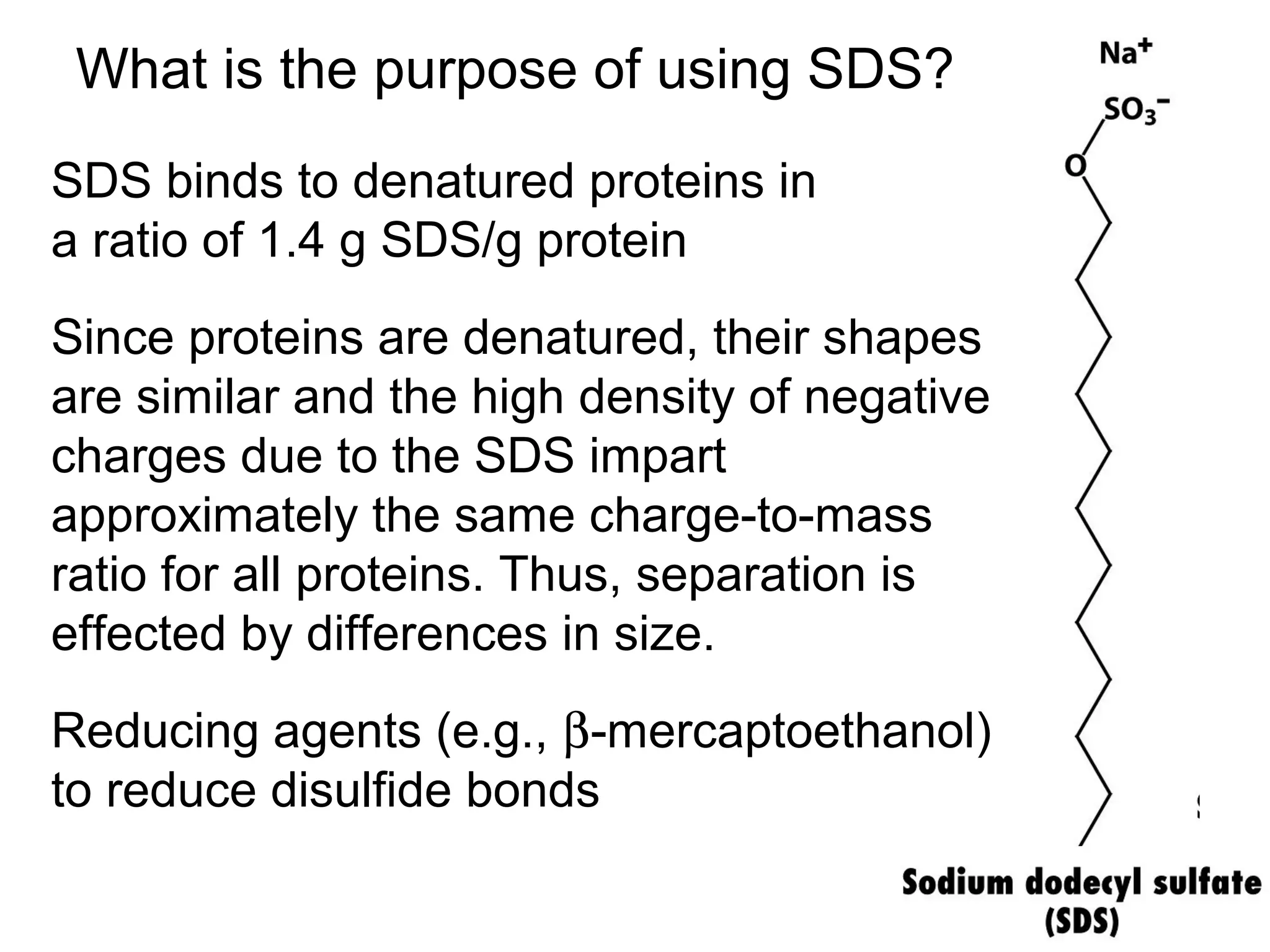
What is the purpose of using SDS? 
SDS binds to denatured proteins in 
a ratio of 1.4 g SDS/g protein 
Since proteins are denatured, their shapes 
are similar and the high density of negative 
charges due to the SDS impart 
approximately the same charge-to-mass 
ratio for all proteins. Thus, separation is 
effected by differences in size. 
Reducing agents (e.g., b-mercaptoethanol) 
to reduce disulfide bonds
An overview of SDS-PAGE electrophoresis 
Stacking gel, 
pH 6.8 
Resolving gel 
pH 8.8 
anode cathode
Why does the stacking gel have a lower 
concentration of acrylamide and why is it at a 
different pH than that of the resolving gel? 
Under the influence of the electric field, the Cl- ions 
(from the Tris×Cl) move relatively fast through the 
stacking gel towards the anode due to their small size. 
Many of the glycine molecules in the running buffer 
(pH 8.3) are initially attracted toward the anode, but 
when they encounter the stacking gel at pH 6.8, they 
become protonated (and therefore zwitterionic) and 
mostly neutral and relatively immobile. What fraction 
is in the glycinate form at this pH?
So, in the stacking gel the Cl- ions are moving ahead 
toward the anode, and the glycine molecules, which 
are mostly neutral, are lagging behind and not 
carrying the charge. The fast moving Cl- ions and 
slow, mostly neutral glyicine molecules create a zone 
of low conductance or high resistance. Due to the 
requirement of constant current (I) in an electrical 
circuit (E = IR), the high resistance leads to a localized 
(narrow zone) increase in the electric field. The 
negatively charged protein molecules find themselves 
in between the Cl- ions and the glycine molecules and 
thus subject to the high field strength. They move 
forward in the field fairly rapidly, until they encounter 
the interface of the stacking gel and the resolving gel.
The key is that the proteins cannot move past the 
Cl- ions. To do so would put them in a region of high 
conductance and low field strength, which would 
cause them to slow down. 
Thus, the proteins end up moving through the 
relatively porous (low concentration of acrylamide) 
stacking gel (sieving effect not desirable here) in the 
moving zone of high voltage (V = IR) and they reach 
the “starting gate” (the interface between the stacking 
and resolving gels) in a very thin band and at 
essentially the same time.
The resolving gel has a higher pH (8.8), which leads 
to a higher proportion of glycine molecules becoming 
deprotonated and thus negatively charged. These 
glycinate ions overtake the proteins due to their 
small size. The sieving characteristics of the gel 
can now separate proteins on the basis of size.
But the need to pour stacking gels may be obviated:

SDS Page Lecture

  • 1.
    SDS-PAGE Electrophoresis Excellentresources on the web: Wikipedia mullinslab.ucsf.edu/protocols/html/SDS_PAGE_protocol.htm Good videos, e.g., one by UC Davis people, available on YouTube: http://sdspage.homestead.com/ http://www.molecularstation.com/wiki/SDS-PAGE_protocol
  • 2.
    An overview ofSDS-PAGE electrophoresis Stacking gel, pH 6.8 Resolving gel pH 8.8 anode cathode Details will be discussed after the overview
  • 3.
    Some of thechemical components used
  • 4.
    A typical, stainedSDS-PAGE gel
  • 5.
    What do younotice about the ordinate axis?
  • 6.
    This figure willlook familiar when you start next week’s THQ
  • 7.
    What you willbe doing for next week’s take-home quiz (and for next week’s lab)
  • 8.
  • 12.
    Resolution of 1000different proteins from E. coli
  • 13.
    Electrophoresis – sometheory It involves the movement of charged particles under the influence of an electric field Very useful for separating amino acids, proteins, oligonucleotides, DNA, RNA, and DNA sequencing Negatively charged molecules move towards the positive (+) electrode (the anode in this set-up) Positively charged molecules move towards the negative (-) electrode (the cathode in this set-up)
  • 14.
    Theory – cont’d Remember from General Chemistry: cathode is where reduction occurs (consonants) anode is where oxidation occurs (vowels) In an electrolytic cell, the cathode is negatively charged and can “give electrons away” (reduction); the anode is positively charged and can “take electrons away” (oxidation). In a battery, the convention is reversed: the anode has a negative charge and the cathode has a positive charge.
  • 15.
    Electrode Reactions Cathode(reduction): 2e- + 2H2O Û 2OH- + H2­ Anode (oxidation): H2O Û 2H+ + ½O2­ + 2e- Twice as many bubbles arise from the cathode. pH increases in the cathode chamber. pH decreases in the anode chamber.
  • 16.
    Theory cont’d Fromelectrostatics: where q is the charge of the particle, E is the electric field strength, V is the electric field potential in volts, and d is the distance between electrodes.
  • 17.
    Theory cont’d Also,the movement of the charged particle in the electric field is opposed by a frictional force: where r is the Stoke’s (effective) radius of the particle, h is the viscosity, v is the velocity, and f is the frictional coefficient (6prh)
  • 18.
    Theory cont’d Ina constant electric field (constant velocity) the two forces balance (no acceleration) and we have: And we define the mobility (m) as follows:
  • 19.
    Theory cont’d Keyidea: mobility is directly proportional to the charge of the molecule and inversely proportional to the frictional coefficient, which itself depends on the size and shape of the molecule. the relative mobilities of different molecules depends on charge, size, and shape (all three factors)
  • 20.
    If electrophoresis occurredin a non-viscous solution, local heating effects would generate convective flows, which would interfere with the orderly separation of molecules. A stabilizing medium (i.e., gel) is used to greatly improve separation. Gels are a cross between a solid and a liquid; mechanically more stable than a liquid but they are not solid. Liquids are retained, and small molecules can pass through relatively freely. In SDS-PAGE, the polyacrylamide is cross-linked by N,N¢-methylene-bis-acrylamide, which provides a molecular sieving effect.
  • 21.
    acrylamide, a nerve toxin! (Gloves) TEMED, helps in cleavage of persulfate persulfate homolytic cleavage · free radical
  • 22.
    Free radical attacksacrylamide (steals an electron) and in the process forms a cation radical + sulfate ion · Cation radical attacks other monomers to form a polymer
  • 23.
    So you endup with a polymer of acrylamide, with occasional methylene-bisacrylamide cross-links
  • 24.
    What is thepurpose of using SDS? SDS binds to denatured proteins in a ratio of 1.4 g SDS/g protein Since proteins are denatured, their shapes are similar and the high density of negative charges due to the SDS impart approximately the same charge-to-mass ratio for all proteins. Thus, separation is effected by differences in size. Reducing agents (e.g., b-mercaptoethanol) to reduce disulfide bonds
  • 25.
    An overview ofSDS-PAGE electrophoresis Stacking gel, pH 6.8 Resolving gel pH 8.8 anode cathode
  • 26.
    Why does thestacking gel have a lower concentration of acrylamide and why is it at a different pH than that of the resolving gel? Under the influence of the electric field, the Cl- ions (from the Tris×Cl) move relatively fast through the stacking gel towards the anode due to their small size. Many of the glycine molecules in the running buffer (pH 8.3) are initially attracted toward the anode, but when they encounter the stacking gel at pH 6.8, they become protonated (and therefore zwitterionic) and mostly neutral and relatively immobile. What fraction is in the glycinate form at this pH?
  • 27.
    So, in thestacking gel the Cl- ions are moving ahead toward the anode, and the glycine molecules, which are mostly neutral, are lagging behind and not carrying the charge. The fast moving Cl- ions and slow, mostly neutral glyicine molecules create a zone of low conductance or high resistance. Due to the requirement of constant current (I) in an electrical circuit (E = IR), the high resistance leads to a localized (narrow zone) increase in the electric field. The negatively charged protein molecules find themselves in between the Cl- ions and the glycine molecules and thus subject to the high field strength. They move forward in the field fairly rapidly, until they encounter the interface of the stacking gel and the resolving gel.
  • 28.
    The key isthat the proteins cannot move past the Cl- ions. To do so would put them in a region of high conductance and low field strength, which would cause them to slow down. Thus, the proteins end up moving through the relatively porous (low concentration of acrylamide) stacking gel (sieving effect not desirable here) in the moving zone of high voltage (V = IR) and they reach the “starting gate” (the interface between the stacking and resolving gels) in a very thin band and at essentially the same time.
  • 29.
    The resolving gelhas a higher pH (8.8), which leads to a higher proportion of glycine molecules becoming deprotonated and thus negatively charged. These glycinate ions overtake the proteins due to their small size. The sieving characteristics of the gel can now separate proteins on the basis of size.
  • 30.
    But the needto pour stacking gels may be obviated: