C H I N C H U E L E Z E B T H
M T E C H B I O P R O C E S S E N G I N E E R I I N G
M E T ’ S S C H O O L O F E N G I N E E R I N G
M A L A
1
ELECTROPHORESIS
 Separate and characterize proteins by applying electric current
 Rapid and sensitive
 Polyacrylamide gel is the medium preferred
 Large number of sample analysis possible
 Poly acrylamide gel:
Polymer of acrylamide and bis-acrylamide
Per sulphate ion as catalyst and TEMED as chain initiator
Oxygen act as inhibitor
 Porosity based on relative proportion of monomers
2
PRINCIPLE
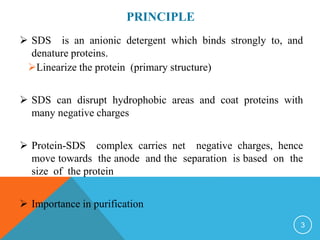
 SDS is an anionic detergent which binds strongly to, and
denature proteins.
Linearize the protein (primary structure)
 SDS can disrupt hydrophobic areas and coat proteins with
many negative charges
 Protein-SDS complex carries net negative charges, hence
move towards the anode and the separation is based on the
size of the protein
 Importance in purification
3
4
5
 Stock acrylamide solution
Acrylamide 30% : 30g
Bis acrylamide : 0.8g
Water : 100ml
 Separating gel buffer
1.875M Tris HCl : 22.7 g
(pH 8.8)
Water : 100ml
 Stacking gel buffer
0.6M Tris HCl : 7.26g (pH 6.8)
Water : 100ml
 Polymerising agents
 Ammonium persulfate 5% : 0.5g/10ml
 TEMED
 Electrode buffer
 0.05M Tris : 12g
0.192M glycine : 28.8g pH 8.2-8.4
0.1% SDS : 2g
Water : 2L
MATERIALS REQUIRED
6
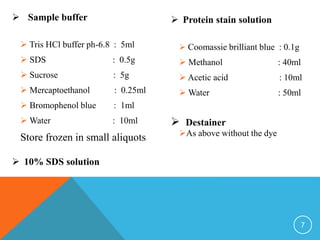
 Sample buffer
 Tris HCl buffer ph-6.8 : 5ml
 SDS : 0.5g
 Sucrose : 5g
 Mercaptoethanol : 0.25ml
 Bromophenol blue : 1ml
 Water : 10ml
Store frozen in small aliquots
 10% SDS solution
 Protein stain solution
 Coomassie brilliant blue : 0.1g
 Methanol : 40ml
 Acetic acid : 10ml
 Water : 50ml
 Destainer
As above without the dye
7
8
PROCEDURE
 Thoroughly clean and dry the glass plates and spacers, then
assemble them properly. Hold and clamp in an upright position
 White petroleum jelly or 2% agar is applied around the edges of
the spacer to hold them in place and seal the chamber between
the glass plates
 Prepare sufficient volume of separating gel mixture
For 15% For 10%
Stock acrylamide
solution
20ml 13.3ml
Tis-HCl (pH-8.8) 8ml 8ml
Water 11.4ml 18.1ml
Ammonium per sulphate 0.2ml 0.2ml
10% SDS 0.4ml 0.4ml
TEMED 20µl 20µl
9
 Mix gently and carefully, pour the solution in the chamber
between the glass plates
 Layer distilled water on top of the gel and leave to set for 30min
 Prepare stacking gel
 Remove water from top of the gel and wash with stacking gel
solution. Pour stacking gel mixture, place the comb and allow to
set
Stock acrylamide solution 1.35ml
Tris-HCl (pH 6.8) 1ml
water 7.5ml
Ammonium per sulphate
(5%)
50µl
10% SDS 0.1ml
TEMED 10µl
10
 After polymerisation, comb is removed carefully and install the
gel in the electrophoresis apparatus
 Fill it with electrode buffer
 Connect the cathode at the top
 Sample preparation:
Prepare samples by suitable extraction procedure
Sample heated in boiling water bath for 2-3min with equal volume of 5X
sample buffer and cool to room temperature for complete denaturation and
concentration of protein
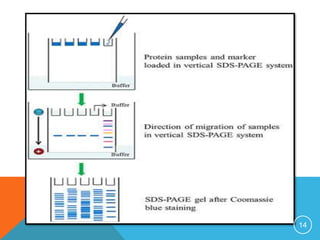
 Take required volume of sample and inject into sample well
using micro pipette
 Also load marker sample in a few wells
 Turn on the current to 10-15mA initially and continue to run at
30mA through separating gel until sample reach the
bottom(3/4) of the gel
11
12
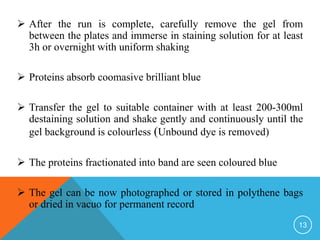
 After the run is complete, carefully remove the gel from
between the plates and immerse in staining solution for at least
3h or overnight with uniform shaking
 Proteins absorb coomasive brilliant blue
 Transfer the gel to suitable container with at least 200-300ml
destaining solution and shake gently and continuously until the
gel background is colourless (Unbound dye is removed)
 The proteins fractionated into band are seen coloured blue
 The gel can be now photographed or stored in polythene bags
or dried in vacuo for permanent record
13
14
PROTEIN MW IN DALTONS
α- Lactalbumin 14200
Trypsin inhibitor soya bean 20100
trypsinogen 24000
Carbonic anhydrase 29000
Albumin, egg 45000
Albumin, bovine 66000
STANDARD MARKER PROTEINS
15
16

Sds page

  • 1.
    C H IN C H U E L E Z E B T H M T E C H B I O P R O C E S S E N G I N E E R I I N G M E T ’ S S C H O O L O F E N G I N E E R I N G M A L A 1
  • 2.
    ELECTROPHORESIS  Separate andcharacterize proteins by applying electric current  Rapid and sensitive  Polyacrylamide gel is the medium preferred  Large number of sample analysis possible  Poly acrylamide gel: Polymer of acrylamide and bis-acrylamide Per sulphate ion as catalyst and TEMED as chain initiator Oxygen act as inhibitor  Porosity based on relative proportion of monomers 2
  • 3.
    PRINCIPLE  SDS isan anionic detergent which binds strongly to, and denature proteins. Linearize the protein (primary structure)  SDS can disrupt hydrophobic areas and coat proteins with many negative charges  Protein-SDS complex carries net negative charges, hence move towards the anode and the separation is based on the size of the protein  Importance in purification 3
  • 4.
  • 5.
  • 6.
     Stock acrylamidesolution Acrylamide 30% : 30g Bis acrylamide : 0.8g Water : 100ml  Separating gel buffer 1.875M Tris HCl : 22.7 g (pH 8.8) Water : 100ml  Stacking gel buffer 0.6M Tris HCl : 7.26g (pH 6.8) Water : 100ml  Polymerising agents  Ammonium persulfate 5% : 0.5g/10ml  TEMED  Electrode buffer  0.05M Tris : 12g 0.192M glycine : 28.8g pH 8.2-8.4 0.1% SDS : 2g Water : 2L MATERIALS REQUIRED 6
  • 7.
     Sample buffer Tris HCl buffer ph-6.8 : 5ml  SDS : 0.5g  Sucrose : 5g  Mercaptoethanol : 0.25ml  Bromophenol blue : 1ml  Water : 10ml Store frozen in small aliquots  10% SDS solution  Protein stain solution  Coomassie brilliant blue : 0.1g  Methanol : 40ml  Acetic acid : 10ml  Water : 50ml  Destainer As above without the dye 7
  • 8.
  • 9.
    PROCEDURE  Thoroughly cleanand dry the glass plates and spacers, then assemble them properly. Hold and clamp in an upright position  White petroleum jelly or 2% agar is applied around the edges of the spacer to hold them in place and seal the chamber between the glass plates  Prepare sufficient volume of separating gel mixture For 15% For 10% Stock acrylamide solution 20ml 13.3ml Tis-HCl (pH-8.8) 8ml 8ml Water 11.4ml 18.1ml Ammonium per sulphate 0.2ml 0.2ml 10% SDS 0.4ml 0.4ml TEMED 20µl 20µl 9
  • 10.
     Mix gentlyand carefully, pour the solution in the chamber between the glass plates  Layer distilled water on top of the gel and leave to set for 30min  Prepare stacking gel  Remove water from top of the gel and wash with stacking gel solution. Pour stacking gel mixture, place the comb and allow to set Stock acrylamide solution 1.35ml Tris-HCl (pH 6.8) 1ml water 7.5ml Ammonium per sulphate (5%) 50µl 10% SDS 0.1ml TEMED 10µl 10
  • 11.
     After polymerisation,comb is removed carefully and install the gel in the electrophoresis apparatus  Fill it with electrode buffer  Connect the cathode at the top  Sample preparation: Prepare samples by suitable extraction procedure Sample heated in boiling water bath for 2-3min with equal volume of 5X sample buffer and cool to room temperature for complete denaturation and concentration of protein  Take required volume of sample and inject into sample well using micro pipette  Also load marker sample in a few wells  Turn on the current to 10-15mA initially and continue to run at 30mA through separating gel until sample reach the bottom(3/4) of the gel 11
  • 12.
  • 13.
     After therun is complete, carefully remove the gel from between the plates and immerse in staining solution for at least 3h or overnight with uniform shaking  Proteins absorb coomasive brilliant blue  Transfer the gel to suitable container with at least 200-300ml destaining solution and shake gently and continuously until the gel background is colourless (Unbound dye is removed)  The proteins fractionated into band are seen coloured blue  The gel can be now photographed or stored in polythene bags or dried in vacuo for permanent record 13
  • 14.
  • 15.
    PROTEIN MW INDALTONS α- Lactalbumin 14200 Trypsin inhibitor soya bean 20100 trypsinogen 24000 Carbonic anhydrase 29000 Albumin, egg 45000 Albumin, bovine 66000 STANDARD MARKER PROTEINS 15
  • 16.