This document explains the key differences between observational and experimental studies. Observational studies involve observing phenomena as they occur naturally, while experimental studies involve manipulating variables and determining their effects. It defines related concepts like independent and dependent variables, treatment and control groups. It notes advantages of experimental studies like controlling subject selection and variable manipulation, and disadvantages like artificial settings and potential confounding variables.
Objective: To explainthe difference between and
observational and an experimental study.
1-5: Observational and Experimental Studies
3.
1) Observational Study:A study in which the
researcher merely observes what is happening or what
has happened in the past and tries to draw conclusion
based on these observations.
2) Experimental Study: A study in which the
researcher manipulates one of the variables and tries
to determine how the manipulation influences other
variables.
1-5: Observational and Experimental Studies
4.
Quasi-experimental study: Astudy in which random
assignment is not possible so researchers use intact
groups. Often used in education (intact groups are
existing classrooms).
1-5: Observational and Experimental Studies
5.
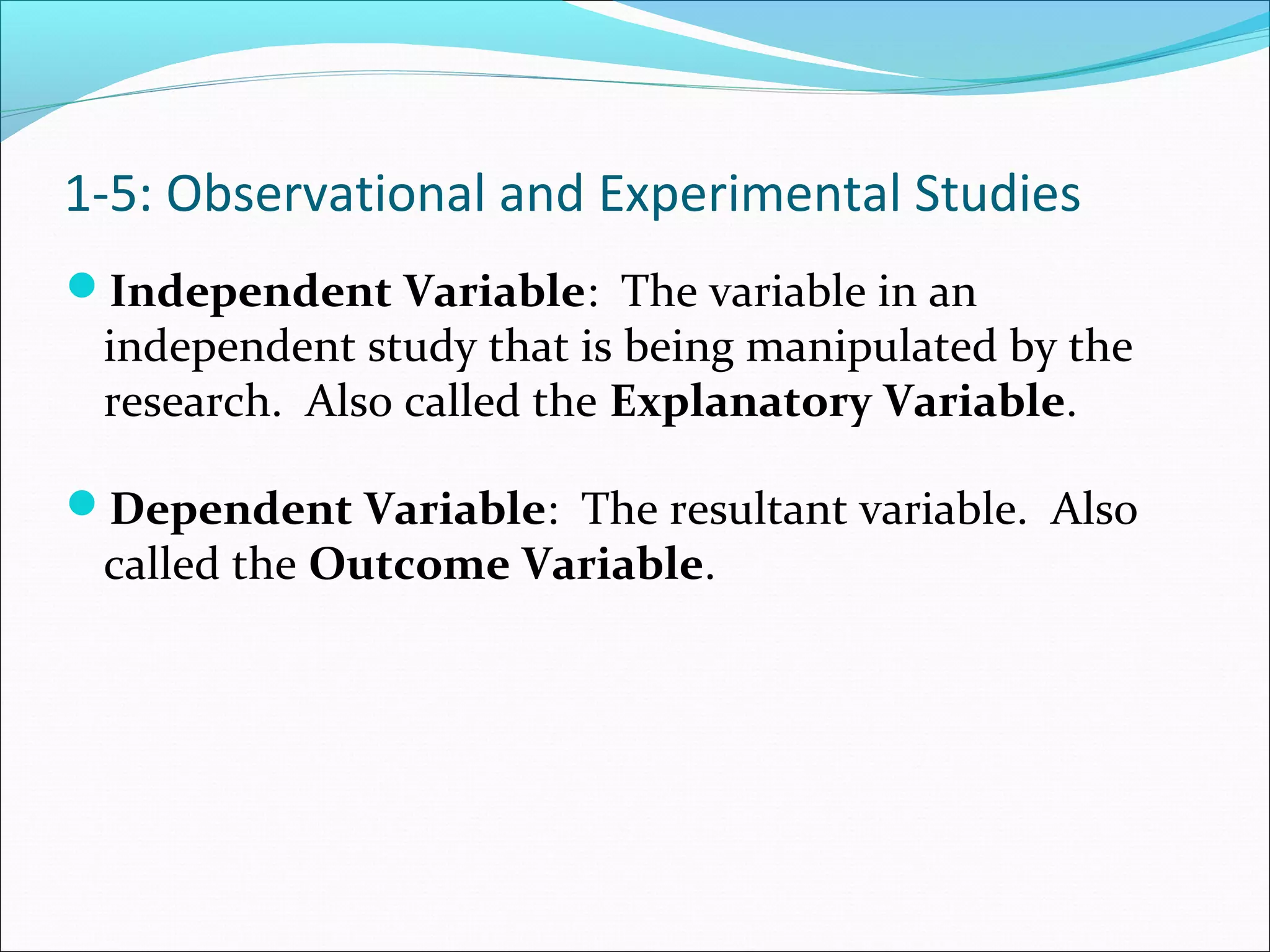
Independent Variable: Thevariable in an
independent study that is being manipulated by the
research. Also called the Explanatory Variable.
Dependent Variable: The resultant variable. Also
called the Outcome Variable.
1-5: Observational and Experimental Studies
6.
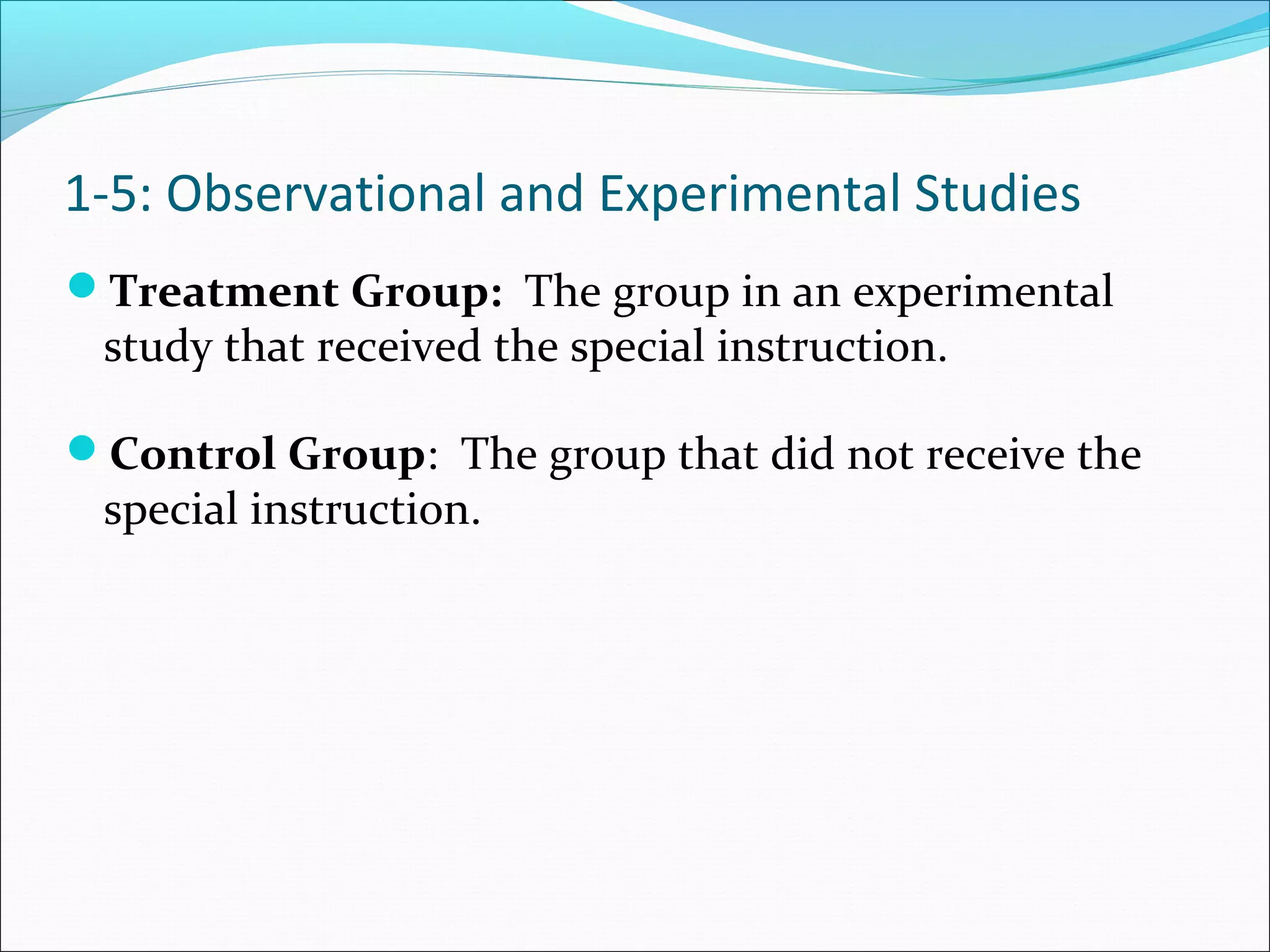
Treatment Group: Thegroup in an experimental
study that received the special instruction.
Control Group: The group that did not receive the
special instruction.
1-5: Observational and Experimental Studies
7.
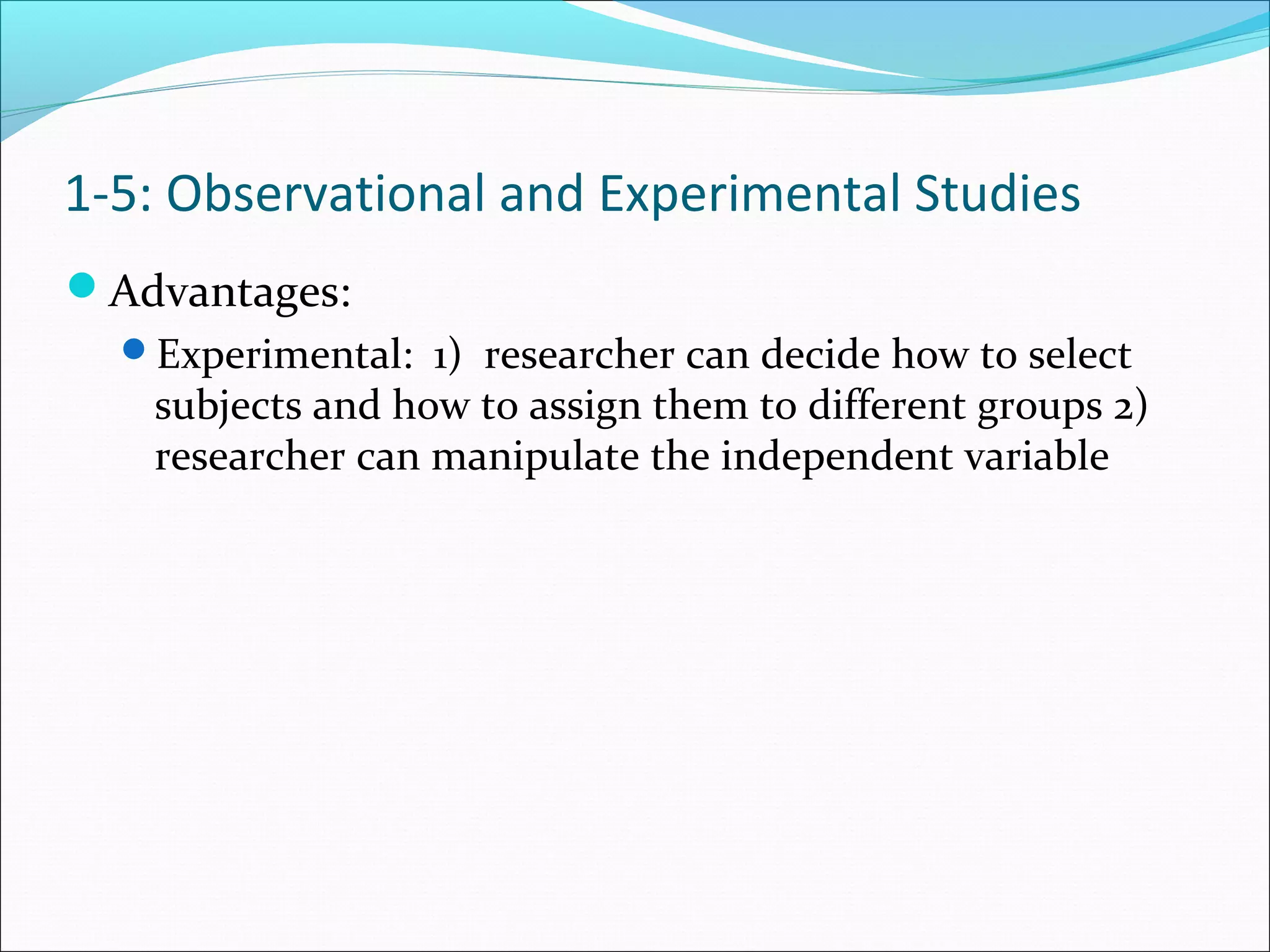
Advantages:
Experimental: 1) researchercan decide how to select
subjects and how to assign them to different groups 2)
researcher can manipulate the independent variable
1-5: Observational and Experimental Studies
8.
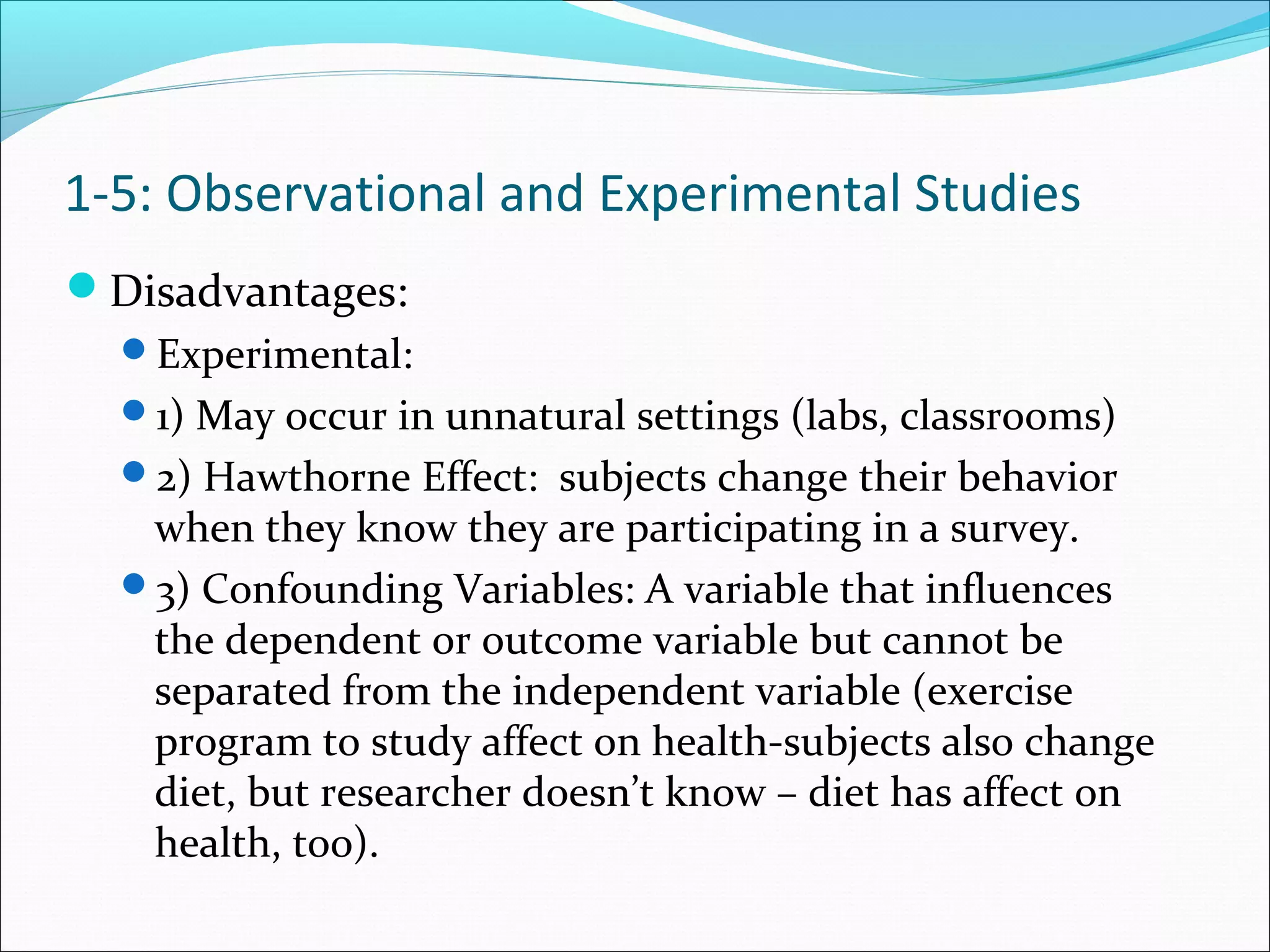
Disadvantages:
Experimental:
1) May occurin unnatural settings (labs, classrooms)
2) Hawthorne Effect: subjects change their behavior
when they know they are participating in a survey.
3) Confounding Variables: A variable that influences
the dependent or outcome variable but cannot be
separated from the independent variable (exercise
program to study affect on health-subjects also change
diet, but researcher doesn’t know – diet has affect on
health, too).
1-5: Observational and Experimental Studies
9.
Assignment: p. 16,Applying the Concepts, # 1-6
1-5: Observational and Experimental Studies
10.
Assignment: p. 16,Applying the Concepts, # 1-6
1-5: Observational and Experimental Studies