Type I and Type II Errors
Explained in Malayalam
Dr. Chinchu C.
Type I Error
• A Type I error is when we reject the null hypothesis when it
is in fact true
• In other words, it is when we wrongly assume that there is
an effect when no such effect really exists
• Like a False Positive result in a Covid-19 RTPCR test
Type I Error Example
• Assume that we are testing to see if there is a statistically significant
difference between the average marks obtained by female and
transgender students in a class
• Also assume that in reality, there is no such significant difference
• The Null Hypothesis will be ā€œAverage Marks of Females and Average
Marks of Transgender persons are not statistically differentā€
• H0: Marks(Female) = Marks(TG)
• Rejecting this Null Hypothesis would mean that we conclude that
there is a significant difference in the average marks between female
and transgender students.
• A Type I error is when we wrongly conclude that there is such a
significant difference when no such significant difference actually
exists.
Type II Error
• A Type II error is when we do not reject the null hypothesis
when in fact we should have rejected it
• In other words, it is when we conclude that there is no
effect, when in reality there is an effect
• Like a false negative in Covid-19 RTPCR test
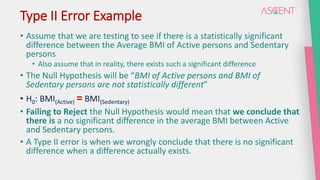
Type II Error Example
• Assume that we are testing to see if there is a statistically significant
difference between the Average BMI of Active persons and Sedentary
persons
• Also assume that in reality, there exists such a significant difference
• The Null Hypothesis will be ā€œBMI of Active persons and BMI of
Sedentary persons are not statistically differentā€
• H0: BMI(Active) = BMI(Sedentary)
• Failing to Reject the Null Hypothesis would mean that we conclude that
there is a no significant difference in the average BMI between Active
and Sedentary persons.
• A Type II error is when we wrongly conclude that there is no significant
difference when a difference actually exists.
Type I error is considered more serious in Research
(and the one that we try to control the most)
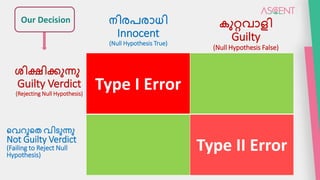
1000 culprits can escape, but, one innocent person
should not be punished
ą“†ą“Æą“æą“°ą“‚ ą“•ąµą“±ąµą“±ą“µą“¾ą“³ą“æą“•ąµ¾ ą“°ą“•ąµą“·ą“Ŗąµą“Ŗąµ†ą“Ÿąµą“Ÿą“¾ą“²ąµą“‚ ą“’ą“°ąµ
ą“Øą“æą“°ą“Ŗą“°ą“¾ą“§ą“æ ą“Ŗą“Ŗą“¾ą“²ąµą“‚ ą“¶ą“æą“•ąµą“·ą“æą“•ąµą“•ą“Ŗąµą“Ŗąµ†ą“Ÿą“°ąµą“¤
ą“Øą“æą“°ą“Ŗą“°ą“¾ą“§ą“æ
Innocent
(Null Hypothesis True)
Type I Error
Type II Error
ą“•ąµą“±ąµą“±ą“µą“¾ą“³ą“æ
Guilty
(Null Hypothesis False)
ą“¶ą“æą“•ąµą“·ą“æą“•ąµą“•ąµą“Øąµą“Øąµ
Guilty Verdict
(Rejecting Null Hypothesis)
ą“Ŗąµą“Ŗą“µą“±ąµą“Ŗąµą“Ŗąµ† ą“µą“æą“Ÿąµą“Øąµą“Øąµ
Not Guilty Verdict
(Failing to Reject Null
Hypothesis)
Our Decision
The š›‚ (Level of Significance)
• The level of significance is commonly understood as the probability of
making a Type I error.
• Typically set at 5% (expressed as 0.05) to balance between the
probability for Type I and Type II errors.

Type I and Type II Errors in Research Methodology

  • 1.
    Type I andType II Errors Explained in Malayalam Dr. Chinchu C.
  • 2.
    Type I Error •A Type I error is when we reject the null hypothesis when it is in fact true • In other words, it is when we wrongly assume that there is an effect when no such effect really exists • Like a False Positive result in a Covid-19 RTPCR test
  • 3.
    Type I ErrorExample • Assume that we are testing to see if there is a statistically significant difference between the average marks obtained by female and transgender students in a class • Also assume that in reality, there is no such significant difference • The Null Hypothesis will be ā€œAverage Marks of Females and Average Marks of Transgender persons are not statistically differentā€ • H0: Marks(Female) = Marks(TG) • Rejecting this Null Hypothesis would mean that we conclude that there is a significant difference in the average marks between female and transgender students. • A Type I error is when we wrongly conclude that there is such a significant difference when no such significant difference actually exists.
  • 4.
    Type II Error •A Type II error is when we do not reject the null hypothesis when in fact we should have rejected it • In other words, it is when we conclude that there is no effect, when in reality there is an effect • Like a false negative in Covid-19 RTPCR test
  • 5.
    Type II ErrorExample • Assume that we are testing to see if there is a statistically significant difference between the Average BMI of Active persons and Sedentary persons • Also assume that in reality, there exists such a significant difference • The Null Hypothesis will be ā€œBMI of Active persons and BMI of Sedentary persons are not statistically differentā€ • H0: BMI(Active) = BMI(Sedentary) • Failing to Reject the Null Hypothesis would mean that we conclude that there is a no significant difference in the average BMI between Active and Sedentary persons. • A Type II error is when we wrongly conclude that there is no significant difference when a difference actually exists.
  • 6.
    Type I erroris considered more serious in Research (and the one that we try to control the most)
  • 7.
    1000 culprits canescape, but, one innocent person should not be punished ą“†ą“Æą“æą“°ą“‚ ą“•ąµą“±ąµą“±ą“µą“¾ą“³ą“æą“•ąµ¾ ą“°ą“•ąµą“·ą“Ŗąµą“Ŗąµ†ą“Ÿąµą“Ÿą“¾ą“²ąµą“‚ ą“’ą“°ąµ ą“Øą“æą“°ą“Ŗą“°ą“¾ą“§ą“æ ą“Ŗą“Ŗą“¾ą“²ąµą“‚ ą“¶ą“æą“•ąµą“·ą“æą“•ąµą“•ą“Ŗąµą“Ŗąµ†ą“Ÿą“°ąµą“¤
  • 8.
    ą“Øą“æą“°ą“Ŗą“°ą“¾ą“§ą“æ Innocent (Null Hypothesis True) TypeI Error Type II Error ą“•ąµą“±ąµą“±ą“µą“¾ą“³ą“æ Guilty (Null Hypothesis False) ą“¶ą“æą“•ąµą“·ą“æą“•ąµą“•ąµą“Øąµą“Øąµ Guilty Verdict (Rejecting Null Hypothesis) ą“Ŗąµą“Ŗą“µą“±ąµą“Ŗąµą“Ŗąµ† ą“µą“æą“Ÿąµą“Øąµą“Øąµ Not Guilty Verdict (Failing to Reject Null Hypothesis) Our Decision
  • 9.
    The š›‚ (Levelof Significance) • The level of significance is commonly understood as the probability of making a Type I error. • Typically set at 5% (expressed as 0.05) to balance between the probability for Type I and Type II errors.