STUDY	DESIGNS
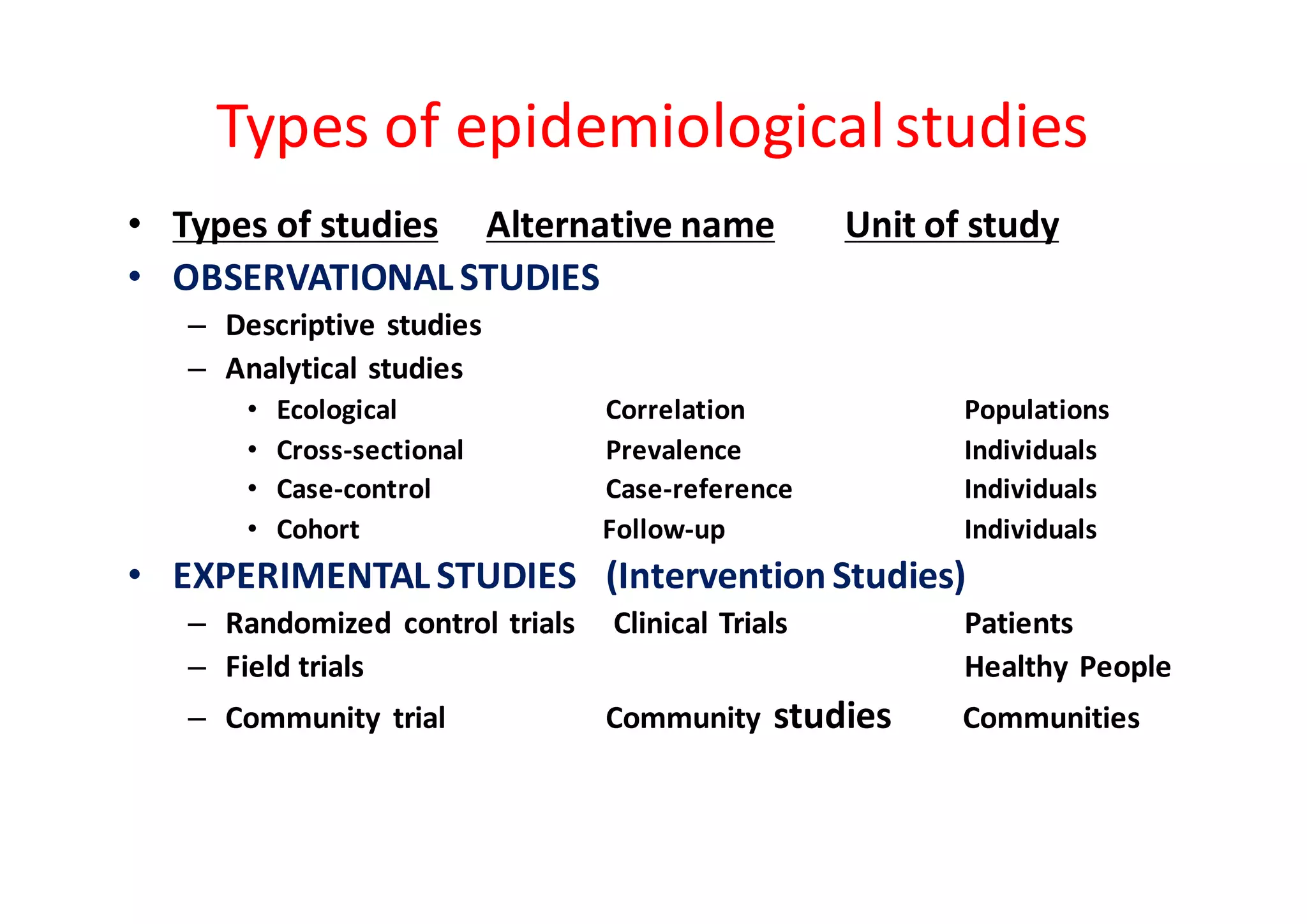
Types	of	epidemiological	studies
• Types	of	studies Alternative	name Unit	of	study	
• OBSERVATIONAL	STUDIES
– Descriptive	studies
– Analytical	studies
• Ecological	 Correlation	 Populations
• Cross-sectional Prevalence Individuals
• Case-control Case-reference Individuals
• Cohort Follow-up Individuals
• EXPERIMENTAL	STUDIES (Intervention	Studies)
– Randomized	 control	trials Clinical	Trials Patients
– Field	trials Healthy	People
– Community	 trial Community	 studies			 Communities
Difference	between	Descriptive	and	Analytical	Epidemiology
Descriptive Epidemiology Analytical	Epidemiology
Only	one	group	studies At	least	two	groups	are	studied	for	
comparison	
At	the start	of	study	there	is	no	
explicit	hypothesis	regarding	cause	
effect	 relationship	
At	the	start	of	the	study there	is	definite	
hypothesis	regarding	an	exposure	
possibly	causing	an	outcome.	
The	study	ends	in	development	 of	
possible	hypothesis	regarding	cause	
and	effect	relationship	 but	does	not	
confirm or	reject	such	hypothesis	
At	the	end	of	the	study	it	confirms	or	
rejects	the	hypothesis with	which	it	
started
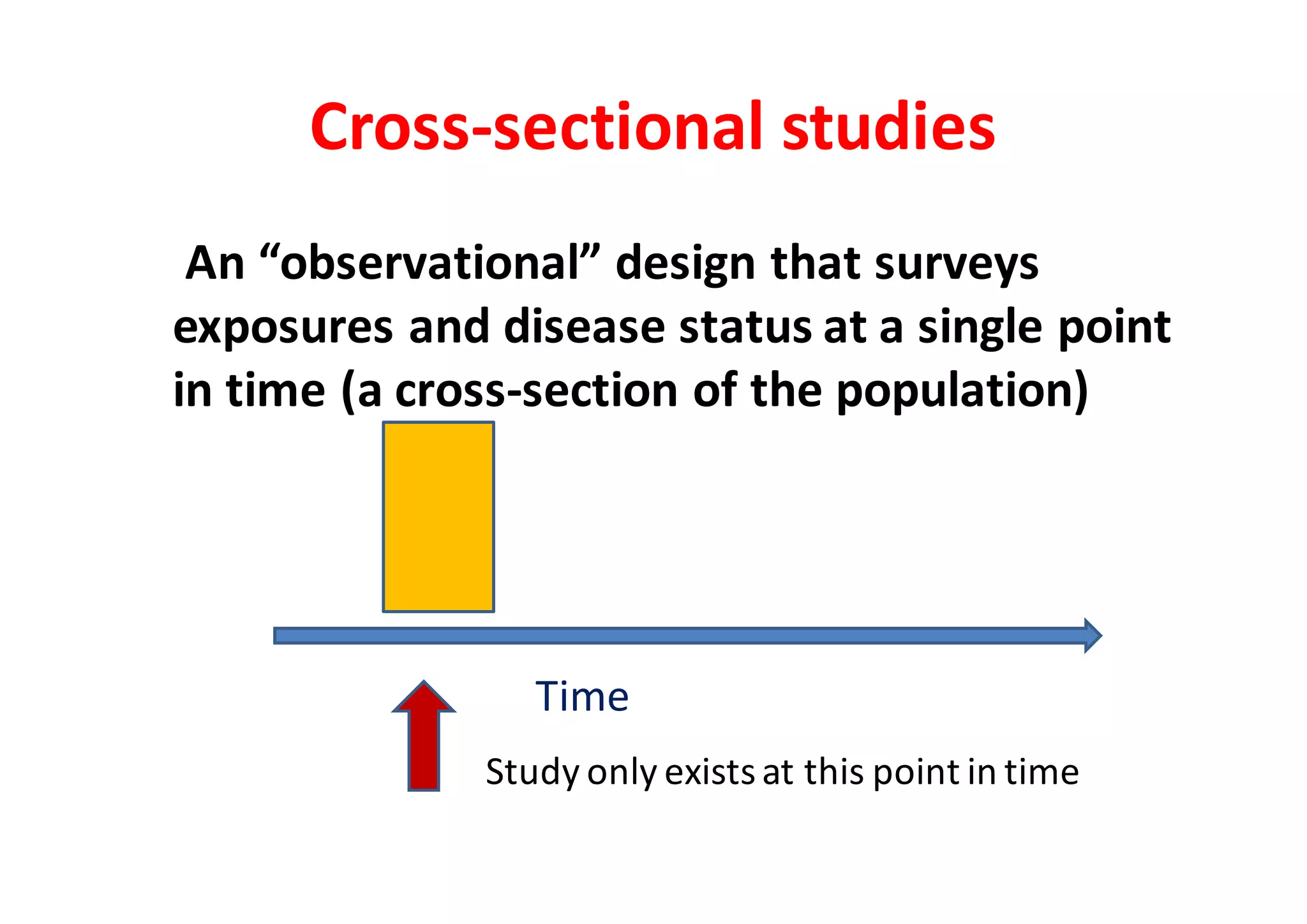
Cross-sectional	studies
An	“observational”	design	that	surveys	
exposures	and	disease	status	at	a	single	point	
in	time	(a	cross-section	of	the	population)
Time
Study	only	exists	at	this	point	in	time
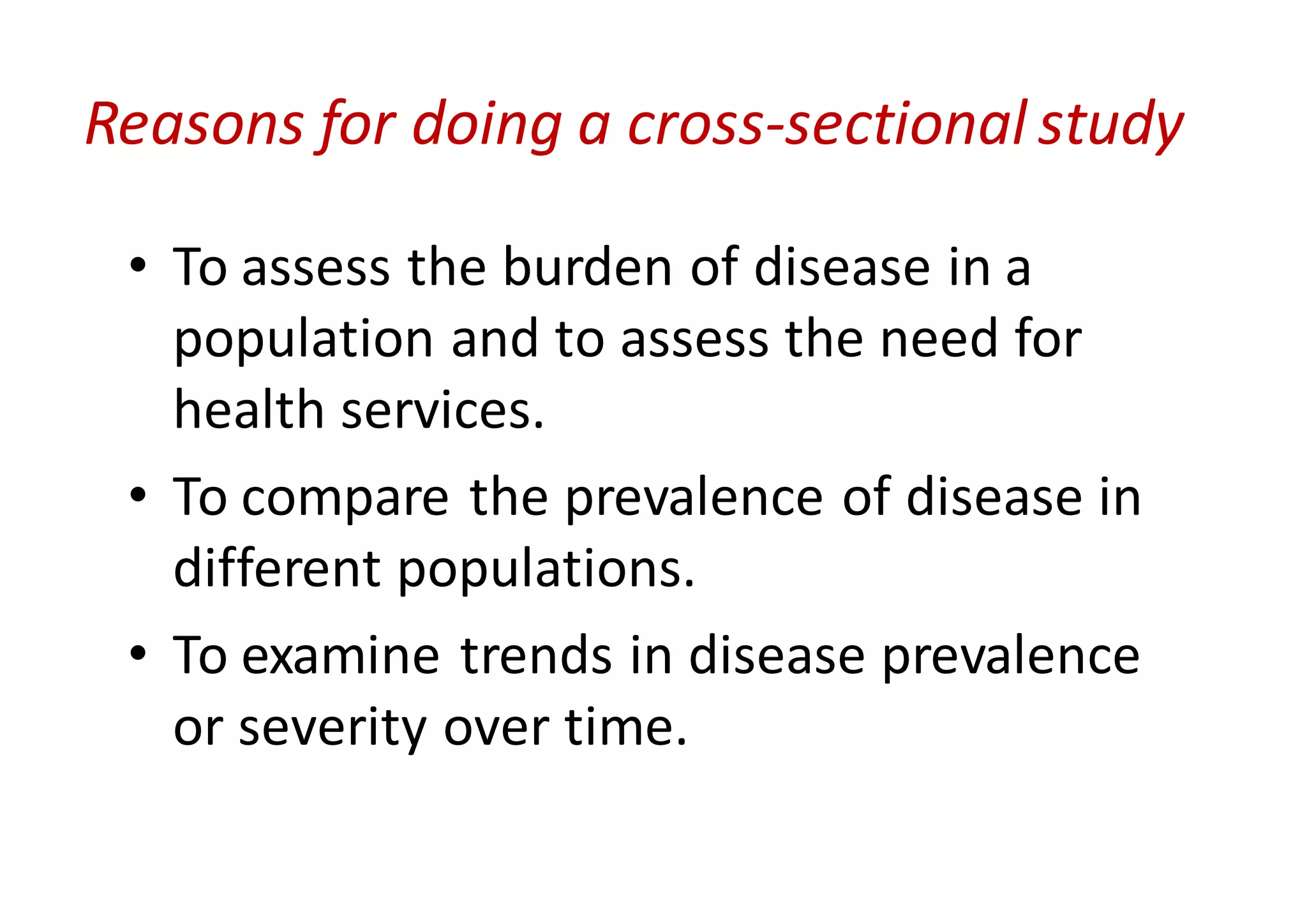
Reasons	for	doing	a	cross-sectional	study
• To	assess	the	burden	of	disease	in	a	
population	and	to	assess	the	need	for	
health	services.
• To	compare	the	prevalence	of	disease	in	
different	populations.
• To	examine	trends	in	disease	prevalence	
or	severity	over	time.
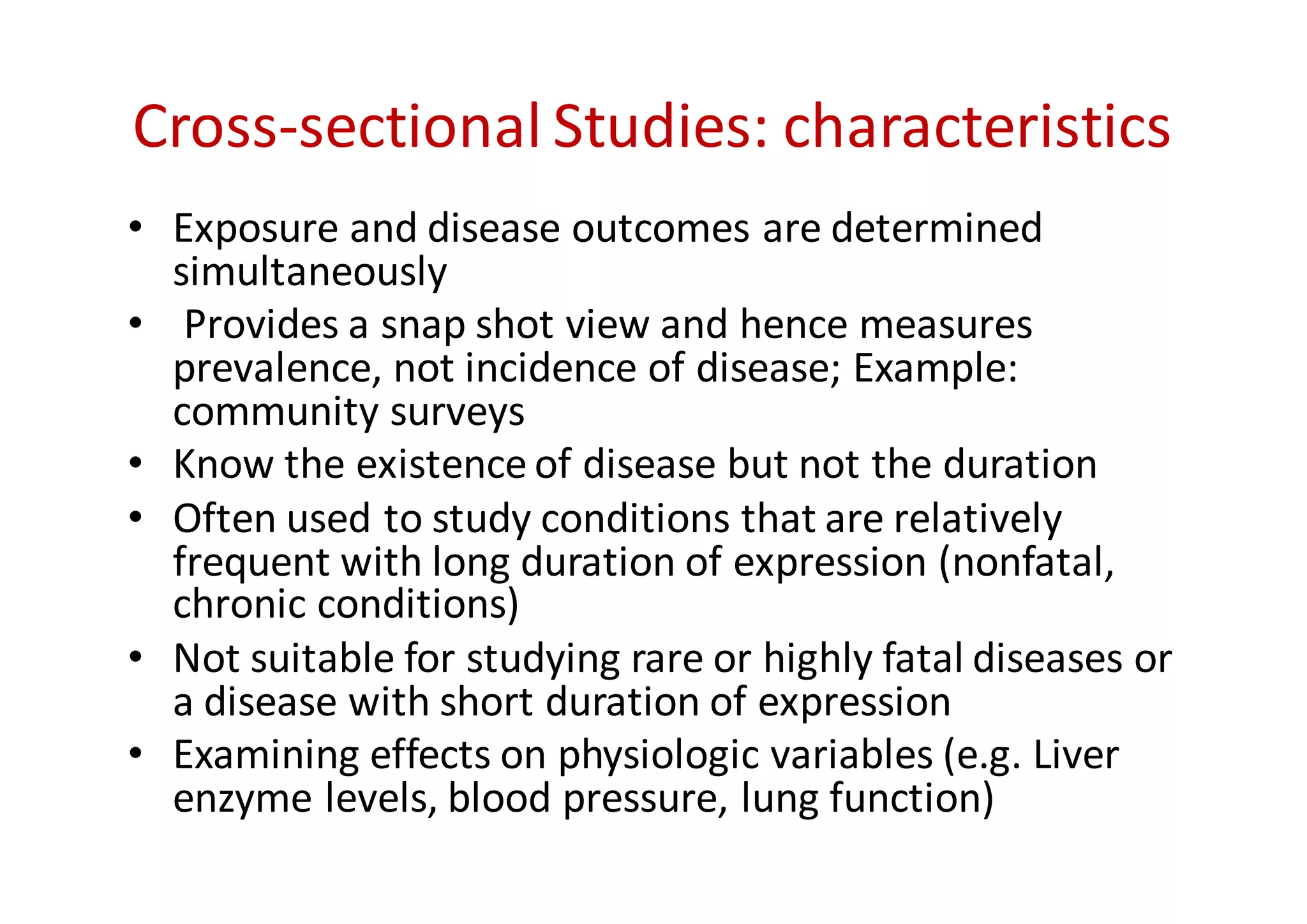
Cross-sectional	Studies:	characteristics
• Exposure	and	disease	outcomes	are	determined	
simultaneously
• Provides	a	snap	shot	view	and	hence	measures	
prevalence,	not	incidence	of	disease;	Example:	
community	surveys
• Know	the	existence	of	disease	but	not	the	duration
• Often	used	to	study	conditions	that	are	relatively	
frequent	with	long	duration	of	expression	(nonfatal,	
chronic	conditions)
• Not	suitable	for	studying	rare	or	highly	fatal	diseases	or	
a	disease	with	short	duration	of	expression
• Examining	effects	on	physiologic	variables	(e.g.	Liver	
enzyme	levels,	blood	pressure,	lung	function)
Where	can	we	do	a	cross	sectional	study
• Any	setting	or	location
– Community
– Schools
– Worksite
– Hospitals

Cross sectional study