Question
everythin
    g
thinking reflection
assumed knowledge
PDP
personal development planning
PDP is a process not an outcome
what is a
journal?
format
A4, 5, 6, 7, 8
pocket

phone
i pad
a journal is a place for...
Recording
      thoughts, ideas, observations, things
Reflecting
      to gain understanding
Analyzing
      to further your learning
Concluding
      setting out what you have thought
      about
what’s in it - actual?
written notes

diagrams

drawings

sketches
what’s in it - ideas?
personal insight

observations

questions

speculation

the work of others
content
raw
       un-thought-out observations
recorded close to the action
       think police note book
reflection
       stuff you have thought about
connections
       notes on the unexpected
questions
what happened?

why did it happen?

what do I think about this?

what should I do as a result of this?

how do I do this?
how to use it
write often

note down dates and times

write freely - without hesitation

write down stuff even if its not relevant
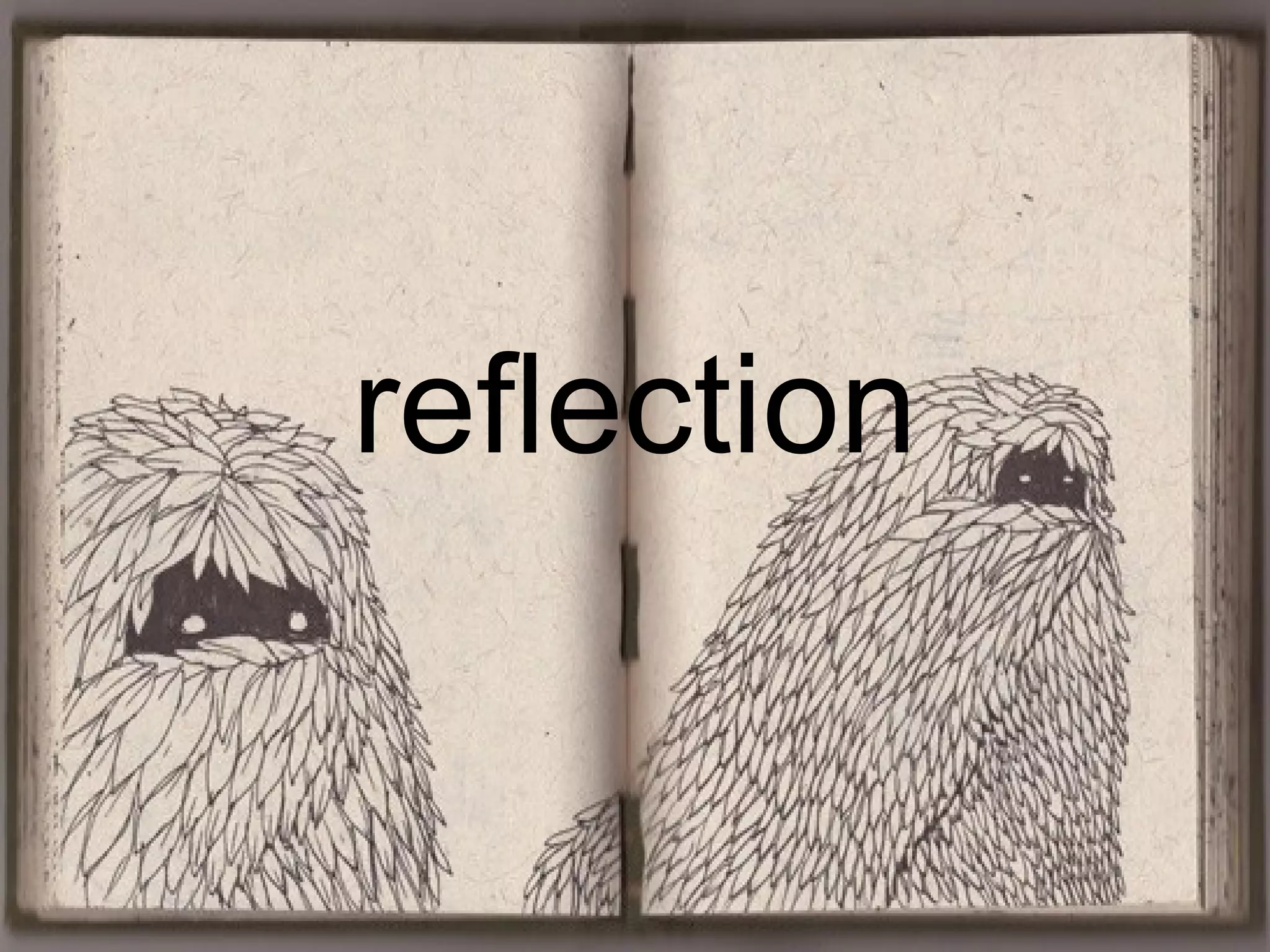
reflection
what is reflection?
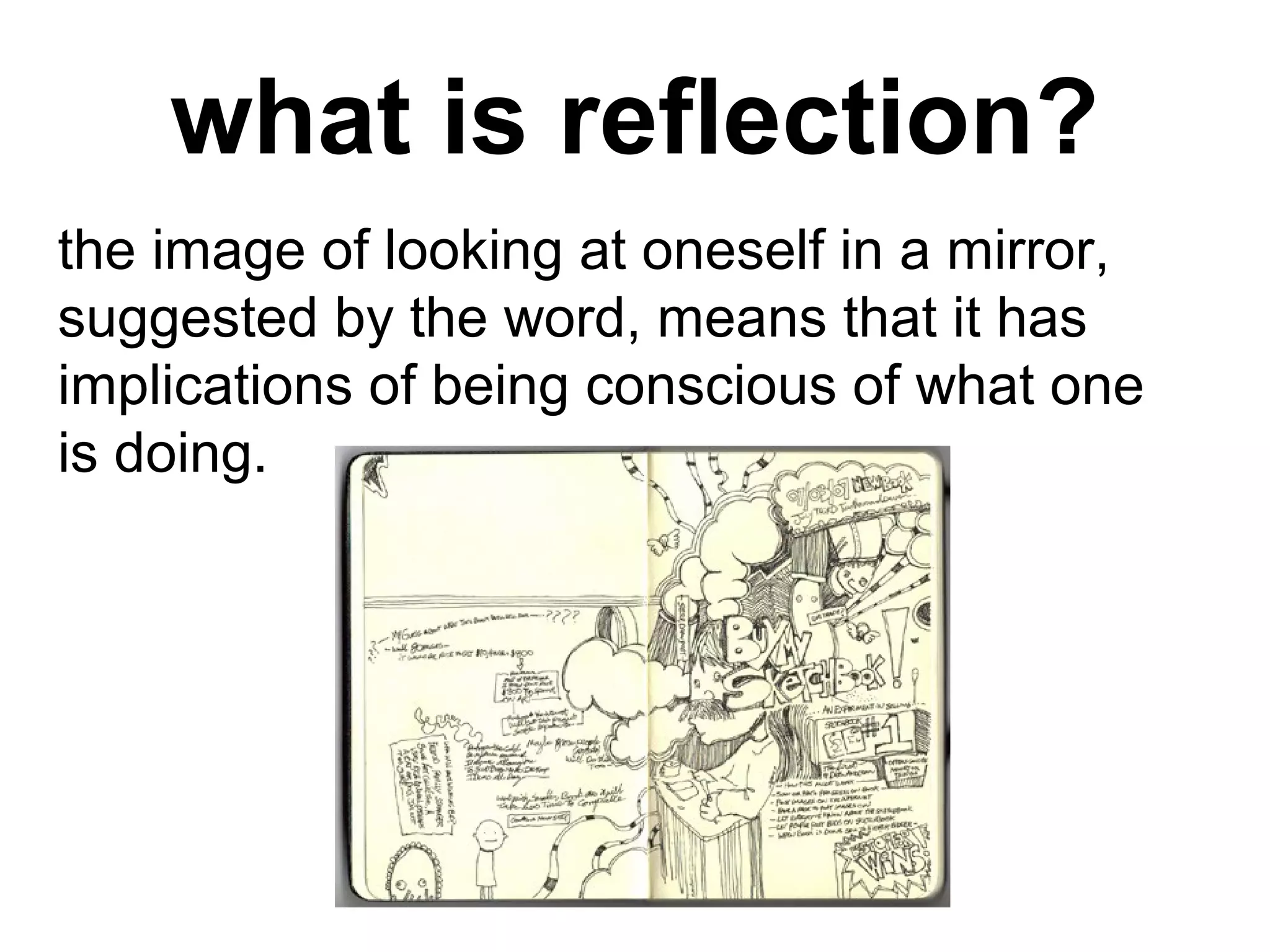
the image of looking at oneself in a mirror,
suggested by the word, means that it has
implications of being conscious of what one
is doing.
what is reflection?
reflection is studying one's own study methods
as seriously as one studies the subject

and
thinking about a learning task after you have
done it.
unless you do this, the task will almost
certainly be wasted.
what is reflection?
so
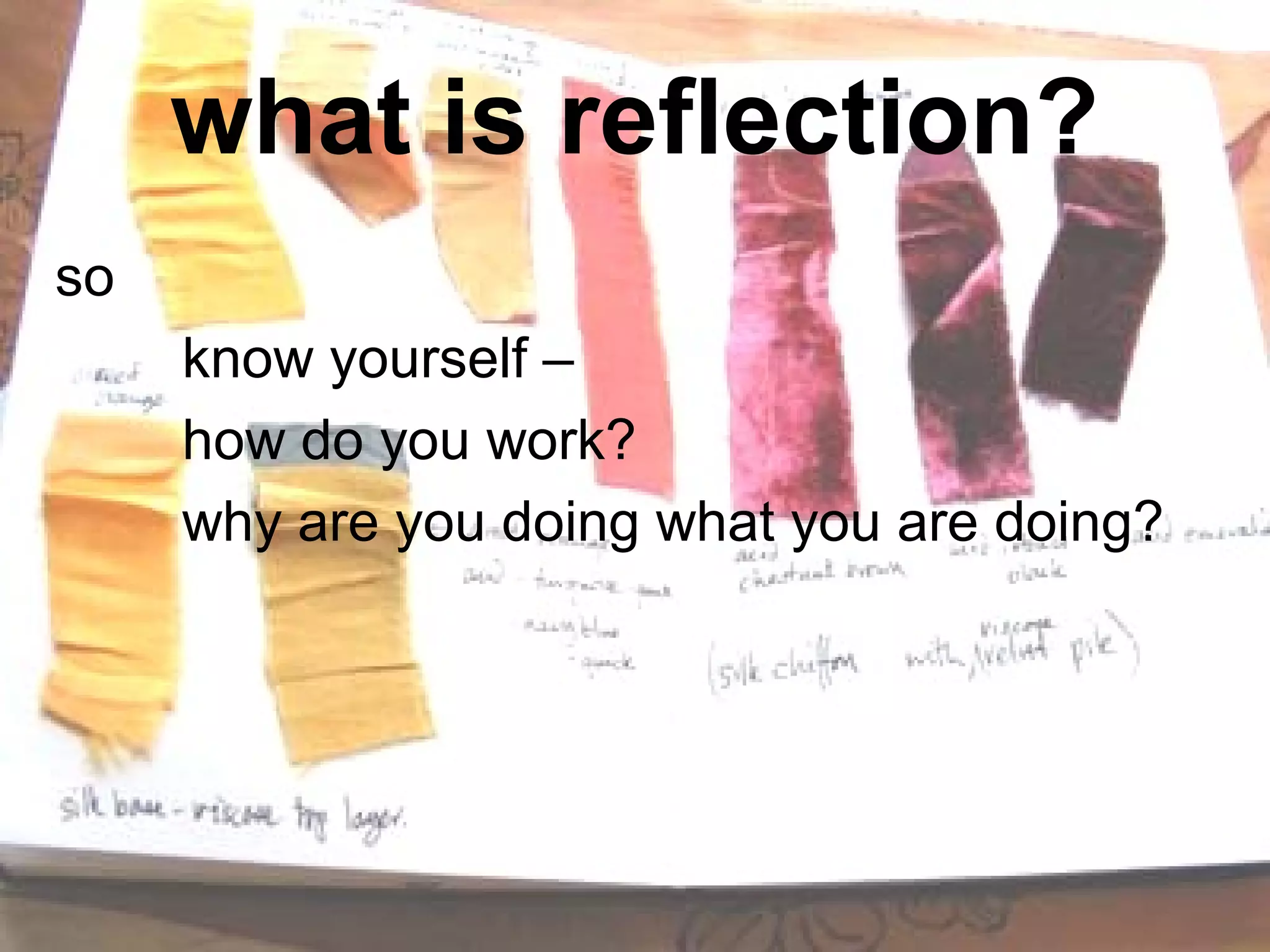
     know yourself –
     how do you work?
     why are you doing what you are doing?
what is reflection?
so


when do you work?
where do you work?
         time
         scale time
         location


how does this inform your working pattern /
approach to work?
what is reflection?
so
     how do you think you work?
     how do you actually work?
what is reflection?
in any learning situation
you should

           -    prepare for it beforehand
           -    participate actively during it
           -   reflect on it afterwards
what is reflection?
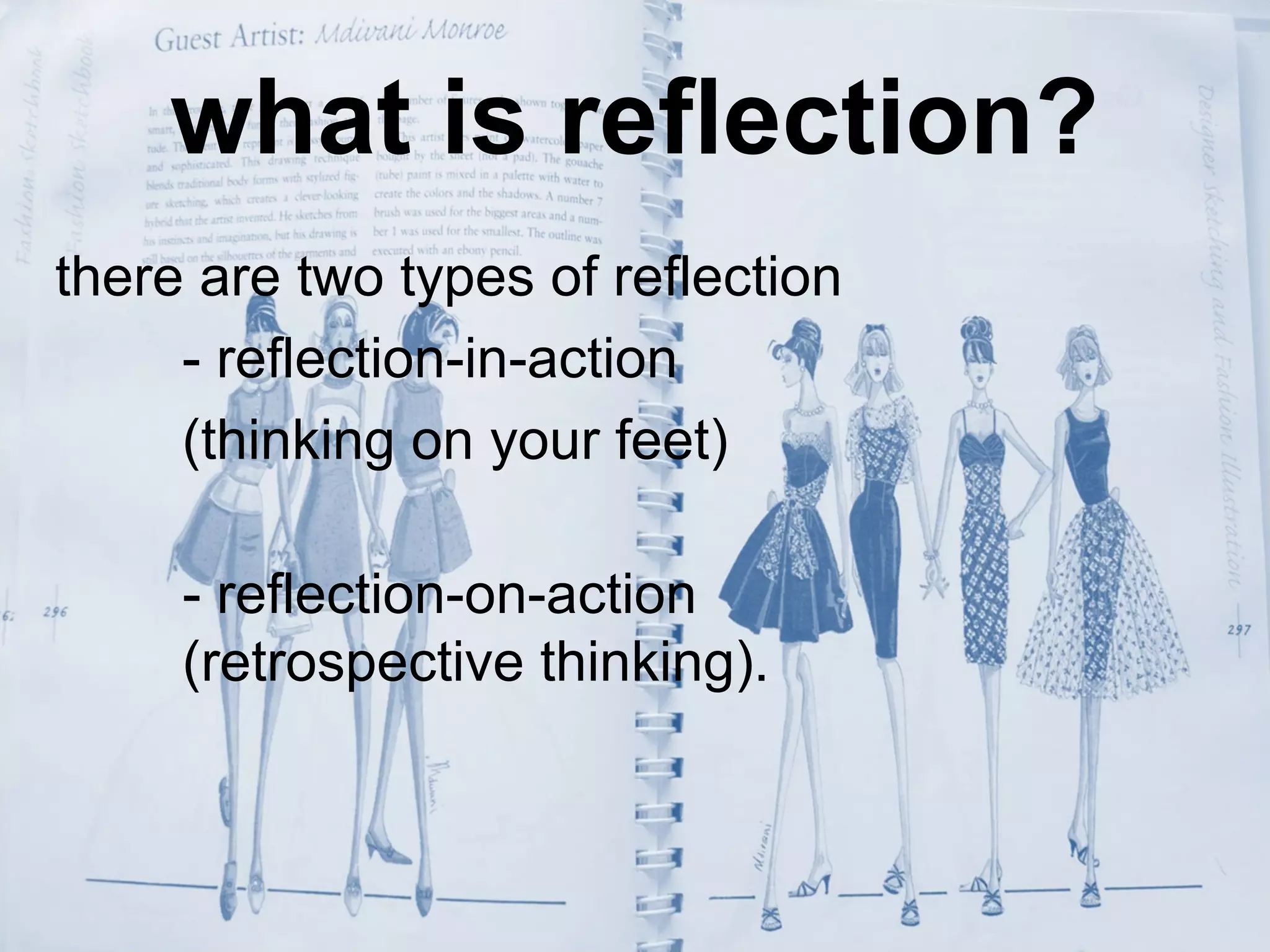
there are two types of reflection
     - reflection-in-action
     (thinking on your feet)

     - reflection-on-action
     (retrospective thinking).
what is reflection?
    what is reflection?

reflection is a process of reviewing an
experience of practice in order to describe,
analyse, evaluate and so inform learning
about practice
what is reflection?
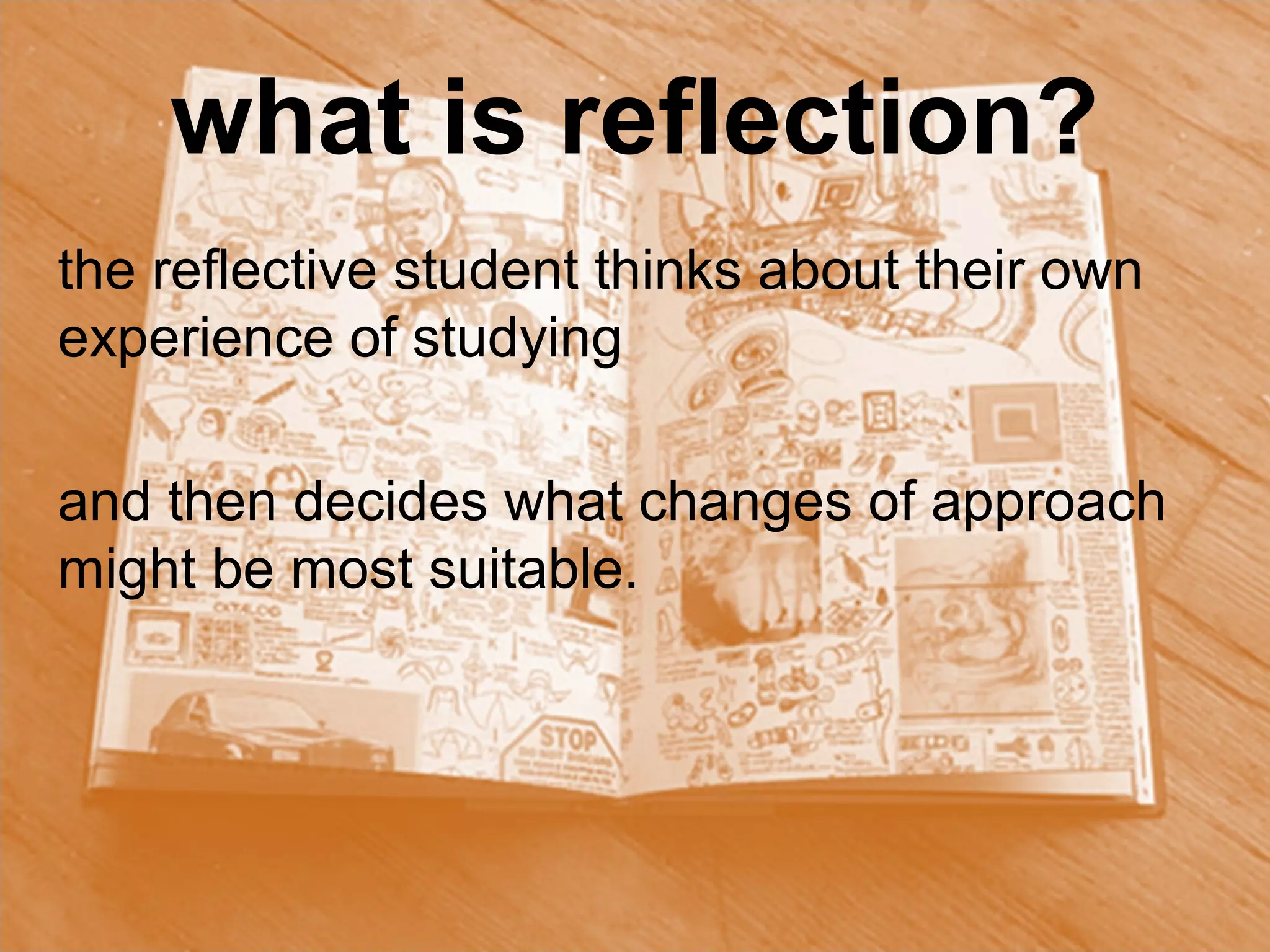
the reflective student thinks about their own
experience of studying

and then decides what changes of approach
might be most suitable.
so
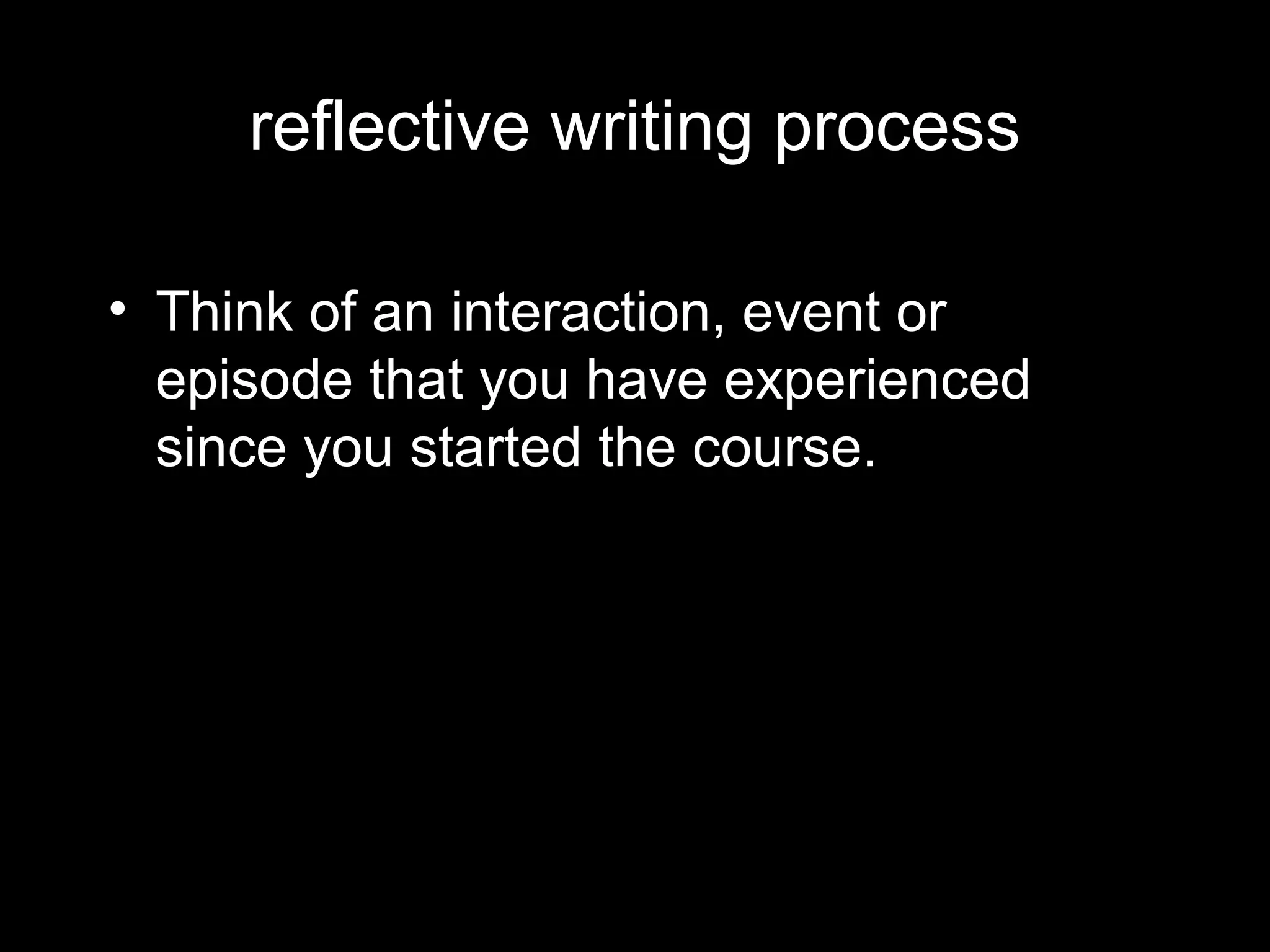
reflective writing process

• Think of an interaction, event or
  episode that you have experienced
  since you started the course.
reflective writing process

• Describe what happened
reflective writing process


• What was your role?
reflective writing process

• What feelings and perceptions
  surrounded the experience?
reflective writing process


• How would you explain the situation to
  someone else?
reflective writing process

• What might this experience mean in the
  context of your course?
reflective writing process


• What other perspectives, theories or
  concepts could be applied to the
  situation?
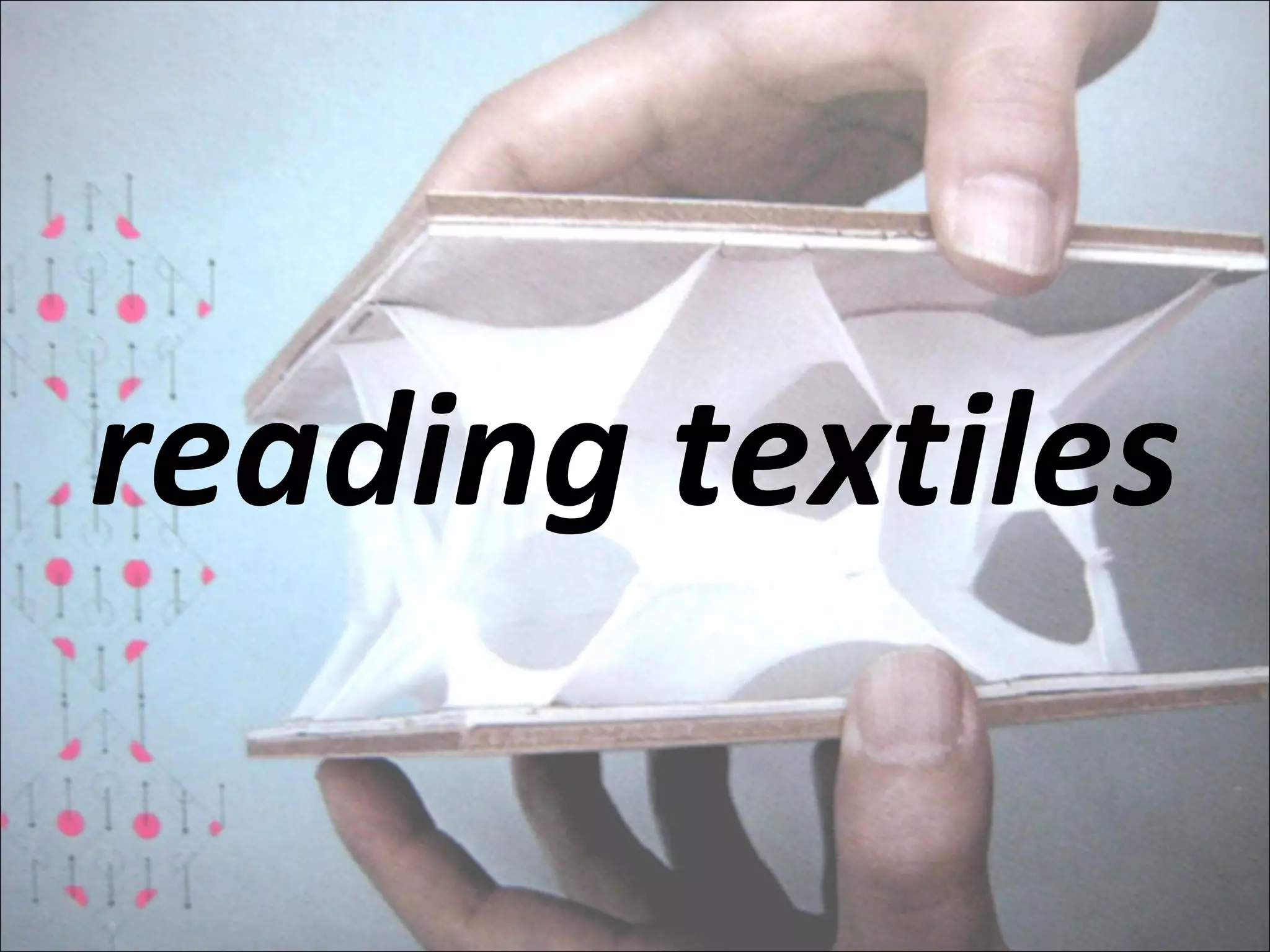
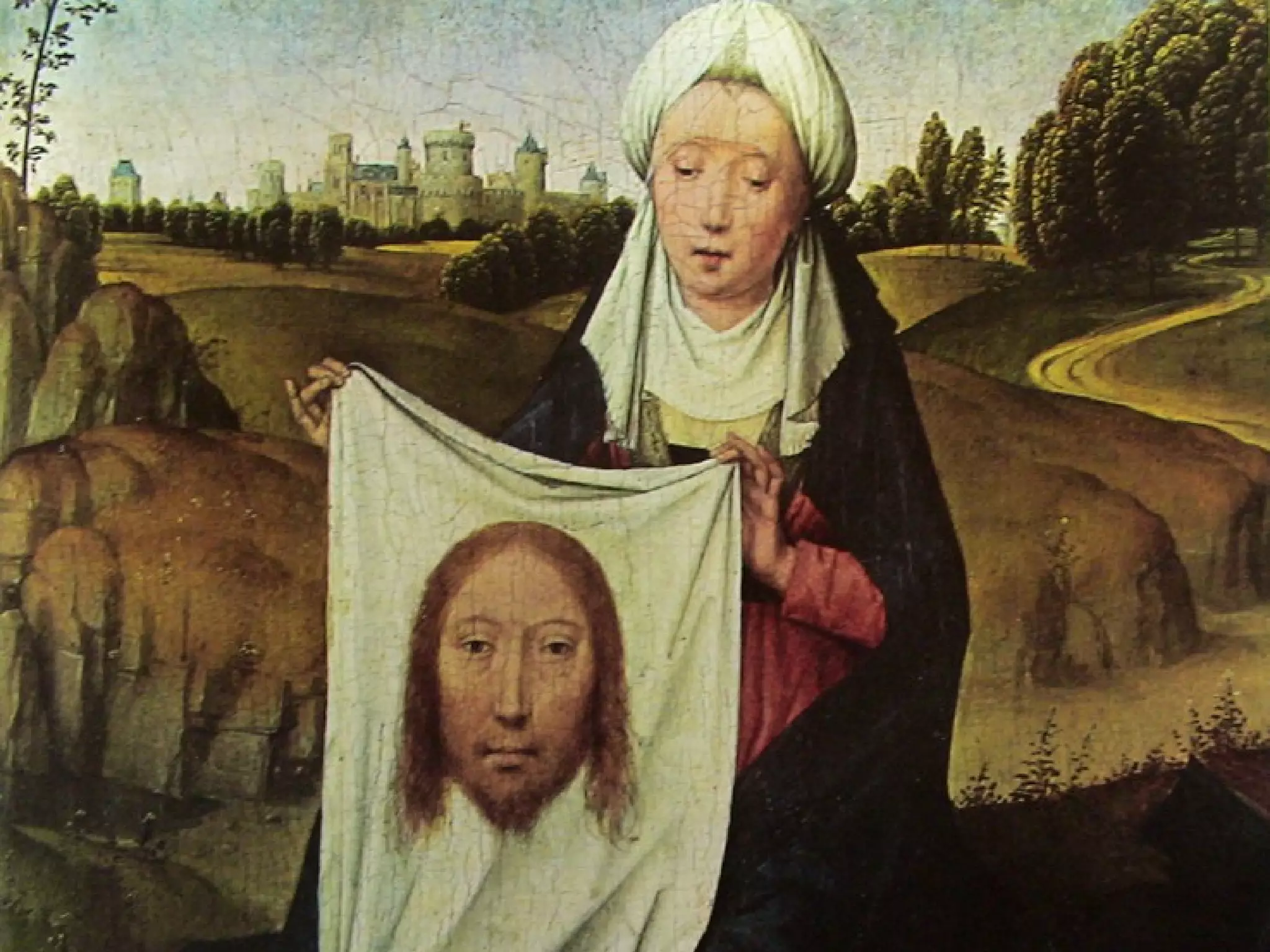
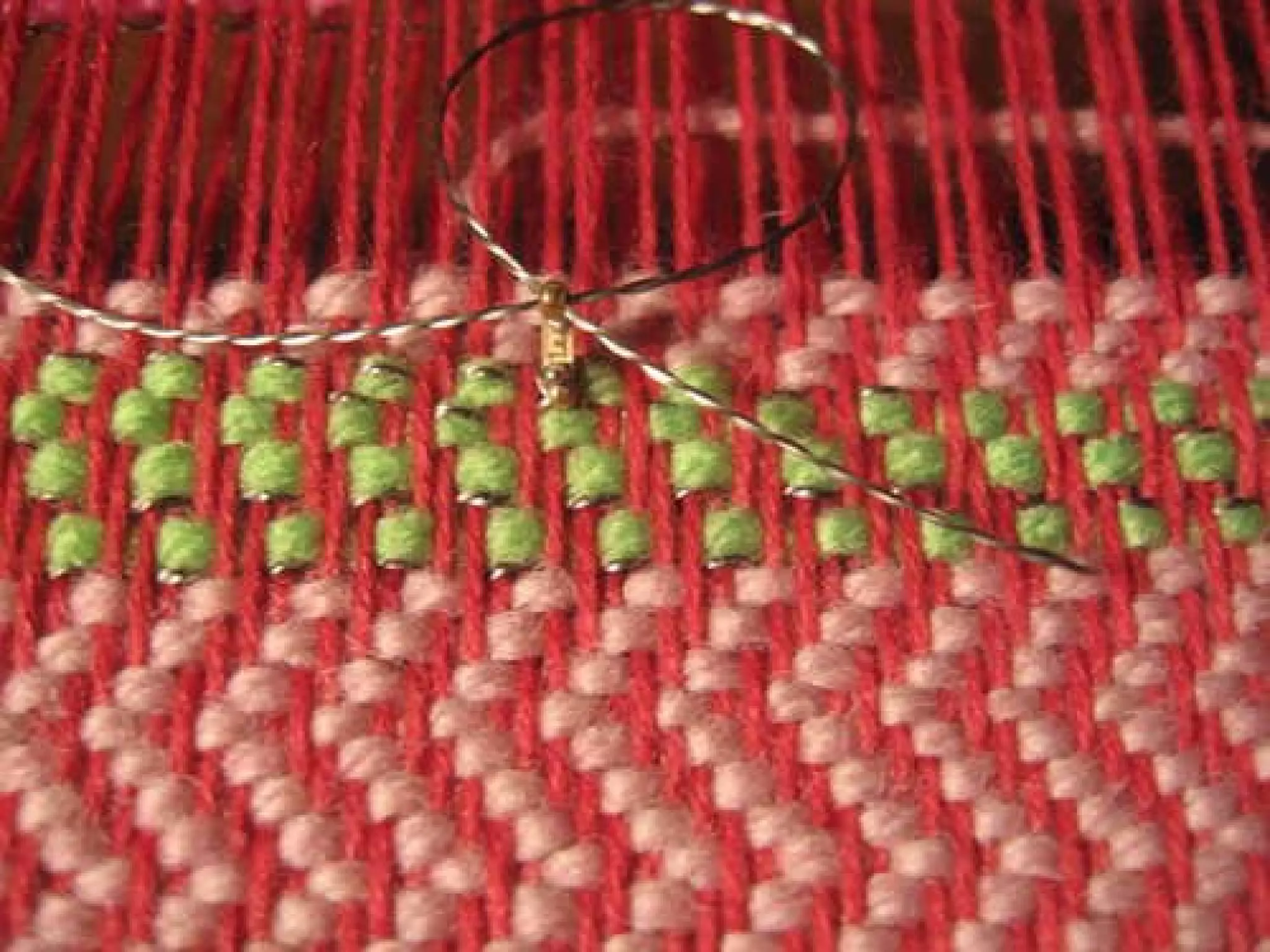
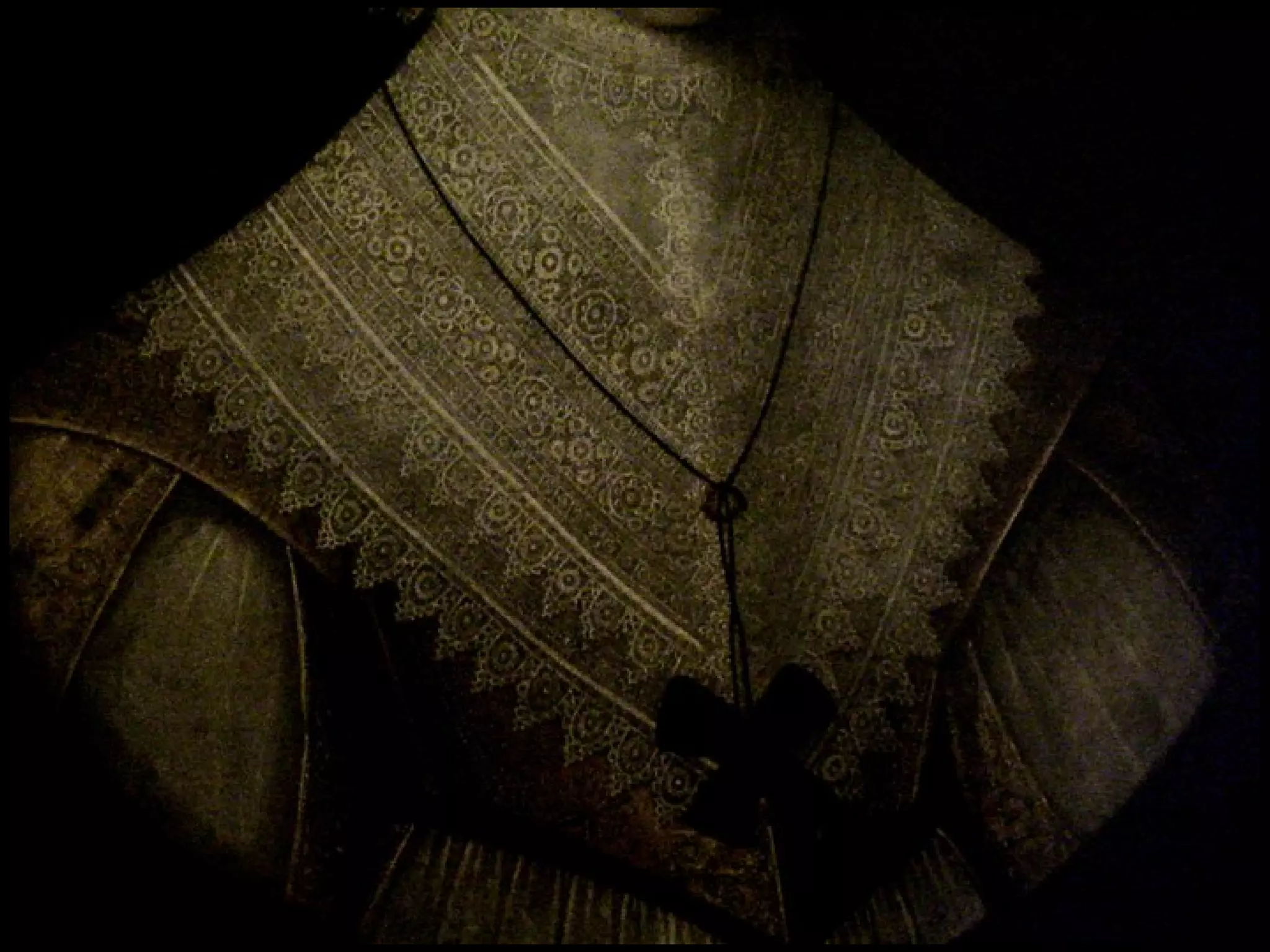
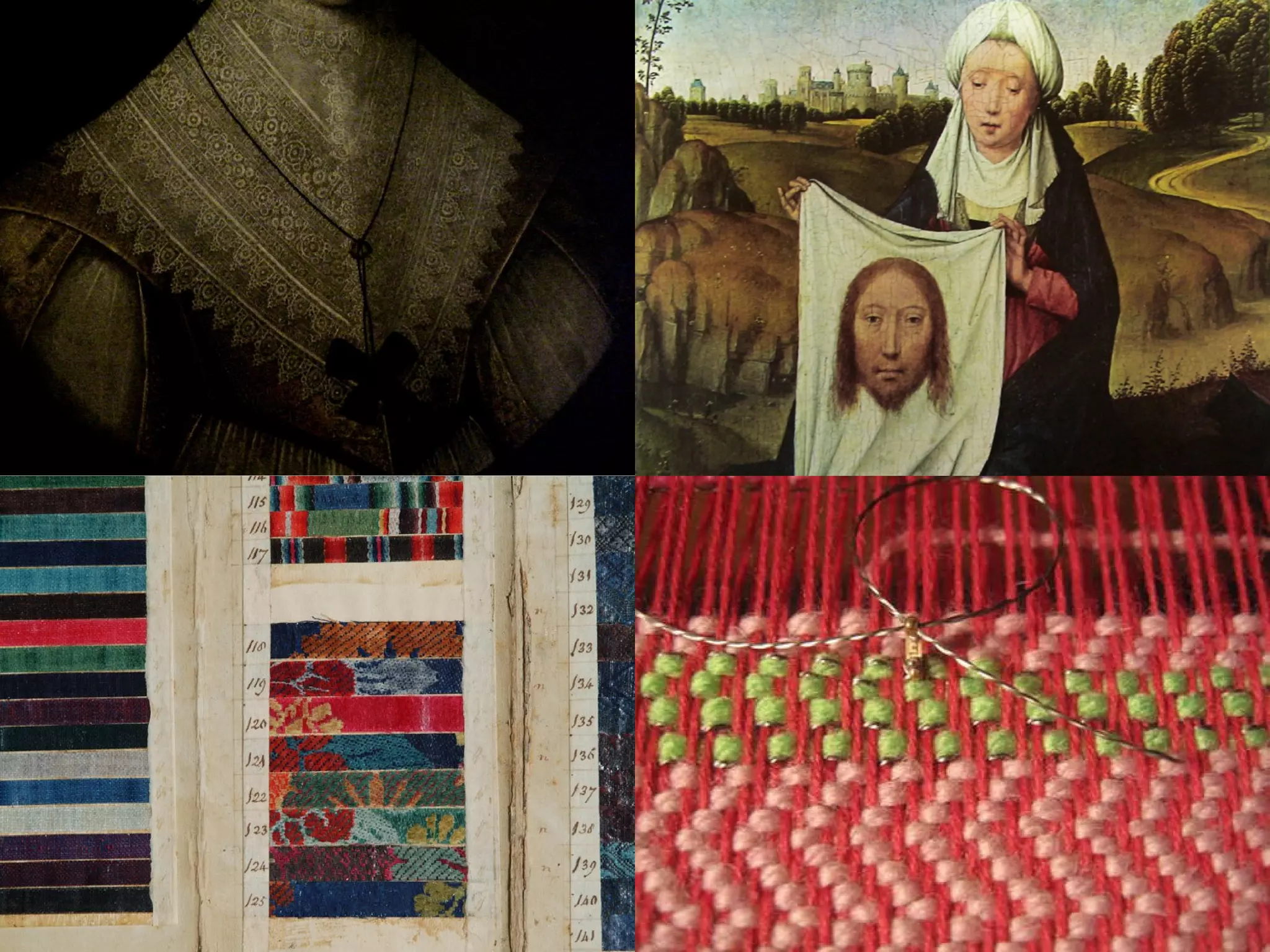
reading textiles
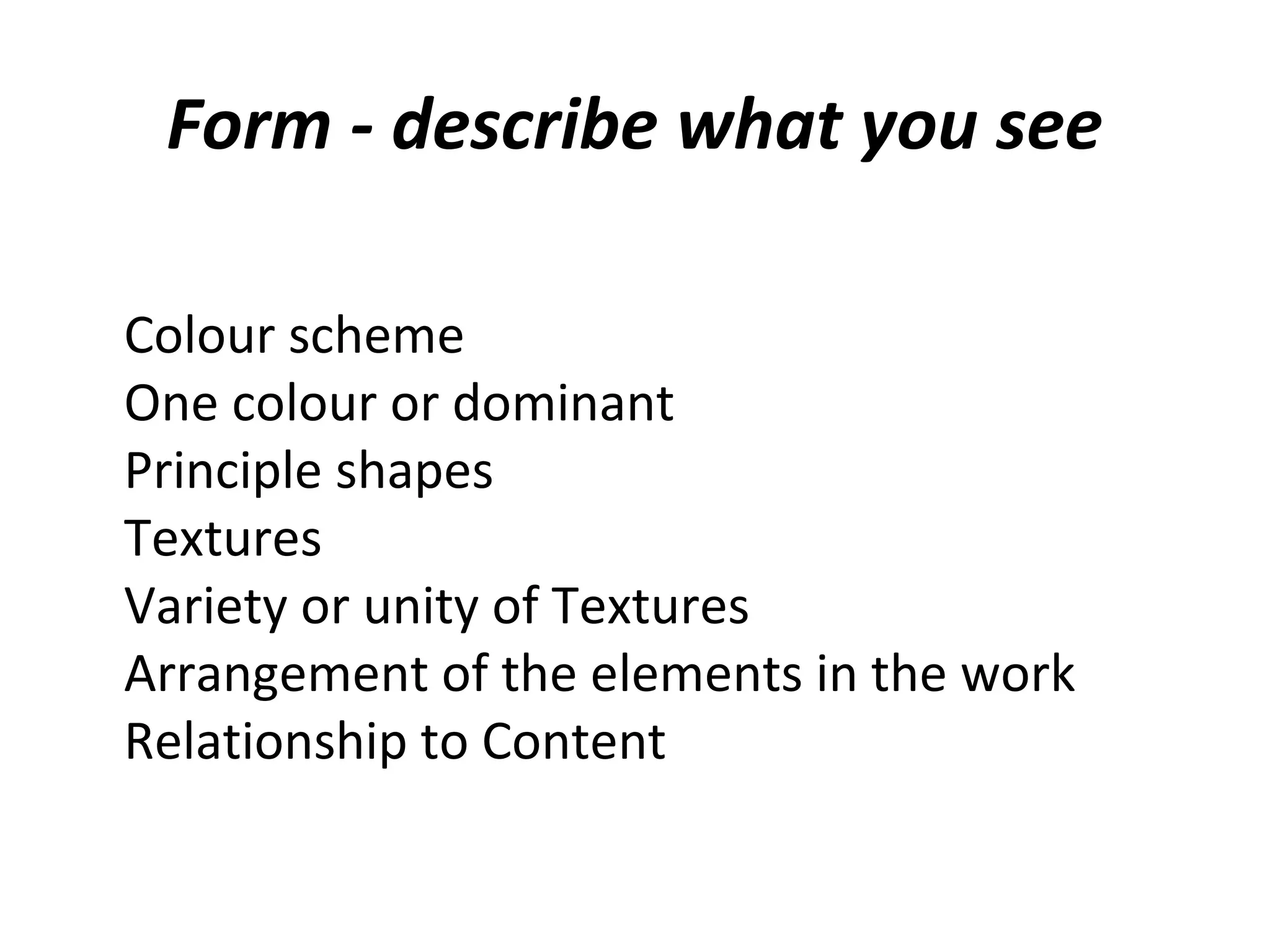
Form - describe what you see

Colour scheme
One colour or dominant
Principle shapes
Textures
Variety or unity of Textures
Arrangement of the elements in the work
Relationship to Content
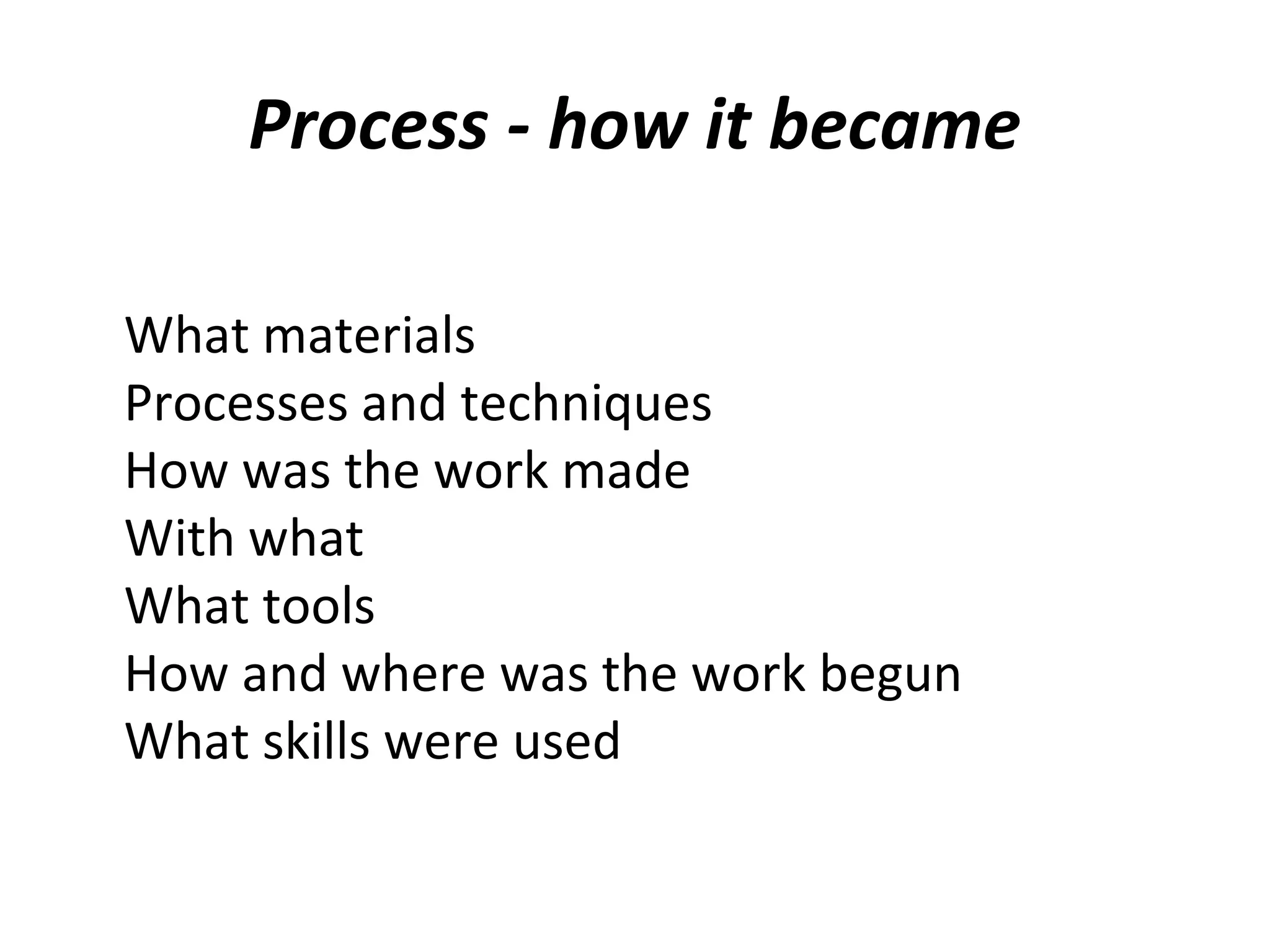
Process - how it became

What materials
Processes and techniques
How was the work made
With what
What tools
How and where was the work begun
What skills were used
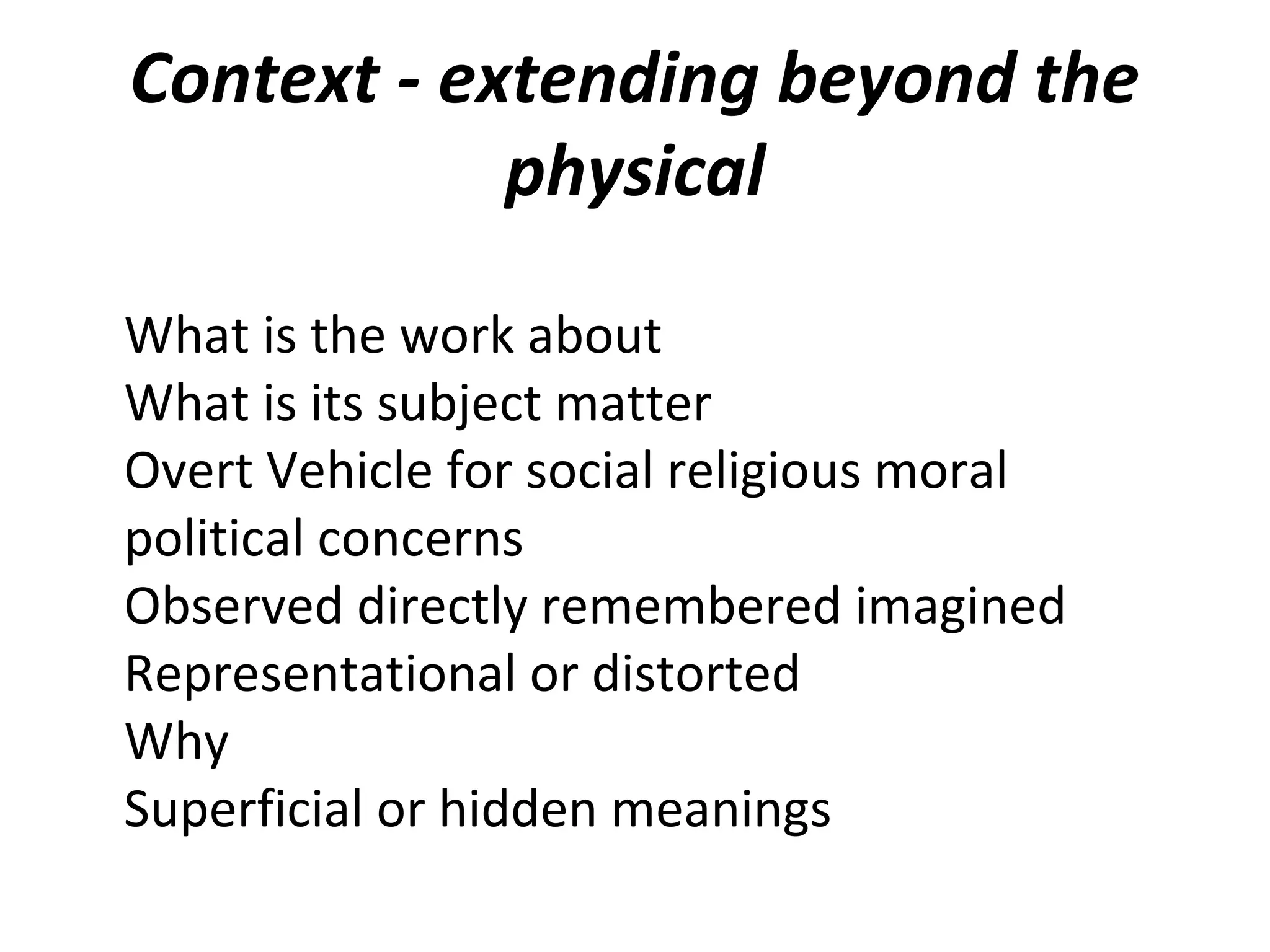
Context - extending beyond the
            physical

What is the work about
What is its subject matter
Overt Vehicle for social religious moral
political concerns
Observed directly remembered imagined
Representational or distorted
Why
Superficial or hidden meanings
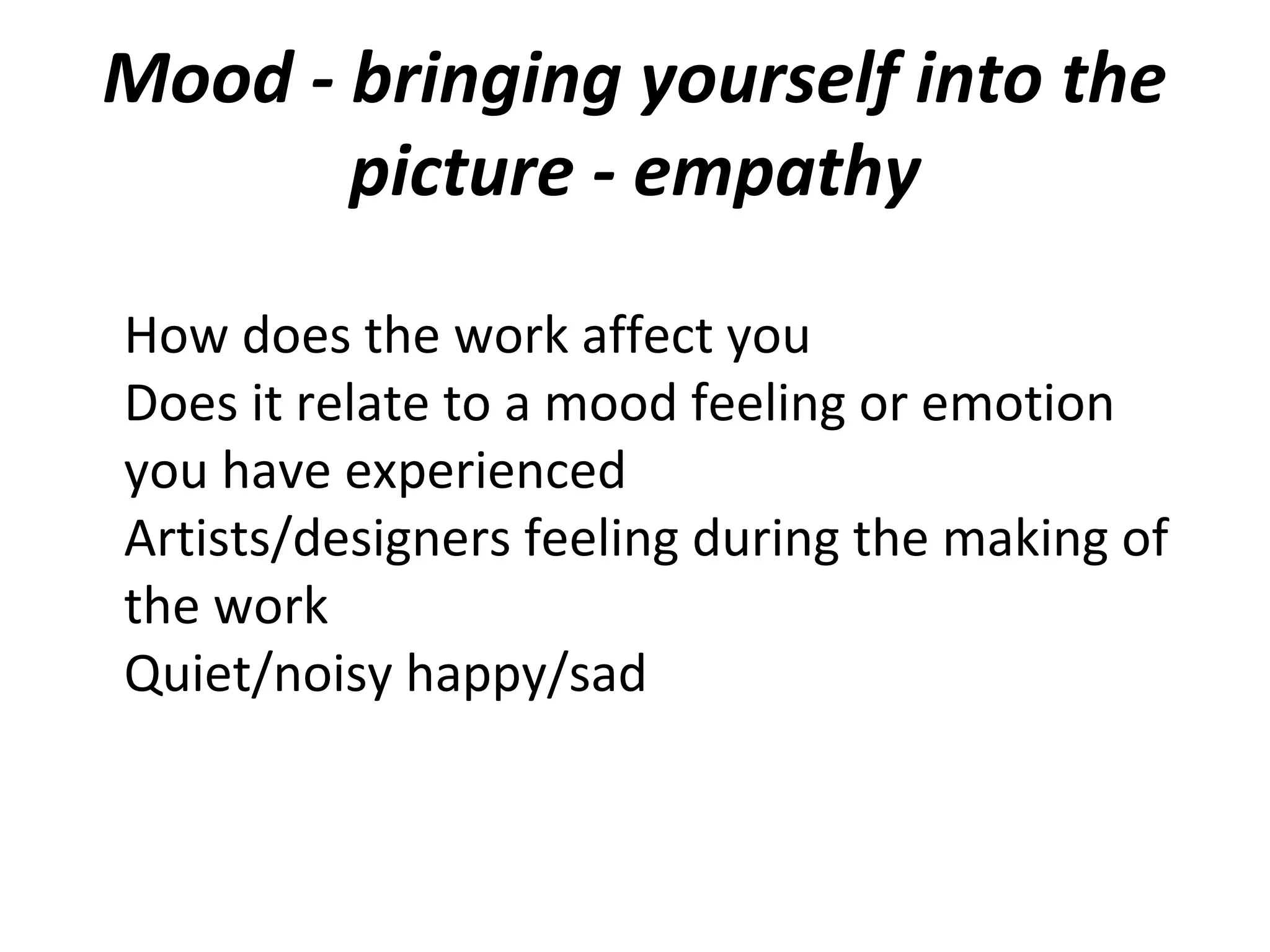
Mood - bringing yourself into the
       picture - empathy

How does the work affect you
Does it relate to a mood feeling or emotion
you have experienced
Artists/designers feeling during the making of
the work
Quiet/noisy happy/sad
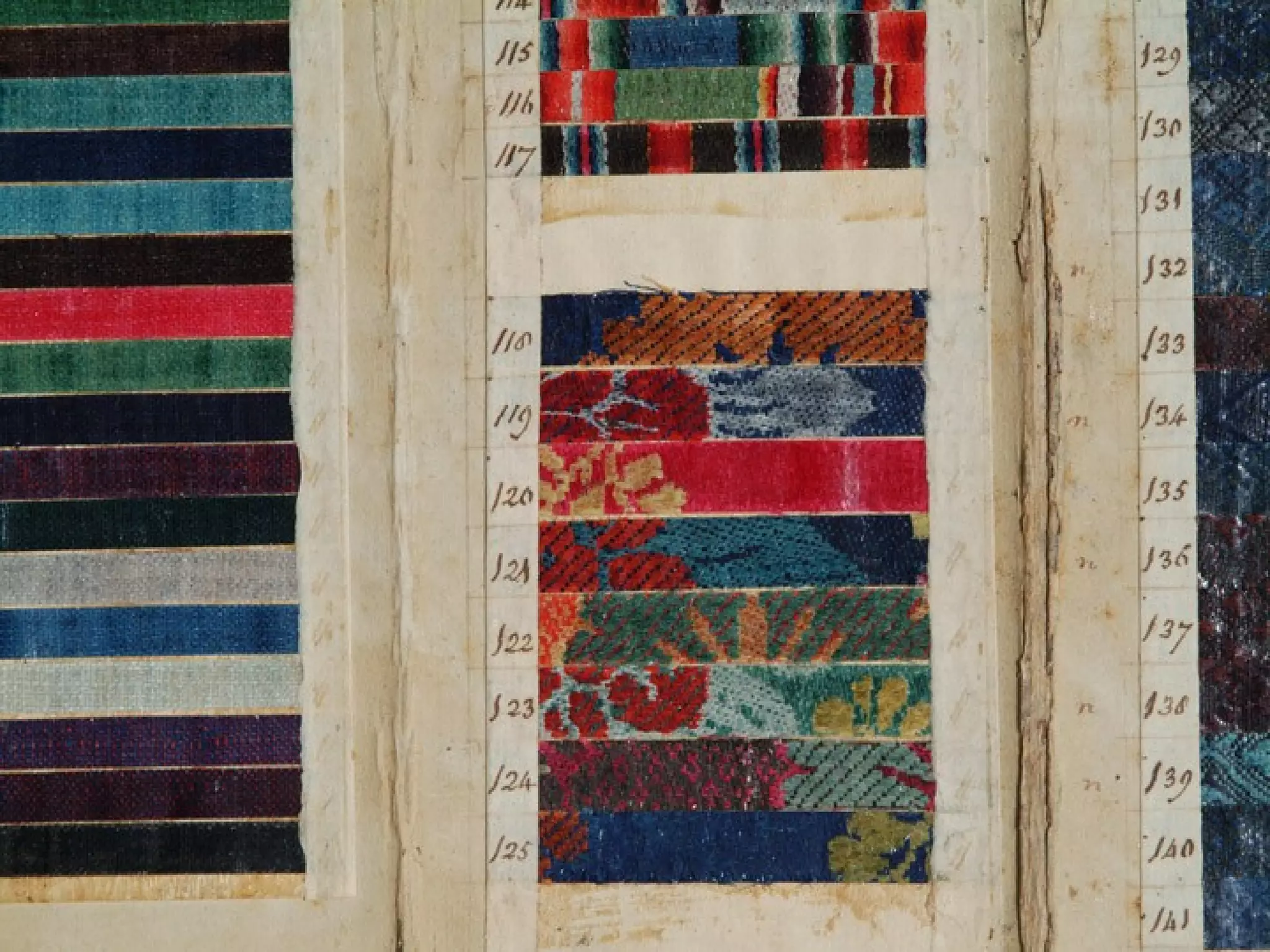
what is your connection to these
                images?

•   Describe what you see
•   Consider what you think about it
•   How could this inform your work?
•   What is the next thing to do?
Presentation1
Presentation1
Presentation1
Presentation1
Presentation1

Presentation1

  • 1.
  • 2.
  • 3.
  • 4.
  • 5.
    PDP is aprocess not an outcome
  • 10.
  • 11.
    format A4, 5, 6,7, 8 pocket phone i pad
  • 12.
    a journal isa place for... Recording thoughts, ideas, observations, things Reflecting to gain understanding Analyzing to further your learning Concluding setting out what you have thought about
  • 13.
    what’s in it- actual? written notes diagrams drawings sketches
  • 14.
    what’s in it- ideas? personal insight observations questions speculation the work of others
  • 15.
    content raw un-thought-out observations recorded close to the action think police note book reflection stuff you have thought about connections notes on the unexpected
  • 16.
    questions what happened? why didit happen? what do I think about this? what should I do as a result of this? how do I do this?
  • 17.
    how to useit write often note down dates and times write freely - without hesitation write down stuff even if its not relevant
  • 18.
  • 19.
    what is reflection? theimage of looking at oneself in a mirror, suggested by the word, means that it has implications of being conscious of what one is doing.
  • 20.
    what is reflection? reflectionis studying one's own study methods as seriously as one studies the subject and thinking about a learning task after you have done it. unless you do this, the task will almost certainly be wasted.
  • 21.
    what is reflection? so know yourself – how do you work? why are you doing what you are doing?
  • 22.
    what is reflection? so whendo you work? where do you work? time scale time location how does this inform your working pattern / approach to work?
  • 23.
    what is reflection? so how do you think you work? how do you actually work?
  • 24.
    what is reflection? inany learning situation you should - prepare for it beforehand - participate actively during it - reflect on it afterwards
  • 25.
    what is reflection? thereare two types of reflection - reflection-in-action (thinking on your feet) - reflection-on-action (retrospective thinking).
  • 26.
    what is reflection? what is reflection? reflection is a process of reviewing an experience of practice in order to describe, analyse, evaluate and so inform learning about practice
  • 27.
    what is reflection? thereflective student thinks about their own experience of studying and then decides what changes of approach might be most suitable.
  • 28.
  • 29.
    reflective writing process •Think of an interaction, event or episode that you have experienced since you started the course.
  • 30.
    reflective writing process •Describe what happened
  • 31.
    reflective writing process •What was your role?
  • 32.
    reflective writing process •What feelings and perceptions surrounded the experience?
  • 33.
    reflective writing process •How would you explain the situation to someone else?
  • 34.
    reflective writing process •What might this experience mean in the context of your course?
  • 35.
    reflective writing process •What other perspectives, theories or concepts could be applied to the situation?
  • 36.
  • 37.
    Form - describewhat you see Colour scheme One colour or dominant Principle shapes Textures Variety or unity of Textures Arrangement of the elements in the work Relationship to Content
  • 38.
    Process - howit became What materials Processes and techniques How was the work made With what What tools How and where was the work begun What skills were used
  • 39.
    Context - extendingbeyond the physical What is the work about What is its subject matter Overt Vehicle for social religious moral political concerns Observed directly remembered imagined Representational or distorted Why Superficial or hidden meanings
  • 40.
    Mood - bringingyourself into the picture - empathy How does the work affect you Does it relate to a mood feeling or emotion you have experienced Artists/designers feeling during the making of the work Quiet/noisy happy/sad
  • 41.
    what is yourconnection to these images? • Describe what you see • Consider what you think about it • How could this inform your work? • What is the next thing to do?