Learning

{

The link between Kolb and Honey & Mumford
Learning
This is a presentation on how the learning styles
described by Honey & Mumford link to Kolb’s
theory on learning.
Instructions: Try and answer the questions first,
before moving to the next slide.
What are the four
learning styles,
according to Honey
& Mumford?
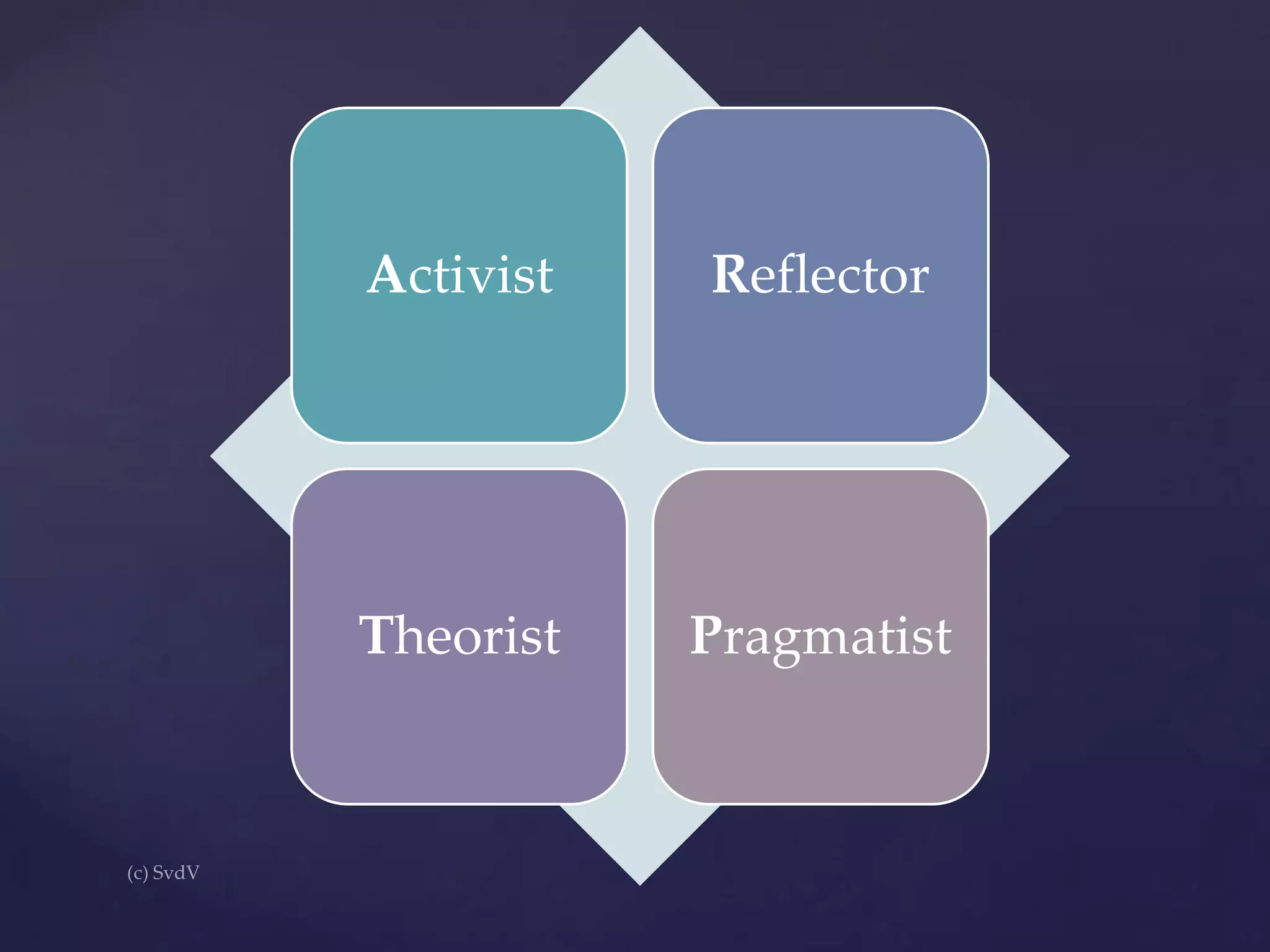
Activist

Reflector

Theorist

Pragmatist
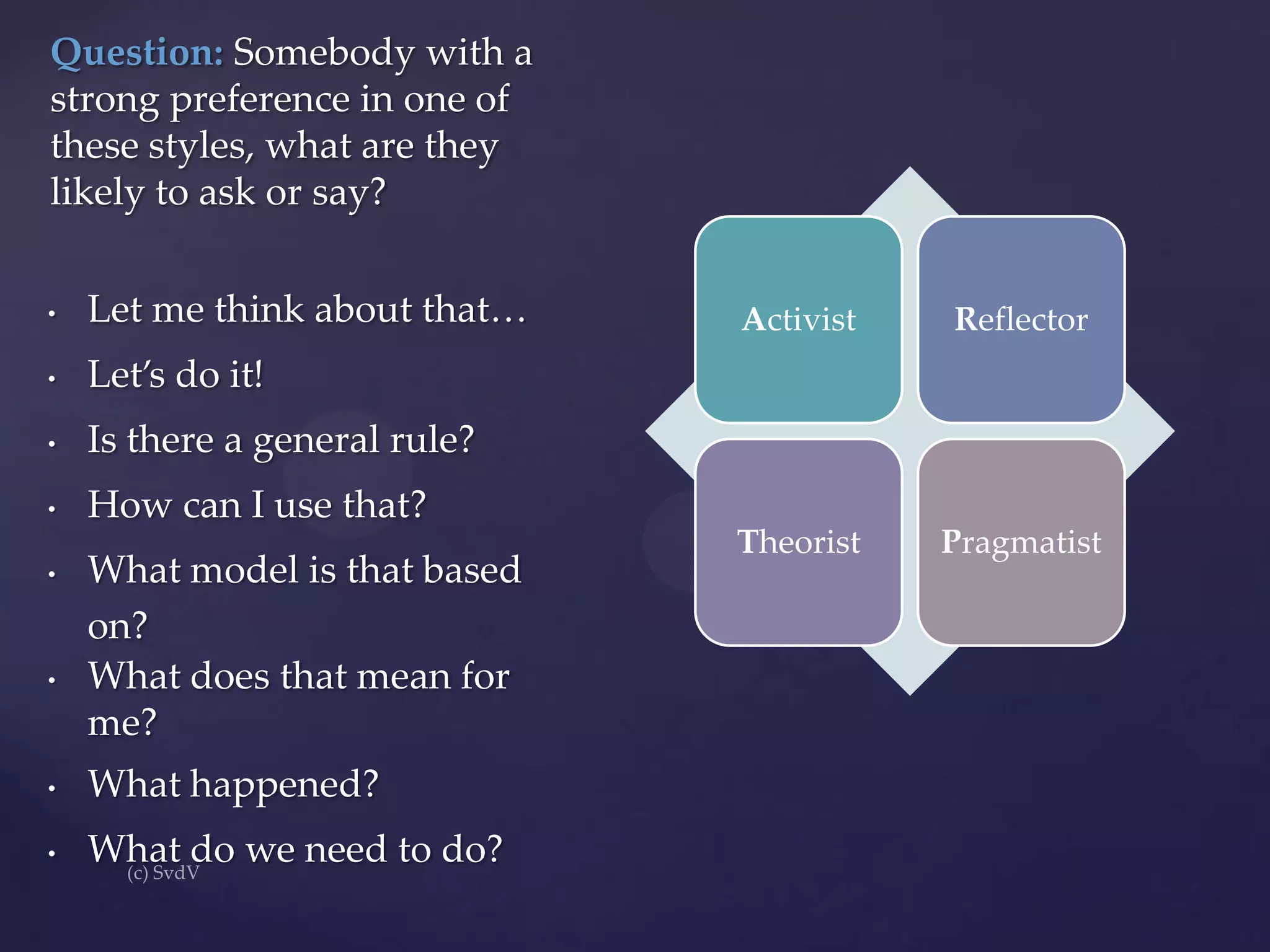
Question: Somebody with a
strong preference in one of
these styles, what are they
likely to ask or say?
•

Let me think about that…

•

Let’s do it!

•

Is there a general rule?

•

How can I use that?

•

•

What model is that based
on?
What does that mean for
me?

•

What happened?

•

What do we need to do?

Activist

Reflector

Theorist

Pragmatist
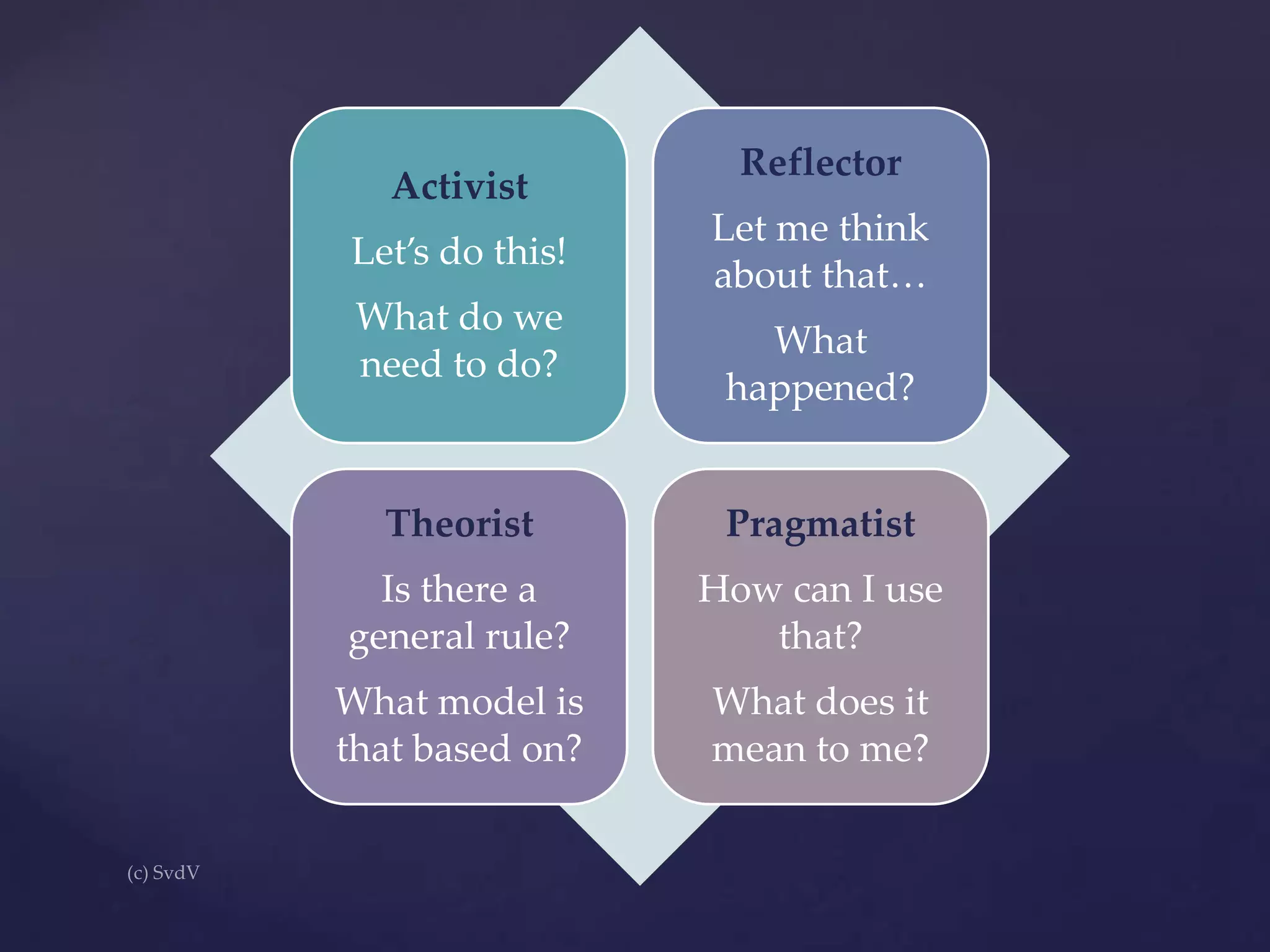
Activist
Let’s do this!
What do we
need to do?

Reflector
Let me think
about that…
What
happened?

Theorist

Pragmatist

Is there a
general rule?

How can I use
that?

What model is
that based on?

What does it
mean to me?
And now for
something
completely different

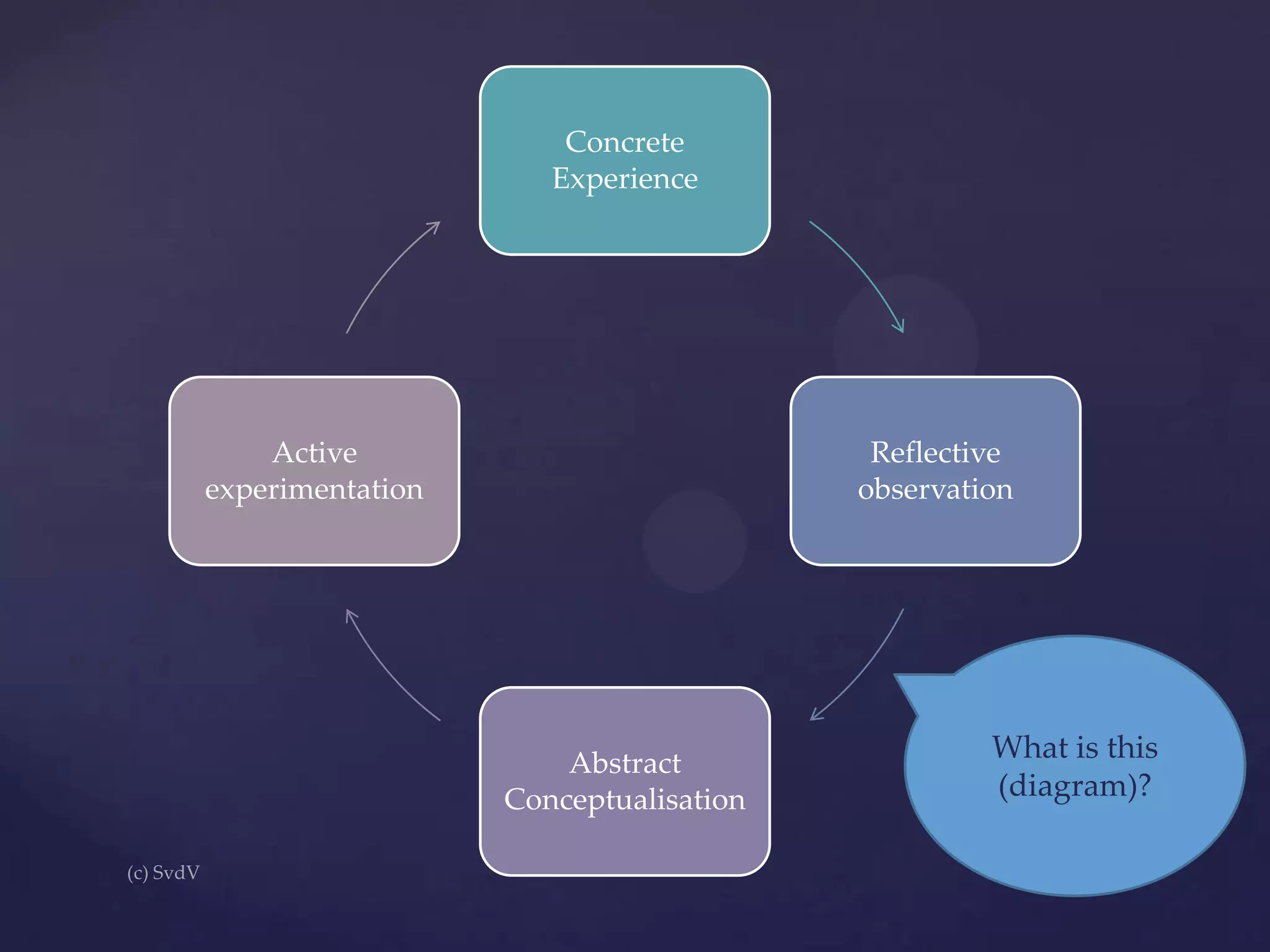
Concrete
Experience

Active
experimentation

Reflective
observation

Abstract
Conceptualisation

What is this
(diagram)?
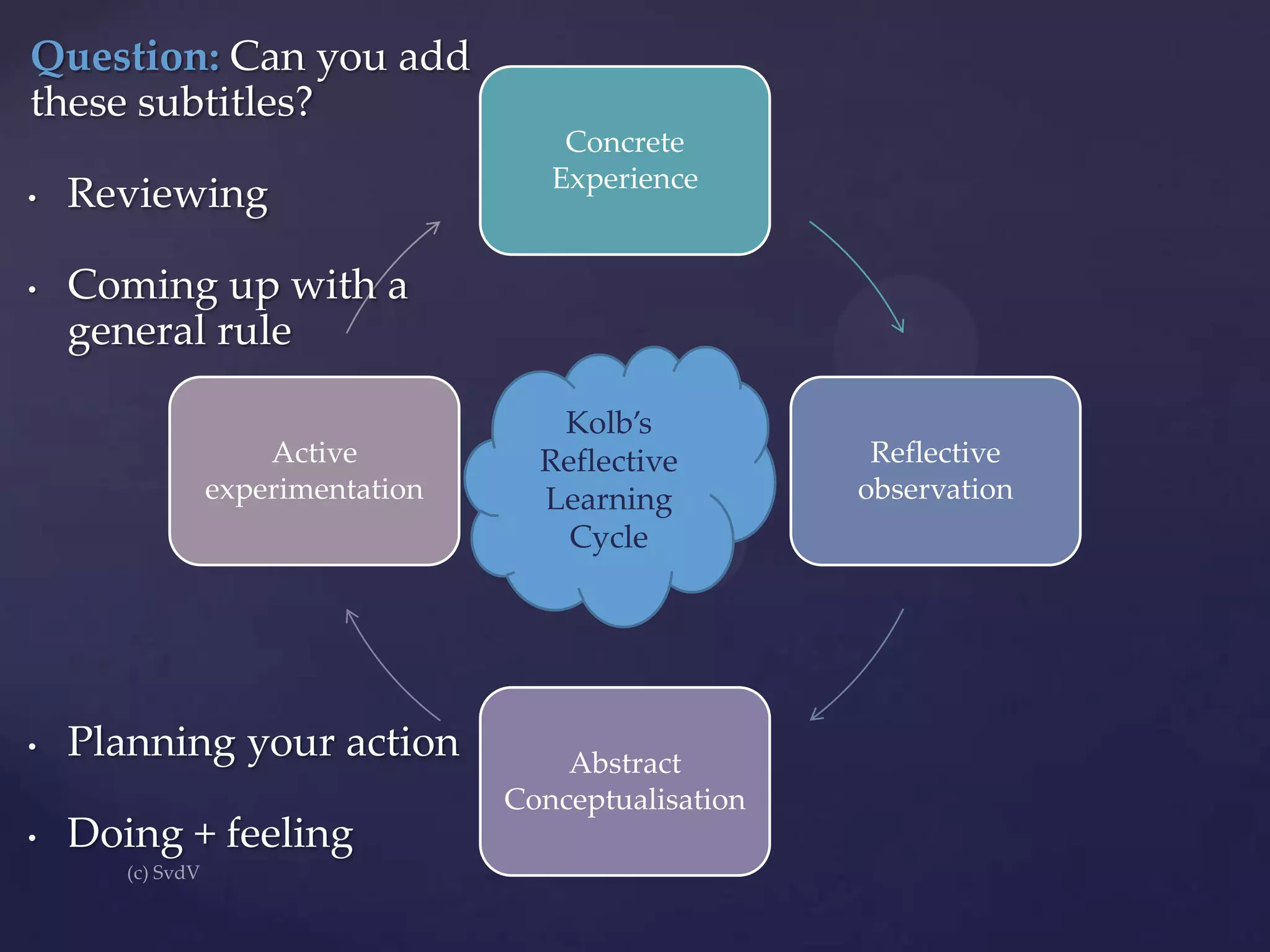
Question: Can you add
these subtitles?
•

Reviewing

•

Concrete
Experience

Coming up with a
general rule
Active
experimentation

•

Planning your action

•

Doing + feeling

Kolb’s
Reflective
Learning
Cycle

Abstract
Conceptualisation

Reflective
observation
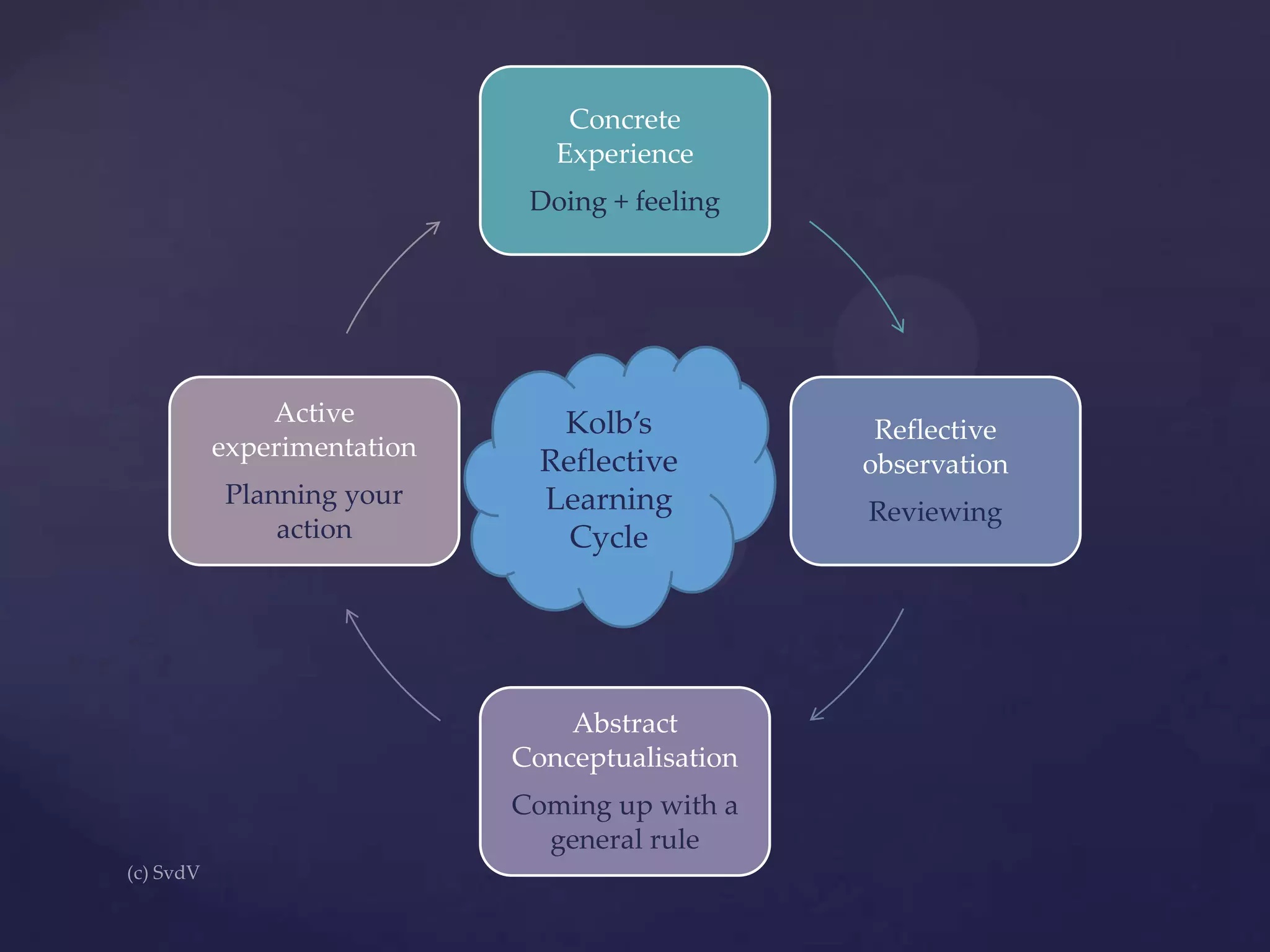
Concrete
Experience
Doing + feeling

Active
experimentation
Planning your
action

Kolb’s
Reflective
Learning
Cycle

Abstract
Conceptualisation
Coming up with a
general rule

Reflective
observation
Reviewing
Concrete
Experience
Doing + feeling

Active
experimentation
Planning your
action

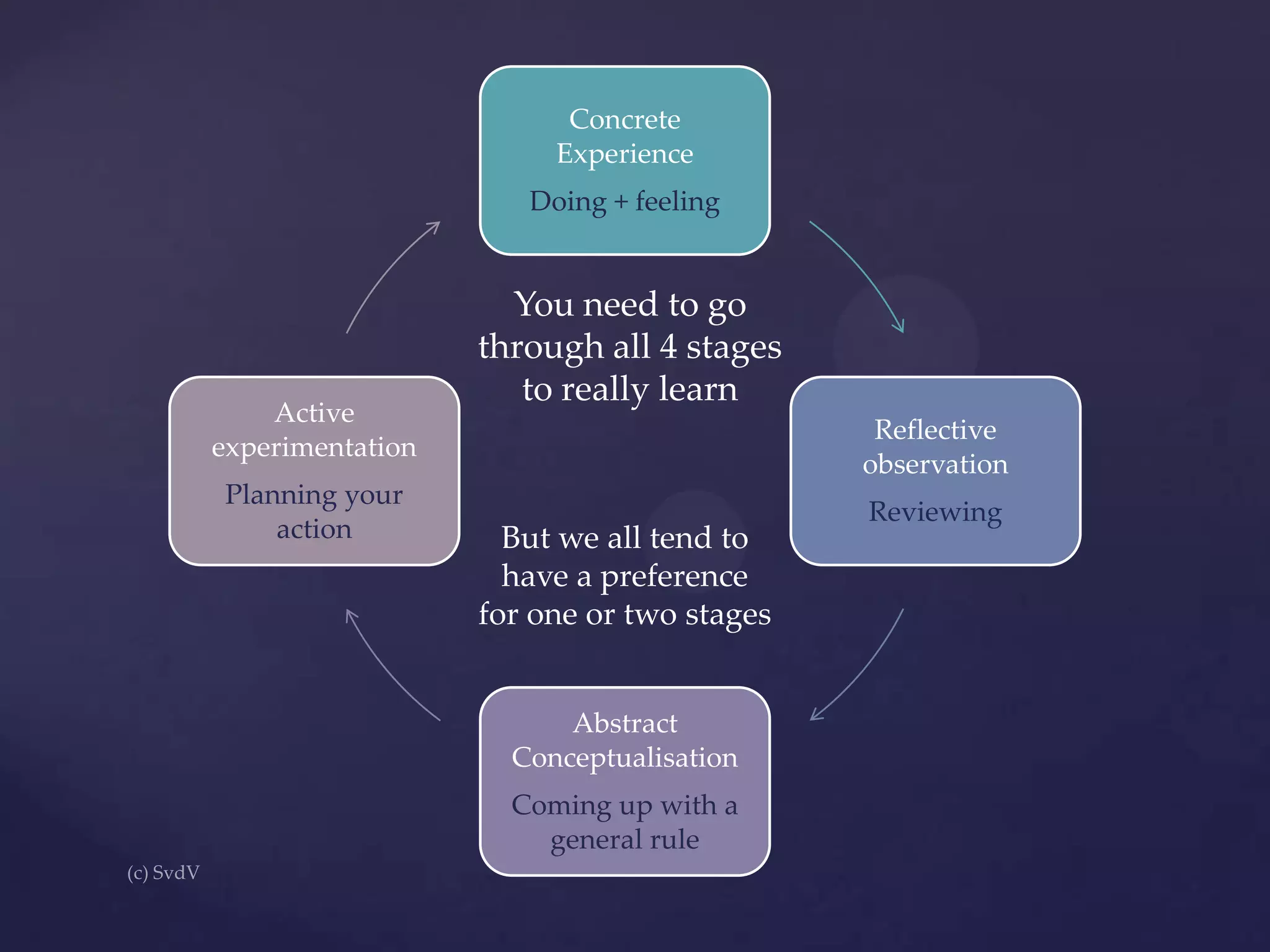
You need to go
through all 4 stages
to really learn
Reflective
observation

But we all tend to
have a preference
for one or two stages
Abstract
Conceptualisation
Coming up with a
general rule

Reviewing
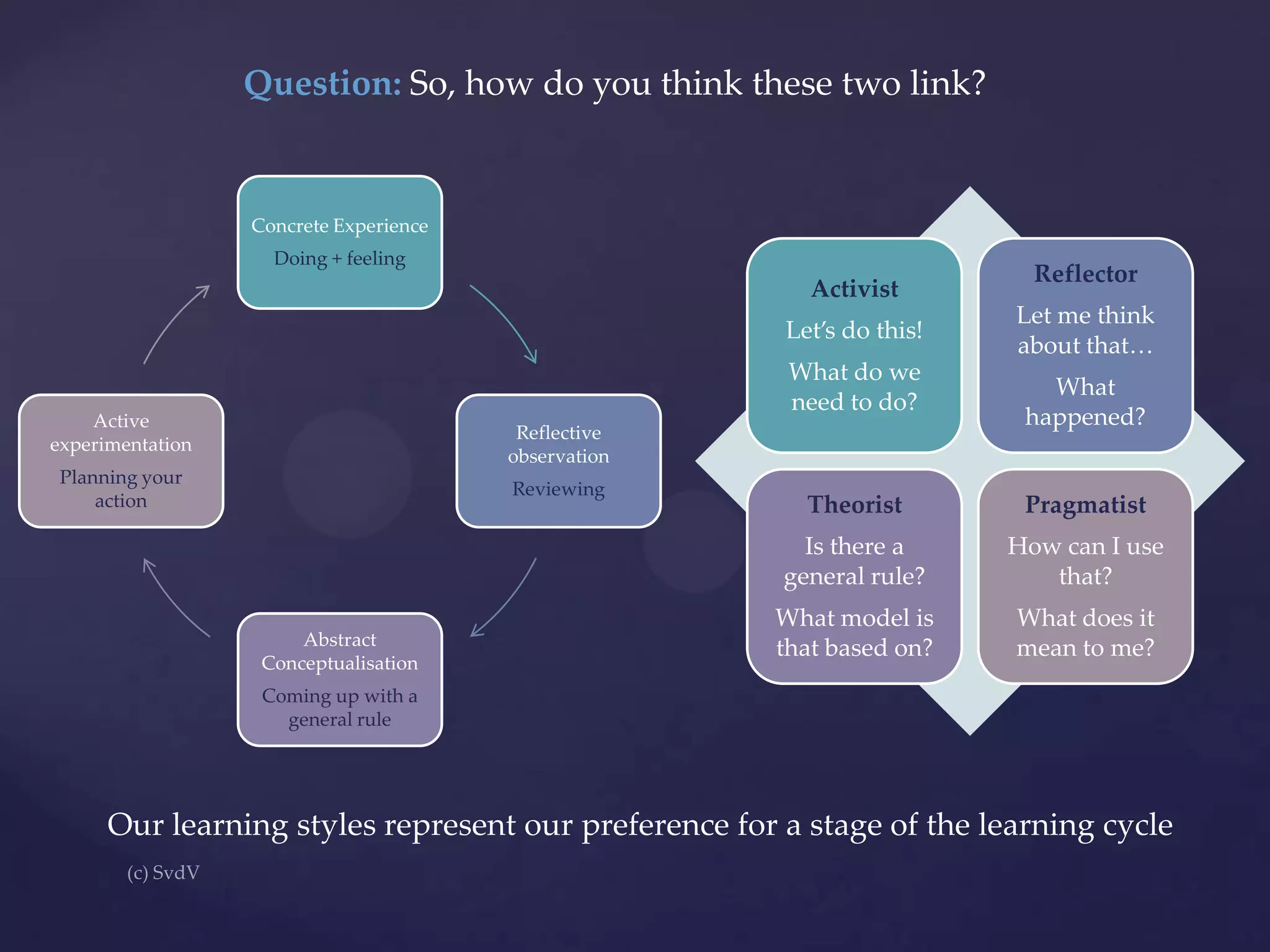
Question: So, how do you think these two link?

Concrete Experience
Doing + feeling

Activist
Let’s do this!
What do we
need to do?

Active
experimentation

Reflective
observation

Planning your
action

Reviewing

Reflector
Let me think
about that…
What
happened?

Pragmatist

Is there a
general rule?
Abstract
Conceptualisation

Theorist

How can I use
that?

What model is
that based on?

What does it
mean to me?

Coming up with a
general rule

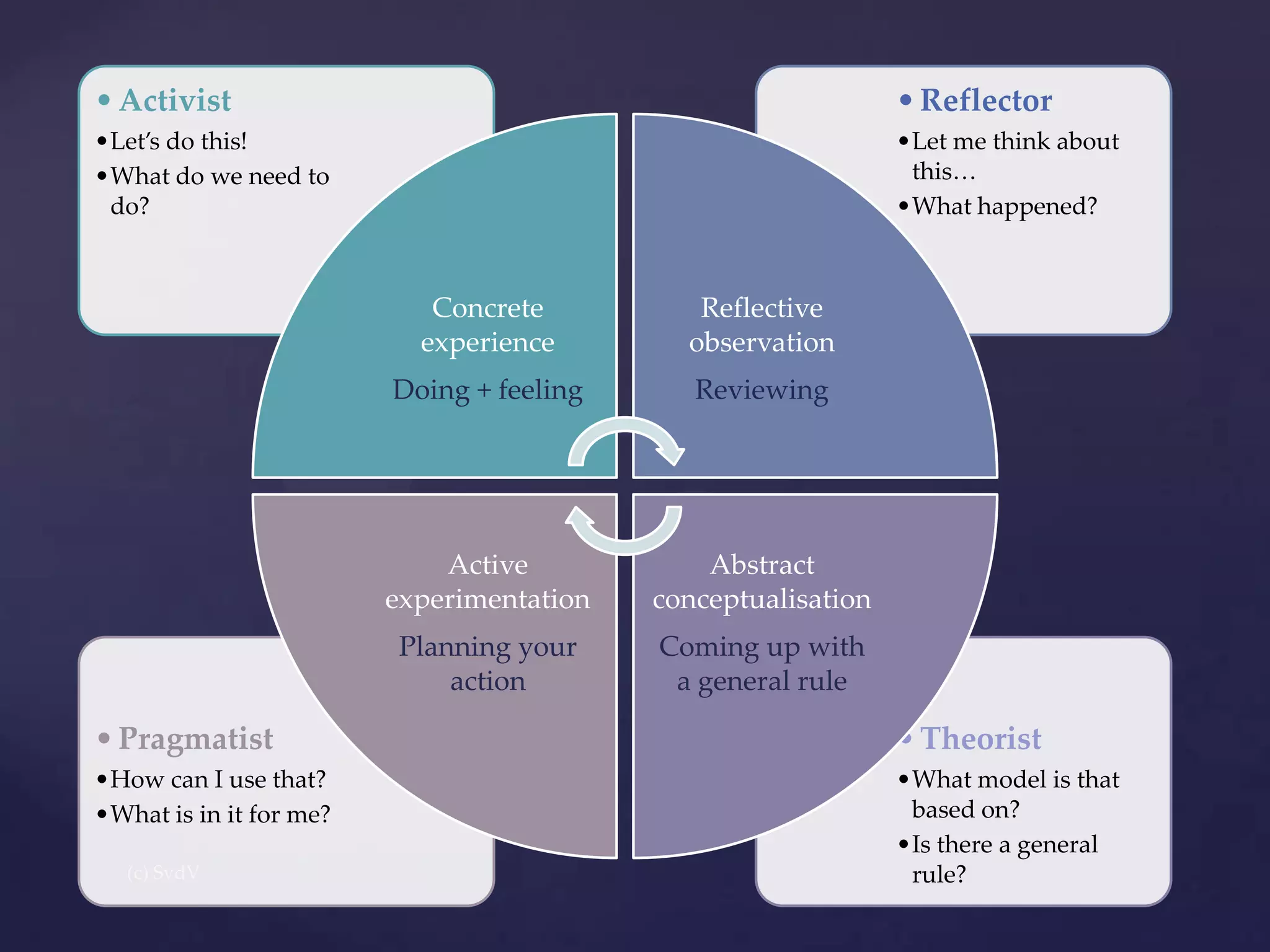
Our learning styles represent our preference for a stage of the learning cycle
• Activist

• Reflector

•Let’s do this!
•What do we need to
do?

•Let me think about
this…
•What happened?

Concrete
experience

Reflective
observation

Doing + feeling

Reviewing

Active
experimentation

Abstract
conceptualisation

Planning your
action

Coming up with
a general rule

• Pragmatist

• Theorist

•How can I use that?
•What is in it for me?

•What model is that
based on?
•Is there a general
rule?
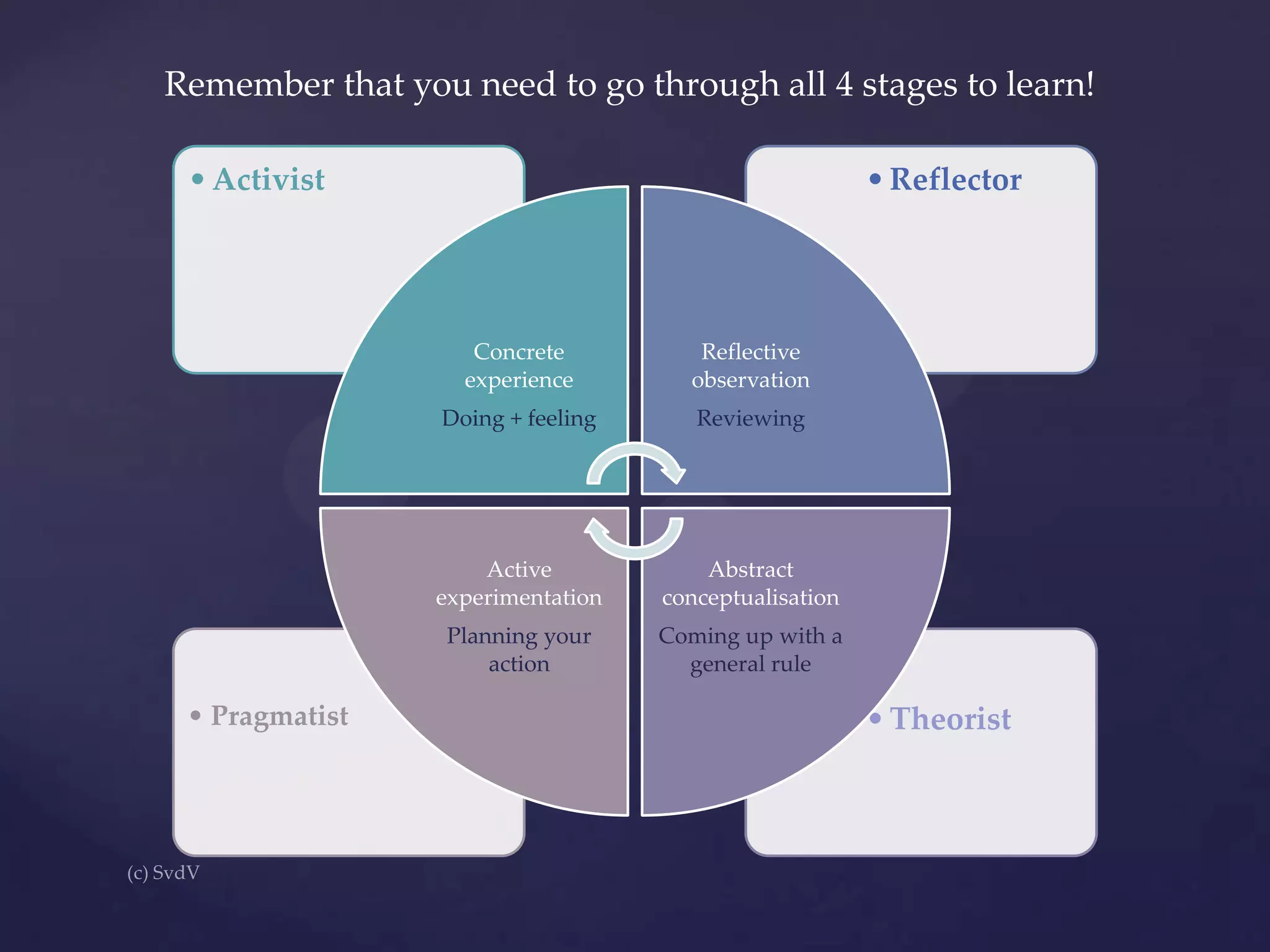
Remember that you need to go through all 4 stages to learn!
• Activist

• Reflector

Concrete
experience
Doing + feeling

Reviewing

Active
experimentation

Abstract
conceptualisation

Planning your
action

• Pragmatist

Reflective
observation

Coming up with a
general rule

• Theorist
Sources
Kolb D. (1984), Experiential Learning – Experience as the Source of Learning
and Development, Englewood Cliffs –New Jersey, Prentice Hall Inc.

Honey and Mumford learning styles questionnaire

{

When looking at learning styles, remember
that they are preferences, and that we all
need all 4 to optimise our learning.

Reflective learning

  • 1.
    Learning { The link betweenKolb and Honey & Mumford
  • 2.
    Learning This is apresentation on how the learning styles described by Honey & Mumford link to Kolb’s theory on learning. Instructions: Try and answer the questions first, before moving to the next slide.
  • 3.
    What are thefour learning styles, according to Honey & Mumford?
  • 4.
  • 5.
    Question: Somebody witha strong preference in one of these styles, what are they likely to ask or say? • Let me think about that… • Let’s do it! • Is there a general rule? • How can I use that? • • What model is that based on? What does that mean for me? • What happened? • What do we need to do? Activist Reflector Theorist Pragmatist
  • 6.
    Activist Let’s do this! Whatdo we need to do? Reflector Let me think about that… What happened? Theorist Pragmatist Is there a general rule? How can I use that? What model is that based on? What does it mean to me?
  • 7.
  • 8.
  • 9.
    Question: Can youadd these subtitles? • Reviewing • Concrete Experience Coming up with a general rule Active experimentation • Planning your action • Doing + feeling Kolb’s Reflective Learning Cycle Abstract Conceptualisation Reflective observation
  • 10.
    Concrete Experience Doing + feeling Active experimentation Planningyour action Kolb’s Reflective Learning Cycle Abstract Conceptualisation Coming up with a general rule Reflective observation Reviewing
  • 11.
    Concrete Experience Doing + feeling Active experimentation Planningyour action You need to go through all 4 stages to really learn Reflective observation But we all tend to have a preference for one or two stages Abstract Conceptualisation Coming up with a general rule Reviewing
  • 12.
    Question: So, howdo you think these two link? Concrete Experience Doing + feeling Activist Let’s do this! What do we need to do? Active experimentation Reflective observation Planning your action Reviewing Reflector Let me think about that… What happened? Pragmatist Is there a general rule? Abstract Conceptualisation Theorist How can I use that? What model is that based on? What does it mean to me? Coming up with a general rule Our learning styles represent our preference for a stage of the learning cycle
  • 13.
    • Activist • Reflector •Let’sdo this! •What do we need to do? •Let me think about this… •What happened? Concrete experience Reflective observation Doing + feeling Reviewing Active experimentation Abstract conceptualisation Planning your action Coming up with a general rule • Pragmatist • Theorist •How can I use that? •What is in it for me? •What model is that based on? •Is there a general rule?
  • 14.
    Remember that youneed to go through all 4 stages to learn! • Activist • Reflector Concrete experience Doing + feeling Reviewing Active experimentation Abstract conceptualisation Planning your action • Pragmatist Reflective observation Coming up with a general rule • Theorist
  • 15.
    Sources Kolb D. (1984),Experiential Learning – Experience as the Source of Learning and Development, Englewood Cliffs –New Jersey, Prentice Hall Inc. Honey and Mumford learning styles questionnaire { When looking at learning styles, remember that they are preferences, and that we all need all 4 to optimise our learning.