





Is reflective writing an enigma?
                       Can preparing evidence for an
                         electronic portfolio develop
                         skills for reflective practice?


                                                             Bronwyn Hegarty
http://www.flickr.com/photos/cubagallery/3368330063/       Doctorate candidate
                                                       University of Wollongong, NSW
Why this
research?


            http://www.flickr.com/photos/lrargerich/3203435803/
http://www.flickr.com/photos/araswami/2206733790/   http://www.flickr.com/photos/araswami/2206733790/
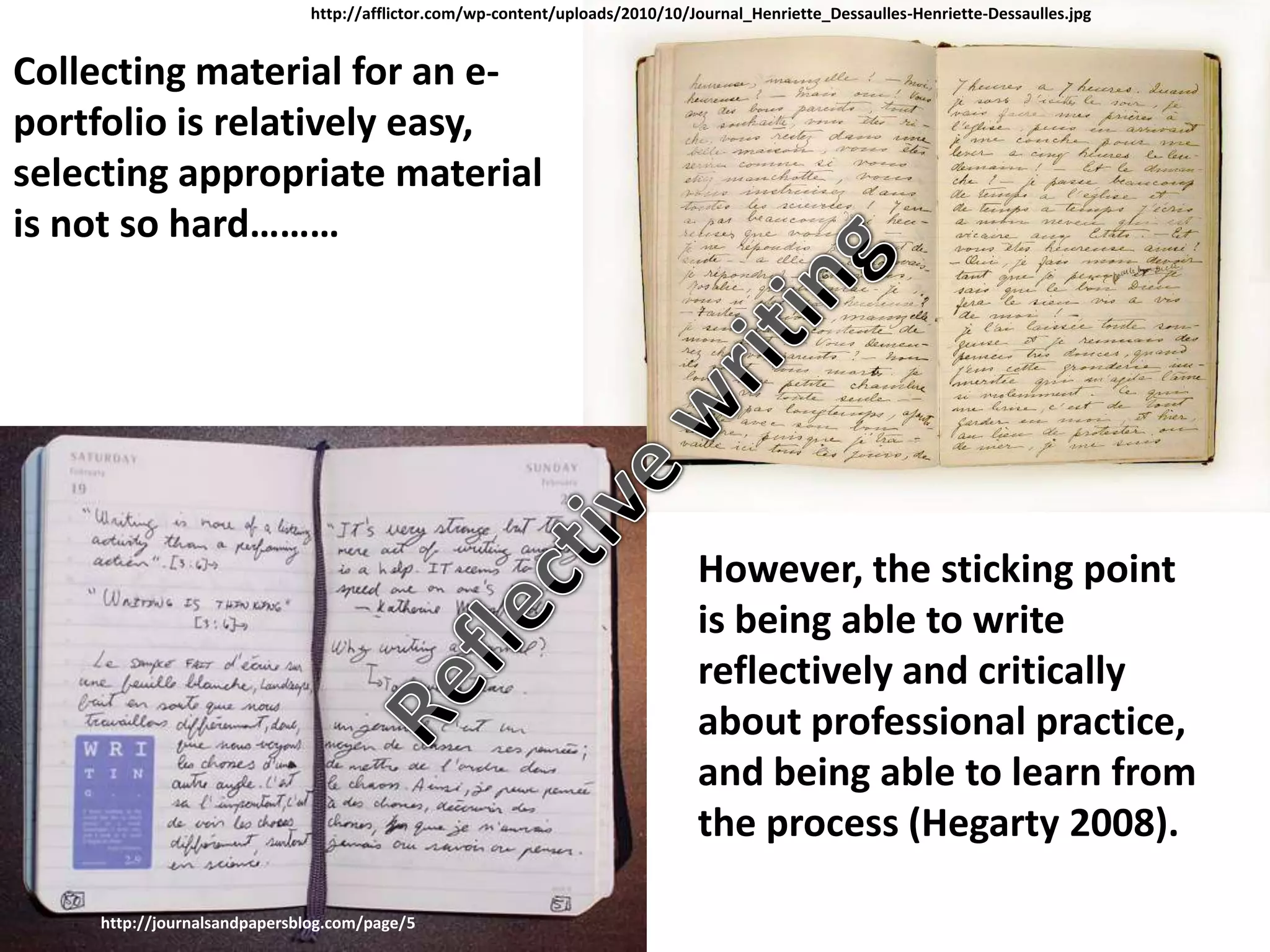
http://afflictor.com/wp-content/uploads/2010/10/Journal_Henriette_Dessaulles-Henriette-Dessaulles.jpg


Collecting material for an e-
portfolio is relatively easy,
selecting appropriate material
is not so hard………


                                                                                However, the sticking point
                                                                                is being able to write
                                                                                reflectively and critically
                                                                                about professional practice,
                                                                                and being able to learn from
                                                                                the process (Hegarty 2008).

    http://journalsandpapersblog.com/page/5
Research Question


     How do educational practitioners reflect when using
       a framework to write about their experiences?

            http://www.flickr.com/photos/araswami/2206733790/
Hatton and Smith (1995) - believed teachers could be taught
how to reflect in preparation for reflective practice, using a
framework to enhance reflection and learning for professional
practice.
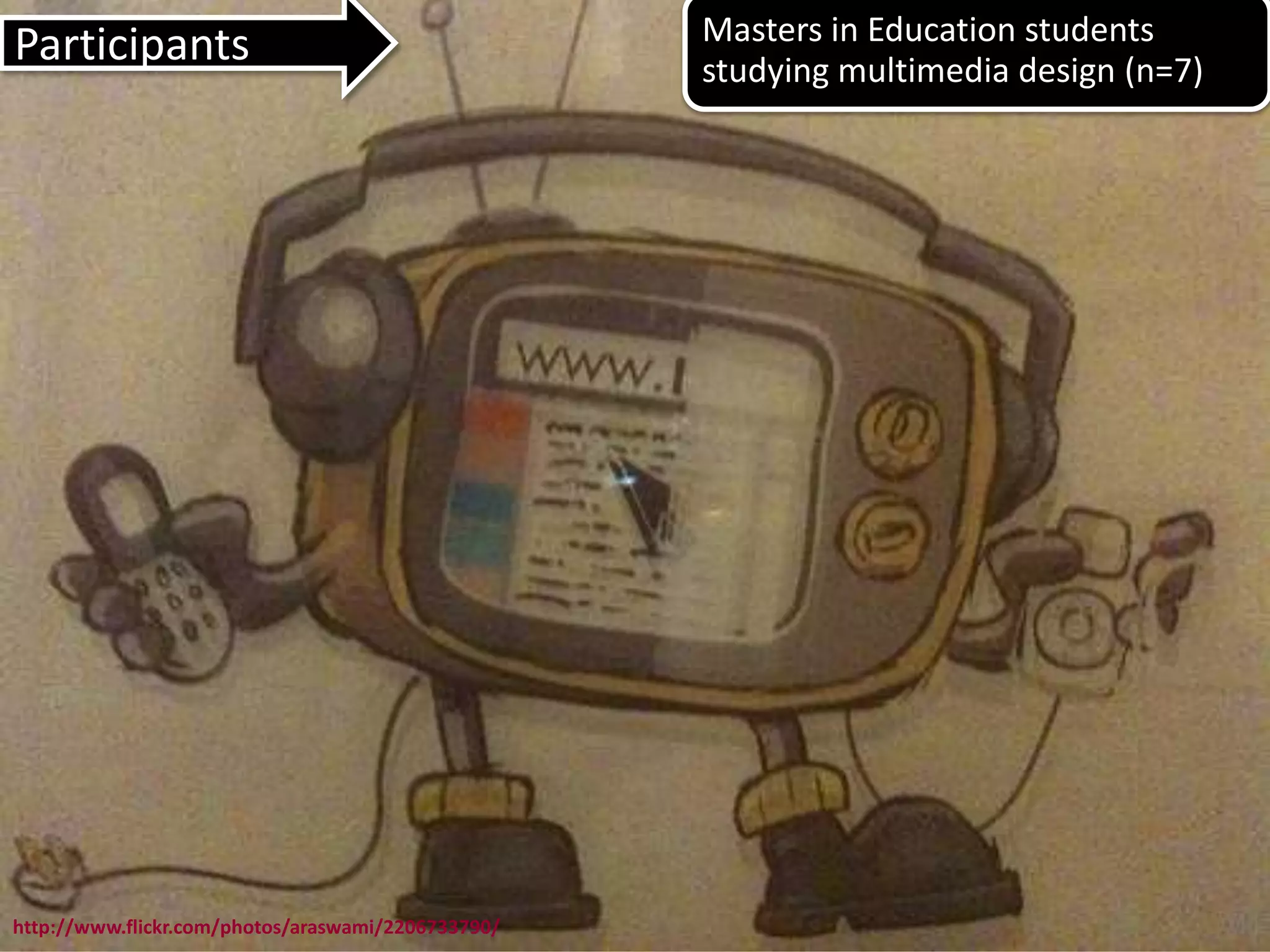
Participants                                        Masters in Education students
                                                    studying multimedia design (n=7)


http://www.flickr.com/photos/araswami/2206733790/
Case study, as a qualitative method using an
intervention, was chosen to study how
participants responded in a “real-life context”,
and is an approach based on work by Yin (2003,
p. 15).
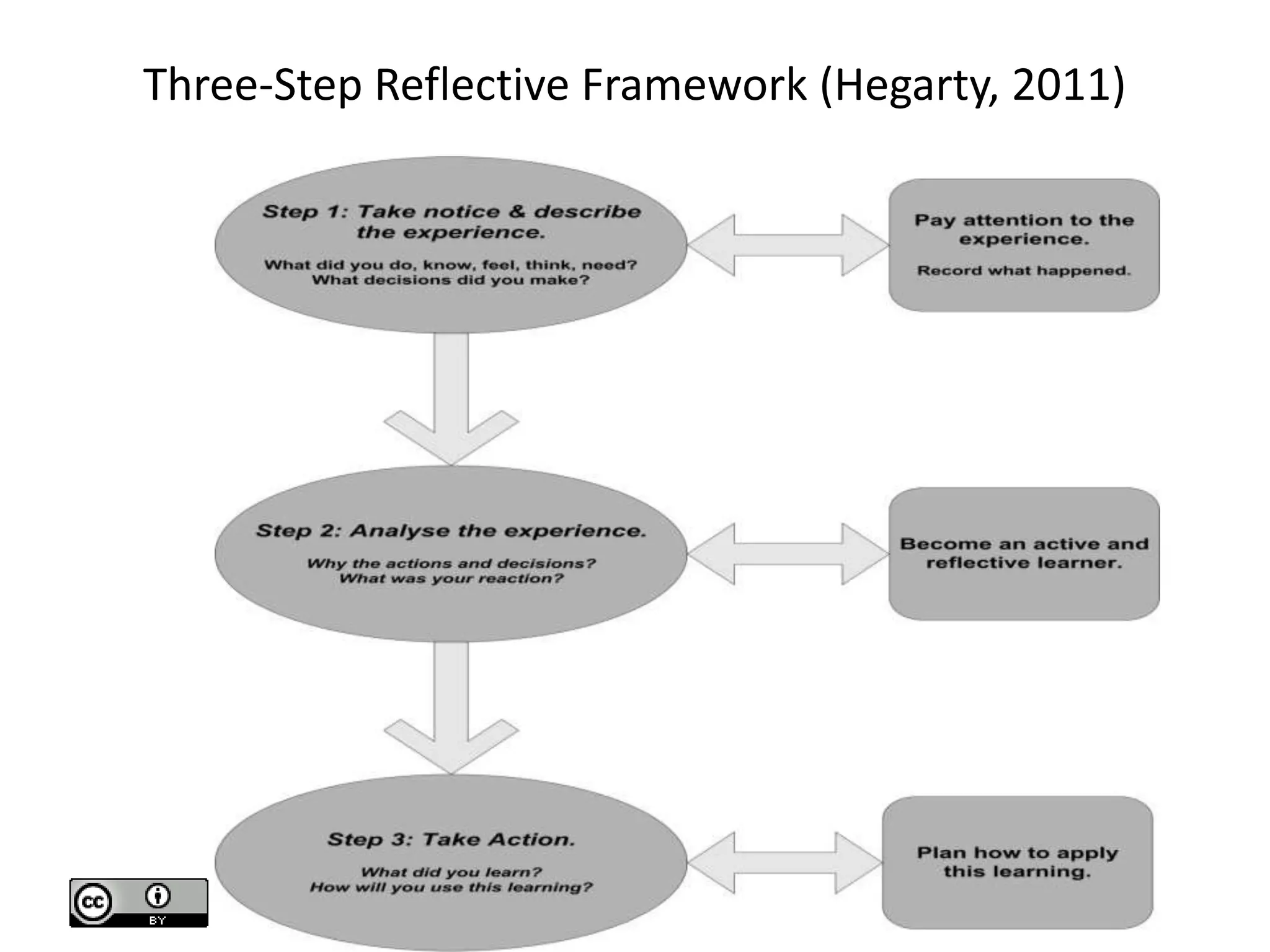
Three-Step Reflective Framework (Hegarty, 2011)
http://www.flickr.com/photos/generated/3409686604/
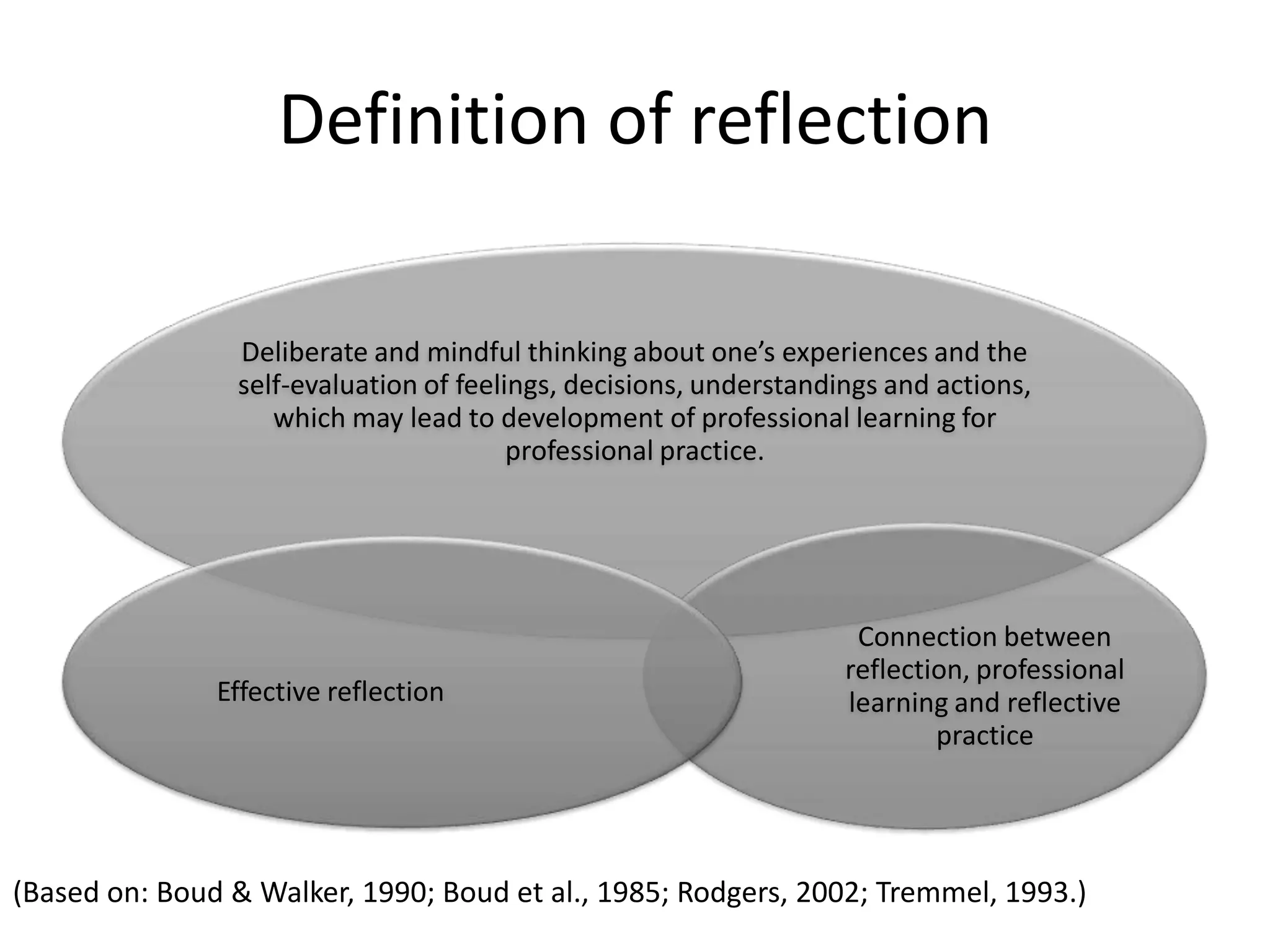
Definition of reflection

                Deliberate and mindful thinking about one’s experiences and the
                self-evaluation of feelings, decisions, understandings and actions,
                   which may lead to development of professional learning for
                                        professional practice.


                                                                    Connection between
                                                                   reflection, professional
               Effective reflection                                learning and reflective
                                                                           practice


(Based on: Boud & Walker, 1990; Boud et al., 1985; Rodgers, 2002; Tremmel, 1993.)
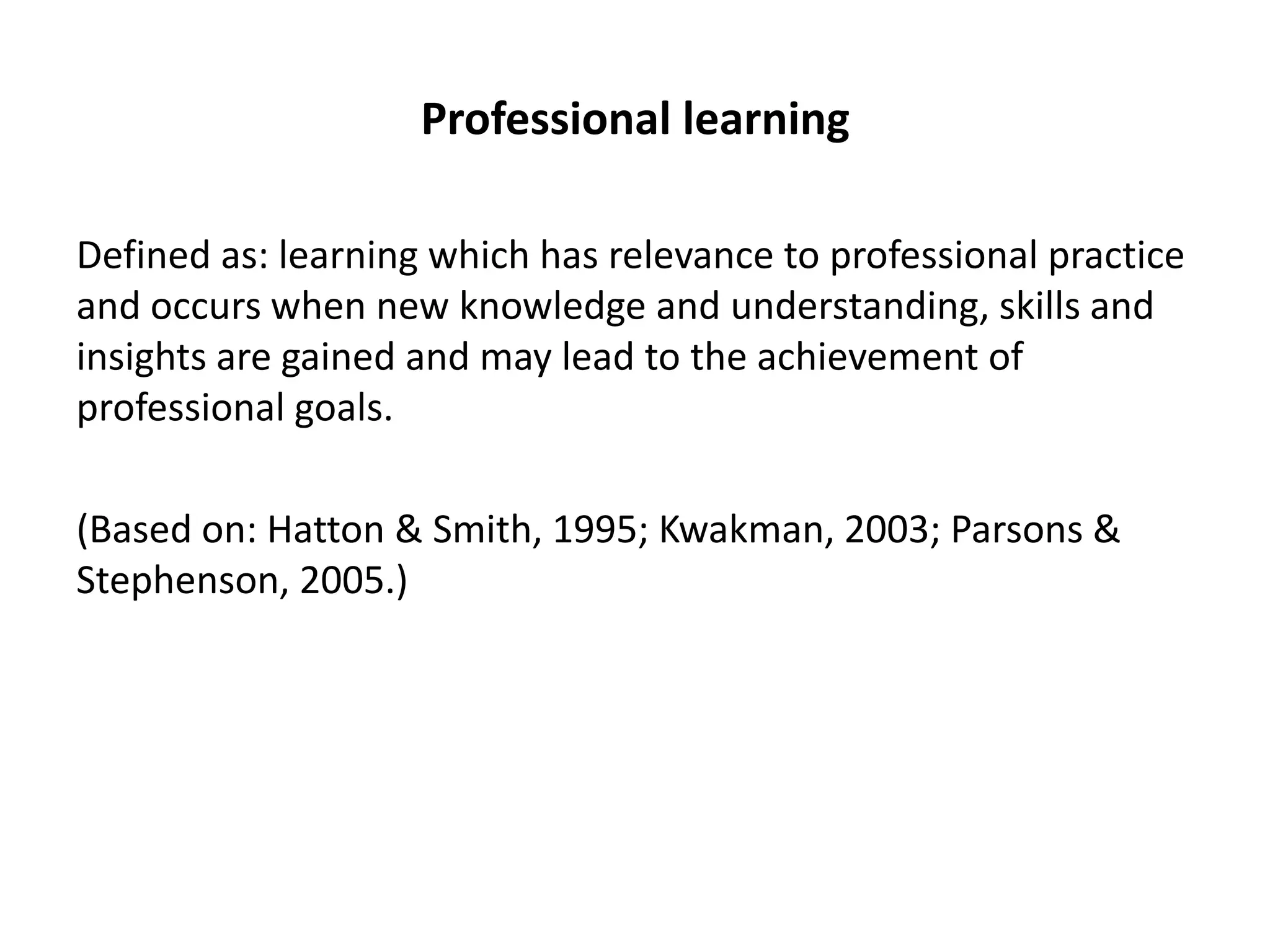
Professional learning

Defined as: learning which has relevance to professional practice
and occurs when new knowledge and understanding, skills and
insights are gained and may lead to the achievement of
professional goals.

(Based on: Hatton & Smith, 1995; Kwakman, 2003; Parsons &
Stephenson, 2005.)
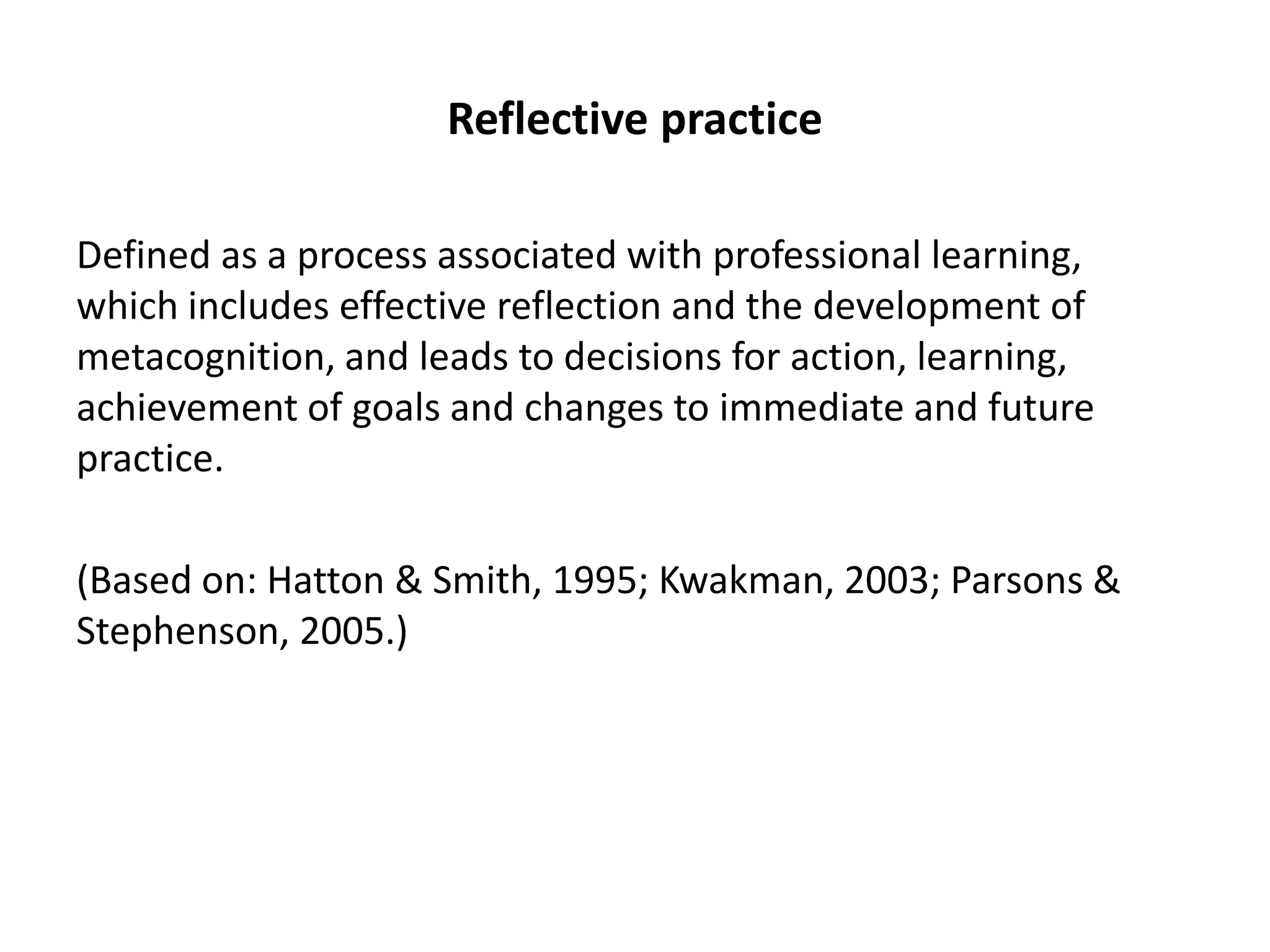
Reflective practice

Defined as a process associated with professional learning,
which includes effective reflection and the development of
metacognition, and leads to decisions for action, learning,
achievement of goals and changes to immediate and future
practice.

(Based on: Hatton & Smith, 1995; Kwakman, 2003; Parsons &
Stephenson, 2005.)
RESULTS
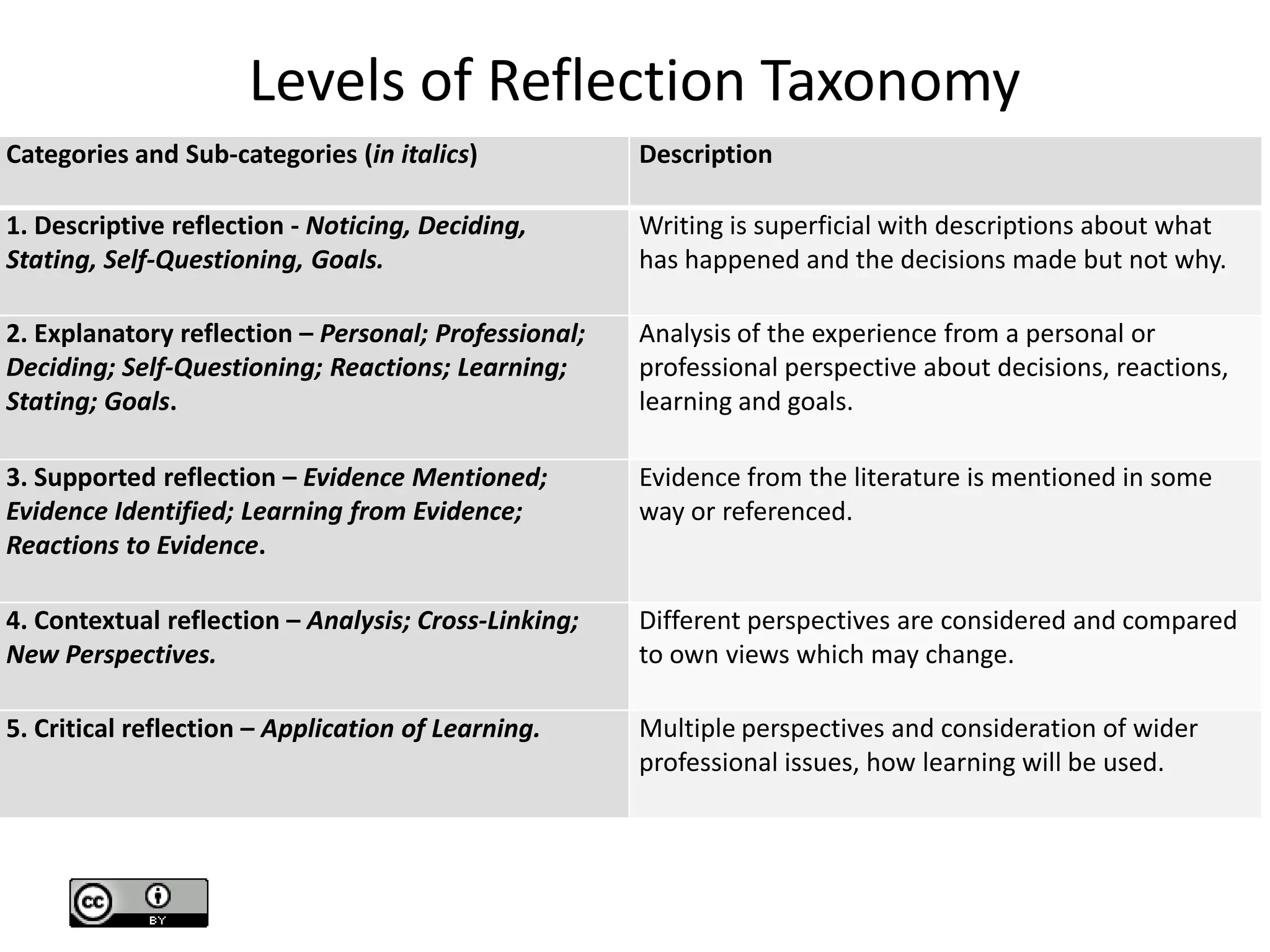
Levels of Reflection Taxonomy
Categories and Sub-categories (in italics)            Description

1. Descriptive reflection - Noticing, Deciding,       Writing is superficial with descriptions about what
Stating, Self-Questioning, Goals.                     has happened and the decisions made but not why.

2. Explanatory reflection – Personal; Professional;   Analysis of the experience from a personal or
Deciding; Self-Questioning; Reactions; Learning;      professional perspective about decisions, reactions,
Stating; Goals.                                       learning and goals.

3. Supported reflection – Evidence Mentioned;         Evidence from the literature is mentioned in some
Evidence Identified; Learning from Evidence;          way or referenced.
Reactions to Evidence.

4. Contextual reflection – Analysis; Cross-Linking;   Different perspectives are considered and compared
New Perspectives.                                     to own views which may change.

5. Critical reflection – Application of Learning.     Multiple perspectives and consideration of wider
                                                      professional issues, how learning will be used.
80%                                                                               Descriptive
                                                                                                Explanatory
                                                                                                Supported
              70%
                                                                                                Contextual
                                                                                                Critical
              60%
% Frequency


              50%


              40%


              30%


              20%


              10%


              0%
                    Qadir      Marie     Nicholas     Teresa     Yonten          Ruth   Nabil


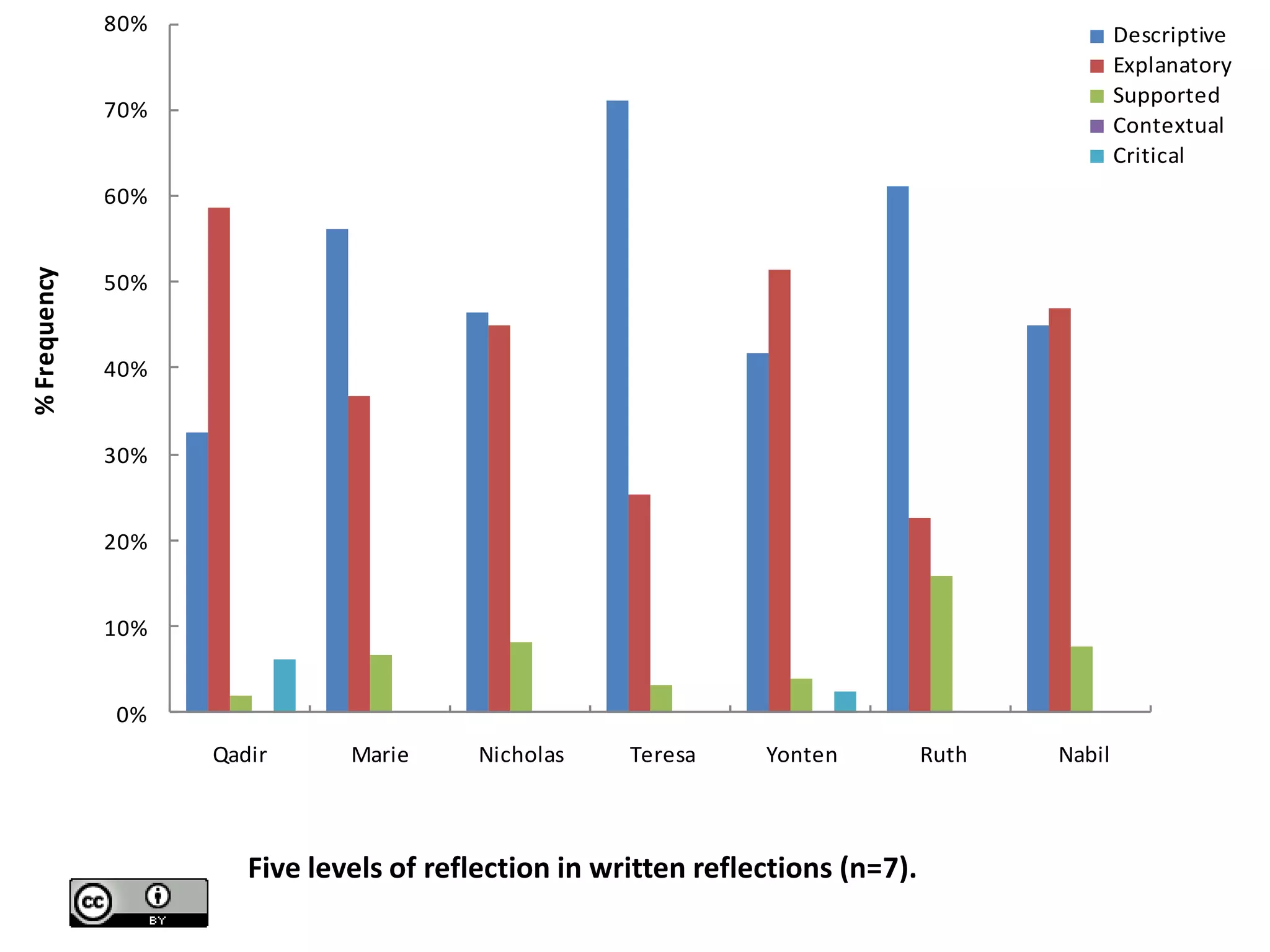
                       Five levels of reflection in written reflections (n=7).
80%
                                                                        Noticing

              70%                                                       Deciding

                                                                        Stating
              60%
                                                                        Goals

              50%
% Frequency


                                                                        Self-Questioning


              40%


              30%


              20%


              10%


              0%
                    Qadir     Marie     Nicholas    Teresa    Yonten        Ruth       Nabil


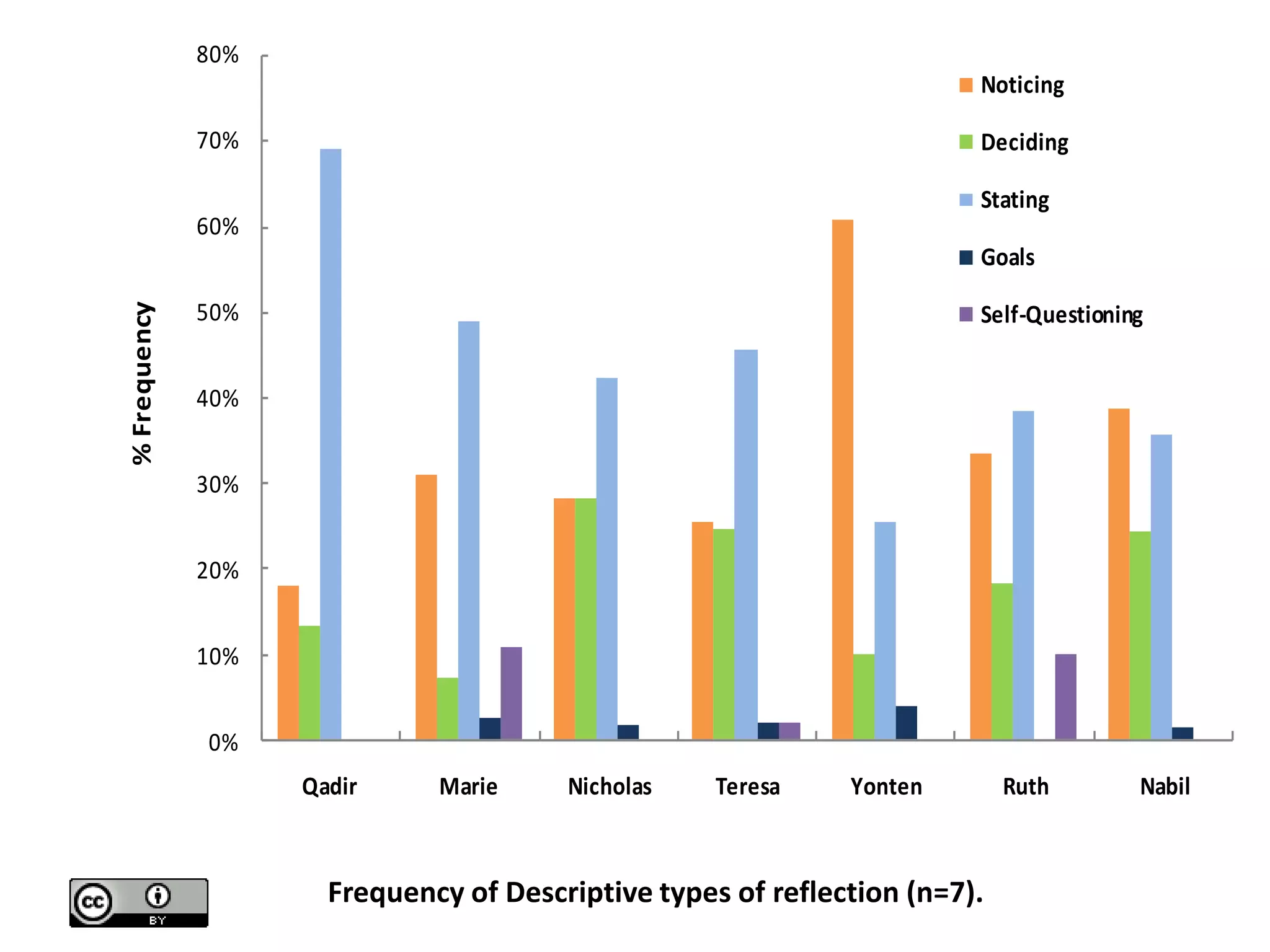
                      Frequency of Descriptive types of reflection (n=7).
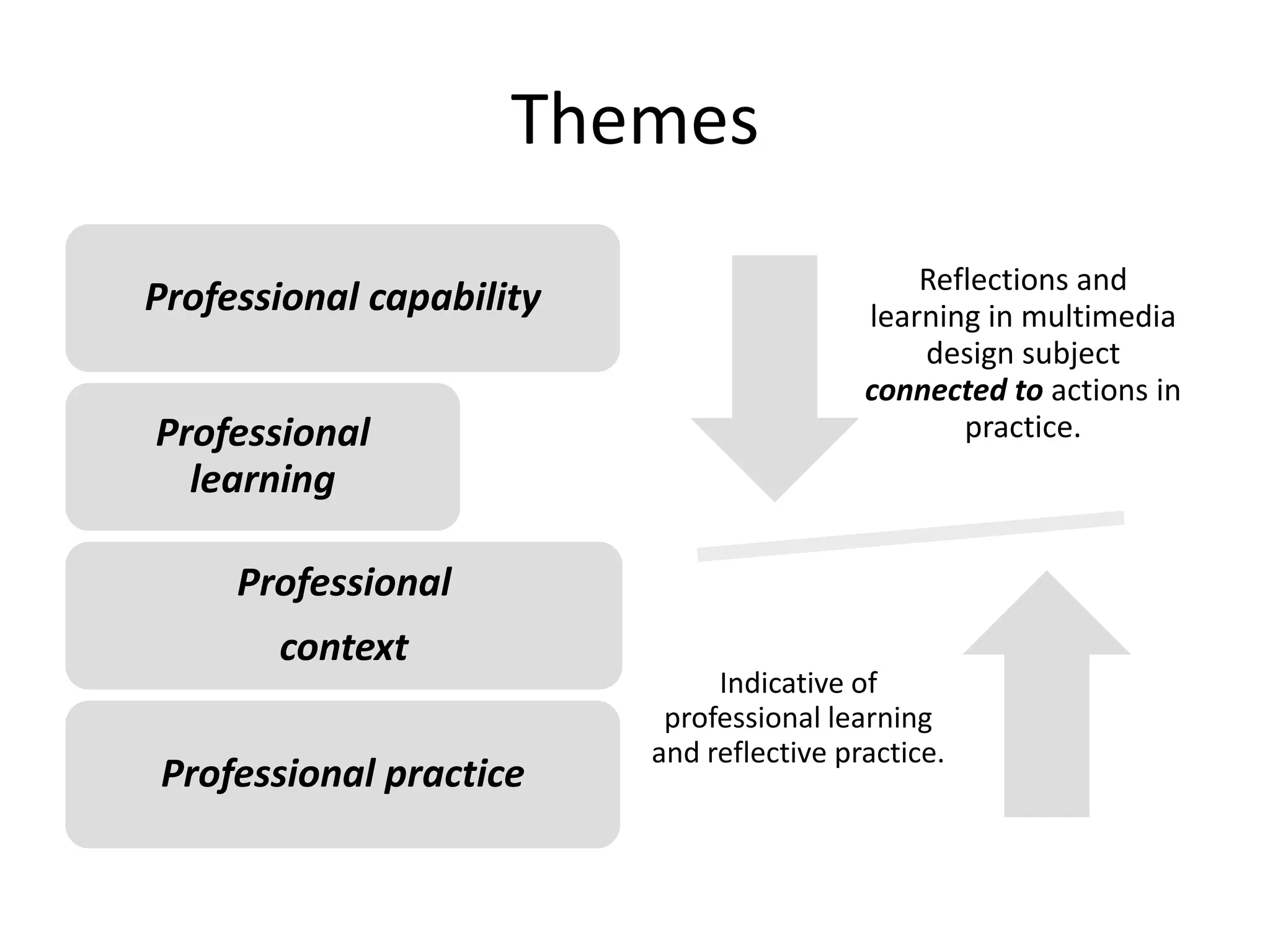
Themes
                                               Reflections and
Professional capability                    learning in multimedia
                                               design subject
                                           connected to actions in
Professional                                      practice.
  learning

     Professional
       context
                               Indicative of
                           professional learning
                          and reflective practice.
Professional practice
Conclusion

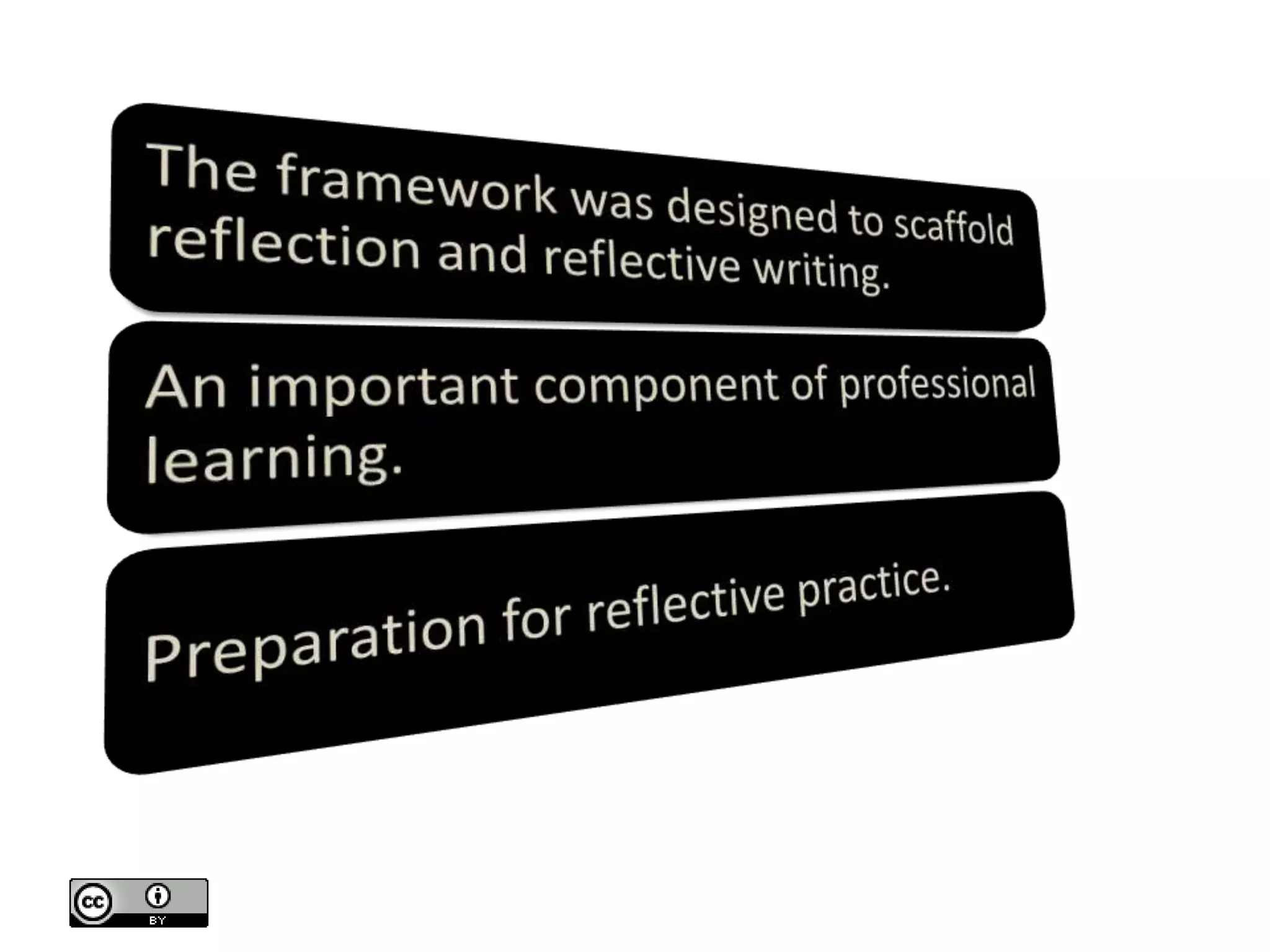
The Reflective Framework
scaffolded reflective writing
for an ePortfolio.

Three levels of reflection -
Descriptive, Explanatory,
Supported.

Demonstrated - Noticing -
feelings, thoughts
knowledge – Application to
Practice - engaging
reflectively with their
practice.
                                http://www.flickr.com/photos/bswise/4034981426/
Is reflective writing an enigma?
                       Can preparing evidence for an
                         electronic portfolio develop
                         skills for reflective practice?


           NO – it can be scaffolded.
                                                       Yes – effective reflection,
                                                       capacity for professional
http://www.flickr.com/photos/cubagallery/3368330063/   learning.

Is reflective writing an enigma_Ascilite2011

  • 1.
    Is reflective writingan enigma? Can preparing evidence for an electronic portfolio develop skills for reflective practice? Bronwyn Hegarty http://www.flickr.com/photos/cubagallery/3368330063/ Doctorate candidate University of Wollongong, NSW
  • 2.
    Why this research? http://www.flickr.com/photos/lrargerich/3203435803/
  • 3.
    http://www.flickr.com/photos/araswami/2206733790/ http://www.flickr.com/photos/araswami/2206733790/
  • 4.
    http://afflictor.com/wp-content/uploads/2010/10/Journal_Henriette_Dessaulles-Henriette-Dessaulles.jpg Collecting material foran e- portfolio is relatively easy, selecting appropriate material is not so hard……… However, the sticking point is being able to write reflectively and critically about professional practice, and being able to learn from the process (Hegarty 2008). http://journalsandpapersblog.com/page/5
  • 5.
    Research Question How do educational practitioners reflect when using a framework to write about their experiences? http://www.flickr.com/photos/araswami/2206733790/
  • 6.
    Hatton and Smith(1995) - believed teachers could be taught how to reflect in preparation for reflective practice, using a framework to enhance reflection and learning for professional practice.
  • 7.
    Participants Masters in Education students studying multimedia design (n=7) http://www.flickr.com/photos/araswami/2206733790/
  • 8.
    Case study, asa qualitative method using an intervention, was chosen to study how participants responded in a “real-life context”, and is an approach based on work by Yin (2003, p. 15).
  • 9.
  • 12.
  • 13.
    Definition of reflection Deliberate and mindful thinking about one’s experiences and the self-evaluation of feelings, decisions, understandings and actions, which may lead to development of professional learning for professional practice. Connection between reflection, professional Effective reflection learning and reflective practice (Based on: Boud & Walker, 1990; Boud et al., 1985; Rodgers, 2002; Tremmel, 1993.)
  • 14.
    Professional learning Defined as:learning which has relevance to professional practice and occurs when new knowledge and understanding, skills and insights are gained and may lead to the achievement of professional goals. (Based on: Hatton & Smith, 1995; Kwakman, 2003; Parsons & Stephenson, 2005.)
  • 15.
    Reflective practice Defined asa process associated with professional learning, which includes effective reflection and the development of metacognition, and leads to decisions for action, learning, achievement of goals and changes to immediate and future practice. (Based on: Hatton & Smith, 1995; Kwakman, 2003; Parsons & Stephenson, 2005.)
  • 16.
  • 17.
    Levels of ReflectionTaxonomy Categories and Sub-categories (in italics) Description 1. Descriptive reflection - Noticing, Deciding, Writing is superficial with descriptions about what Stating, Self-Questioning, Goals. has happened and the decisions made but not why. 2. Explanatory reflection – Personal; Professional; Analysis of the experience from a personal or Deciding; Self-Questioning; Reactions; Learning; professional perspective about decisions, reactions, Stating; Goals. learning and goals. 3. Supported reflection – Evidence Mentioned; Evidence from the literature is mentioned in some Evidence Identified; Learning from Evidence; way or referenced. Reactions to Evidence. 4. Contextual reflection – Analysis; Cross-Linking; Different perspectives are considered and compared New Perspectives. to own views which may change. 5. Critical reflection – Application of Learning. Multiple perspectives and consideration of wider professional issues, how learning will be used.
  • 18.
    80% Descriptive Explanatory Supported 70% Contextual Critical 60% % Frequency 50% 40% 30% 20% 10% 0% Qadir Marie Nicholas Teresa Yonten Ruth Nabil Five levels of reflection in written reflections (n=7).
  • 19.
    80% Noticing 70% Deciding Stating 60% Goals 50% % Frequency Self-Questioning 40% 30% 20% 10% 0% Qadir Marie Nicholas Teresa Yonten Ruth Nabil Frequency of Descriptive types of reflection (n=7).
  • 20.
    Themes Reflections and Professional capability learning in multimedia design subject connected to actions in Professional practice. learning Professional context Indicative of professional learning and reflective practice. Professional practice
  • 21.
    Conclusion The Reflective Framework scaffoldedreflective writing for an ePortfolio. Three levels of reflection - Descriptive, Explanatory, Supported. Demonstrated - Noticing - feelings, thoughts knowledge – Application to Practice - engaging reflectively with their practice. http://www.flickr.com/photos/bswise/4034981426/
  • 22.
    Is reflective writingan enigma? Can preparing evidence for an electronic portfolio develop skills for reflective practice? NO – it can be scaffolded. Yes – effective reflection, capacity for professional http://www.flickr.com/photos/cubagallery/3368330063/ learning.