The oddest thingis that you're not quite the same person as you were a
few seconds ago.
You have a memory of coming into the room and looking at this screen,
and this memory has joined others held somewhere in your biology:
how you came to be here today, who you are and even how to read
these words.
Something must change amongst the atoms and molecules in your body
for you to learn to remember these things.
Learning in other words is transformative in a very concrete sense - it
changes not just your mental world but also your biological form.
Learning accumulates so gradually and quietly that the changes go
unnoticed.
But some ideas are so pronounced and profound they entirely alter a
person's view of themselves and what's around them.
And when that idea spreads, it can transform others until the world itself
seems changed.
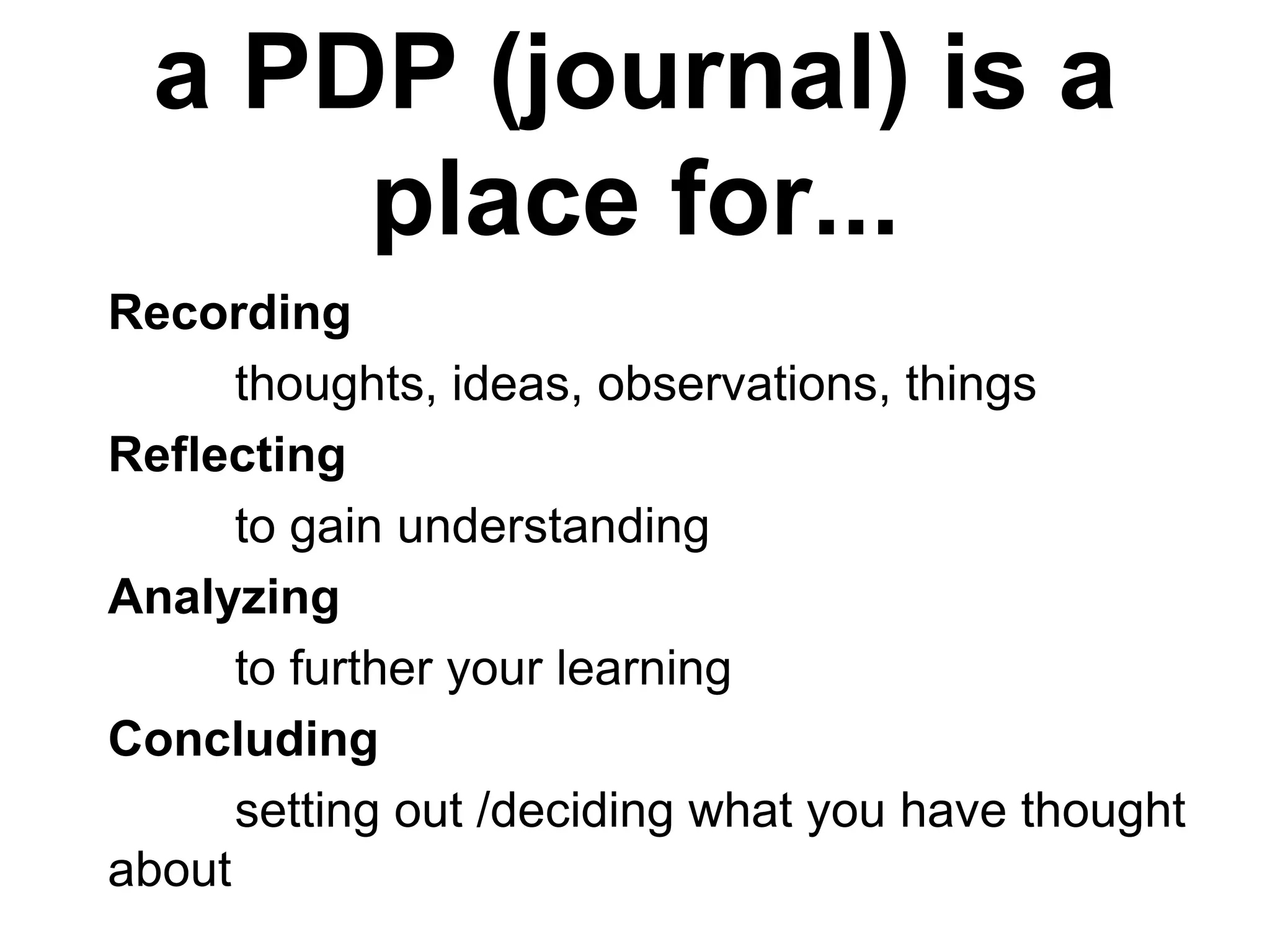
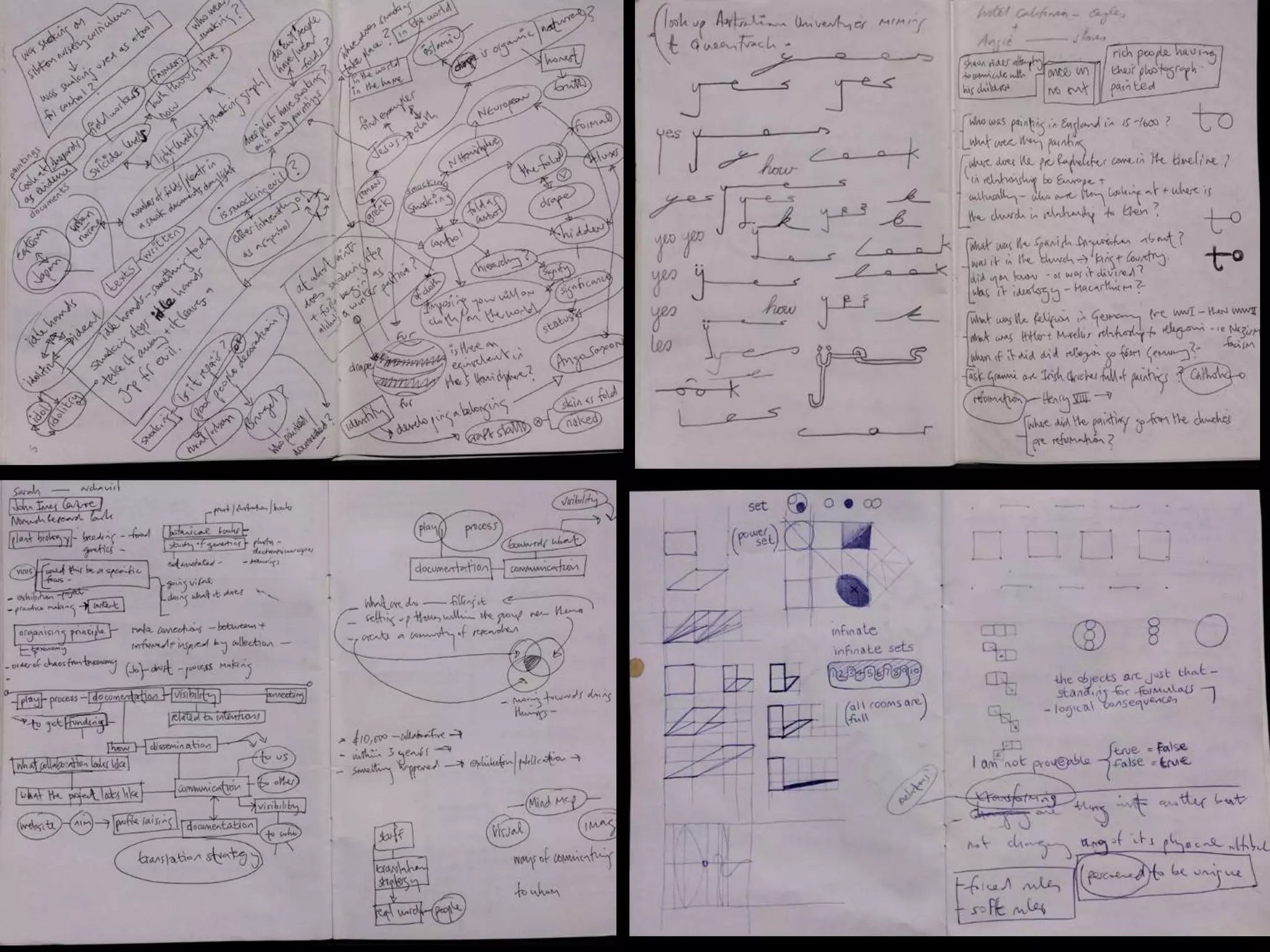
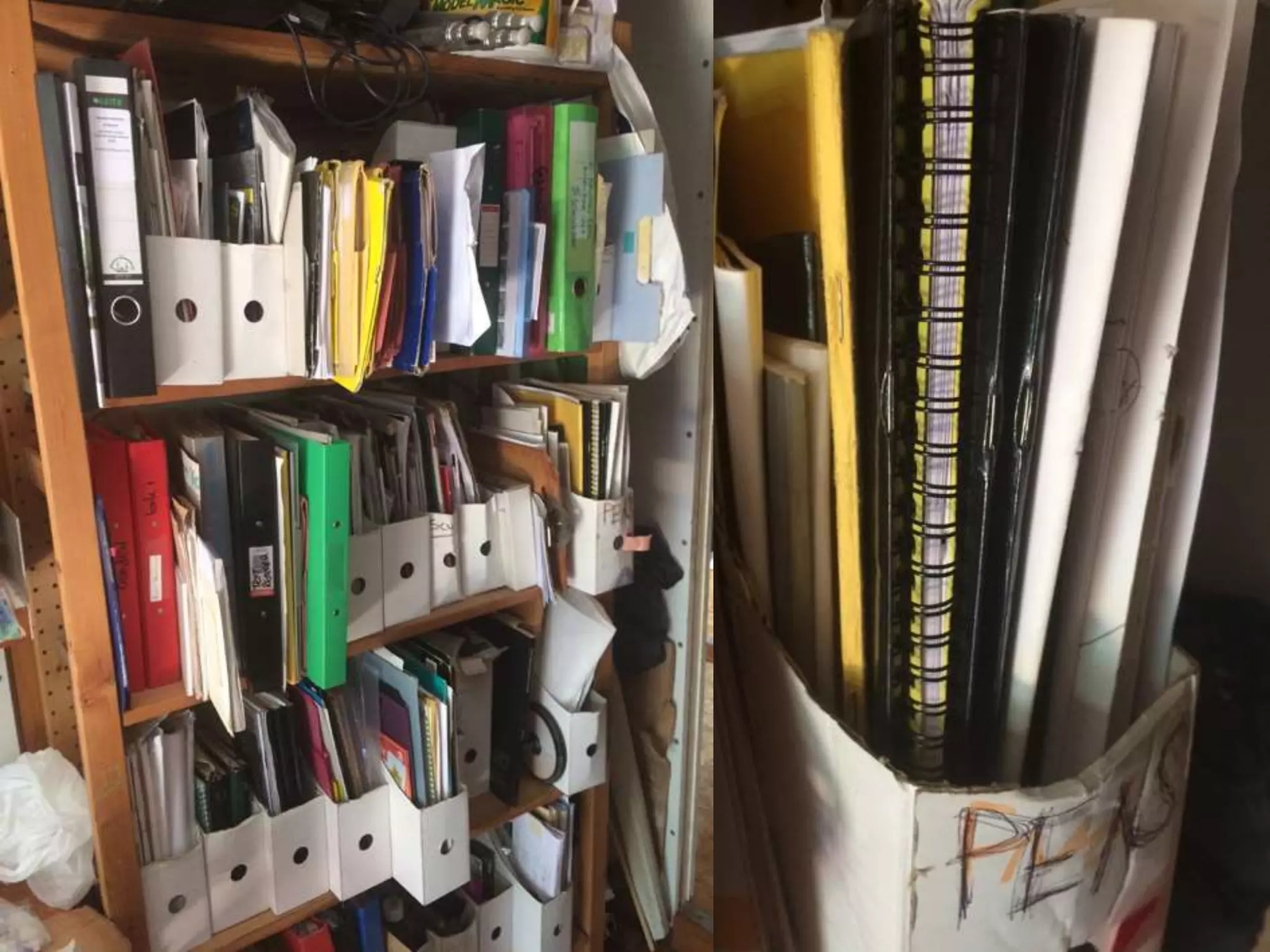
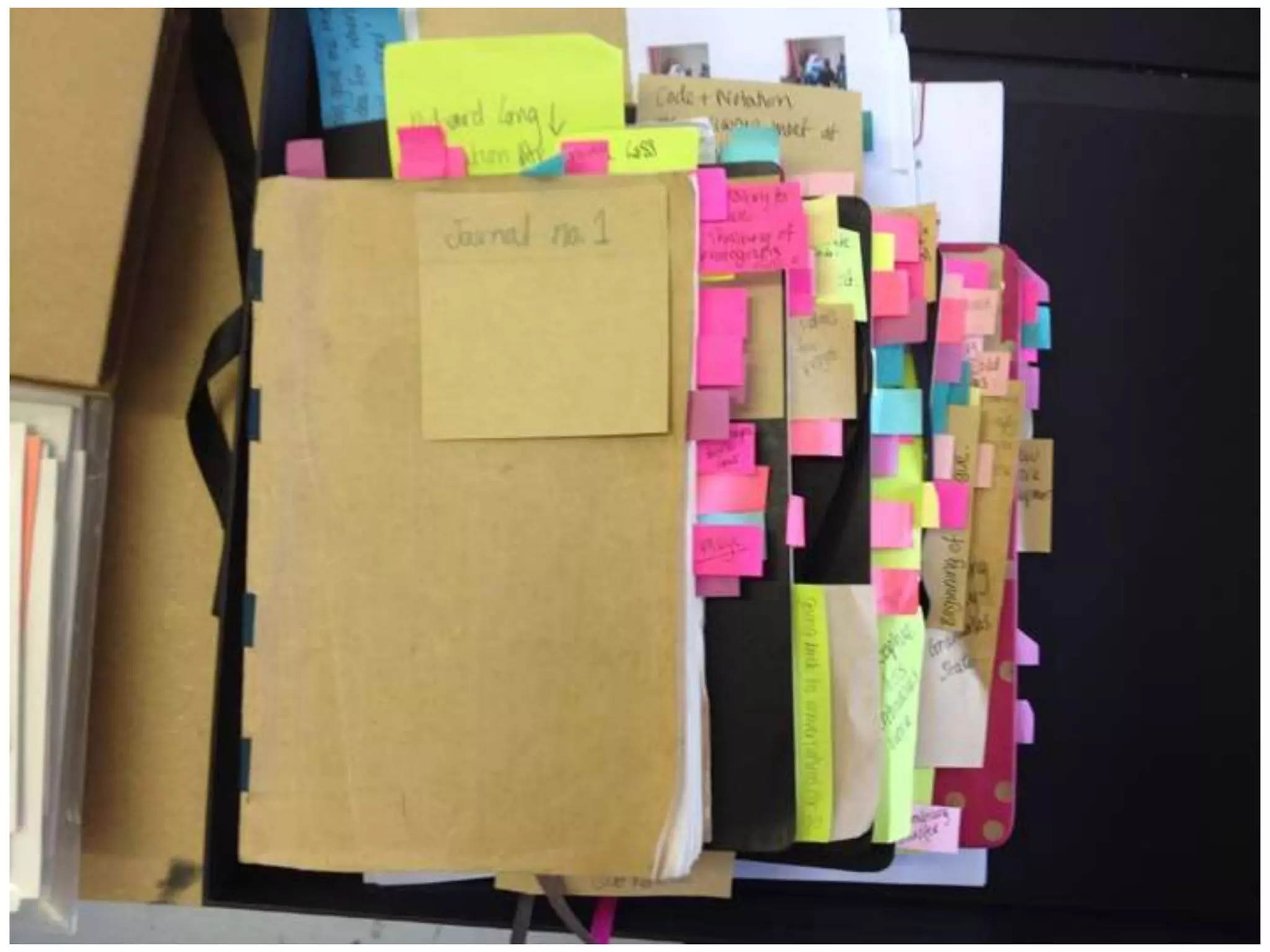
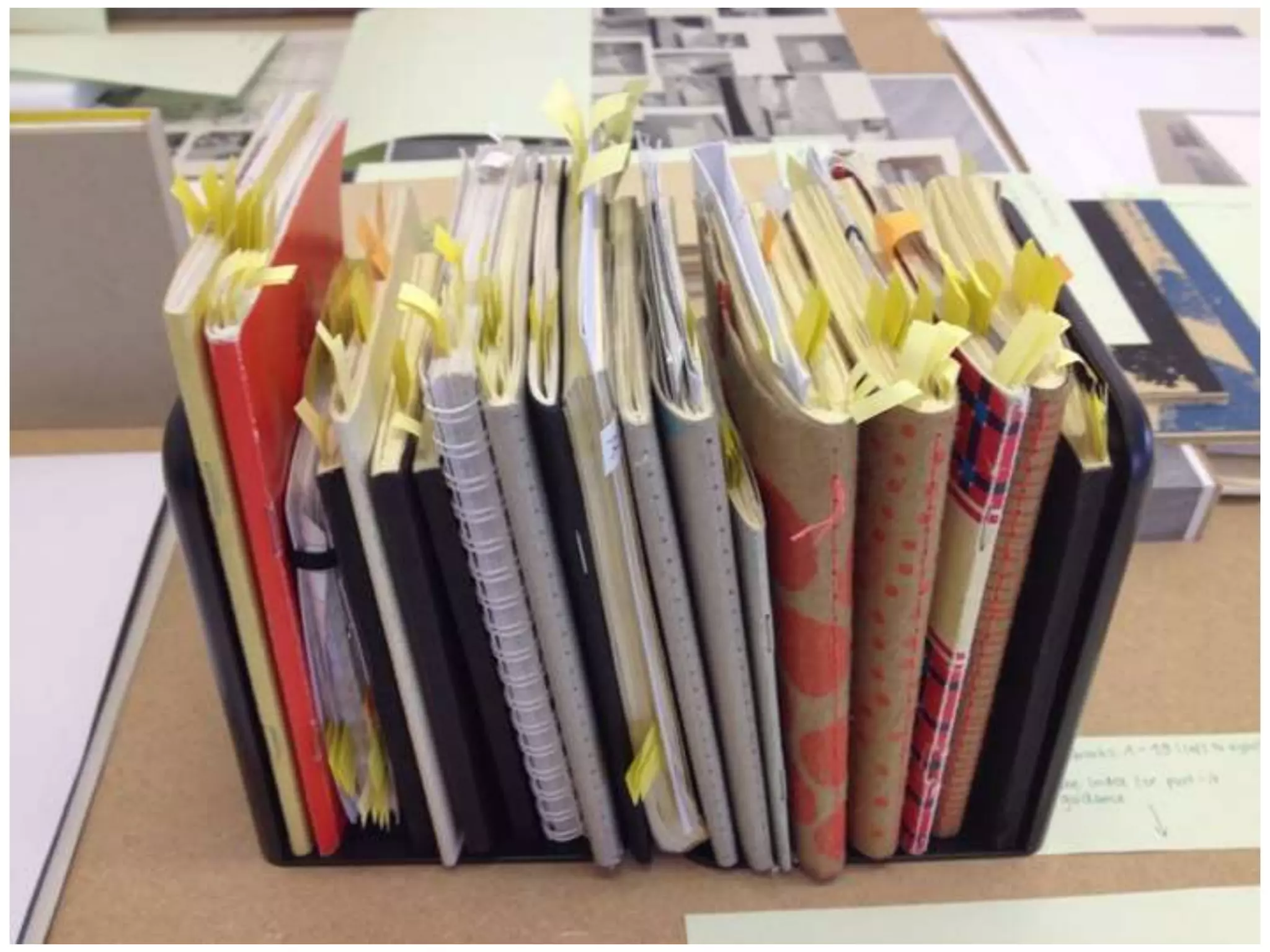
a PDP (journal)is a
place for...
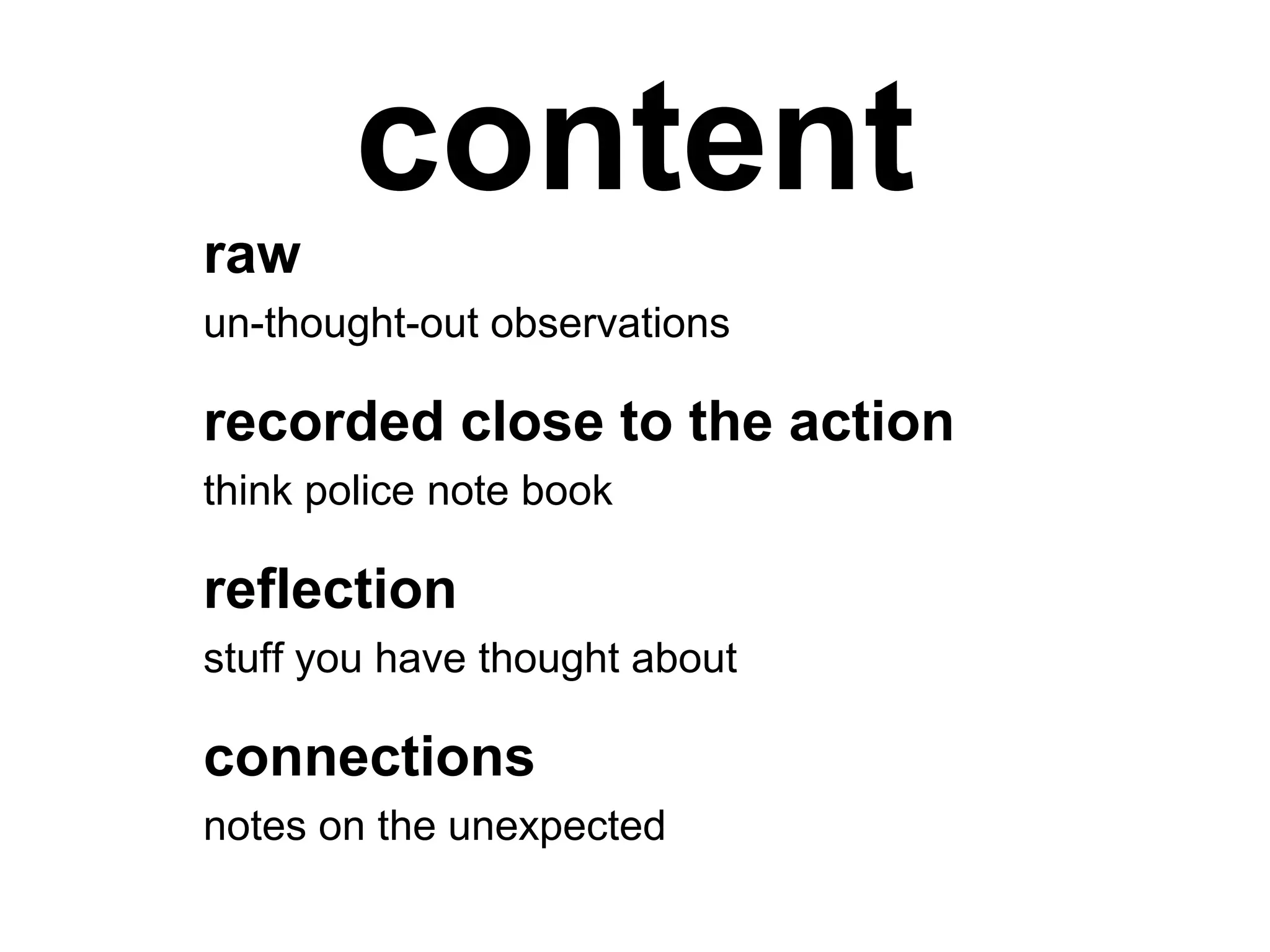
Recording
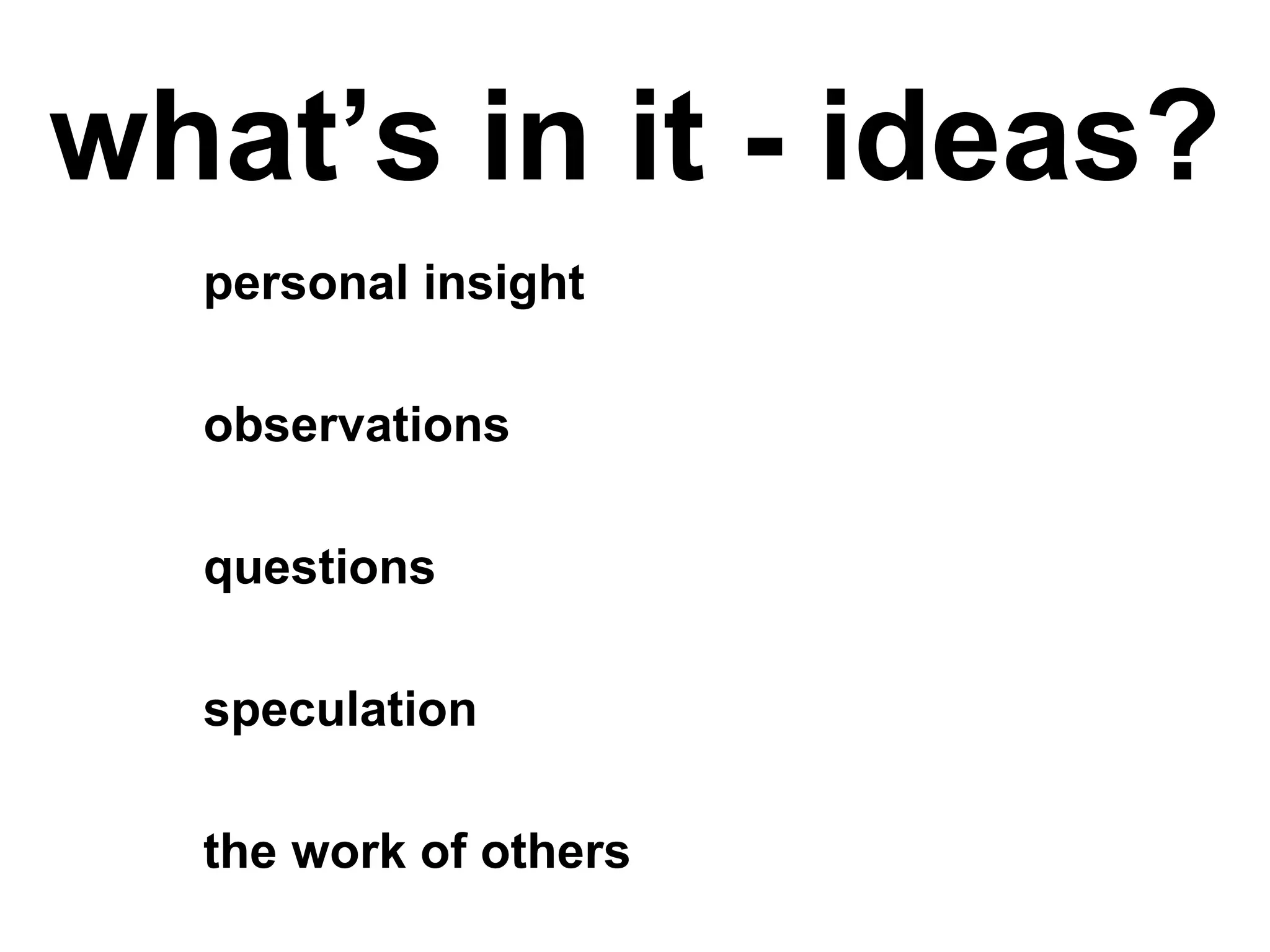
thoughts, ideas, observations, things
Reflecting
to gain understanding
Analyzing
to further your learning
Concluding
setting out /deciding what you have thought
about
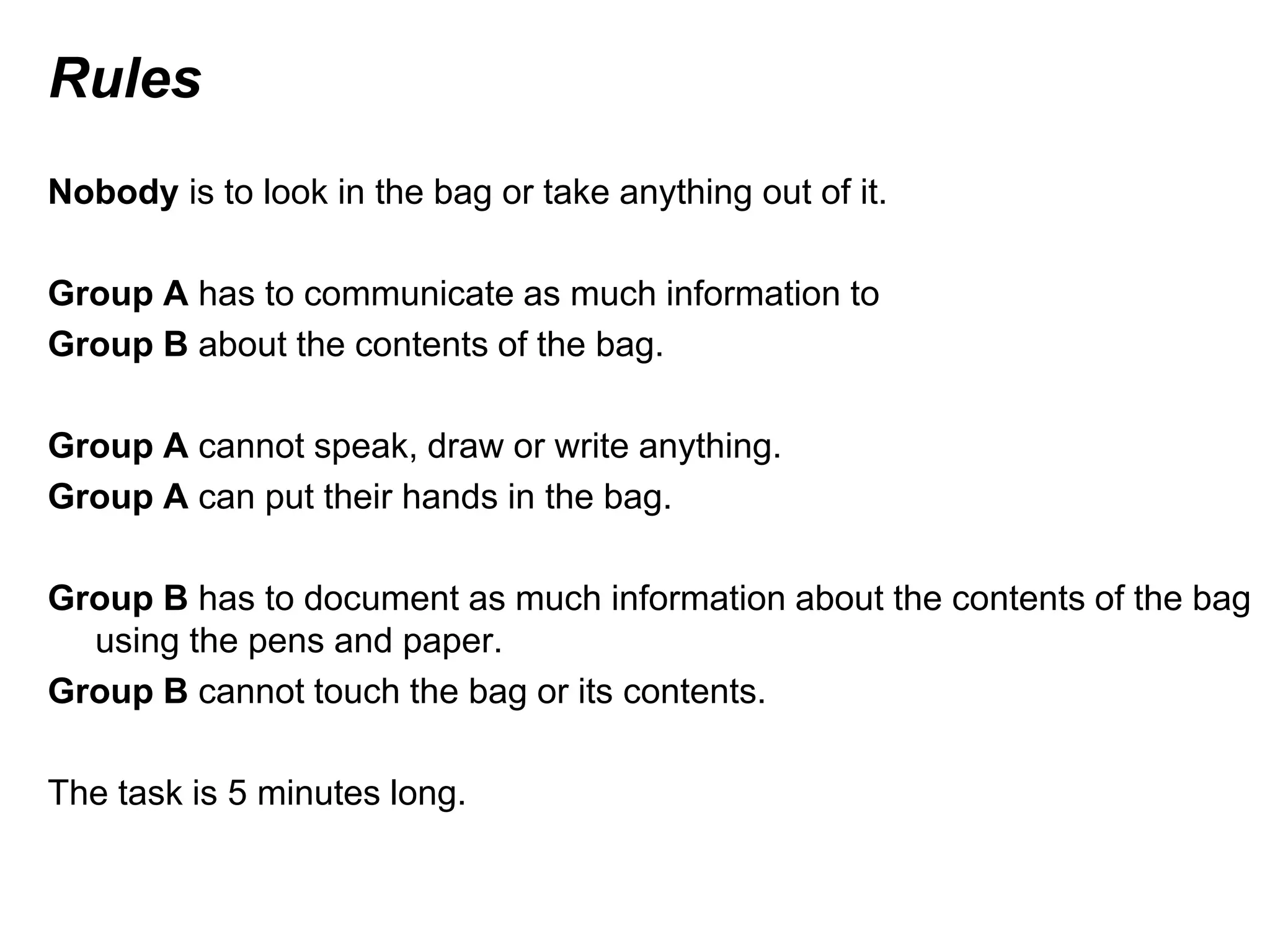
Rules
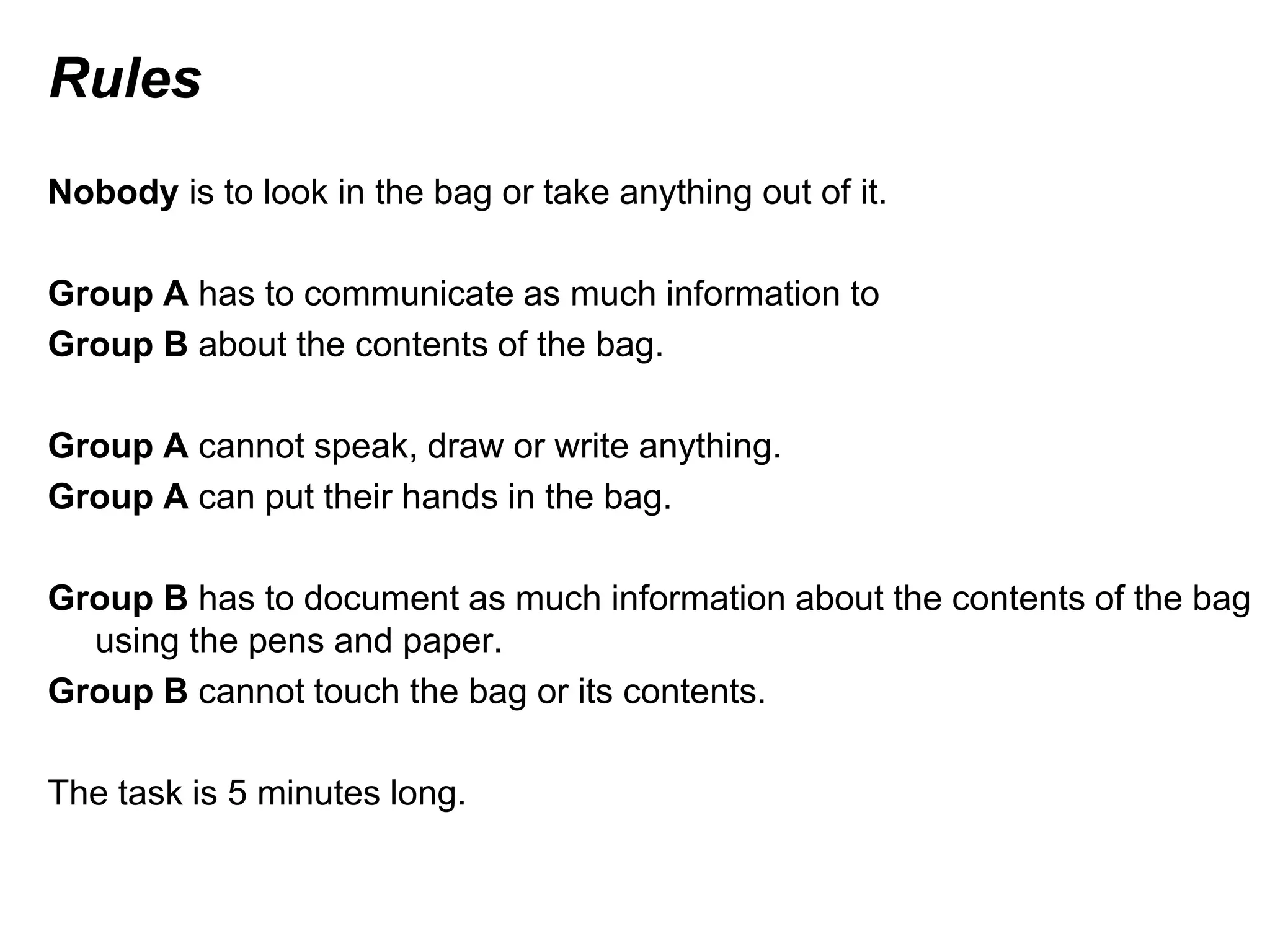
Nobody is tolook in the bag or take anything out of it.
Group A has to communicate as much information to
Group B about the contents of the bag.
Group A cannot speak, draw or write anything.
Group A can put their hands in the bag.
Group B has to document as much information about the contents of the bag
using the pens and paper.
Group B cannot touch the bag or its contents.
The task is 5 minutes long.
27.
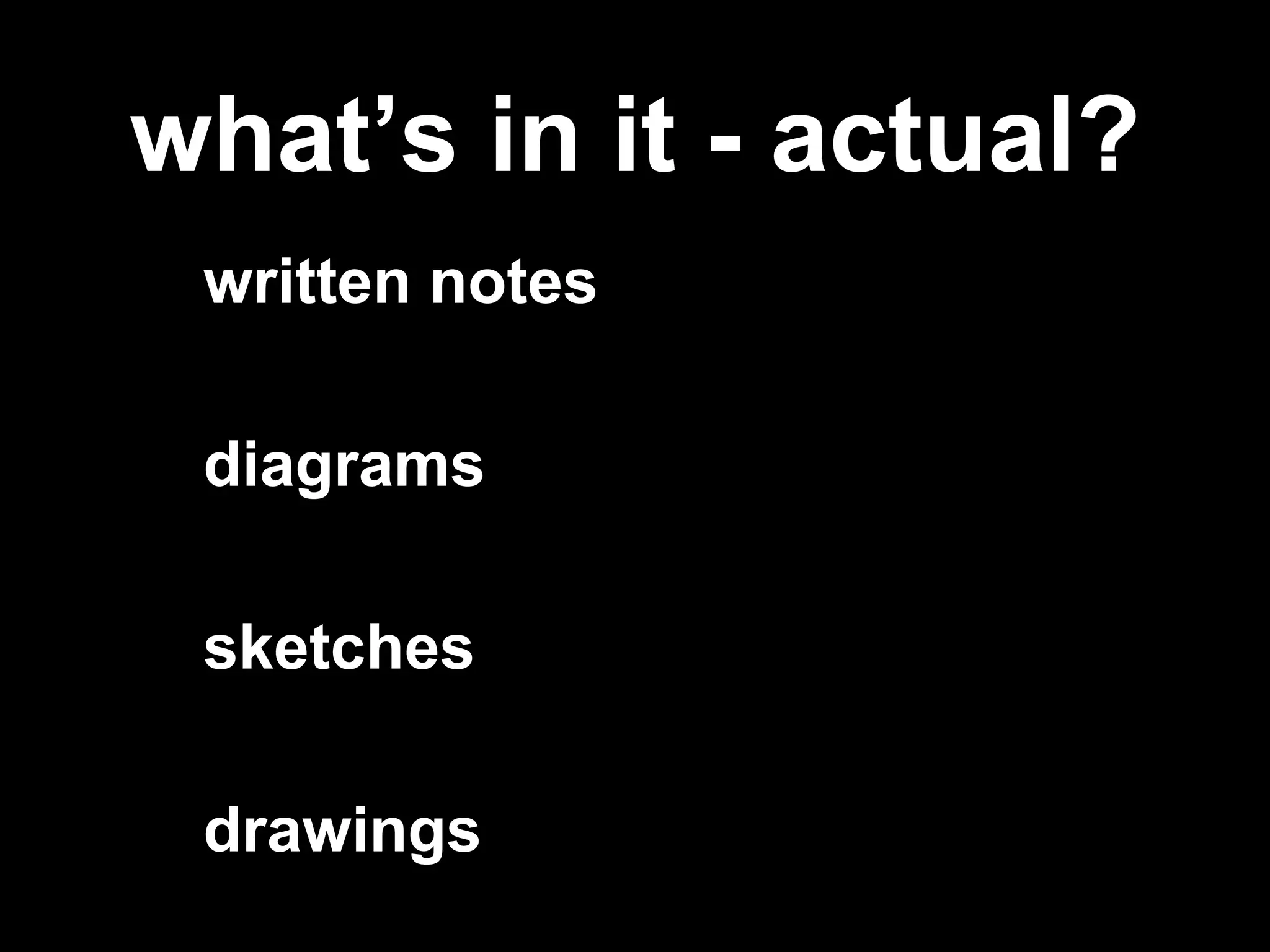
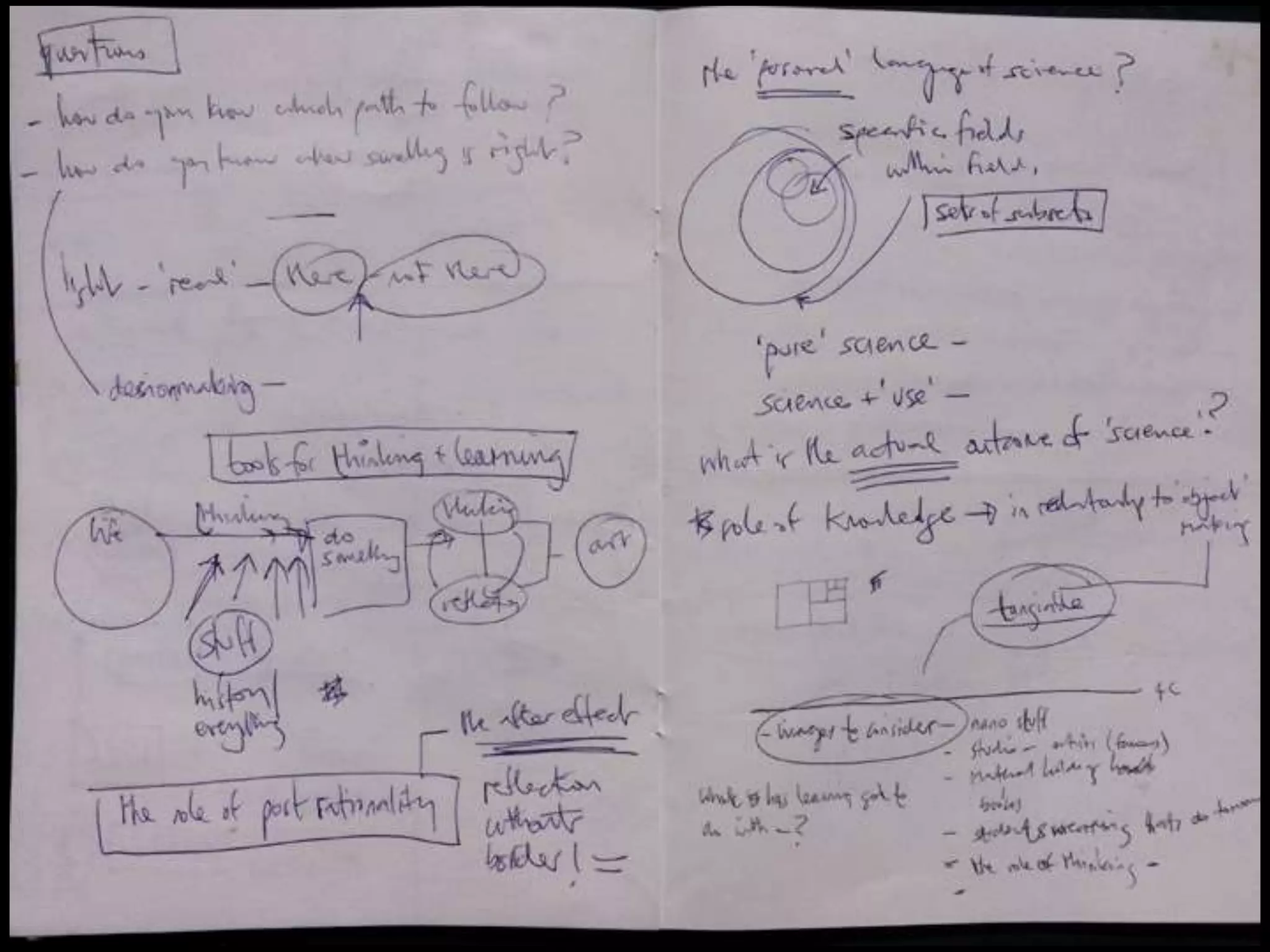
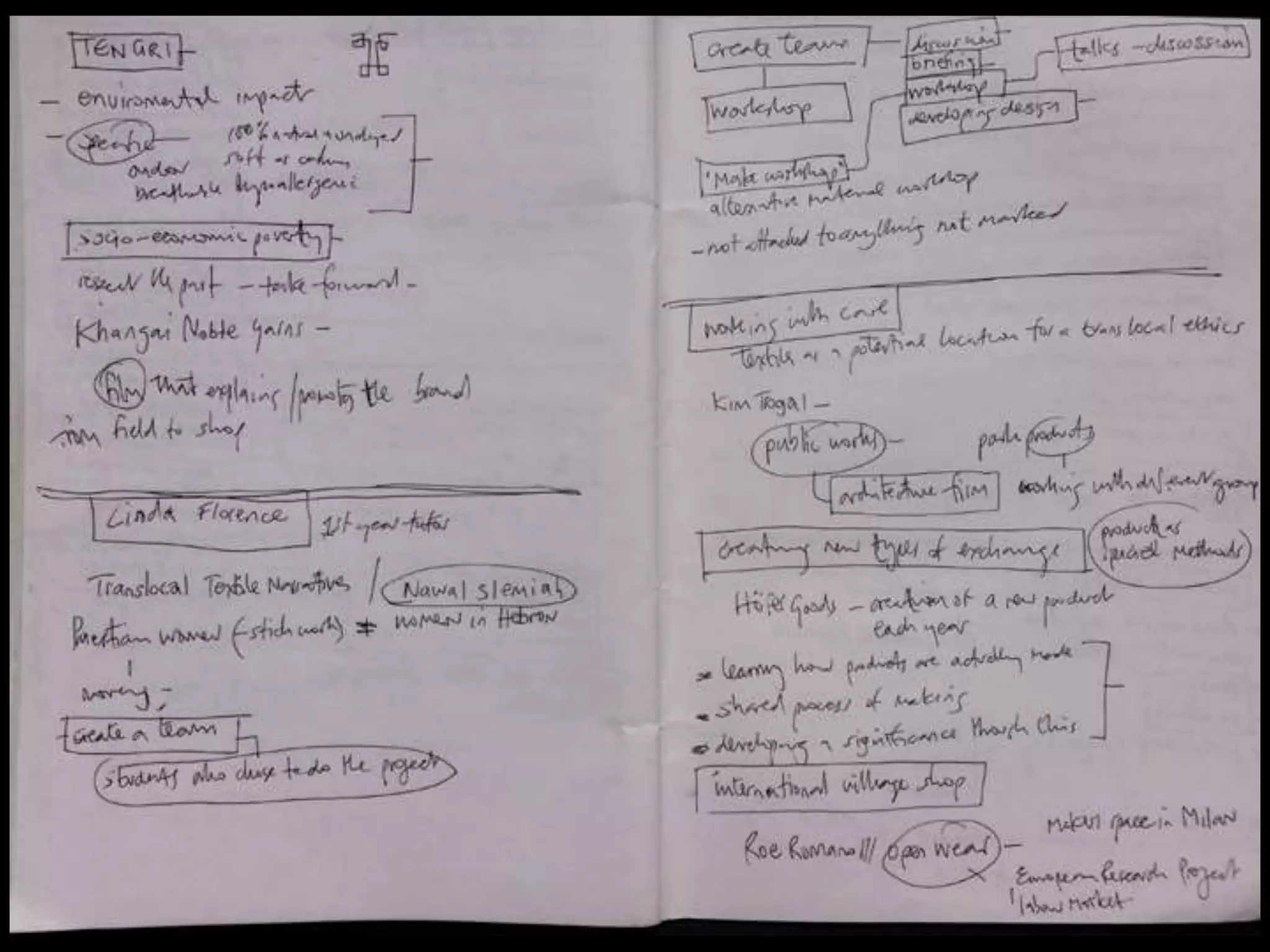
what’s in it- actual?
written notes
diagrams
sketches
drawings
28.
Rules
Nobody is tolook in the bag or take anything out of it.
Group A has to communicate as much information to
Group B about the contents of the bag.
Group A cannot speak, draw or write anything.
Group A can put their hands in the bag.
Group B has to document as much information about the contents of the bag
using the pens and paper.
Group B cannot touch the bag or its contents.
The task is 5 minutes long.
29.
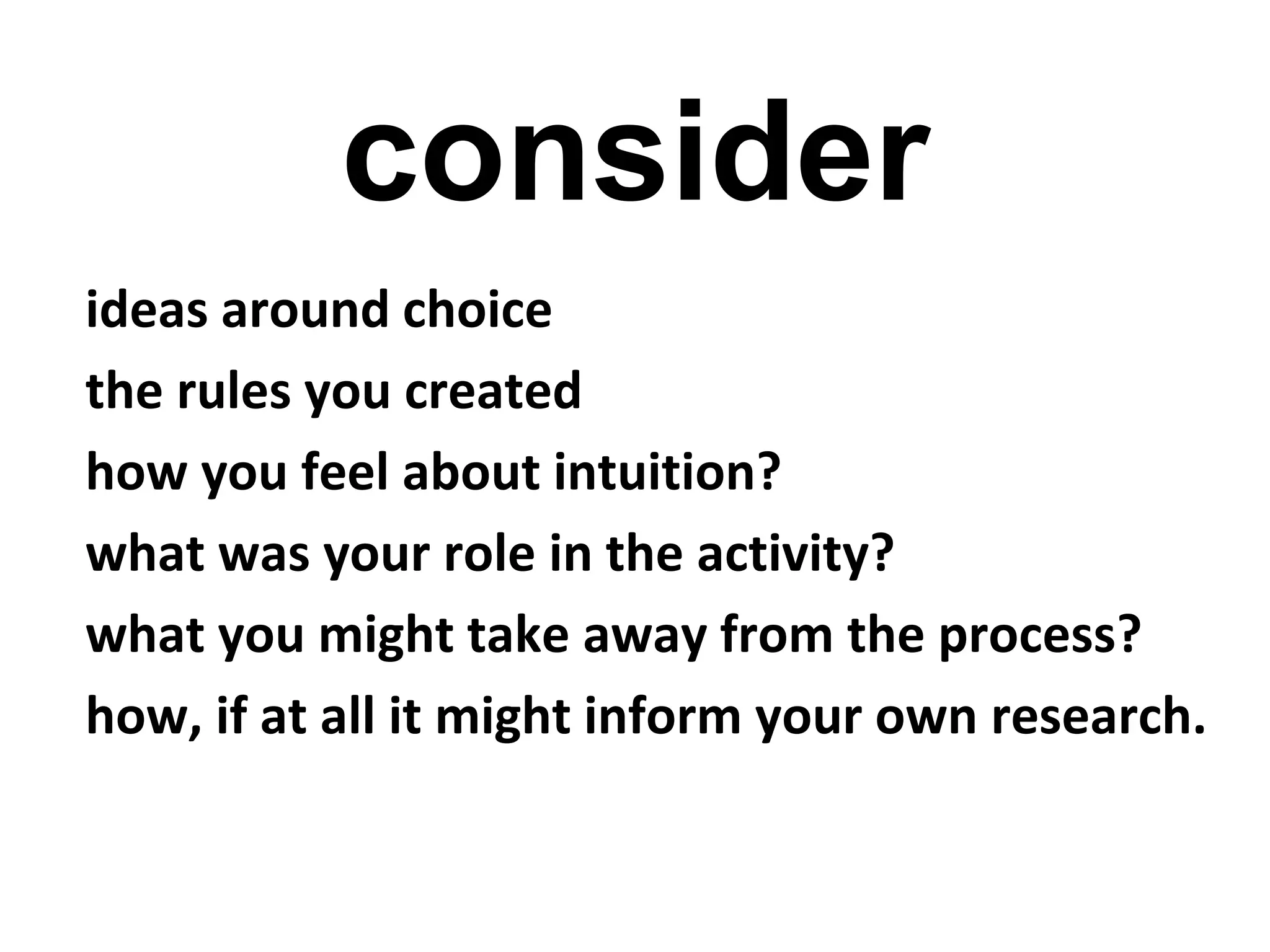
consider
ideas around choice
therules you created
how you feel about intuition?
what was your role in the activity?
what you might take away from the process?
how, if at all it might inform your own research.
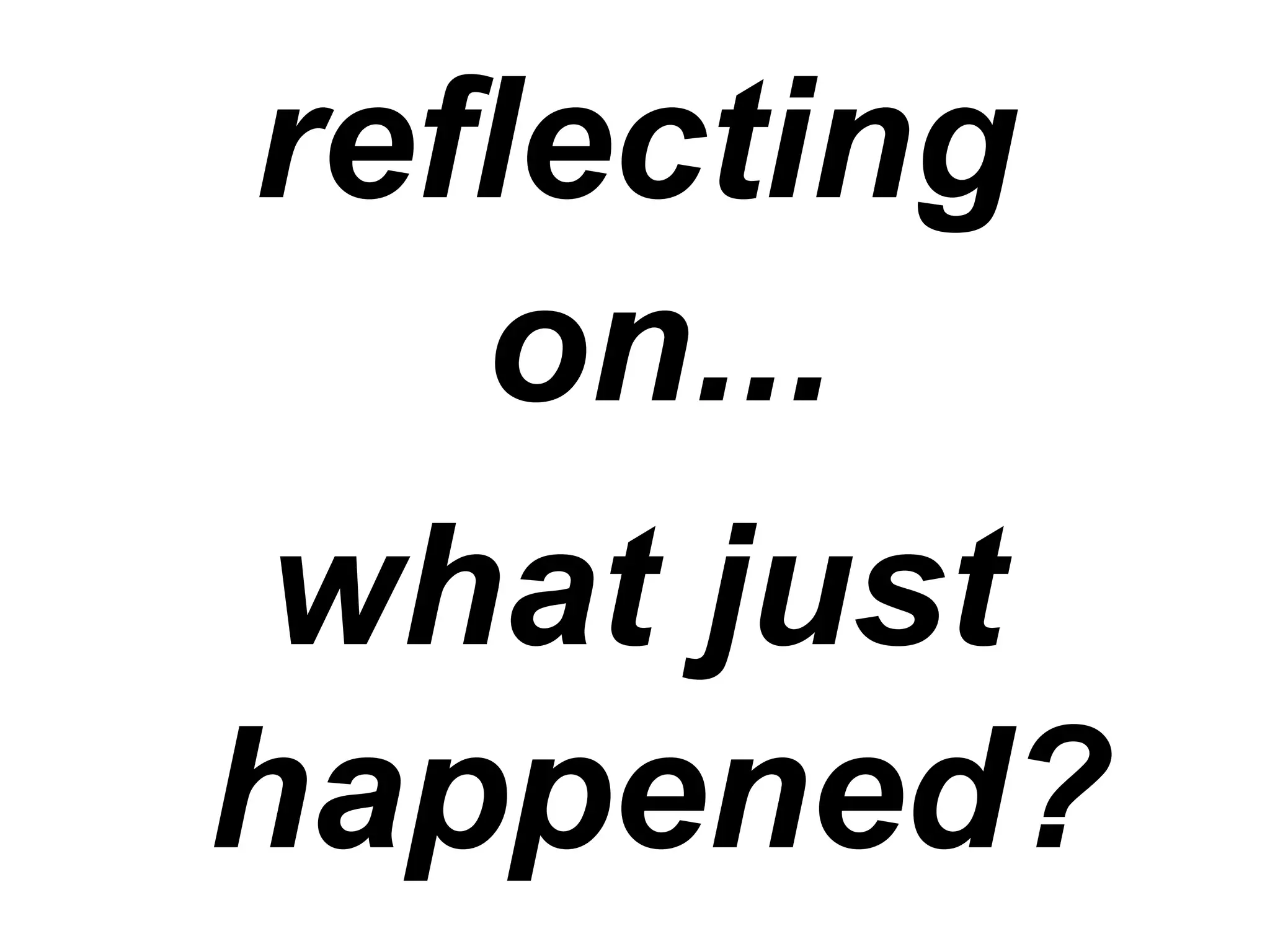
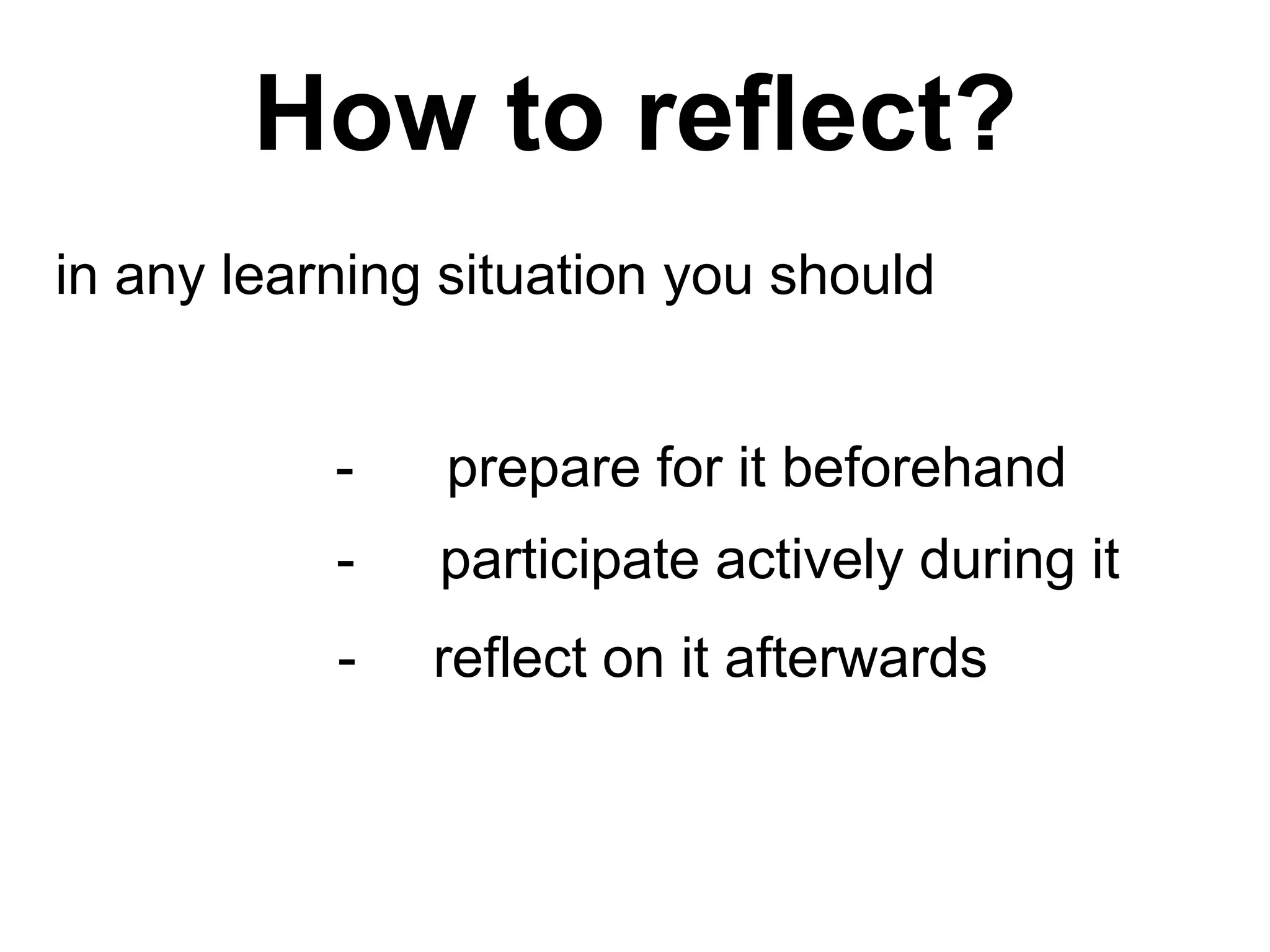
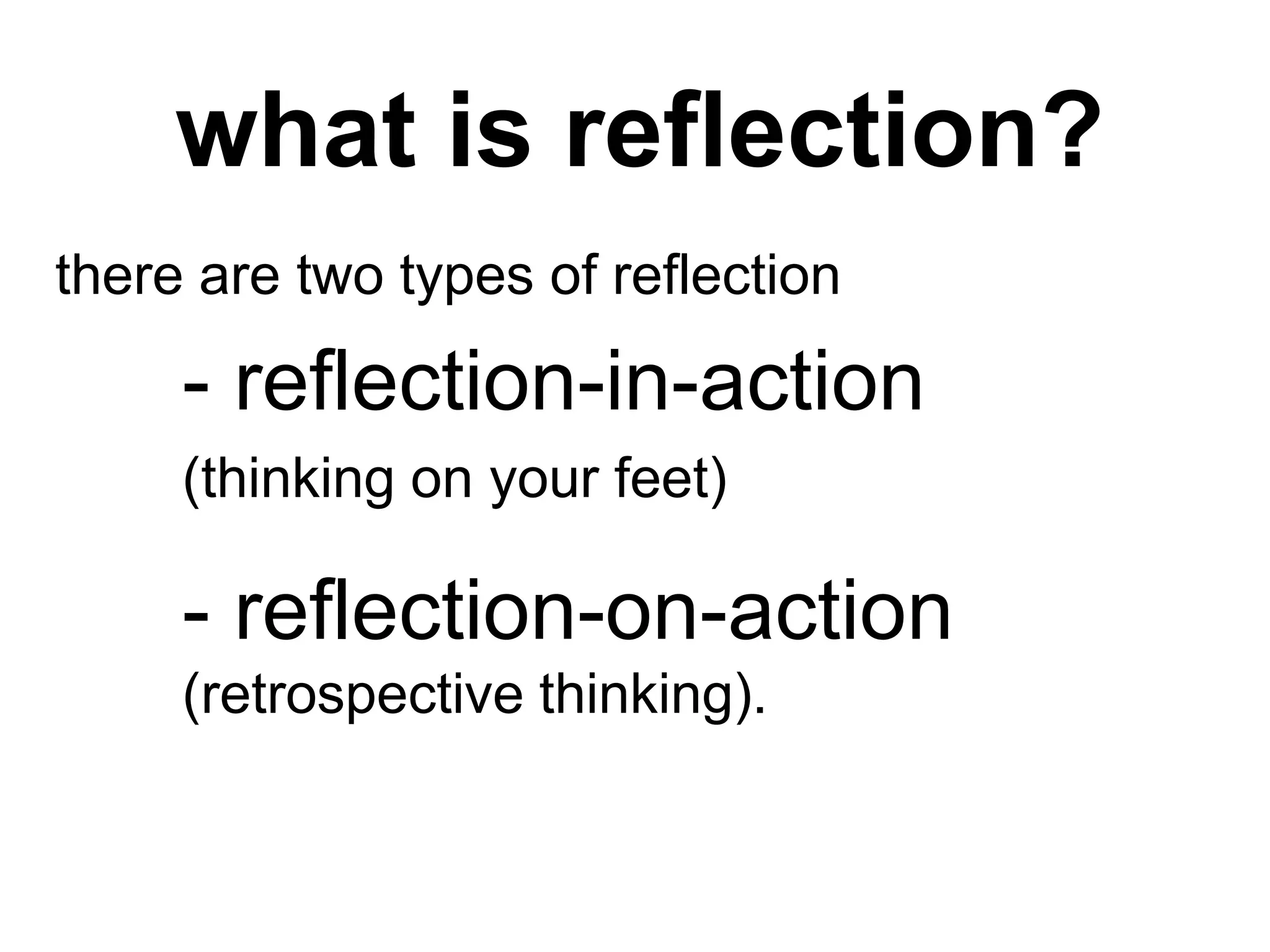
what is reflection?
thereare two types of reflection
- reflection-in-action
(thinking on your feet)
- reflection-on-action
(retrospective thinking).
what is reflection?