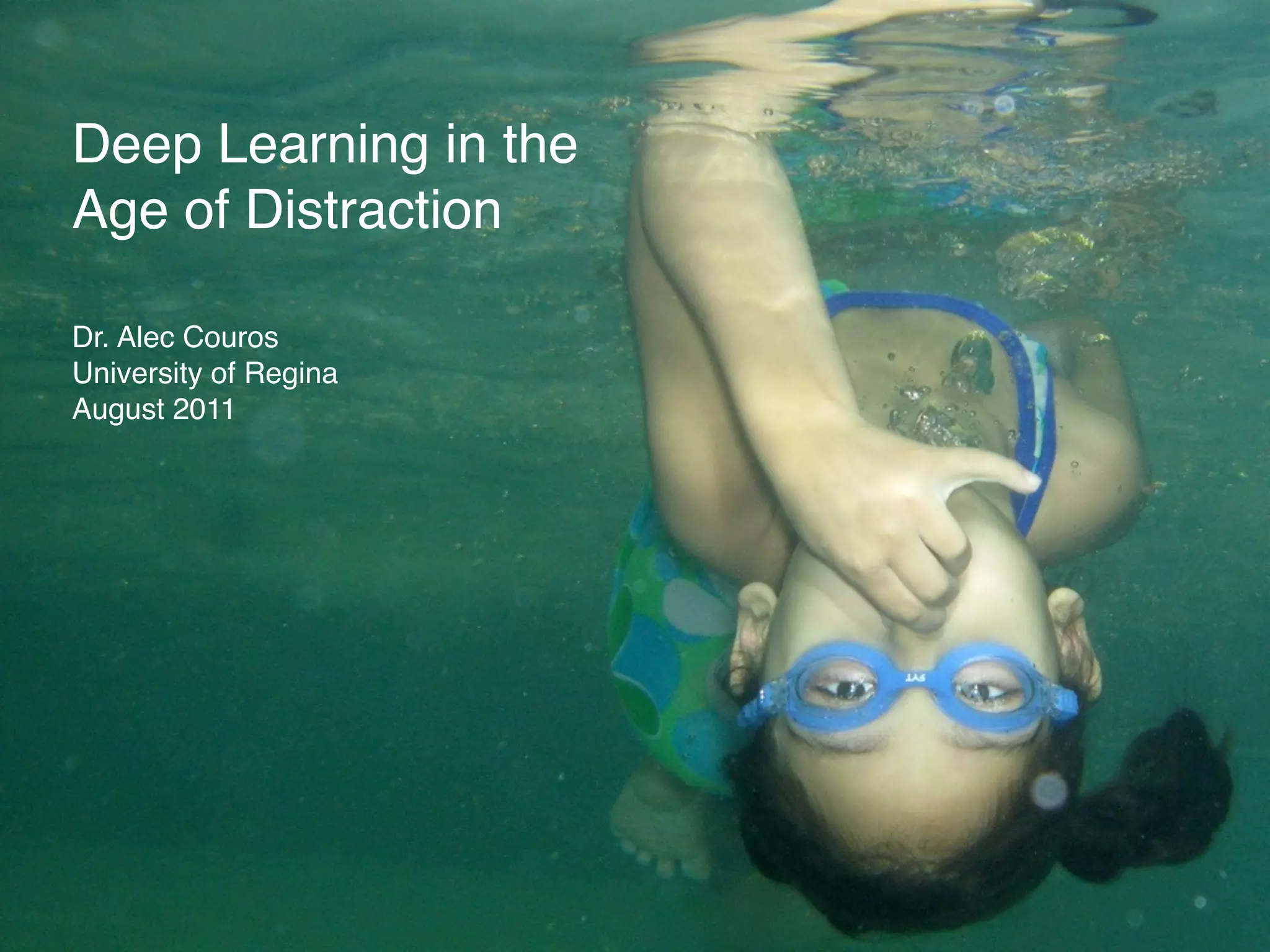
Deep Learning in the
Age of Distraction

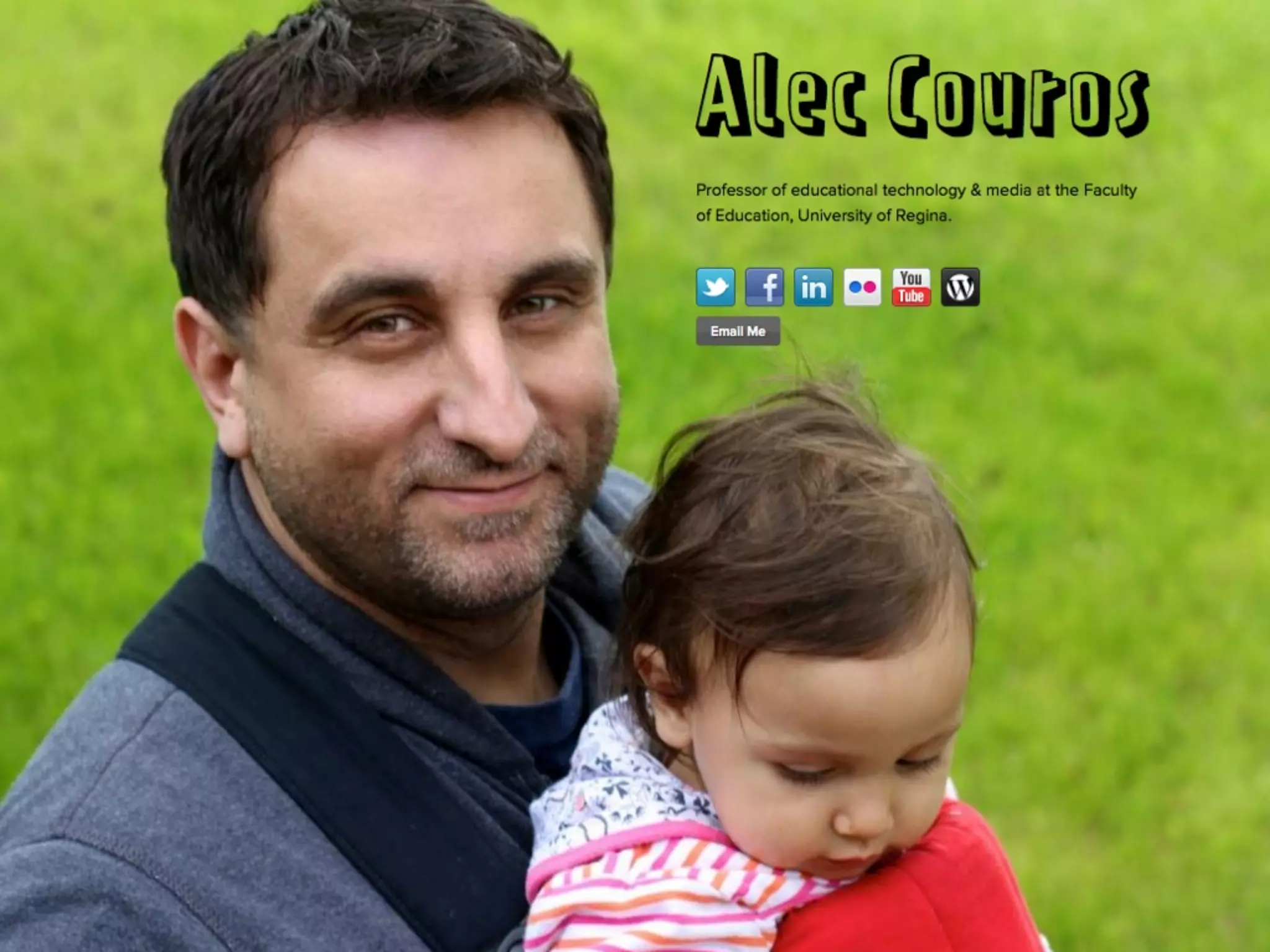
Dr. Alec Couros
University of Regina
August 2011
#cesd73


   bit.ly/cesd73
me
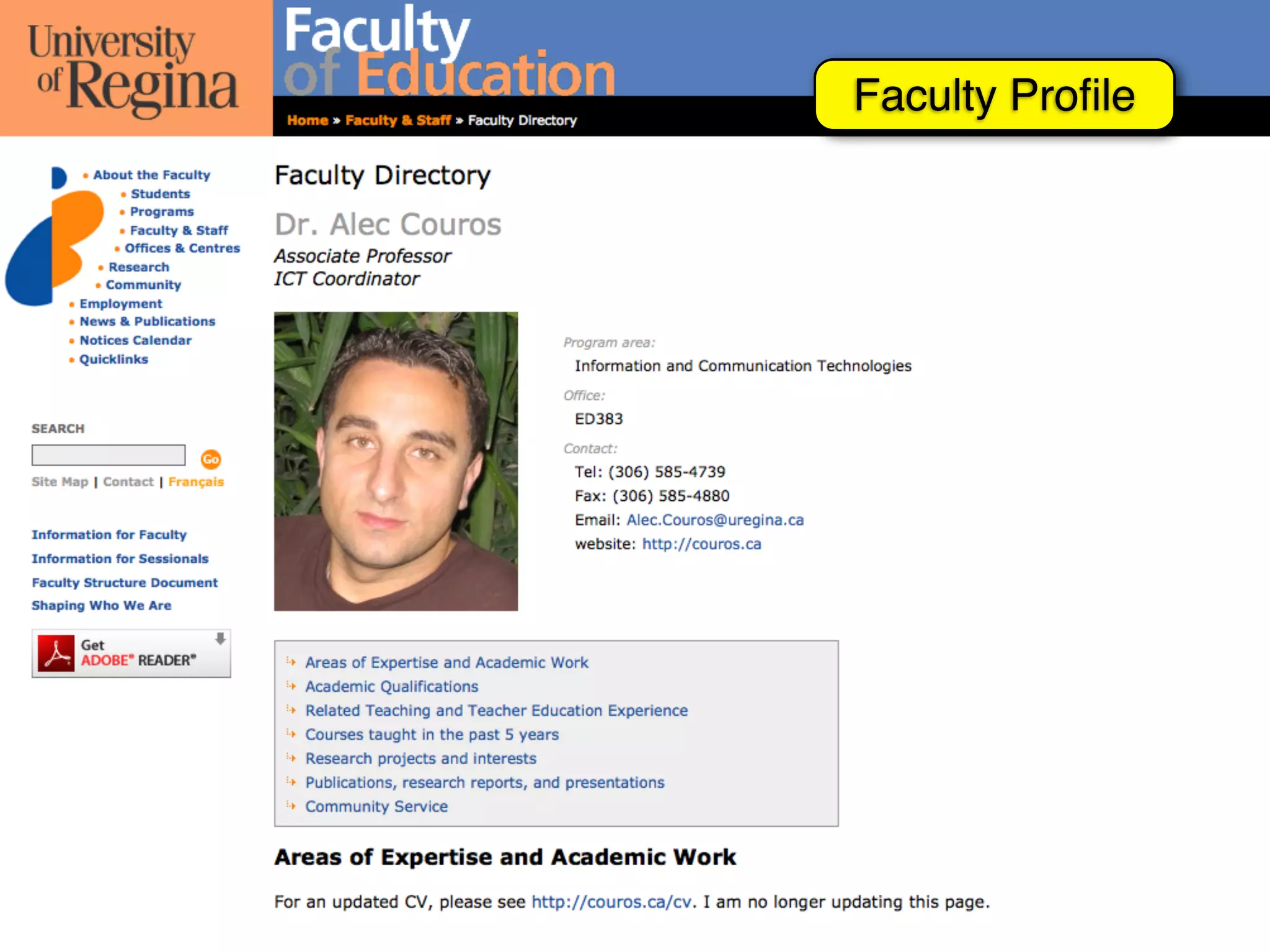
Faculty Profile
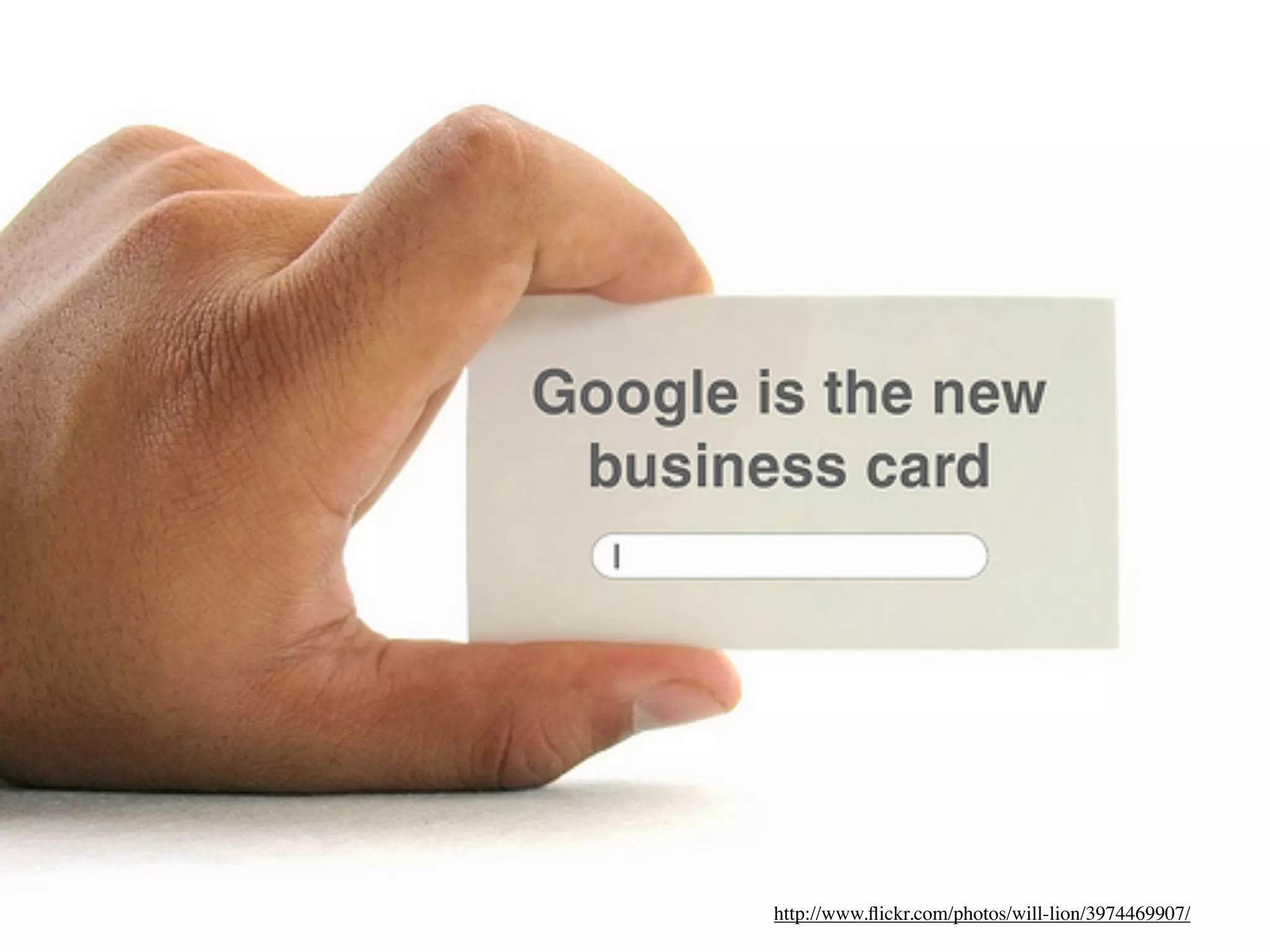
http://www.flickr.com/photos/will-lion/3974469907/
The Blur
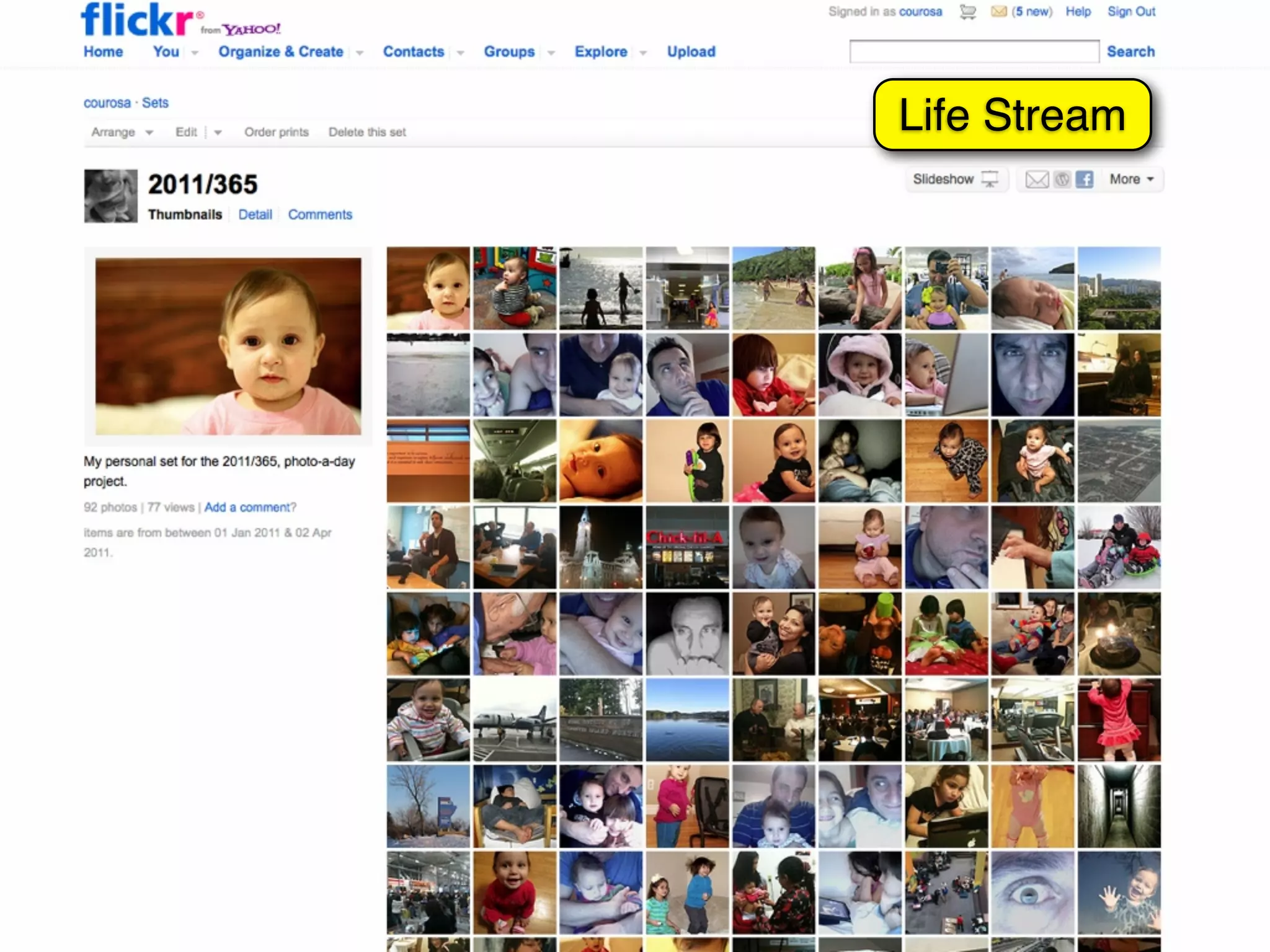
Life Stream
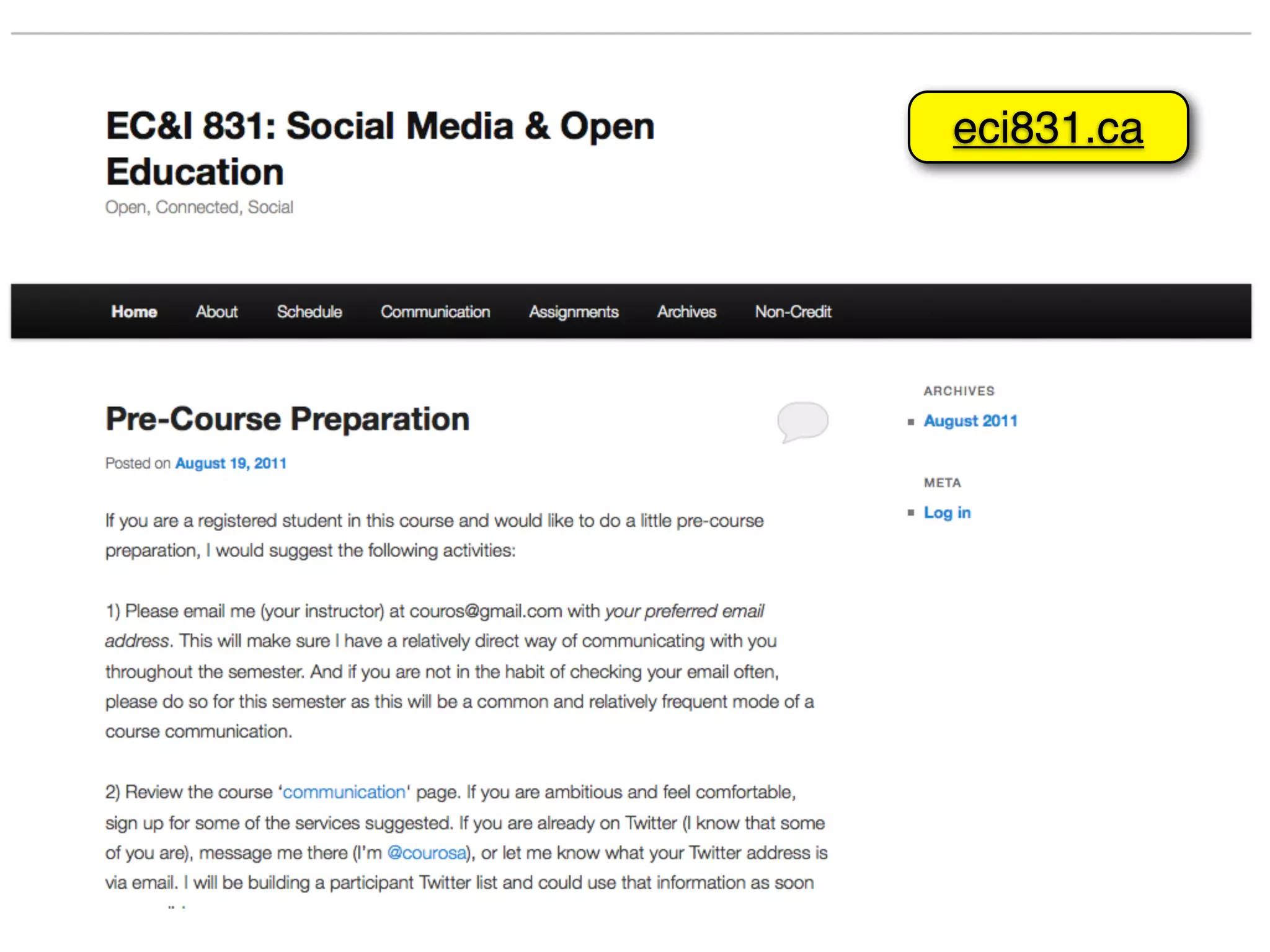
eci831.ca
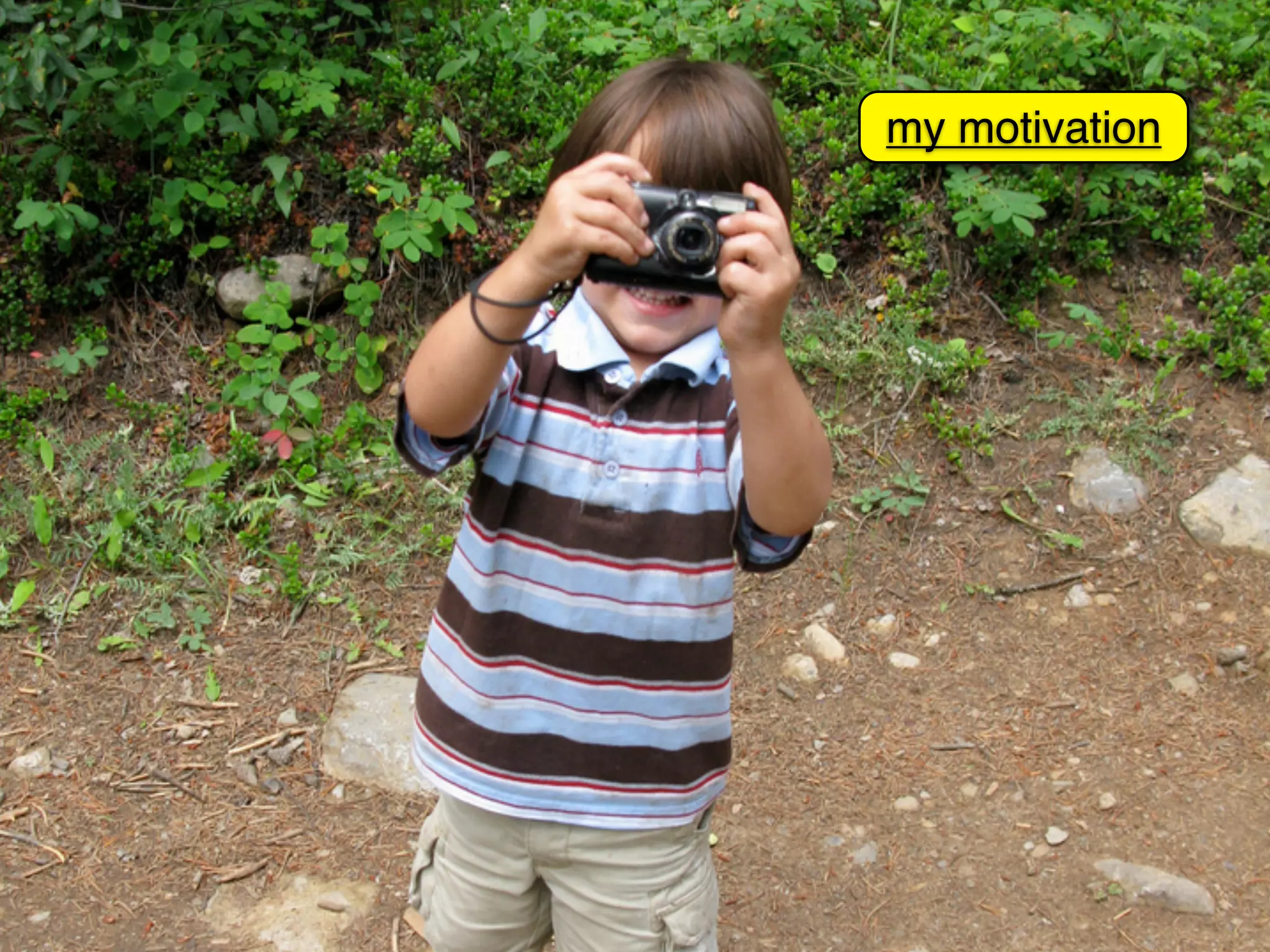
my motivation
context
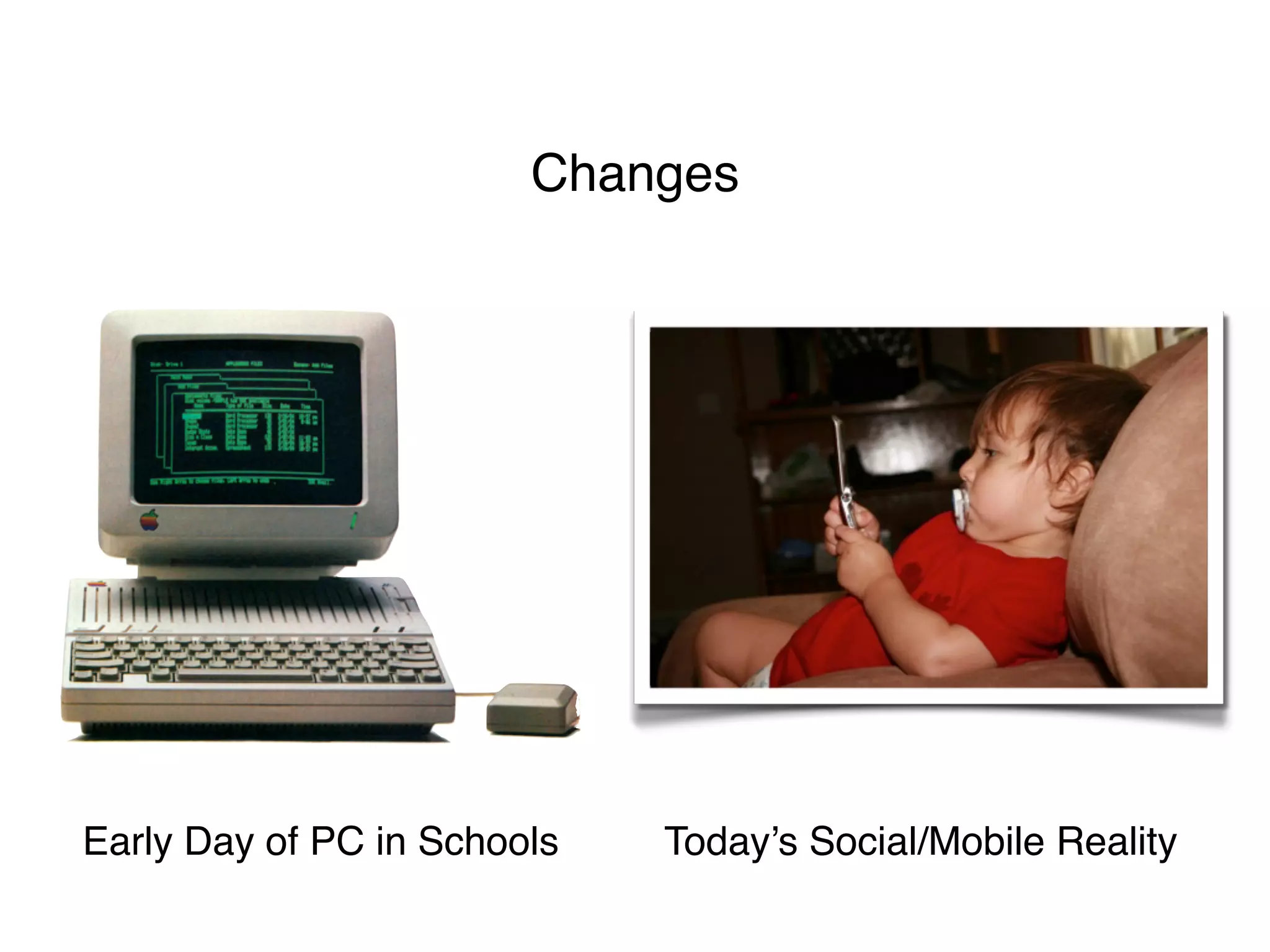
Changes


Early Day of PC in Schools   Today’s Social/Mobile Reality
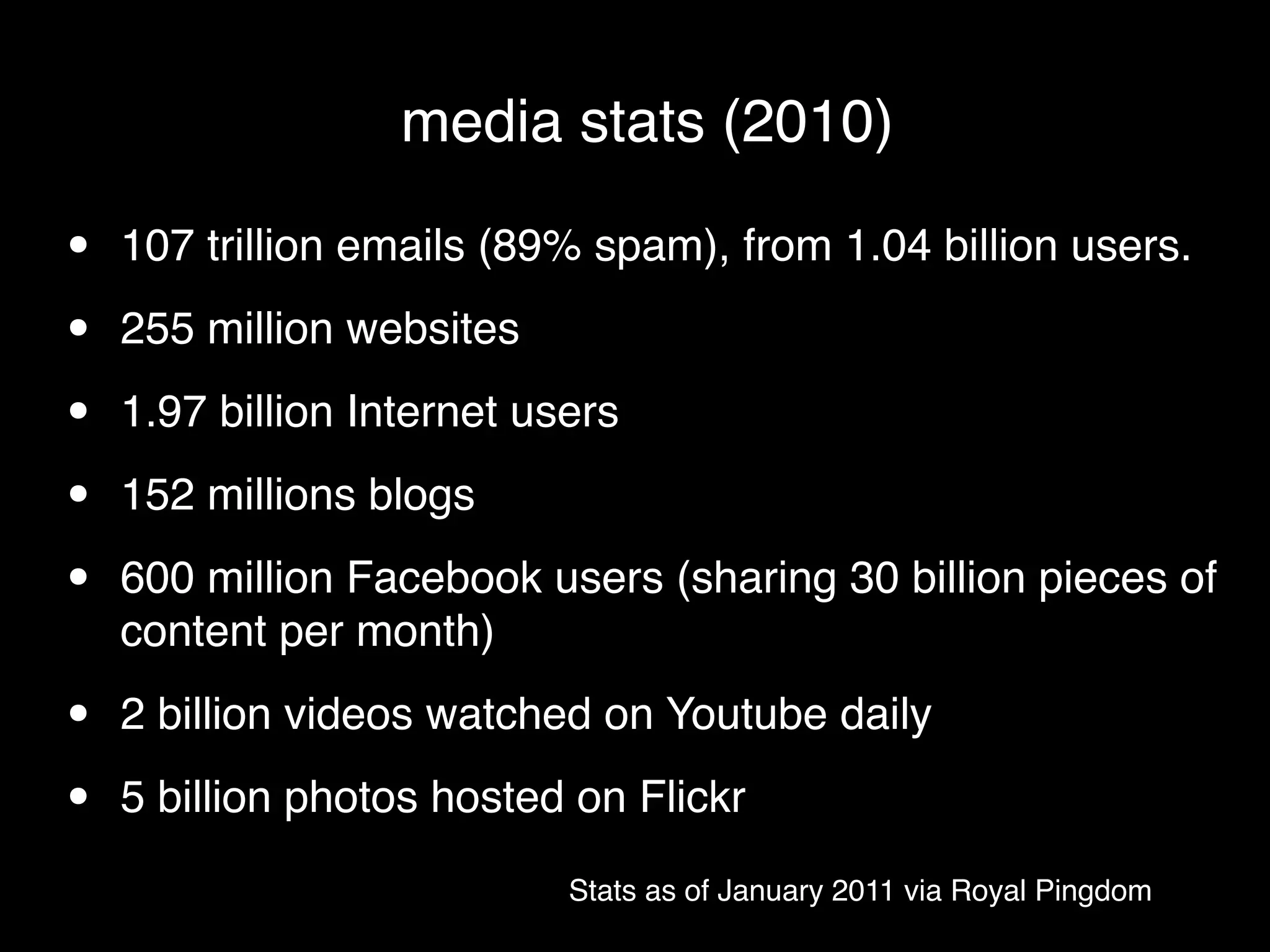
media stats (2010)

•   107 trillion emails (89% spam), from 1.04 billion users.

•   255 million websites

•   1.97 billion Internet users

•   152 millions blogs

•   600 million Facebook users (sharing 30 billion pieces of
    content per month)

•   2 billion videos watched on Youtube daily

•   5 billion photos hosted on Flickr
                            Stats as of January 2011 via Royal Pingdom
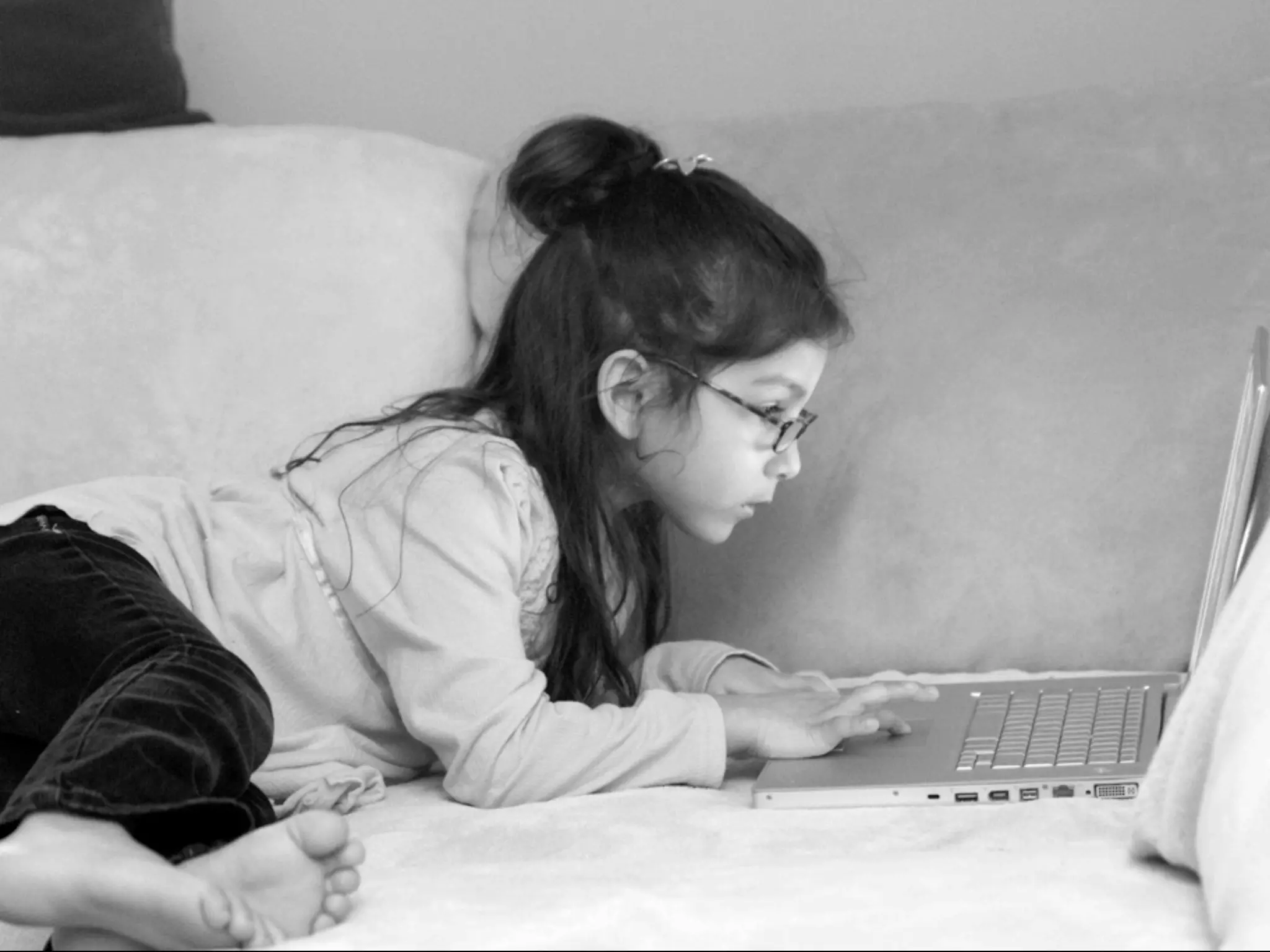
myth of the digital native
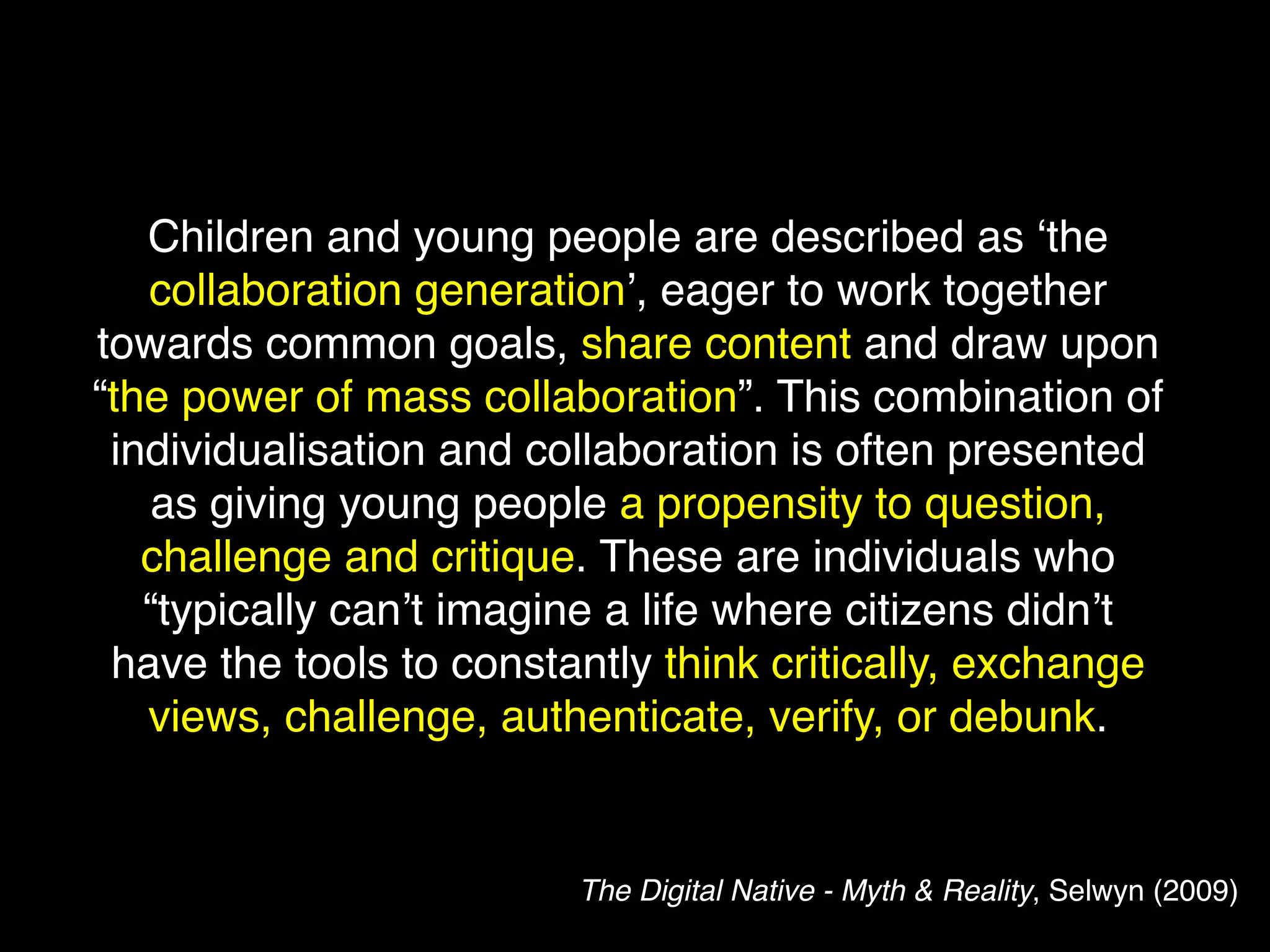
Children and young people are described as ‘the
   collaboration generation’, eager to work together
towards common goals, share content and draw upon
“the power of mass collaboration”. This combination of
 individualisation and collaboration is often presented
   as giving young people a propensity to question,
   challenge and critique. These are individuals who
   “typically can’t imagine a life where citizens didn’t
 have the tools to constantly think critically, exchange
   views, challenge, authenticate, verify, or debunk.


                         The Digital Native - Myth & Reality, Selwyn (2009)
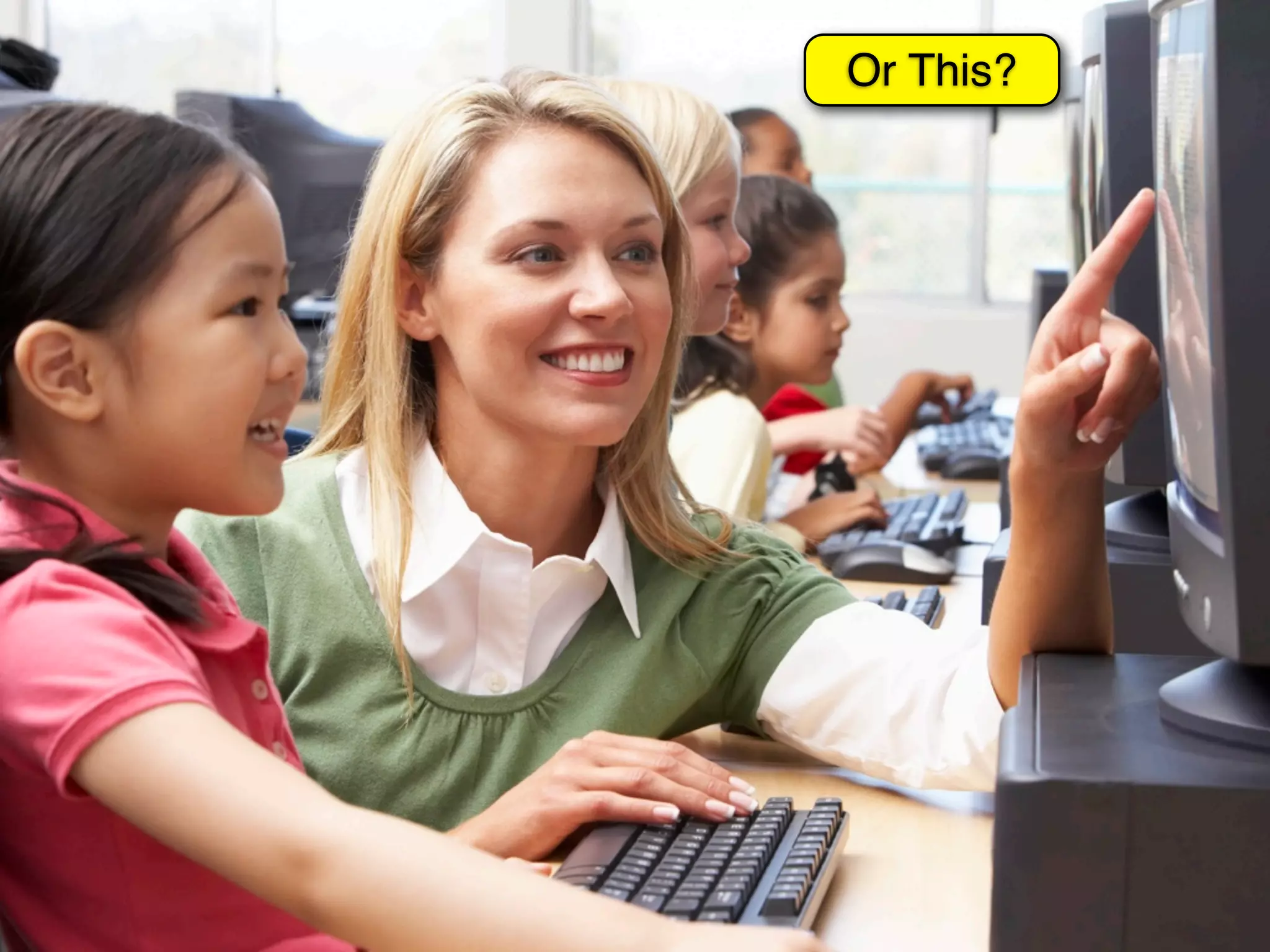
Are We To Believe This?
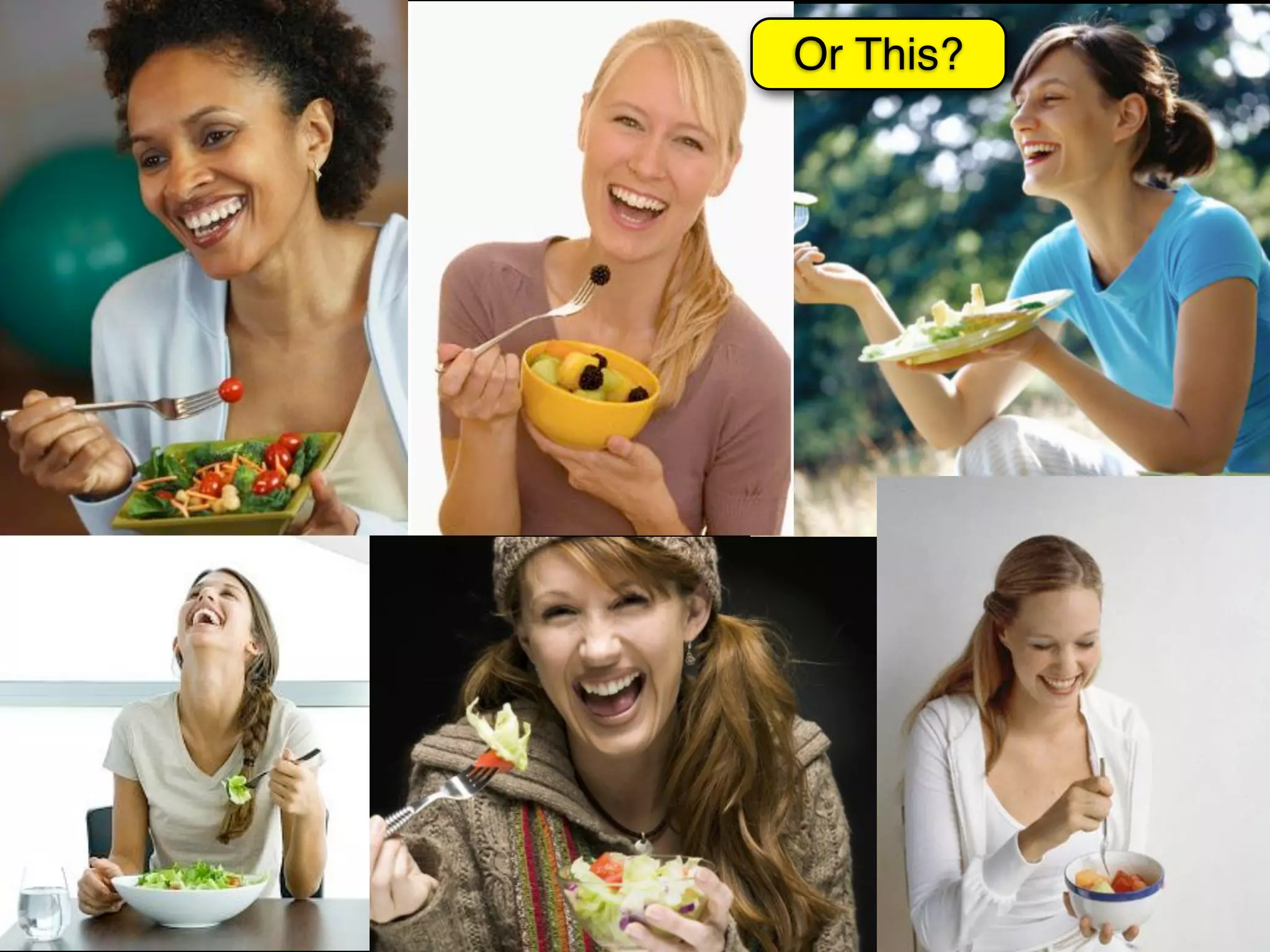
Or This?
Or This?
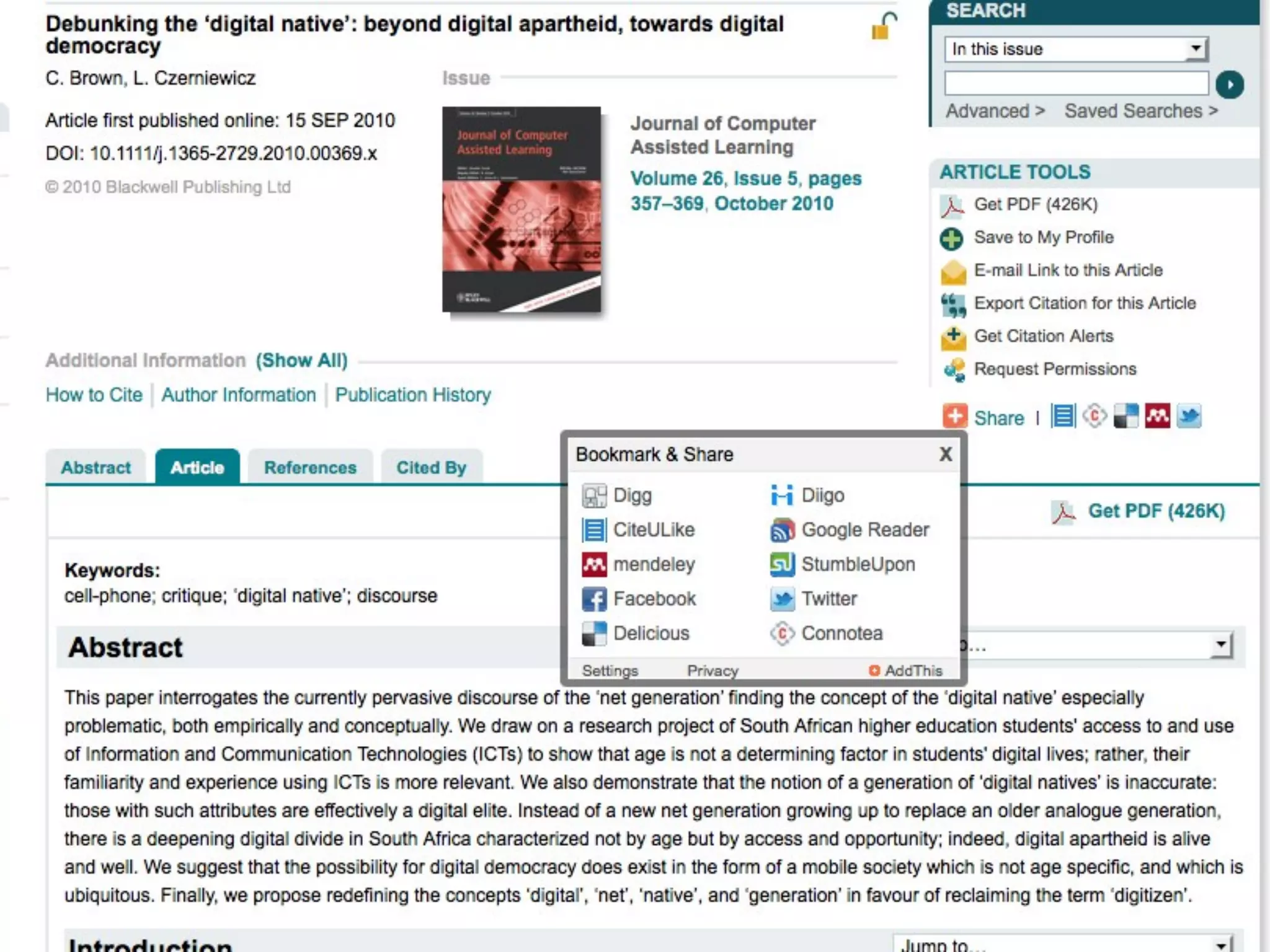
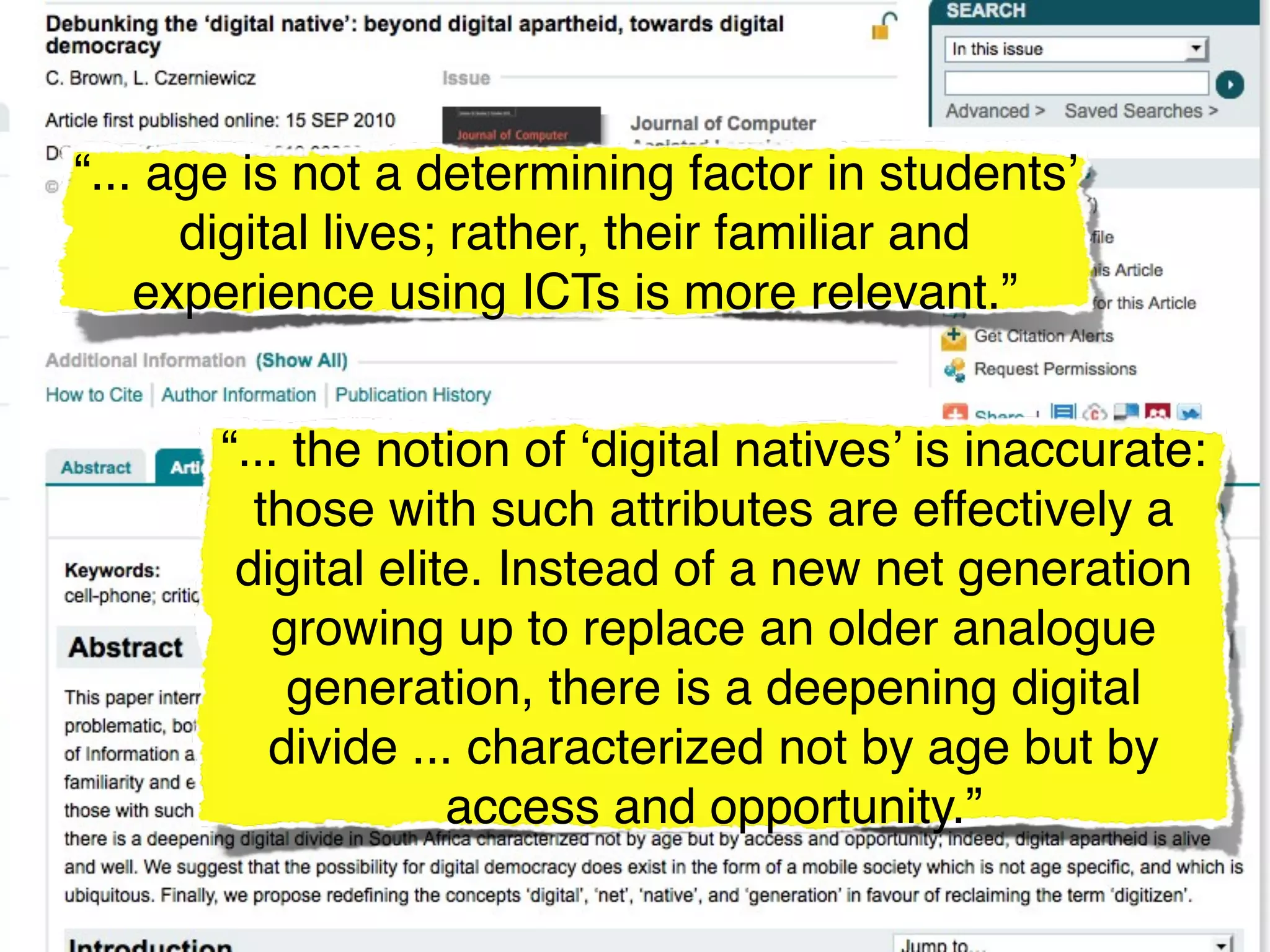
“... age is not a determining factor in students’
      digital lives; rather, their familiar and
    experience using ICTs is more relevant.”
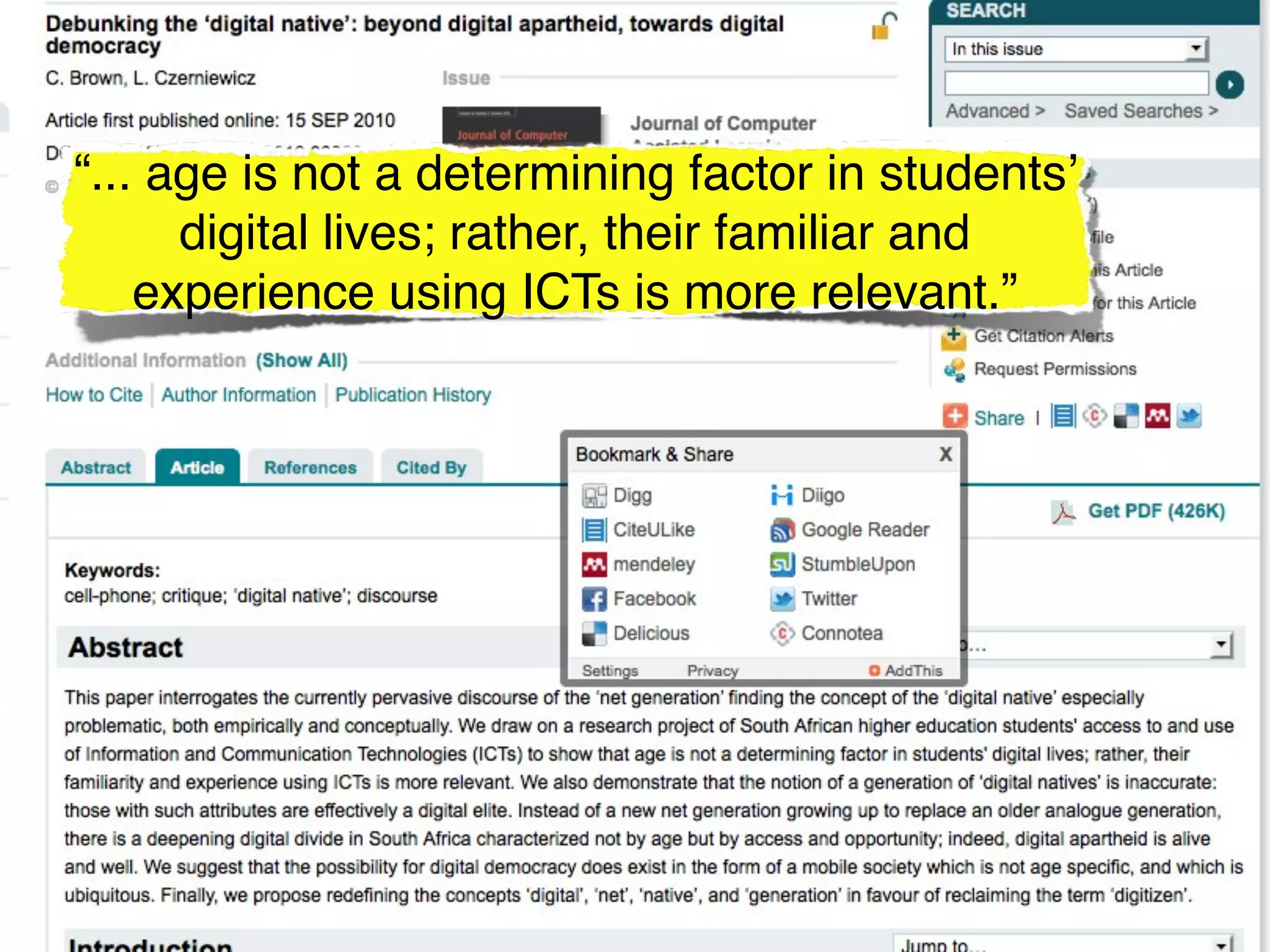
“... age is not a determining factor in students’
      digital lives; rather, their familiar and
    experience using ICTs is more relevant.”


       “... the notion of ‘digital natives’ is inaccurate:
         those with such attributes are effectively a
        digital elite. Instead of a new net generation
          growing up to replace an older analogue
            generation, there is a deepening digital
          divide ... characterized not by age but by
                    access and opportunity.”
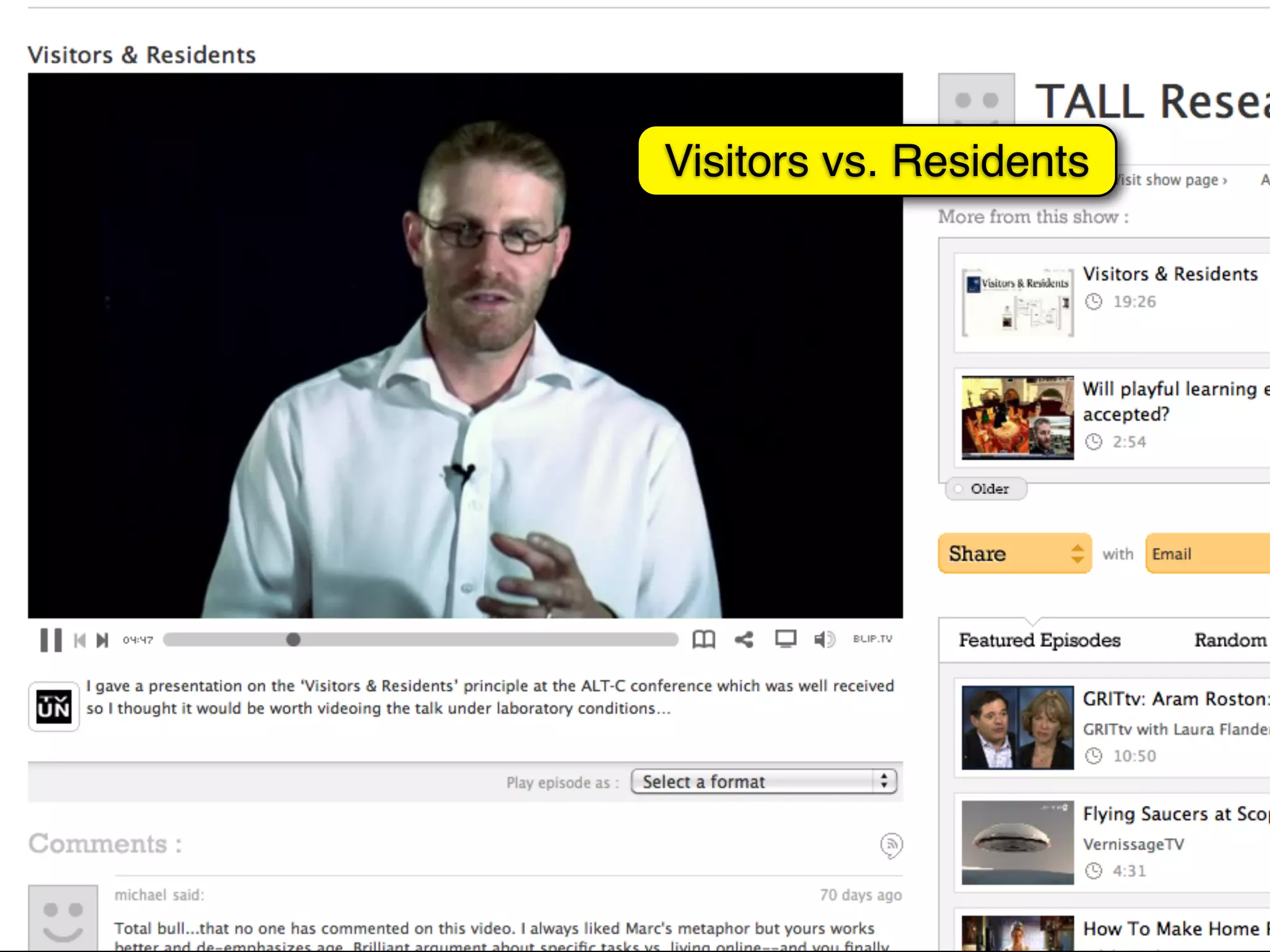
Visitors vs. Residents
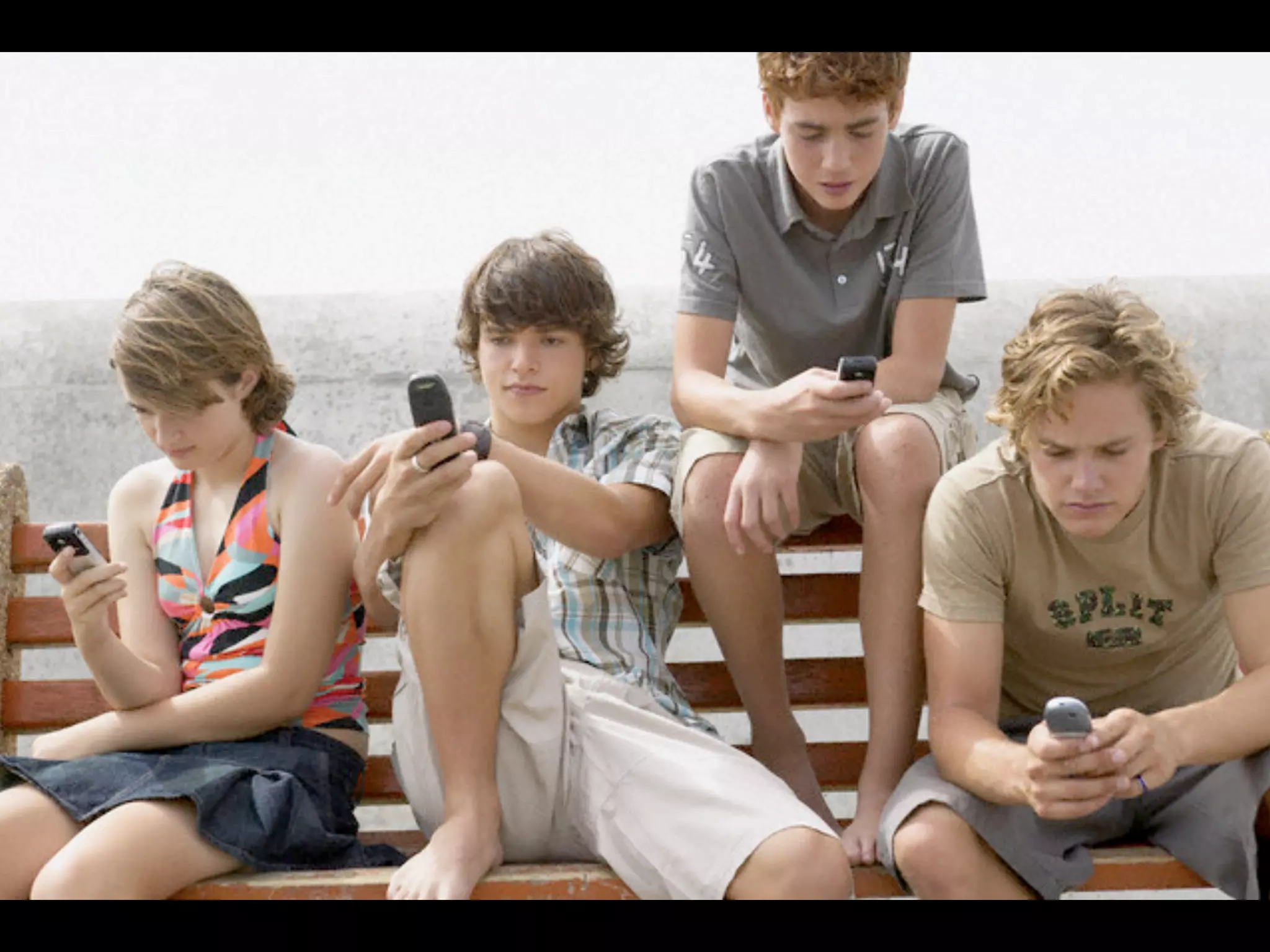
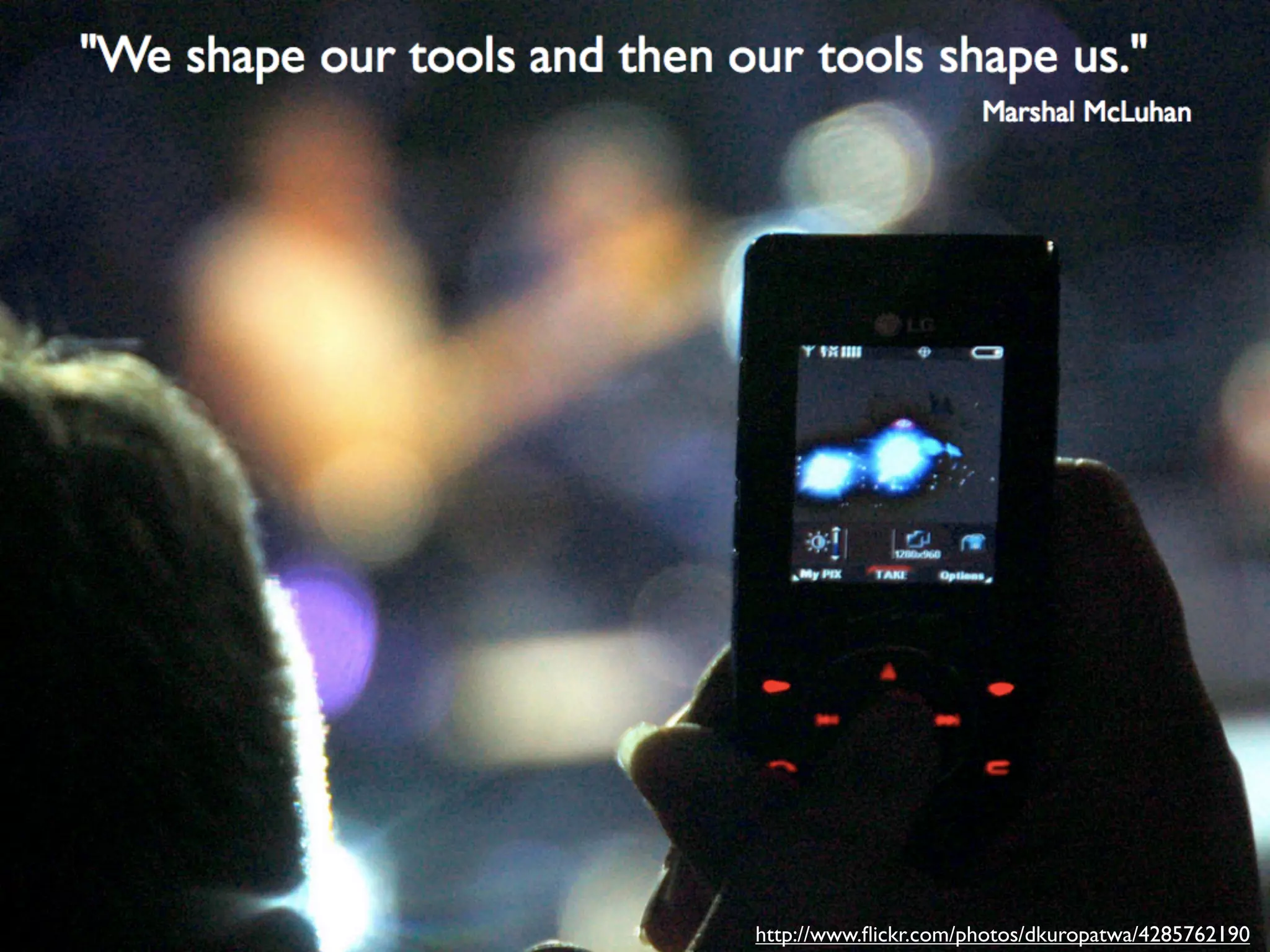
social disconnection?
http://www.flickr.com/photos/dkuropatwa/4285762190
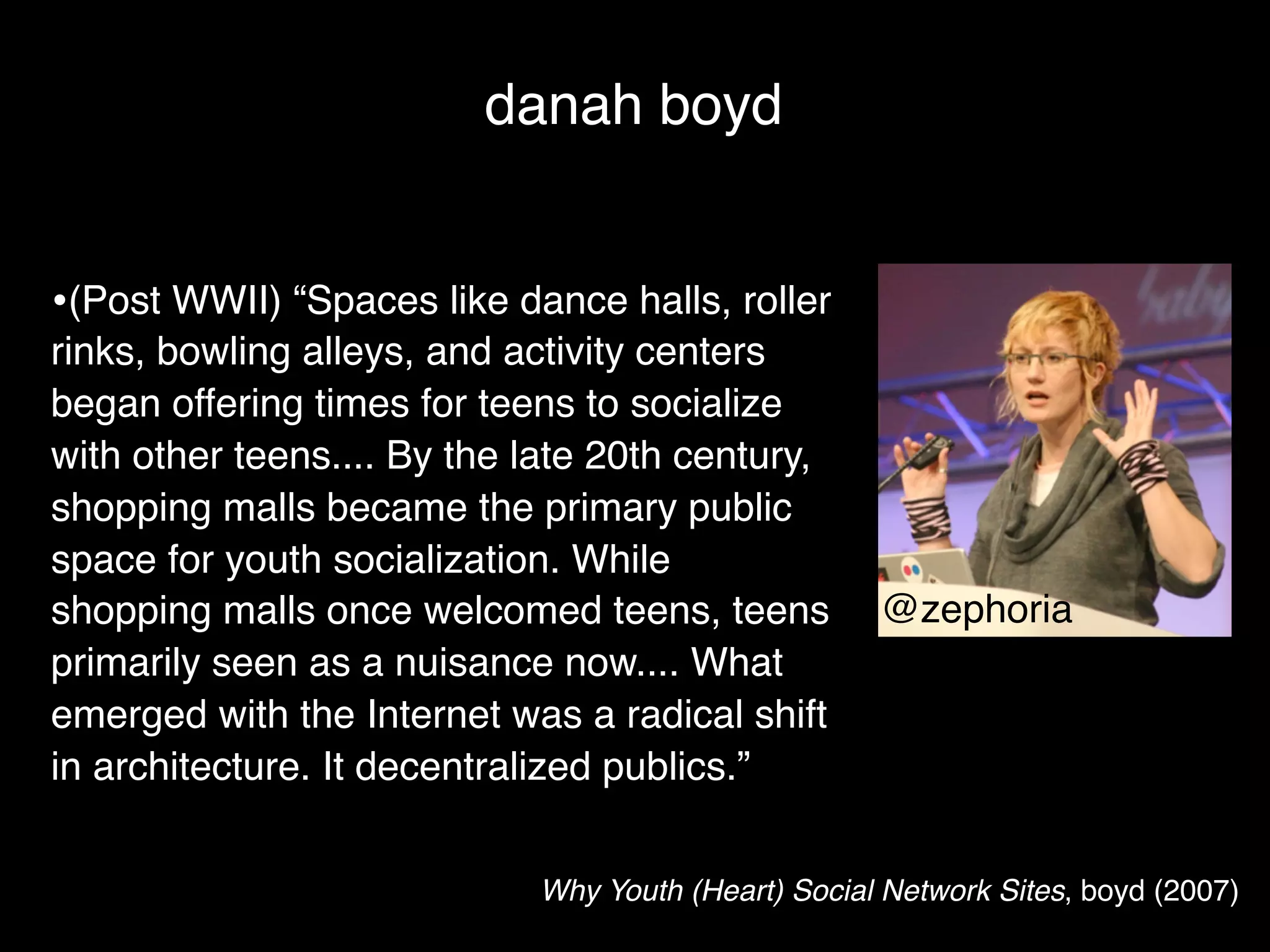
danah boyd


•(Post WWII) “Spaces like dance halls, roller
rinks, bowling alleys, and activity centers
began offering times for teens to socialize
with other teens.... By the late 20th century,
shopping malls became the primary public
space for youth socialization. While
shopping malls once welcomed teens, teens           @zephoria
primarily seen as a nuisance now.... What
emerged with the Internet was a radical shift
in architecture. It decentralized publics.”


                            Why Youth (Heart) Social Network Sites, boyd (2007)
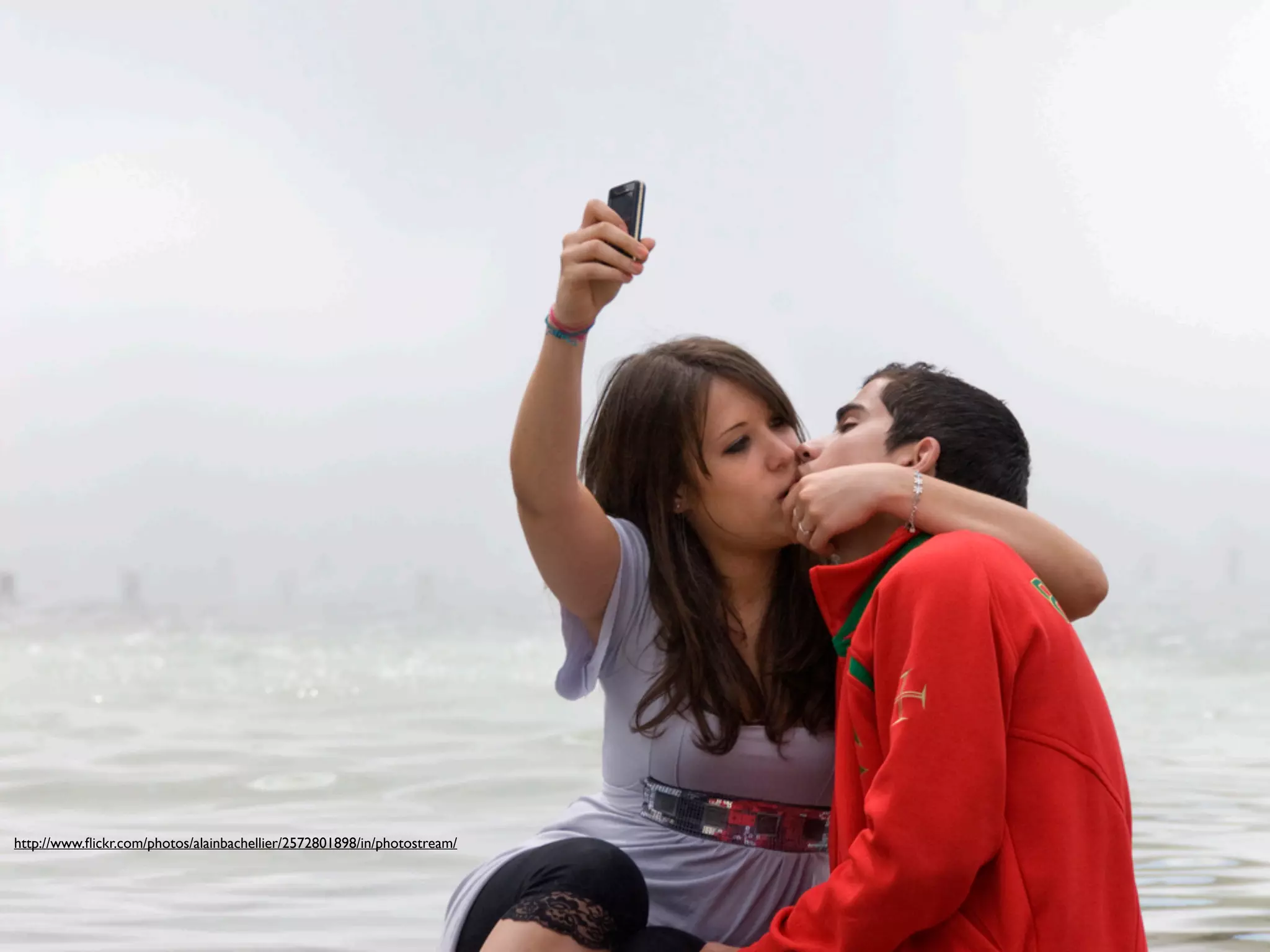
narcissism?
http://www.flickr.com/photos/alainbachellier/2572801898/in/photostream/
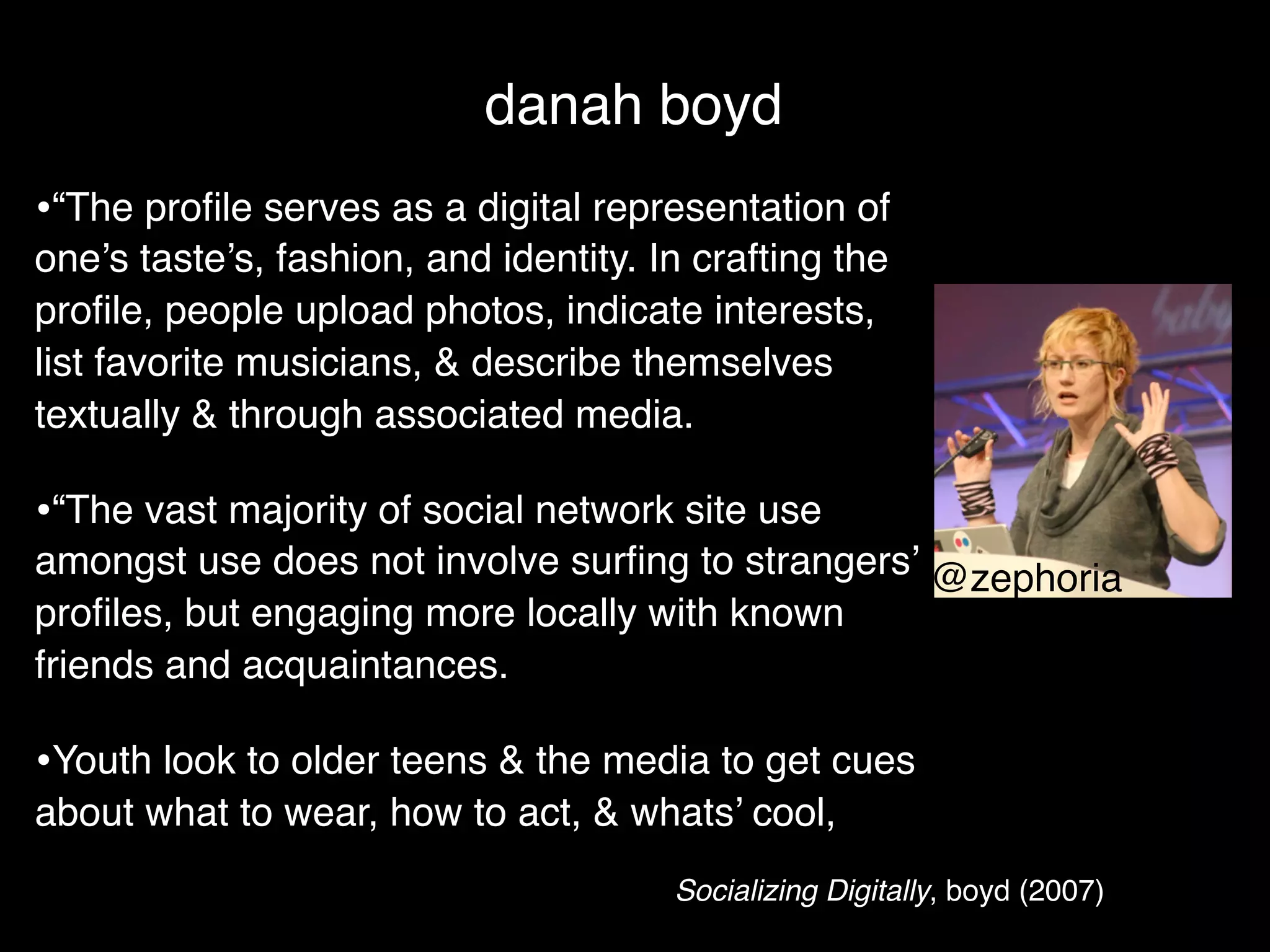
danah boyd
•“The profile serves as a digital representation of
one’s taste’s, fashion, and identity. In crafting the
profile, people upload photos, indicate interests,
list favorite musicians, & describe themselves
textually & through associated media.

•“The vast majority of social network site use
amongst use does not involve surfing to strangers’ @zephoria
profiles, but engaging more locally with known
friends and acquaintances.

•Youth look to older teens & the media to get cues
about what to wear, how to act, & whats’ cool,
                                       Socializing Digitally, boyd (2007)
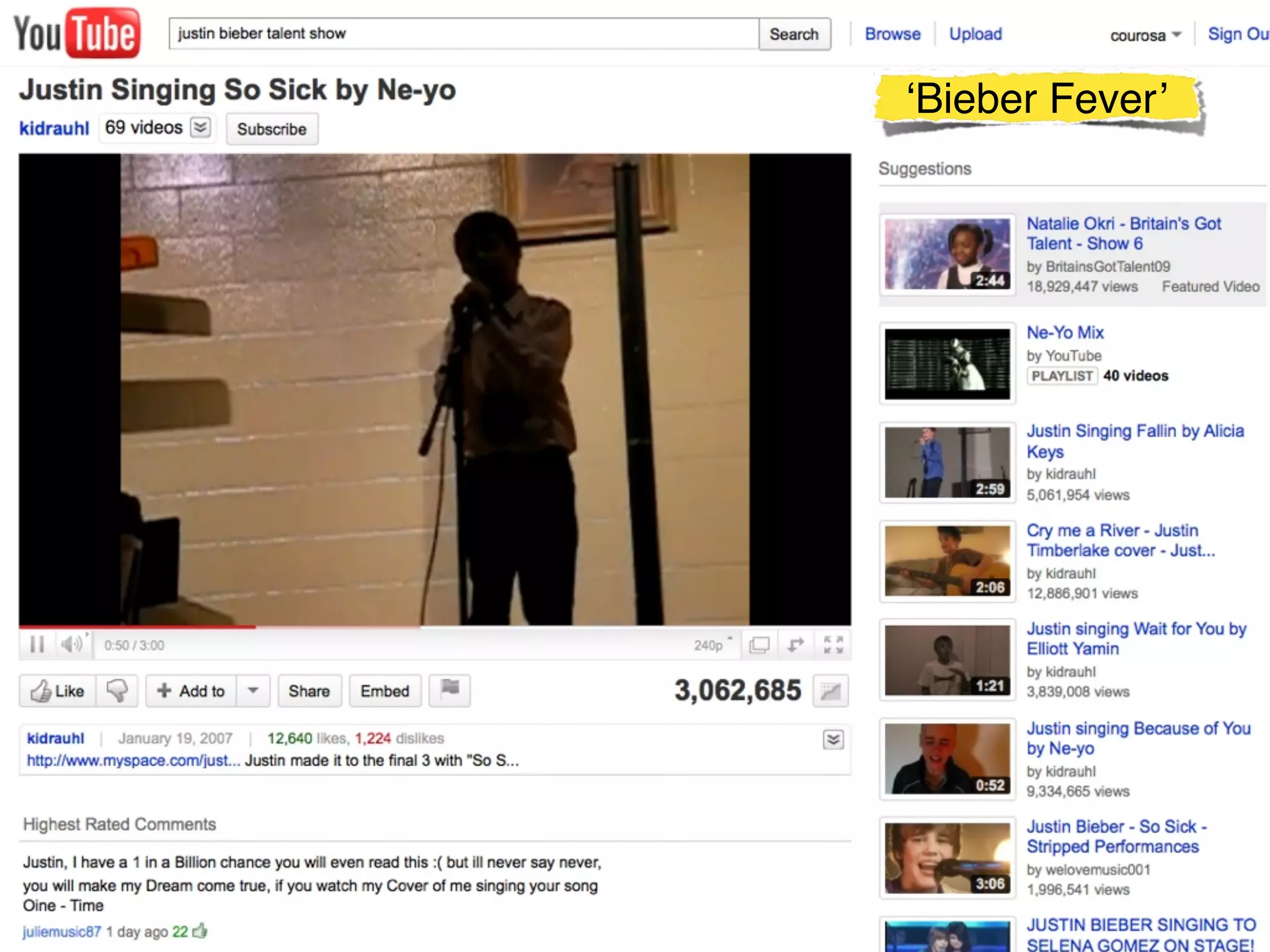
‘Bieber Fever’
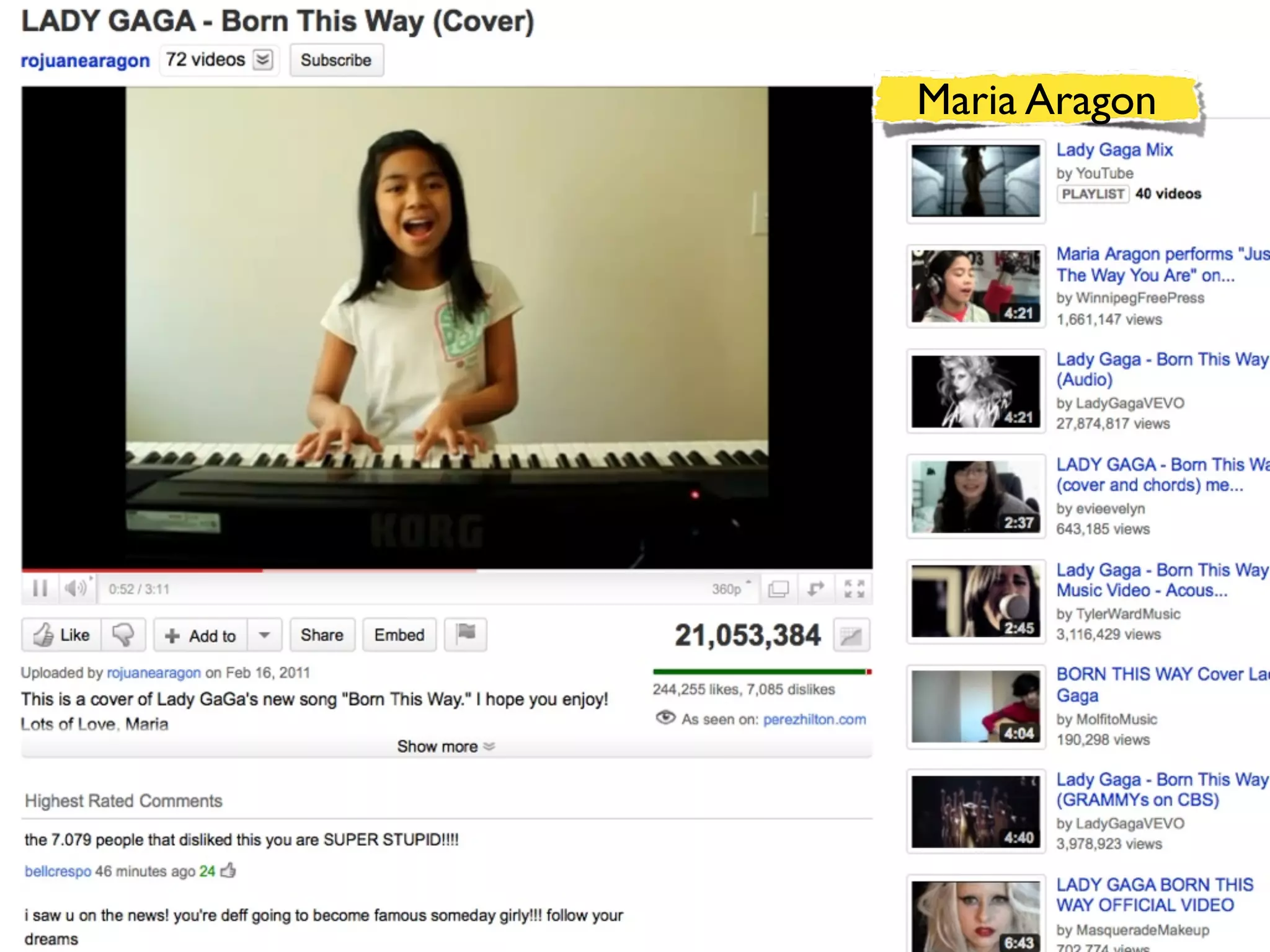
Maria Aragon
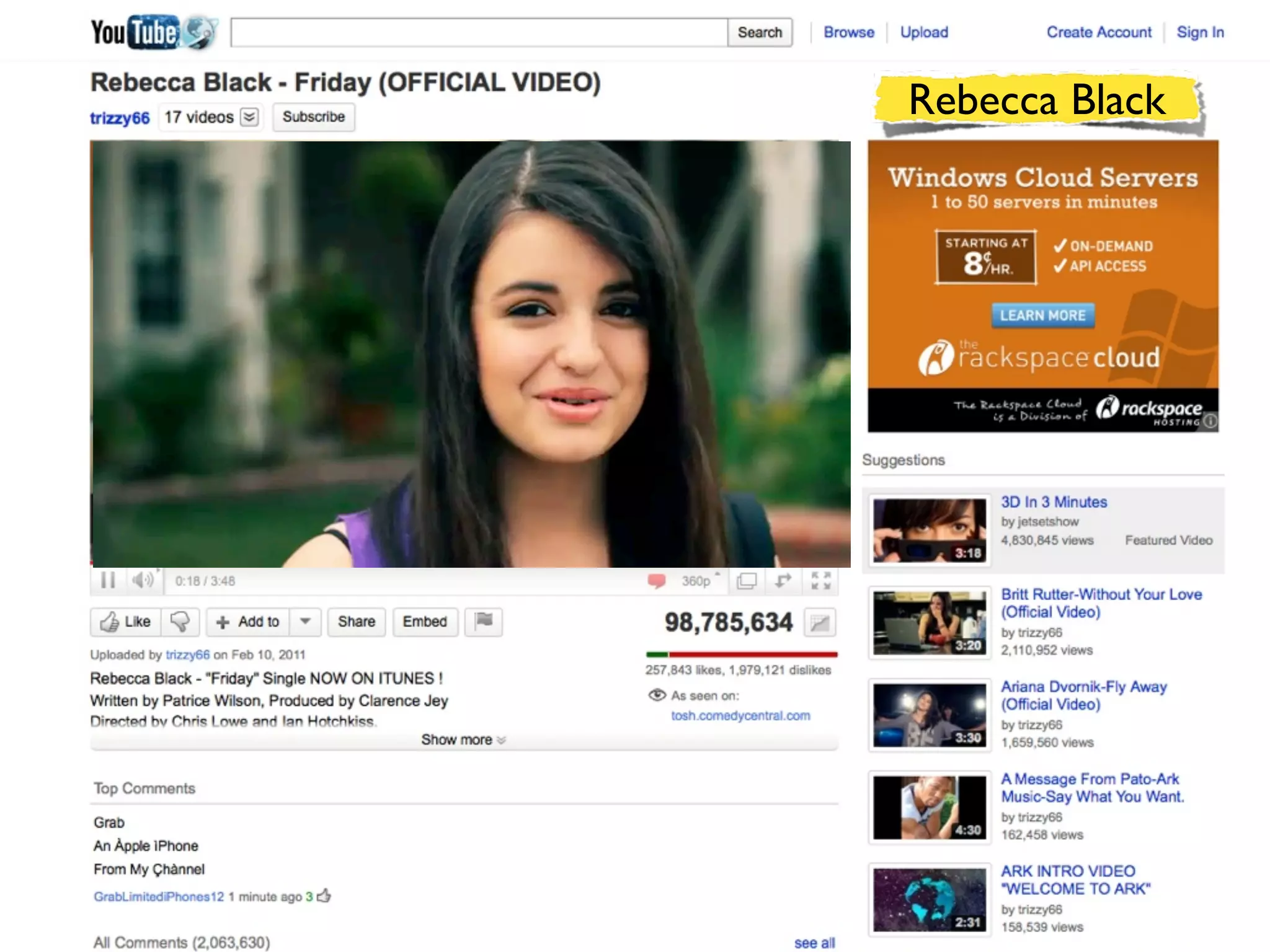
Rebecca Black
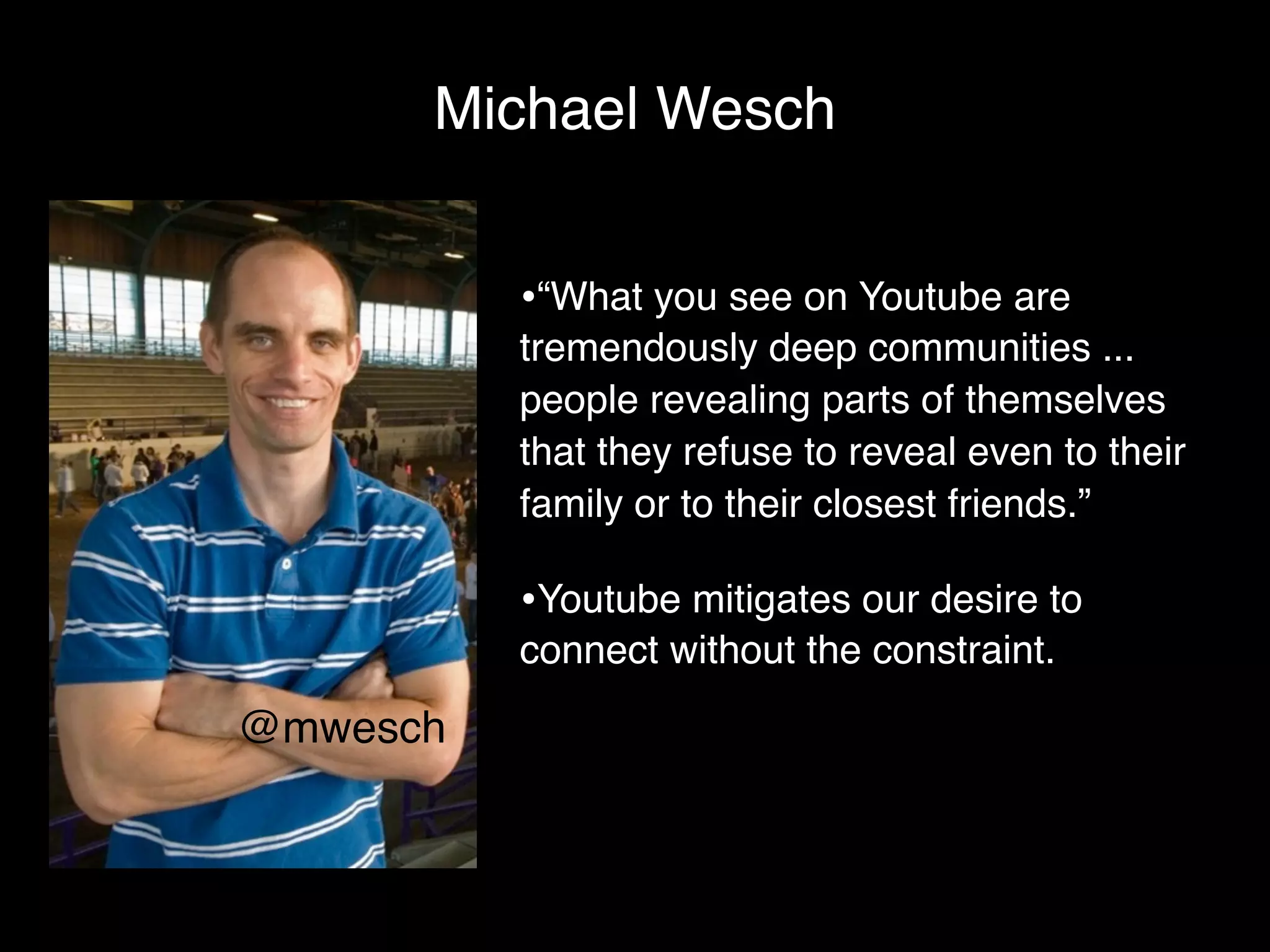
Michael Wesch


          •“What you see on Youtube are
          tremendously deep communities ...
          people revealing parts of themselves
          that they refuse to reveal even to their
          family or to their closest friends.”

          •Youtube mitigates our desire to
          connect without the constraint.

@mwesch
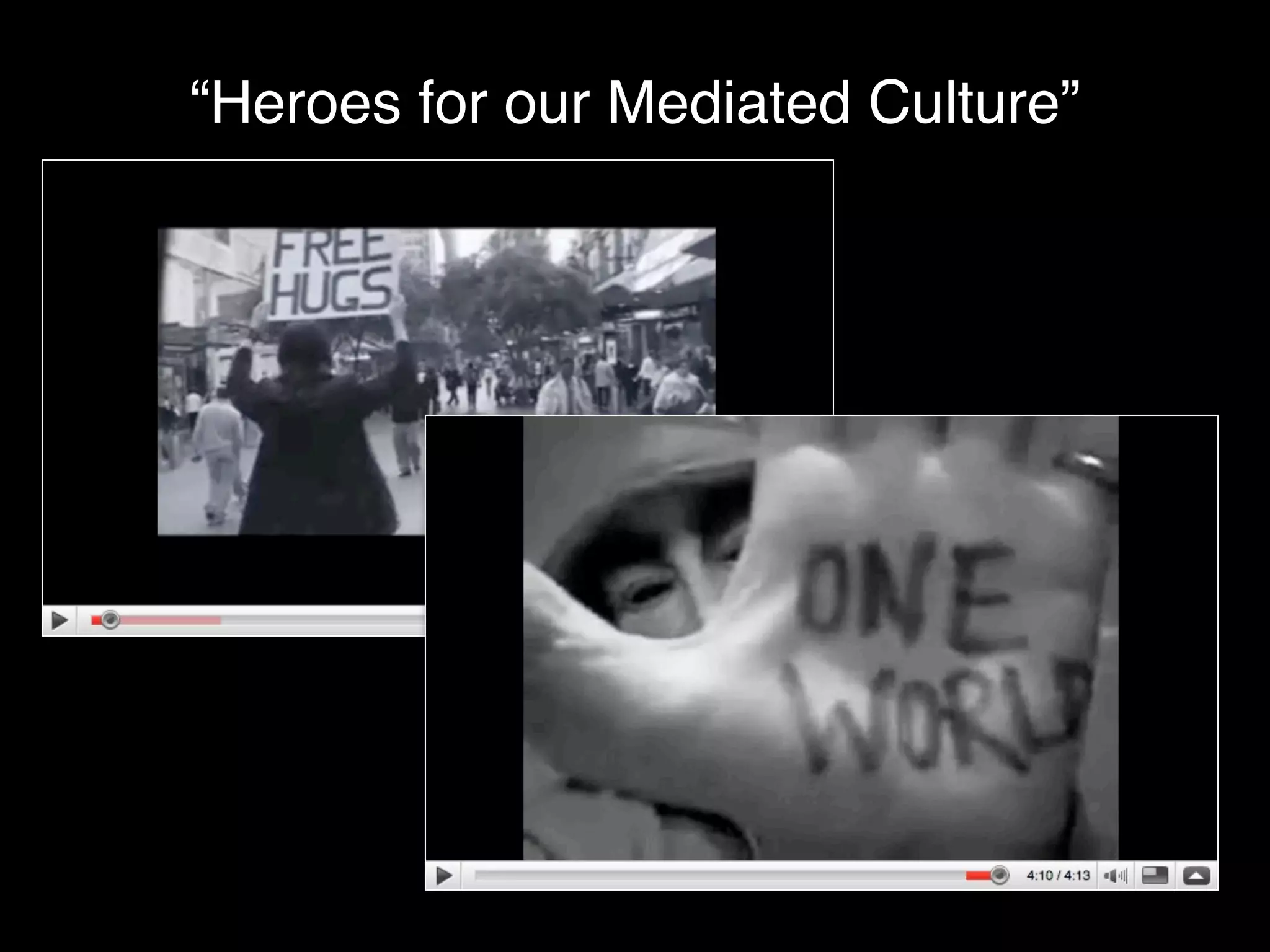
“Heroes for our Mediated Culture”
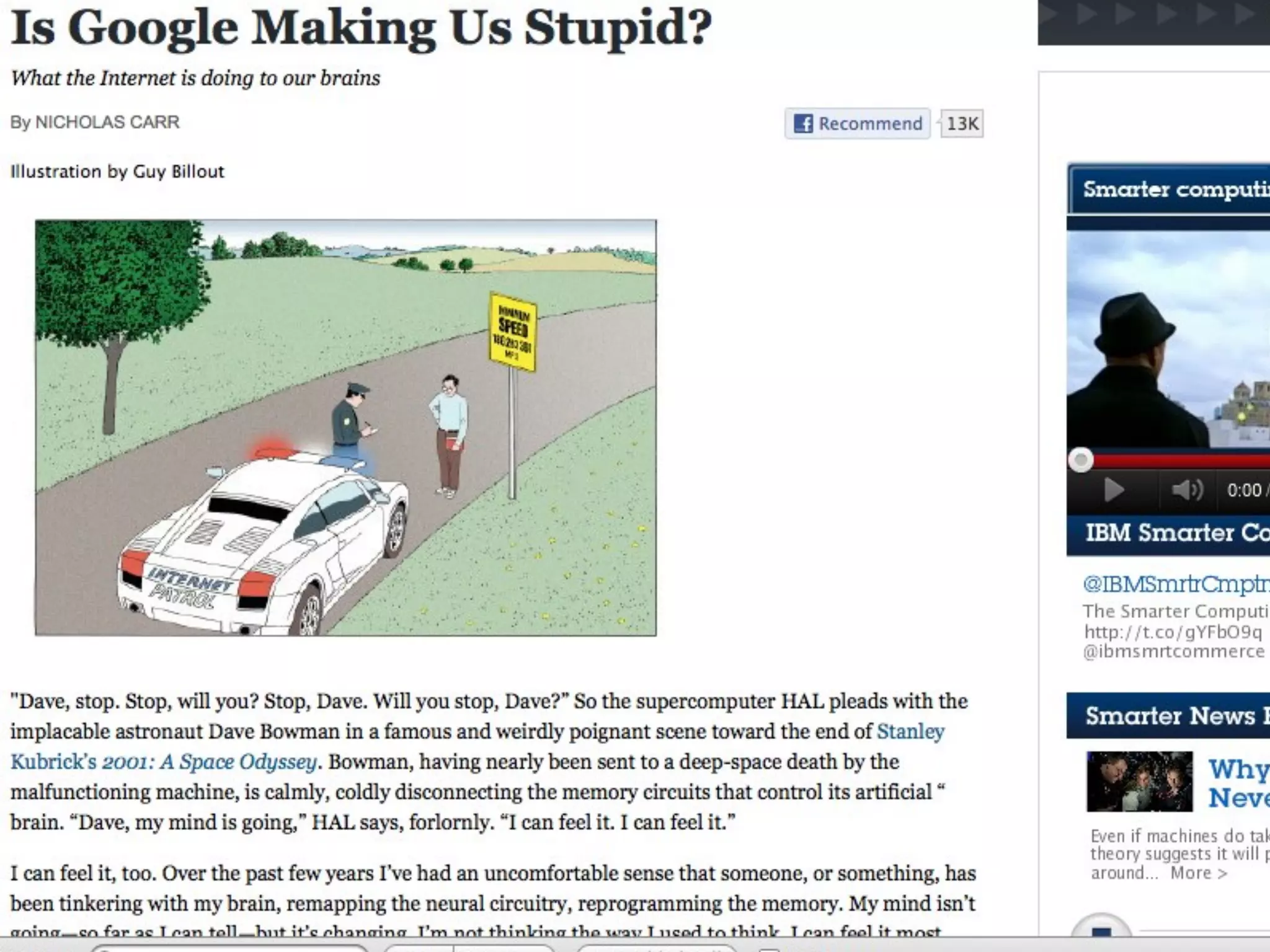
is tech making us stupid?
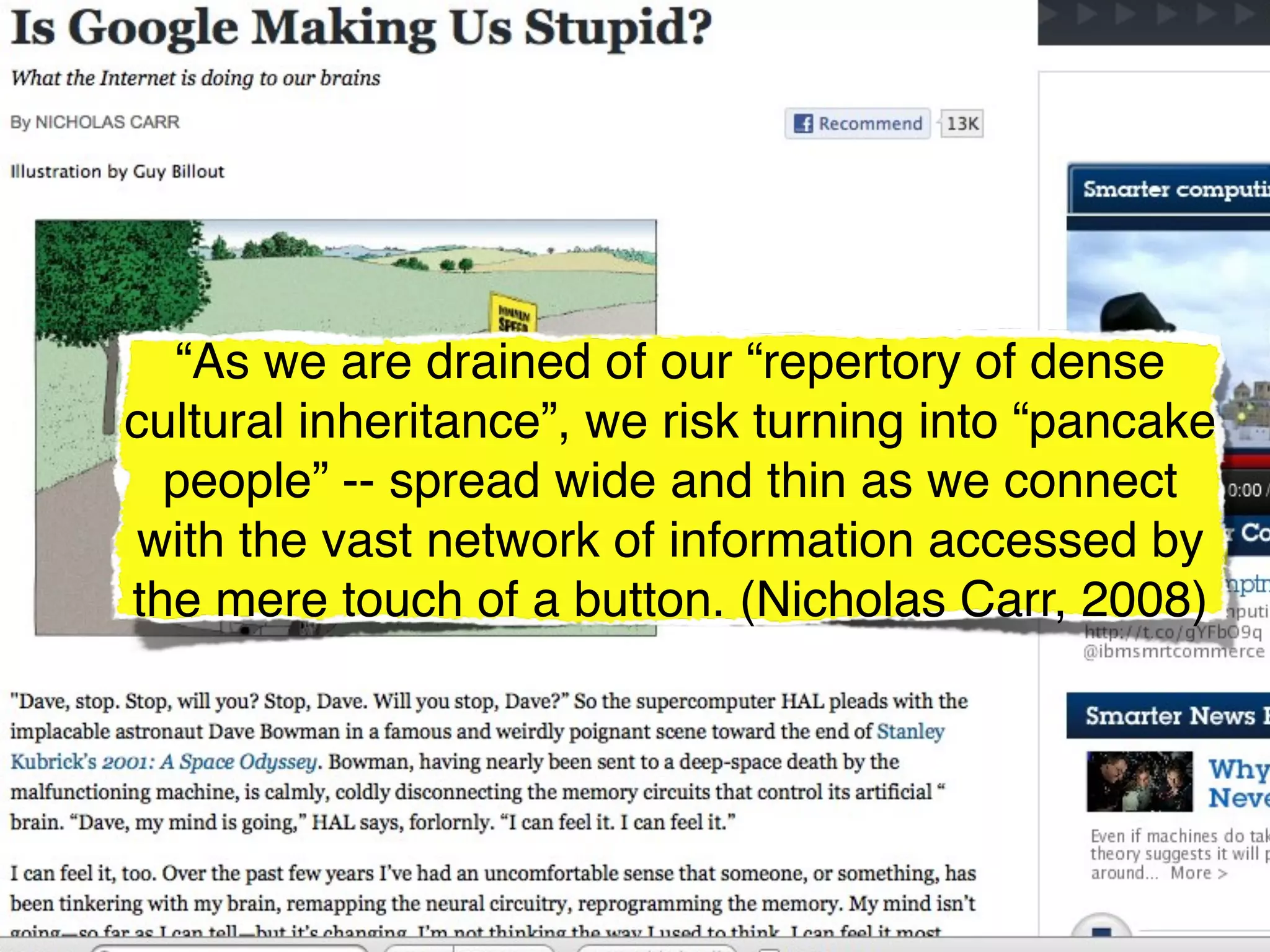
“As we are drained of our “repertory of dense
cultural inheritance”, we risk turning into “pancake
  people” -- spread wide and thin as we connect
 with the vast network of information accessed by
the mere touch of a button. (Nicholas Carr, 2008)
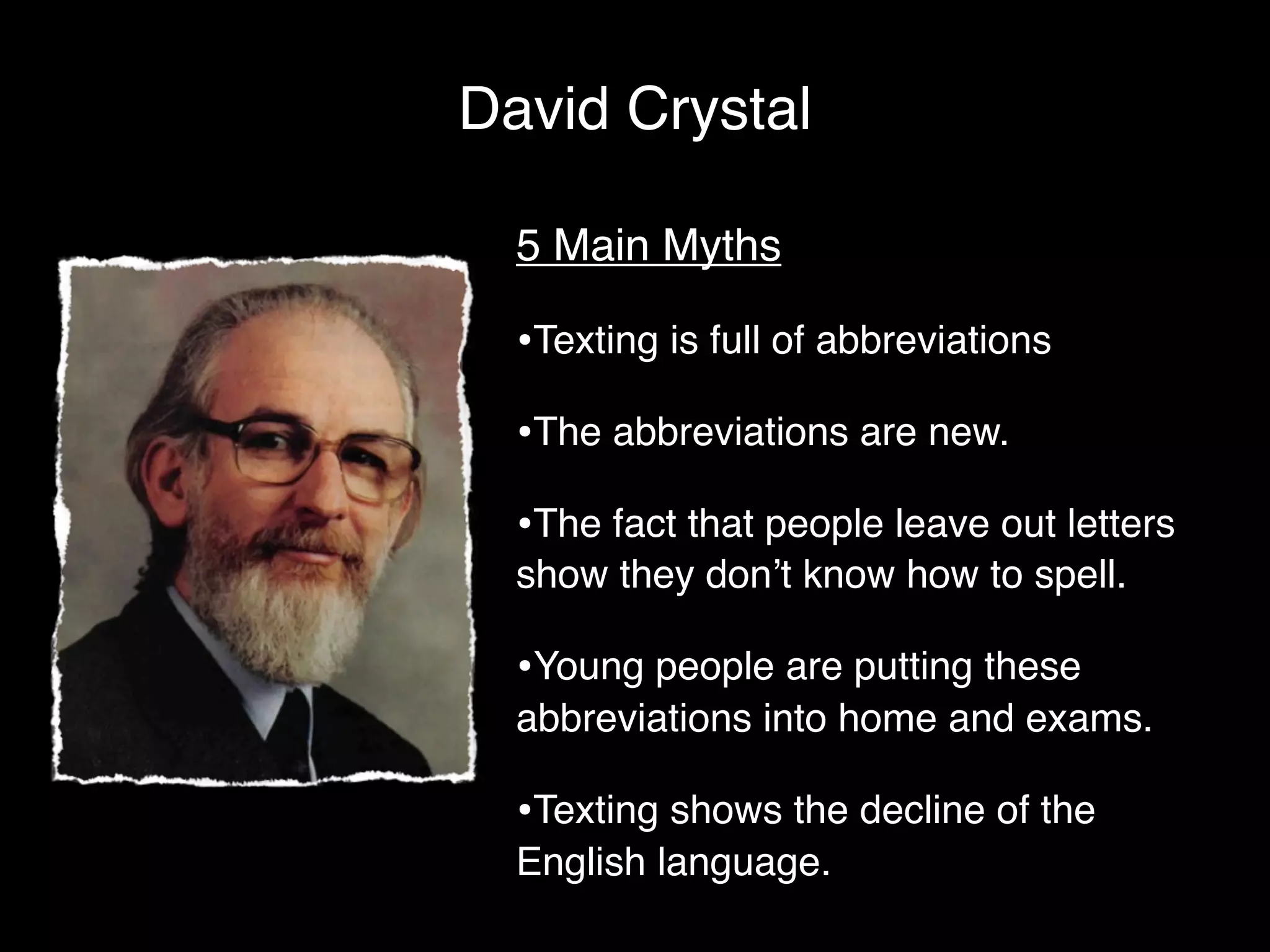
David Crystal

            5 Main Myths

            •Texting is full of abbreviations
            •The abbreviations are new.
            •The fact that people leave out letters
            show they don’t know how to spell.

            •Young people are putting these
@mwesch     abbreviations into home and exams.

            •Texting shows the decline of the
            English language.
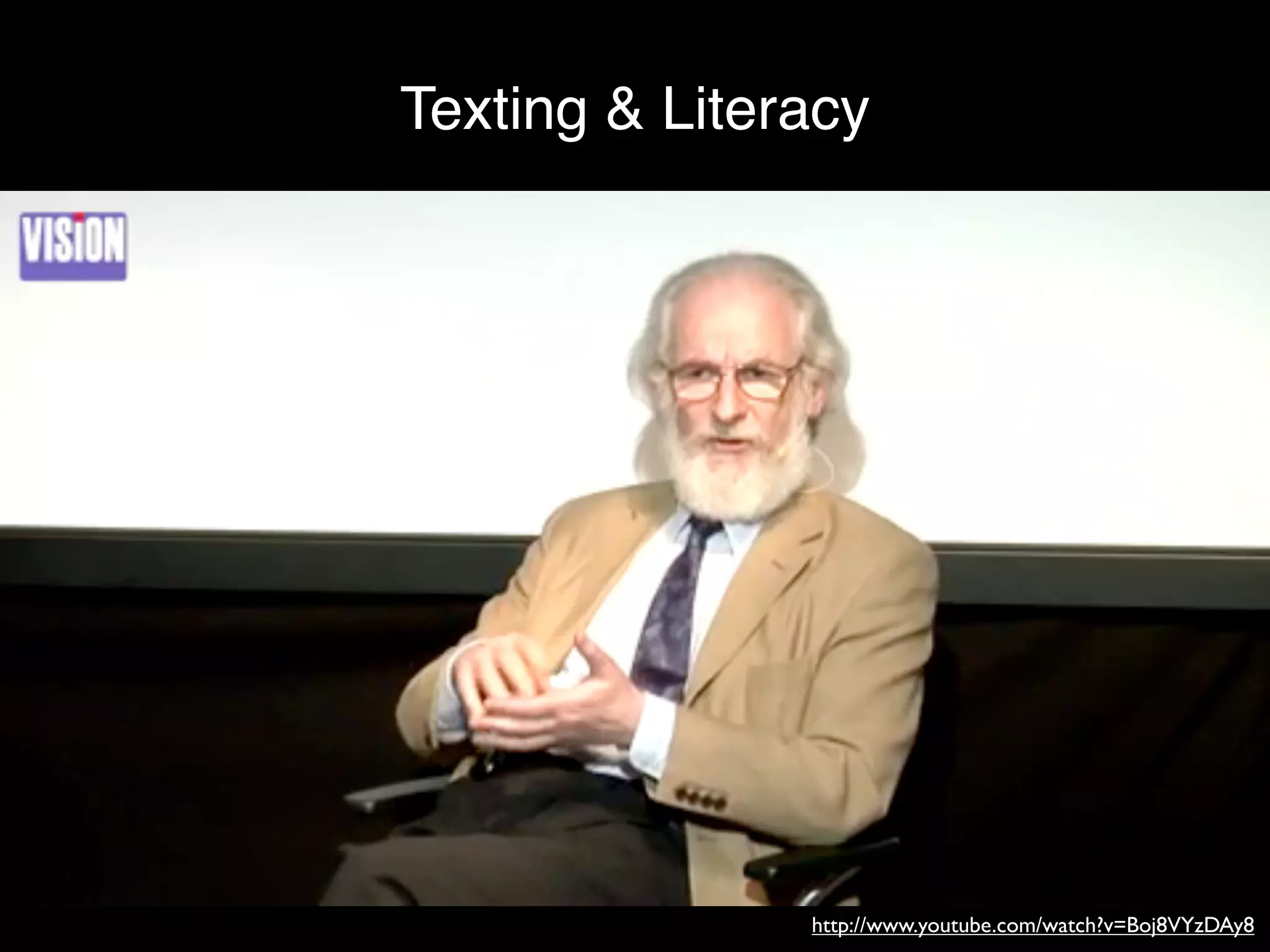
Texting & Literacy


               http://www.youtube.com/watch?v=Boj8VYzDAy8
Texting & Literacy


               http://www.youtube.com/watch?v=Boj8VYzDAy8
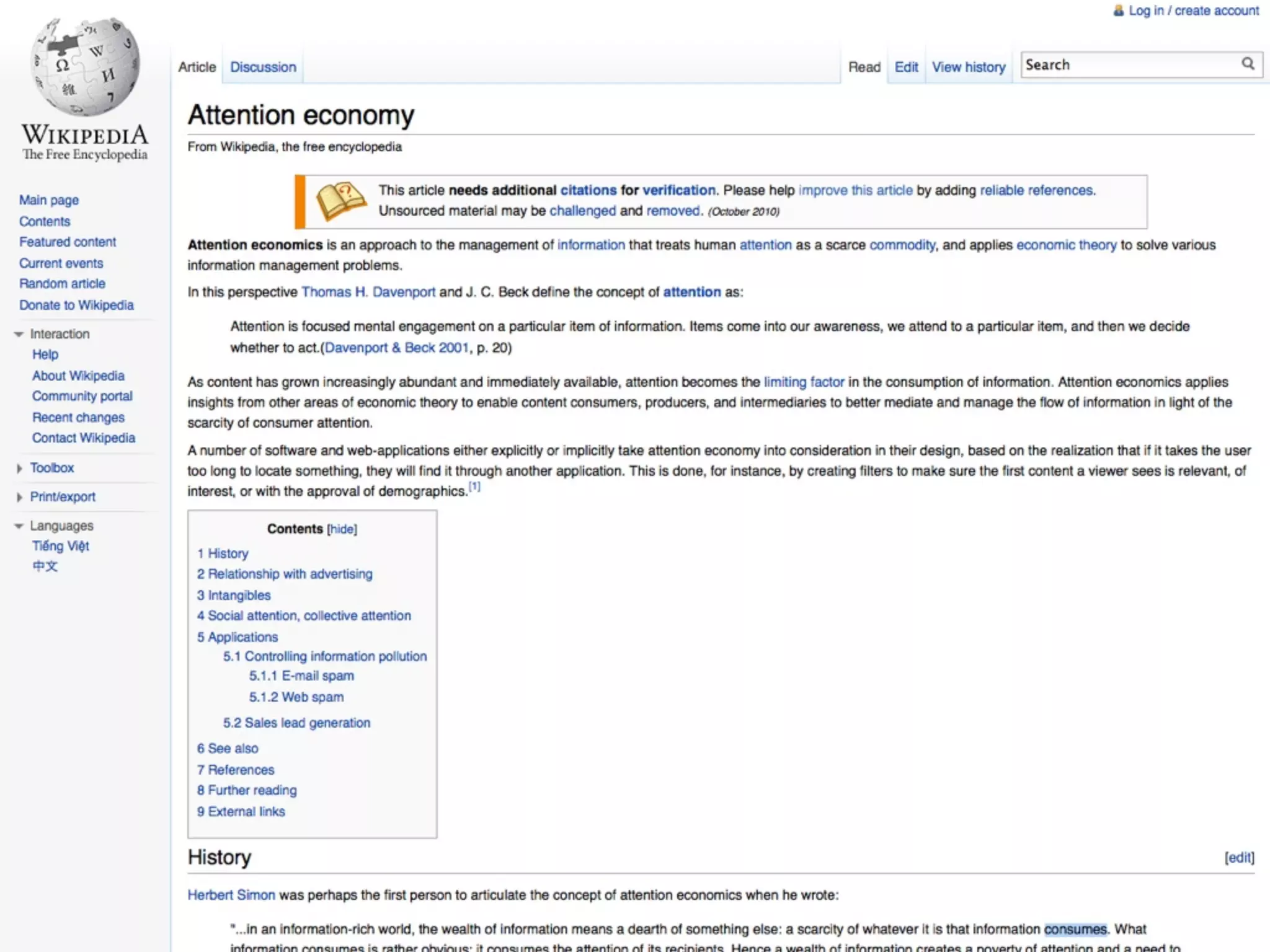
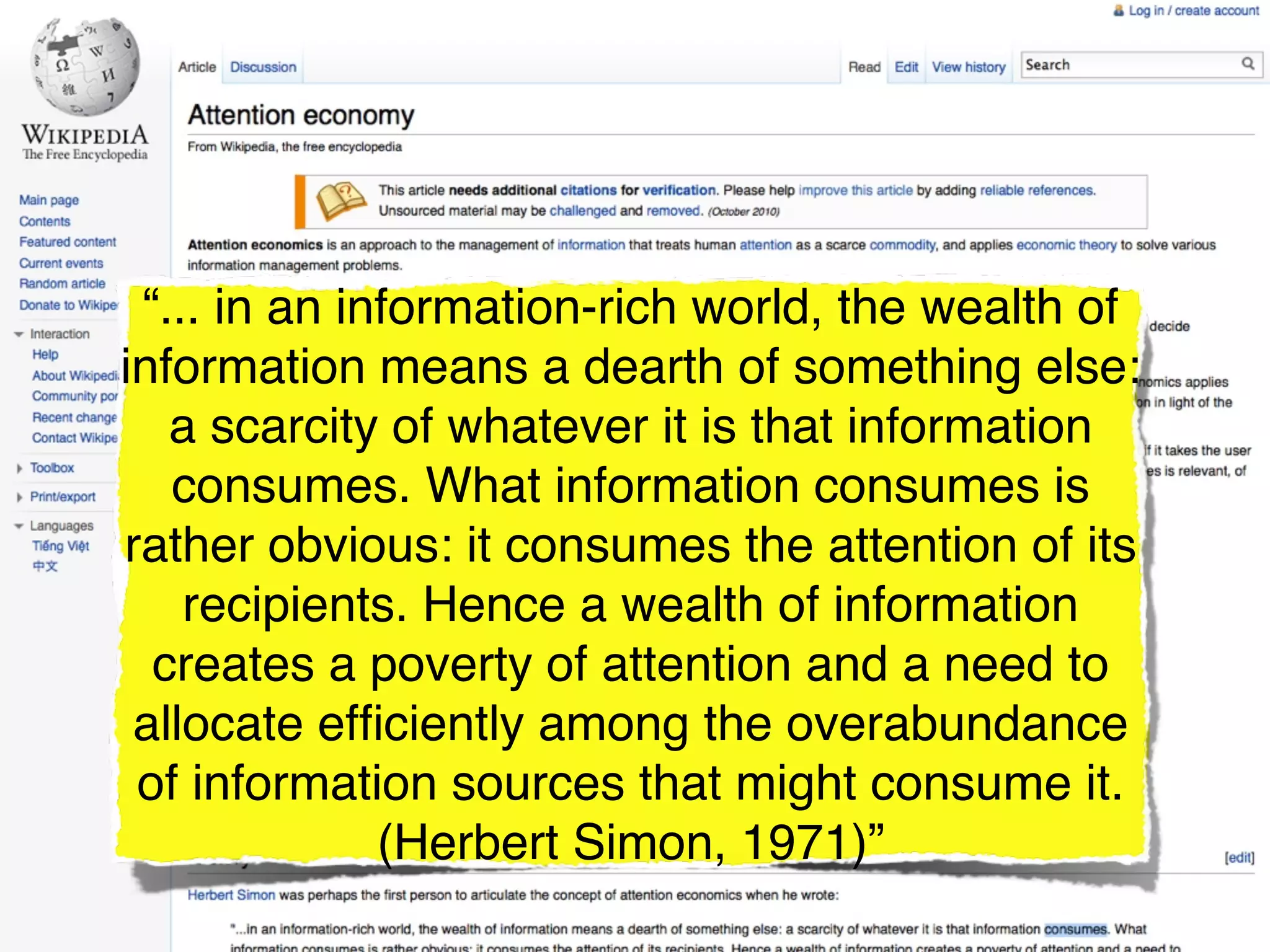
“... in an information-rich world, the wealth of
information means a dearth of something else:
   a scarcity of whatever it is that information
   consumes. What information consumes is
rather obvious: it consumes the attention of its
    recipients. Hence a wealth of information
  creates a poverty of attention and a need to
 allocate efficiently among the overabundance
 of information sources that might consume it.
              (Herbert Simon, 1971)”
practice
deep learning?
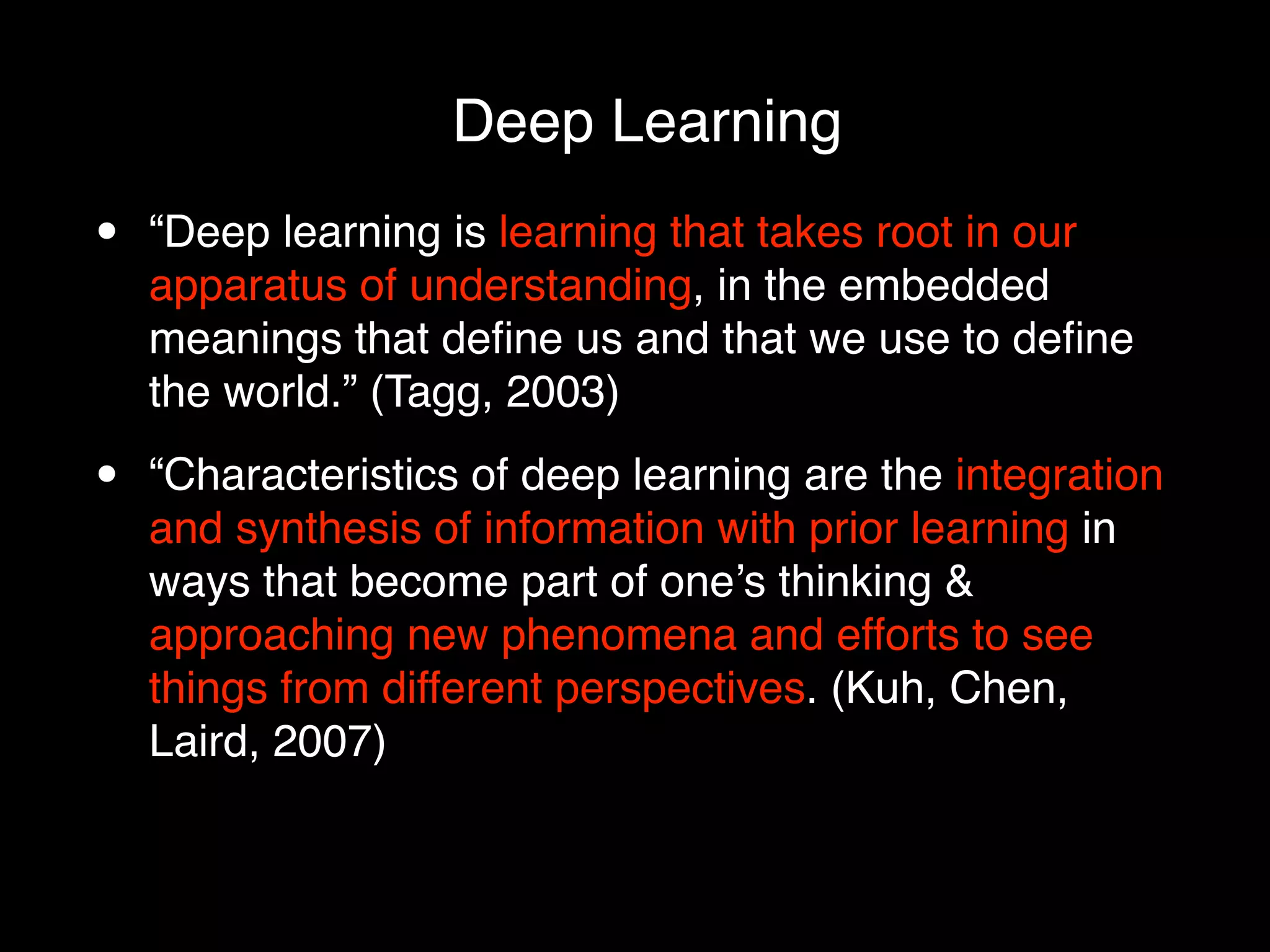
Deep Learning
•   “Deep learning is learning that takes root in our
    apparatus of understanding, in the embedded
    meanings that define us and that we use to define
    the world.” (Tagg, 2003)

•   “Characteristics of deep learning are the integration
    and synthesis of information with prior learning in
    ways that become part of one’s thinking &
    approaching new phenomena and efforts to see
    things from different perspectives. (Kuh, Chen,
    Laird, 2007)
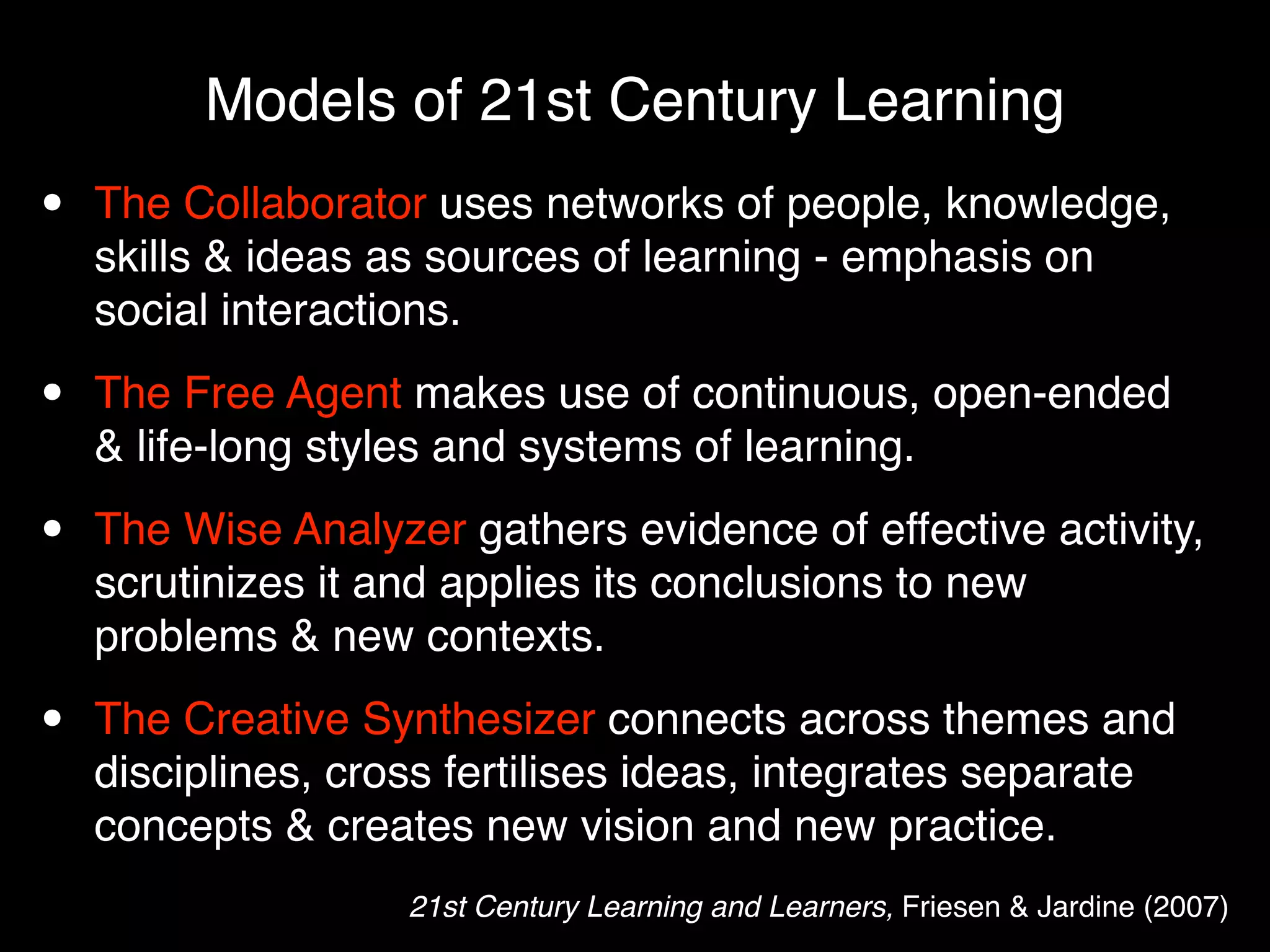
Models of 21st Century Learning
•   The Collaborator uses networks of people, knowledge,
    skills & ideas as sources of learning - emphasis on
    social interactions.

•   The Free Agent makes use of continuous, open-ended
    & life-long styles and systems of learning.

•   The Wise Analyzer gathers evidence of effective activity,
    scrutinizes it and applies its conclusions to new
    problems & new contexts.

•   The Creative Synthesizer connects across themes and
    disciplines, cross fertilises ideas, integrates separate
    concepts & creates new vision and new practice.
                    21st Century Learning and Learners, Friesen & Jardine (2007)
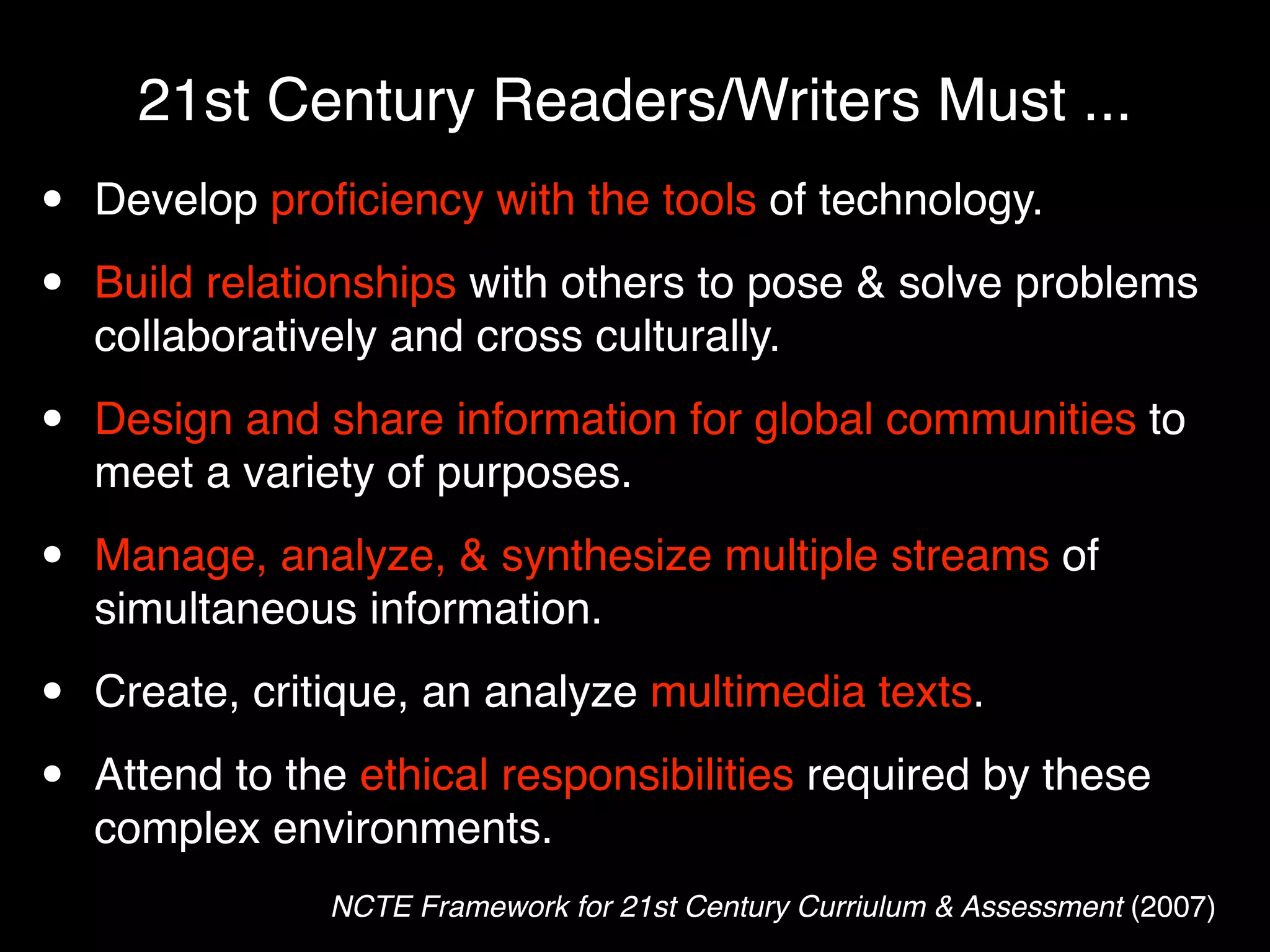
21st Century Readers/Writers Must ...
•   Develop proficiency with the tools of technology.

•   Build relationships with others to pose & solve problems
    collaboratively and cross culturally.

•   Design and share information for global communities to
    meet a variety of purposes.

•   Manage, analyze, & synthesize multiple streams of
    simultaneous information.

•   Create, critique, an analyze multimedia texts.

•   Attend to the ethical responsibilities required by these
    complex environments.
                NCTE Framework for 21st Century Curriulum & Assessment (2007)
Example #1: Using Relevant Modes


                            Jenny Johns
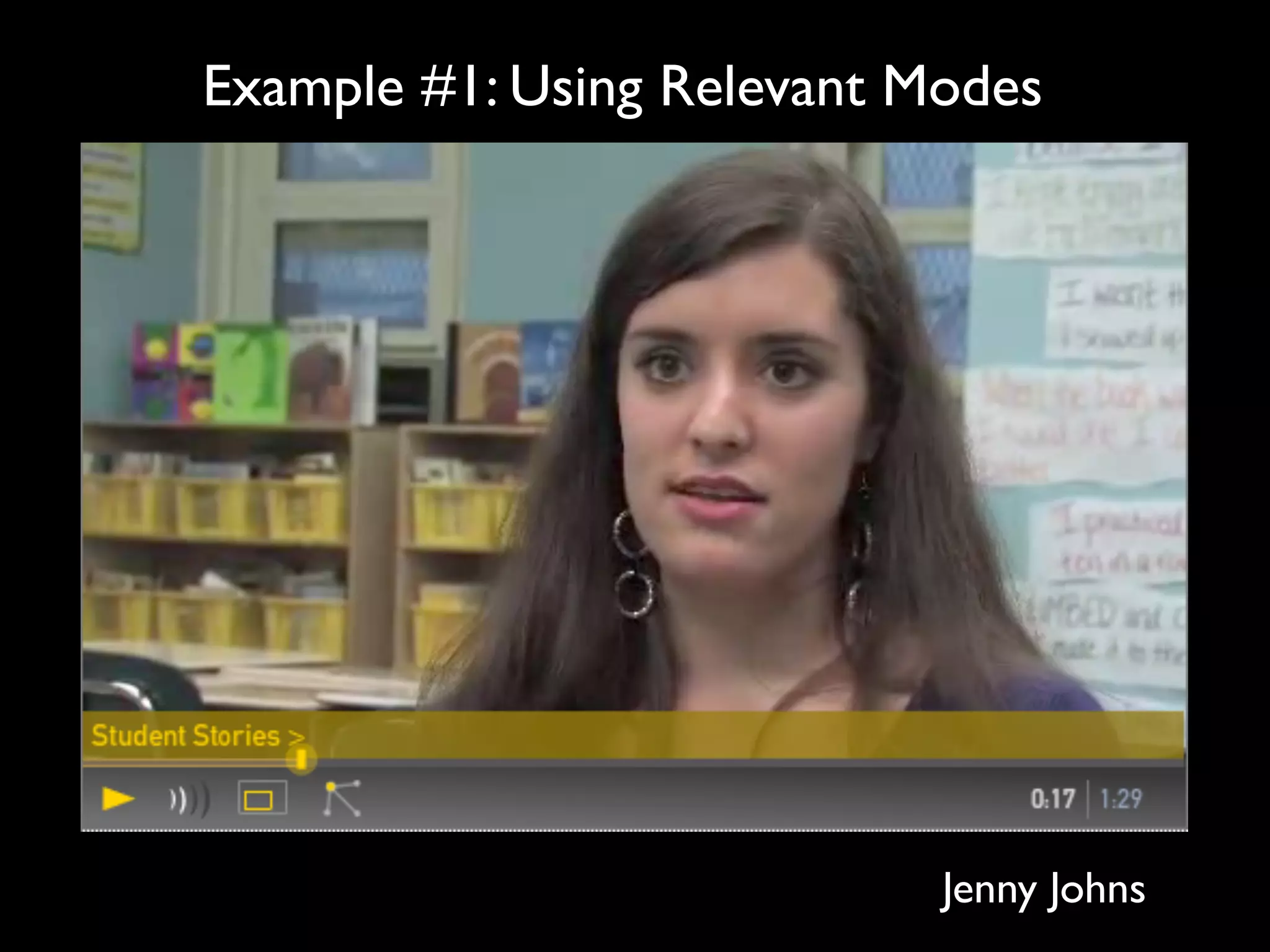
Example #1: Using Relevant Modes


                            Jenny Johns
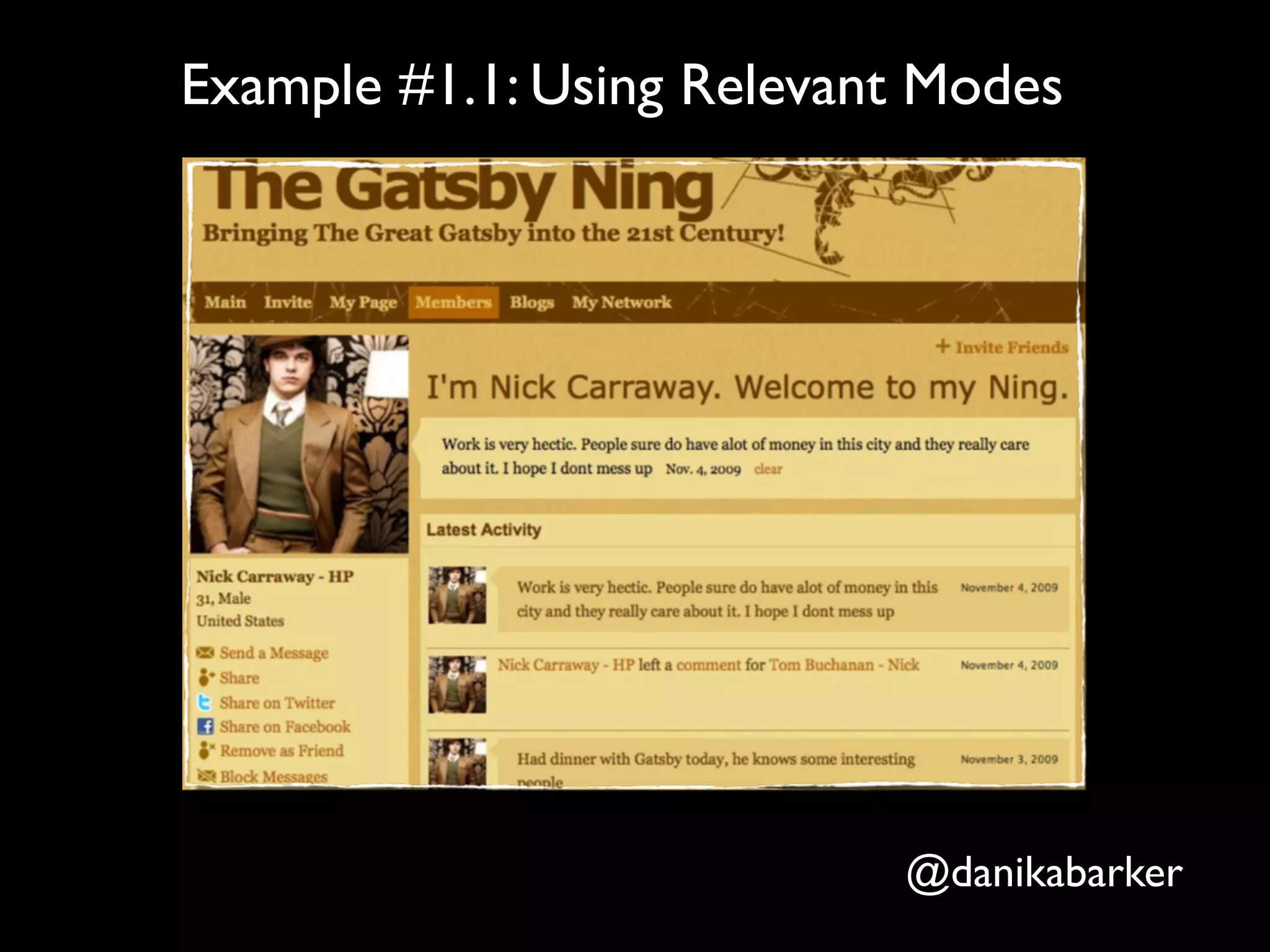
Example #1.1: Using Relevant Modes


                           @danikabarker
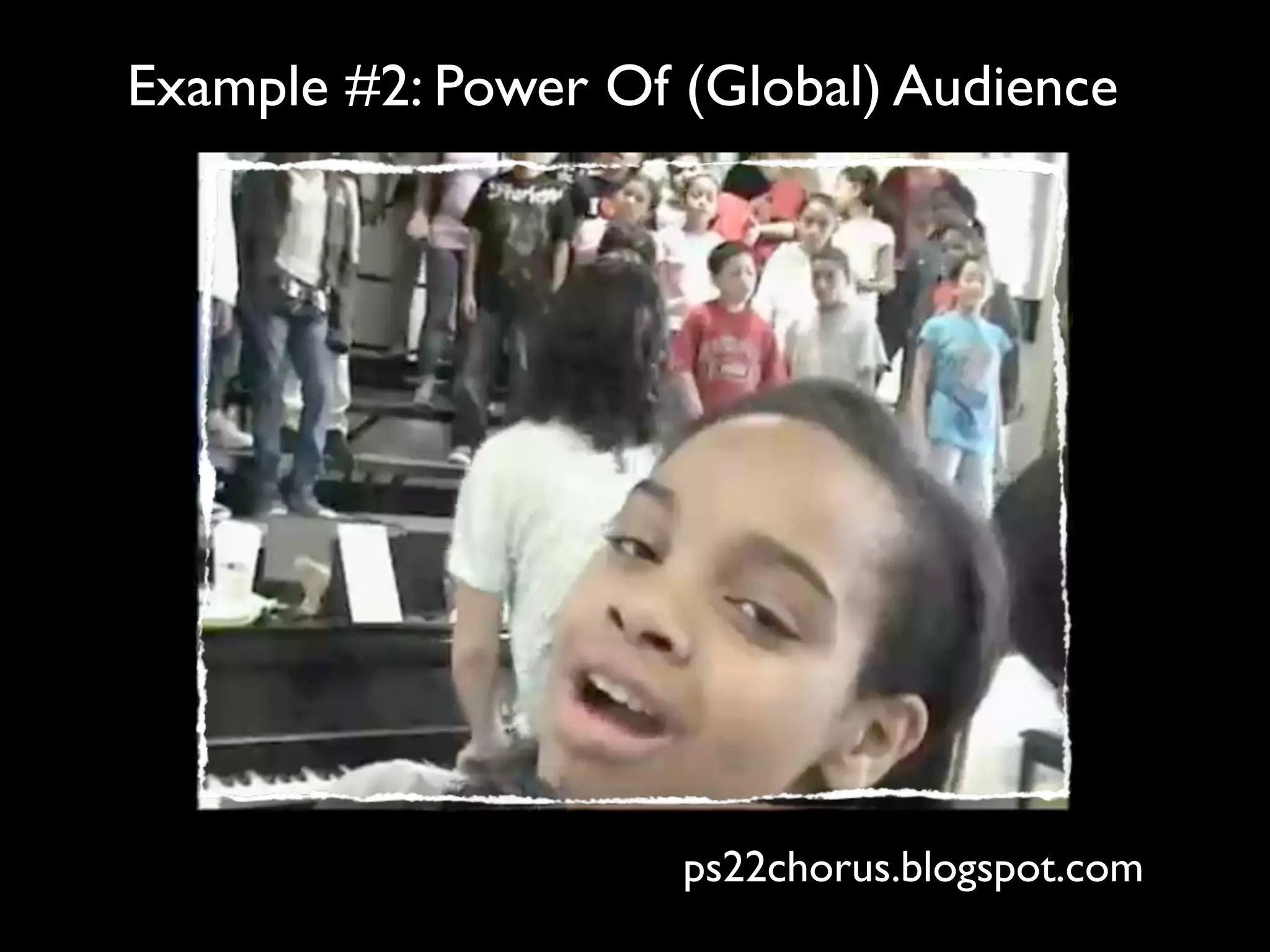
Example #2: Power Of (Global) Audience


                     ps22chorus.blogspot.com
Example #2: Power Of (Global) Audience


                     ps22chorus.blogspot.com
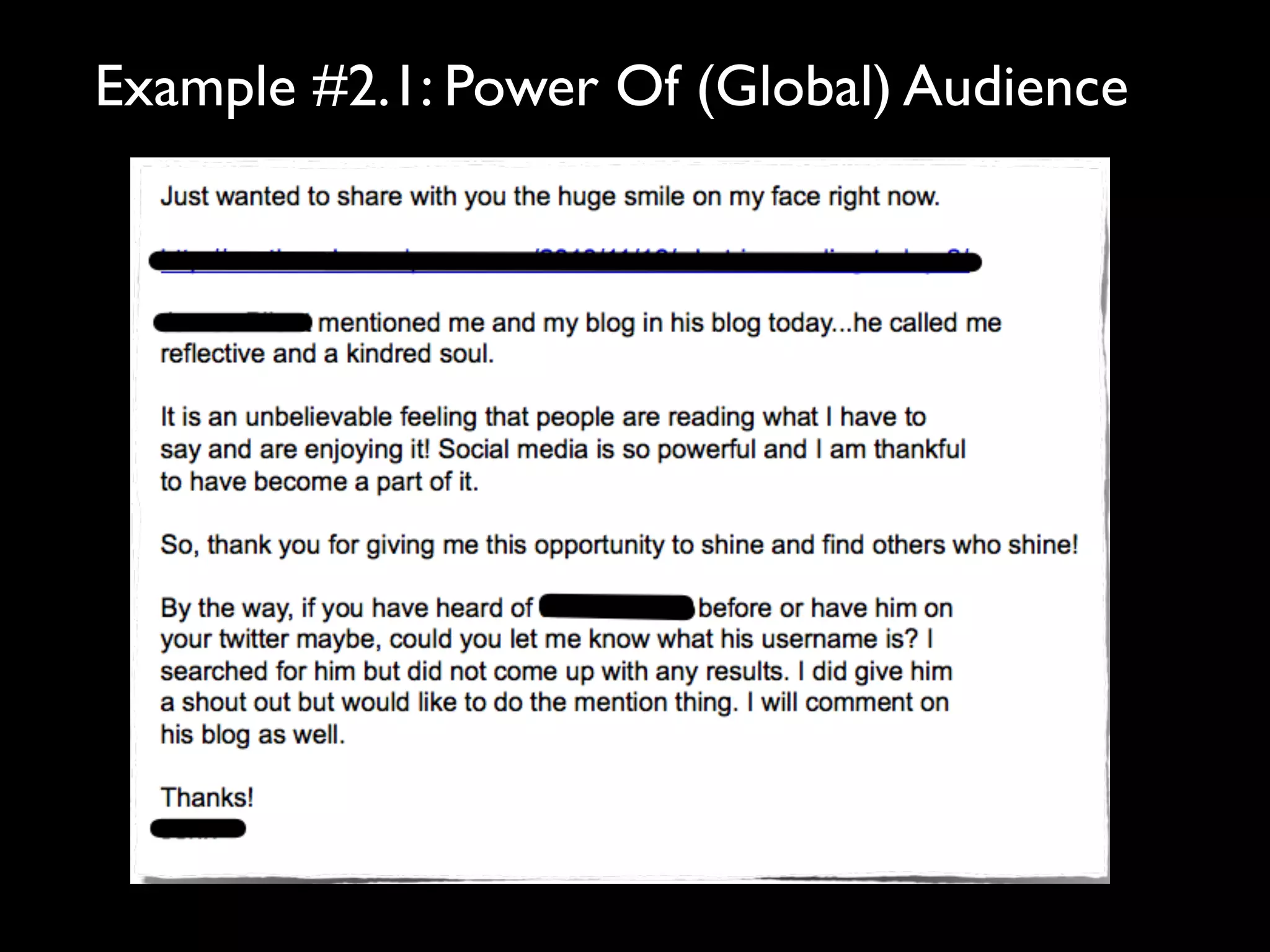
Example #2.1: Power Of (Global) Audience
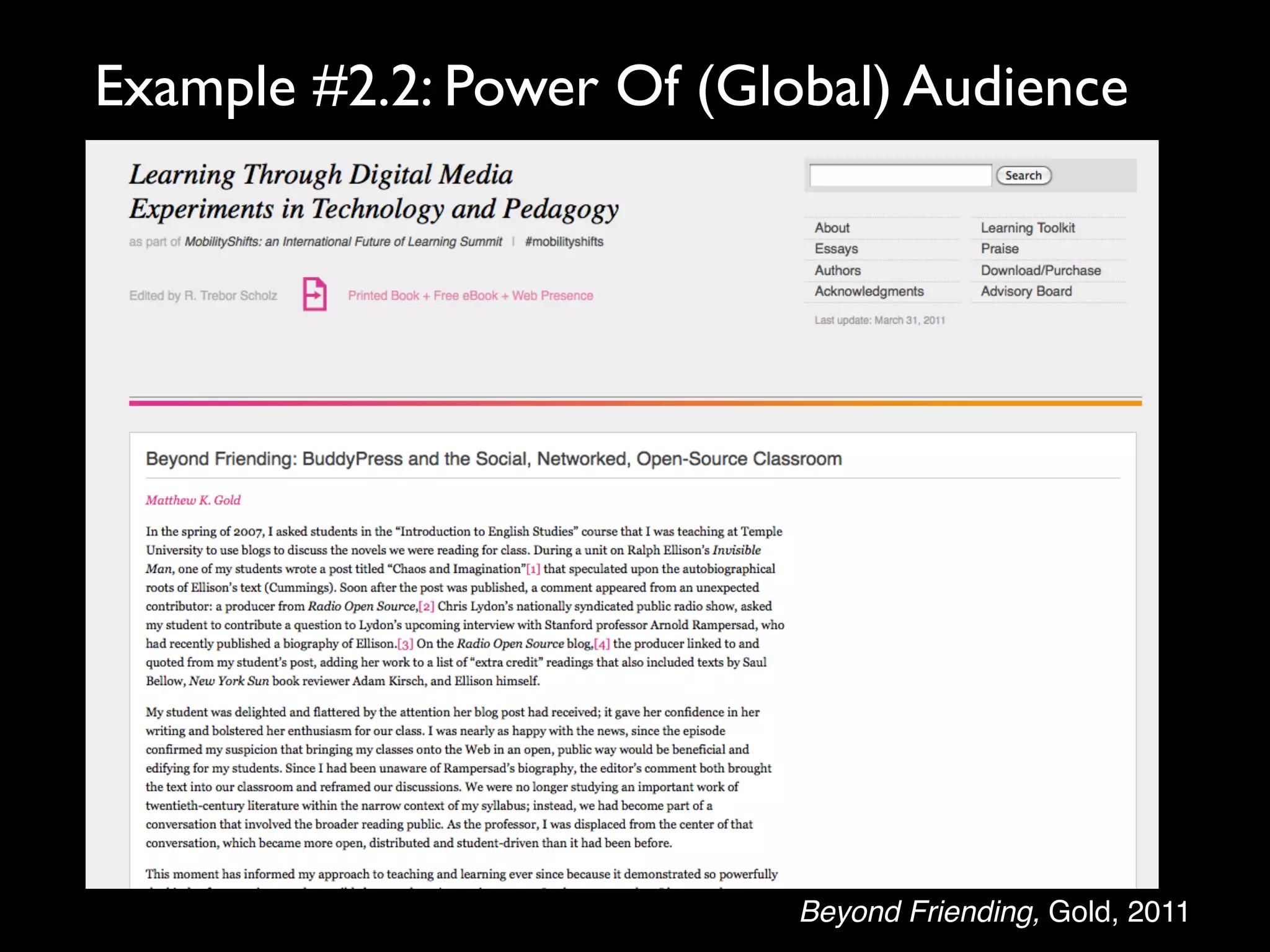
Example #2.2: Power Of (Global) Audience


                           Beyond Friending, Gold, 2011
Example #2.2: Power Of (Global) Audience


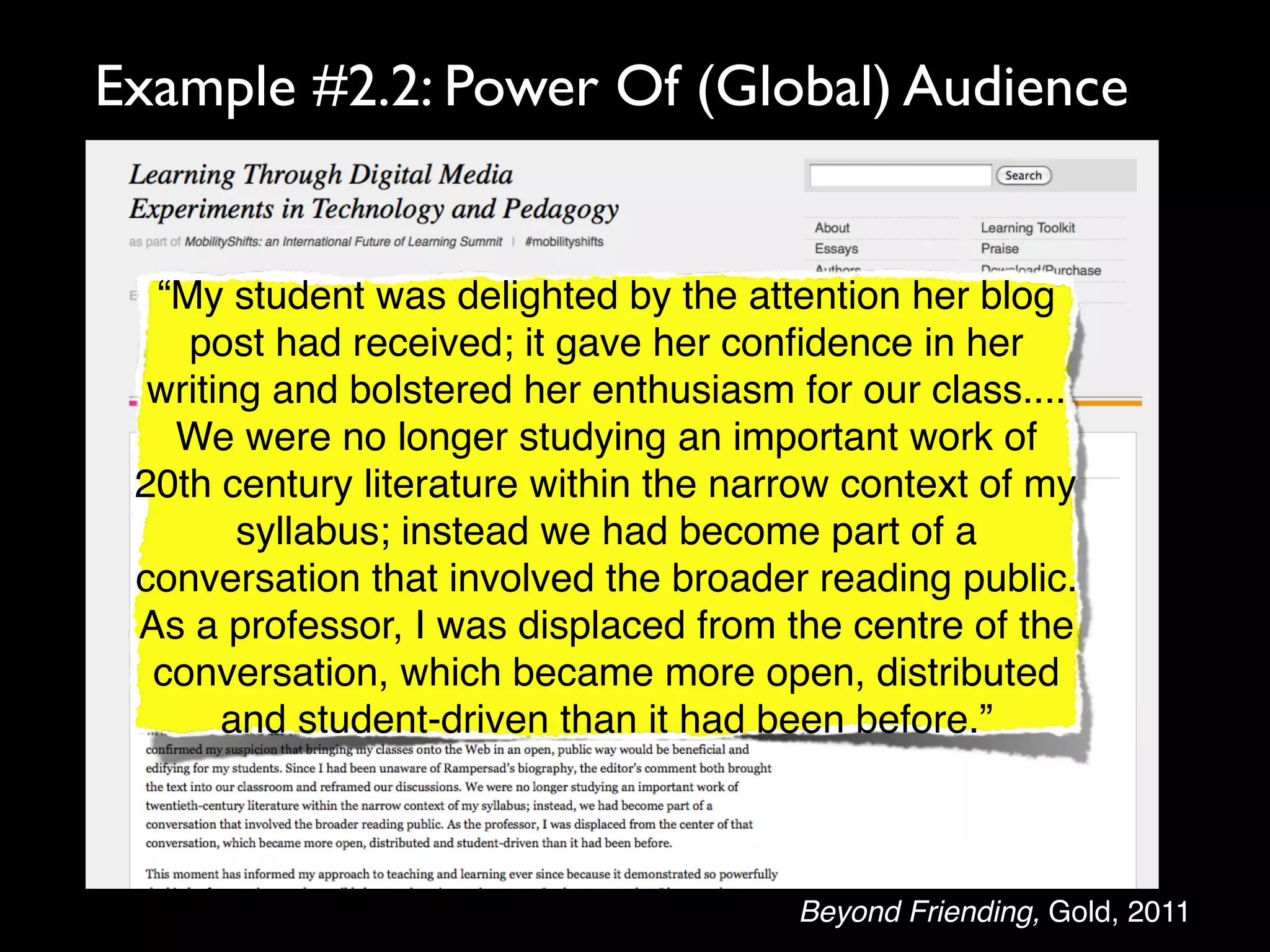
  “My student was delighted by the attention her blog
    post had received; it gave her confidence in her
  writing and bolstered her enthusiasm for our class....
   We were no longer studying an important work of
 20th century literature within the narrow context of my
        syllabus; instead we had become part of a
 conversation that involved the broader reading public.
 As a professor, I was displaced from the centre of the
  conversation, which became more open, distributed
       and student-driven than it had been before.”


                                       Beyond Friending, Gold, 2011
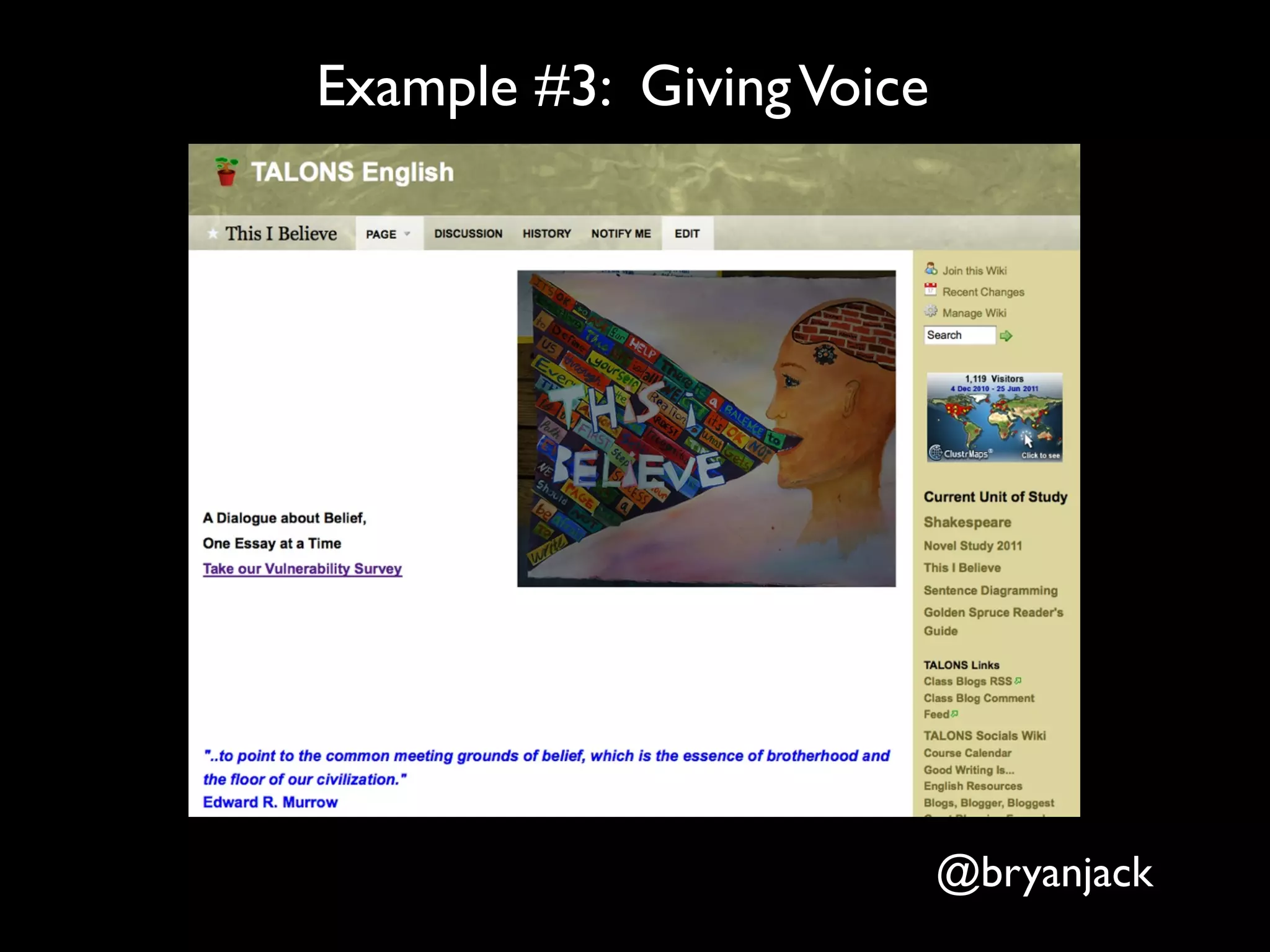
Example #3: Giving Voice


                           @bryanjack
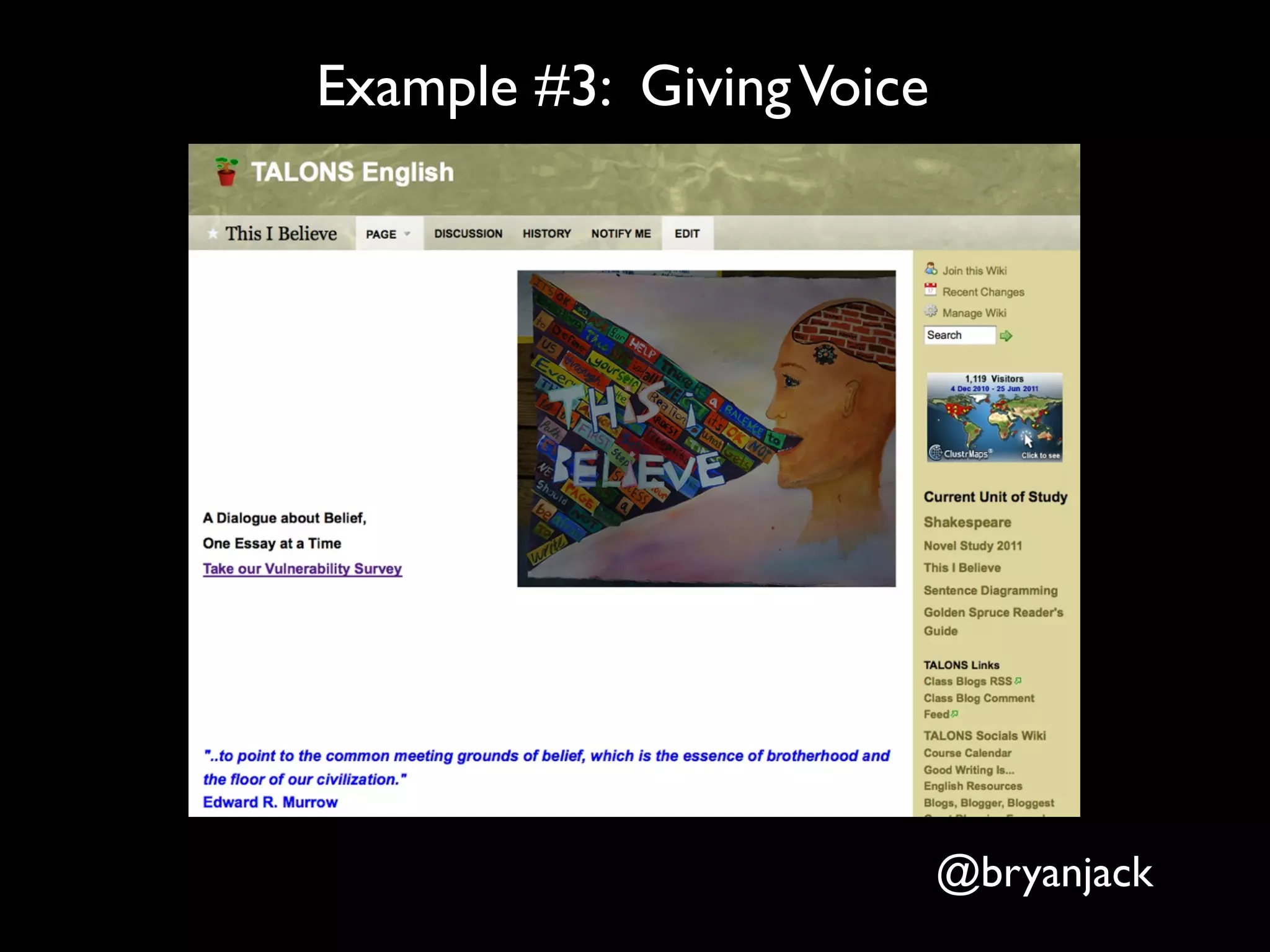
Example #3: Giving Voice


                           @bryanjack
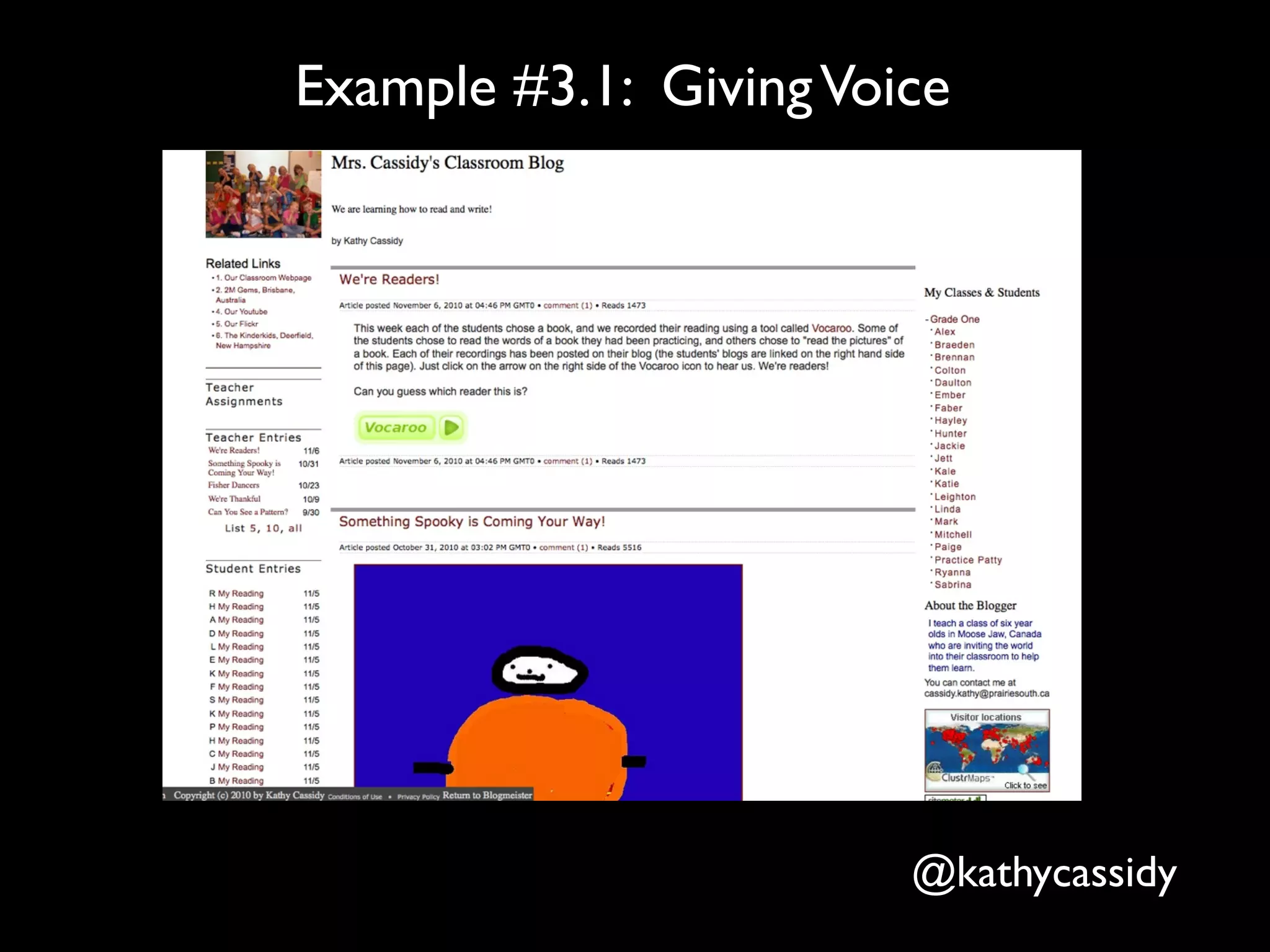
Example #3.1: Giving Voice


                        @kathycassidy
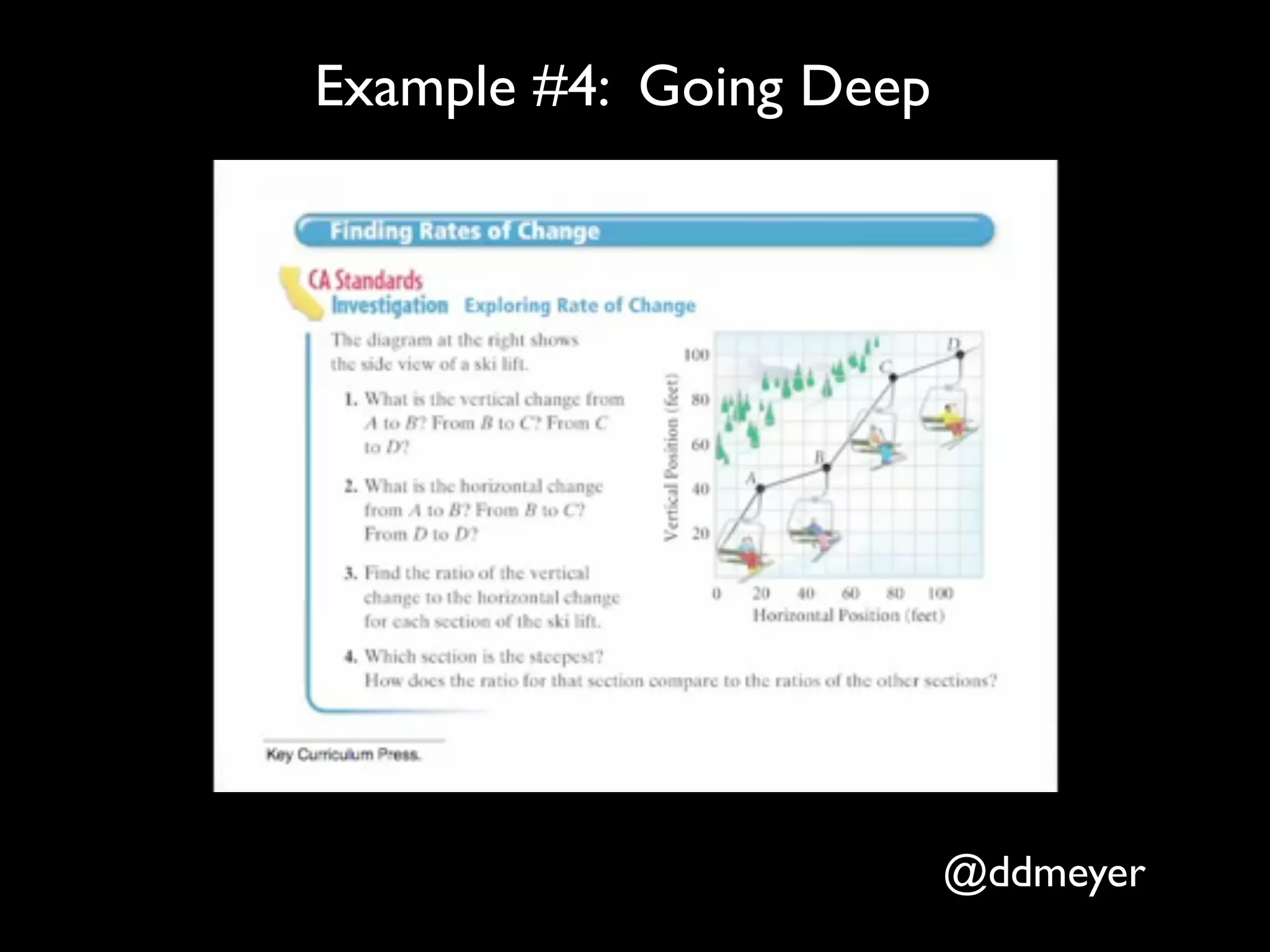
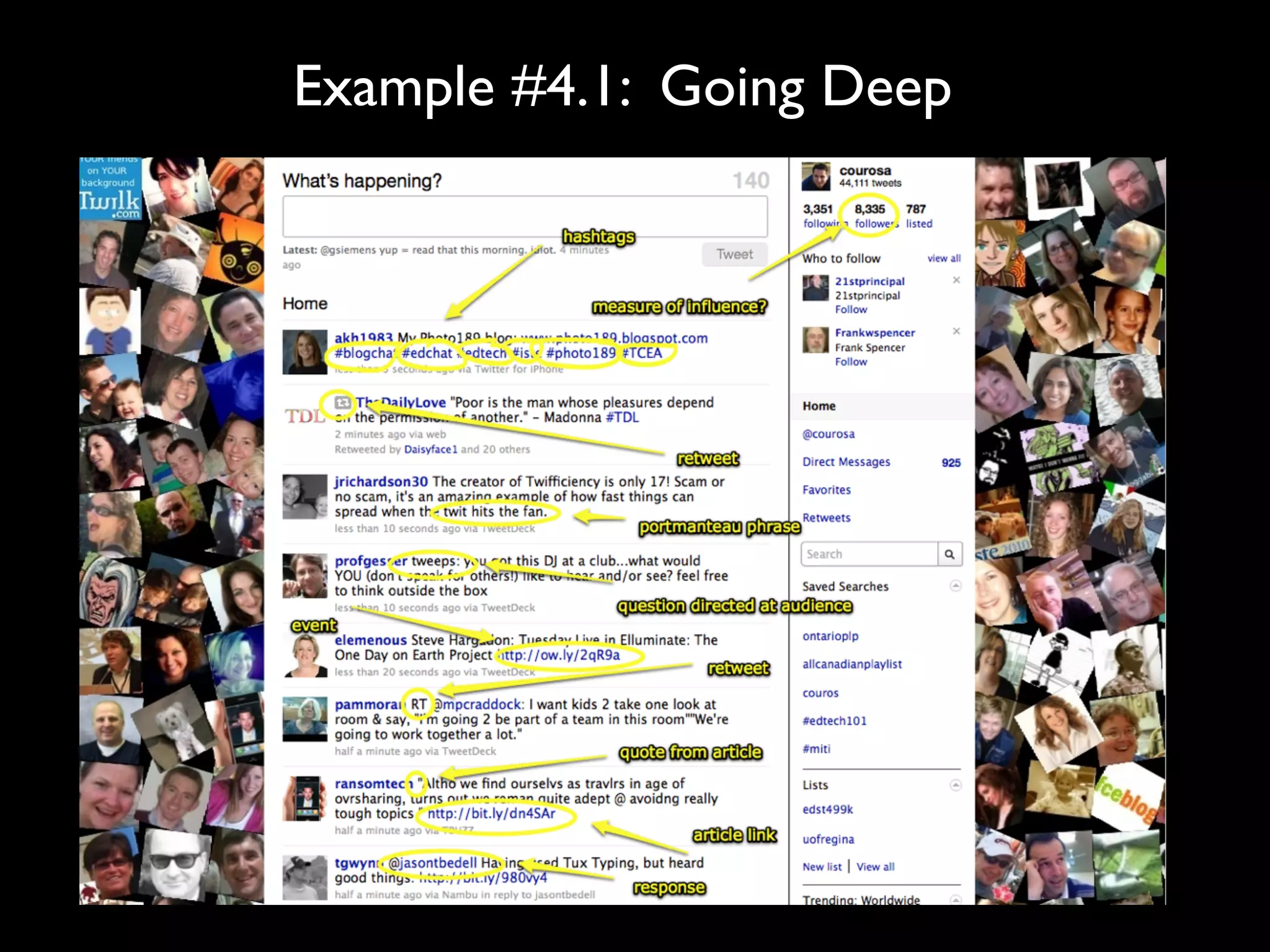
Example #4: Going Deep


                         @ddmeyer
Example #4.1: Going Deep
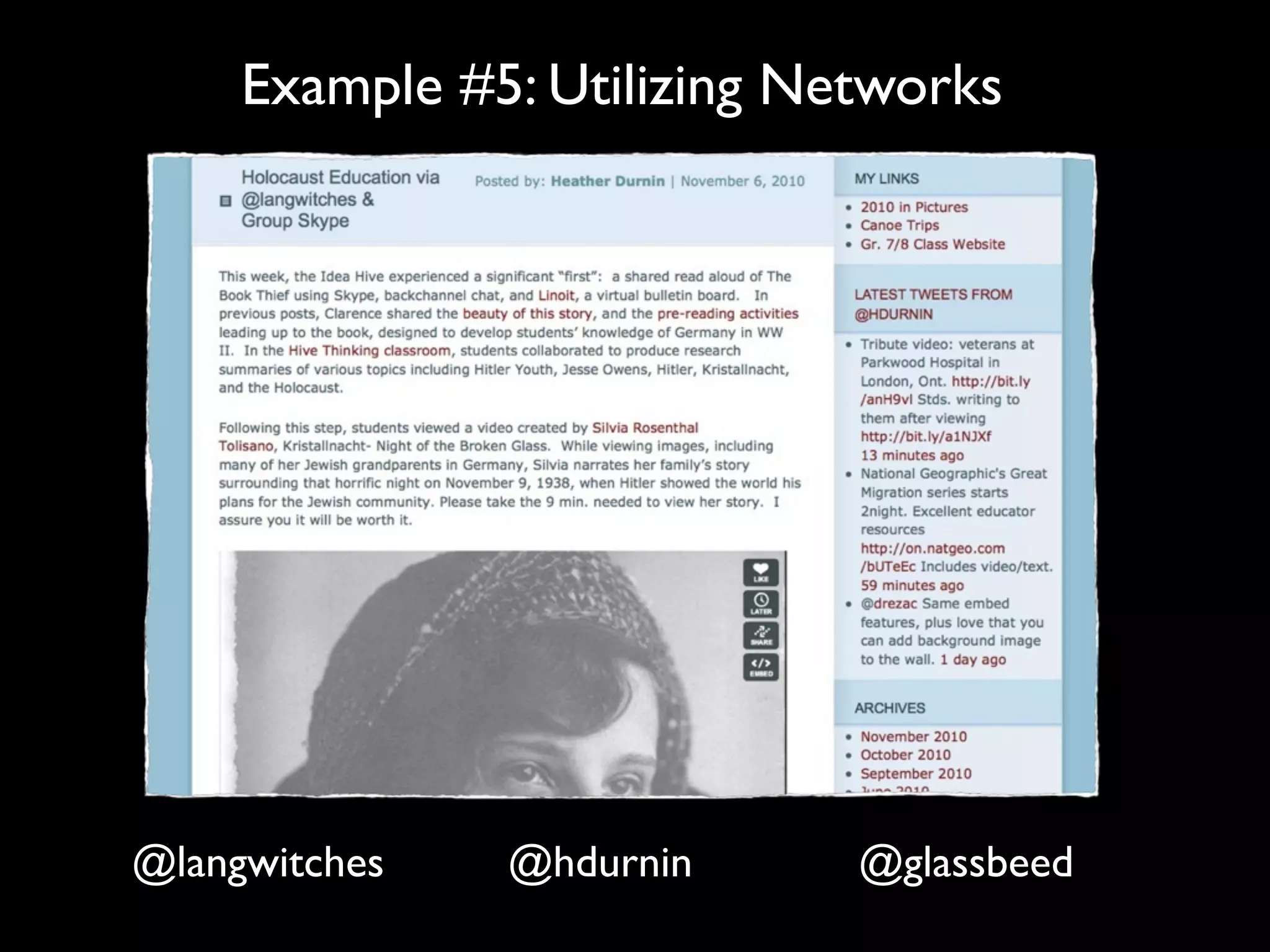
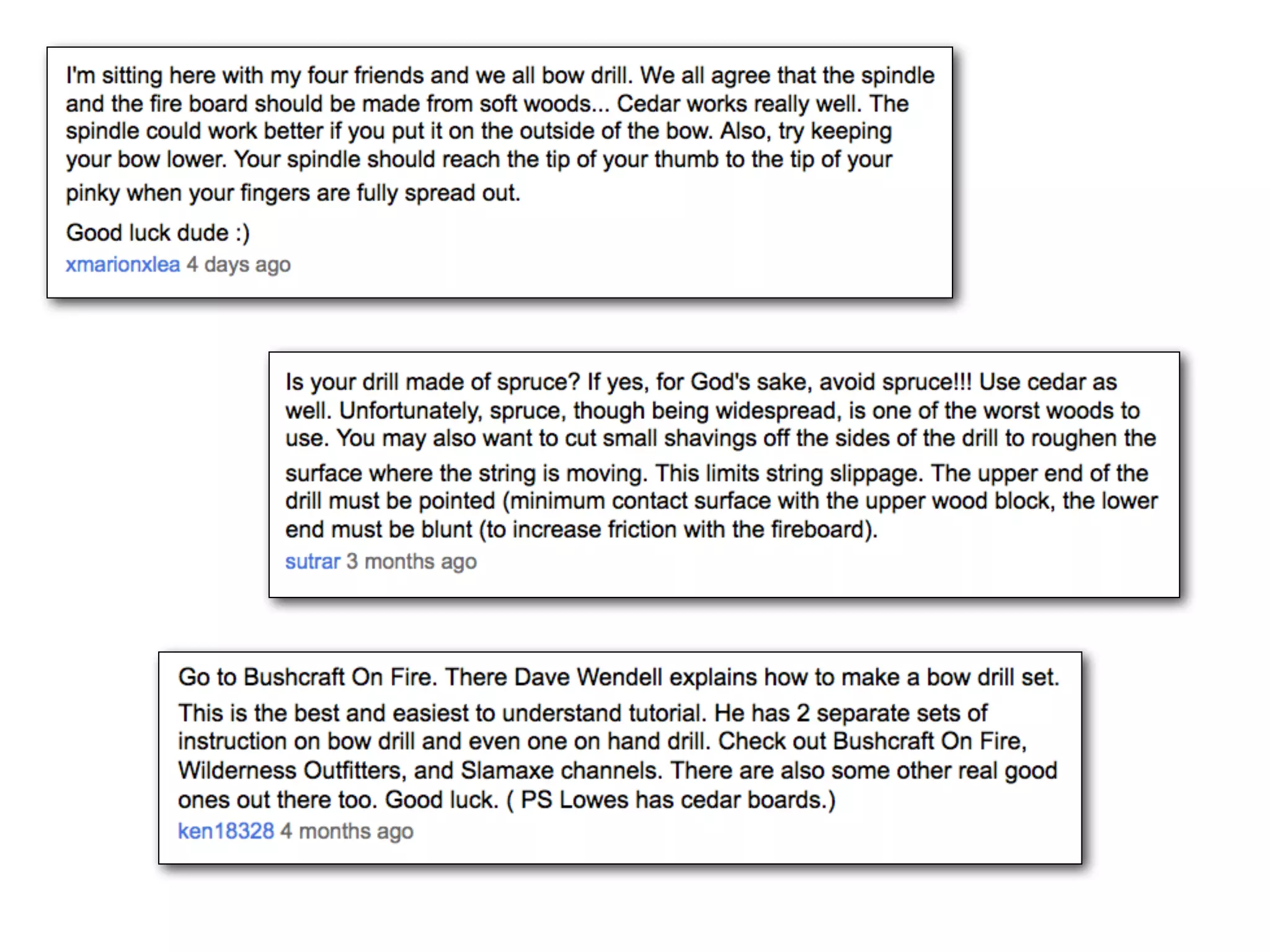
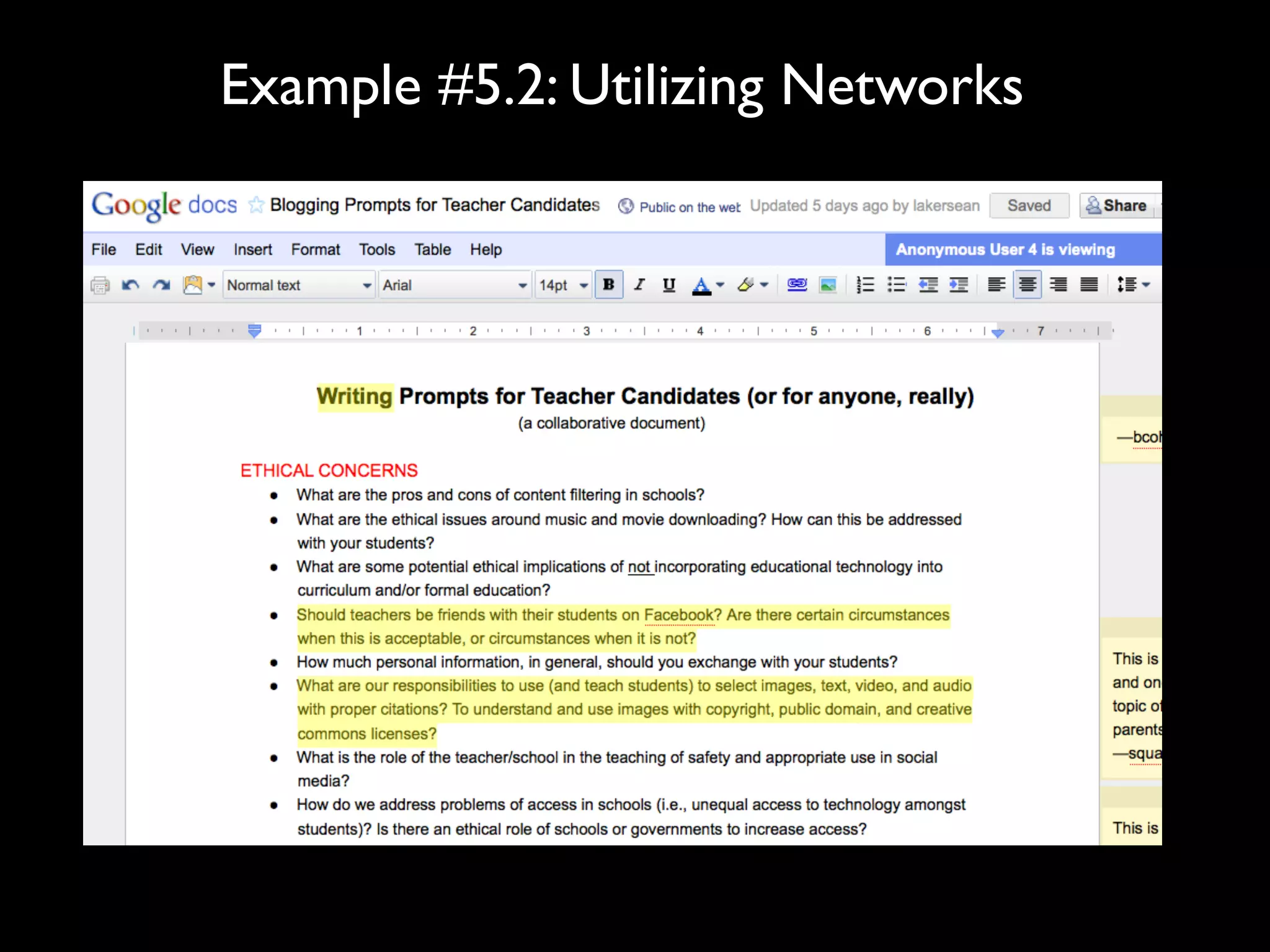
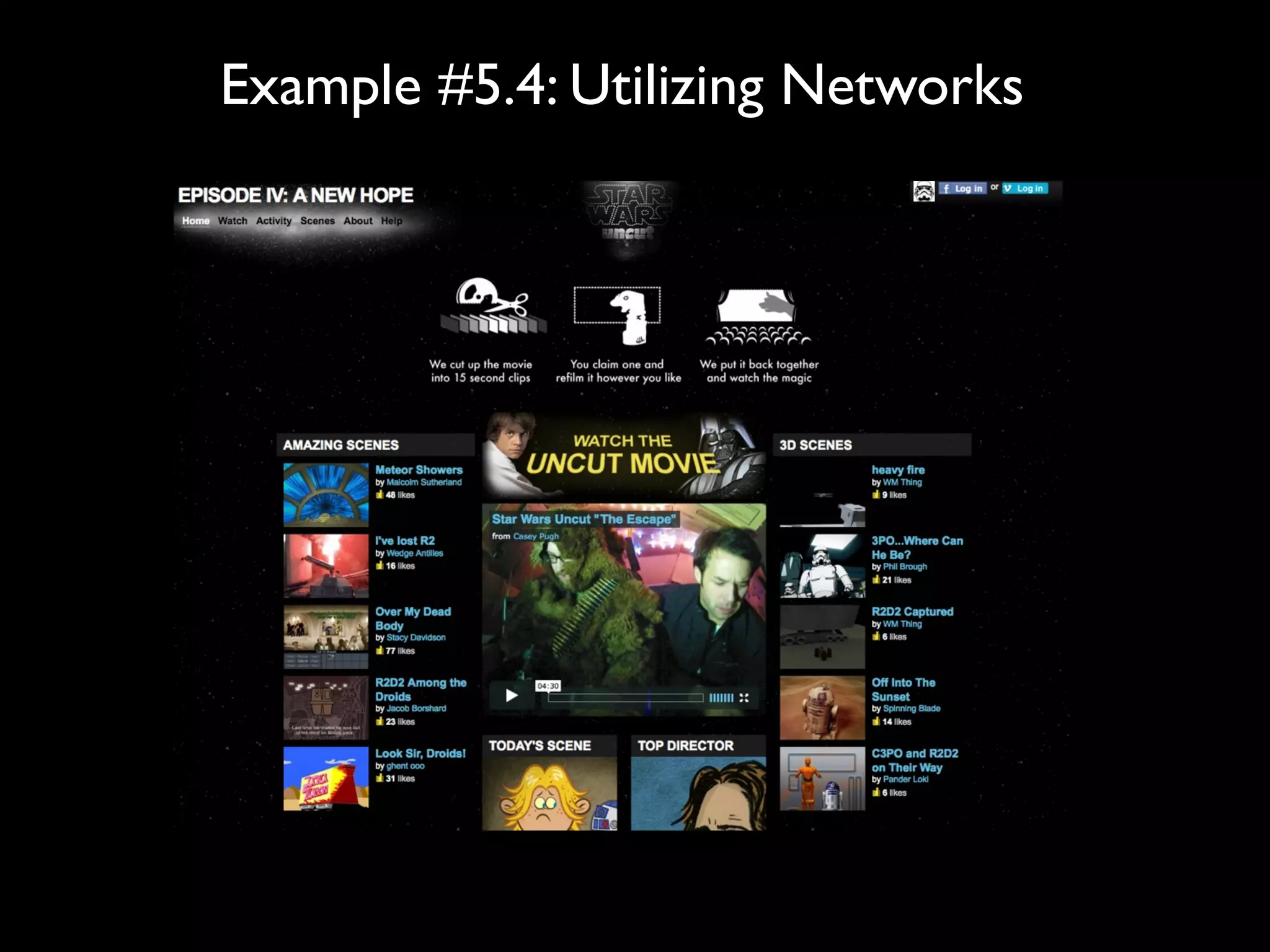
Example #5: Utilizing Networks


@langwitches   @hdurnin      @glassbeed
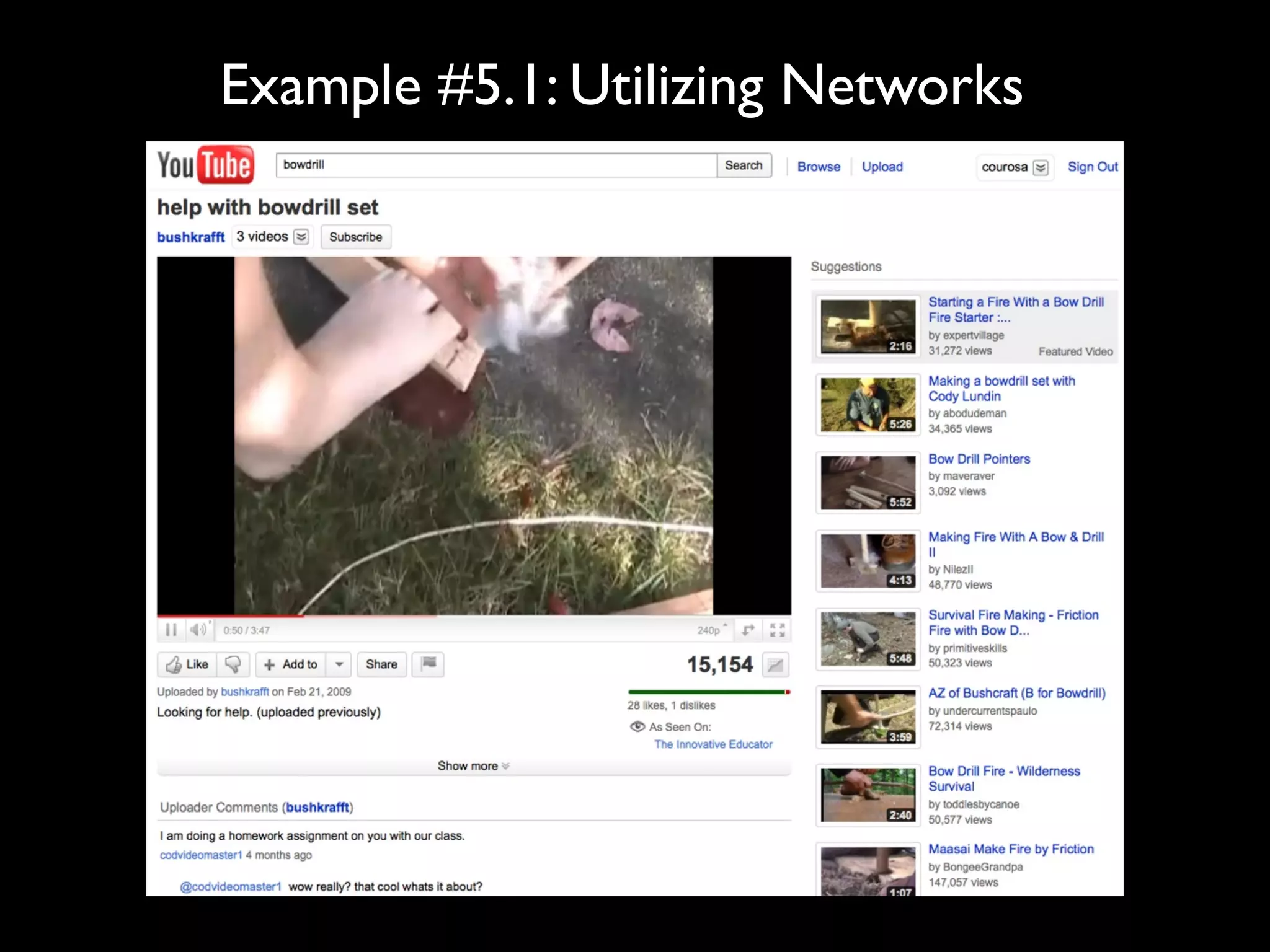
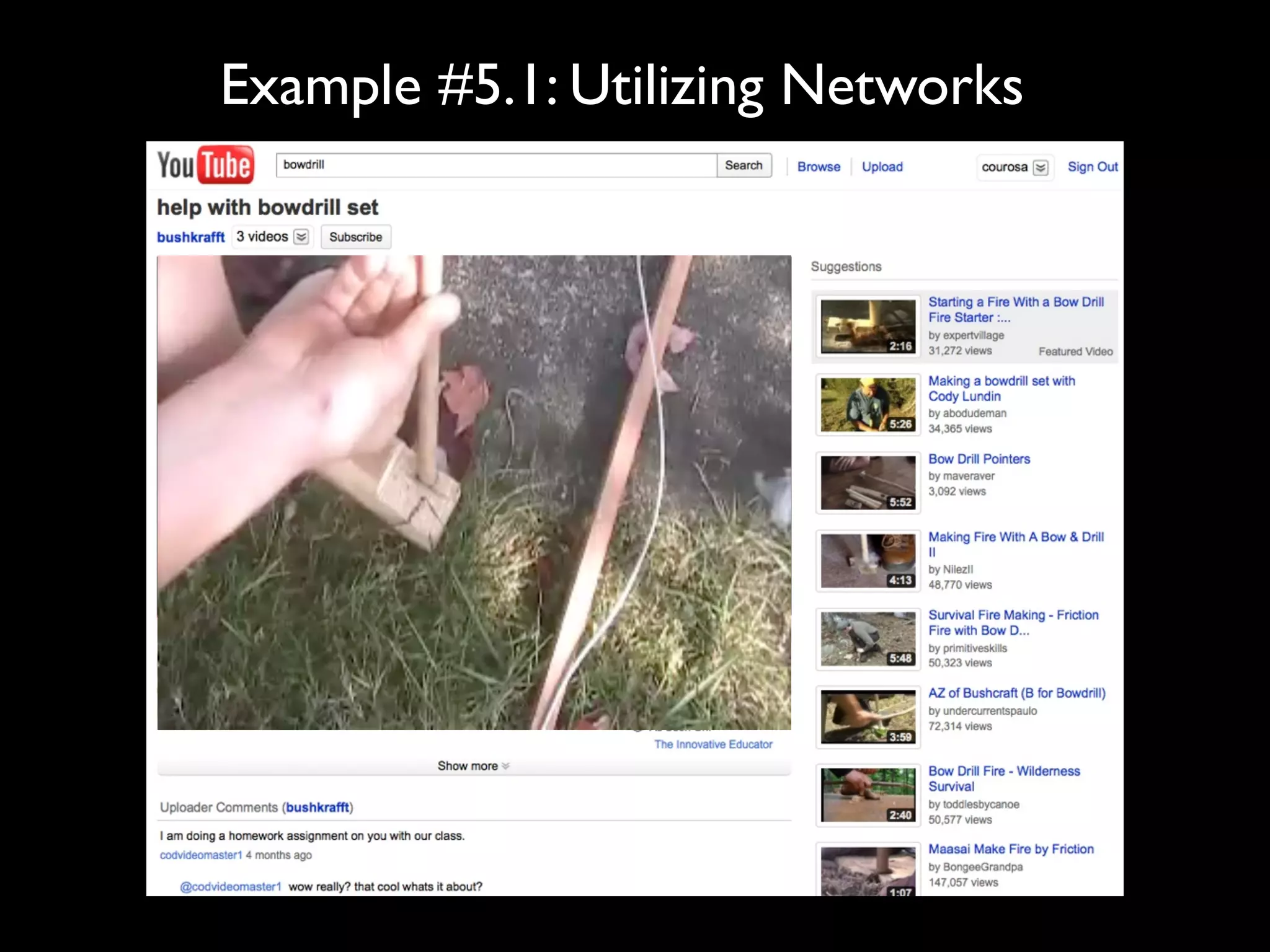
Example #5.1: Utilizing Networks
Example #5.2: Utilizing Networks
Example #5.4: Utilizing Networks
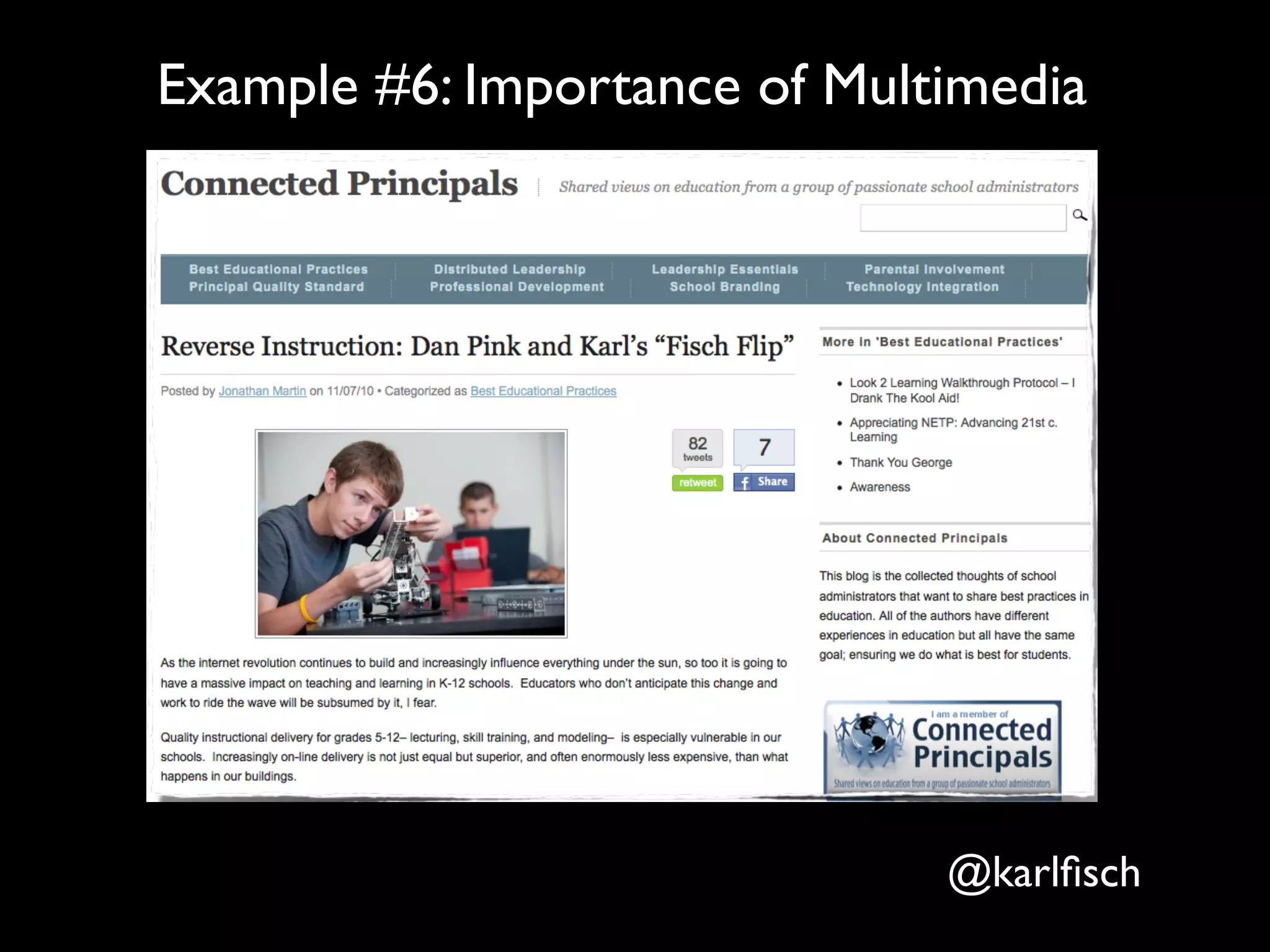
Example #6: Importance of Multimedia


                              @karlfisch
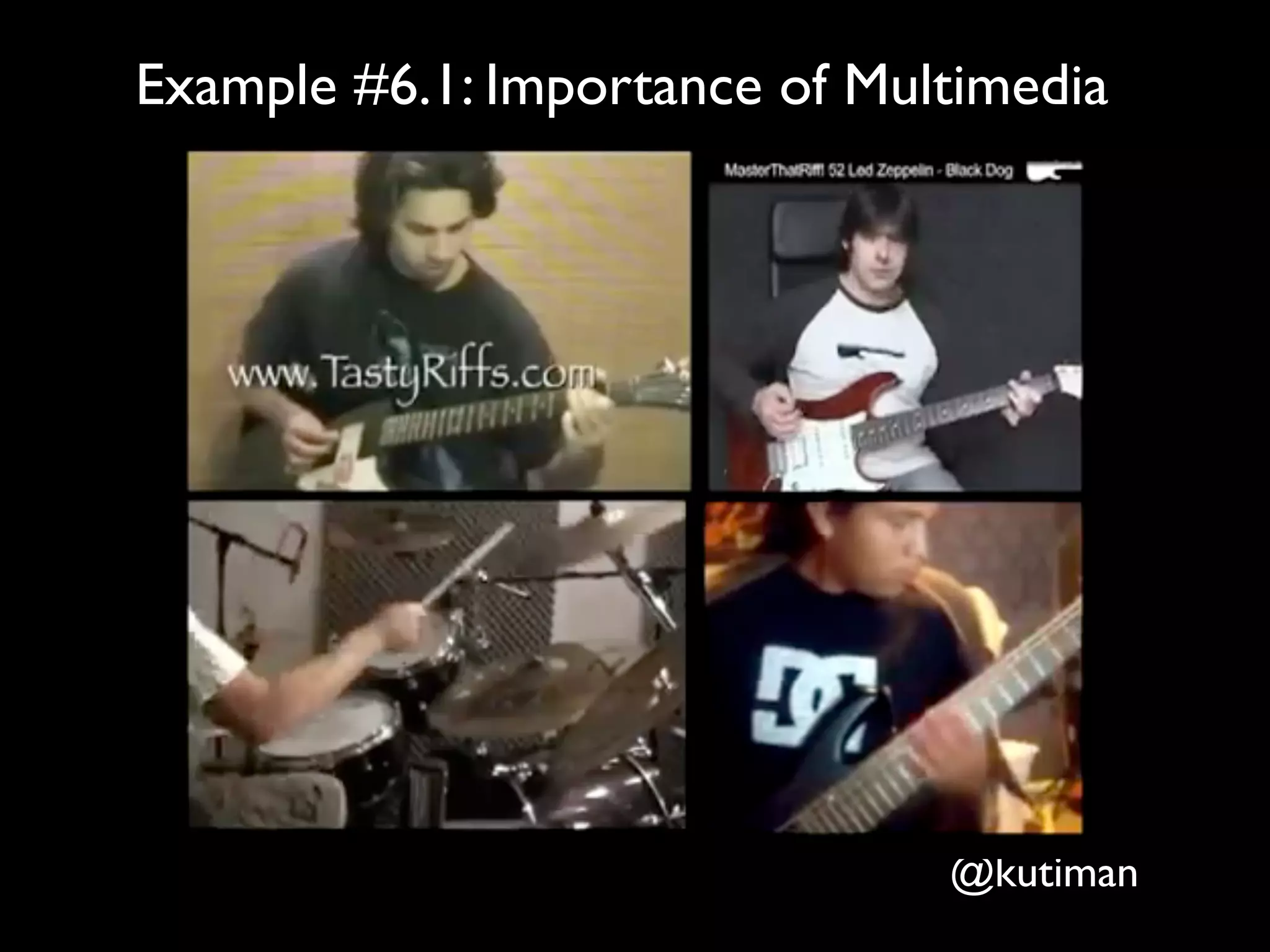
Example #6.1: Importance of Multimedia


                               @kutiman
Example #6.1: Importance of Multimedia


                               @kutiman
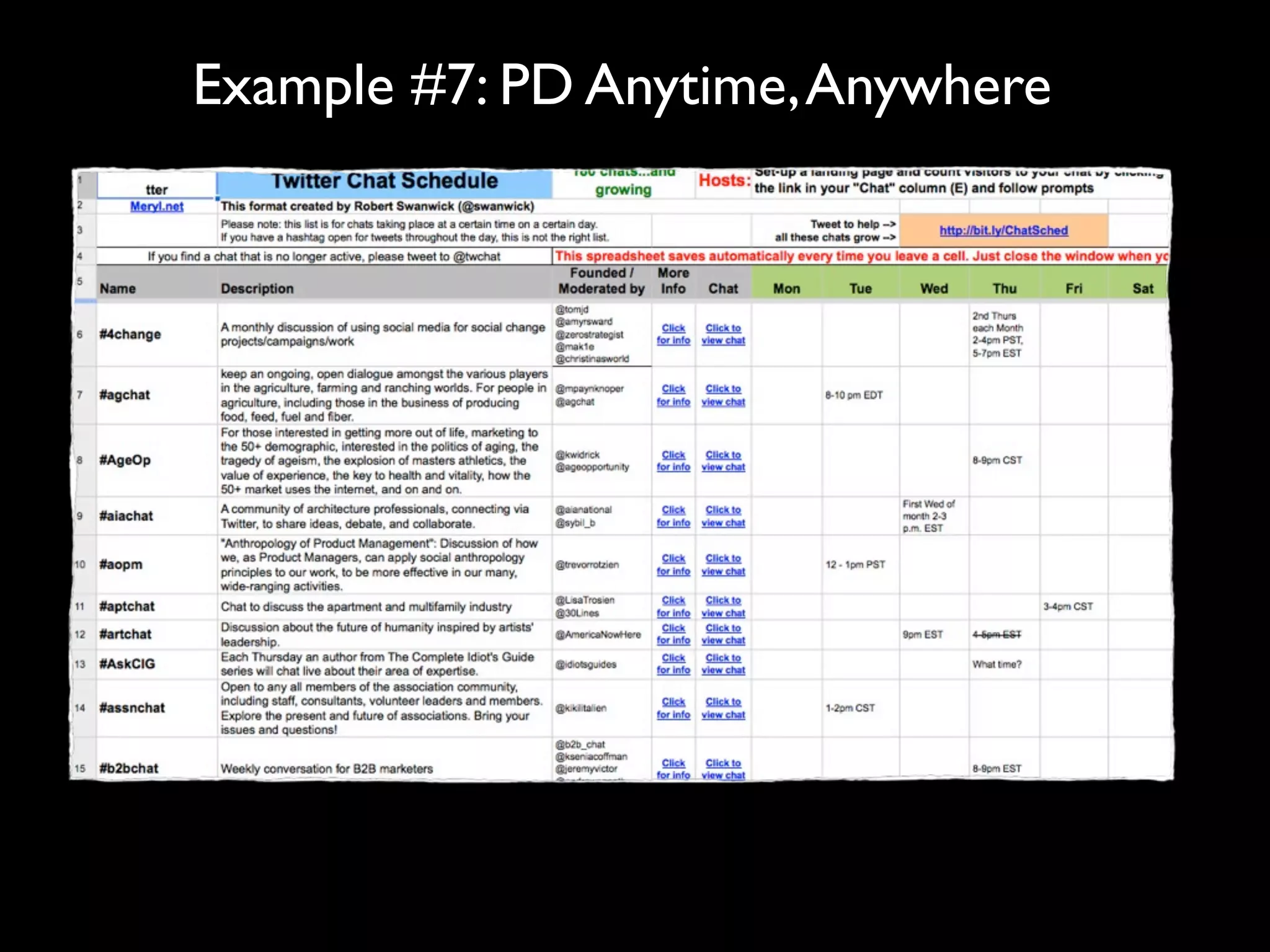
Example #7: PD Anytime, Anywhere
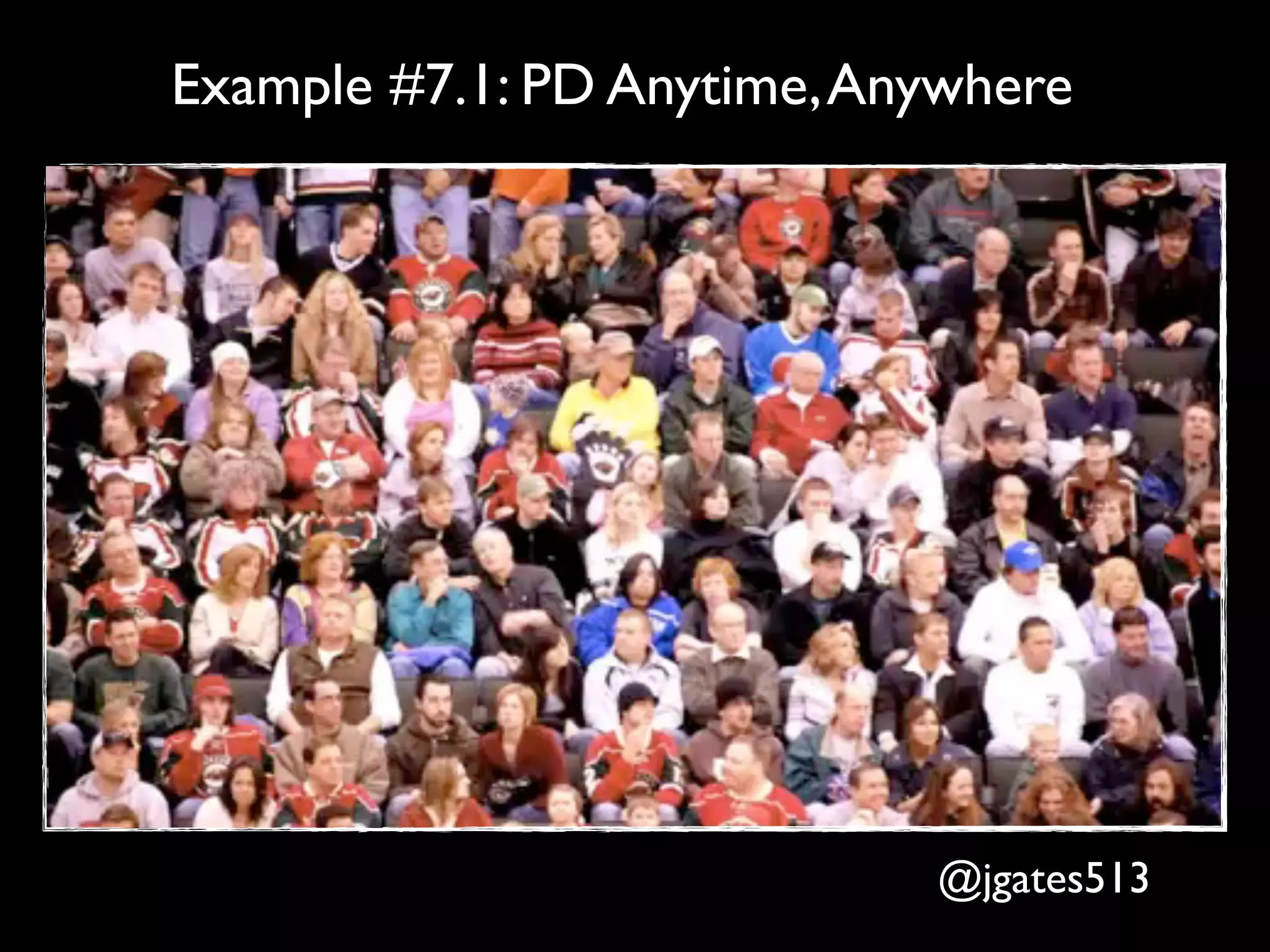
Example #7.1: PD Anytime, Anywhere


                            @jgates513
Example #7.1: PD Anytime, Anywhere


                            @jgates513
there are thousands of examples


    but this is not the norm
the big ideas to consider
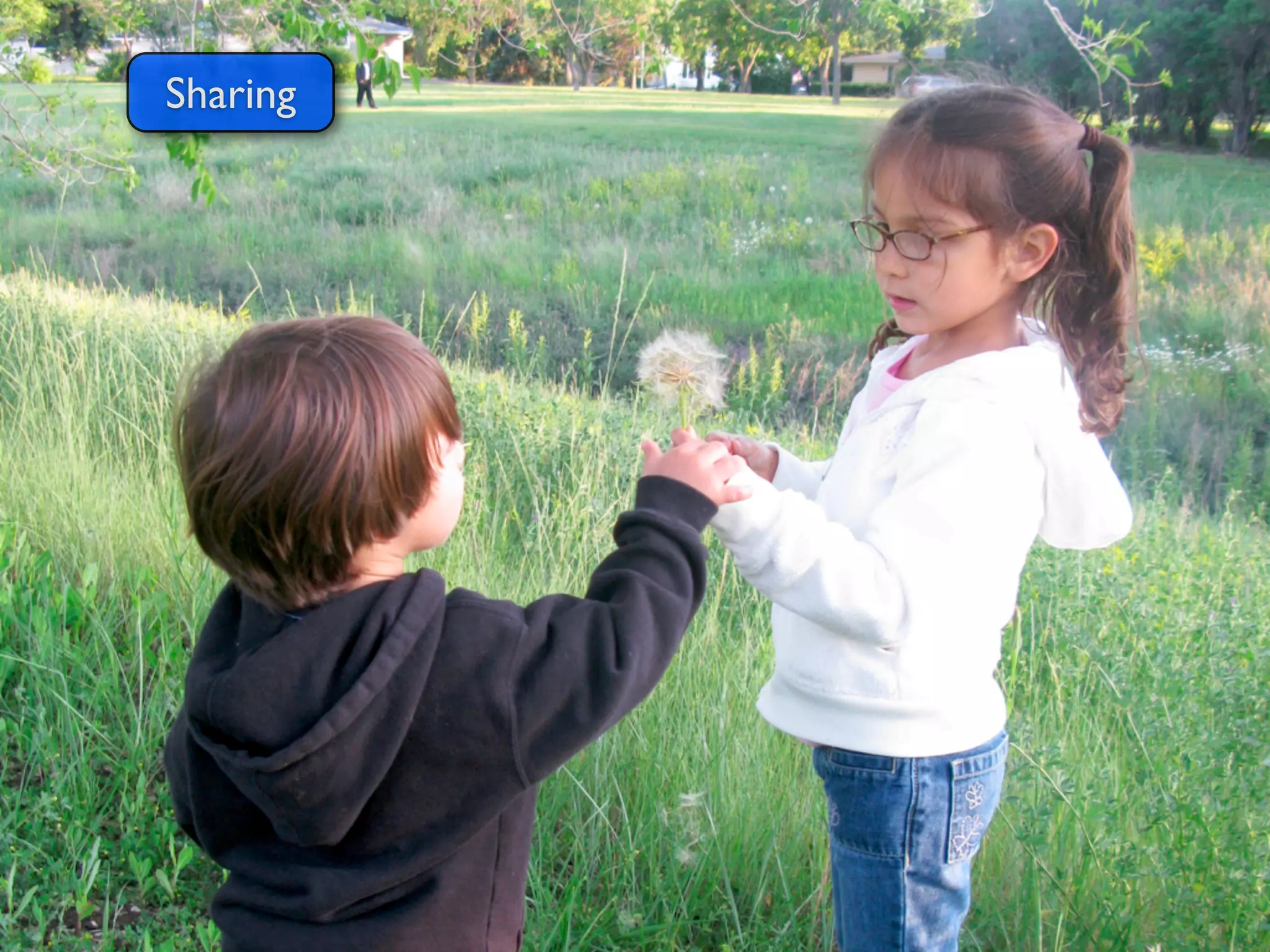
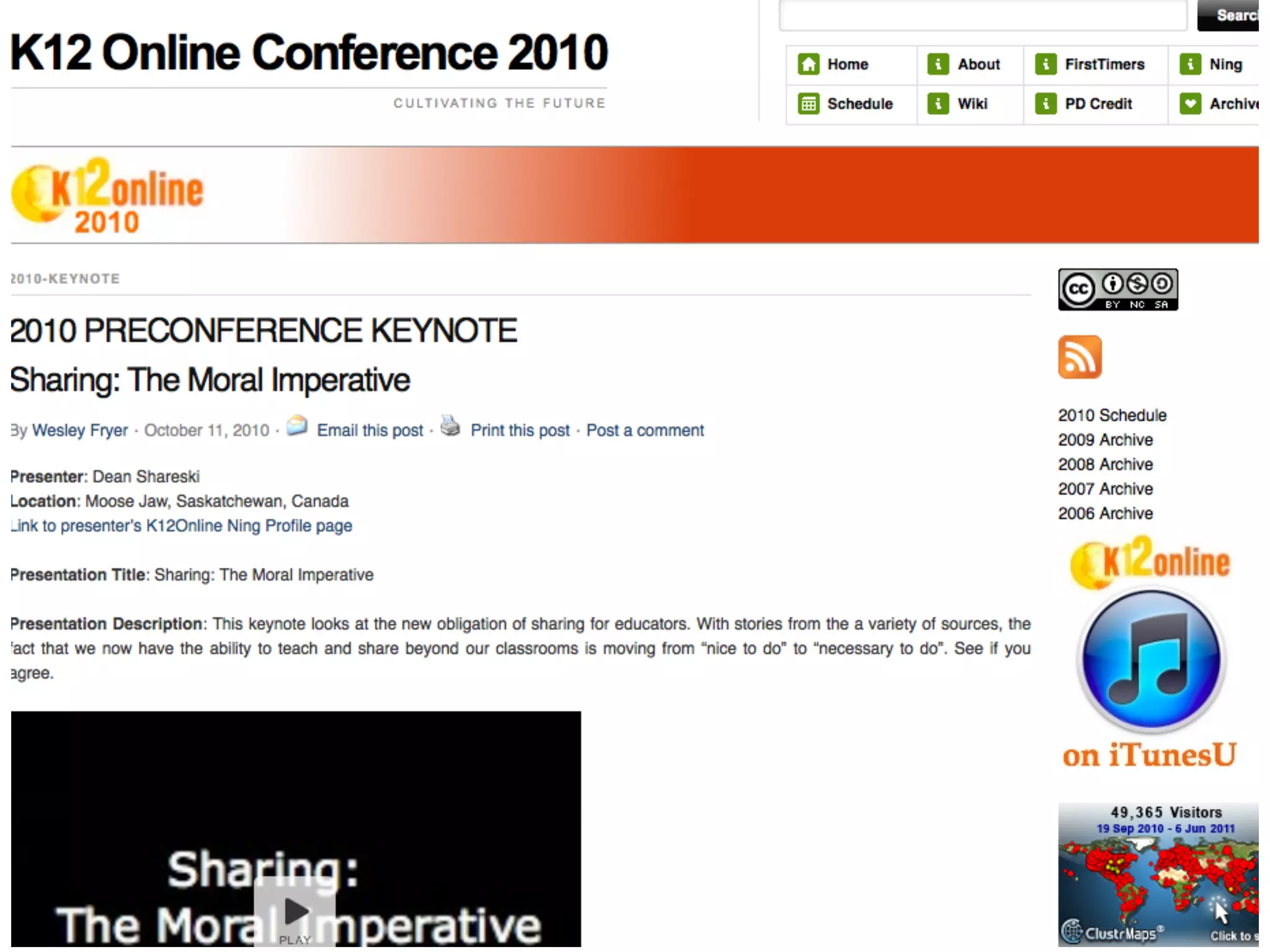
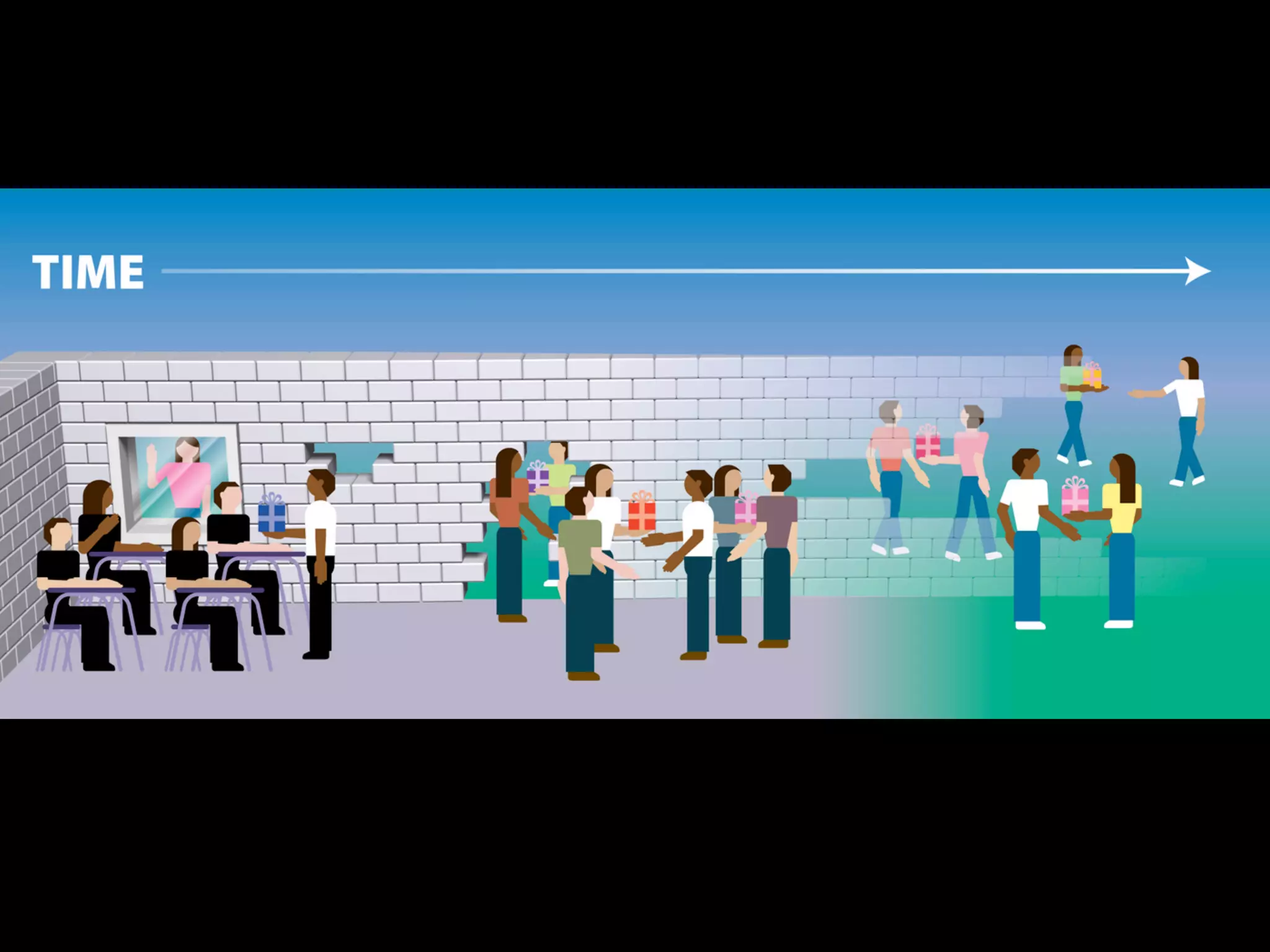
Sharing


          http://www.flickr.com/photos/dolmansaxlil/4802611949/
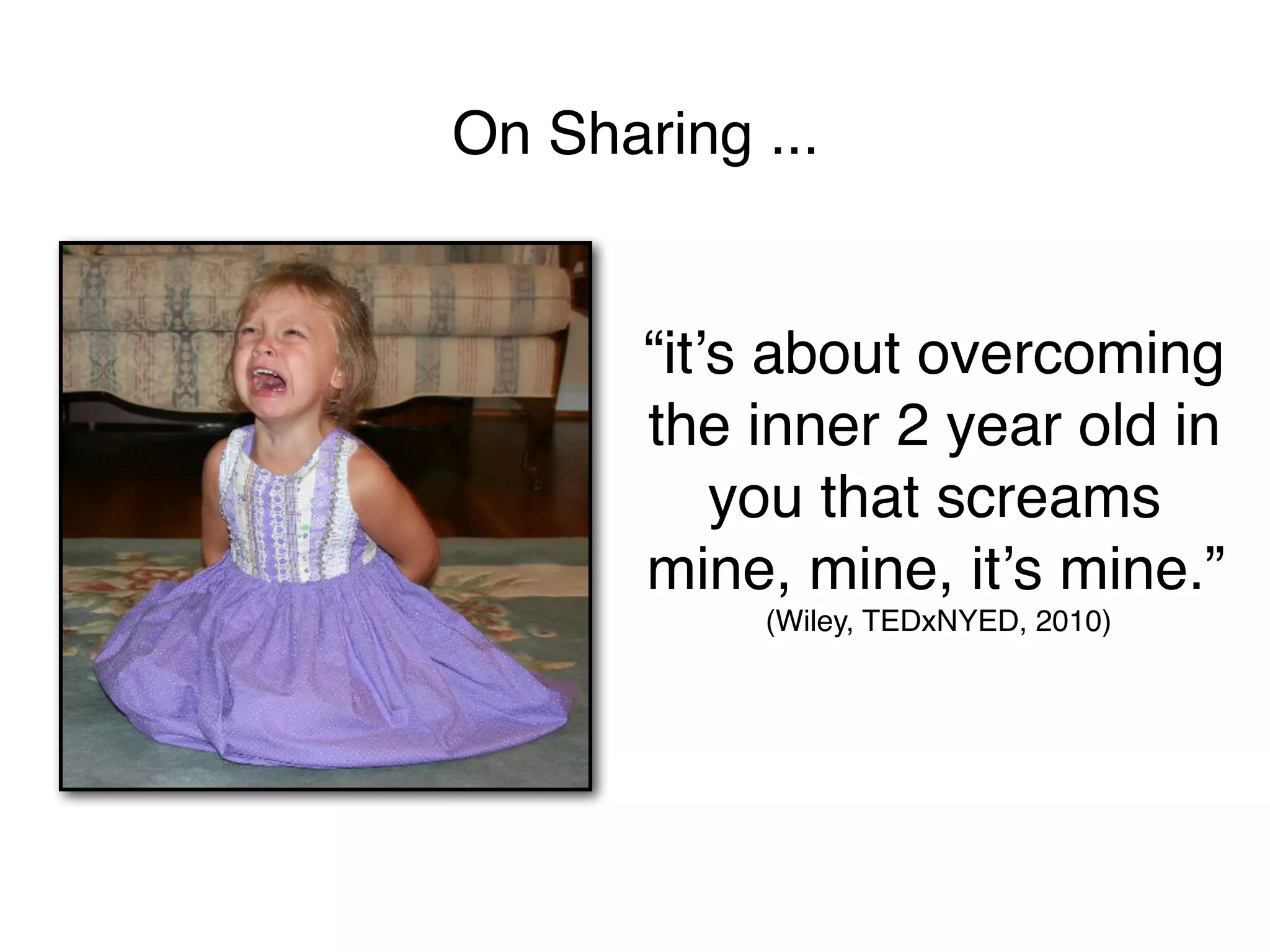
On Sharing ...


       “it’s about overcoming
       the inner 2 year old in
           you that screams
       mine, mine, it’s mine.”
           (Wiley, TEDxNYED, 2010)
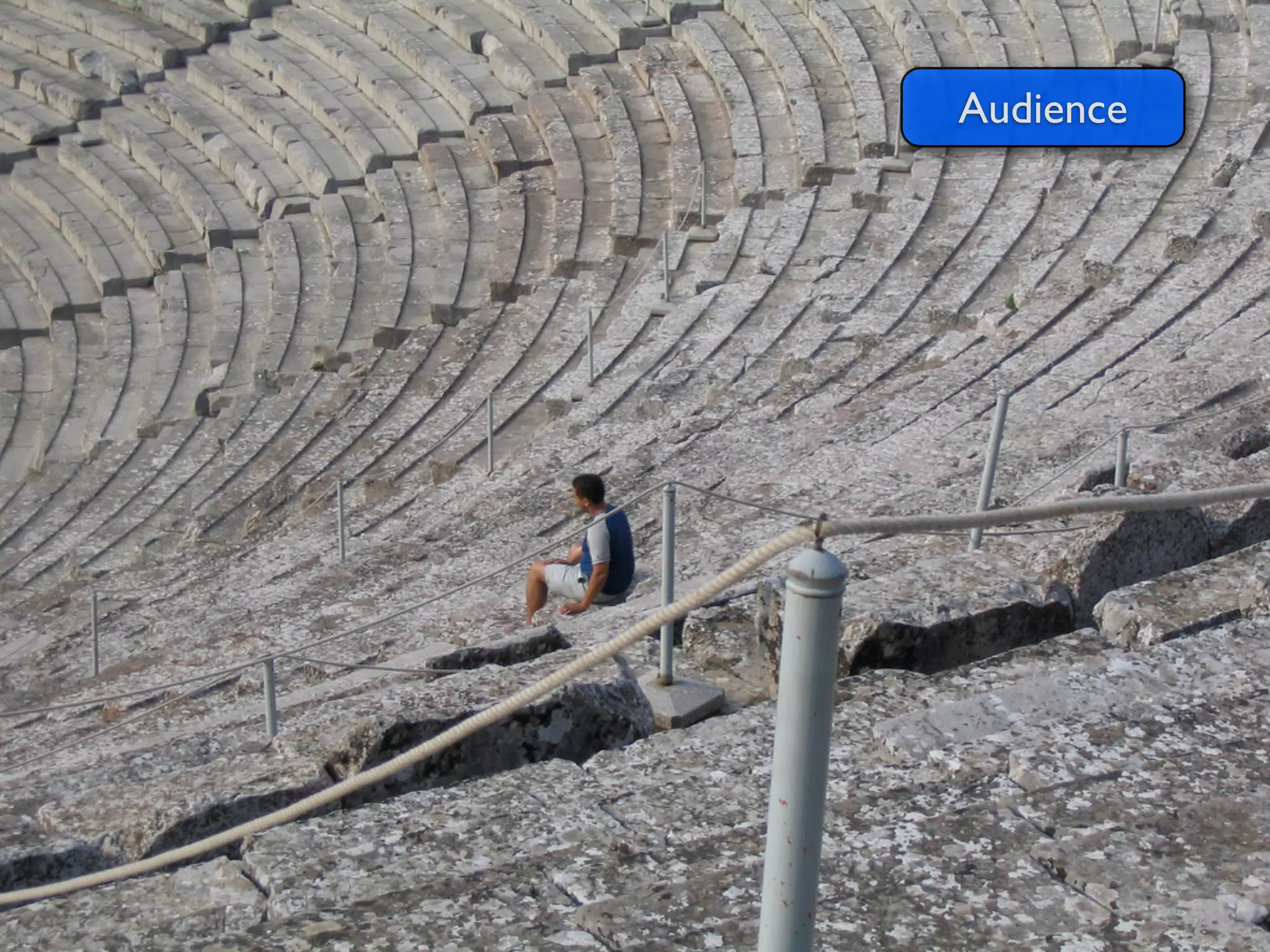
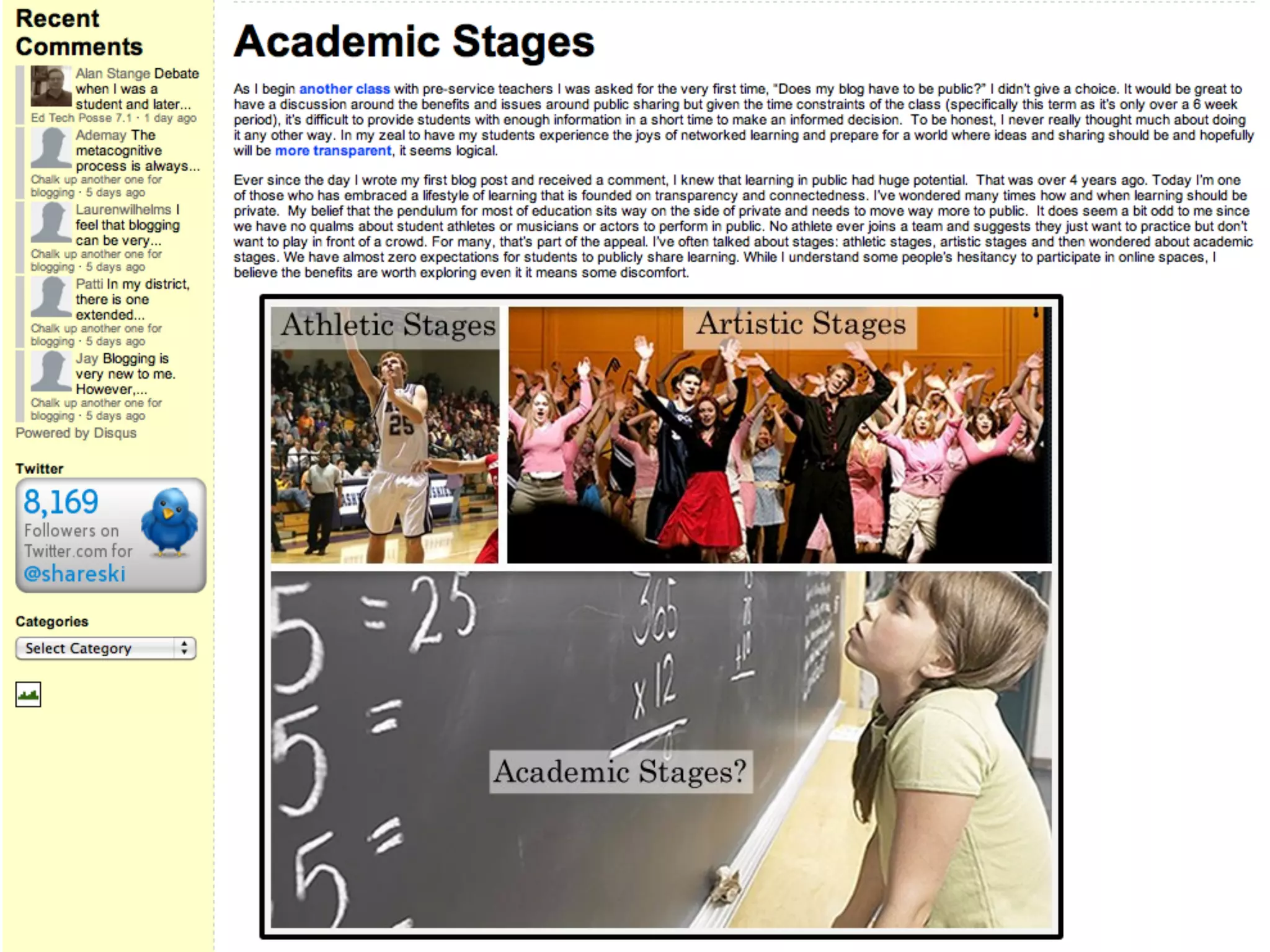
Audience
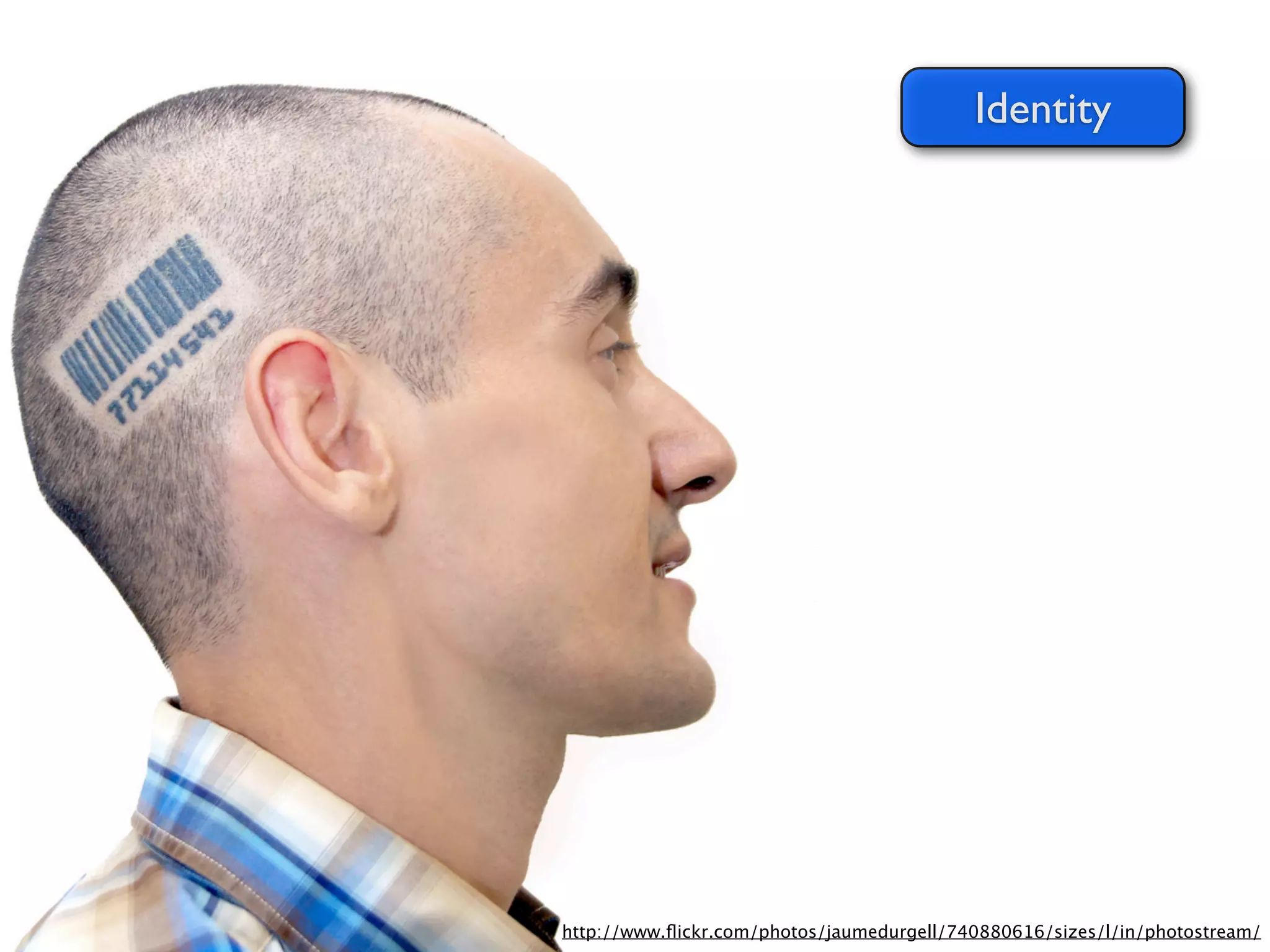
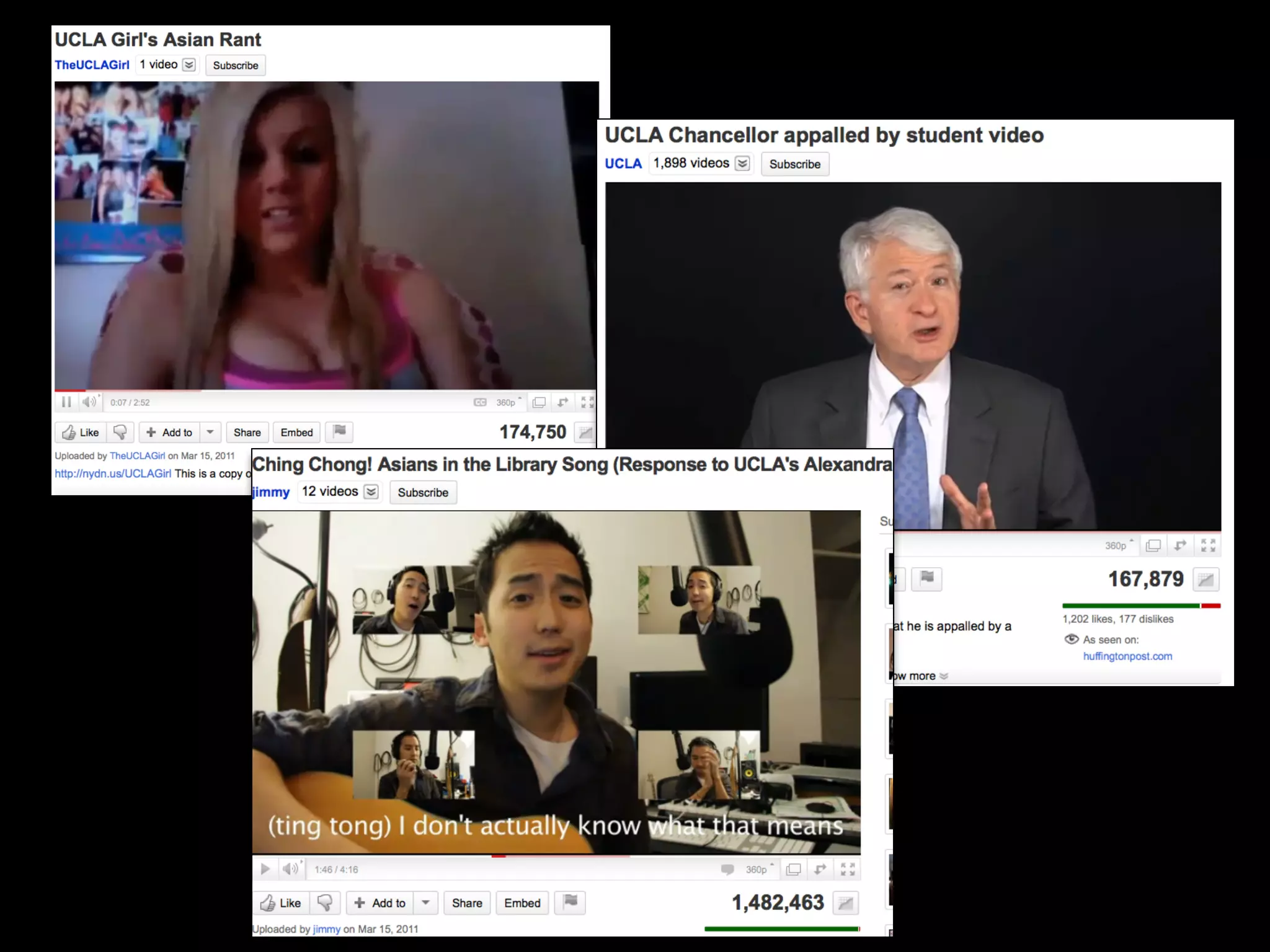
Identity


http://www.flickr.com/photos/jaumedurgell/740880616/sizes/l/in/photostream/
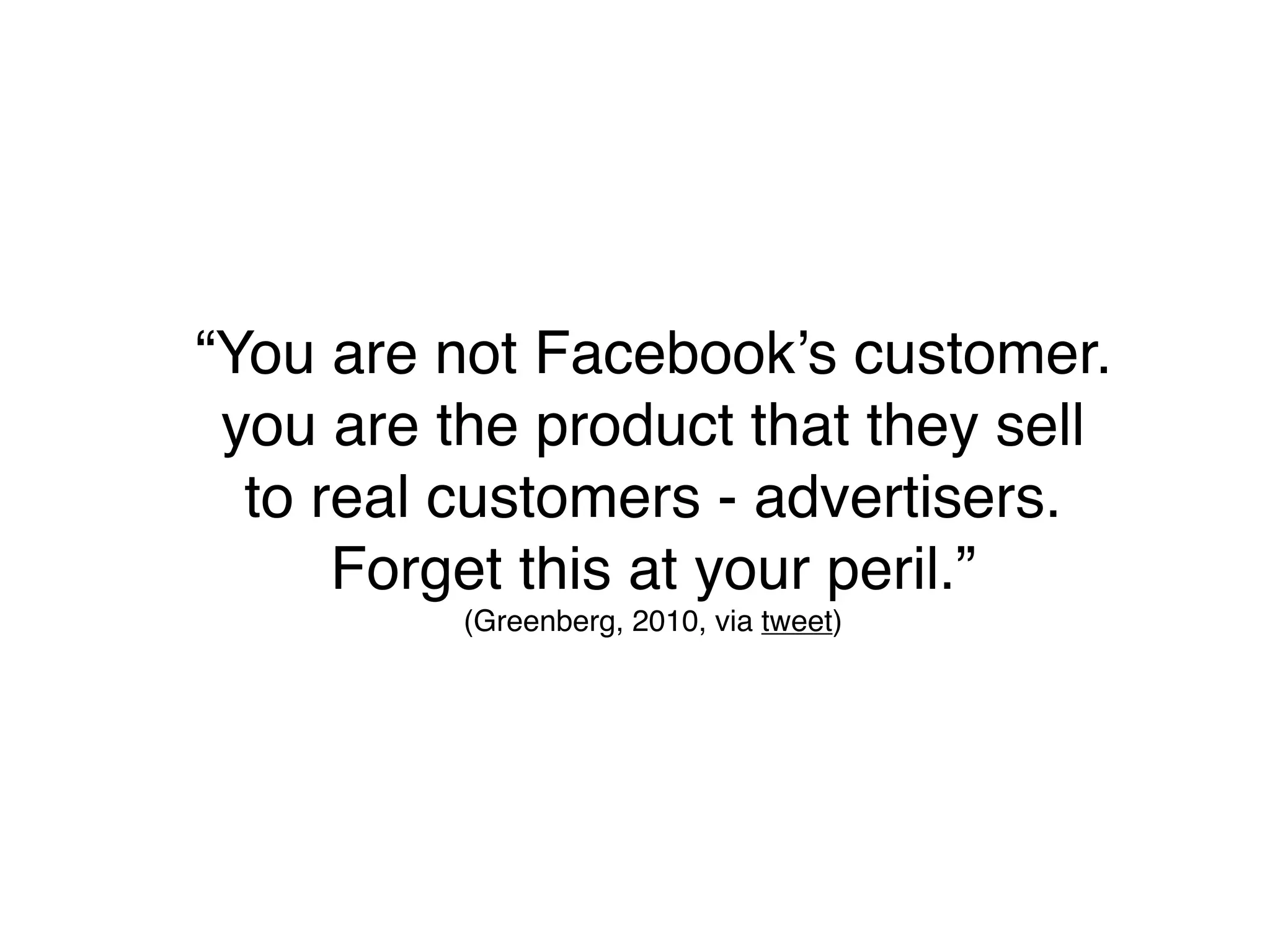
“You are not Facebook’s customer.
 you are the product that they sell
  to real customers - advertisers.
      Forget this at your peril.”
          (Greenberg, 2010, via tweet)
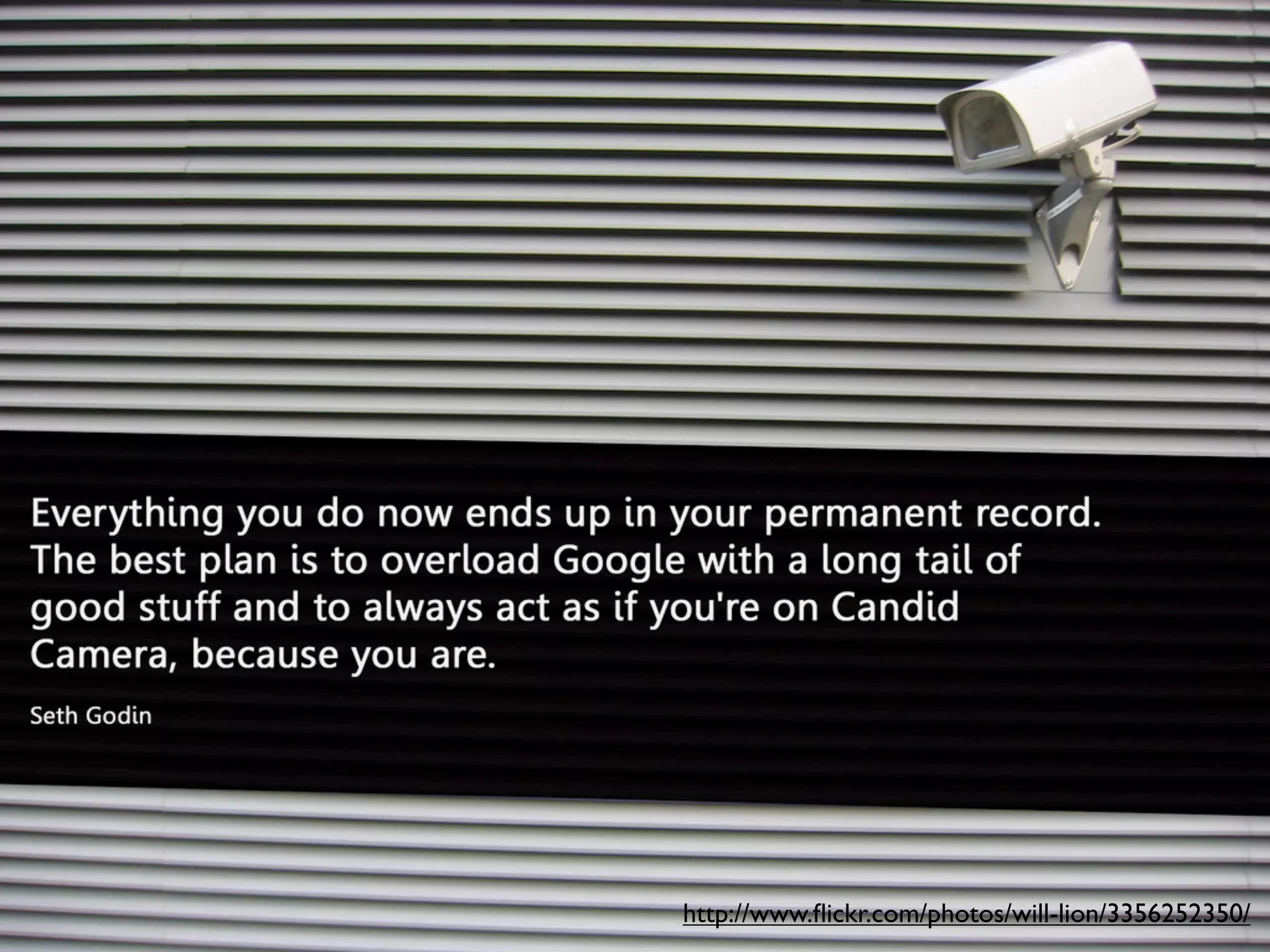
http://www.flickr.com/photos/will-lion/3356252350/
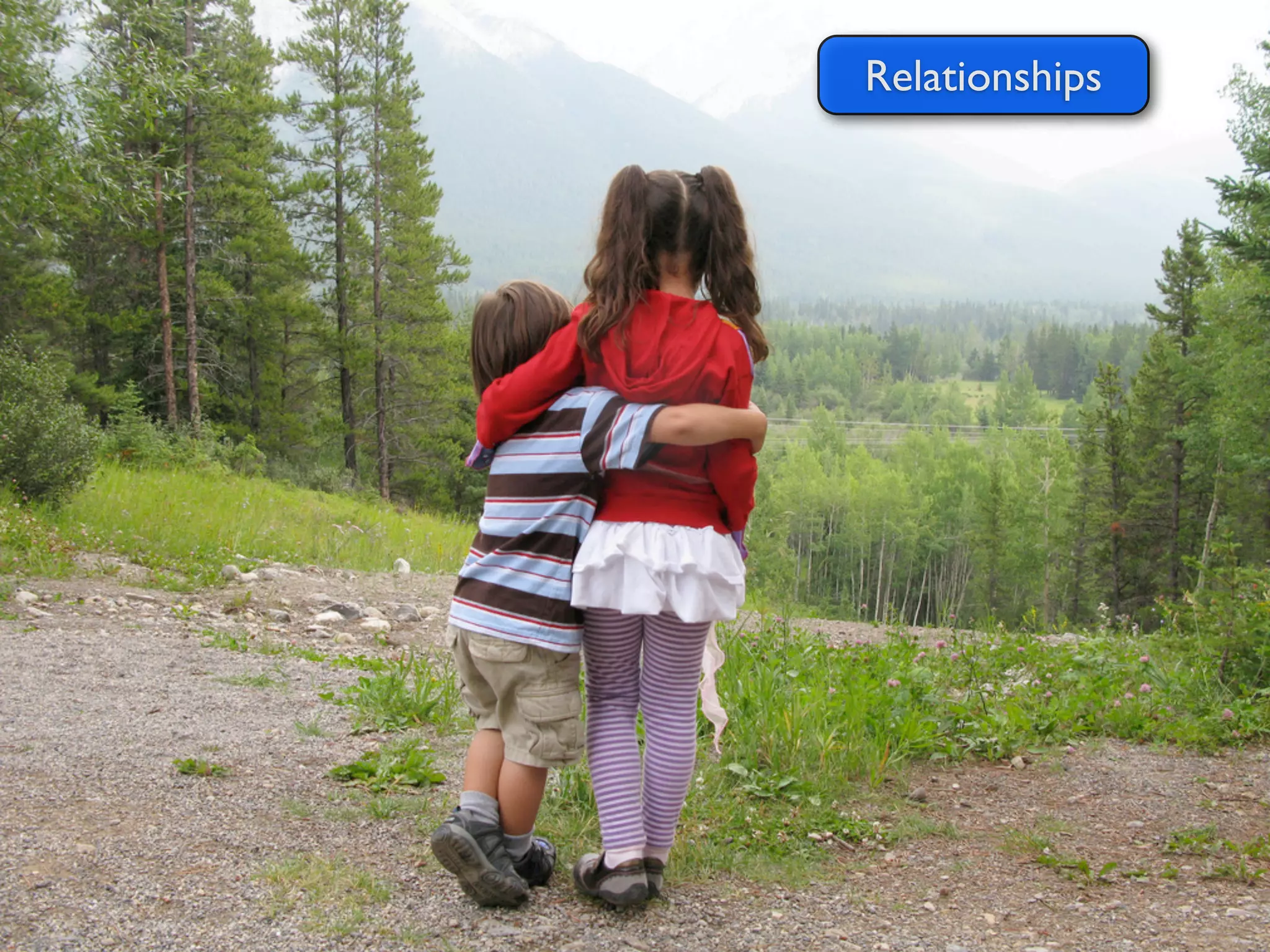
Relationships
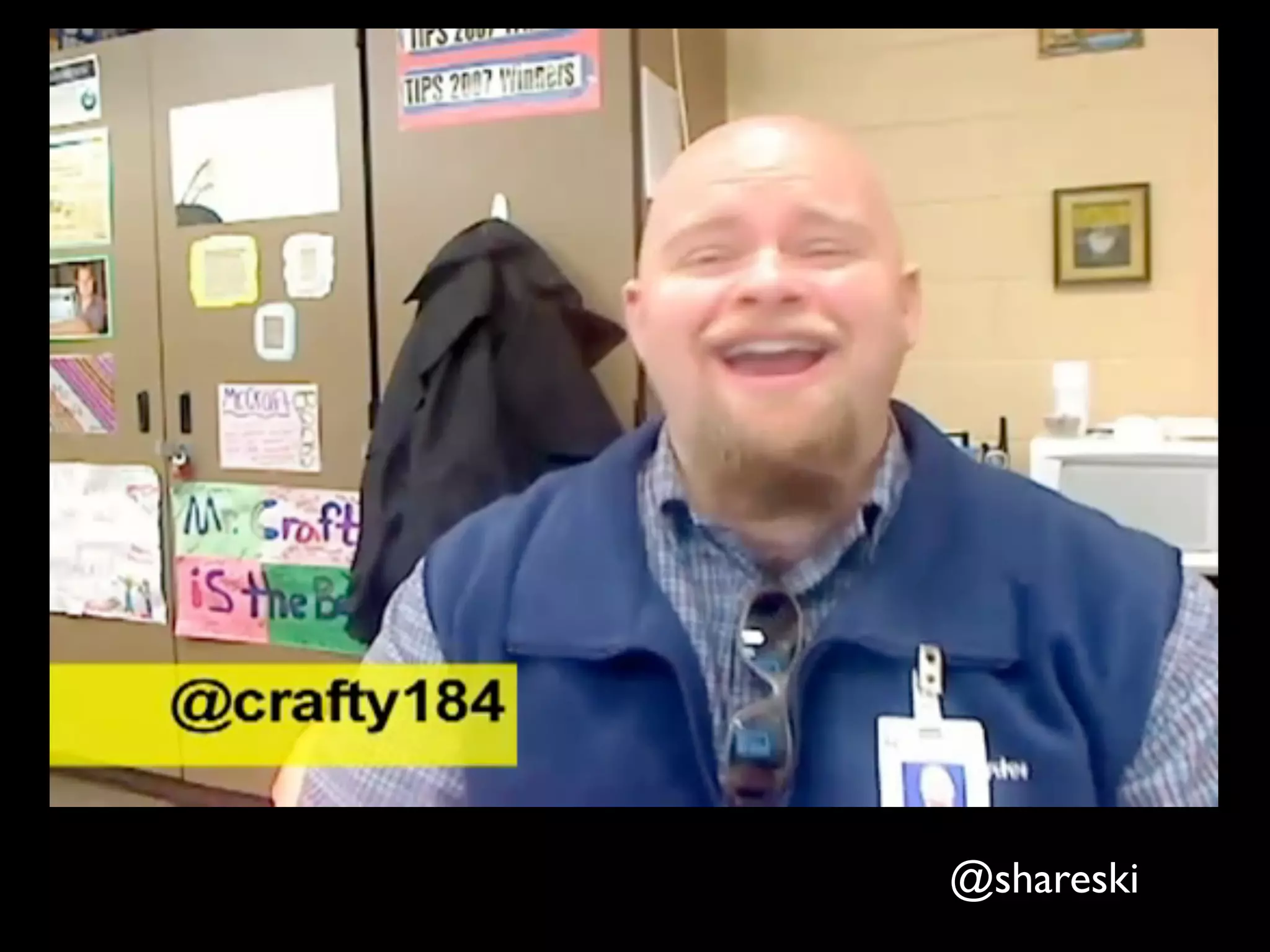
@shareski
@shareski
conclusion
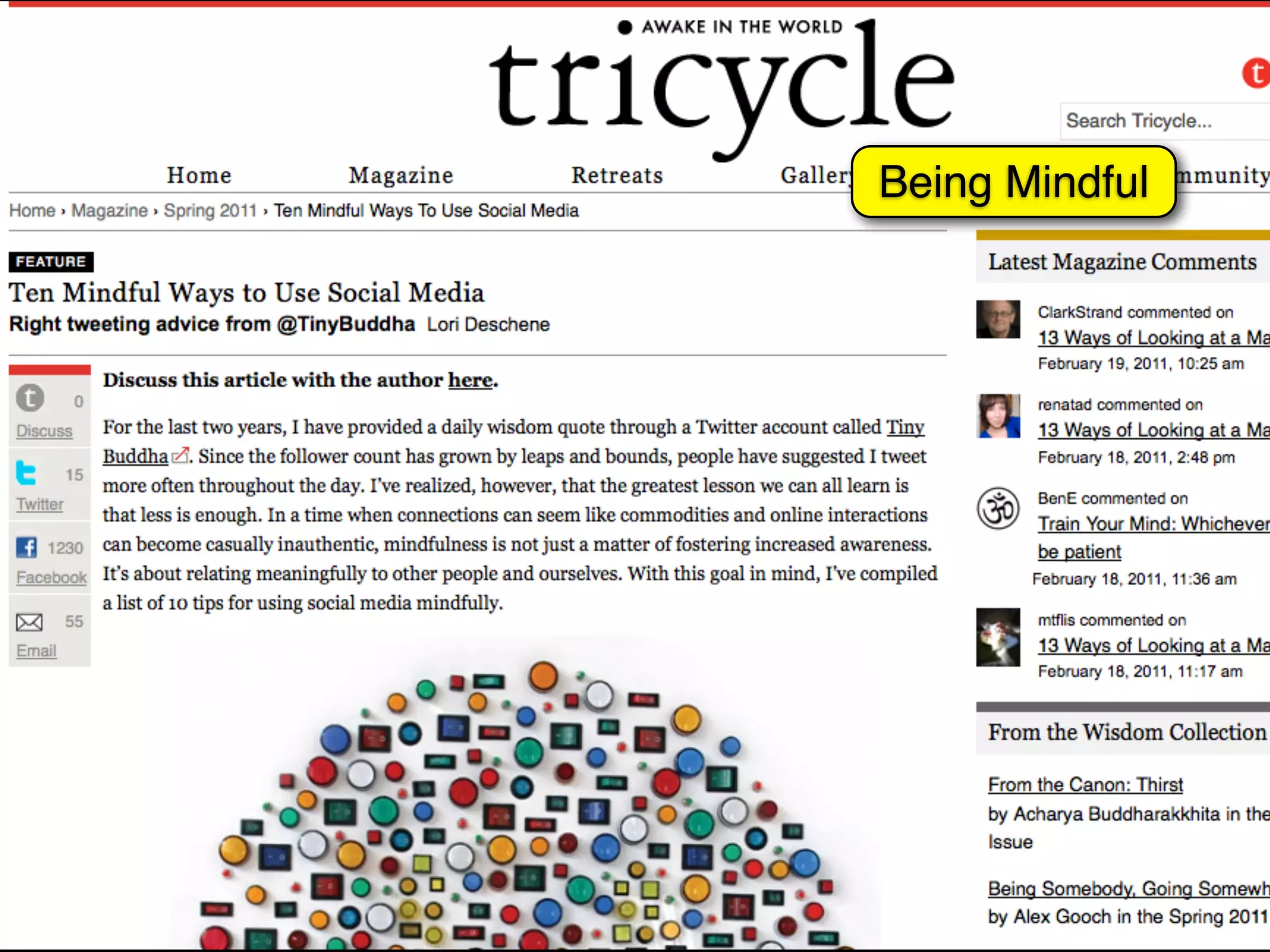
Being Mindful
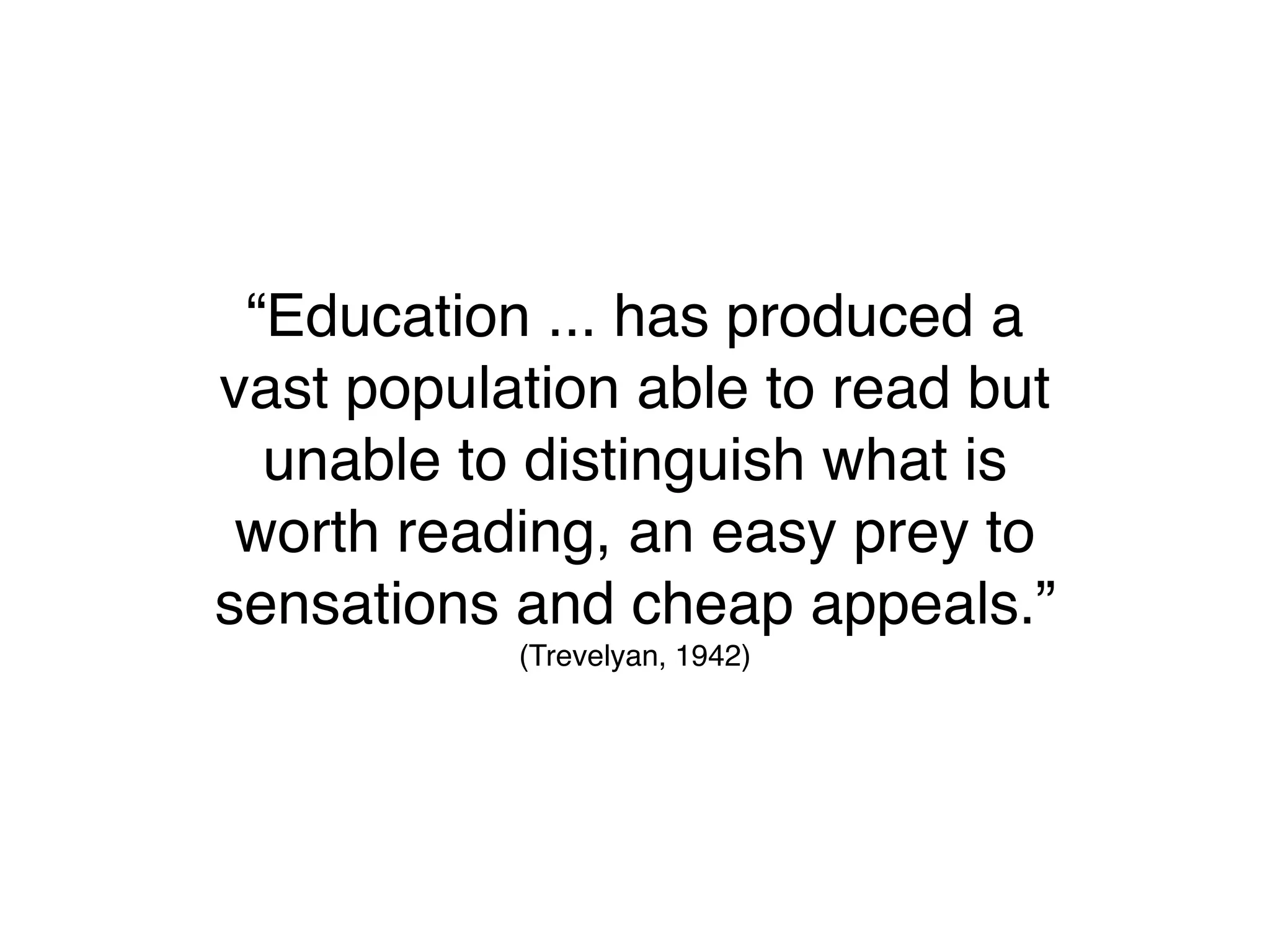
“Education ... has produced a
vast population able to read but
  unable to distinguish what is
 worth reading, an easy prey to
sensations and cheap appeals.”
           (Trevelyan, 1942)
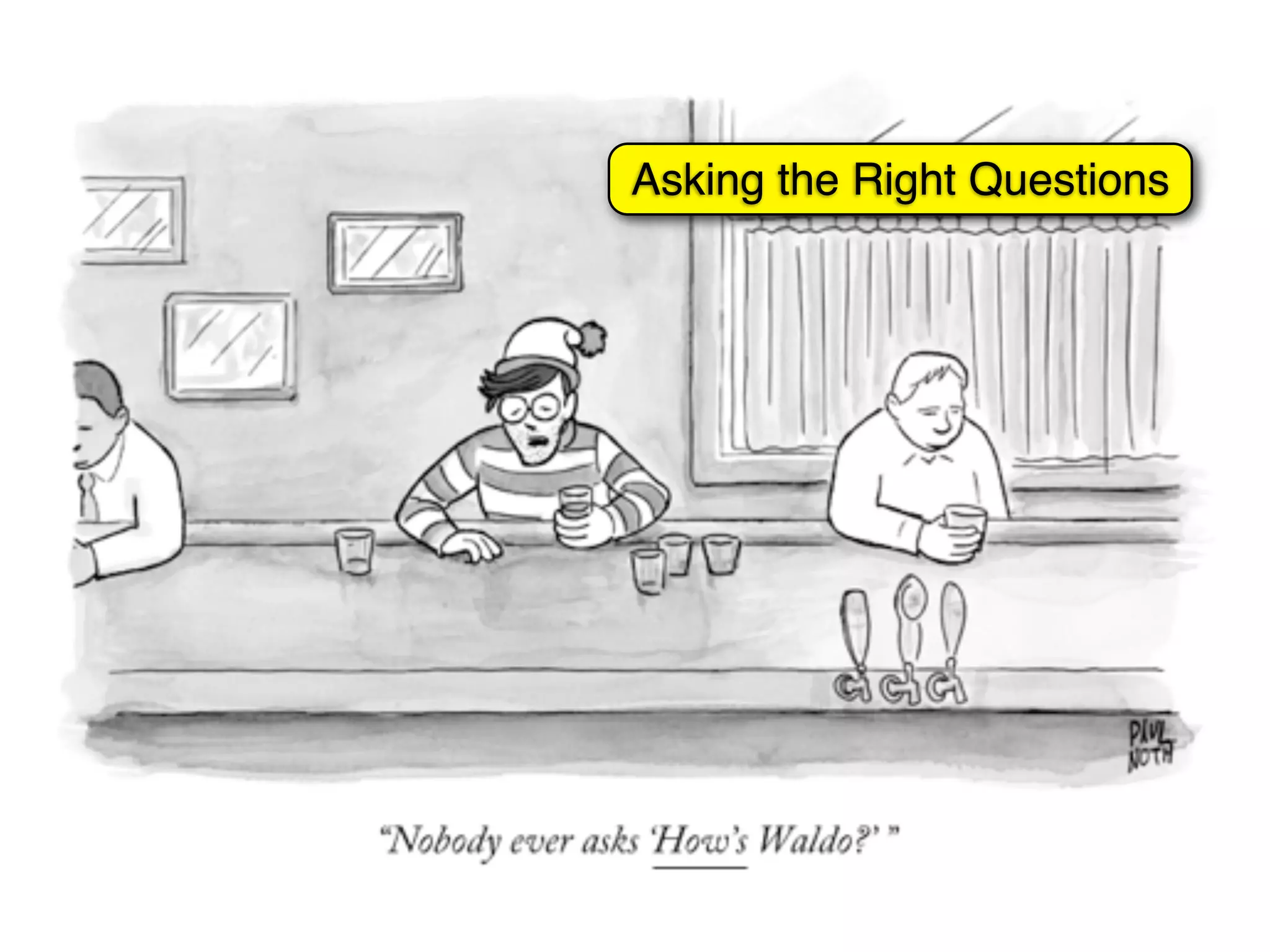
Asking the Right Questions
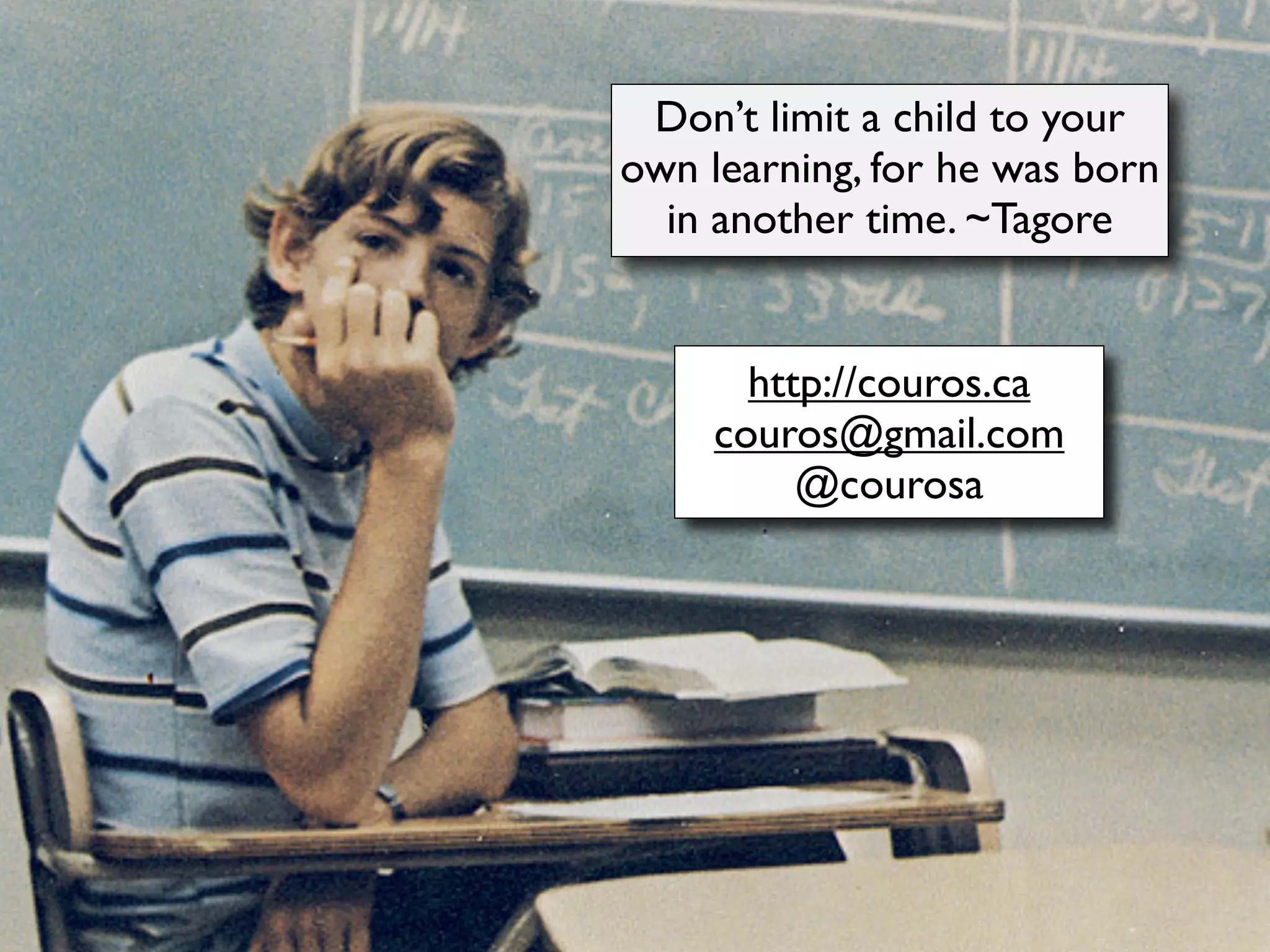
Don’t limit a child to your
own learning, for he was born
  in another time. ~Tagore


       http://couros.ca
     couros@gmail.com
          @courosa

Deep learning in the Age of Distraction

  • 1.
    Deep Learning inthe Age of Distraction Dr. Alec Couros University of Regina August 2011
  • 2.
    #cesd73 bit.ly/cesd73
  • 3.
  • 4.
  • 5.
  • 7.
  • 8.
  • 9.
  • 10.
  • 11.
  • 12.
    Changes Early Day ofPC in Schools Today’s Social/Mobile Reality
  • 13.
    media stats (2010) • 107 trillion emails (89% spam), from 1.04 billion users. • 255 million websites • 1.97 billion Internet users • 152 millions blogs • 600 million Facebook users (sharing 30 billion pieces of content per month) • 2 billion videos watched on Youtube daily • 5 billion photos hosted on Flickr Stats as of January 2011 via Royal Pingdom
  • 14.
    myth of thedigital native
  • 16.
    Children and youngpeople are described as ‘the collaboration generation’, eager to work together towards common goals, share content and draw upon “the power of mass collaboration”. This combination of individualisation and collaboration is often presented as giving young people a propensity to question, challenge and critique. These are individuals who “typically can’t imagine a life where citizens didn’t have the tools to constantly think critically, exchange views, challenge, authenticate, verify, or debunk. The Digital Native - Myth & Reality, Selwyn (2009)
  • 17.
    Are We ToBelieve This?
  • 18.
  • 19.
  • 21.
    “... age isnot a determining factor in students’ digital lives; rather, their familiar and experience using ICTs is more relevant.”
  • 22.
    “... age isnot a determining factor in students’ digital lives; rather, their familiar and experience using ICTs is more relevant.” “... the notion of ‘digital natives’ is inaccurate: those with such attributes are effectively a digital elite. Instead of a new net generation growing up to replace an older analogue generation, there is a deepening digital divide ... characterized not by age but by access and opportunity.”
  • 23.
  • 24.
  • 26.
  • 30.
    danah boyd •(Post WWII)“Spaces like dance halls, roller rinks, bowling alleys, and activity centers began offering times for teens to socialize with other teens.... By the late 20th century, shopping malls became the primary public space for youth socialization. While shopping malls once welcomed teens, teens @zephoria primarily seen as a nuisance now.... What emerged with the Internet was a radical shift in architecture. It decentralized publics.” Why Youth (Heart) Social Network Sites, boyd (2007)
  • 33.
  • 34.
  • 36.
    danah boyd •“The profileserves as a digital representation of one’s taste’s, fashion, and identity. In crafting the profile, people upload photos, indicate interests, list favorite musicians, & describe themselves textually & through associated media. •“The vast majority of social network site use amongst use does not involve surfing to strangers’ @zephoria profiles, but engaging more locally with known friends and acquaintances. •Youth look to older teens & the media to get cues about what to wear, how to act, & whats’ cool, Socializing Digitally, boyd (2007)
  • 39.
  • 40.
  • 41.
  • 42.
    Michael Wesch •“What you see on Youtube are tremendously deep communities ... people revealing parts of themselves that they refuse to reveal even to their family or to their closest friends.” •Youtube mitigates our desire to connect without the constraint. @mwesch
  • 43.
    “Heroes for ourMediated Culture”
  • 44.
    is tech makingus stupid?
  • 46.
    “As we aredrained of our “repertory of dense cultural inheritance”, we risk turning into “pancake people” -- spread wide and thin as we connect with the vast network of information accessed by the mere touch of a button. (Nicholas Carr, 2008)
  • 48.
    David Crystal 5 Main Myths •Texting is full of abbreviations •The abbreviations are new. •The fact that people leave out letters show they don’t know how to spell. •Young people are putting these @mwesch abbreviations into home and exams. •Texting shows the decline of the English language.
  • 49.
    Texting & Literacy http://www.youtube.com/watch?v=Boj8VYzDAy8
  • 50.
    Texting & Literacy http://www.youtube.com/watch?v=Boj8VYzDAy8
  • 52.
    “... in aninformation-rich world, the wealth of information means a dearth of something else: a scarcity of whatever it is that information consumes. What information consumes is rather obvious: it consumes the attention of its recipients. Hence a wealth of information creates a poverty of attention and a need to allocate efficiently among the overabundance of information sources that might consume it. (Herbert Simon, 1971)”
  • 53.
  • 54.
  • 55.
    Deep Learning • “Deep learning is learning that takes root in our apparatus of understanding, in the embedded meanings that define us and that we use to define the world.” (Tagg, 2003) • “Characteristics of deep learning are the integration and synthesis of information with prior learning in ways that become part of one’s thinking & approaching new phenomena and efforts to see things from different perspectives. (Kuh, Chen, Laird, 2007)
  • 56.
    Models of 21stCentury Learning • The Collaborator uses networks of people, knowledge, skills & ideas as sources of learning - emphasis on social interactions. • The Free Agent makes use of continuous, open-ended & life-long styles and systems of learning. • The Wise Analyzer gathers evidence of effective activity, scrutinizes it and applies its conclusions to new problems & new contexts. • The Creative Synthesizer connects across themes and disciplines, cross fertilises ideas, integrates separate concepts & creates new vision and new practice. 21st Century Learning and Learners, Friesen & Jardine (2007)
  • 59.
    21st Century Readers/WritersMust ... • Develop proficiency with the tools of technology. • Build relationships with others to pose & solve problems collaboratively and cross culturally. • Design and share information for global communities to meet a variety of purposes. • Manage, analyze, & synthesize multiple streams of simultaneous information. • Create, critique, an analyze multimedia texts. • Attend to the ethical responsibilities required by these complex environments. NCTE Framework for 21st Century Curriulum & Assessment (2007)
  • 60.
    Example #1: UsingRelevant Modes Jenny Johns
  • 61.
    Example #1: UsingRelevant Modes Jenny Johns
  • 62.
    Example #1.1: UsingRelevant Modes @danikabarker
  • 63.
    Example #2: PowerOf (Global) Audience ps22chorus.blogspot.com
  • 64.
    Example #2: PowerOf (Global) Audience ps22chorus.blogspot.com
  • 65.
    Example #2.1: PowerOf (Global) Audience
  • 66.
    Example #2.2: PowerOf (Global) Audience Beyond Friending, Gold, 2011
  • 67.
    Example #2.2: PowerOf (Global) Audience “My student was delighted by the attention her blog post had received; it gave her confidence in her writing and bolstered her enthusiasm for our class.... We were no longer studying an important work of 20th century literature within the narrow context of my syllabus; instead we had become part of a conversation that involved the broader reading public. As a professor, I was displaced from the centre of the conversation, which became more open, distributed and student-driven than it had been before.” Beyond Friending, Gold, 2011
  • 68.
    Example #3: GivingVoice @bryanjack
  • 69.
    Example #3: GivingVoice @bryanjack
  • 70.
    Example #3.1: GivingVoice @kathycassidy
  • 71.
    Example #4: GoingDeep @ddmeyer
  • 72.
  • 73.
    Example #5: UtilizingNetworks @langwitches @hdurnin @glassbeed
  • 74.
  • 75.
  • 77.
  • 78.
  • 79.
    Example #6: Importanceof Multimedia @karlfisch
  • 80.
    Example #6.1: Importanceof Multimedia @kutiman
  • 81.
    Example #6.1: Importanceof Multimedia @kutiman
  • 82.
    Example #7: PDAnytime, Anywhere
  • 83.
    Example #7.1: PDAnytime, Anywhere @jgates513
  • 84.
    Example #7.1: PDAnytime, Anywhere @jgates513
  • 85.
    there are thousandsof examples but this is not the norm
  • 86.
    the big ideasto consider
  • 87.
    Sharing http://www.flickr.com/photos/dolmansaxlil/4802611949/
  • 88.
    On Sharing ... “it’s about overcoming the inner 2 year old in you that screams mine, mine, it’s mine.” (Wiley, TEDxNYED, 2010)
  • 92.
  • 94.
  • 100.
    “You are notFacebook’s customer. you are the product that they sell to real customers - advertisers. Forget this at your peril.” (Greenberg, 2010, via tweet)
  • 104.
  • 105.
  • 107.
  • 108.
  • 109.
  • 110.
  • 111.
    “Education ... hasproduced a vast population able to read but unable to distinguish what is worth reading, an easy prey to sensations and cheap appeals.” (Trevelyan, 1942)
  • 112.
  • 113.
    Don’t limit achild to your own learning, for he was born in another time. ~Tagore http://couros.ca couros@gmail.com @courosa