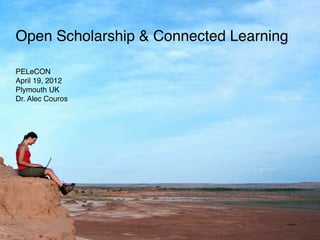
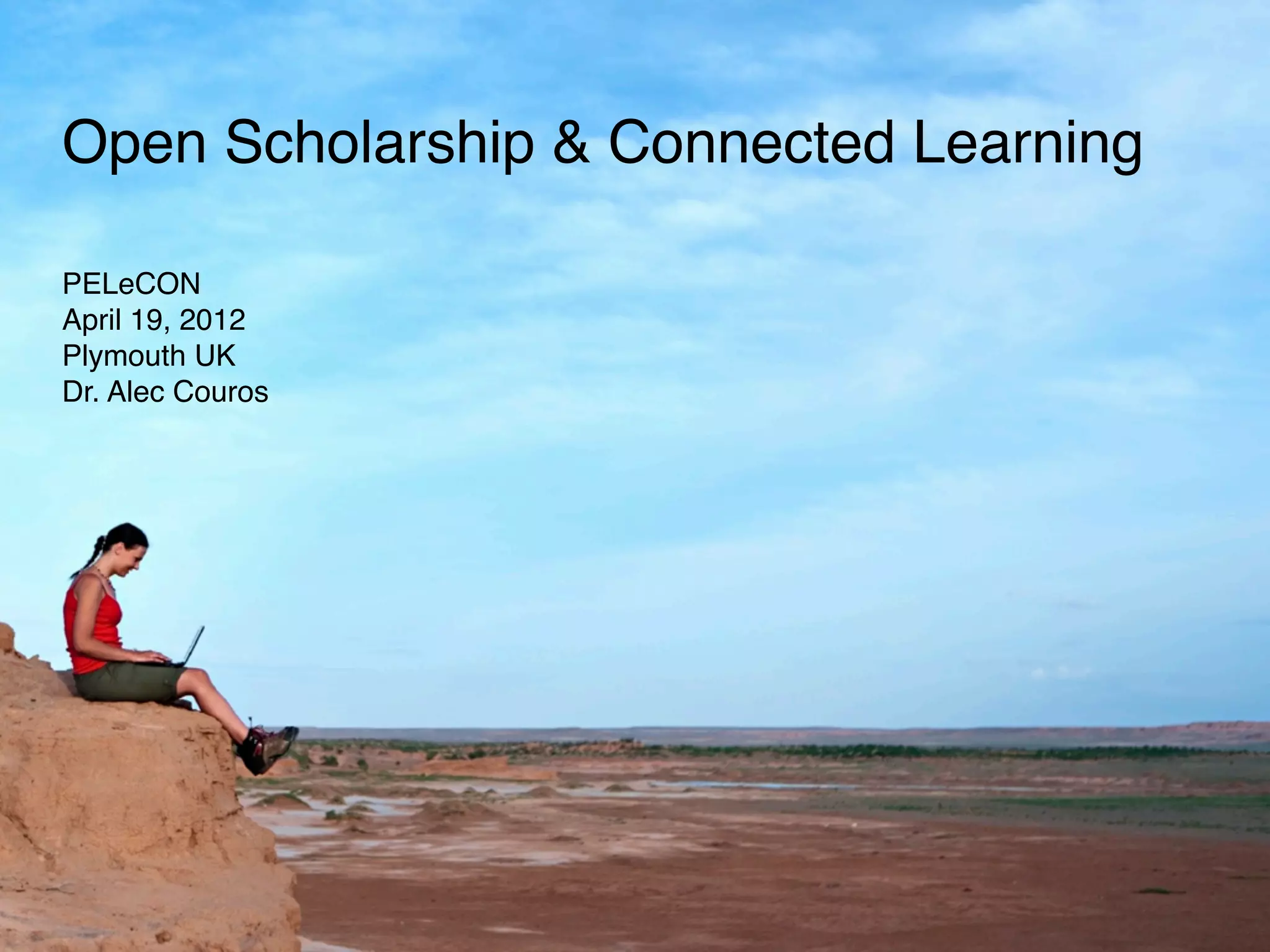
Open Scholarship & Connected Learning

PELeCON
April 19, 2012
Plymouth UK
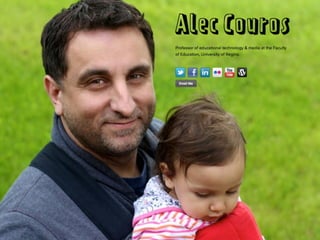
Dr. Alec Couros
#pelc12
me
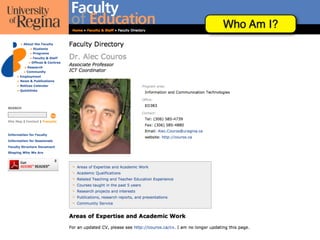
Who Am I?
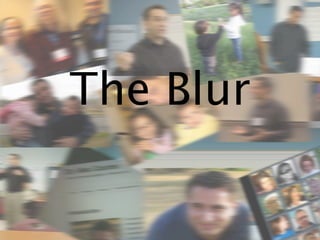
The Blur
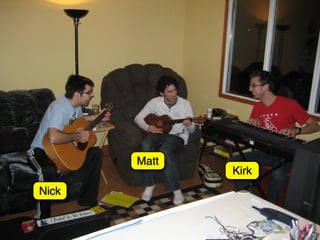
Matt
              Kirk
Nick
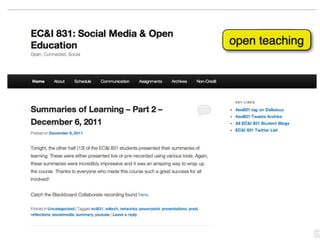
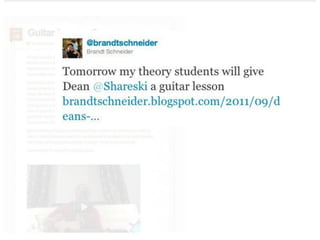
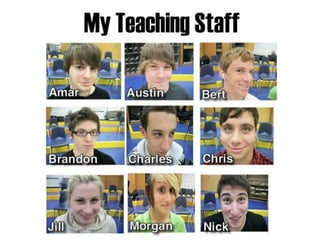
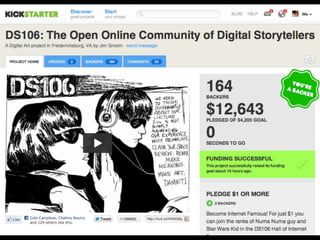
open teaching
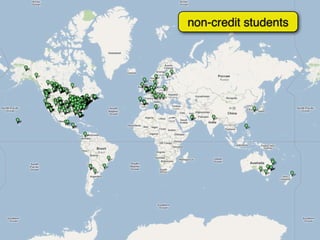
non-credit students
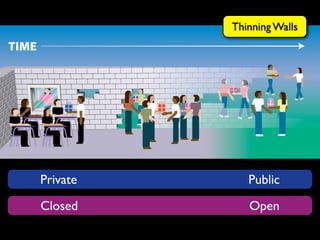
Thinning Walls


Private      Public

Closed       Open
early inspirations
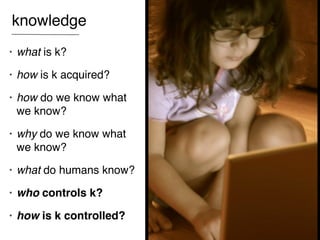
knowledge
•   what is k?
•   how is k acquired?
•   how do we know what
    we know?
•   why do we know what
    we know?
•   what do humans know?
•   who controls k?
•   how is k controlled?
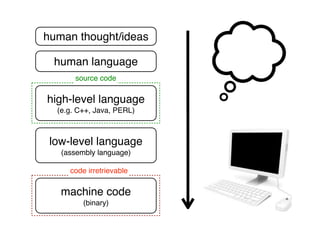
human thought/ideas

 human language
       source code

high-level language
  (e.g. C++, Java, PERL)


 low-level language
   (assembly language)

     code irretrievable

   machine code
         (binary)
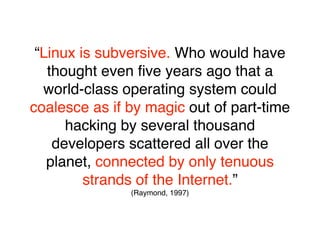
“Linux is subversive. Who would have
   thought even five years ago that a
  world-class operating system could
coalesce as if by magic out of part-time
      hacking by several thousand
    developers scattered all over the
   planet, connected by only tenuous
         strands of the Internet.”
               (Raymond, 1997)
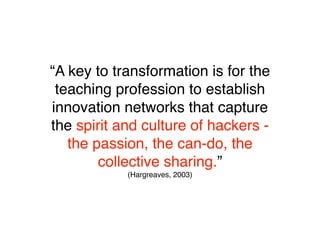
“A key to transformation is for the
 teaching profession to establish
innovation networks that capture
the spirit and culture of hackers -
   the passion, the can-do, the
        collective sharing.”
            (Hargreaves, 2003)
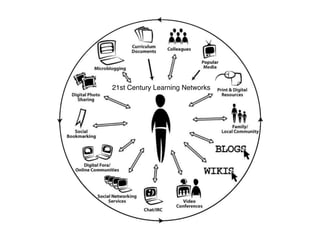
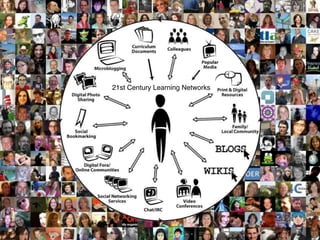
21st Century Learning Networks
power, control & fear
  as key barriers
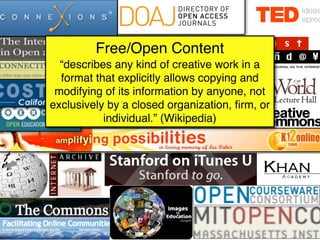
Free/Open Content
  “describes any kind of creative work in a
  format that explicitly allows copying and
 modifying of its information by anyone, not
exclusively by a closed organization, firm, or
           individual.” (Wikipedia)
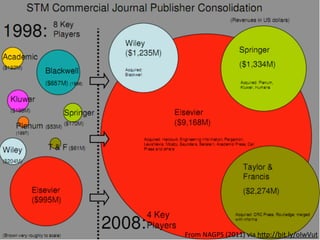
From	
  NAGPS	
  (2011)	
  via	
  h4p://bit.ly/oIwVut
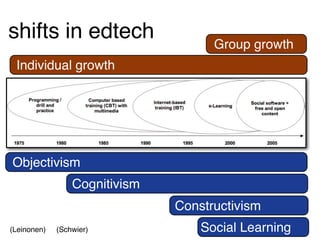
shifts in edtech                     Group growth
 Individual growth


Objectivism
                 Cognitivism
                               Constructivism
(Leinonen)   (Schwier)             Social Learning
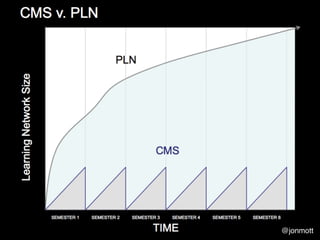
@jonmott
literacies
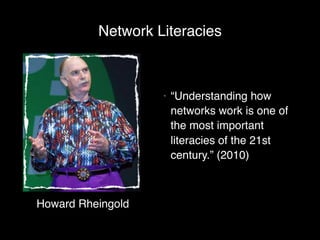
Network Literacies


                   •   “Understanding how
                       networks work is one of
                       the most important
                       literacies of the 21st
                       century.” (2010)


Howard Rheingold
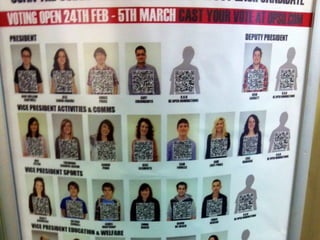
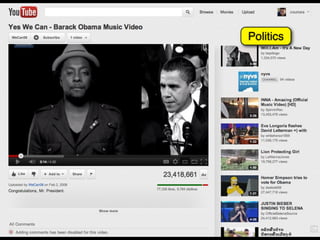
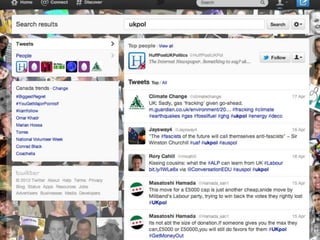
Politics


http://www.anduro.com/calgary-mayor-race.html
Services
Reputation
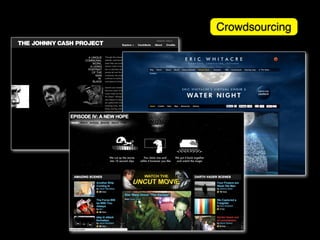
Crowdsourcing
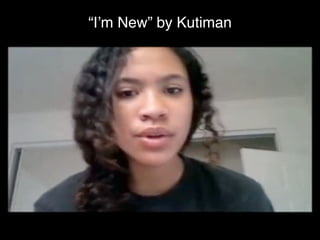
“I’m New” by Kutiman
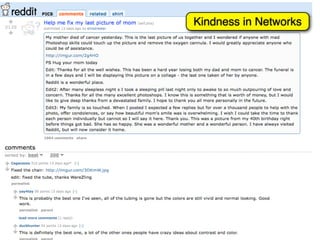
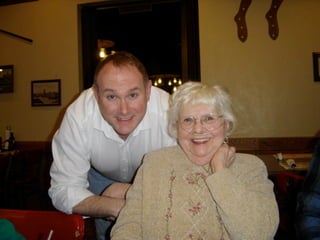
Kindness in Networks
God bless you and your family
through this difficult time.
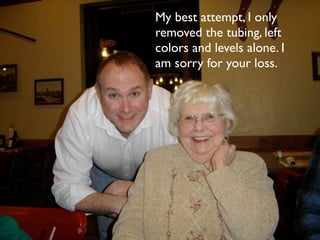
My best attempt, I only
removed the tubing, left
colors and levels alone. I
am sorry for your loss.
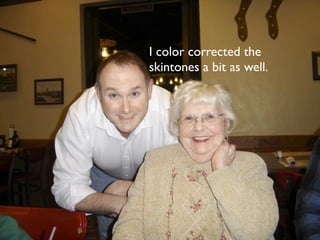
I color corrected the
skintones a bit as well.
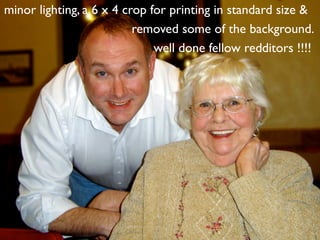
minor lighting, a 6 x 4 crop for printing in standard size &
                          removed some of the background.
                              well done fellow redditors !!!!
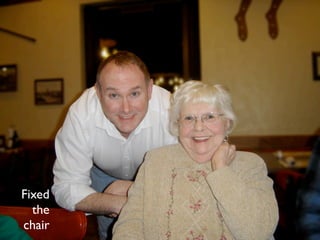
Fixed
  the
chair
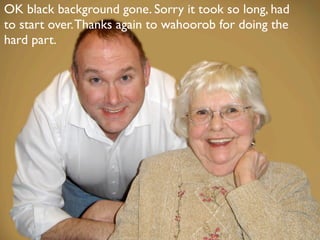
OK black background gone. Sorry it took so long, had
to start over. Thanks again to wahoorob for doing the
hard part.
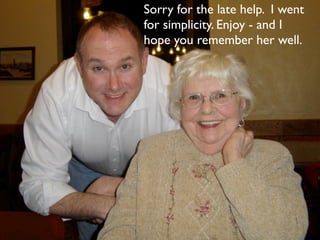
Sorry for the late help. I went
for simplicity. Enjoy - and I
hope you remember her well.
myth of the digital native
http://www.flickr.com/photos/dolmansaxlil/4802611949/
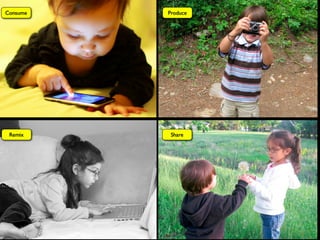
Children and young people are described as ‘the
   collaboration generation’, eager to work together
towards common goals, share content and draw upon
“the power of mass collaboration”. This combination of
 individualisation and collaboration is often presented
   as giving young people a propensity to question,
   challenge and critique. These are individuals who
   “typically can’t imagine a life where citizens didn’t
 have the tools to constantly think critically, exchange
   views, challenge, authenticate, verify, or debunk.


                       The Digital Native - Myth & Reality, Selwyn (2009)
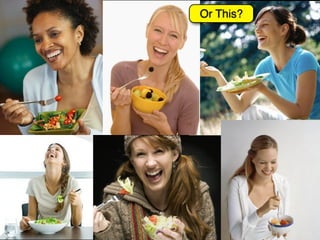
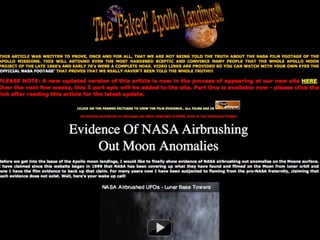
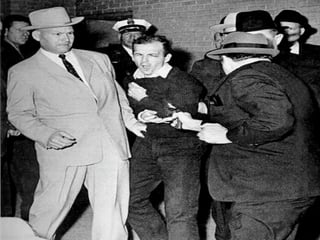
Are We To Believe This?
Or This?
Or This?
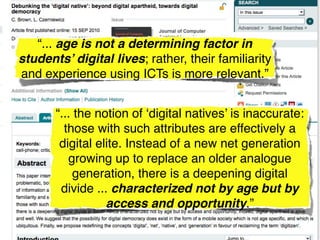
“... age is not a determining factor in
students’ digital lives; rather, their familiarity
and experience using ICTs is more relevant.”


       “... the notion of ‘digital natives’ is inaccurate:
         those with such attributes are effectively a
        digital elite. Instead of a new net generation
          growing up to replace an older analogue
            generation, there is a deepening digital
        divide ... characterized not by age but by
                  access and opportunity.”
information literacy
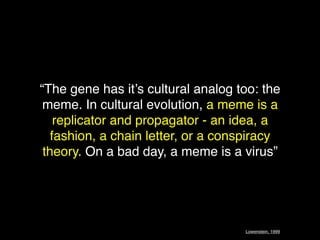
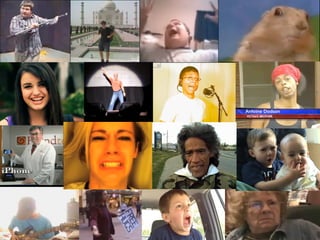
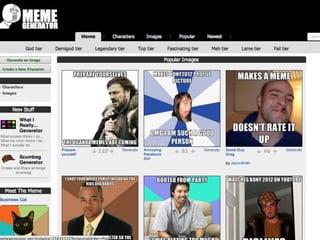
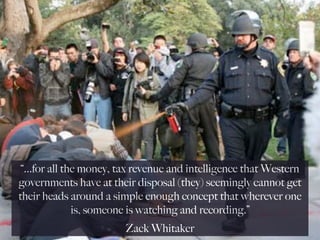
memes
“The gene has it’s cultural analog too: the
 meme. In cultural evolution, a meme is a
    replicator and propagator - an idea, a
   fashion, a chain letter, or a conspiracy
 theory. On a bad day, a meme is a virus”


                                    Lowenstein, 1999
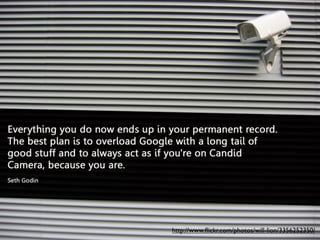
http://www.flickr.com/photos/will-lion/3601144842/sizes/l/in/photostream/
“...for all the money, tax revenue and intelligence that Western
governments have at their disposal (they) seemingly cannot get
their heads around a simple enough concept that wherever one
               is, someone is watching and recording.”
                        Zack Whitaker
what does it mean when
 you like something?
digital fluency
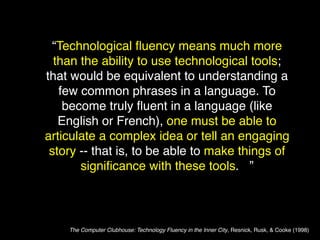
“Technological fluency means much more
  than the ability to use technological tools;
that would be equivalent to understanding a
   few common phrases in a language. To
    become truly fluent in a language (like
   English or French), one must be able to
articulate a complex idea or tell an engaging
 story -- that is, to be able to make things of
       significance with these tools. ”


    The Computer Clubhouse: Technology Fluency in the Inner City, Resnick, Rusk, & Cooke (1998)
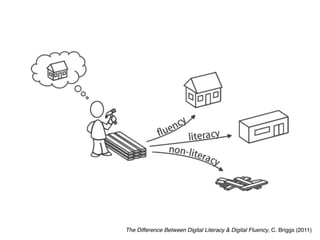
The Difference Between Digital Literacy & Digital Fluency, C. Briggs (2011)
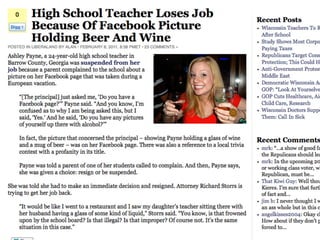
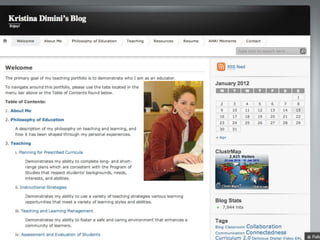
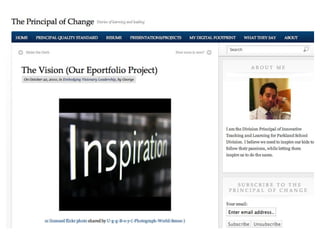
digital identity
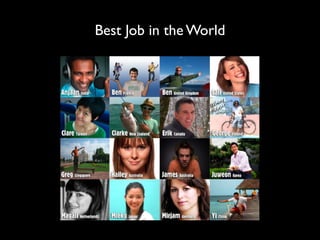
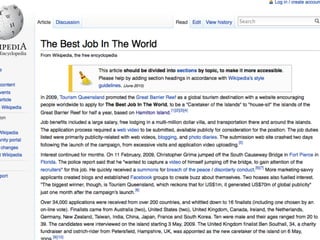
Best Job in the World
On Digital Video

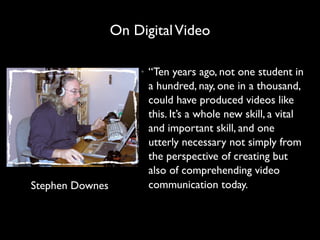
                     •   “Ten years ago, not one student in
                         a hundred, nay, one in a thousand,
                         could have produced videos like
                         this. It’s a whole new skill, a vital
                         and important skill, and one
                         utterly necessary not simply from
                         the perspective of creating but
                         also of comprehending video
Stephen Downes           communication today.
http://www.flickr.com/photos/will-lion/3356252350/
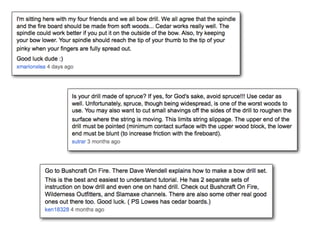
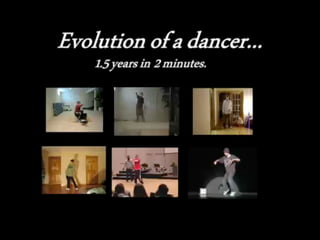
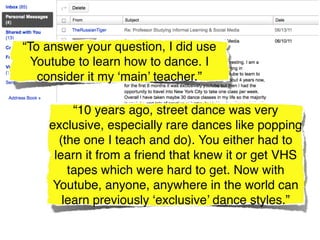
social learning
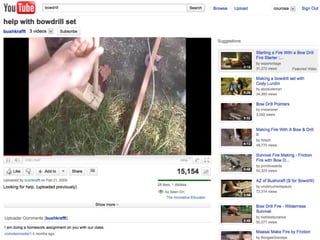
“To answer your question, I did use
  Youtube to learn how to dance. I
   consider it my ‘main’ teacher.”

         “10 years ago, street dance was very
    exclusive, especially rare dances like popping
      (the one I teach and do). You either had to
     learn it from a friend that knew it or get VHS
        tapes which were hard to get. Now with
     Youtube, anyone, anywhere in the world can
       learn previously ‘exclusive’ dance styles.”
closing thoughts
open scholarship
111
112
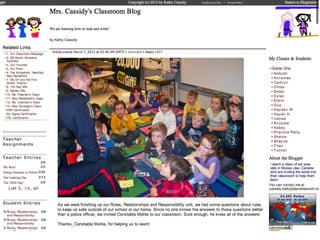
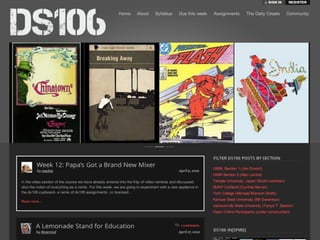
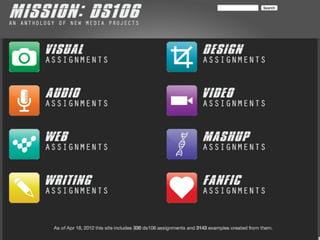
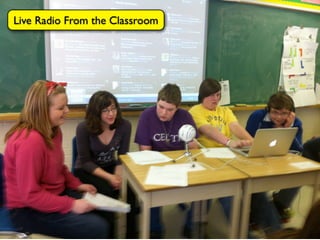
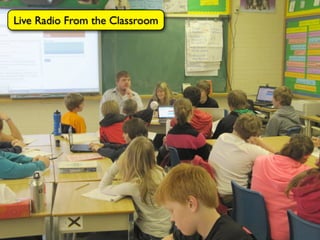
making learning visible
Text
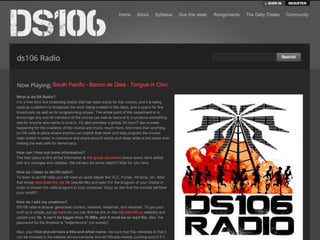
Live Radio From the Classroom
how are you making learning visible?
how are you contributing to
  the learning of others?
Don’t limit a child to your
own learning, for he was born
  in another time. ~Tagore


       http://couros.ca
     couros@gmail.com
          @courosa

Open Scholarship & Connected Learning