Social Media
Definitions, Facts, and
   Implications
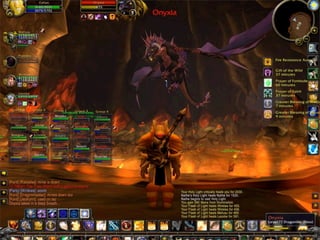
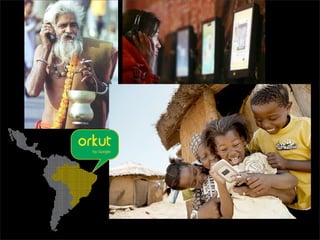
...a shifting digital
          landscape


• changing societal norms (expectations)
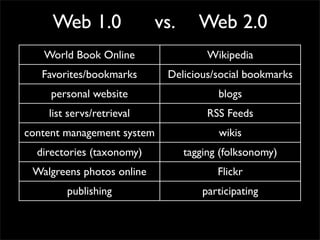
Web 1.0               vs.      Web 2.0
   World Book Online                  Wikipedia
   Favorites/bookmarks      Delicious/social bookmarks
     personal website                   blogs
    list servs/retrieval              RSS Feeds
content management system               wikis
  directories (taxonomy)         tagging (folksonomy)
 Walgreens photos online                Flickr
        publishing                   participating
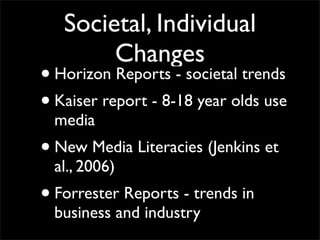
Societal, Individual
          Changes
• Horizon Reports - societal trends
• Kaiser report - 8-18 year olds use
    media
•   New Media Literacies (Jenkins et
    al., 2006)
•   Forrester Reports - trends in
    business and industry
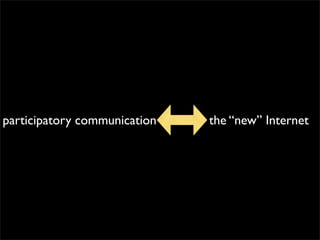
participatory communication   the “new” Internet
How is communication
   shaped today?
• continues to be shaped by individuals and
  society (valued and required)
• the Internet plays a larger role in
  communication than ever before - and the
  practices online continue to change
• no longer shaped solely by print/text
• continues to be social; availability of media
  enhances opportunities to participate in
  social environments
The Facts
• Facebook has 5+ million users - 28% are
  over the age of 34 - fastest growing
  segment
• 48 billion unique images on Facebook
• Twitter’s use is over 90% last year alone
• LinkedIn has a 10-15% following in the US
• YouTube - 2 billion views a day; average
  person spends 15 minutes a day
• Over 60% of adults game; mostly male - 40
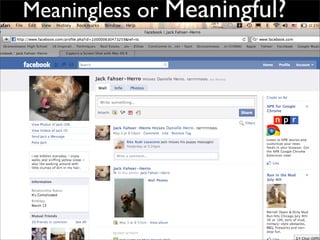
Meaningless or Meaningful?
What’s in it for
        business?
• Continual connection with your market/target/
  audience on may levels
• Global reach
• Accessibility - available to anyone
• Usability - no specialized training required
• Recency - little lag time...posts are immediate
• Lack of permanence - acceptance of ever-
  changing nature of society/product refinement
Realizing the potential
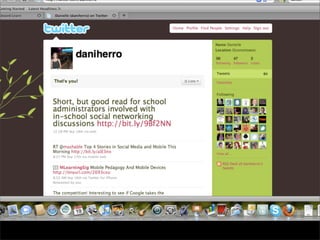
• Healthcare - Tweets to pregnant women
• Marketing - mobile phone App that shows
  tax information and nearby listings
• Journalism - blogging, opinions and feedback
  dialogue is “author” controlled
• Military - games as simulations of real
  events
• Civic engagement - kids are increasing
  political involvement at a younger age,
  supporting global causes
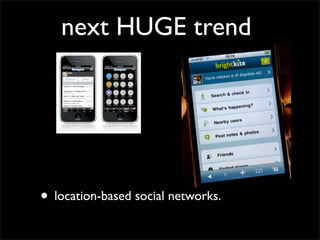
next HUGE trend


• location-based social networks.
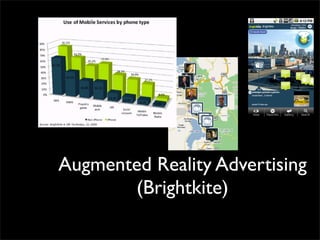
Augmented Reality Advertising
       (Brightkite)
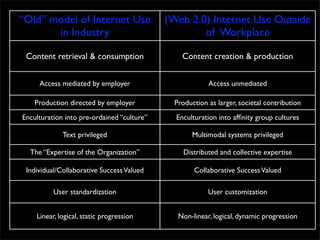
“Old” model of Internet Use                 (Web 2.0) Internet Use Outside
       in Industry                                  of Workplace

 Content retrieval & consumption                Content creation & production


     Access mediated by employer                         Access unmediated

    Production directed by employer           Production as larger, societal contribution
Enculturation into pre-ordained “culture”     Enculturation into affinity group cultures

             Text privileged                        Multimodal systems privileged

  The “Expertise of the Organization”            Distributed and collective expertise

 Individual/Collaborative Success Valued            Collaborative Success Valued

          User standardization                           User customization


    Linear, logical, static progression        Non-linear, logical, dynamic progression
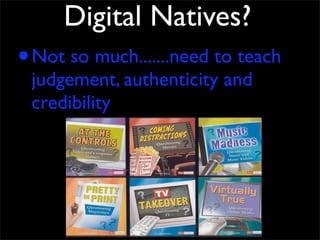
Digital Natives?
• Not so much.......need to teach
 judgement, authenticity and
 credibility
HR Concerns
• privacy policies
• confidentiality
• determining what constitutes social media
• protection of branding
• disclaimers on blogs
• ownership of content
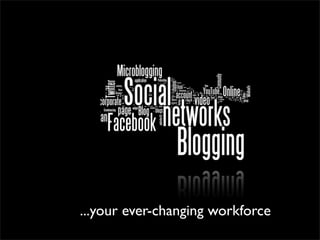
...your ever-changing workforce
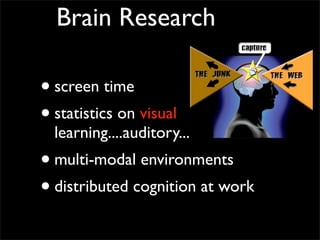
Brain Research

• screen time
• statistics on visual
  learning....auditory....
• multi-modal environments
• distributed cognition at work
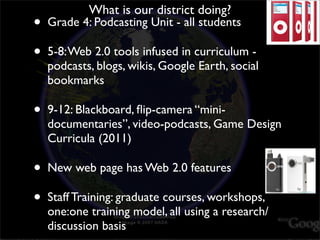
What is our district doing?
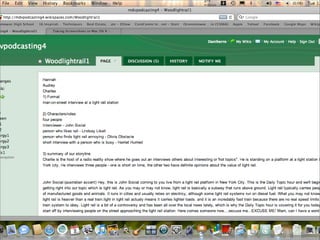
•   Grade 4: Podcasting Unit - all students

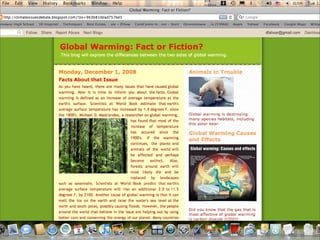
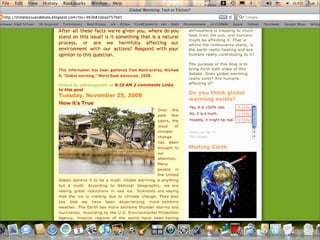
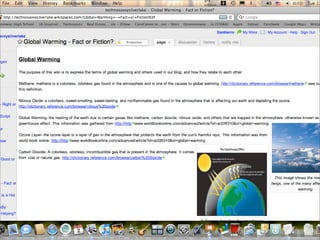
•   5-8: Web 2.0 tools infused in curriculum -
    podcasts, blogs, wikis, Google Earth, social
    bookmarks

•   9-12: Blackboard, flip-camera “mini-
    documentaries”, video-podcasts, Game Design
    Curricula (2011)

•   New web page has Web 2.0 features

•   Staff Training: graduate courses, workshops,
    one:one training model, all using a research/
    discussion basis
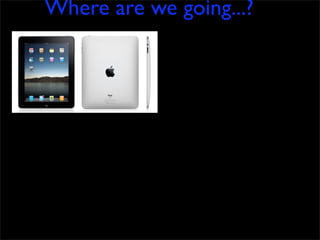
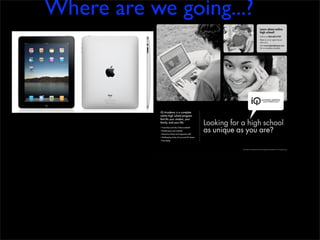
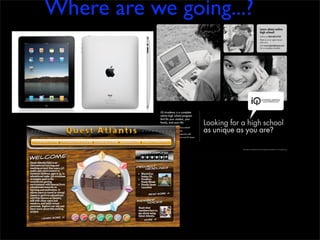
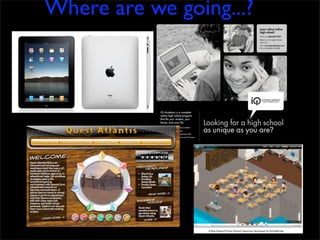
Where are we going...?
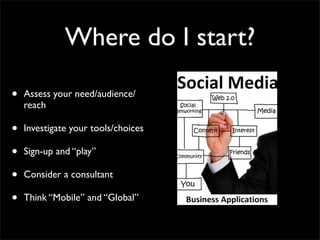
Where do I start?

•   Assess your need/audience/
    reach

•   Investigate your tools/choices

•   Sign-up and “play”

•   Consider a consultant

•   Think “Mobile” and “Global”

Hr roundtable slides

  • 1.
  • 2.
    ...a shifting digital landscape • changing societal norms (expectations)
  • 3.
    Web 1.0 vs. Web 2.0 World Book Online Wikipedia Favorites/bookmarks Delicious/social bookmarks personal website blogs list servs/retrieval RSS Feeds content management system wikis directories (taxonomy) tagging (folksonomy) Walgreens photos online Flickr publishing participating
  • 6.
    Societal, Individual Changes • Horizon Reports - societal trends • Kaiser report - 8-18 year olds use media • New Media Literacies (Jenkins et al., 2006) • Forrester Reports - trends in business and industry
  • 7.
    participatory communication the “new” Internet
  • 8.
    How is communication shaped today? • continues to be shaped by individuals and society (valued and required) • the Internet plays a larger role in communication than ever before - and the practices online continue to change • no longer shaped solely by print/text • continues to be social; availability of media enhances opportunities to participate in social environments
  • 9.
    The Facts • Facebookhas 5+ million users - 28% are over the age of 34 - fastest growing segment • 48 billion unique images on Facebook • Twitter’s use is over 90% last year alone • LinkedIn has a 10-15% following in the US • YouTube - 2 billion views a day; average person spends 15 minutes a day • Over 60% of adults game; mostly male - 40
  • 10.
  • 11.
    What’s in itfor business? • Continual connection with your market/target/ audience on may levels • Global reach • Accessibility - available to anyone • Usability - no specialized training required • Recency - little lag time...posts are immediate • Lack of permanence - acceptance of ever- changing nature of society/product refinement
  • 12.
    Realizing the potential •Healthcare - Tweets to pregnant women • Marketing - mobile phone App that shows tax information and nearby listings • Journalism - blogging, opinions and feedback dialogue is “author” controlled • Military - games as simulations of real events • Civic engagement - kids are increasing political involvement at a younger age, supporting global causes
  • 13.
    next HUGE trend •location-based social networks.
  • 14.
  • 15.
    “Old” model ofInternet Use (Web 2.0) Internet Use Outside in Industry of Workplace Content retrieval & consumption Content creation & production Access mediated by employer Access unmediated Production directed by employer Production as larger, societal contribution Enculturation into pre-ordained “culture” Enculturation into affinity group cultures Text privileged Multimodal systems privileged The “Expertise of the Organization” Distributed and collective expertise Individual/Collaborative Success Valued Collaborative Success Valued User standardization User customization Linear, logical, static progression Non-linear, logical, dynamic progression
  • 16.
    Digital Natives? • Notso much.......need to teach judgement, authenticity and credibility
  • 17.
    HR Concerns • privacypolicies • confidentiality • determining what constitutes social media • protection of branding • disclaimers on blogs • ownership of content
  • 18.
  • 19.
    Brain Research • screentime • statistics on visual learning....auditory.... • multi-modal environments • distributed cognition at work
  • 20.
    What is ourdistrict doing? • Grade 4: Podcasting Unit - all students • 5-8: Web 2.0 tools infused in curriculum - podcasts, blogs, wikis, Google Earth, social bookmarks • 9-12: Blackboard, flip-camera “mini- documentaries”, video-podcasts, Game Design Curricula (2011) • New web page has Web 2.0 features • Staff Training: graduate courses, workshops, one:one training model, all using a research/ discussion basis
  • 26.
    Where are wegoing...?
  • 27.
    Where are wegoing...?
  • 28.
    Where are wegoing...?
  • 29.
    Where are wegoing...?
  • 30.
    Where are wegoing...?
  • 31.
    Where do Istart? • Assess your need/audience/ reach • Investigate your tools/choices • Sign-up and “play” • Consider a consultant • Think “Mobile” and “Global”